

Monthly Archives: April 2020

Pangur Bán

Pangur Bán
By Anonymous
Translated by Seamus Heaney
- From the ninth-century Irish poem
Pangur Bán and I at work,
Adepts, equals, cat and clerk:
His whole instinct is to hunt,
Mine to free the meaning pent.
More than loud acclaim, I love
Books, silence, thought, my alcove.
Happy for me, Pangur Bán
Child-plays round some mouse’s den.
Truth to tell, just being here,
Housed alone, housed together,
Adds up to its own reward:
Concentration, stealthy art.
Next thing an unwary mouse
Bares his flank: Pangur pounces.
Next thing lines that held and held
Meaning back begin to yield.
All the while, his round bright eye
Fixes on the wall, while I
Focus my less piercing gaze
On the challenge of the page.
With his unsheathed, perfect nails
Pangur springs, exults and kills.
When the longed-for, difficult
Answers come, I too exult.
So it goes. To each his own.
No vying. No vexation.
Taking pleasure, taking pains,
Kindred spirits, veterans.
Day and night, soft purr, soft pad,
Pangur Bán has learned his trade.
Day and night, my own hard work
Solves the cruxes, makes a mark.
About This Poem
This Old Irish poem was written by a monk about his cat, in around the 9th century, and found in a monastery in Austria. (Pangur Bán is the name of the monk’s cat.) Describing the life of the monk in his study with his cat as his happy companion, this pet poem has everything for the pet-lover and book-lover. Just as the scholar goes in search of knowledge, so his faithful companion goes in search of mice.
Here’s a bonus picture today, because we all need a fluffy kitten sitting on a stack of books.


Quarantine Cooking

While I have been working from home, I have had the chance to do some real cooking. I have always loved to cook, but I am often too tired from work to really take the time to make a good meal. However, working from home does not tire me out as much, and I am able to really cook. I can also put food on to cook while I am still working. The other day, I made red beans and rice. It’s a simple recipe: prepare red kidney beans as instructed on the package with andouille sausage, salt, pepper, and one chopped onion. Then simply serve over rice. In all it takes about four hours to cook the beans if you use the quick soak method, otherwise you should soak the beans overnight. Once the beans have been soaked, it’s just a matter of boiling them for about 2-2 ½ hours.
With this post, I am presenting four recipes that I have made recently. The “One Pan Garlic Herb Chicken and Asparagus,” I made last night, it is a recipe I adapted from one on the Crème de la Crum website. The “Broiled Chicken and Artichokes” came Taste of Home, and the “Roasted Chicken with Croutons” came from Katie Lee on the Food Network Show The Kitchen. The last recipe, “Joe’s Tilapia Picante with Salsa Rice” is one I came up with about ten years ago when I was trying to figure out how I wanted to cook some fish. The “Salsa Rice” that I make with it is adapted from a recipe on the Taste of Home website. The green beans that I also serve with this recipe was something I put together when I cooked this dish the other night in order to have something green with my dinner.
None of these recipes are very hard to make. In fact, they are actually quite simple, though some have a lot of ingredients. I hope you will try some of these and let me know what you think of them.
One Pan Garlic Herb Chicken and Asparagus
Prep Time 5 minutes
Cook Time 20 minutes
Total Time 25 minutes
Servings 4
Ingredients
• 3-6 chicken thighs or boneless skinless chicken breasts (breasts pounded to even ½ inch thickness)
• salt and pepper, to taste
• 1-pound asparagus, ends trimmed
• 3 tablespoons butter, divided
• 1 tablespoon minced garlic
• ½ teaspoon dried basil
• ½ teaspoon dried oregano
• ½ teaspoon dried thyme
• ½ teaspoon onion powder
Pan Sauce
• salt and pepper, to taste
• ¾ cup chicken broth
• ¼ cup white wine
• 1 teaspoon Dijon mustard
• 2 tablespoon butter
• chopped fresh rosemary, thyme, sage
• 1 jar (7-1/2 ounces) marinated quartered artichoke hearts, drained
Instructions
1. Season chicken with salt and pepper on both sides. Melt 2 tablespoons butter in a large skillet over medium-high heat. Stir in garlic and herbs and cook another minute or so until the garlic is fragrant.
2. Reduce heat to medium, add chicken to skillet, and cook for 5-7 minutes, then flip and cook another 5-7 minutes. (Chicken should be nearly, but not completely cooked through by this point)
3. Move the chicken over the side of the skillet and add remaining 1 tablespoon butter to the empty portion of the pan. Once the butter is melted, add asparagus. Season asparagus with salt and pepper, to taste. Cook, rotating throughout, for 4-6 minutes until tender and chicken is completely cooked through.
4. Set cooked chicken and asparagus aside.
5. To make pan sauce, pour chicken broth and white wine into skillet. Add chopped fresh rosemary, thyme, sage.
6. Add butter one tablespoon at a time until you have added both tablespoons. Add mustard and reduce sauce by half, about 4-5 minutes.
7. Add artichokes and allow them to be warmed through.
8. Slice chicken and place chicken and asparagus on a plate with the artichokes and pour pan sauce over chicken and asparagus.
Broiled Chicken & Artichokes
Prep Time 5 minutes
Cook Time 15 minutes
Total Time 20 minutes
Servings 4
Ingredients
• 4 boneless skinless chicken thighs or boneless skinless chicken breasts (breasts pounded to even ½ inch thickness)
• 1 jar (7-1/2 ounces) marinated quartered artichoke hearts, drained
• 1 tablespoons olive oil
• ½ teaspoon salt
• ¼ teaspoon pepper
• ¼ cup shredded Parmesan cheese
• 1 tablespoon minced fresh parsley or 1 ½ teaspoons dried parsley
Instructions
1. Preheat boiler. In a large bowl, toss chicken and artichokes with oil, salt and pepper. Transfer to a broiler pan.
2. Broil 3 in. from heat 8-10 minutes or until a thermometer inserted in chicken reads 170°, turning chicken and artichokes halfway through cooking. Sprinkle with cheeseand parsley. Broil 1-2 minutes longer or until cheese is melted.
Roasted Chicken with Croutons
Prep Time 30 min
Cook Time 1 ½ hours
Total Time 2 hours
Servings 4
Ingredients
• One 4- to 5-pound roaster chicken
• 1 tablespoon kosher salt
• 1 teaspoon freshly ground black pepper
• 1 teaspoon garlic powder
• 6 sprigs fresh thyme
• 2 sprigs fresh rosemary
• 1 head garlic, sliced in half
• 1/2 medium yellow onion
• 1 baguette
• 3 tablespoons unsalted butter, at room temperature
Pan Sauce:
• 2/3 cup white wine
• 1/3 cup chicken stock
• 4 tablespoons unsalted butter, cut into tablespoon pieces
• 1 teaspoon chopped fresh rosemary
• 1 teaspoon chopped fresh thyme
• Kosher salt and freshly ground black pepper
• 1 teaspoon Dijon mustard
Serving:
Dijon mustard, as needed
Instructions
For the chicken:
• Preheat the oven to 425 degrees F. When hot, put a cast-iron skillet in the oven to preheat, about 5 minutes.
• Dry the chicken with paper towels. In a small bowl, mix together the salt, pepper and garlic powder. Generously season the chicken inside and out with the salt mixture. Stuff the chicken cavity with the thyme, rosemary, garlic and onion.
• Slice the baguette on the bias into five 2-inch-thick slices. Spread some butter on one side of each slice. Carefully remove the hot skillet from the oven and arrange the baguette slices buttered side down in the center of the skillet. Place the chicken on the baguette slices, making sure all of the bread is covered by the chicken. Roast until the chicken is golden brown, an instant-read thermometer reads 165 degrees F and the juices run clear, about 1 hour and 15 minutes. Transfer the chicken to a cutting board and tent with foil. Let rest for 10 minutes before carving. Remove the baguette slices from the skillet and reserve.
For the pan sauce:
• While the chicken is resting, put the skillet over medium-high heat. Pour in the wine and scrape with a wooden spoon to remove all the brown bits. Add the chicken stock and cook until the liquid is slightly reduced, about 2 minutes. If any juices from the chicken have collected on the cutting board, pour them into the skillet now. Add in the butter piece by piece, waiting for each to melt before stirring in the next piece. Stir in the rosemary and thyme. Season with salt and pepper.
For serving: Carve the chicken and serve with the baguette slices, pan sauce, Dijon mustard and vegetable of your choice.
Joe’s Tilapia Picante and Salsa Rice
Prep Time 5 minutes
Cook Time 20 minutes
Total Time 25 minutes
Servings 4
• 4 Tilapia fillets (You can use your favorite delicate white fish: catfish, flounder, etc.)
• 1 jar of salsa (I like restraint style, but use your favorite salsa)
• 1 stick of unsalted butter (You can use ½ stick if you like)
• 1 cup of white wine
• Salt and pepper to taste
• 1 can of green beans (you can use frozen or fresh if you prefer)
• ½ cup chicken broth
• 2 cups prepared rice
• 1 to 1 ½ cups shredded Monterey Jack cheese
Instructions
1. In a large skillet combine salsa, butter, and wine over medium high heat. Stir until combined.
2. Pour sauce in a food processor and blend until smooth (this is optional if you want a chunkier sauce).
3. Return sauce to skillet, reserving one cup for later.
4. Place fish in the sauce and cover skillet, cooking until fish is done and is flaky.
5. While fish cooks, in a small saucepan, pour ¼ cup of sauce over green beans and add ½ cup of chicken broth. Cook until beans are to your desired doneness.
6. Take ¾ of the reserved sauce and combine rice and Monterey Jack Cheese together.
7. Place a spoonful or two of the rice mixture on a plate with a fillet of top, spooning some of the sauce over the fish and rice. Serve with green beans on the side.

The Meaning of Easter
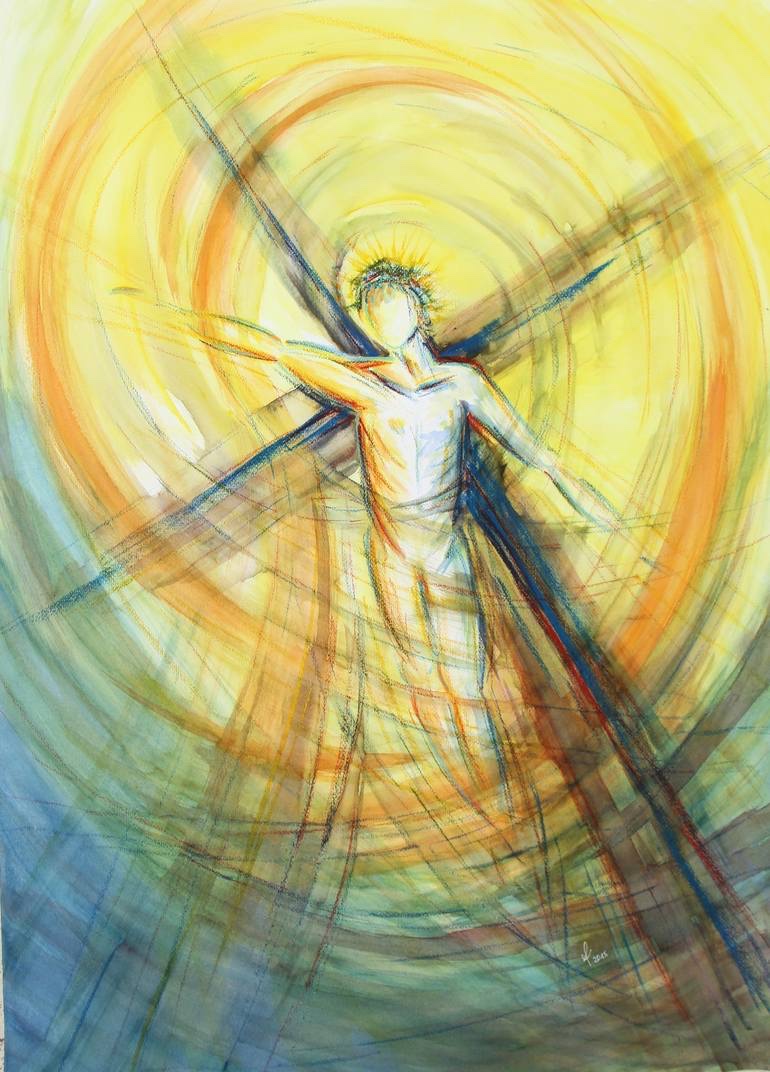
The Passion of Christ, from the Latin patior meaning “suffer,” refers to those sufferings our Lord endured for our salvation from the agony in the garden of Gethsemane when he asks God to spare him from the coming misery and then resigns himself to the will of the Father through to His crucifixion on Calvary. The Four Gospels tell us the story of the Passion and provide the details of our Lord’s final days. The Passion is to some extent corroborated by contemporary Roman historians — Tacitus, Suetonius and Pliny the Younger.
After the Last Supper, Jesus went to the Garden of Gethsemane at the Mount of Olives. Our Lord prayed, “Father, if it is your will, take this cup from me; yet not my will but yours be done” (Luke 22:42). Jesus knew the sacrifice He faced. He prayed so intensely that “his sweat became like drops of blood falling to the ground” (Luke 22:44). There is little doubt as to why the Father sent an angel to strengthen Him (Luke 22:43). It was in the garden that Judas Iscariot kissed Jesus to identify him to the arresting officers.
Jesus was then arrested and tried before the Sanhedrin presided over by the High Priest Caiphas. Responding to their questions, He proclaimed, “Soon you will see the Son of Man seated at the right hand of the Power and coming on the clouds of heaven” (Matthew 26:64). For this statement, He was condemned to death for blasphemy, and was then spat upon, slapped, and mocked. While the Sanhedrin could condemn our Lord to death, it lacked the authority to execute; only Pontius Pilate, the Roman governor, could order an execution.
The Jewish leaders, therefore, took Jesus to Pilate. The Jewish leaders told Pilate not that Jesus had committed blasphemy in their eyes, but told Pilate, “We found this man subverting our nation, opposing the payment of taxes to Caesar, and calling Himself the Messiah, a king” (Luke 23:2). Why did they not mention the charge of blasphemy? Pilate did not care if Jesus wanted to be a messiah, a prophet, or a religious leader; however, if Jesus wanted to be a king, He threatened the authority of Caesar. An act of rebellion, treason or subversion against Rome had to be punished quickly and severely. So, Pilate asked, “Are you the king of the Jews?” (Luke 23:3).
Pilate could not find conclusive evidence to condemn Jesus. Pilate challenged the chief priests, the ruling class, and the people, “I have examined Him in your presence and have no charge against Him arising from your allegations” (Luke 23:14). When offering to release a prisoner, Pilate asked the crowd about Jesus: “What wrong is this man guilty of? I have not discovered anything about Him that calls for the death penalty?” (Luke 23:22). Even Pilate’s wife pleaded with him not to interfere in the case of “that holy man” (Matthew 27:19). Pilate then asked the crowd what he should do: Should he spare “Barabbas, or Jesus which is called Christ?” (Matthew 27:17). The crowd indicated that Jesus should be crucified. Pilate then washed his hands and declared himself innocent of the blood of Jesus.
Pilate then had Jesus scourged (John 19:1). The Romans used a short whip with several single or braided leather thongs. Iron balls or hooks made of bones or shells were placed at various intervals along the thongs and at their ends. The person was stripped of his clothing and whipped along the back, buttocks and legs. The scourging ripped the skin and tore into the underlying muscles, leaving the flesh in bloody ribbons. The victim verged on circulatory shock and the blood loss would help determine how long he would survive on the cross. To enhance the scourging of our Lord, the soldiers added other tortures: crowning Him with thorns, dressing Him in a purple cloak, placing a reed in His right hand, spitting upon Him, and mocking Him, “All hail, king of the Jews!” (Matthew 27:27-31).
The Romans had perfected crucifixion, which probably originated in Persia, to produce a slow death with the maximum amount of pain. Crucifixion was reserved for the worst of criminals; those who had committed crimes against the Roman Empire. Ordinary criminals would have been beheaded as Paul was in Rome by orders of Nero. Crucifixion was so awful that Cicero (d. 43 BC) introduced legislation in the Roman Senate exempting Roman citizens from crucifixion; therefore St. Paul was beheaded rather than crucified for being a Christian. Jesus, however, was not a Roman citizen and thus could be crucified.
Jesus carried his own cross to further weaken him. Since the entire cross weighed around 300 pounds, he usually carried only the horizontal beam weighing 75-125 pounds to the place of execution where the vertical beams were already in place. A military guard headed by a centurion led the procession. A soldier carried the titulus which displayed the victim’s name and his crime and was later attached to the cross (Matthew 27:37). For Jesus, the path from the praetorium to Golgotha was about 1/3 of a mile, and He was so weak Simon of Cyrene was forced to assist Him (Matthew 27:32).
Upon arriving at the place of execution, the law mandated the victim be given vinegar mixed with gall (Matthew 27:34). Gall was a poison and would have hastened death and the suffering on the cross. Jesus refused the drink probably because he did not want to die from poisoning or have his senses numbed while on the cross. He knew He had to shed his blood and suffer for Him to become the supreme sacrifice for the sins of all men. His hands were stretched over the horizontal beam and either tied, nailed or both. Archeological evidence reveals the nails were tapered iron spikes approximately seven inches in length with a square shaft about 3/8 of an inch. The nails were driven through the wrist between the radius and the ulna to support the weight of the person. The horizontal beam was affixed to the vertical beams, and the feet were then tied or nailed directly to it or to a small footrest.
As the victim hung on the cross, the crowds commonly tormented him with jeers (Matthew 27:39-44). The Romans oftentimes forced the family to watch to add psychological suffering. The soldiers divided the man’s garments as part of their reward (Matthew 27:35). The victim would hang on the cross anywhere from three hours to three days. The horrors of crucifixion caused it to be one of the most torturous forms of execution. Perhaps,therefore, Jesus spoke only tersely from the cross. He is said to have uttered only a few phrases which differ from gospel to gospel. In Matthew and Mark: “My God, My God, why have you forsaken me?” In Luke: “Father, forgive them, for they know not what they do.” “Truly, I say to you, today you will be with me in paradise.” and “Father, into your hands I commit my spirit.” (This final sentence were His last words as recorded by Luke.) In John: “He said to His mother, “Woman, behold thy son!” He then turned to the disciple and said, “Behold thy mother!” And from that hour that disciple took her into his own home. After this, Jesus, knowing all things were now accomplished, that the scripture might be fulfilled,said, “I thirst” just before a wetted sponge, mentioned by all the Canonical Gospels, is offered. And finally, “It is finished.”
To hasten death, the soldiers would break the legs of the victim though when the soldiers came to break Jesus’ legs, they found him already dead. (John 19:32-33). When he appeared dead, the soldiers insured the fact by piercing the heart with a lance or sword; the soldiers did not pierce Jesus’ heart, but pierced his side instead which may have entered his heart, and from which flowed blood and water (John 19:34). Commonly, the corpse of the crucified was left on the cross until decomposed or eaten by birds or animals; however, Roman law allowed the family to take the body for burial with permission of the Roman governor. In Jesus’ case, Joseph of Arimathea asked Pilate for Christ’s body to which Pilate agreed. Jesus was then taken from the cross, and because it was late on a Friday, there was no time to prepare the body for burial, and He was placed in the tomb.
What we celebrate today is not the Passion, but what happened next, the Resurrection. The Resurrection of Jesus Christ is the cornerstone of our Christian faith. The Resurrection of Christ had been predicted in the Old Testament and by Christ Himself. Early on the Sunday morning after the death of Jesus on the cross, Mary Magdalene and several other women went to the tomb with the spices they had prepared. When they arrived, they found the tomb had been opened already. When they went in, they did not find Jesus’ body, and they wondered what had happened.
Suddenly, two angels in dazzling white clothes appeared. The women were terrified, but the angels said to them, “Why do you look for the living among the dead? He is not here; He has risen! Remember how He told you He would be turned over to sinful men, be crucified, and rise again on the third day?” While the Gospels disagree on what exactly happened next, it seems the women ran back to tell Jesus’ apostles what they had seen. Peter and one other apostle went to the tomb to see for themselves. They looked in and saw the linen cloths that Jesus’ body had been wrapped in but nothing else. Then they went home, amazed and confused.
Luke and John both describe at length Jesus’ post-Resurrection appearances to his followers. (Mark mentions these briefly as well.) Jesus’ appearance before “doubting Thomas” and the other disciples (in John and in Luke) are well known and contain a few details. For instance, Jesus appeared “when the disciples were together, with the doors locked for fear of the Jewish leaders.” A minor sentence, but one that communicates the terror and bewilderment that must have plagued the disciples in the immediate aftermath of Jesus’ crucifixion.
Matthew and Mark both close with the “Great Commission,” Jesus’ instructions to his disciples to go out into the world and spread the good news of salvation:
Then Jesus came to them and said, “All power is given unto me in heaven and in earth. Go ye therefore, and teach all nations, baptizing them in the name of the Father, and of the Son, and of the Holy Ghost: Teaching them to observe all things whatsoever I have commanded you: and, lo, I am with you always, even unto the end of the world.” (Matthew 28:18-20)
This passage has long been the basis of the Christian emphasis on sharing the Gospel with the world through evangelism and missionary work.
The Bible Story of the Ascension of Jesus, found in the first chapter of Acts, describes the ascent of Christ from the Earth to the Heavenly realm. According to Acts, the Ascension of Jesus takes place 40 days after the Resurrection in the presence of his disciples. Christ is risen after advising them to stay in Jerusalem until the arrival of the Holy Spirit. As he rises, a cloud obscures him from their view, and two men in white arrive to tell them that he will return “in the same way you have seen him go into heaven.” In Christian doctrine, the Ascension is correlated with the Deification of Jesus, meaning that through his Ascension, Jesus took his seat at the right hand of God: “He ascended into heaven, and is seated at the right hand of God the Father Almighty.”
The Resurrection of Jesus and His Crucifixion are the central historical events in the Christian faith. Without the Resurrection there would be no Christianity. “If Christ has not been raised,” wrote St. Paul, “then our preaching is in vain and your faith is in vain” (1 Corinthians 15:14). The foundation of all Christian doctrine hinges on the truth of the Resurrection. Jesus said, ” I am the Resurrection, and the Life: he that believe in Me, though he were dead, yet shall he live: And whosoever live and believe in Me shall never die.” (John 11:25-26) Without the Resurrection, Jesus could have been thought of as simply a great teacher and a good man. But after he rose from the dead, his followers knew for certain that he was who he had claimed to be—the Resurrection and the Life, the Savior of the world.
The painting at the top of the post is titled “resurrection” by Oliver Pfaff.





Authors
Recent Comments
furbirdsqueerly on Pic of the Day Joe on Pic of the Day noisilycool3bc985058… on Pic of the Day vandycolt on Moment of Zen: Reading noisilycool3bc985058… on Pic of the Day Top Posts & Pages




Amazon Associate

As an Amazon Associate I earn from qualifying purchases. So, if you click on a link that takes you to Amazon.com, I may earn a commission.
Trust me, it isn’t much, but every little bit helps.

 Joe
Joe


 The Closet Professor