

Monthly Archives: September 2020
Lament/Klage

Lament
By Rainer Maria Rilke
(English Translation by Horst A. Scholz)*
O how far away everything is
And long since gone.
I think that the star
From which I receive radiance
Has been dead for thousands of years.
I think, from the boat
Drifting past,
I heard some frightening words.
Inside the house a clock
Has struck …
In which house? …
I would like to step out of my heart
To walk under the immense sky.
I would like to pray.
And one of all these stars
Must surely still exist.
I think I might know
Which alone of them,
Endures –
Like a white city,
Standing in the heavens at the end of the ray …
Klage
By Rainer Maria Rilke
(In original German)
O wie ist alles fern
und lange vergangen.
Ich glaube, der Stern,
von welchem ich Glanz empfange,
ist seit Jahrtausenden tot.
Ich glaube, im Boot,
das vorüberfuhr,
hörte ich etwas Banges sagen.
Im Hause hat eine Uhr
geschlagen …
In welchem Haus? …
Ich möchte aus meinem Herzen hinaus
unter den großen Himmel treten.
Ich möchte beten.
Und einer von allen Sternen
müßte wirklich noch sein.
Ich glaube, ich wüßte,
welcher allein
gedauert hat, –
welcher wie eine weiße Stadt
am Ende des Strahls in den Himmeln steht …
*Text and translation provided courtesy of Oxford Lieder (www.oxfordlieder.co.uk)
About the Poet:
René Karl Wilhelm Johann Josef Maria Rilke (4 December 1875 – 29 December 1926), better known as Rainer Maria Rilke, was a Bohemian-Austrian poet and novelist. He is “widely recognized as one of the most lyrically intense German-language poets.” He wrote both verse and highly lyrical prose. Several critics have described Rilke’s work as inherently “mystical”. His writings include one novel, several collections of poetry, and several volumes of correspondence in which he invokes haunting images that focus on the difficulty of communion with the indefinable in an age of disbelief, solitude, and profound anxiety. These deeply existential themes tend to position him as a transitional figure between the traditional and the modernist writers.
The earliest poems by Rilke mainly featured two topics: religion and nationalism. While the very first poems show strong adherence to the canon of Christian stories, later poems take Christianity on a whole different journey. Later in his career, Rilke moved ever further away from his Christian roots, starting to bring Greek mythological characters into his stories. Transformed into Christian symbology, these Greek characters offered a whole new world for Rilke, in which he dove willingly. However, true to the romantic spirit of his time, religion and mythology did not stay the only topics on which he focused. From the middle of his career until his death, his poetry was mainly focused on the emotional description of true events. Two main areas of interest are evident during this period. The first is nature and the will of nature to survive. The second is the human struggle. Rilke put his focus mainly on individuals, expressing his points of view through the eyes of fictitious individuals. In general, most of Rilke’s poetry should be understood through the lens of his time and physical location. The struggles of the multicultural state of Austria-Hungary, which would be dissolved in his lifetime, play a pivotal role within his poetry and often individual poems make more sense seen this way.
About the Poem:
Berlin in the early 1900s was a hotbed for ‘art for art’s sake.’ Put simply, this expresses the belief that writers and artists needed no justification for their art. Their work did not need to serve political, moral, or any other end. Artists, especially those of Aestheticist and Romanticist conviction, had begun to discover progressive modernism, with its penchant for avant-garde art, fueled by inner creativity alone. Rilke found himself caught in this rise of modernism, with its conflict between the burden of tradition and a desire to break free of it. Rilke’s poetic development is a key example of this tension at work. For example, his poem ‘Klage’ likens the failure of creative power to the destruction of a tree by a storm.
The poem opens by expressing a longing for something passed. It captures the sense of distance and time which separates each of us from those we have lost. The line “under the immense sky” depicts the poet’s wishes to be outside himself, a part of the greater cosmos where perhaps he may be able to lose himself. As with the notion of loss, one must contemplate the loss of self as well, thinking of stepping out from our own hearts into a time and place in which the physical appearance is not an adequate definition of things. The last section of the poem conjures something which is “like a white city” only found at the end of the radiant universe. It is a call to a longing from the heart. Life beyond mere life, an experience that cannot be held as an ordinary experience. Rilke wishes and believes “something” still exists, after all is said and done.

Losers and Suckers
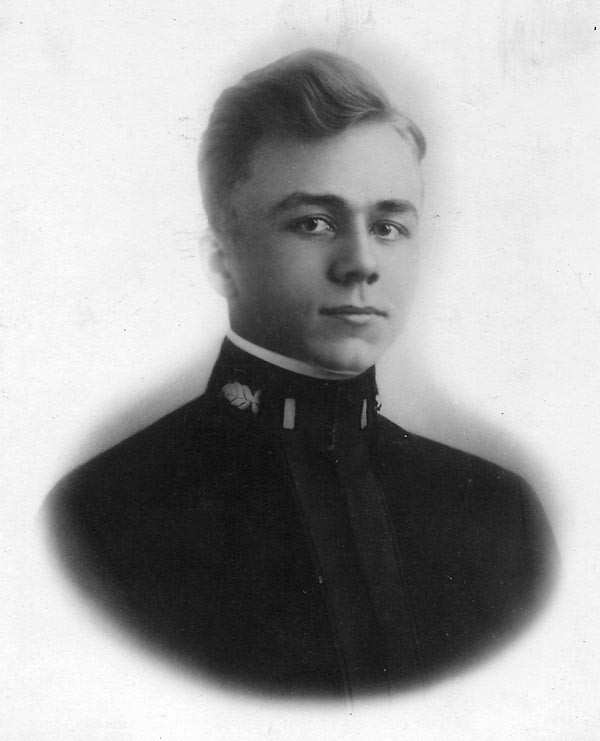
United States Navy (Dental Corps)
By now, I think we’ve all heard the president’s disparaging remarks about veterans. In an article in The Atlantic, Jeffrey Goldberg wrote that numerous witnesses heard Trump make excuses for not visiting the Aisne-Marne American Cemetery in 2018. Trump was to visit there on November 10, 2018 to mark the armistice’s 100th anniversary of the end of World War I. This coincided with the 243rd birthday of the Marine Corps. One of Trump’s excuses was the rainy weather might mess up his hair, his fucking hair. It looks like shit on the best of days, and he’s worried what a little rain might do to it! Officially, he said, “the helicopter couldn’t fly” and the Secret Service wouldn’t drive him there. All of the other world leaders drove there, but Trump couldn’t be bothered, saying, “Why should I go to that cemetery? It’s filled with losers.”
While many of you might not know about the importance of the Aisne-Marne American Cemetery, most of you know I’m a World War I historian. I want to tell you why that cemetery is significant. It is located 53.5 miles outside of Paris (roughly an hour-long drive) and contains the headstones of 2,289 soldiers of the American Expeditionary Force (AEF) mostly from the Battle of Belleau Wood, and the larger campaign in the Marne Valley. One of those “losers” was Lt. Weedon Osborne of Chicago, a Medal of Honor recipient. His citation for the medal reads:
For conspicuous gallantry and intrepidity at the risk of his life above and beyond the call of duty while attached to the Fifth Regiment, United States Marines, in actual conflict with the enemy and under fire during the advance on Bouresche, France on June 6 1918. In the hottest of the fighting when the Marines made their famous advance on Bouresche at the southern edge of Belleau Wood, Lieutenant (j.g.) Osborne threw himself zealously into the work of rescuing the wounded. Extremely courageous in the performance of this perilous task, he was killed while carrying a wounded officer to a place of safety. By his exceptional fortitude, inspiring initiative, and selfless devotion to duty, Lieutenant (j.g.) Osborne reflected great credit upon himself and upheld the highest traditions of the United States Naval Service. He gallantly gave his life for his country.
Osborne was obviously no “loser.” He had “exceptional fortitude, inspiring initiative, and selfless devotion to duty,” which Donald Trump does not. He selflessly sought to aid the wounded during the Battle of Belleau Wood, and was killed while carrying an injured officer to safety on June 6, 1918.
Alongside the Battles of Fallujah, Khe Sanh, Chosin, and Iwo Jima, the Battle of Belleau Wood occupies a hallowed place in U.S. Marine Corps lore and history. Every U.S. Marine knows the famous quotes from the Marines fighting in the 1918 battle: “Retreat, hell we just got here!” by Capt. Lloyd Williams who received three Silver Star citations and a Purple Heart, and “C’mon you sons-of-bitches, do you want to live forever?” by Gunnery Sgt. Dan Daley one of only nineteen men to have received the Medal of Honor twice.
The battlefield of Belleau Wood lays about five miles west of the town of Château-Thierry the site of another AEF battle. Looking at the strategic context in early 1918, Belleau Wood was only a small piece of a major campaign that saw the American forces help French and British armies stem the onslaught of the massive German Spring Offensive. On March 21, the Germans launched their attack along the Western Front in France. This was made possible because a peace treaty with the new Russian Bolshevik government had freed up German units deployed on the Eastern Front. The German leadership hoped the influx of 50 divisions could overwhelm the Allied forces in France bringing the war to an end before millions of American reinforcements could cross the Atlantic. The Spring Offensive nearly reached Paris coming close enough to shell the city. The loss of Paris would have likely resulted in a German victory in WWI. However, while the German offensive made significant gains in the first few weeks of the battle, they began to falter by May during the Aisne Offensive. The German assault was weakened because American units like the 2nd Division and its 4th Marine Brigade joined the fray to stop the Germans at the Battle of Belleau Wood.
After three weeks of intense combat, a report announced the 4th Marine Brigade’s success with the message, “Belleau Wood now U.S. Marine Corps entirely.” The French government renamed it Bois de la Brigade de Marine to honor the incredible sacrifices and fierce struggles there and awarded members of the 4th Marine Brigade the French Croix de Guerre. Although a victory for the Americans, the Battle of Belleau Wood exacted a heavy toll on the 4th Marine Brigade. Of its complement of 9,500 men, the brigade suffered 1,000 killed in action, and 4,000 wounded, gassed, or missing equaling a 55 percent casualty rate.
General Pershing, commander of the AEF said, “The deadliest weapon in the world is a United States Marine and his rifle.” Pershing also said, “the Battle of Belleau Wood was for the U.S. the biggest battle since Appomattox and the most considerable engagement American troops had ever had with a foreign enemy.” The battle had been brutal. “It has been a living hell,” Lt. Clifton B. Cates, 24, a future Marine Corps commandant wrote to his mother. “We were shelled all night with shrapnel and gas shells. [….] It was mustard gas and a lot of the men were burned.” It was a battle that changed the Marine Corps. “For all intents and purposes, the old warriors of the U.S. Marine Corps were virtually wiped out,” wrote historian, George B. Clark.
In a separate conversation on the 2018 trip, Trump referred to the 1,811 soldiers and Marines who lost their lives at Belleau Wood as “suckers” for getting killed. Trump also asked aides, “Who were the good guys in this war?” He couldn’t understand why the United States would intervene on the side of the Allies. While I realize the U.S. entry into WWI is complicated and controversial, Woodrow Wilson’s Fourteen Points stated the principles for peace that were to be used for negotiations to end World War I, and are a good starter for understanding the entry of the United States into the Great War. The ideas expressed by Wilson’s Fourteen Points included free trade, open diplomacy, national self-determination, and the League of Nations; ideas which remain as relevant today as they were a century ago. Wilson transformed the primary objective of American foreign policy from isolation to internationalism.
Trump could learn a lot from Wilson, whose vision of a world made safe and prosperous by the collective action of all nations, is a cornerstone of U.S. diplomacy. Instead of looking to Wilson for his positive attributes, Trump is more closely aligned with Wilson’s negative characteristics. Wilson tolerated no dissent during the war, and authorized serious violations of Americans’ civil liberties in his quest for victory. Playing to his base, Trump has incessantly targeted the most vulnerable. His anti-immigrant measures began with the Muslim ban. He has separated families, detained individuals who posed no threat to others or risk of flight, sought to deny asylum because they were directly contrary to the statute, and attempted to rescind protected status for the Dreamers.
Sadly, Wilson’s zest for humanitarian justice did not extend to African-Americans. He supported segregation in government departments and did little to stop the waves of anti-black violence and race riots that swept over the land during his administration particularly in the years after the war. In the present day, Trump praised white supremacists in Charlottesville as “very fine people” and referred to African countries as “shitholes.” His Justice Department sought to back off from consent decrees requiring police to treat their citizens with equal respect and dignity. And he has done nothing to help ease the current racial tensions in the United States instead fanning the flames of his conservative base by disparaging the Black Lives Matter movement.
For those who might not believe the allegations in The Atlantic article, look at the statements he’s made about military personnel in interviews and speeches. He has no respect for anyone who might do something selfless because he cannot fathom doing something that would not benefit him personally. To quote The Atlantic article:
“He can’t fathom the idea of doing something for someone other than himself,” one of Kelly’s friends, a retired four-star general, told me. “He just thinks that anyone who does anything when there’s no direct personal gain to be had is a sucker. There’s no money in serving the nation.” Kelly’s friend went on to say, “Trump can’t imagine anyone else’s pain.”
Retired Navy Admiral James Stavridis shared The Atlantic article on Twitter and described the military’s cemeteries as “sacred shrines to those who have given everything.” Stavardis suggested the lack of denials by John Kelly and retired Marine General Jim Mattis, Trump’s former Chief of Staff and Defense Secretary respectively were notable. Senior and former military leaders have struggled with how to respond to a report that Trump referred to U.S. service members killed in combat as “losers,” as the president attacked the allegations as “fake news.” The only thing fake here is Trump’s patriotism.
Trump lacks empathy when he lashes out at critics. Instead, he reaches for petty insults. His contempt for service and heroism extends to events throughout history. Trump finds the notion of military service challenging to understand, and volunteering to serve especially incomprehensible. Remember, the president has never served in the military but claims his attendance at New York Military Academy was an equivalent to military service. He also made the idiotic statement comparing his efforts to avoid contracting sexually transmitted diseases to the Vietnam War saying it constituted his “personal Vietnam.”
And if you still think he’s not lying when he denies the allegations in The Atlantic article, he can’t even tell the simple truth about the 2018 trip. Trump told reporters over the weekend he “called home” to Melania at the time and told her how upset he was for not being able to visit the cemetery. Trump claimed, “I spoke to my wife and I said, I hate this. I came here to go to that ceremony. And to the one the following day which I did go to. I feel terribly. And that was the end of it.” The truth about this is he couldn’t have “called home” because Melania was on the same trip and was scheduled to attend the cemetery visit with him!
And what did Trump do instead of visiting the Aisne-Marne American Cemetery? He spent hours on that Saturday afternoon holed up watching television inside the U.S. ambassador’s residence. Later that night, Trump and Melania had dinner with French President Emanuel Macron. He could watch TV and have a fancy dinner, but he could not be bothered to visit a cemetery for soldiers who died in one of the United States’ most significant battles in World War I. He is a total disgrace. He needs to be voted out of office along with all of those who have supported him, because, without the Senate’s support, he would not still be our president.
While I find Trump’s remarks and lack of empathy for our military men and women deplorable, I find it even more upsetting that Fox News and his rabid base do not believe The Atlantic article could contain any truth. Saturday, my mother called. I think you know by now she is a loyal Trump supporter. After asking me if I had called her because she had three phone calls she couldn’t answer and doesn’t know how to use Caller ID, she began to tell me, “I just told your sister that we need to pray that Donald Trump is reelected.” To which I, in turn, brought up the allegations in The Atlanticarticle. Her response was, “You don’t believe that mess, do you?” I told her, “Why wouldn’t I believe it? Considering what he has said in the past about veterans, and especially since he called John McCain a loser.” His base doesn’t care what he does as long as he is part of the Republican Party.
My mother is not the only one to claim The Atlantic article is fake news. Saturday evening, Fox News host Jeanine Pirro called the claims “absurd,” and Greg Gutfeld, another Fox News host, called the Atlantic’s story “a hoax” and “a scam” that was “created in a lab.” However, Fox News seems to be divided on whether the claims are valid. Fox’s national security correspondent, Jennifer Griffin, confirmed the allegations. Conor Powell, a former Fox News foreign correspondent, backed up Griffin’s report saying, “Jennifer is a straight shooter and always pursues reporting with the goal of uncovering the truth.” Anchor Neil Cavuto then endorsed Griffin’s work. “Jennifer, you are a very good reporter,” he told her. Then, addressing his audience, he said, “She’s pretty scrupulous when it comes to making sure all the I’s are dotted, all the t’s are crossed.” Senior Political Analyst for Fox News, Brit Hume tweeted, “This is bullshit. Jen plays it straight and always has.” Hume’s tweet was in response to a tweet by Steve Milloy, a Fox News contributor, who claimed Griffin was suffering from Stockholm Syndrome. Maybe, just maybe, some Fox News enthusiasts and Trump supporters will see the light and realize the article was not a hoax.
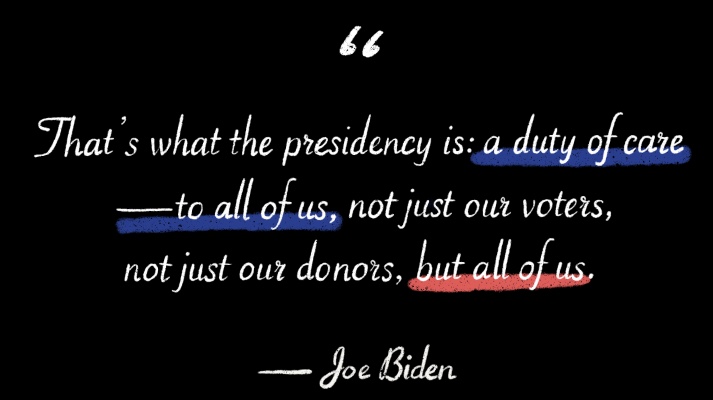
Let’s vote for someone who cares about our veterans. Someone who is the father of a veteran. Vote for Biden on November 3, 2020.
P.S. I felt this post was more important and timely than my usual Tuesday poetry post. The poetry post will be postponed until tomorrow.

Happy Labor Day

Labor Day is celebrated each year on the first Monday in September. It was born amid violence and unrest over oppressive working conditions. For many, Labor Day weekend signals the end of summer and an opportunity to host a barbecue or head to the beach one final time. This year, I pray that the barbecues and beach trips will be done with socially-distancing. I fear it won’t be, and there will be a major spike in COVID-19 cases.
This usually festive national holiday—celebrated every year in the United States and Canada on the same day—has revolutionary origins. Labor Day was originally commemorated through parades, political speeches, and labor union activities but was born amid rising unrest over oppressive working conditions—and a massive strike that threatened to turn violent. It feels strange to celebrate Labor Day when so many are out of a job because of the pandemic. This year, we not only need to celebrate those who keep our country running, but also, we need to remember those who aren’t able to work right now.
By the late 19th century, the Industrial Revolution had made working life miserable for people around the world. In many places, workers labored for at least 12 hours a day six days a week in mines, factories, railroads, and mills. Children were especially exploited as cheap laborers who were less likely to strike. Sweatshops locked workers in small, crowded spaces, and punished them for talking or singing as they worked. Outrage at these conditions galvanized the burgeoning labor movement, which organized strikes and rallies in the 1860s and 1870s. In addition to shorter workdays and safer conditions, workers fought for recognition of their contributions.
In the wake of a printers strike in April 1872—which saw 10,000 people march through the streets of Toronto to appeal for a shorter work week—Canadian cities began to host annual parades in honor of workers. Ten years later, the U.S. followed suit. On September 5, 1882, New York City union leaders organized what is now considered the nation’s first Labor Day parade. Ten thousand workers marched along city streets in an event culminating in a picnic, speeches, fireworks, and dancing. Organizers proclaimed the day “a general holiday for the workingmen of this city.” They continued to host the parade in the years after, and in 1884 the event was fixed on the first Monday in September.
More than a century after the first Labor Day observance, there is still some doubt as to who first proposed the holiday for workers. Some records show that Peter J. McGuire, general secretary of the Brotherhood of Carpenters and Joiners and a co-founder of the American Federation of Labor, was first in suggesting a day to honor those “who from rude nature have delved and carved all the grandeur we behold.” But McGuire’s place in Labor Day history has not gone unchallenged. Many believe that Matthew Maguire, a machinist, not Peter McGuire, founded the holiday. Recent research seems to support the contention that Matthew Maguire, later the secretary of Local 344 of the International Association of Machinists in Paterson, N.J., proposed the holiday in 1882 while serving as secretary of the Central Labor Union in New York. What is clear is that the Central Labor Union adopted a Labor Day proposal and appointed a committee to plan a demonstration and picnic.
New York’s Labor Day parade wasn’t an official holiday. Participants had to take unpaid leave. The movement to declare Labor Day an official holiday began in the late 1880s. In 1887, Oregon became the first state to designate a Labor Day holiday, followed later that year by Colorado, Massachusetts, New Jersey, and New York. Yet the first Monday in September wasn’t the only option for celebrating workers’ rights. An alternative had emerged in 1886: May Day.
May Day, which is now observed in countries across the world, is also called International Workers’ Day, but actually originated in the U.S. On May 1, 1886, in what came to be known as the Haymarket Riot, workers flooded Chicago streets to demand an eight-hour workday. The demonstrations lasted for days, punctuated by scuffles between workers and police. On May 4, after police ordered a crowd to disperse, a bomb detonated. Seven police officers and up to eight civilians were killed. The perpetrator was never identified.
In 1889, an international gathering of socialists in Paris officially declared May Day a holiday honoring workers’ rights. Although it gained steam internationally and was backed by some U.S. labor unions, President Grover Cleveland feared May Day “would become a memorial to the Haymarket radicals.” He pressed state legislatures to select the September date instead. By 1894, about half of U.S. states had adopted Labor Day.
It would take another clash in the American Midwest to make Labor Day a federal holiday. On May 11, 1894, workers at the Pullman Palace Car Company, a railroad car manufacturer near Chicago, went on strike to protest their low wages and 16-hour workdays. On June 22, members of the powerful American Railway Union (ARU) joined their struggle by refusing to move Pullman’s cars from one train to another, thus crippling rail traffic across the country. In Washington, D.C., politicians sought to placate the labor movement. At the time, federal legislation to designate Labor Day a public holiday had been languishing in Congress for 10 months after U.S. Senator James Kyle, a Populist from South Dakota, had introduced it in August 1893. To appease the strikers and their supporters, the Senate quickly passed the bill on June 22, the same day the ARU joined the Pullman strike. The bill passed the House four days later and President Cleveland signed it into law on June 28, 1894. Although the holiday is often described as a conciliatory gesture at a time of crisis, Cleveland was hardly an ally to the Pullman strikers. On July 3, just days after signing the bill, he ordered federal troops to Chicago to end the boycott. Furious strikers began to riot, and on July 7, national guardsmen fired into a mob and killed as many as 30 people.
In spite of its bloody aftermath, the creation of a Labor Day holiday made waves. In Canada, Prime Minister John Thompson also faced mounting pressure from the labor movement. On July 23, 1894, less than a month after the U.S. bill had passed, Thompson followed Cleveland’s lead in designating the first Monday in September an official holiday for workers.
But the holiday did not improve conditions for the people it sought to honor and was little more than lip service from politicians. As the U.S. House Committee on Labor said in its 1894 report on the legislation: “So long as the laboring man can feel that he holds an honorable as well as a useful place in the body politic, so long will he be a loyal and faithful citizen.” It would take another 44 years for the U.S. to set a minimum wage, mandate a shorter workweek, and limit child labor with the 1938 Fair Labor Standards Act.
Whatever the intentions, the creation of a holiday devoted solely to workers was nonetheless an important achievement for the labor movement. “Labor Day marks a new epoch in the annals of human history,” wrote Samuel Gompers, president of the American Federation of Labor, in the New York Times in 1910. “Among all the festive days of the year…there is not one which stands so conspicuously for social advancement of the common people as the first Monday in September.”
On a more personal note, Labor Day is a depressing day for me this year. It falls on the birthday of a friend of mine who died; he was one of the few people I could tell anything to and not be judged for it. That means a lot because I internalize a lot of stuff that I really should talk to friends or family about, but sometimes I just fear that I will be judged for my feelings. When things are really bothering me or even when I have exciting news, I don’t want those things to be trivialized, and I have had that happen a lot. I am also not a perfect person, but I don’t like to be beaten up over my imperfections. My friend never did any of those things, and I miss him so much. It’s been nearly five years, and while things have gotten better, I still miss him tremendously.
This year also marks the first year that my town is not having its annual Labor Day Weekend celebrations. Usually, the town square is filled with carnival-like games and food trucks, and constant live entertainment can be heard all over town. Yet, this year, it is so quiet. The weekend always culminates on Labor Day with a parade. Honestly, there isn’t much to the parade. It’s your average small-town parade, except that the entire Corps of Cadets at my university marches in the parade in their uniforms. If you combine all the other parade groups and floats together, they wouldn’t equal the size of the Corps. It is by far one of the most impressive sights in town as they march in perfect unison down the street. I will miss seeing the Corps this year because they are quarantined on campus in an effort to keep them safe from the pandemic. It will just be a quiet Monday here for me, at least that’s the plan.


Telling Our Stories

Not many of you should become teachers, my brothers, for you know that we who teach will be judged with greater strictness.
– James 3:1
Our brains seem uniquely adapted to making sense of experiences through stories. We tell stories and listen to them not just in our daily conversation, but on the news, in the movies, and in novels. The Bible is filled with stories to help us make sense of the world around us. Most of Christ’s teachings are done using parables. Perhaps even more than the stories we tell in our daily lives, biblical stories and parables invite us to reflect on our most profound experiences whether of God, our families, our community or the terrors and pleasures of life. In other words, these stories aim to make us think about important matters. Rather than telling us how or what to think, they force us to find out what we believe and how to respond. If we’re lucky, we are rewarded with insight and perspective we would otherwise miss engrossed as we usually are in more commonplace matters.
When studied together, biblical stories help join us to others and shape our identity as a community. These sacred stories are less concerned with facts and details than in the “truth” of experience whether of a moral, a spiritual, or a psychological nature. They teach us about the human condition and the many ways in which human beings have encountered God. They teach us how we might best respond to God in our own lives.
The Bible also contains many stories about individuals who face life’s difficulties leaving home and traveling long distances to meet uncertain futures. Some flee to escape the murderous rage of brothers or abuses heaped upon them. Others are abandoned by lovers. They have journeys just as we do. These individuals are recognizably flawed, and we are meant to identify with them. How these characters handle the events of their lives and God’s role in supporting them through such trials are among the stories’ essential lessons for the reader.
As a blogger, I tell stories in each of my posts. Sometimes, the story is about my life; other times, the story is about history. Even the “Picture of the Day” tells a story. It’s the old English adage, “a picture is worth a thousand words.” When it comes to telling our own stories, we must ask ourselves some questions: Why do we tell our story? How do we tell our story? Which story do we tell? And, to whom do we tell? When I write a post about my life, I consider each of these questions. Storytelling can be powerful, but sometimes it’s just entertaining. Other times, I hope, they are thought-provoking. Storytelling can connect us in many ways, and they can teach us about the many truths in life.
The Nigerian author, Chimamanda Ngozi Adichie wrote, “Many stories matter. Stories have been used to dispossess and to malign. But stories can also be used to empower and to humanize. Stories can break the dignity of a person. But stories can also repair that broken dignity.” When we as LGBTQ+ individuals tell our stories truthfully and honestly, we can change people’s attitudes and make the LGBTQ+ community more visible. Through our stories, we show the need not only for the full inclusion of LGBTQ+ people in all aspects of society, but also for the gifts LGBTQ+ people have to offer to ourselves and to others. Sometimes, this includes digging deep to find the courage to come out, and to give ourselves grace and forgiveness for our past mistakes.
American screenwriter, producer, and actress Lena Waithe said, “I’m writing my story so that others might see fragments of themselves.” What she says in her quote is a large part why I try to be as open and honest about my life as possible. Whether I am telling about my own of coming out journey, living as a closeted gay man in the South, my work and teaching career, the journey of my faith, or my struggles with headaches and depression, I tell these stories, so others might realize they are not alone. The most important thing is to be honest in our stories.
So Jesus said to the Jews who had believed him, “If you abide in my word, you are truly my disciples, and you will know the truth, and the truth will set you free.” –John 8:31-32
Telling stories can be a liberating experience for the teller and the hearer. It can provide us with a catharsis which can be valuable in its own right. And yet, if we want to bring about change, catharsis alone is insufficient. They can inspire, empower, and educate us. They can lead us and those around us to action.
How can our stories lead to action? When we begin with the end in mind, our stories are powerful engines for change. When I tell a story, I always wonder: how will my readers respond? When someone hears how I was afraid in the beginning to tell my friends I am gay, will they realize they too should find someone with whom they can truly trust before taking the first step coming out? When writing about how something as simple as going to an LGBTQ+ event by myself can be daunting because of social anxiety, will others empathize and see themselves in that situation? Will they have the courage to go it alone when necessary? When I share how my faith and sexual orientation have informed and enriched my life, does it show other Christians that churches should be inclusive and allow LGBTQ+ people to participate fully? When I tell stories of the incredible support from my straight friends, will others take steps to be vocal and visible allies?
Sadly, the often, overriding, public narrative of LGBTQ+ lives is one of shame, sorrow, hurt, heartache, and injustice. Read most LGBTQ+ novels from before approximately fifteen years ago, and you will see they are all about hardship. The earliest gay fiction always ended badly. The first gay book I ever read was the 1956 novel, Giovanni’s Room, by James Baldwin. While the book is noteworthy for its complex representations of homosexuality and bisexuality, the book ends with David’s mental pictures of Giovanni’s execution and his own guilt. Nowadays, and especially within the male/male romance genre, stories often have a much happier and hopeful ending. With the changes taking place around the world for LGBTQ+ rights, there is hope out there.
A popular counter-narrative to the one of despair is that of normalcy. When people say, “The people in the gay community are just like everyone else; we just happen to be gay,” it’s well-intentioned, but if we’re really honest, it’s incomplete. We are not just like everyone else, and we should value these differences. Equality and unity are not the same as conformity. When we only tell sad stories or stories of normalcy, what stories are we leaving out? How can we relate the real harms we have suffered, and the real injustices which need to be corrected without hosting a pity party? How can we tell stories of our strength and resiliency while noting that our differences are part of what make us beautiful?
Finally, to whom should we tell our stories? We must take our stories to the places where they are not heard. Sharing our stories is inherently a form of activism and must always be a personal decision. No one is required to come out nor share their story. Safety and survival should be the priority. For those of us who can come out and want to, when we take our stories to unpopular places, we bring truth and justice with our mere presence. Where do our stories need to be heard? We can tell our stories at work, in our schools, in organizations we work with, to our friends, our family members, extended family, neighbors, and our blog readers.
How do you share your story?

Moment of Zen: Masked Men






There’s not much sexier right now than a man who cares enought to protect others.



Authors
Recent Comments
noisilycool3bc985058… on Dr. McDreamy Joe on Dr. McDreamy poetrybeautiful3d840… on Dr. McDreamy Joe on Dr. McDreamy noisilycool3bc985058… on Dr. McDreamy Top Posts & Pages


Amazon Associate

As an Amazon Associate I earn from qualifying purchases. So, if you click on a link that takes you to Amazon.com, I may earn a commission.
Trust me, it isn’t much, but every little bit helps.

 Joe
Joe


 The Closet Professor