
Monthly Archives: November 2020
Thanksgiving in the Midst of a Pandemic

As we prepare for Thanksgiving tomorrow, let us look back on what it was like in the United States during the last Thanksgiving celebrated during a pandemic. The Spanish Flu was raging in November 1918. They were coming to the end of the worst of the second wave, and like this year, many government leaders and health officials encouraged people to have small Thanksgiving gatherings. Did they listen? What can the Spanish Flu pandemic teach us for Thanksgiving 2020?
Thanksgiving 1918 took place during a deadly pandemic. The pandemic began in February 1918 (possibly as early as December 1917, at Camp Greene, North Carolina) and lasted until April 1920. It infected 500 million people – about a third of the world’s population at the time – in four successive waves. The first wave lasted from March to July 1918 and was relatively mild. The second wave was much deadlier, beginning in August and receding in December. The third wave started in January 1919 and lasted through July. It was less severe than the second wave but still much more deadly than the initial first wave. The fourth wave hit in January 1920 and continued until April of that year. While it was called the Spanish Flu, it is believed that it mutated to become one of history’s most dangerous pandemics in the United States. Due to World War I, many countries engaged in wartime censorship and suppressed reporting of the pandemic; however, newspapers were allowed to report the epidemic’s effects in neutral Spain, such as the grave illness of King Alfonso XIII, and these stories created a false impression of Spain as especially hard hit.
On Thanksgiving 1918, a thankful nation celebrated with particular enthusiasm, though many Americans, like today, lived under various phases of quarantines and face mask orders. Millions mourned loved ones. And health officials in many cities issued the same holiday warning: Stay home and stay safe. As Thanksgiving rolled around, some cities celebrated the relaxation of flu-related restrictions—partly due to opposition campaigns by retailers, theater owners, unions, mass transportation companies, and other economically stressed stakeholders. Washington, Indianapolis, and Oakland, California, had lifted restrictions days before, and San Francisco was on the brink of lifting its mask mandate. In some cities, Thanksgiving rituals brought a welcome sense of normalcy. Many Americans returned to religious services, performed charity work, and went through with planned football games, parties, and performances.
However, not all was well. On November 27, the day before Thanksgiving, St. Louis reported its highest new daily case count since the epidemic began, and Buffalo, New York, reported its largest jump in daily cases since the lifting of its pandemic ban weeks earlier. Both cities subsequently cracked down on public gatherings, limited the number of passengers on streetcars, and ordered those cars to be ventilated and cleaned. The month before, the pandemic was blamed for killing 11,000 in Philadelphia. The epidemic ultimately claimed an estimated 675,000 American lives, probably a tremendous underestimate since it did not include countless deaths involving preexisting conditions. The pandemic was raging in the fall of 1918. Yet on November 28, 1918, the United States celebrated Thanksgiving. In his annual Thanksgiving proclamation, President Woodrow Wilson didn’t even mention the flu, which he later contracted himself while in France for the WWI Peace Conference.
COVID-19 is casting its long, persistent shadow over Thanksgiving 2020, but for various reasons, the Spanish flu didn’t have a similar effect in 1918 on Thanksgiving or the subsequent holidays. That likely had consequences later. The Great War had ended two and a half weeks earlier. It appeared to be a good reason for giving thanks. In the minds of many Americans, they had a lot for which to be thankful. The war was over, and they were still alive. This year, we have the defeat of Donald Trump for which to celebrate. A dark period in American history is coming to an end, but I digress. In November 1918, the flu continued to kill people worldwide, but it appeared to be in retreat. By Thanksgiving, people were anxious to forget a pandemic that they didn’t understand in the first place.
COVID-19 and the Spanish flu appear to have at least one thing in common: they both induced certain degrees of denial, but in so many other ways, they are as different as Thanksgiving 1918 and Thanksgiving 2020. The most significant contrast is in ferocity. In October 1918, the flu claimed as many lives as 4,500 in a week, and 13,500 in the September-through-December period in Philadelphia, according to the Centers for Disease Control and Prevention. So far, just under 2,000 deaths have been attributed to COVID-19 in the city. In Pennsylvania, nearly two-thirds of coronavirus deaths have occurred in nursing facilities. The Spanish flu’s favored targets were people 20 to 40 years old. In all, the virus infected 25 percent of Americans.
Philadelphia’s infamous Liberty Bond Parade of September 28, 1918, was attended by 200,000 people and featured march king John Philip Sousa. It was a major superspreader event, and deaths spiked within 72 hours. On October 3, Pennsylvania ordered all theaters and saloons closed, and Philadelphia added schools and churches to the list. But it was too late: During the week that ended October 19, 4,500 were dead. By the first week in November, the flu virus seemed to be winding down, and even though massive crowds gathered to celebrate the war-ending Armistice on November 11, the aftereffects were not as dire, but the number of cases did rise. In the week that ended November 23, the city did report 103 deaths. That did not stop Thanksgiving.
Just as cases rose after Armistice Day celebrations, they rose again after Thanksgiving. Dallas, Minneapolis, San Antonio, San Francisco, and Seattle saw surges. Omaha relaunched a public health campaign. Parts of Cleveland and its suburbs closed schools and enacted influenza bans in early December. On December 6, the St. Paul Daily News announced that more than 40 Minneapolis schools were closed because of the flu, below the headline “SANTA CLAUS IS DOWN WITH THE FLU.” Health officials asked “moving picture show” managers to exclude children, closed Sunday schools, and ordered department stores to dispense with “Santa Claus programs.” On Christmas Eve, health officials in Nebraska made influenza a mandatory quarantine disease, and fines ranged from $15 to $100 for violations. Approximately 1,000 homes in Omaha were placarded, meaning their occupants could not leave for at least four days after the fever had subsided. By January, influenza fully engulfed the United States in the third wave of the pandemic. The virus spread throughout the winter and spring, killing thousands more.
During the war, sustaining morale was seen as the most important goal of the government, and that “no bad news allowed” spirit lingered after the war. People had lived through rationing and had watched loved ones die in front of their eyes. Every day already was a hardship experience, and people were reeling on an everyday basis. In short, Americans were ready for a break and were thinking they could finally step back from the height of scarcities. The New York Sunwrote of families welcoming returning military personnel they didn’t know into their homes for dinner.
The flu, however, did not go away. It experienced a resurgence in December, and the Centers for Disease Control and Prevention reported that in the first six months of 1919, “influenza” deaths were matching the annual totals for each of 1915, 1916, and 1917. Experts believe that it would not have lasted as long as it did or been as deadly if people had been keeping to themselves. It would be impossible to precisely know what effects mitigation efforts would have had on the flu’s spread. Still, we can see today that in areas where governments imposed greater mitigation efforts, COVID-19 was better contained, and infection rates were lower. Like today, in 1918, the nation had no organized response, leaving it to states and local governments. Some cities in the West did have mask ordinances, as did Atlanta. But when he shut down theaters and saloons, the Pennsylvania health commissioner did not address masks or physical distancing, mentioning only the importance of getting fresh air and exercise.
The response or lack thereof wasn’t surprising since people were apt to view what was happening as a “flu,” with which they were familiar, not some exotic plague. While some Americans don’t know anyone who has been affected by COVID-19, that is becoming a rarer occurrence. COVID has had such an inordinate impact on people of color, the marginalized, the elderly, and Americans do not want to acknowledge the vulnerable in our society. That’s part of the reason Donald Trump was so successful with his followers. Like him, they do not care about others and refuse to wear masks or social distance even though it has been proven effective in preventing the mask wearer from spreading the virus to someone else.
Given that so many fatalities are occurring among people with preexisting conditions, we need to look at what that means for the health of the United States. We would be wise now to turn our attention to fighting the likes of diabetes, hypertension, and obesity. The state of American healthcare has proven to be an issue during this pandemic. Rural areas with no hospitals and few doctors in the county are suffering greatly. Poverty and poor health conditions are a significant problem in this country. Rather than merely bracing for the next pandemic, we have numerous public health priorities that need to be addressed.
We do have things to be thankful for this Thanksgiving. Donald Trump and many of his cronies will be leaving office on January 20. We can still hold out hope that John Ossoff and Rev. Raphael Warnock will win the January 5 runoffs in Georgia and give Democrats control of the Senate. If that happens, we will see the death nail in the coffin of Trumpism, at least for two years. Also, if you are reading this, it means you are alive. We will get through this pandemic, but we need to remain vigilant. That means we need to avoid unnecessary travel and gathering. I know it is disappointing for many Americans, but we can get through this so that we can celebrate many, many more Thanksgivings. The better part of valor is to stay home and stay safe so that we can have more to be thankful for next Thanksgiving.

From Nature Poem
from Nature Poem
By Tommy Pico
Let’s say I want to get a nose piercing.
Let’s say I’m 30 years old.
Let’s say nothing big and bull-like, nothing too attractive, nothing chandeliering
from septum to lobe. Just a simple, little stud nothing more.
Is it normal to get a nose ring at 30?
Normal is defined not by what it is, but what surrounds it. Meaning it could literally be
anything, and is nothing.
Is it normal to get a nose ring at 30?
No, it’s not.
Am I just afraid of death?
Yes, probably.
Is there nothing more normal than fearing death?
It is very natural to fear death.
Should I get a nose ring?
It would look very cute on you
November is National Native American Heritage Month. It’s a time to recognize the many sacrifices, contributions, and achievements of Native American people, as well as celebrate their rich and vibrant cultures. In 1990, President George H.W. Bush approved a joint resolution designating November as “National American Indian Heritage Month.” Although the name eventually changed, it started an annual tradition upheld in communities across the United States.
The US holds in trust 56.2 million acres of land for various Native American tribes and individuals, according to the US Department of Indian Affairs. There are approximately 326 reservations. These reservations are not tourist attractions. Many are the remnants of native tribes’ lands, while others were created by the federal government for Native Americans who were forcibly removed from their lands. They are homes for tribes and communities; it’s where many live, work, and raise their families.
The Thanksgiving story of pilgrims and Native Americans sharing a friendly meal will be reenacted and celebrated across the country on November 26, and Friday, November 27 is Native American Heritage Day. However, many Native Americans actually consider Thanksgiving a “Day of Mourning,” pointing out the story overlooks how the introduction of European settlers spelled tragedy for indigenous communities. For this reason, some Native American groups and their allies are calling on Americans to “decolonize” their Thanksgiving celebrations. Some ways of doing this include putting away Native American decorations and tropes, introducing native dishes to the dinner table, and engaging in conversations about Native American history with dinner guests.
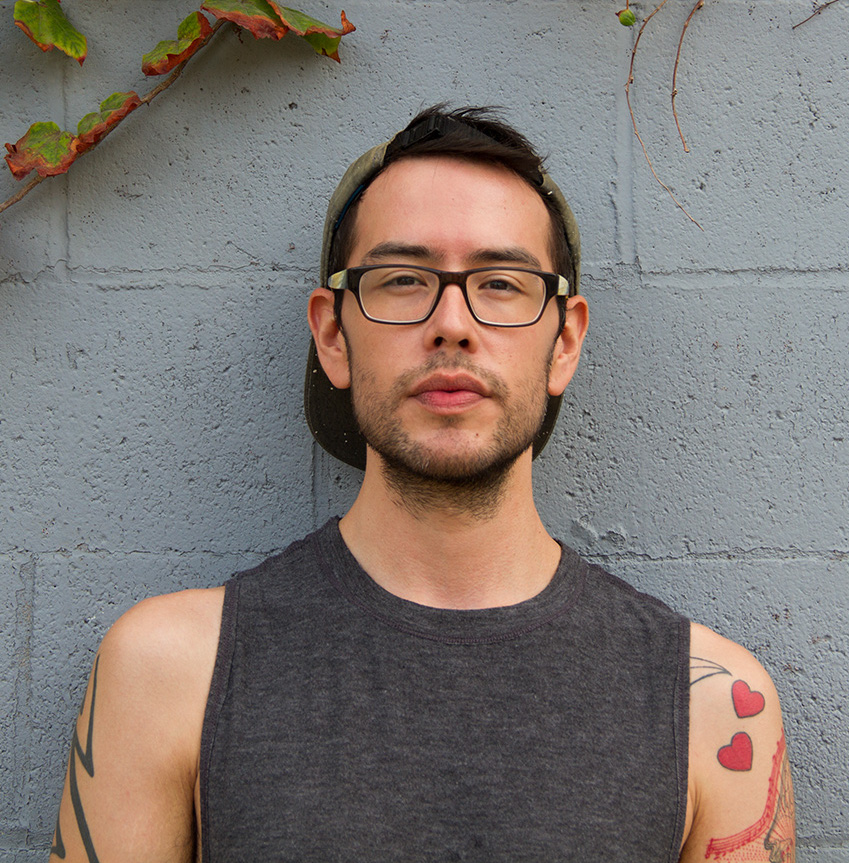
I usually post a poem about Thanksgiving, but this year, I thought I would honor Native Americans by posting a poem by a gay Native American. The poem above is by Tommy “Teebs” Pico. Many of Pico’s poems are centered on a character called Teebs, a queer Native American poet born on a reservation who left his home for school, much like the author himself. “I wasn’t raised in a world that necessarily uplifts queer indigenous perspectives,” Pico said. “So in order to get people to pay attention, I knew that I was going to have to be very loud and very funny or sharp or something.”
He is the author of many books published in the last few years, all of which are sort of a mix between poetry, novel-in-verse, and very slutty Tumblr posts. He is an indigenous American poet from the Kumeyaay Nation. The Kumeyaay, also known as Tipai-Ipai, are a tribe of Indigenous peoples of the Americas who live at the northern border of Baja California in Mexico and the southern border of California. Pico grew up on the Viejas reservation located in San Diego County, California, where he got his start writing comics at age 5, and as a teenager created zines and wrote poetry. Pico originally left the Viejas Indian reservation to study pre-med at Sarah Lawrence, hoping to return to the reservation to address some of the health problems he grew up surrounded by. Instead, he spent his twenties pioneering the artist collective Birdsong, making zines, publishing his poetry on Tumblr, and honing his performance skills through “exposure therapy.”
His poems are irreverent queer anthems, and in 2018, he received the $50,000 Whiting Award prize (just one of many things his work has won) for a book-length poem that contained content about Grindr, rimjobs, and Beyoncé. As you can tell from the excerpt from his second book of poems, Nature Poem, he has an interesting style. Nature Poem was the winner of a 2018 American Book Award and a finalist for the 2018 Lambda Literary Award. As you might have guessed, as an Indigenous American, his relationship with Thanksgiving is not too sweet. In 2015, Pico wrote an essay/poem for Literary Hub titled, “How to Pass the Time on a Holiday Commemorating the Destruction of Your Ancestors,” which is definitely worth reading.

Americans Are Suffering

I have not spoken much about politics since Joe Biden won the election. I had hoped by now that Republican leaders would have stepped up to congratulate Biden on his win publicly. Yet, few have done so, and America is suffering because of it. They know, Trump knows, we all know that it’s over. Yes, until the Electoral College officially casts their votes and Congress certifies them, there will continue to be a cloud of uneasiness that one of Trump’s schemes will work, and that is only one of the problems at hand. The transition to a Biden administration should be going smoothly; instead, petty bureaucrats are holding up the transition process under some idiotic notion of loyalty to Donald Trump. What Trumpists do not seem to understand is that he cares nothing about them. Trump cares only for himself and no one else, including his family. As Trump fights the election results, the country is in a perilous position. The economy, health, and diplomatic relations of the United States are hanging onto the side of a cliff, trying desperately to hold on until January 20, but will the damage be too great by then? It may be, and that my greatest fear.
No matter what he says in public, Trump obviously knows he’s lost. Why do I say this? It’s because he is punishing the people of the United States for his loss. Trump is seeking vengeance against those he believes have betrayed him, which happens to be the American people. It isn’t just the more than 82.5 million people who voted against him (nearly 80 million of those voted for Joe Biden). I suspect he even blames the 73 million who voted for him because he believes they did not do enough to get him reelected. After the election, Trump claimed that he would push through a new stimulus package, but we all knew that came with the unspoken caveat that it was only if he won. Now that he has lost, there will be no stimulus package before the end of his term. Talks with congressional leaders to arrive at a coronavirus stimulus deal, which were active in the run-up to the election, have gone dormant—with no signs, they will begin again despite the clear need for more money to be pumped into the economy to withstand the ongoing effects of COVID-19 on the country. Trump will also not be extending student loan deferments. I received an email yesterday that said those deferments were coming to an end as of January 1, 2021.
Black Friday and Christmas shopping keeps many businesses in the black each year. How can that be the case this year when people barely have enough to pay for food or rent? As Dolly Parton sang, “Lord, it’s like a hard candy Christmas, I’m barely getting through tomorrow.” Unlike the song, though, we won’t “be just fine and dandy.” Furthermore, not many of us will be able to say, “still, I won’t let sorrow get me way down.” The families of over a quarter-million people will be without loved ones this holiday season. I filled my Amazon cart with the gifts for my family, and UPS will play Santa Claus for me this year because I will let Amazon wrap and ship those gifts to my family. I won’t be going home. I doubt I will even decorate for Christmas here. I rarely do since I am not usually here for Christmas, but even though I will be alone in Vermont this year, I just feel it is a waste of money to decorate just for me. I still think about the millions of Americans wondering how they will buy their children something for Christmas this year. It is difficult for many of them during a good year, but this is not a good year.
If the problems with the economy weren’t bad enough, the pandemic is surging like never before. Over 200,000 diagnosed cases a day. The surging coronavirus is taking an increasingly dire toll across the U.S. just as a vaccine appears close at hand. The nation has recorded more than 1,500 fatalities daily since Tuesday, death tolls not seen since May. On Thursday, the U.S. recorded more than 2,000 deaths. It is the highest level since the devastating spring in and around New York City. And what is the federal government doing about it? Donald Trump is playing golf at his club in Virginia. He continues to tweet in an effort to push any number of disproven or entirely fact-free conspiracy theories about the election. He is trying to push controversial military decisions, including planning to withdraw American troops in Afghanistan and Iraq, and he has inquired about options to strike at Iran’s nuclear capabilities before he leaves office. He is also firing critical people in the government. He removed Secretary of Defense Mark Esper shortly after the election and has carried out a series of removals of civilian staff at the various government agencies. He is also rumored to be weighing the possibility of firing CIA Director Gina Haspel and has openly speculated about removing FBI Director Christopher Wray.
Trump continues to exact vengeance on those who oppose him. Over 82.5 million people opposed him. Even the Constitution opposes him at this point, which is why he will proceed over the next sixty days with a policy of destruction aimed at the people and institutions of the United States. Like Sherman’s March to the Sea in the Civil War, Trump will follow a “scorched earth” policy, destroying the United States’ health, infrastructure, and economy. He hopes this policy will break the back of the American people and its democracy that he believes turned its back on him, just as Sherman broke the back of the Confederacy and helped lead to its eventual surrender. If Trump allows things to deteriorate bad enough, he believes it will cause the Biden administration to fail. Republicans will immediately begin blaming Biden for all of the failures in the United States caused by Trump. He thinks this will allow him to remain relevant and rise again to be elected in 2024, which is likely if Republicans continue to humor his every whim. Biden has a new reconstruction of the United States to handle. He will be inaugurated and take over a divided, sick, and economically (and mentally) depressed nation. I hope, and believe, Biden will do better than the Reconstruction government from 1865-1877, and unlike in 1877 when the South enacted Jim Crow and racial segregation and inequality, the nation won’t be again abandoned to the wolves over a political compromise that undermined democracy like the Compromise of 1877 which ended Reconstruction.


Be Thankful and Be Safe

Do not be anxious about anything, but in everything by prayer and supplication with thanksgiving, let your requests be made known to God. And the peace of God, which surpasses all understanding, will guard your hearts and your minds in Christ Jesus.
—Philippians 4:6-7
This year won’t be my first Thanksgiving without seeing my family. Since I moved to Vermont, I have chosen to go home for Christmas and not Thanksgiving. It’s always been impossible to afford both. However, this year, I won’t be going home for Christmas either. The pandemic is just too bad in Alabama, and I don’t want to take the chance of getting the virus and spreading it to my parents. I think this will be the second time that I have spent Thanksgiving on my own. Since I moved to Vermont, I have spent most years having Thanksgiving with friends or coworkers. Last year, I spent Thanksgiving and my birthday with my friend Susan in Manhattan. It was one of my most memorable Thanksgivings and birthdays. For once, I got to spend those two days with someone who loves me unconditionally for who I am. With my family, it’s always on the condition that I don’t speak about being gay.
This year, the United States (and to a certain extent, the whole world) is in the middle of what disaster-preparedness experts once believed would be a worst-case scenario. A highly contagious virus with unpredictable symptoms (sometimes mild, sometimes fatal) is raging worse than ever in the United States. The curve is not flat, nor is there even a curve. It’s a line that is starting to point straight upward. More than 1,000 Americans are dying every day, on average. Soon that number will likely hit 2,000. Over one-quarter of a million people have died. That number may rise to over 300,000 by Christmas, or more if people gather together from multiple households over Thanksgiving, which will see the United States have thousands of super-spreader events. It doesn’t look like there is a lot to be thankful for this year. However, 1 Chronicles 16:34 tells us, “Give thanks to the Lord, for he is good; his love endures forever.”
I know that few things sound nicer for many of us than sitting around eating with friends and family after so much isolation and worry over this seemingly never-ending year. But from an infectious-disease standpoint, the guidelines at this moment are stark and frank:
- Limit activities to those essential to life.
- Don’t gather socially.
- Don’t travel.
Many doctors, public-health experts, and some civic leaders (though not enough) have begged us in recent weeks to follow these guidelines. They have asked us not to celebrate Thanksgiving in anything resembling the modern American way—with multigenerational gatherings that involve travel and prolonged conversations over an indoor meal. Canada celebrated its Thanksgiving on October 12. In the days and weeks following Canada’s Thanksgiving, coronavirus case numbers immediately started to rise. From November 12-19, Canada reported three of its five highest single-day totals in the entire year, all within the span of a week. Canada’s COVID-19 surge since after Thanksgiving is a warning for Americans.
In any other administration, the Centers for Disease Control and Prevention would issue guidelines to Americans. In a coordinated effort with the president and coronavirus task force to advise and coordinate with governors, mayors, and citizens. Instead, there is a messaging void. The president has spent his time golfing and tweeting about the election being stolen from him, including saying dead people voted when the families of over 250,000 people are mourning the death of loved ones from a virus he has done nothing to control. He has effectively quit being the president and at the same time trying to hang on to the false belief that he won the election. He has broken with his task force and refused to concede or transfer power to incoming experts, leaving them without vital information. The CDC has a barely adequate page of new “considerations” for holiday celebrations that the agency’s officials have neither publicly announced nor explained in news conferences.
If people don’t stay home and have Thanksgiving with only the members of their households, this virus will spread exponentially, and thousands more will die. The truth is that we will likely need to be more vigilant with each passing day this winter, not less. The virus knows no difference between holidays and workdays. Our default should be to treat Thanksgiving as a day when the health guidelines are no different from any other day. As the prevalence of the virus increases, things that were previously low risk become more dangerous. This is why it’s so important to follow the directives of not gathering indoors or traveling. It’s never been advisable during the pandemic to socialize with people outside your bubble who can’t manage to wear masks and keep their distance, but it’s especially ill-advised now.
No family member should put pressure on others to gather. Many people will likely join reluctantly because they do not want to be the ones who are no fun or to keep others in the family from acting indignant or insulted. That’s what my parents are doing by going to my sister’s in-laws for Thanksgiving. Just simply say no. Say that you are thankful they are currently safe and healthy, and you would like to keep it that way. If you don’t, it might be the last Thanksgiving you do see your family. Remember, the risk of such gatherings is not limited to those who gather. Each transmission of the virus can possibly spread to dozens more, and those dozens will spread it to dozens more, and the spread goes on and on. We are all in this together, and we can’t forget that.
Take the opportunity to think about what you love most about the day. Focus on how to re-create that, and even build on it. Maybe learn to cook one of the dishes that someone else usually brings to dinner. Think of the people you actually look forward to seeing, and call them. Think of the people you don’t look forward to seeing, and don’t call them. Maybe most important, this year is an opportunity to bond over the moral certainty of the moment. At its core, Thanksgiving is a day of giving thanks for the blessings of the past year. While there may not be a lot to be thankful for when it comes to 2020, 1 Timothy 4:4-5 tells us, “For everything God created is good, and nothing is to be rejected if it is received with thanksgiving, because it is consecrated by the word of God and prayer.” This year, families, friends, and communities can work together to achieve something meaningful and good: ending the pandemic. All you’re asked to do is eat food at home.
Whatever you do, have hope that next Thanksgiving, if the news of an effective vaccine proves as promising as it sounds, we can go back to whatever traditions draw people to Thanksgiving. We can hope and pray that this is a one-time deal. Next year will be an opportunity to be thankful for the fundamentals of the holiday that we tend to take for granted in normal years.

Moment of Zen: Coffee or Tea?


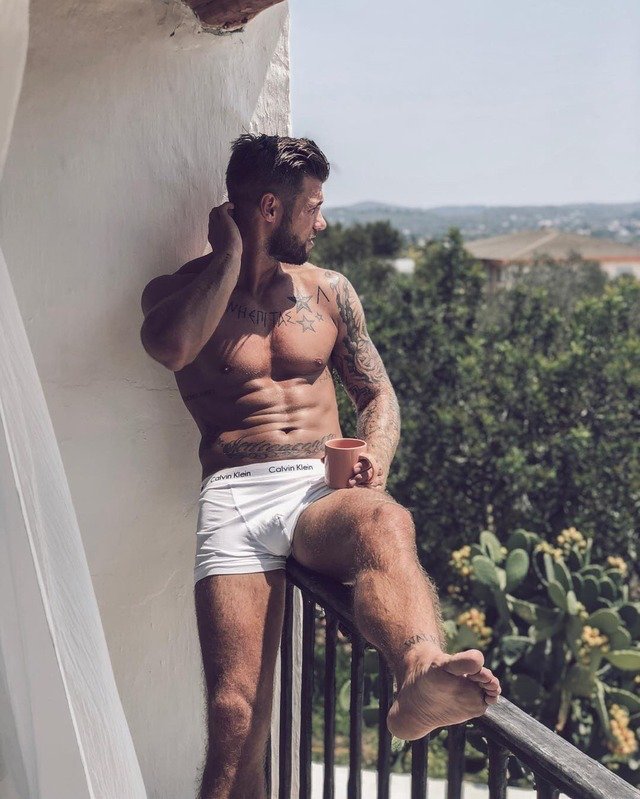

In the mornings, I tend to prefer a hot cup of tea, but sometimes I drink a cup of coffee. I’m not sure why I prefer tea in the mornings, but I’ve always liked hot tea. For years, I’ve gone through periods of drinking tea in the mornings, and then I will go back to coffee for a while. Which do you prefer as a wake me up in the morning: coffee or tea?


Authors
Recent Comments
noisilycool3bc985058… on Pic of the Day Joe on Pic of the Day vandycolt on Pic of the Day furbirdsqueerly on Pic of the Day Joe on Pic of the Day Top Posts & Pages



Amazon Associate

As an Amazon Associate I earn from qualifying purchases. So, if you click on a link that takes you to Amazon.com, I may earn a commission.
Trust me, it isn’t much, but every little bit helps.

 Joe
Joe


 The Closet Professor