


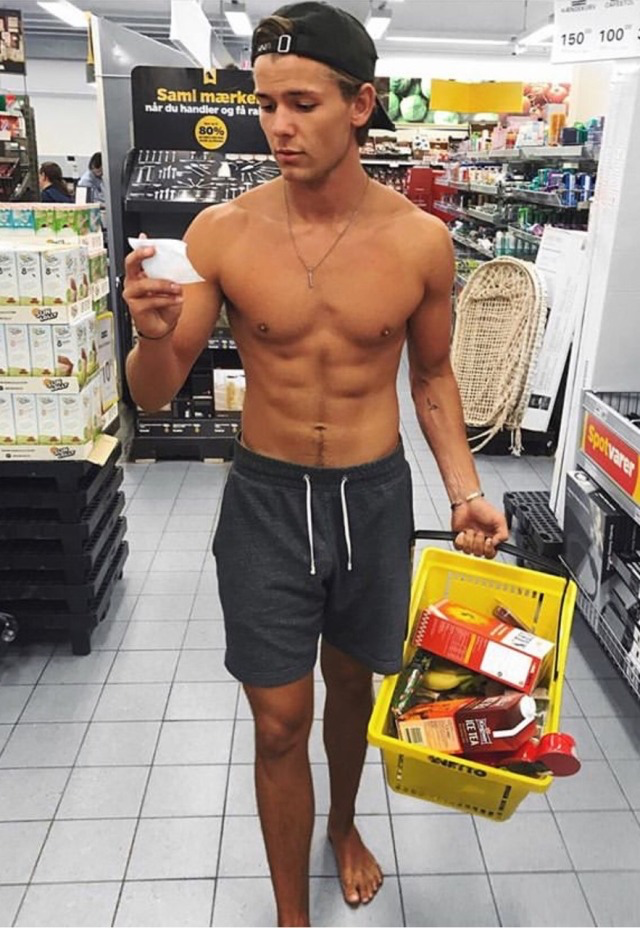
Sometimes, especially during the coldest days of winter, I miss the sugary white sands and emerald waters of the beaches on Florida’s Gulf Coast. I especially miss going into a store to pick up a few things and see similar sights to the one above: a hot guy in swim trunks and barefoot doing a little shopping before heading back to the beach. I also used to love sitting on a blanket at the beach and reading a good book. Beach reads were always the best. The only problem with the beach is that you can easily get sunburned if you’re not paying close attention, and there is no way to leave the beach without having sand in uncomfortable places. Not to mention, on a hot summer day, the sand could literally burn your bare feet. Also, I never much cared for swimming in the ocean. It was okay once yo got past the waves, but for the most part, I just loved the scenery. More so than sitting on a blanket on the beach, I preferred sitting on the balcony of a hotel room looking out over the beach and watching all the hot guys. There was always a cute lifeguard or cabana boy to look at.

I remember one winter, my parents and I went down to Navarre Beach, which is about halfway between Pensacola and Fort Walton Beach. (All of these places are in Florida, of course.) I don’t remember where my sister was, but she was not with us. We stayed at a nice hotel on the beach, and I think it’s one of the only times we went the whole trip without arguing about something. I think this was just before Christmas and we did some Christmas shopping at the outlet stores in Sandestin. My fondest memory though was going to this little restaurant near our hotel. It was winter, and we mostly had the restaurant to ourselves. The food was good, but what made it so wonderful is that we laughed, talked, and had a great time having dinner that night. There weren’t many times like that. My father could be mean to my mother, and he and I often argued. My mother and I always got along much better than my father and I. However, this night, there was no fussing or fighting. I don’t remember what we were laughing so much about, but it was a very happy memory.


Last night, I was so sleepy all evening. I often write my posts just before I go to bed, which is what I was about to do when I wrote this; however, I was so sleepy that this is all I got written before my tiredness completely took me over.
Peanuts creator Charles M. Schulz said, “Learn from yesterday, live for today, look to tomorrow, rest this afternoon.” I guess I should have followed his advice and rested yesterday afternoon. Although, I have to agree with Ernest Hemingway when he said, “I love sleep. My life has the tendency to fall apart when I’m awake, you know?” Homer, though, may have said exactly the right thing for this post, “There is a time for many words, and there is also a time for sleep.”

In 2018, American figure skater Adam Rippon became the first openly gay man to qualify for the Olympics. No openly gay figure skaters competed in the 2014 Olympics in Sochi, and there were only three, including Rippon at the 2018 PyeongChang Olympics. At the 2022 Winter Olympics in Beijing, there are a record eight out gay men competing in figure skating. This increase is due to the greater level of acceptance in society and sports, according to skaters who have come out, with social media being a big driver. Jason Brown, who competes in singles, is Team USA’s only gay figure skater competing this year, though Team USA’s pairs skater Timothy LeDuc is the first non-binary skater to compete. LeDuc is a pairs figure skater, who competes with their teammate Ashley Cain-Gribble.

France has Kevin Aymoz completing in singles and Guillaume Cizeron in pairs. Canada also has two out gay men competing this year: pairs skater Eric Radford, who skates with Vanessa James, and Paul Poirier, who skates with Piper Gilles in ice dancing. Also in ice dancing, Lewis Gibson of Great Britain skates with Lilah Fear, and Simon Proulx Sénécal of Armenia skates with Tina Garabedian. Finally, Filippo Ambrosini of Italy skates with Rebecca Ghilard in pairs figure skating.
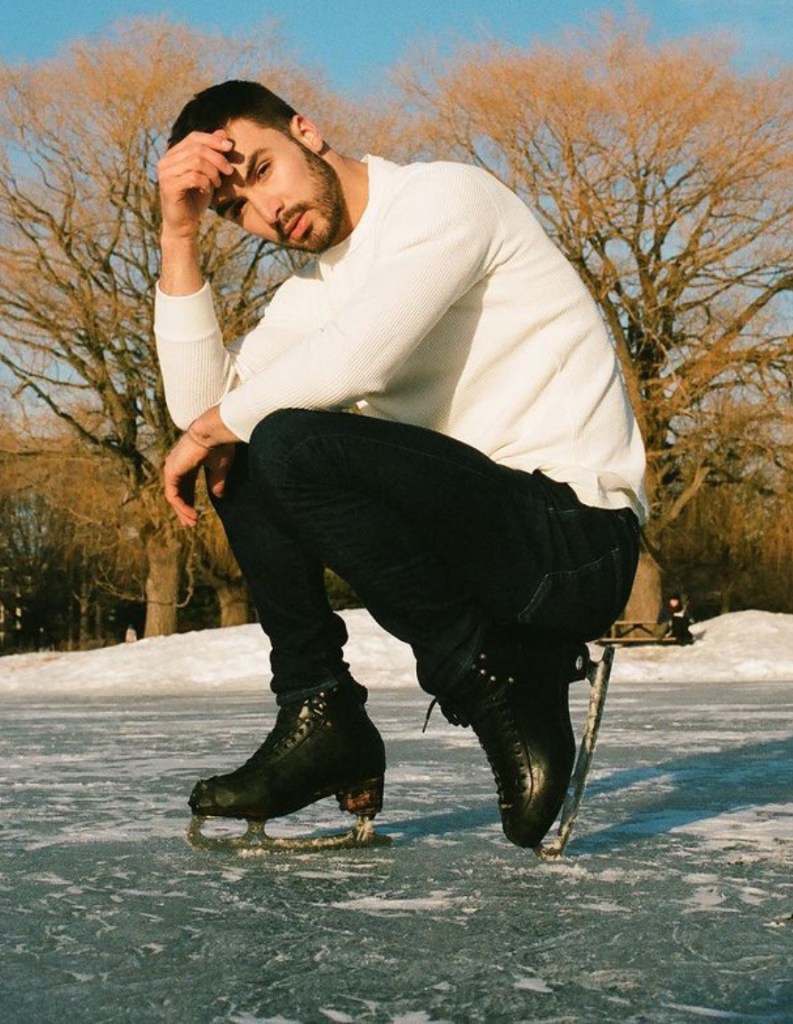
But what accounts for this record number of out gay men in the Beijing Olympics? Chad Conley, a Canadian junior nationals silver medalist who now coaches and is gay, was asked what accounted for the increase in the number of out male skaters. He said, “I do not think there is a change in the numbers of gay men in figure skating. In fact, I find there are more straight males finding success in figure skating.” Conley said that skaters feel more open about coming out because of the chance to make money on tour as opposed to being blackballed from the sport. “What is easier than it was even 15 years ago is that skaters who are open about their sexual orientation are now able to get postseason contracts with ‘Stars on Ice’ and more commercial sponsorships,” he said. “This is considered a recent evolution.”
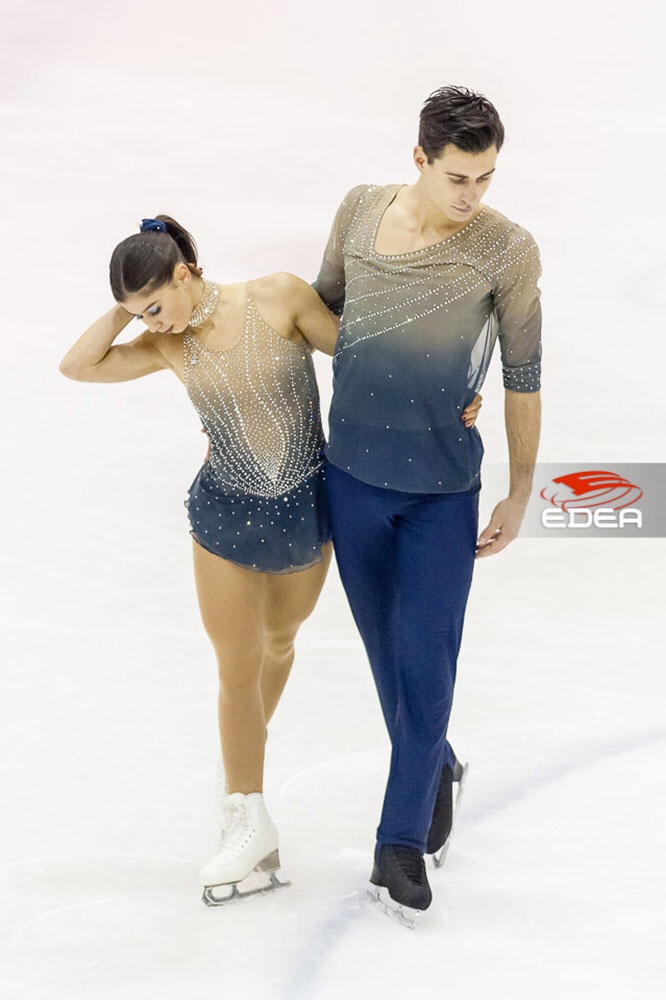
Filippo Ambrosini never had a public coming out moment, but his Instagram account has numerous photos of him and his male partner, making it seemingly obvious that he is LGBTQ. When asked for confirmation by Outsports, Ambrosini said, “Yes, I identify as gay and I’m out.” The same goes for ice dancer Guillaume Cizeron of France, who came out in 2020 by posting a photo of him and his boyfriend. In response to the Instagram post, Cizeron said, “I would not consider myself in the closet before posting this, so I don’t really consider it coming out. Even though I have never spoken publicly about my sexual orientation, I am one of those who think that it is not something that [people] should have to do. Straight people don’t come out. … I still hesitated a bit before publishing. Because I’m not in the habit of revealing really intimate things. I don’t know what got into me, I said to myself, ‘What do I have to lose?’”
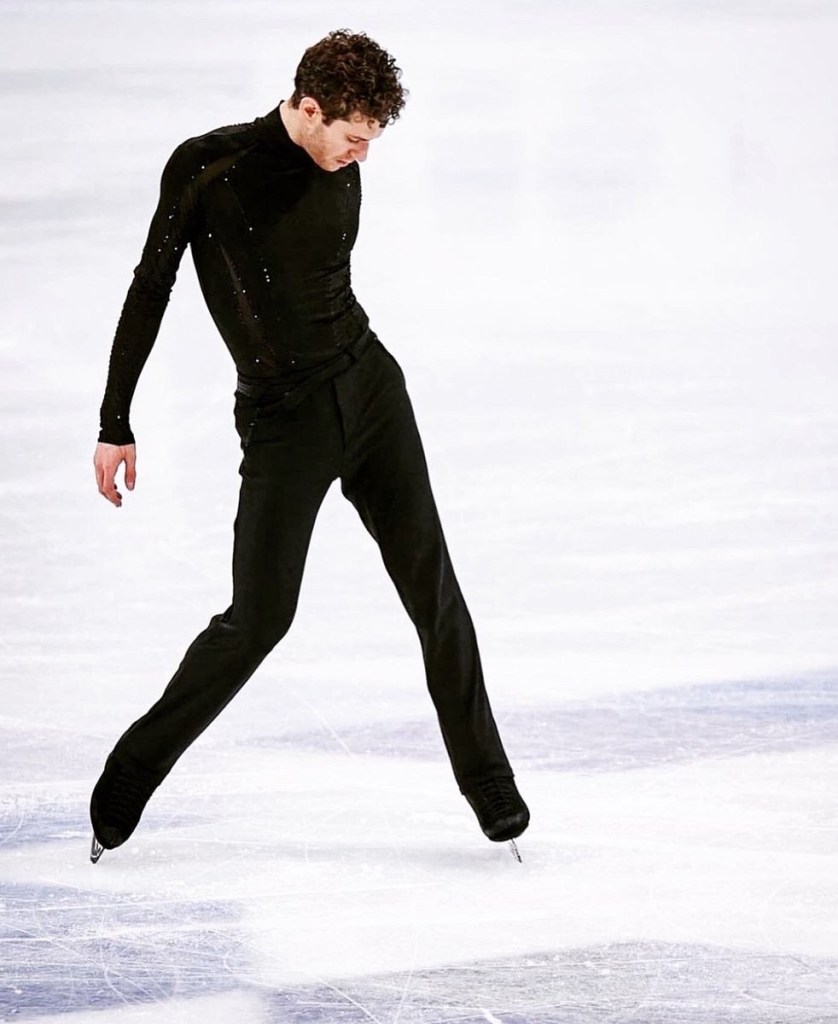
When American singles skater Jason Brown came out during Pride Month last June, he talked about the diversity he experienced in skating. “I’ve grown up surrounded by beautiful, creative, strong, proud, successful and supportive LGBTQ+ role models,” Brown said on Instagram. “Whether it be family members, coaches, skaters, teachers, friends or others I’ve had the privilege of crossing paths with, my perception of what’s it like to be LGBTQ+ was far from one-dimensional. I’ve always found it impossible and truthfully dangerous to paint or stereotype any one group with a singular brushstroke. The diversity of people I’ve met along my journey has shown me that everyone is so individually themselves. No experience or personality is the same, simply people finding their identity, their voice and owning their truths and their own unique ways.”
Despite the record number of out male skaters, there are still issues, especially with coaches and judges from the former Soviet Union, where skating — and homophobia — has a long tradition. In October, Alexander Vedenin, a former international judge, said that Cizeron was “cold” in his performances with his ice dance partner Gabriella Papadakis because he is gay. “The French skate with class, but are cold,” Vedenin said. “The partner [Cizeron] does not have a traditional orientation and he cannot hide it.” Cizeron responded to Vedenin’s comments, calling them “a pathetic attempt to harm us.” On Instagram, Cizeron said, “Don’t let ignorant people tell you how much of a man or a woman you are. What makes you a man, a woman, a non-binary or anything in between, has nothing to do with your sexual orientation, and even less with your abilities, your value, your skills, or the level or respect that you deserve.”

In addition, 1994 Olympic silver medalist Alexander Zhulin of Russia insulted Timothy LeDuc, the non-binary American pairs skater, and then refused to apologize. LeDuc has been amazing in telling their historic story to inspire others, but the concern is that there could be homophobic judges who share the disgusting views of those two Russians. Cizeron and Papadakis won the silver at the 2018 Winter Games in South Korea and have won first at the worlds, so they are serious gold medal contenders.
“Until proper sanctions are put in place when comments from regulated officials — coaches and judges — make disrespectful comments, then our sport will not be completely safe,” Conley said.
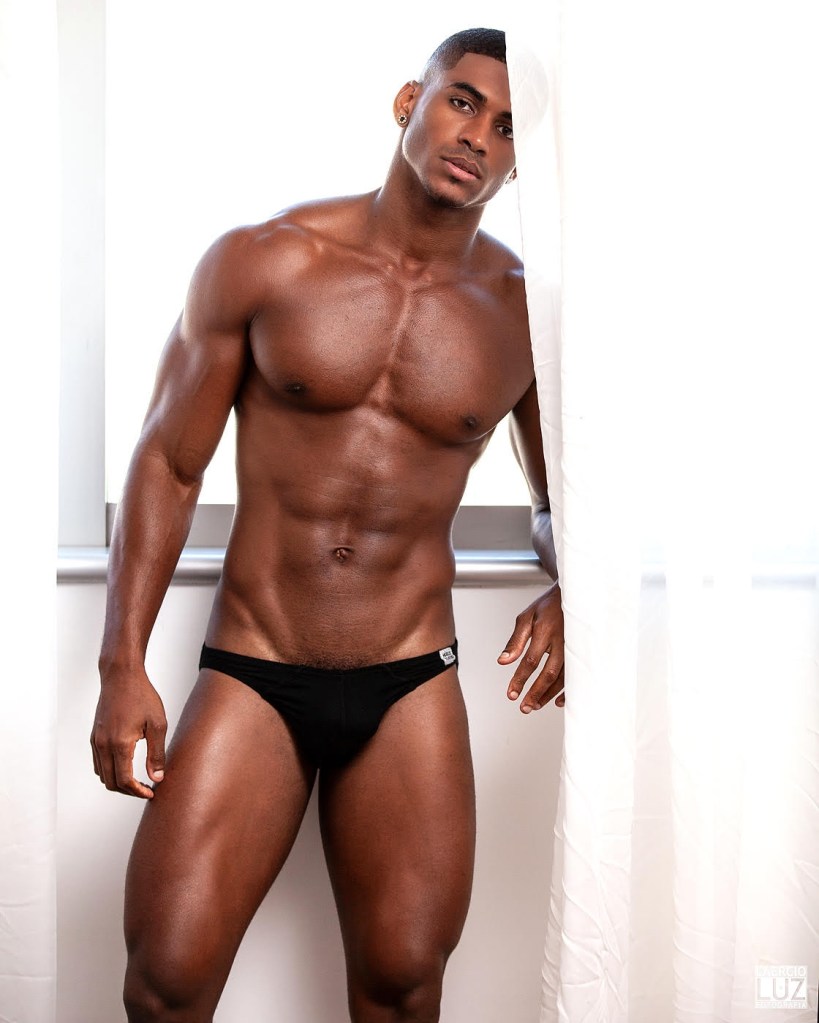
To America
By James Weldon Johnson (1871-1938)
How would you have us, as we are?
Or sinking ‘neath the load we bear?
Our eyes fixed forward on a star?
Or gazing empty at despair?
Rising or falling? Men or things?
With dragging pace or footsteps fleet?
Strong, willing sinews in your wings?
Or tightening chains about your feet?
Calling Dreams
By Georgia Douglas Johnson (1880-1966)
The right to make my dreams come true,
I ask, nay, I demand of life,
Nor shall fate’s deadly contraband
Impede my steps, nor countermand;
Too long my heart against the ground
Has beat the dusty years around,
And now at length I rise! I wake!
And stride into the morning break!
Each February, National Black History Month serves as both a celebration and a powerful reminder that Black history is American history, Black culture is American culture, and Black stories are essential to the ongoing story of America — our faults, our struggles, our progress, and our aspirations. Shining a light on Black history today is as important to understanding ourselves and growing stronger as a Nation as it has ever been. That is why it is essential that we take time to celebrate the immeasurable contributions of Black Americans, honor the legacies and achievements of generations past, reckon with centuries of injustice, and confront those injustices that still fester today.
—From “A Proclamation on National Black History Month, 2022,” Joseph R. Biden Jr.
As I read these poems, it invokes images of the hardships and discrimination faced by the African American community, but I also can’t help to also read them as a gay man. In “To America,” James Weldon Johnson writes, “How would you have us, as we are?” The world has treated the LGBTQ+ community, especially gay men (and even more so, black gay men), as wrong. They want us to be something that we are not. We have faced discrimination and hardships, not in the same way as African Americans, mainly because we can often hide our queerness, but minorities of color are not able to do so. While there were certainly gay African American slaves in antebellum America, gay men, no matter their race, have faced the fear of imprisonment or “tightening chains about” their feet for “lewd behavior and crimes against nature.” One famous example is Oscar Wilde who was imprisoned for two years of hard labor for “sodomy and gross indecency” in 1895. Georgia Douglas Johnson begins “Calling Dreams” with the lines: “The right to make my dreams come true, / I ask, nay, I demand of life.” Isn’t this what all LGBTQ+ individuals, no matter their race, want?
Gay African Americans have made “immeasurable contributions” to the history of the United States. The Harlem Renaissance of the 1920s and 1930s was as much about the burden of representation and sexual dissidence. There were several queer men who made up the core of the Harlem Renaissance: Countée Cullen, whose ” virtues are many; his vices unheard of”; Langston Hughes, who was a “true people’s poet”; Claude McKay was the “enfant terrible of the Negro Renaissance”; and Richard Bruce Nugent, who is called “Gay Rebel of the Harlem Renaissance.” However, the Harlem Renaissance did not have monopoly on black queer trailblazers. Bayard Rustin organized the 1963 March on Washington, where Martin Luther King, Jr. gave his “I Have A Dream Speech.” The writer and social critic, Baldwin is perhaps best known for his 1955 collection of essays, “Notes of a Native Son,” and his groundbreaking 1956 novel, Giovanni’s Room,which depicts themes of homosexuality and bisexuality. (Giovanni’s Room was the first gay work of fiction I ever read.)
Queer black representation had not been limited to men either. Audre Lorde, a self-described “Black, lesbian, feminist, mother, poet, warrior,” made lasting contributions in the fields of feminist theory, critical race studies and queer theory through her pedagogy and writing. Barbara Jordan, a civil rights leader and attorney, became the first African American elected to the Texas Senate in 1966, and the first woman and first African American elected to Congress from Texas in 1972. Marsha P. Johnson, who would cheekily tell people the “P” stood for “pay it no mind,” was an outspoken transgender rights activist and is reported to be one of the central figures of the historic Stonewall uprising of 1969.
About the Poets
James Weldon Johnson, born in Florida in 1871, was a national organizer for the NAACP and an author of poetry and nonfiction. Perhaps best known for the song “Lift Every Voice and Sing,” he also wrote several poetry collections and novels, often exploring racial identity and the African American folk tradition.
Georgia Douglas Johnson was born in Atlanta, Georgia, in the late nineteenth century. A member of the Harlem Renaissance, her poetry collections include Bronze: A Book of Verses (B.J. Brimmer Company, 1922) and The Heart of a Woman and Other Poems (The Cornhill Company, 1918). She died in 1966.


 | furbirdsqueerly on Pic of the Day |
 | Joe on Pic of the Day |
 | noisilycool3bc985058… on Pic of the Day |
 | vandycolt on Moment of Zen: Reading |
| noisilycool3bc985058… on Pic of the Day |




As an Amazon Associate I earn from qualifying purchases. So, if you click on a link that takes you to Amazon.com, I may earn a commission.
Trust me, it isn’t much, but every little bit helps.




 The Closet Professor