



The weekend is almost upon us. I have no plans for the weekend because it’s supposed to rain here every day through Wednesday. Rain in Vermont is not quite like the torrential downpours in Alabama, so I’m not too worried, but it does mean that I am not likely to get out and do anything.
Lately, I’ve been going through and watching all of the original Star Trek episodes. I’ve seen most of them here and there, but I always preferred the Star Trek series that were on in my lifetime. I’ve seen all of The Next Generation numerous times, and I’ve seen Deep Space Nine more times than I can count. The only Star Trek series that I have never seen all of them are The Original Series, The Animated Series, and Voyager. I haven’t seen all episodes of Voyager because when it was on UPN, I didn’t always have UPN on my cable system.
I will probably spend the weekend watching old episodes of the original Star Trek. I really don’t have much else to do. I may vacuum, do some cooking, and wash a few loads of laundry, but I don’t have much else to do this weekend. I may watch Galaxy Quest, since it’s now available on Paramount+. I found that out when I was searching for one of the newer Star Trek movies with Chris Pine as Kirk to watch and did a search for “Star Trek” and Galaxy Quest was listed under the Star Trek movies. If The Orville was on Paramount+, they’d probably list it under Star Trek too.
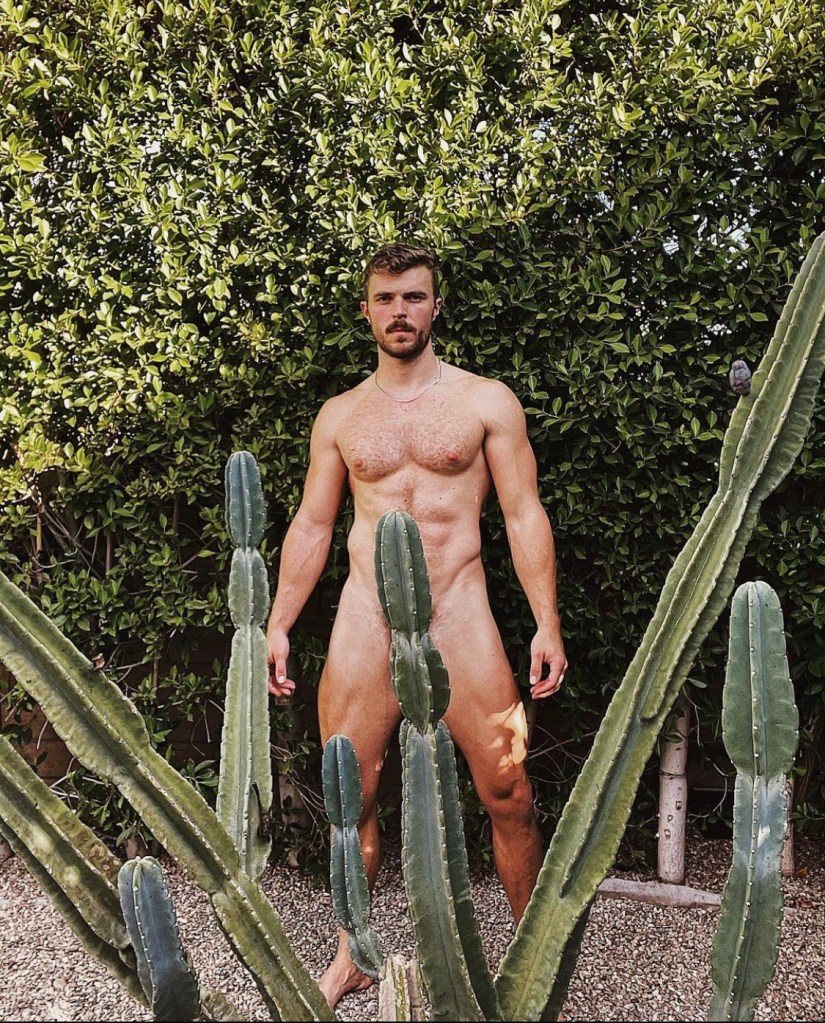
P.S. I had no idea what picture to use, but I like this one. It doesn’t represent Friday or the weekend or even Star Trek, but I used it anyway. I hope y’all like it.

On Monday, I had my first infusion of VYEPTI for my migraines. It was actually not too bad. My nurse put in the IV, and I sat there listening to an audiobook for thirty minutes while the medicine dripped into my vein. Following the advice I’d been given, I’d drunk plenty of water the day before and that morning, so he had no trouble finding a good vein to use.
The best part of the experience was my nurse. (The picture above is not him, though he was kind of cute.) He was about my age, maybe a little older, and he made my gaydar go off. So, I’m pretty sure he was gay, and he was a bit flirtatious. He talked me through the procedure and once he found a vein to use, he held a warm compress to my arm before he stuck the needle in me. Just before he inserted the needle, he told me to “Go to my happy place.” Then after a pause, he said, “You don’t have to tell me what it is,” and then sotto voce, he said, “But I’m dying to know.” I am not very quick witted with replies, or I would have said, “it would be very inappropriate for me to say.” I was thinking that my “happy place” was laying with a naked man’s arms wrapped around me. Basically, the picture below:

Hopefully, he’ll be my nurse when I go back for my second infusion, but I doubt I will be so lucky. He made the experience a pleasant one. The needle going in did hurt for a second, but then the pain was over. Once the medicine started entering my bloodstream, I could feel it for just a moment, then I could barely tell anything was happening. When he took out the IV, it didn’t even bleed, and there is no bruise, which I usually have with something like this. There is the faintest little dot where the IV was, and that’s it.
As for VYEPTI’s effectiveness, time will tell. I went to bed Monday night with a major migraine, but it was lessened by morning and was mostly gone by lunchtime. My nurse told me that this medicine had been a real game changer for some people. I received 100 mg/mL of the drug, and he said that at that dosage, it lessens the intensity of the migraines for most people. He said it seems to be most effective at 300 mg/mL, but insurances won’t authorize that much in the beginning. He said the second treatment will be another 100 mg/mL and if it’s not deemed effective enough, then they can usually convince insurance companies to pay for the 300 mg/mL for the third and subsequent treatments. The treatments will be every three months, and my next one is scheduled for October 24.
Rant of the day:I find it incredibly frustrating that doctors know 300 mg/mL works best, but insurance companies require me to continue to suffer for six months before they will allow the treatment that I need. I cannot fathom why the United States allows someone without a medical degree at an insurance company to determine what’s best for my health. Every treatment I have been prescribed by the Headache Clinic has been denied by my insurance, and my neurologist has had to file an appeal to get the treatment approved. The same thing happened with. YEPTI, but the insurance company is still requiring the lower dosage for six months before they will consider the higher, more effective dose. Rant over…for now.

The More Loving One
By W. H. Auden – 1907-1973
Looking up at the stars, I know quite well
That, for all they care, I can go to hell,
But on earth indifference is the least
We have to dread from man or beast.
How should we like it were stars to burn
With a passion for us we could not return?
If equal affection cannot be,
Let the more loving one be me.
Admirer as I think I am
Of stars that do not give a damn,
I cannot, now I see them, say
I missed one terribly all day.
Were all stars to disappear or die,
I should learn to look at an empty sky
And feel its total dark sublime,
Though this might take me a little time.
About the Poem
“The More Loving One” is one of W. H. Auden’s most popular post-1930s poems. At once a celebration of unrequited love and a metaphysical poem about the difficulty of finding “love” and meaning in a secular age, it is a straightforward poem that, like much of Auden’s poetry, conceals more complex interpretations beneath the surface.
In the first stanza, the poet begins by remarking upon the indifference of the stars: when he looks up at them, he knows they don’t care about what happens to him. However, the poem is not a self-pitying verse. Auden stoically reflects that of all the things man is primed to be wary of in “man or beast,” indifference is the least one to be feared.
Auden thinks about the stars’ indifference towards him in the second stanza. He wonders if things were different, and the stars were “burning” not purely out of an act of nuclear fission but because they harbored a passion for us, a love we could not reciprocate. At the end of this second stanza, Auden declares that when it comes to the stars, he is glad to be “the more loving one” out of the two.
In the third stanza, Auden tells us that, although he likes to think of himself as the stars’ “admirer,” he doesn’t miss them during the day when they’re not visible in the sky. Auden is saying that technically he is “the more loving one” because he admires the beauty of the stars in the night sky, but that’s as far as it goes.
In the final stanza, Auden says that if all the stars in the sky disappeared and died, he would get used to looking up at an empty night sky and eventually embrace the total darkness without stars to brighten it up. While it might take him some time, he’d adapt.
Auden constantly reins in this poem. The first half of the first stanza sets us up for a poem lamenting the indifference of nature towards us, only to conclude that indifference is actually fine; the first half of the poem leads us to believe that Auden loves the stars and that we are in for a celebratory poem admiring their beauty, before the second half checks this impulse and the poet heartily reassures us that he could cope without them. When summarized in this way, it seems that the poem is almost too simple: he’s an admirer of the stars, which don’t care whether he lives or dies, but actually, he doesn’t even care that much about the stars. However, there’s more to the poem than you might think at first reading.
“The More Loving One” should be analyzed in light of the decline of faith in the western world and the growing secularism of the twentieth century. The “stars” in Auden’s poem should be read with astrology as well as astronomy in mind: the stars may be mere balls of gas light-years away in the universe, but for centuries man made them the center of a whole belief system, believing that human fate could be read or divined within the patterns of the stars. As the famous quotation from Julius Caesar says, “The fault, dear Brutus, lies not in our stars / But in ourselves.”
In other words, it’s significant that of all natural phenomena, Auden looks up at the heavens and decides that there is no “heaven” as man conceived of it. The stars are just balls of gas, and there is no godly guiding hand. What should we make of this knowledge? As it consistently is throughout his work, Auden’s answer is love: we should admire the stars all the same, even though they don’t care about us. But at the same time, we should resist the romantic. “The More Loving One” is not a song of praise for the beauty of the stars but instead a level-headed response to the crisis of disenchantment in a post-religious age. Once, man collectively believed the stars or the heavens cared about what happened to him. Auden is saying that the world has lost its belief in the stars.
As individuals, we can respond by believing that the universe has a purpose for us; or we can respond by saying it doesn’t and ask what the point of anything is. Or we can meet the universe’s indifference to us head-on and take pride in the fact that we, as products of nature, have been instilled with the ability to care, to feel awe in the face of nature’s beauty, and to love.
About W. H. Auden
Wystan Hugh Auden (1907-73) was born in York, England, and was educated at the University of Oxford. He described how the poetic outlook when he was born was “Tennysonian,” but by the time he went to Oxford as a student in 1925, T. S. Eliot’s The Waste Land had altered the English poetic landscape away from Tennyson and towards what we now call “modernism.”
W. H. Auden was admired for his unsurpassed technical virtuosity and ability to write poems in nearly every imaginable verse form; his incorporation of popular culture, current events, and vernacular speech in his work; and also for the vast range of his intellect, which drew easily from an extraordinary variety of literary art forms, social and political theories, and scientific and technical information.
Surprisingly given his later, better-known work, Auden’s early poetry flirted with the obscurity of modernism: in 1932, his long work The Orators (a mixture of verse and prose poetry with an incomprehensible plot) was published by Faber and Faber, then under the watchful eye of none other than T. S. Eliot. Auden later distanced himself from this experimental false start, describing The Orators as the kind of work produced by someone who would later either become a fascist or go mad.
Auden thankfully did neither, embracing instead a more traditional set of poetic forms (he wrote a whole sequence of sonnets about the Sino-Japanese War of the late 1930s) and a more direct way of writing that rejected modernism’s love of obscure allusion. This does not mean that Auden’s work is always straightforward in its meaning, and arguably his most famous poem, “Funeral Blues,” is often “misread” as a sincere elegy when it was intended to be a send-up or parody of public obituaries.
In early 1939, not long before the outbreak of the Second World War, Auden left Britain for the United States, much to the annoyance of his fellow left-wing writers. They saw such a move as a desertion of Auden’s political duty as the most prominent English poet of the decade. In America, where he lived for much of the rest of his life with his long-time partner Chester Kallman, Auden collaborated with composers on a range of musicals and continued to write poetry, but 90 percent of his best work belongs to the 1930s, the decade with which is most associated. He died in 1973 in Austria, where he had a holiday home.
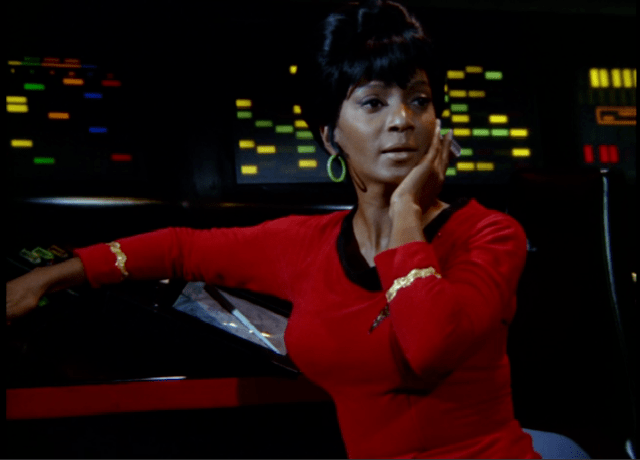
The bridge of Star Trek’s U.S.S. Enterprise was surpassingly diverse for a 1960s television show. The first officer was an alien, the helmsman was Japanese, the navigator was Russian, and the communications officer was an African woman. Actress and singer Nichelle Nichols, played communications officer Lieutenant Uhura, whose name came from Uhuru, the Swahili word for “freedom.” At age 89, Nichols died Saturday night of heart failure in Silver City, New Mexico. Nichols was one of the first Black women featured in a major television series.
It was a groundbreaking role that Nichols did not realize just how groundbreaking until she met a particular fan of hers. It was 1967, and reviews for the first season of Star Trek were not great. Nichols had bigger issues with the show. She found it demoralizing to see her lines cut and cut again. She had to deal with racist insults off set, as well as from executives who conspired to keep her from seeing her fan mail. At the end of the first season, Nichols recounted in her autobiography, she told the show’s creator she was done.
But the next day, at an NAACP function, a fan greeted her: Martin Luther King Jr. He told her how important her role was and how he and his family watched Star Trek faithfully and adored her in particular — the only Black character. Nichols thanked him, but said she planned to leave.
“You cannot and you must not,” she recalls him saying. “Don’t you realize how important your presence, your character is? … Don’t you see? This is not a Black role, and this is not a female role. You have the first non-stereotypical role on television, male or female. You have broken ground. “… For the first time,” he continued, “the world sees us as we should be seen, as equals, as intelligent people — as we should be.”
Nichols stayed for the next two seasons of the series, lent her voice to an animated version, and appeared in a half-dozen Star Trek movies. She had the first interracial kiss in American television. She recruited for NASA. Through her work, she influenced Mae Jemison — the first Black female astronaut.
Nichols suffered a stroke in 2015 and was diagnosed with dementia in 2018. Last December, at San Diego’s Comic Con, Nichols made her last public appearance and was celebrated by NASA.
With the passing of Nichelle Nichols, one of Star Trek’s brightest stars has gone out. Hailing frequency closed.


 | noisilycool3bc985058… on Pic of the Day |
 | iameverywhere1 on Not Quite as Planned |
| iameverywhere1 on Pic of the Day |
| noisilycool3bc985058… on Not Quite as Planned |
 | Joe on Pic of the Day |



As an Amazon Associate I earn from qualifying purchases. So, if you click on a link that takes you to Amazon.com, I may earn a commission.
Trust me, it isn’t much, but every little bit helps.





 The Closet Professor