Monthly Archives: October 2022

Embrace Our Differences

And just as you want men to do to you, you also do to them likewise.

— Luke 6:31

Multiculturalism is the presence, or support for the presence, of several distinct cultural or ethnic groups within a society. It is diversity, and the Bible teaches that God created and loves people from every culture and every ethnic group. From the beginning, God’s plan was that “I will bless those who bless you, and I will curse him who curses you; and in you, all the families of the earth shall be blessed.” (Genesis 12:3). At the end of time, this picture of diversity comes to life in Revelation 7:9 where we read that there was “After these things I looked, and behold, a great multitude which no one could number, of all nations, tribes, peoples, and tongues, standing before the throne and before the Lamb, clothed with white robes, with palm branches in their hands.” God does not use culture or ethnicity as a reason to exclude people from His kingdom. He seems to delight in the diversity of people who bring Him praise. 

Paul teaches that we can continue and indulge in cultural practices that do not conflict with God’s law. He exhorts the Colossians, “So let no one judge you in food or in drink, or regarding a festival or a new moon or sabbaths.” (Colossians 2:16) He is telling them that their cultural practices of what foods they eat or the days they choose to celebrate or not celebrate are appropriate to continue and need not conform to another cultural standard. Paul admits to the Corinthians, “And to the Jews I became as a Jew, that I might win Jews; to those who are under the law, as under the law, that I might win those who are under the law; to those who are without law, as without law (not being without law toward God, but under law toward Christ), that I might win those who are without law; to the weak, I became as weak, that I might win the weak. I have become all things to all men, that I might, by all means, save some.” (1 Corinthians 9:20–22) Paul was an expert at taking on whatever cultural practices were necessary to effectively share the gospel. In Athens, Paul referenced the Athenians’ “own poets.” In Acts 17:28,  he writes, “For in Him we live and move and have our being, as also some of your own poets have said, ‘For we are also His offspring.’” These examples show that cultural differences can be celebrated and appreciated as displays of God’s creativity in the many diverse ways we glorify God. 

Universalism is the philosophical and theological concept that some ideas have universal applications. The living truth is seen as more far-reaching than the national, cultural, or religious boundaries or interpretations of that one truth. As the Rig Veda states, “Truth is one; sages call it by various names.” A community that calls itself universalist may emphasize the universal principles of most religions and inclusively accept others. Nearly all religions and moral philosophies contain the belief in the Golden Rule or the ethics of reciprocity. This falls under moral universalism, which believes that a universal ethic applies universally regardless of culture, race, sex, religion, nationality, sexual orientation, gender identity, or any other distinguishing feature. The idea dates at least to the early Confucian times (551–479 BCE). The concept appears prominently in Buddhism, Christianity, Hinduism, Islam, Judaism, Taoism, Zoroastrianism, and the rest of the world’s major religions. As part of the 1993 “Declaration Toward a Global Ethic,” 143 leaders of the world’s major faiths endorsed the Golden Rule. According to the Humanist Rabbi Greg M. Epstein, it is “a concept that essentially no religion misses entirely,” but belief in God is not necessary to endorse the Golden Rule. The English philosopher Simon Blackburn also states that the Golden Rule can be “found in some form in almost every ethical tradition.”

Romans 12:18 says, “If it is possible, as much as depends on you, live peaceably with all men.” In Romans 12:2, Paul tells his readers, “And do not be conformed to this world, but be transformed by the renewing of your mind, that you may prove what is that good and acceptable and perfect will of God.” No matter what religion or belief system someone has, we were all created to love all people from all cultural backgrounds. We should enjoy and embrace the diversity in this world. At the heart of Christianity, if we hate or discriminate against others, we are not doing God’s will. We must show love and acceptance as Jesus did. Ephesians 4:2-4 tells us, “With all lowliness and gentleness, with longsuffering, bearing with one another in love, endeavoring to keep the unity of the Spirit in the bond of peace. There is one body and one Spirit, just as you were called in one hope of your calling.”

If we argue over non-essentials, then we are not accepting differences in people’s preferences and in what they see as sin and what they see as not being a sin. Who are we to judge our brother over the non-essentials like food, drink, days of worship, sexuality, or anything else where the Bible is silent? In Romans 14:4, Paul asks, “Who are you to judge another’s servant? To his own master he stands or falls. Indeed, he will be made to stand, for God is able to make him stand.”  A good rule to live by is one I learned growing up in the churches of Christ:  Where the Bible is silent, so must we be. This includes LGBTQ+ relationships. Christ never mentions sexuality, and therefore, we should not be judged by others who think differently than we do. We must realize that they are not following God’s Word.

Romans 2:11 tells us, “For there is no partiality with God.” World history shows that cultures treated women like they were livestock or property, but Jesus valued women and treated them as co-heirs and co-equals, and in God’s eyes, women and men are equal before Him.  So too, believers should treat those who are poor, of a different nationality, or in any way are different from us with the same regard as God does. He is no respecter of persons; therefore, there is no partiality with God. Too many people who call themselves Christians forget this. We must learn to accept the faults of others just as God has learned to accept our imperfections. If we want to cast stones, we should be our first target because we have no right to judge anyone else but ourselves. If God accepts us, then we must learn to accept others. To fail to do so is a sin before God because He is no respecter of persons and shows no partiality between men and women, gay and straight, liberal and conservative, etc., over another, nor does God show partiality to any race or ethnicity. If we show partiality, then we are judging them, which is God’s job, not ours.



Pic of the Day


Moment of Zen: Sleep


Pic of the Day


Monkeypox: A Rise and Fall

In my email this morning was my New York Times daily newsletter. I don’t always read the NYT newsletters, but this on peaked my interesting because the title was “What happened to monkeypox?”, and I recently got my first dose of the monkeypox vaccine. By the way, the actual vaccination was very easy, and I barely felt anything. In fact, the doctor who gave it to me remarked on how well I did and that I didn’t even flinch. However, that was two weeks ago, and there is still a raised red blemish where I received the injection. Supposedly, this is the most common side effect, and the only one I had with the first dose. I go back at the end of the month for my second dose.

Anyway, so back to the newsletter titled “What happened to monkeypox?”. Back in June, monkeypox regularly made headlines as a major new disease outbreak. Since then, it largely disappeared from the news. So, what did happen? The simple answer is that the virus receded. Since a peak in early August, reported monkeypox cases in the U.S. have fallen more than 85 percent. Monkeypox shows us how effective a well-received vaccination rollout can accomplish so much. 

The NYT gave several explanations for why there was a decline. Ultimately, monkeypox in the U.S. has been contained to a narrow demographic, mostly gay and bisexual men with multiple partners. It was never very deadly; there were just 28 confirmed deaths globally out of more than 72,000 reported cases. Experts say that four factors explain monkeypox’s decline. First, vaccines helped slow the virus’s spread (despite a rocky rollout). Second, gay and bisexual men reduced activities, such as sex with multiple partners, that spread the virus more quickly and the third reason is related, the Pride Month effect. Monkeypox began to spread more widely around June, when much of the world celebrated LGBTQ+ Pride. Beyond the parades and rallies, some parties and other festivities involved casual sex. As the celebrations dwindled, so did the increased potential for monkeypox to spread. And finally, the virus simply burned out. Monkeypox mainly spreads through close contact, making it harder to transmit than a pathogen that is primarily airborne, like the coronavirus. The monkeypox virus is self-limiting virus, which makes it less likely to grow into a larger outbreak.

Much of this explanation may sound familiar after more than two years of Covid: A virus can be tamed by vaccines and behavioral changes. Two more reasons worth noting. First, public health officials provided a clearer and more unified message. During COVID, officials sometimes gave unclear or misleading guidance because they did not trust the public with the truth. At first, officials were cautious about labeling monkeypox as a “gay disease” because of the response to the AIDS epidemic and the discrimination and stigma it created for the gay community. The initial response was slow because of this. 

After the World Health Organization’s director general said that men who have sex with men should consider limiting their number of sexual partners, public health officials began tailoring their warnings toward gay and bisexual men. The C.D.C. and New York City’s health department echoed the guidance. A factor that the NYT did not seem to mention in its report is that gay men are more likely to listen to health warnings because of the lessons learned during the AIDS epidemic. And it appeared to work. Monkeypox cases began to decline. That shift in public messaging enabled two of the four factors I explained earlier, as officials targeted gay and bisexual men for vaccine drives, and men who have sex with men limited riskier activities. But the clearer guidance came after weeks of criticism, exposing a habit of unclear messaging that keeps the country vulnerable to health crises.

While Vermont was a leader in their COVID response, largely keeping the numbers low during the pandemic (with a few exceptions), they were lacking in their monkeypox response. There is one major reason and one anecdotal reason, that is my opinion only. The major reason is that there were very few cases of monkeypox in Vermont. The anecdotal reason is that we have fewer gay men. Lesbians outnumber us greatly. The initial Vermont response was that only gay men who had come into contact with someone exposed to monkeypox should receive the vaccination, which seemed to me like it would be too late. Eventually, the state health officials widened the access to any gay men in the state. However, while COVID vaccines were readily available, monkeypox vaccines were available at pop-up clinics organized by LGBTQ+ organizations in Vermont and Planned Parenthood. I went to a Planned Parenthood office for mine. As an aside, I have never met a nicer, more helpful, or more efficient medical practice than this Planned Parenthood.

As for monkeypox’s decline, no one know what might happen next as human behavior is unpredictable. That uncertainty opens the possibility that monkeypox could spread again. People most in danger of contracting the virus may skip the vaccine because its spread has slowed, or they could resume risky activities too soon before cases are low enough to stop another outbreak. Or another major event, like next year’s Pride Month, could bring monkeypox back.

And the virus still regularly spreads in western and central Africa, where it was first found in humans and has never been fully contained — putting it one flight away from the U.S. or Europe. Here’s the good news: This year’s outbreak has made officials take monkeypox more seriously. So, if it does come back, the country may be more prepared to deploy vaccines and take other steps to fight it. But success depends on how people react.

Another bright side is that if there is an outbreak of smallpox (unlikely but not impossible), many gay men would be vaccinated against smallpox as well, since JYNNEOS (the vaccine’s proper name) pretexts against both smallpox and monkeypox.


Pic of the Day

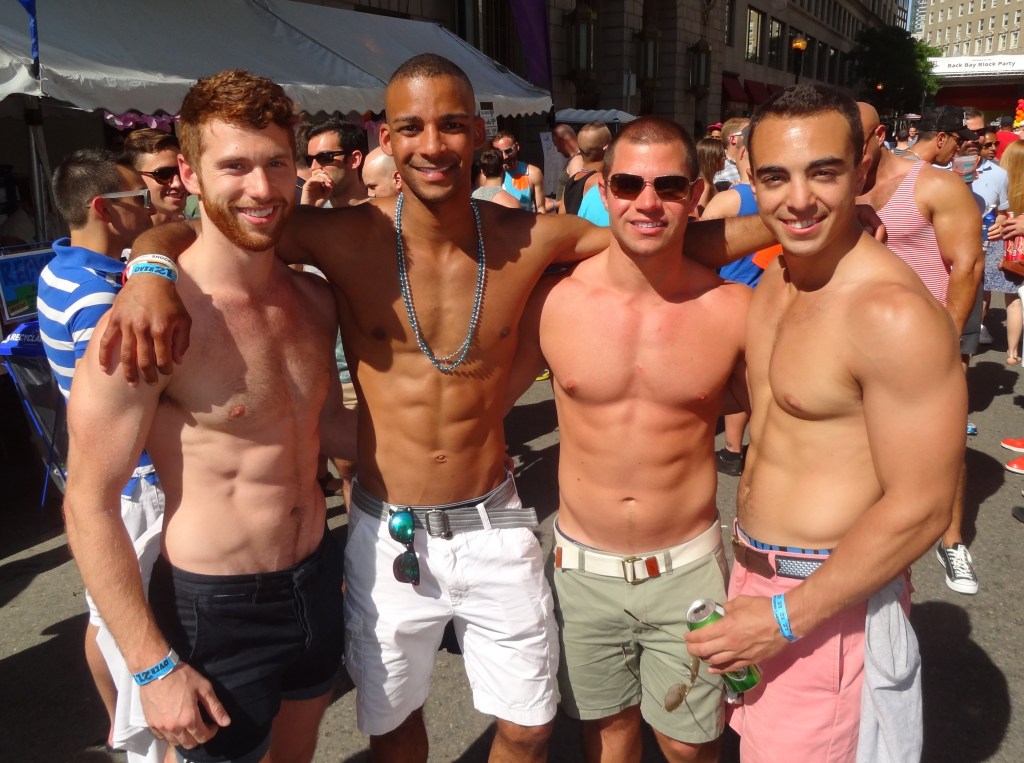
I don’t usually just post a torso, but this one was too good not to post. I wish I could see the whole picture though.


Pic of the Day


The Roads We Take

Yesterday was National Coming Out Day. Throughout history, people have remained in the closet for various reasons, but in this day and age, people are more comfortable and confident in coming out. Coming out is something that only a minority of people have to do. Only members of the LGBTQ+ community are forced to declare our sexuality in order to be true to ourselves. Some in the LGBTQ+ community, never come out, and that is their choice to make. For a lot of people, it’s a very difficult choice.

Yesterday, I posted the Robert Frost poem, “The Road Not Taken.” It’s final lines say:

Two roads diverged in a wood, and I—
I took the one less traveled by,
And that has made all the difference.

At some point in an LGBTQ+ individual’s life, they have certain choices they must make: Do I accept who I am? Will I hide who I really am from the world? If not, who do I want to come out to first? Who else do I want to know? Then, once out of the closet, we are forced to come out over and over again. Coming out has been the “road not taken” for many people. The LGBTQ+ community is a minority, and thus coming out becomes the road “less traveled by.” For me, taking that “less traveled by” road has made all the difference.


Pic of the Day


The Road Not Taken

The Road Not Taken
By Robert Frost – 1874-1963

Two roads diverged in a yellow wood,
And sorry I could not travel both
And be one traveler, long I stood
And looked down one as far as I could
To where it bent in the undergrowth;

Then took the other, as just as fair,
And having perhaps the better claim,
Because it was grassy and wanted wear;
Though as for that the passing there
Had worn them really about the same,

And both that morning equally lay
In leaves no step had trodden black.
Oh, I kept the first for another day!
Yet knowing how way leads on to way,
I doubted if I should ever come back.

I shall be telling this with a sigh
Somewhere ages and ages hence:
Two roads diverged in a wood, and I—
I took the one less traveled by,
And that has made all the difference.

I realize that I have posted Robert Frost poems three weeks in a row, but Autumn seems like the perfect time to read some Frost. I was not going to post another one this week. However, on Saturday, I was out walking and taking some pictures of the fall foliage in Vermont, and I took this picture because the scene reminded me of this poem.

About the Poem

Everyone can quote those final two lines. David Orr writes in his book The Road Not Taken that everyone gets the meaning wrong. The usual interpretation is that the poem is praised as an ode of individuality, to not follow the pack even though the path may be more difficult. Except Frost notes early in the poem that the two roads were “worn . . . really about the same.” There is no difference. It’s only later, when the narrator recounts this moment, that he says he took the road less traveled.

“This is the kind of claim we make when we want to comfort or blame ourselves by assuming that our current position is the product of our own choices (as opposed to what was chosen for us, or allotted to us by chance),” Orr writes. “The poem isn’t a salute to can-do individualism,” he continues. “It’s a commentary on the self-deception we practice when constructing the story of our own lives.”

Wrongly referred to by many as “The Road Less Traveled,” the poem’s true title, “The Road Not Taken,” references regret rather than pride. That’s by design. Frost wrote it as somewhat of a joke to a friend, English poet Edward Thomas. In 1912, Frost was nearly 40 and frustrated by his lack of success in the United States. After Thomas praised his work in London, the two became friends, and Frost visited him in Gloucestershire. They often took walks in the woods, and Frost was amused that Thomas always said another path might have been better. “Frost equated [it] with the romantic predisposition for ‘crying over what might have been,’” Orr writes, quoting Frost biographer Lawrance Thompson.

Frost thought his friend “would take the poem as a gentle joke and protest, ‘Stop teasing me,’” Thompson writes. He didn’t. Like readers today, Thomas was confused by it and maybe even thought he was being lampooned. Matthew Hollis, Edward Thomas’ biographer, suggested that “The Road Not Taken” goaded the British poet, who was indecisive about joining the army. “It pricked at his confidence . . . the one man who understood his indecisiveness most acutely — in particular, toward the war — appeared to be mocking him for it,” writes Hollis. Thomas enlisted in World War I and was killed two years later.

Orr writes that “The Road Not Taken” is “a thoroughly American poem. The ideas that [it] holds in tension — the notion of choice, the possibility of self-deception — are concepts that define . . . the United States.” It is also, as critic Frank Lentricchia writes, “the best example in all of American poetry of a wolf in sheep’s clothing.”

I have always equated this poem with what Jesus says during the Sermon on the Mount about the narrow gate. In Matthew 7:13-14, Jesus says “Enter through the narrow gate; for the gate is wide and the road is easy that leads to destruction, and there are many who take it. For the gate is narrow and the road is hard that leads to life, and there are few who find it.” Frost’s religious beliefs have long been speculated upon. Raised by a mother who was a follower of Swedenborgianism, a Swedish mystical belief, many of Frost’s biographers have noted his apparent atheism or agnosticism. But he was deeply interested in Christianity.

Axinn Professor of English and Creative Writing at Middlebury College and a prominent Frost scholar Jay Parini said that “Robert Frost called himself an ‘Old Testament Christian. Which meant he was really more focused on the Torah and the old Biblical stories. Things like the Book of Job, the first five books of Moses, the Book of Proverbs and the Psalms were hugely important to Frost as a poet, a man and a thinker.”

No matter how you interpret “The Road Not Taken,” it is still one of the most famous American poems.