
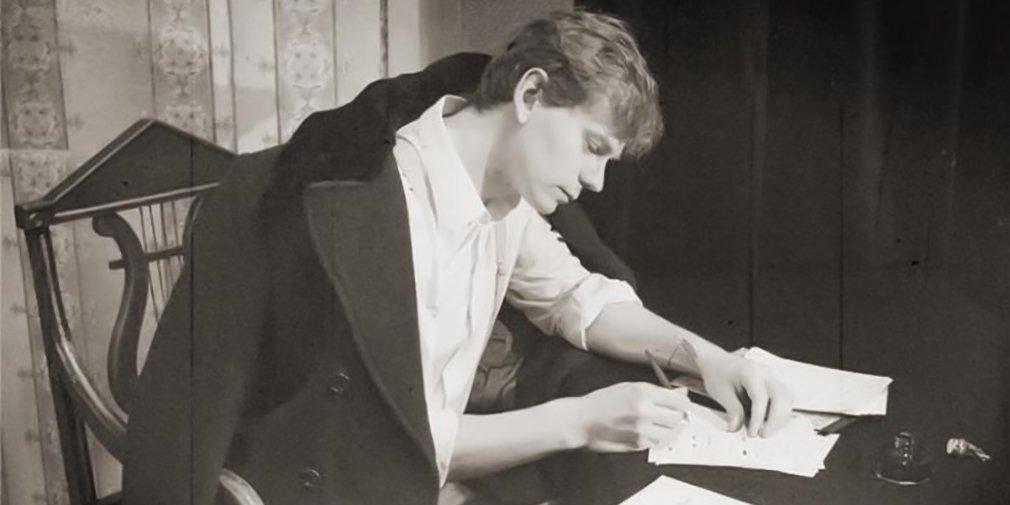
Who am I? What am I? Just a dreamer…
By Sergei Yesenin (Sergey Esenin)
Translated by Anton Yakovlev
Who am I? What am I? Just a dreamer
Looking for a ring of happiness in the dark,
Living this life as if by happenstance,
Just like others on earth.
And I’m only kissing you out of habit,
Because I’ve kissed many,
And speaking words of love
As though I’m lighting matches.
“Dear”, “darling”, “forever”,
But always one thing on my mind:
If you wake up the passion in a person,
You surely won’t find truth.
This is why my soul has no trouble
Desiring, demanding fire —
You, my walking birch,
Were created for many and for me.
But, always looking for the one
And languishing in callous captivity,
I’m not at all jealous of you,
Not cursing you in the least.
Who am I? What am I? Just a dreamer
Who has lost the blue of his eyes in the dark,
And I only love you by happenstance,
Just like others on earth.
Сергей Есенин Кто я? Что я? Только лишь мечтатель…
Кто я? Что я? Только лишь мечтатель,
Перстень счастья ищущий во мгле,
Эту жизнь живу я словно кстати,
Заодно с другими на земле.
И с тобой целуюсь по привычке,
Потому что многих целовал,
И, как будто зажигая спички,
Говорю любовные слова.
«Дорогая», «милая», «навеки»,
А в уме всегда одно и то ж,
Если тронуть страсти в человеке,
То, конечно, правды не найдешь.
Оттого душе моей не жестко
Ни желать, ни требовать огня,
Ты, моя ходячая березка,
Создана для многих и меня.
Но, всегда ища себе родную
И томясь в неласковом плену,
Я тебя нисколько не ревную,
Я тебя нисколько не кляну.
Кто я? Что я? Только лишь мечтатель,
Синь очей утративший во мгле,
И тебя любил я только кстати,
Заодно с другими на земле.
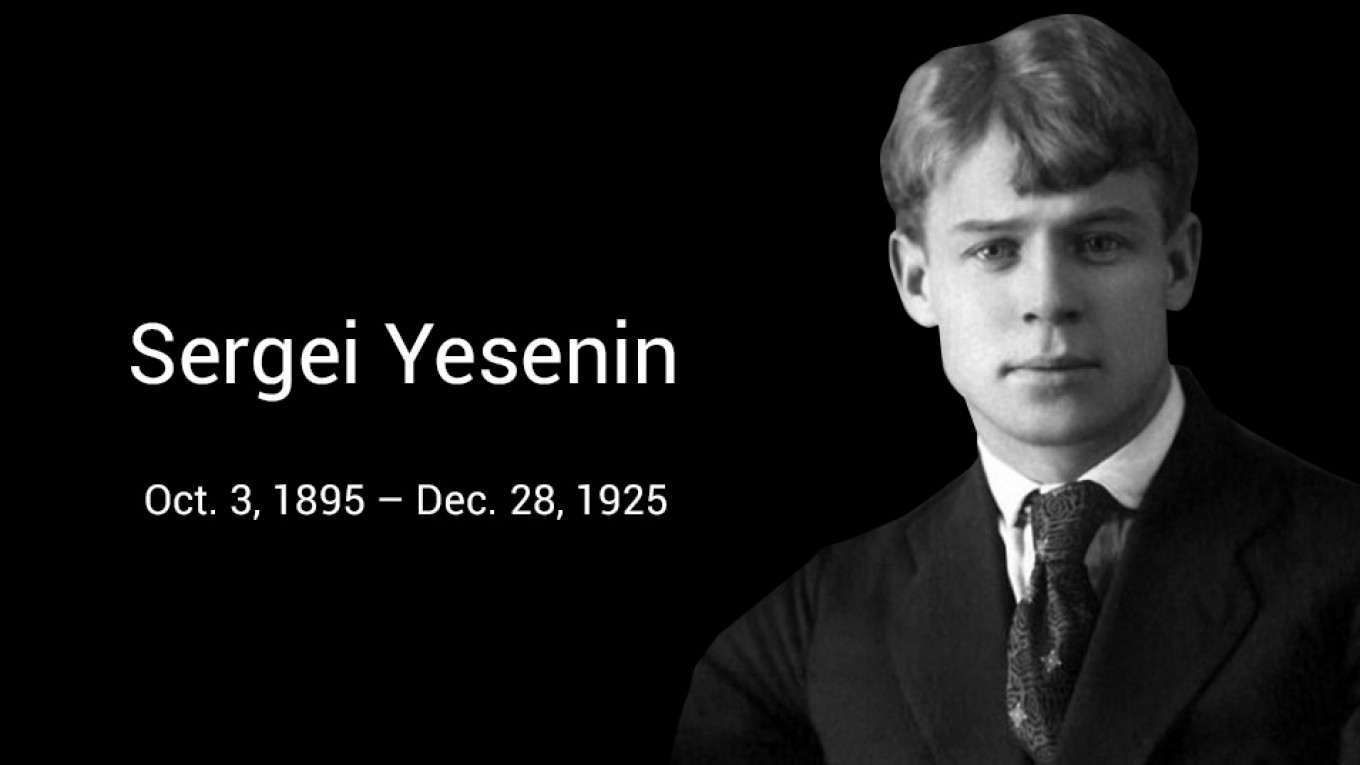
Sergei Yesenin (1895-1925) grew up in a peasant family in the village of Konstantinovo, Ryazan Province but spent most of his adult life in Petrograd (previously St. Petersburg, later Leningrad, now St. Petersburg again). Yesenin called himself “the last poet of the village,” both in the sense of his peasant origins and of being the last among his contemporaries whose poems were mainly concerned with country life. In writing, sometimes nostalgically, always sympathetically, and often with an almost mystical devotion to rural Russia, Yesenin succeeded in cultivating a national identity and mythology so strong and cohesive that his work would forever imprint itself into Russian culture, with the poet becoming a beloved and somewhat mythical figure — a fame that persisted even under Stalin when the poet’s work was blacklisted and when praising or even reading it constituted a risk to one’s very survival. A founding member of the short-lived but influential Imaginist movement (related to the Western Imagism and standing in contrast to Futurism), Yesenin was a star whose public performances were attended by hundreds or thousands of adoring fans across the country. He jousted with fellow poet Vladimir Mayakovsky and was known for publicity stunts. His iconic status continues to this day; it is virtually impossible to find a Russian person who has never heard Sergei Yesenin’s name, and only marginally easier to find someone who doesn’t know at least one of his poems by heart though I suspect many people in the United States have never heard of him.
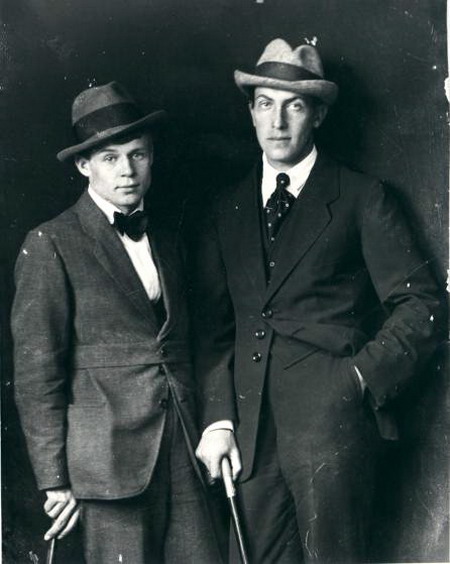
Despite being married to four different women, most notably Isadora Duncan (with whom he shared no common language), Yesenin, loved men. His poetry was loved for its simplicity and clarity, bridging both high and low culture, including his poems of love to the various men in his life. During WWI, he had a relationship with the poet Leonid Kannegisser (later the assassin of Moisei Uritsky of the secret police), while during the Bolshevik Revolution of 1917, gay writers continued writing, but gay-positive work was not encouraged under the Soviet regime (after 1933, when Stalin recriminalized homosexuality, no gay-themed works were published.) By the mid-1920s, Sergei entered into a three-year relationship with another fellow poet Anatoly Marienhof, to whom many poems are dedicated, inspired by, or written about. Sergei was a rebellious writer, suffering through bouts of alcoholism, violent behavior, depression, and plagued by his inner demons when he hung himself in a Leningrad hotel at the age of 30. Perhaps it was his failed marriages, the disillusionment that he must have felt when the revolution that he supported failed to live up to his expectations, or that he was a gay man who had simply yielded to the pressures of the world and no longer wanted to fight. Whatever his reasons, we will never know.
In the poem above, I think he is questioning his sexuality or maybe coming to terms with it since this poem was written in 1925, the year he died. When he writes, “And I’m only kissing you out of habit,” I suspect he is talking about one of his wives. He later writes, “But always one thing on my mind: / If you wake up the passion in a person, / You surely won’t find truth.” Here he seems to be saying that if she awakens his sexuality/passion, then she won’t see the truth of his homosexuality. To me, this is a sad poem. In the fifth stanza, he says he writes that he is “always looking for the one,” but he is “in callous captivity” of a world that does not accept a person being gay. The last stanza seems to be saying that he “has lost the blue of his eyes in the dark,” and maybe that is a foretelling of his suicide in the same year.



 Joe
Joe





 The Closet Professor
May 29th, 2024 at 4:01 pm
I was called a dreamer by my family and friends… Sergei’s poetry speaks volumes to the troubled soul which transcends boundaries of time, culture and nationality…
January 11th, 2025 at 3:12 pm
It is surprising to find persistent views of Sergey Yesenin’s assumed “homosexuality,” which is simply just a fiction. Sure, he was bohemian, alcoholic, and mentally instable, he was said to be the object of Nikolai Klyuev’s affection (they lived some time together after Yesenin had moved to Petrograd; they both belonged to a group called “new peasant poets”), and he also shared accommodation a few years with another eccentric poet, Anatoly Mariengof, who gave honest and insightful description of their life in Petrograd in the early 1920s in his memoir ‘A Novel without Lies’.
Yesenin’s cohabitation was, however, a simple necessity, as he was newcomer in the city and despite of quickly rising fame, he was broke throughout his life. Yesenin and Mariengof had an eventuful relationship; they created imaginism and were involved in huliganism. Their friendship was described in Yesenin’s touching poem, ‘A Farewell to Mariengof’. They took different paths after they started a new life with their then new spouses in the early 1920s. Mariengof spent rest of his life with Anna Nikritina, while Yesenin was less lucky with his several relationships and marriages with different women, most important of them being Zinaida Reich (‘Letter to a Woman’, https://www.youtube.com/watch?v=acZntbSJabA) and much older Isadora Duncan, and to a lesser extent his last wife Sofia Tolstaya.
Lastly, women played actually a tragic and contradictory role in Yesenin’s life, which become clear when thinking of his most touching, at times melancholic, love poems – such as ‘Let’s sit down close by, darling’ (Дорогая, сядем рядом), ‘The flowers say goodbye to me’ (Цветы мне говорят — прощай) or some poems published in ‘Persian motifs’ – against his inability to create lasting relationships with women. This problem had nothing to with homosexuality. It was primarily about his bipolar disorder, absence of impulse-control, depression, and narcissistic disorder. Every time when his romantic relationships lasted longer than just a few months, Yesenin started to be frustrated, irritated, impulsive, and occasionally aggressive, which was partly due to his eccentric lifestyle, emotional highs and lows, mental condition, and, of course, excessive consumption of alcohol. The above poem, ‘Who am I? What am I? Just a dreamer…’, should be interpreted against this background. It includes several elements that can be found in many of Yesenin’s other poems.
See Yesenin’s poems at https://ruverses.com/sergey-esenin/
December 3rd, 2025 at 1:44 pm
English translation here is disgusting. Sergey would be pissed if he heard this