

Monthly Archives: February 2023
Waking Up

This morning and several mornings recently, I have found it difficult to wake up and get out of bed. Usually, when Isabella wakes me at 4:30 or so to feed her, I’m up and raring to go. This morning, I got up to feed her, and then went back to bed and even hit the snooze button when my alarm went off. It’s not like I’ve been staying up late or not getting enough sleep lately. I went to bed last night a little after 9 pm. I’m not sure what the issue is, but I don’t like it. I want to get back to my normal morning routine. In the last several years, I’ve become a morning person for the first time in my life, and I like having the extra time before work. Hopefully, my sleep patterns will return to normal soon.
Pic of the Day

Laissez les bons temps rouler
⚜️⚜️⚜️⚜️⚜️⚜️⚜️⚜️
(“Let the good times roll”)

It’s basically impossible to find pictures of hot guys at Mardi Gras in New Orleans without their dicks being flashed for beads. I had to crop these last two pictures.

Double Exposure

Double Exposure
By May Swenson – 1913-1989
Taking a photo of you taking a photo of me, I see
the black snout of the camera framed by hair, where
your face should be. I see your arms and one hand
on the shutter button, the hedge behind you and
beyond, below, overexposed water and sky wiped white.
Some flecks out of focus are supposed to be boats.
Your back toward what light is left, you’re not
recognizable except by those cutoff jeans that I
gave you by shooting from above, forgetting your
legs. So, if I didn’t know, I wouldn’t know who
you are, you know. I do know who, but you, you know,
could be anybody. My mistake. It was because I
wanted to trip the shutter at the exact moment you
did. I did when you did, and you did when I did.
I can’t wait to see yours of me. It’s got to be
even more awful. A face, facing the light, pulled up
into a squint behind the lens, which must reflect
the muggy setting sun. Some sort of fright mask
or Mardi Gras monster, a big glass Cyclopean eye
superimposed on a flattened nose, that print,
the one you took of me as I took one of you. Who,
or what, will it be—will I be, I wonder? Can’t wait.
About This Poem
“‘Double Exposure’ was a kind of love poem I’d always wanted––earthy and witty, with a streak of primal strangeness. May Swenson disliked the label lesbian poetry (and told me so, in a letter). While my generation’s identity politics found expression in publishing collectives and coming-out anthologies, Swenson continued hiding in plain sight. With marriage equality decades away, she knew who she was and whom she loved, inventing playful shapes that explored (among other things) intimacy between women.
“Two women (‘you’ and ‘me’) photograph each other in a spirit of experimentation that’s both childlike and scientific. The poem reminds us that we’re animals––’the black snout of the camera framed by hair’––and teasingly suggests simultaneous orgasm: ‘I / wanted to trip the shutter at the exact moment you / did.’ But the poem’s erotic life is as much about the intimacy of minds in dialogue with one another as it is about bodies. The Cyclops Swenson sees in the single glass eye of the camera lens invites fear into the ritual, but danger is part of the thrill. Glee is the state of mind and feeling as we transform each other: ‘Who, / or what, will it be––will I be, I wonder? Can’t wait.'” —Joan Larkin
About the Poet
May Swenson was born Anna Thilda May Swenson on May 28, 1913, in Logan, Utah. Her parents were Swedish immigrants, and her father was a professor of mechanical engineering at Utah State University. English was her second language, her family having spoken mostly Swedish in their home. Influenced early on by Edgar Allan Poe, she kept journals as a young girl, in which she wrote in multiple genres.
She attended Utah State University, Logan, and received a bachelor’s degree in 1934. She spent another year in Utah working as a reporter, but in 1935 she relocated to New York, where she remained for most of her adult life. In New York City, she held various positions—including working as a stenographer, a ghostwriter, a secretary, and a manuscript reader—while writing and publishing her poetry. In 1959, she became a manuscript reader at New Directions Press.
Since her first collection of poems, Another Animal, was published by Scribner in 1954, Swenson’s work has been admired for its adventurous word play and erotic exuberance. Her poems have been compared to those by poets E. E. Cummings and Gertrude Stein, as well as Elizabeth Bishop, with whom she was engaged in regular, often frequent correspondence from 1950 until Bishop’s death in 1979.
Swenson’s other poetry collections include A Cage of Spines (1958); To Mix With Time: New and Selected Poems (1963); Half Sun Half Sleep (1967); Iconographs (1970); New & Selected Things Taking Place (1978); and In Other Words (1987). Posthumous collections of her work include The Love Poems (1991); Nature: Poems Old and New (1994); and May Out West (1996).
She is also the author of three collections of poems for younger readers, including Poems to Solve (1966), More Poems to Solve (1968), and Spell Coloring Book (1976), and a one-act play titled The Floor, which was produced in New York in the 1960s. As a translator, she published Windows and Stones: Selected Poems of Tomas Tranströmer (1972), which received a medal of excellence from the International Poetry Forum.
She left New Directions Press in 1966, having decided to devote herself fully to her own writing. In 1967, she moved to Sea Cliff, New York. During the late 1960s and early 1970s, she served as poet-in-residence at several universities in the United States and Canada, including Bryn Mawr, the University of North Carolina, the University of California at Riverside, Purdue University, and Utah State University.
About her work, the poet Grace Schulman said, “Questions are the wellspring of May Swenson’s art… In her speculations and her close observations, she fulfills Marianne Moore’s formula for the working artist: ‘Curiosity, observation, and a great deal of joy in the thing.'”
Swenson’s honors include fellowships from the Guggenheim, Ford, Rockefeller, and MacArthur Foundations, as well as a National Endowment for the Arts grant. She received the Shelley Memorial Award from the Poetry Society of America, the Bollingen Prize from Yale University, and an Award in Literature from the National Institute of Arts and Letters.
In 1967, she received a Distinguished Service Gold Medal from Utah State University, and in 1987 an honorary doctor of letters. She served as a Chancellor of the Academy of American Poets from 1980 until her death. She died in Oceanview, Delaware, on December 4, 1989, and is buried in the city where she was born.
Four months before her death, Swenson wrote: “The best poetry has its roots in the subconscious to a great degree. Youth, naivety, reliance on instinct more than learning and method, a sense of freedom and play, even trust in randomness, is necessary to the making of a poem.”
Why I Chose This Poem
Today is Mardi Gras. I was looking for a poem about Mardi Gras, and found one I liked and was going to use this one next week since it only mentions Mardi Gras masks, but then I looked up the poet of the other poem and realized he’s a member of a far right anti-LGBTQ+ religious group. While I considered posting it anyway, I chose against it. Besides, reading the poem from that perspective, I decided it wasn’t that good anyway.
While Mardi Gras is not observed nationally throughout the United States, a number of traditionally ethnic French cities and regions in the country have notable celebrations. Mardi Gras arrived in North America as a French Catholic tradition with the Le Moyne brothers, Pierre Le Moyne d’Iberville and Jean-Baptiste Le Moyne de Bienville, in the late 17th century, when King Louis XIV sent the pair to defend France’s claim on the territory of Louisiane, which included what are now the U.S. states of Alabama, Mississippi, Louisiana and part of eastern Texas. The brothers celebrated the first Mardi Gras in what is now Biloxi, Mississippi.
Mardi Gras (or Fat Tuesday) has a history traced all the way back to medieval Europe, where early renditions of the holiday known as “Boeuf Gras” (or fatted calf) were celebrated everywhere from Italy to France. In 1699, the Le Moyne brothers settled on a plot of land about 60 miles south of New Orleans and named it “Pointe du Mardi Gras.” When their men realized that it was the eve of the holiday, they had an impromptu celebration.
Bienville went on to found the settlement of Mobile, Alabama in 1702 as the first capital of French Louisiana. In 1703 French settlers in Mobile established the first Carnivale or what became known as Mardi Gras. Mobile celebrated the first formally organized Mardi Gras parade in the United States in 1830. The first informal mystic society, or krewe, was formed in Mobile in 1711, the Boeuf Gras Society. By 1720, Biloxi had been made capital of Louisiana. The French Mardi Gras customs had accompanied the colonists who settled there.
In 1723, the capital of Louisiana was moved to New Orleans, founded in 1718. The first Mardi Gras parade held in New Orleans is recorded to have taken place in 1837. The tradition in New Orleans expanded to the point that it became synonymous with the city in popular perception and embraced by residents of New Orleans beyond those of French or Catholic heritage. Mardi Gras celebrations are part of the basis of the slogan Laissez les bons tempsrouler (“Let the good times roll”). On Mardi Gras Day, the Tuesday before Ash Wednesday, the last parades of the season wrap up and the celebrations come to a close with the Meeting of the Courts (known locally as the Rex Ball). Other cities along the Gulf Coast with early French colonial heritage, from Pensacola, Florida; Galveston, Texas; to Lake Charles and Lafayette, Louisiana; and north to Natchez, Mississippi and Alexandria, Louisiana, have active Mardi Gras celebrations.

Presidents’ Day
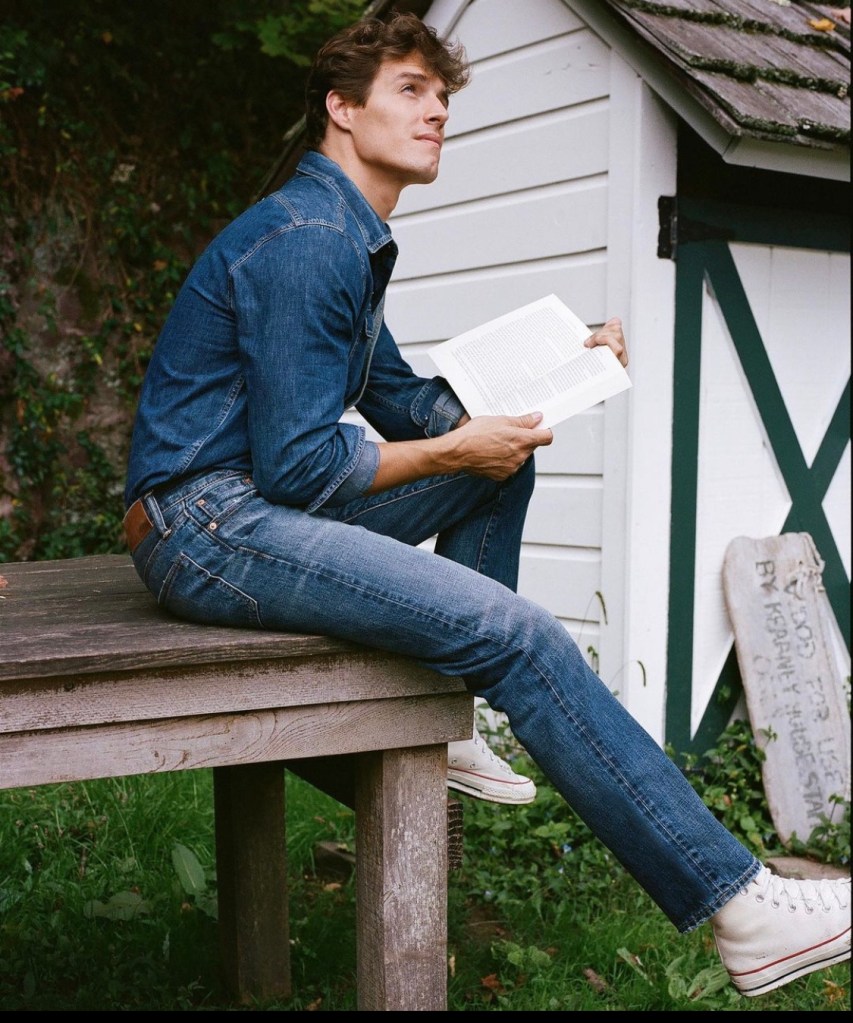
I wish I could say that today is a holiday for me. It’s not. We never get Presidents’ Day off. It’s just another work day. I have to sit in on a class today. I’m not teaching the class, like I usually do when classes are at the museum, but I’m going to sit in and be there to answer any questions they may have about our current exhibit. I’d given this class a tour of the exhibit Friday, and now, I’m going to answer questions that may come up or have come up as they prepare their assignment about the exhibit.
Yesterday, I taught a workshop at the museum. It went remarkably well, I think. Not everyone showed up, but most of them did. I wish I had not had a migraine still, but I persevered. At least the migraine wasn’t as bad as the one I had Saturday night. Yesterday’s was more like the aftershocks that come after a major migraine. I didn’t know until recently that these “aftershocks” had a medical name, a postdrome headache. There are also headaches that come before a major migraine called prodrome headaches. I don’t think I’ve ever had one of them, but I usually have a postdrome headache. I used to call them shadow headaches because they felt like a lingering shadow of what the headache had been.

Inseparable

For I am persuaded that neither death nor life, nor angels nor principalities nor powers, nor things present nor things to come, nor height nor depth, nor any other created thing, shall be able to separate us from the love of God which is in Christ Jesus our Lord.
— Romans 8:38-39
Last night, I had a sudden and very debilitating migraine attack. Once it started, I had to shut everything down and go to bed, almost immediately. I took the medicines that I have and slept for about an hour, and I woke up thinking I was feeling better. However, it only took a few minutes to know that it was still there and just as bad as before. So, I decided to give up for the night. I went to bed, put a cold compress over my eyes, and tried to sleep. Eventually, I was able to fall asleep. When I woke up this morning, again, I thought my headache was better, and it was. It wasn’t as bad as it was last night, so I fed Isabella and then realized, I needed to go back to bed, at least for a little while. I slept for another hour or so before finally getting up.
While my headache is better this morning, it is not completely gone. Sadly though, I have a workshop to teach this afternoon. I can’t cancel or reschedule, and there is no one who can substitute for me. I’ll just have to persevere. The verse above is about perseverance and God’s love. No matter what life throws at us, God’s love is still there. No matter how much someone tells us that God’s love is conditional: that we cannot be gay and Christian, that we cannot have relationships, sex, or love because God has deemed it a sin, or that we are disgusting and an abomination in the eyes of God, none of these things “shall be able to separate us from the love of God which is in Christ Jesus our Lord.” All the conditions put on us about God’s love are manmade. They do not come from God, no matter how much they may wish they do. God is a loving God. We are His creation, and He loves us, unconditionally and eternally.
I know this post is a bit shorter than many of my Sunday devotionals, but headache or not, just like the workshop I have to teach today, I think this message is an important one. I know of a dear friend of mine who is struggling with the conditions man has set upon us about God’s love, but nothing man can say or do can separate us from God’s love.

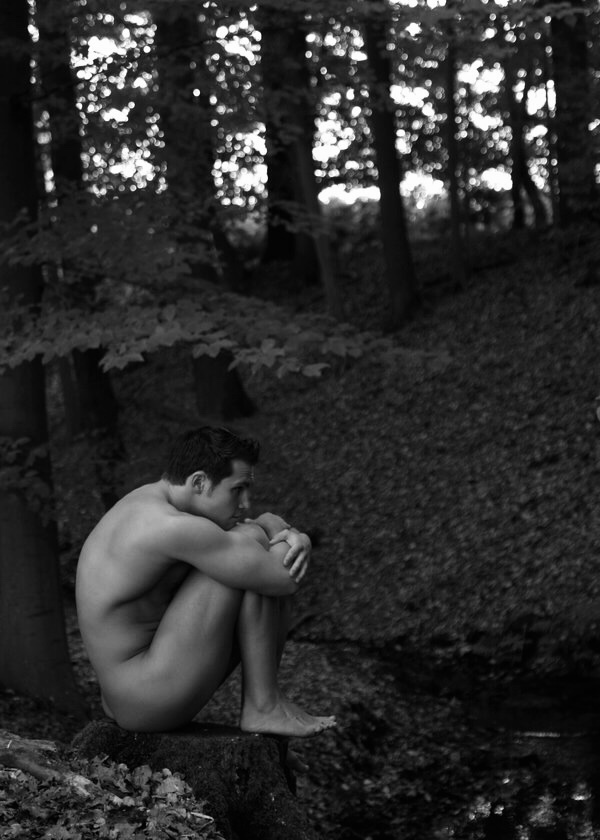
Moment of Zen: Solitude
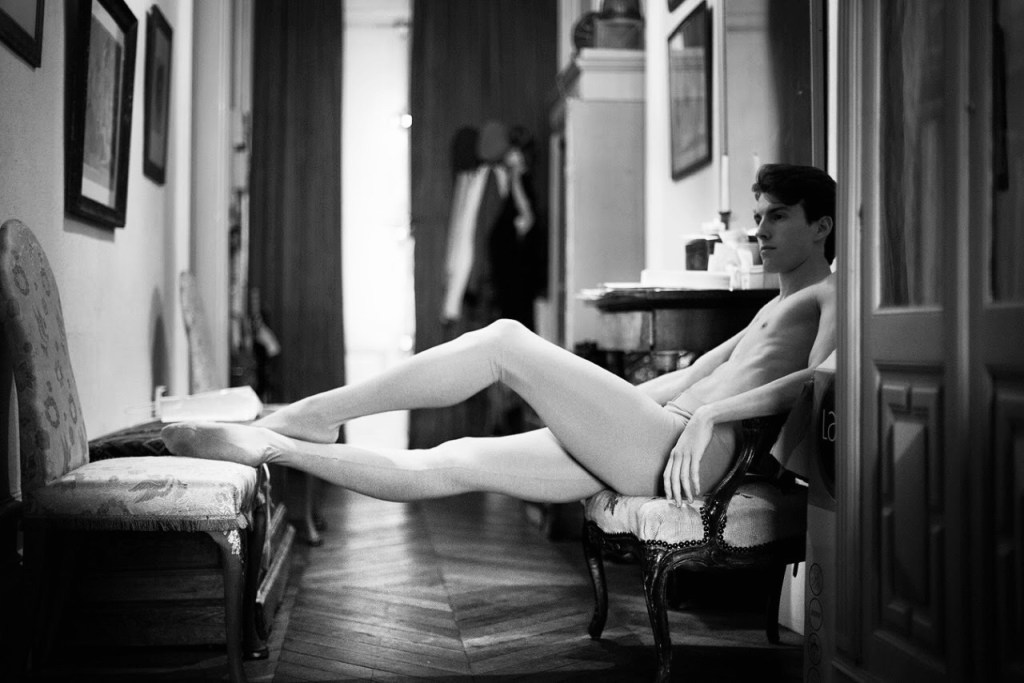
Yesterday was another stressful day at work. It’s been quite a week. Thankfully, I was only working half a day yesterday, so I was able to go home and decompress and calm down before I bit someone’s head off for their stupidity. Sometimes, you just need some solitude.



Authors
Recent Comments
noisilycool3bc985058… on Dr. McDreamy Joe on Dr. McDreamy poetrybeautiful3d840… on Dr. McDreamy Joe on Dr. McDreamy noisilycool3bc985058… on Dr. McDreamy Top Posts & Pages


Amazon Associate

As an Amazon Associate I earn from qualifying purchases. So, if you click on a link that takes you to Amazon.com, I may earn a commission.
Trust me, it isn’t much, but every little bit helps.

 Joe
Joe


 The Closet Professor