

Monthly Archives: April 2023
Aggravation

I considered writing about what has been making my life so stressful the last few days, but I’ve made the decision to not talk much about my job anymore. The whole thing that’s happened has pissed me off more than anything else. I now know for certain that I work with a couple of “malcontents.” I can do my job without them. It would be nice if we could work together as a team, but they have made it clear that they are not team players. Thankfully, I will be the only one working today.
I know I am damn good at my job. I get told regularly by people I work with outside the museum how much they enjoy/appreciate/are impressed with the job I do. I get the same response from my boss, who is the only opinion at the museum that matters. I have a little over three weeks of vacation I need to take before the end of May, so for the next six weeks or so, I will be there when my job requires me to be, but otherwise, I’m going to enjoy my time off.
I have no plans to go anywhere or really do much of anything. I really don’t have the spare cash to do so. However, I can enjoy spending my days with Isabella, even if all she will do is wake me up at 5 am and sleep away the rest of the day. I might just take follow her example and take some cat naps myself.

Invictus

Invictus
By William Ernest Henley
Out of the night that covers me,
Black as the pit from pole to pole,
I thank whatever gods may be
For my unconquerable soul.
In the fell clutch of circumstance
I have not winced nor cried aloud.
Under the bludgeonings of chance
My head is bloody, but unbowed.
Beyond this place of wrath and tears
Looms but the Horror of the shade,
And yet the menace of the years
Finds and shall find me unafraid.
It matters not how strait the gate,
How charged with punishments the scroll,
I am the master of my fate,
I am the captain of my soul.
About the Poem
“Invictus” by William Ernest Henley is an inspirational poem. It depicts the poet’s attempt to motivate himself when there is no hope at all. When the poet wrote this poem, he had already lost one of his legs. So, in such a situation of mental and physical agony, the poet tried to lift up his courage.
In the very beginning of the poem, the poet says that he wants to thank God. In fact, he admits that his life has no ray of hope. Rather his future seems to be as dark as a pit. But then also he is grateful to God for his ‘unconquerable soul.’ He says that no pain can be able to curve his soul. In the next stanza, he claims that whenever he fell into some difficulty, he always remained unbeatable. However, situations have tried to destroy him, but he always fights back with courage. In fact, he agrees that sometimes difficulties have made him bleed and suffer. But he never let himself bow before them and cry out of fear.
In the third stanza, the poet says that horror has always lurked behind him. But it always finds him unafraid. Whenever menace or trouble has come into his life, he has faced it bravely. Finally, in the last stanza, Henley says that though the gate of life is narrow, he will definitely pass it with vigor. Moreover, he declares that he is the master of his fate, meaning his fortune. Also, he claims that he is the captain of his soul. Hence, this poem motivates the readers to understand the fact that nobody can control our lives. It only depends on us how we choose to live our lives. Henley ends his poem with a note that one should become the friend, philosopher, and guide of one’s own soul.
My friend Susan sent me this poem. It is one I needed to read yesterday. It spoke to me in the way some poems do when we read them at just the right moment. I had a rough day at work.
About the Poet
Born in Gloucester, England, poet, editor, and critic William Ernest Henley was educated at Crypt Grammar School, where he studied with the poet T.E. Brown and the University of St. Andrews. His father was a struggling bookseller who died when Henley was a teenager. At age twelve, Henley was diagnosed with tubercular arthritis that necessitated the amputation of one of his legs just below the knee; the other foot was saved only through a radical surgery performed by Joseph Lister.
As he healed in the infirmary, Henley began to write poems, including “Invictus,” which concludes with the oft-referenced lines “I am the master of my fate; / I am the captain of my soul.” Henley’s poems often engage themes of inner strength and perseverance. His numerous collections of poetry include A Book of Verses (1888), London Voluntaries (1893), and Hawthorn and Lavender (1899).
Henley edited the Scots Observer (which later became the National Observer), through which he befriended writer Rudyard Kipling, and the Magazine of Art, in which he lauded the work of emerging artists James McNeill Whistler and Auguste Rodin. Henley was a close friend of Robert Louis Stevenson, who reportedly based his Long John Silver character in Treasure Island in part on Henley.

Migraine Weekend

I’ve been experiencing a lot of anxiety this weekend, and it caused me to have a major migraine since Friday. So, I wasn’t up to writing much today.

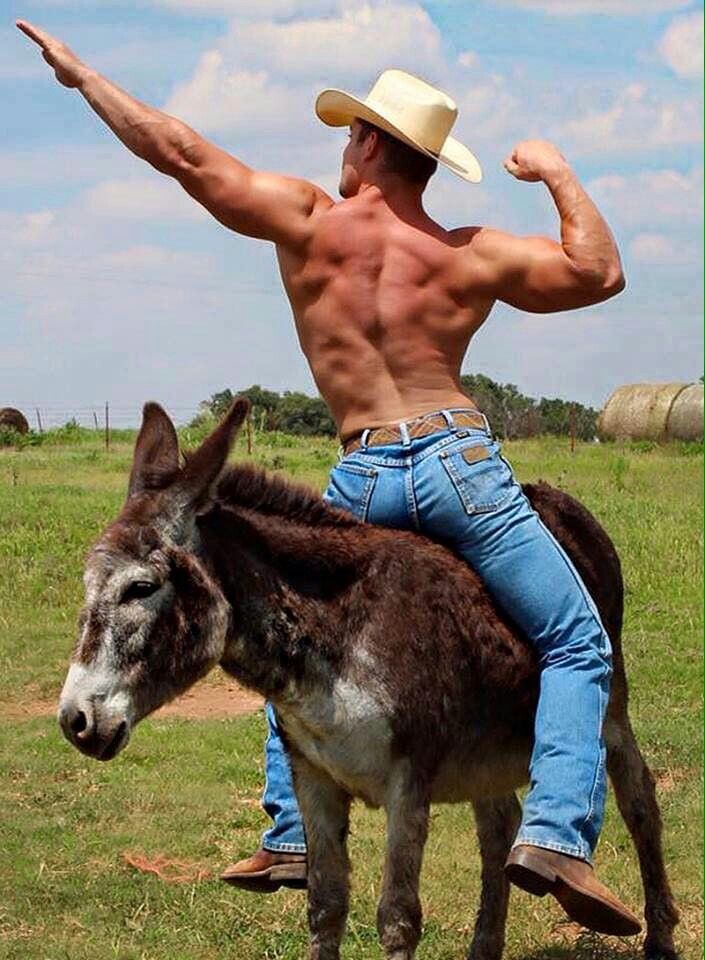
The Donkey
The next day a great multitude that had come to the feast, when they heard that Jesus was coming to Jerusalem, took branches of palm trees and went out to meet Him, and cried out:
“Hosanna!
‘Blessed is He who comes in the name of the Lord!’
The King of Israel!”
— John 12:12-13
Today, Christians throughout the world will celebrate what many consider our holiest week of the year on what is popularly known as Palm Sunday. It commemorates one of the few events in the life of Jesus recorded in all four gospel stories: his entry into Jerusalem, followed by a raucous and warm welcome and a lot of waving branches. (Only John 12:13 mentions they were palms.) In Israel today, churches still reenact the journey from the Mount of Olives to Jerusalem—the route supposedly taken by Jesus all those centuries ago.
As I study this story in Scripture, I’m struck by the fact that the primary symbol for this day—a palm—was not chosen by Jesus. John writes, “took branches of palm trees and went out to meet Him, and cried out: “Hosanna! ‘Blessed is He who comes in the name of the Lord!’ The King of Israel!”” (John 12:13). Why did the crowd choose palm branches? It could simply have been that palms were nearby. But history tells us there might have been a deeper reason: Those plants were symbolically linked to military victories and the Messiah.
First Maccabees, a book not included in Protestant Bibles, is the most extensive source of information on events in Judea from 175 to 135, and a generation before Jesus, when Simon Maccabee drove Israel’s enemies out of Jerusalem, people celebrated by waving palm branches:
On the twenty-third day of the second month, in the one hundred seventy-first year, the Jews entered it with praise and palm branches, and with harps and cymbals and stringed instruments, and with hymns and songs, because a great enemy had been crushed and removed from Israel. (1 Maccabees 13:51)
Jews during this period connected palm branches to the expectation of the Messiah. So when Jesus entered Jerusalem, people used them to interpret his identity. He was another Simon Maccabee—a long-hoped-for king who would drive out the Gentiles.
All the Gospels are clear that Jesus chose a symbol, a way for his people to make sense of his kingship. But it was the young donkey, not the palm branch (John 12:14). John rightly sees the donkey as Jesus intended. It was the fulfillment of Zechariah 9:9, which says, ““Rejoice greatly, O daughter of Zion! Shout, O daughter of Jerusalem! Behold, your King is coming to you; He is just and having salvation, lowly and riding on a donkey, a colt, the foal of a donkey.”
Jesus picked a symbol that emphasized humility and lowliness instead of military strength. That fact should inform how we celebrate and remember his entry into Jerusalem. Of course, it would be impractical for every church across the globe to find a donkey to drag into and out of its sanctuary. But we can spend Palm Sunday reflecting on what it means to follow a king who rejected the way of violence.
As we look to the donkey, not the palm, what practices might it inspire? What aspects of American Christian culture might it critique?
For some, their expressions of Christianity are too confident in our own judgment of others. They’re convinced that they are right and their enemies are not just wrong but evil. They profess that Jesus must hate the same things they hate when often they are putting words in Jesus’s mouth that was never recorded as him speaking. Jesus did not (nor could he have foreseen) that some Christians would attempt to establish their rule by distorting the words of Jesus, one angry tweet and fiery comment at a time. And so on Palm Sunday, they pick up their palm branches and raise their shouts in support of the Jesus they’ve created in their minds, not the crucified Messiah—whose rule is rooted and grounded in love. He has become a rallying cry for their agenda, not His.
As Russell Moore writes, “Jesus is right in saying this sort of hatred and violence never leads where we think it will—to a vanquishing of all of our enemies and to a victory for ‘us,’ whoever ‘us’ is.” We have forgotten that the world is both the object of God’s affection and a place in rebellion against its creator. Christian faithfulness involves holding these things in tension. Many Christians have granted so many exceptions to the love command that it’s almost empty of meaning. They have hoarded God’s grace for themselves while refusing to offer it to others. They shout about Jesus but do not pay attention to His own words and actions.
Jesus’s claim to be the Messiah was not simply about a goal—God’s rule over all things. He and the crowd agreed on that point. His earthly life and ministry were also about the means of accomplishing that goal: namely, sacrificial love. Jesus gave us not only the gift of forgiveness, flowing through his Passion and resurrection, but also a way to follow. Too many Christians, in their desire to defeat who they see as enemies, have lost Christian virtues—the fruit of the Spirit.
As these same people who called themselves Christian strive to establish God’s rule through self-assertion over neighborly care, pragmatism over principle, and malice over love, then whatever else they think they accomplish, they are not following in the way Jesus taught. God chose meekness, integrity, and love to gather his people. That is the message of Palm Sunday. For all the shouts of acclamation, Jesus never lost sight of the cross. This Holy Week and all the weeks of the year, let’s follow Jesus, who sat atop a donkey so that He can remind us again how to best follow his example.





Authors
Recent Comments
noisilycool3bc985058… on Dr. McDreamy Joe on Dr. McDreamy poetrybeautiful3d840… on Dr. McDreamy Joe on Dr. McDreamy noisilycool3bc985058… on Dr. McDreamy Top Posts & Pages


Amazon Associate

As an Amazon Associate I earn from qualifying purchases. So, if you click on a link that takes you to Amazon.com, I may earn a commission.
Trust me, it isn’t much, but every little bit helps.

 Joe
Joe


 The Closet Professor