

Monthly Archives: June 2023
Flag Day

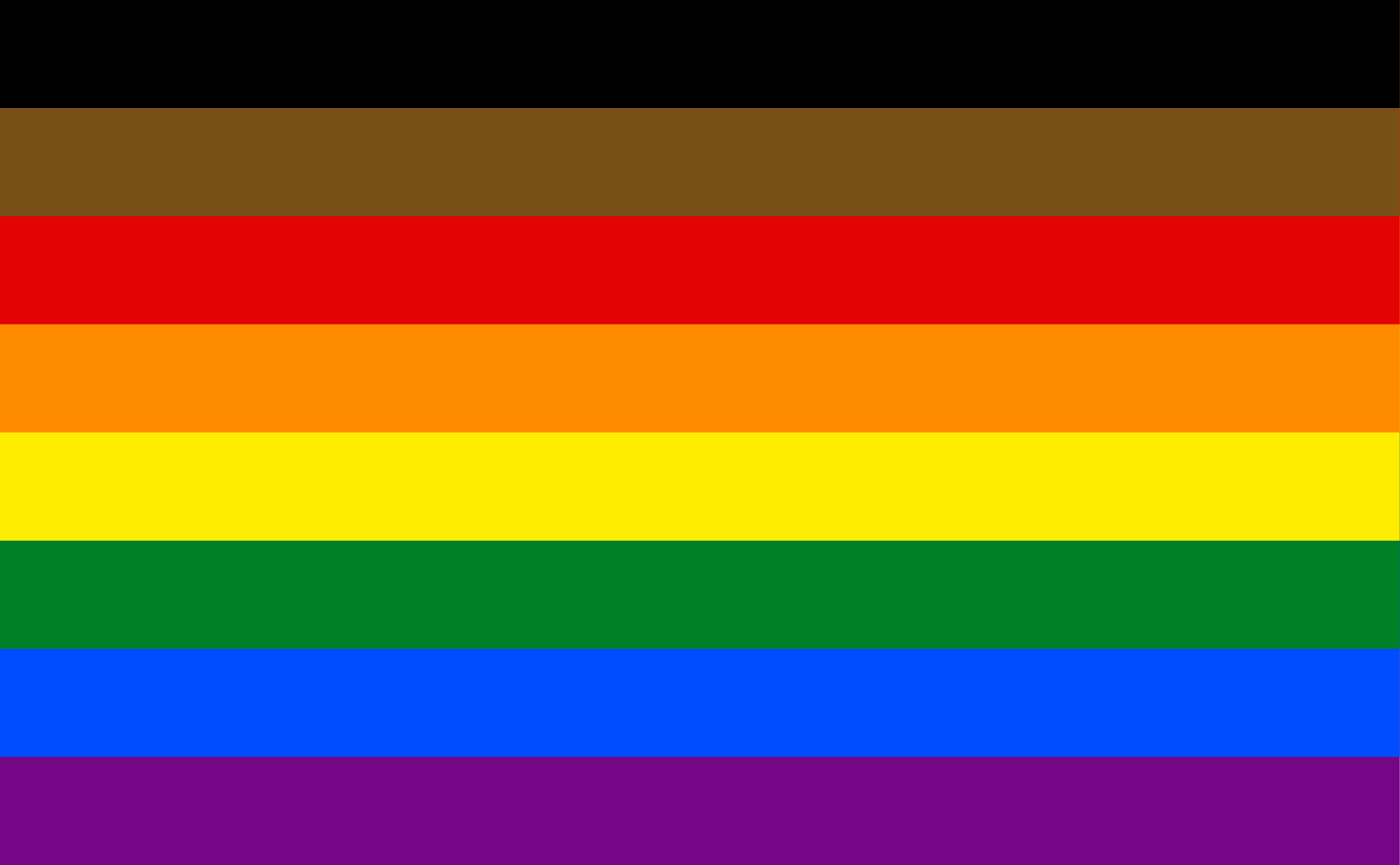
Today is Flag Day. It commemorates the adoption of the flag of the United States on June 14, 1777, by resolution of the Second Continental Congress. The Flag Resolution, passed on June 14, 1777, stated: “Resolved, That the flag of the thirteen United States be thirteen stripes, alternate red and white; that the union be thirteen stars, white in a blue field, representing a new constellation.” But June is also Pride Month, so I thought I’d do a post about the Pride Flag. Flags are symbols of community membership, unity, and visibility. A country’s flag shows a sense of citizenship and national pride. Likewise, the Pride Flag was created as a symbol of community membership, unity, and visibility.
In the late 1970s, Harvey Milk, a member of the San Francisco Board of Supervisors and the first openly gay man elected to public office, asked his friend Gilbert Baker to design a symbol to represent (what was then referred to as) the gay community. Baker collaborated with his friend Lynn Segerblom (also known as Faerie Argyle Rainbow) to design the rainbow-striped flag with eight colors:
- Hot pink: sex_________________
- Red: life _____________________
- Orange: healing ______________
- Yellow: sunlight ______________
- Green: nature ________________
- Turquoise: magic and art ______
- Indigo: serenity ______________
- Violet: spirit __________________
Baker and Segerblom’s flag debuted at the Gay Freedom Day Parade in SF in 1978. Each of the original eight colors had their own unique symbolism. With the help of close to 30 volunteers working in the attic of the Gay Community Center in San Francisco, Baker was able to construct the first draft of the now world-renowned rainbow flag. It was first showcased at San Francisco’s Gay Freedom Day Parade on June 25, 1978.
After the design was unveiled, participants of the parade proudly waved the new symbol in solidarity. Baker then took the design to Paramount Flag Company, which sold a version of the flag without hot pink and turquoise, which were replaced with blue for practicality purposes. After the assassination of Harvey Milk on November 27, 1978, demand for the rainbow banner only increased. Popularity spiked again a decade later when a West Hollywood resident sued his landlord over the right to hang his flag outside his residence.

GLBT Historical Society / Courtesy of Andrew Shaffer
Despite their outsized global impact, the two original flags were thought to be lost for more than four decades. One flag was stolen from a community center and never recovered. But Baker managed to quietly rescue a 10- by 28-foot segment of the second flag, which had been placed in storage after sustaining water damage. Baker took the item with him when he moved to New York City in 1994. After Baker’s death in 2017, the flag and his other belongings were shipped to his sister, who later passed the fragment along to Charley Beal, president of the Gilbert Baker Foundation. Beal did not realize he was in possession of the original 1978 banner until early 2020, when a vexillologist (or flag expert) examined the item firsthand and confirmed its provenance. In June 2021, the GLBT Historical Society Museum unveiled a glass case containing this rare artifact: a segment of the original rainbow gay pride flag, its colors as vibrant as ever.
The iconic rainbow design has succeeded in part because it conveys a bright, hopeful message. In the years since it debuted, the rainbow flag has only grown in popularity and is now seen around the globe as a positive representation of the LGBTQ+ community. A mile-long version of the flag was created to celebrate the 25th anniversaries of two landmark events; the Stonewall Riots and Baker’s creation of the flag itself.
Baker died on March 31, 2017, at the age of 65, just two years after the legalization of same-sex marriage throughout the U.S. His legacy lives on in the six-colored flag that flies proudly every Gay Pride month, recognizing the lives, and loves, of LGBTQ+ people worldwide.

Undressing You

Undressing You
By Witter Bynner
Fiercely I remove from you
All the little vestiges—
Garments that confine you,
Things that touch the flesh,
The wool and the silk
And the linen that entwine you,
Tear them all away from you,
Bare you from the mesh.
And now I have you as you are,
Nothing to encumber you—
But now I see, caressing you,
Colder hands than mine.
They take away your flesh and bone,
And, utterly undressing you,
They tear you from your beauty
And they leave no sign.
About the Poet
Witter Bynner was born in Brooklyn, New York in 1881. He graduated from Harvard University in 1902. After college, he worked as a newspaper reporter and, later, as the assistant editor of McClure’s magazine.
Bynner published his first poetry collection, An Ode to Harvard (Small, Maynard, & Co.), in 1907. He was also the author of New Poems (Alfred A. Knopf, 1960); Take Away the Darkness (Alfred A. Knopf, 1947); The Beloved Stranger (Alfred A. Knopf, 1919); Tiger (M. Kennerley, 1913); and several other poetry collections.
In 1922, Bynner settled in Santa Fe, New Mexico with his partner, Robert Hunt. He died there on June 1, 1968.

When You’re Smiling

Therefore encourage each other and edify one another, just as you also are doing.
—1 Thessalonians 5:11
There is a quote by Dolly Parton that says, “If you see someone without a smile, give them one of yours.” I think of days when I am feeling depressed or worried, and it’s hard to put a smile on my face. It is times like that when you need someone to remind you there is a reason to smile. Smiles can be infectious. I know if I see someone smile, I smile back. I do the same thing when someone winks at me (I wink back), or if someone yawns around me (it causes me to yawn).
If we think about the Golden Rule, i.e., Luke 6:31, “And just as you want men to do to you, you also do to them likewise,” if you want someone to smile at you, shouldn’t you do the same for them. You never know what someone else is going through. They may be in a bad mood one day and make you angry, or they are just a miserable person on a regular basis. We should think about why they are in a bad mood or such a miserable person. Something in their life is not going well, and we just don’t know what it is. Therefore, sometimes all you can do with people like that is to be friendly and smile. It may just be what they need.
Romans 14:19 says, “Therefore, let us pursue the things which make for peace and the things by which one may build up another.” We deal with difficult people every day, but if we stoop to their level and are also difficult, then we are not pursuing “the things which make for peace.” Instead, we are just reinforcing their difficult behavior. When I deal with difficult people, and I do nearly every weekday, I smile, I am pleasant, and I don’t let them know how miserable I think they are.
In the song “When You’re Smiling” popularized by Louis Armstrong, Frank Sinatra, and others, it says:
When you’re smilin’, when you’re smilin’
The whole world smiles with you
When you’re laughin’, when you’re laughin’
The sun comes shinin’ through
But when you’re cryin’, you bring on the rain
So stop that cryin’, be happy again
Keep on smilin’, ’cause when you’re smilin’
The whole world smiles with you
When you’re smilin’, when you’re smilin’
The whole world, it smiles with you
When you’re laughin’, oh babe, when you’re laughin’
The sun would-a come shining through
But when you’re cryin’, you bring on the rain
So, stop that sighin’, come on and be happy again
Keep on smilin’, ’cause when you’re smilin’, baby
The whole world smiles with you




Authors
Recent Comments
furbirdsqueerly on Pic of the Day Joe on Pic of the Day noisilycool3bc985058… on Pic of the Day vandycolt on Moment of Zen: Reading noisilycool3bc985058… on Pic of the Day Top Posts & Pages




Amazon Associate

As an Amazon Associate I earn from qualifying purchases. So, if you click on a link that takes you to Amazon.com, I may earn a commission.
Trust me, it isn’t much, but every little bit helps.

 Joe
Joe


 The Closet Professor