

Monthly Archives: August 2023
It Must Be Thursday…
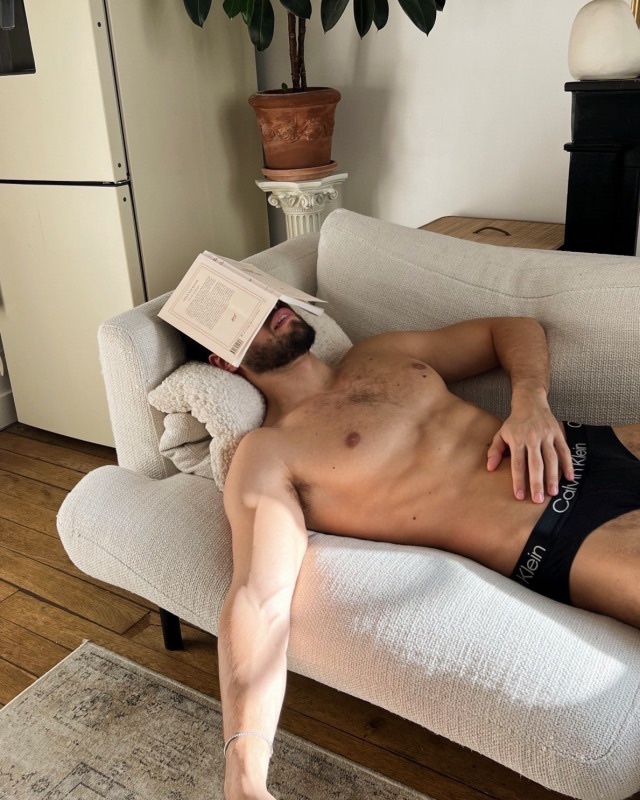
“This must be Thursday,” said Arthur to himself, sinking low over his beer. “I never could get the hang of Thursdays.”
—Douglas Adams, The Hitchhiker’s Guide to the Galaxy

Hump Day

It’s Wednesday, or Hump Day, but sadly, no one is humping me. 😂 I’m ready for this week to be over with and I only work half a day on Monday. My migraine seems to be better this morning, but I had to leave work early Monday and stayed home yesterday. Even with my headache better, I did not want to get out of bed, but alas, I need to go to work today. Not because I have anything to do at work, but I need to go to the pharmacy at lunch and pick up some prescription refills. If I’m going to drive into town, o might as well also work, or at least sit at my desk and appear to work.
I’m other news, I found out that I did not get the job I’d interviewed for a week or so ago. They decided to go with someone with more experience at a “high traffic” historic site. I can understand that as my museum numbers our visitors in the thousands while they measure theirs in millions. It was probably the nicest rejection email I’ve ever received. The director said she wish it could be better news as she enjoyed meeting me and getting the chance to chat. I thought that was pretty nice. As a friend of mine said, “It’s their loss, and a big one.” I’m not so sure that’s true, but I think I’d have been very good at the job.
Names for Hunger
Names for Hunger
By Mrigaa Sethi
On the walk back from
the therapist to the office
you rub your chest and say
It’ll be all right, my gurgush
There’s a clusterfuck waiting at work,
things that really aren’t personal
but slice you up anyway
You’ll be all right, my malai ka doona
It’ll all get done, my chhunmunita
You think of your mother
whose love birthed all these names
How often she hurt you
and it dawns on you, like a flash
of lightning on an airplane:
love is a bagad billa
At the pantry, you feed yourself
a boxed lunch of baingan and channa
and remember how she once
stood at the door, hours
after she locked you up in a room
a plate of aloo parathas in her hand
and a look that said you were ok now,
the anger under your relief
You swallow the last morsel, feeling
it graze your heart.
Back at work, hungry again.
About the Poet
Mrigaa Sethi is an Indian poet and writer who was born in New Delhi. They were raised in Bangkok and currently living in Singapore. Their poems have appeared in The Seneca Review, ep;phany and other literary magazines, and been anthologized in Call and Response 2 and EXHALE: an Anthology of Queer Singapore Voices. She is also a storyteller and has performed at Other Tongues: A Festival of Minority Voices, What’s Your Story Slam, the Singapore Night Festival and StoryFest.
They are also a journalist and writer/editor who covers lifestyle, business, and social issues across the Asia-Pacific region. Their freelance journalism has appeared in Quartz, the Wall Street Journal and CNN Travel, and she has produced jargon-free business content for clients such as Prudential, TM ONE, NinjaVan, and other start-ups. Outside of work, Their creative projects engage digital audiences across different mediums. Over the pandemic, she hosted a podcast series for the Singapore Writers Festival, ran a poetry-themed video series, and helped lead an online theatre festival for queer women in Singapore. Their newest passion project is growing Their LinkedIn network of thought leaders and followers, around topics such as creativity, diversity and inclusion, and content marketing.
Mrigaa’s mother is Bonny Sethi, a fashion designer whose one-woman studio in Bangkok – June Fifth by Bonny – specializes in bespoke Indian bridal wear. Mrigaa is quite the opposite of their mother. In an article for the Singapore women’s magazine Her World, she explains:
As a toddler, I would lie on the floor and shriek with displeasure when she put me in dresses and stockings. During my tween years, I would mope around at parties in the high-waisted skirts and floral blouses she picked out for me. I loathed the culottes the girls had to wear at my Catholic middle school – my mother refused to buy me the trouser option – and hid inside a sweaty oversized jacket.
As a teenager, I became more willful, insisting on wearing my father’s roomy flannel shirts and leather belts. Every dressy occasion – office parties, Diwali dos, wedding receptions – became a fashion battleground for my mother and me.
The tension wasn’t just about clothes. And as I grew older, my gender and sexuality became harder to deny. Fashion anguish aside, I had unrequited crushes on female classmates and teachers that my mother knew about but was unprepared to handle.
There was no word in Hindi for what I was. There wasn’t anyone like me in Bangkok’s conservative Indian community, where their child’s eventual heterosexual wedding was the dream twinkling in every parent’s eye.
After high school, she moved to the US. In both fashion and romance, she found the freedom she wanted but wasn’t able to find the right fit. Mrigaa found it hard to reconcile their sexuality with their Indian identity. She felt she could be queer or Indian, but never at the same time. Things seemed to come to a head when she moved back to Bangkok from the US seven years later and faced the choice of going back in the closet or being openly gay in the city where their parents’ Indian community resided. Their mother’s bridal business had taken off and become very well-known and was concerned that living with my partner would lead to gossip.
The integration of being queer and Indian took many years, but things changed for the better when their mother stopped negotiating on toned-down Indian women’s outfits for them and started designing clothes that made me feel good: more masculine sherwanis, Aligarh trousers, fitted Nehru collar jackets in rich prints with silk pocket squares. Eventually, it seemed like the cosmos sent their mother a gift. Mrigaa met their current partner whom they say is “beautiful, both inside and out.” On every visit to Bangkok, their mother showered their partner with all the dresses, jewelry, and handbags a fashionista mother could give a daughter.
About the Poem
Sometimes you read a poem and you immediately identify with it in some way. You may not understand the whole poem, but there is just something about it that speaks to you. “Names for Hunger” by Mrigaa Sethi did that for me. Mrigaa is lesbian and Indian, while I am white, s gay man from the southern United States. Being members of the LGBTQ+ though is not they only thing we have in common. Our relationships with our mothers are complex, and we are constantly trying to work through that complexity.
Speaking about this poem, Mrigaa Sethi said, “I lived in Singapore during the pandemic, and for a time my temporary office happened to be across the street from my therapist’s. After one particularly impactful session, I came back to my office and reheated my lunch of homemade Indian leftovers. They used to cause me great shame when I was a little immigrant kid, but in adulthood bring me great joy. This poem resulted from the collision of my ‘work self’ with some other selves that had lingered after therapy.”
Before I give my thoughts on the poem, I thought I’d try to give definitions for some of the words in this poem that were unfamiliar to me and will possibly be unfamiliar to you. I could not find a direct reference to the first three, but the last three were easy enough to find. If you are familiar with any of these words (some mean something very different in language other than Hindi), please let me know.
- Gargush was the most difficult for me to understand. The word gargush is Hebrew for a traditional Yemenite Jewish headdress. I do not believe this is what the poet was referencing. I think it is more likely a Hinglish (a mixture of the English and Hindi) word for gorgeous, though I could not find this in my searches for the word’s meaning.
- malai ka doona: Malaika is a Hindu girl’s name meaning “angel.” Doona is a type of quilt or duvet, but it also seems to mean “doubly.” By best guess is malai ka doona means a double angel, or maybe a very sweet and caring person. I could not find any actual equivalent in Hindi, so this is my best guess.
- I assume that chhunmunita is the diminutive of Chhunmun, a girl’s name meaning “Cute.” Thus, chhunmunita would mean “little cutie” or something to that affect. Again, I could not actually find a meaning for chhunmunita. Chunmun is also a clothing store in India, which might mean there is a connection to Mrigaa Sethi’s mother.
- Bagad billa an imaginary animal invoked to frighten children. Also, the name Bagadbilla is of Hindi origin and means “A cat which pretends to be a tiger.”
- Baingan and channa is a flavorful vegan eggplant (baingan) and chickpea (channa) curry.
- Aloo paratha is a paratha (flat bread dish) stuffed with potato filling that is traditionally eaten for breakfast.
The poet hears their mother’s voice in their head as they cross the street from their therapist to their temporary office. They know that “there’s a clusterfuck waiting at work.” As a queer Indian, the poet speaks of how often their mother hurt them and that love can be a terrifying monster (bagad billa) that pretends to be something that it is not but disguises itself as something that should be beautiful. As the poet eats their lunch, they realize that their mother did love them but found it hard to express that love through understanding. Eventually, the mother does accept the poet, and they go back to work still feeling hungry for the love that they had felt they lacked growing up.
I can understand the frustration of wanting to be accepted by your mother who believes that what she does, even though it hurts you, is done in love. My own mother lived in denial about my sexuality for years, and she still often hurts me with how she deals with it and the little nasty comments she sometimes makes. Yet, she wraps all of that in what she believes is love, when it is more hurtful than love ever should be. For some, like Mrigaa Sethi, acceptance eventually comes, but for others like me, I doubt it ever will. So, we press on, get back to work, and live our lives the best we can.

Rain and Migraines
We are expecting rain from today until Wednesday, which is most likely the reason why I’ve had a migraine all weekend. My migraine actually woke me up twice in the night last night. I was hoping I would wake up this morning and it would be better. And maybe it is a little, but it definitely has not gone away. I’d like to call in sick today but unless it get worse before it’s time to leave, I’ll probably go in and at least try to work this morning.
I hate my migraines, and I really hate that they are so affected by atmospheric changes. Vermont had gotten a lot of rain this summer which has proved to be a real problem. I wish we could have at least a week of nice sunny weather. Vermont needs a break from the rain so we can finally dry out after the floods a few weeks ago. The standing water causes more issues than just saturating the ground and not allowing any place for more rain to go. It also means an infestation of mosquitoes. I feel like I can’t leave my apartment without spraying myself down with insect repellent. I hate mosquitoes!
Inner Beauty

But the Lord said to Samuel, “Do not look at his appearance or at his physical stature, because I have refused him. For the Lord does not see as man sees; for man looks at the outward appearance, but the Lord looks at the heart.”
—1 Samuel 16:7
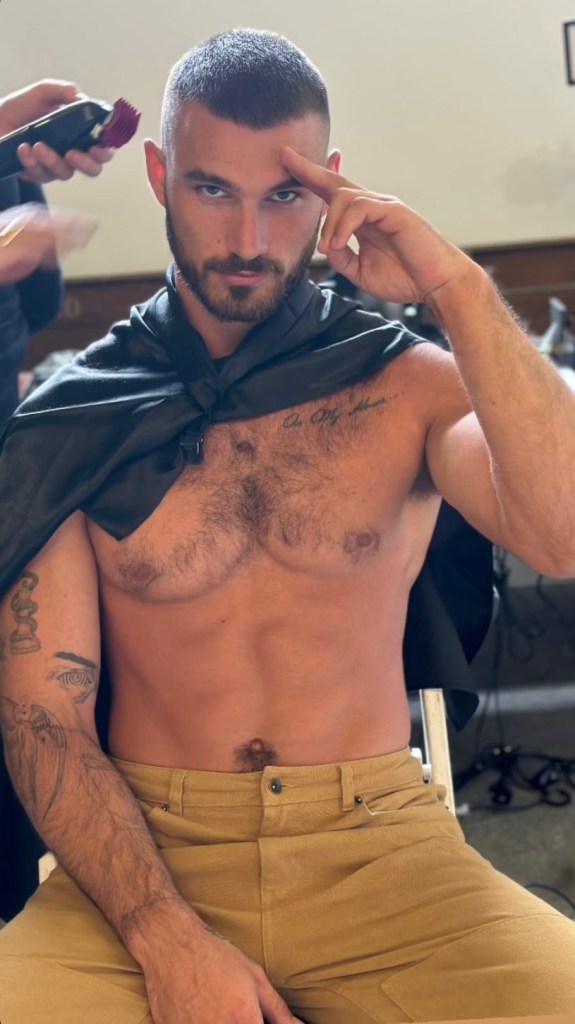
I know on this blog, I post pictures of beautiful men. I had trouble trying to find the right one for today’s post. We all have our own preferences for beautiful men. When I was younger, before I realized I was gay, I would look at beautiful men and think, “I want to look like that.” I wanted to have the beauty and body of the men I saw in magazines. That was what I told myself: it was only admiration. And while admiration was certainly a part of that, it was also a feeling of lust, something that many Christians believe is a sin. As I grew older and examined myself, I realized, I did not have the same lust for women that I had for men. In fact, I was not attracted to women, no matter how hard I tried. We all enjoy aesthetic beauty, especially that of men. Does it mean that the person is beautiful on the inside? Does it mean that we focus too much on appearances than a person’s inner beauty? Yes, we probably do. But should we? No, we shouldn’t. However, it is part of human nature. So, I post images of beautiful men because we all like to look at them. We may not all agree on what constitutes beauty, but we can agree that there are many attractive men out there in the world. The question is, are they as attractive on the inside?
We’ve all met a physically attractive person before. Beautiful or handsome, we are stunned by their appearance. Sometimes, however, when we get to know that person, their character or personality makes them less attractive. Perhaps they are prideful or annoying in some way. Maybe they are cruel or insensitive to the feelings and needs of others. Whatever it might be, this person we thought was attractive is now repugnant to us. Character is more important than anything else. A person can have a modicum of talent and still enjoy great success due to their work ethic or other positive traits. It is also possible for the most talented individual to never accomplish anything due to laziness or entitlement. Despite knowing this, we still want our celebrities to be beautiful or handsome. We want good-looking people in ads. As much as it might be changing, we continue to deal with impossible standards of beauty in media. It is human nature, and we might say, to look at the surface first. To “judge a book by its cover,” so to speak. As I said, I am guilty of this.
In the above passage from 1 Samuel 16:7, God has sent the prophet Samuel to Bethlehem, telling him that among the sons of a man named Jesse, God will anoint a new king. In 1 Samuel 16:6, when Samuel sees the first son Eliab, he said, “Surely the Lord’s anointed is before Him!” God replied, “Do not look at his appearance or at his physical stature, because I have refused him. For the Lord does not see as man sees; for man looks at the outward appearance, but the Lord looks at the heart.” God judges our hearts, not our physical appearance. It is the inner person that is what is truly beautiful or ugly. Our hearts are capable of so many thoughts and feelings, reflections of the complexities of God. We should not fall into the trap of believing that our looks are to be a source of pride or envy.
Our true beauty should come from the inside, not from the outward appearance the world often judges us on. In 1 Peter 3:3-4, Peter says, “Do not let your adornment be merely outward—arranging the hair, wearing gold, or putting on fine apparel—rather let it be the hidden person of the heart, with the incorruptible beauty of a gentle and quiet spirit, which is very precious in the sight of God.” Peter may be talking to women in this passage, but it is advice for all of us. In Matthew 23:28, Jesus said of the scribes and Pharisees, “Even so you also outwardly appear righteous to men, but inside you are full of hypocrisy and lawlessness.” Sadly, we see similar things today with many religious leaders. However, modern religious leaders and politicians not only do they say things that are hypocritical, but also they say things in a way that is very unchristian, yet they wrap in the veil of Christianity.
Physical appearance has its place and is important to God in that it reveals the glory of His creative abilities. So we should appreciate the beauty God has given us as His most complex and amazing creation. In ways we cannot understand, we reflect His own beauty. God places some value on appearances; if He did not, we would all look the same. It is not a wrong thing for us to notice and appreciate physical appearance as well. However, outward appearance should not be our only focus. If the reason we try to be the perfect weight, wear the best clothes, have facial treatments, etc., is to impress other people, then our physical appearance has become a matter of pride. First Corinthians 6:19-20 says, “Or do you not know that your body is the temple of the Holy Spirit who is in you, whom you have from God, and you are not your own? For you were bought at a price; therefore glorify God in your body and in your spirit, which are God’s.” While vanity may cause us to alter our outward appearance, our bodies are a temple for God, and we should take care of it.
Nonetheless, we should be humbly aware of our appearance and do so for our health (even mental health of feeling good about ourselves) rather than acting to conform to the world’s standards. Matthew 23:12 says, “And whoever exalts himself will be humbled, and he who humbles himself will be exalted.” James 4:6 says, “God resists the proud, but gives grace to the humble.” Sometimes, we feel shame in the way we look. The author J’son M. Lee wrote, “Shame is the demon that keeps many of us trapped in our pain; healing comes when we gain the courage to confront our demon(s).” One anonymous author wrote, “May we each find in ourselves the courage we forgot we have, to see the beauty we forgot is inside us, while battling the demons we forgot we can slay, on a battlefield we forgot we can win.”


Authors
Recent Comments
noisilycool3bc985058… on Dr. McDreamy Joe on Dr. McDreamy poetrybeautiful3d840… on Dr. McDreamy Joe on Dr. McDreamy noisilycool3bc985058… on Dr. McDreamy Top Posts & Pages


Amazon Associate

As an Amazon Associate I earn from qualifying purchases. So, if you click on a link that takes you to Amazon.com, I may earn a commission.
Trust me, it isn’t much, but every little bit helps.

 Joe
Joe


 The Closet Professor