


Normally, I work from home on Fridays, but today is different. I worked from home in the afternoon on Tuesday and Thursday, because I knew I’d have to go into the office today. There is an event/meeting in the museum this morning, and I have to be in early to let the caterers in so they can set up before the meeting. I usually get to work at 7:30 am (except on my teaching days when I try to get there at 7 am to prepare for class). My coworkers usually arrive after 8 am when we open. I don’t know what they do when I’m not there, probably open late. Anyway, since the caterers are coming at 7:40 and I normally get there at that time, I said I’d work at the museum today instead of my usual WFH day. Sometimes, I’m too nice to my coworkers, who, quite honestly, don’t deserve it. Oh well, hopefully, I’m building up some good karma.

I got up early this morning and basically had breakfast, got ready for work, and went to the museum to prepare for my class today. I had some last minute notes I needed to go over. I hope all of you have a great day!

I overslept this morning and forgot to write a post when I got up. I fed Isabella and made some breakfast, but writing a post wasn’t on my mind. I’ll write something for tomorrow.
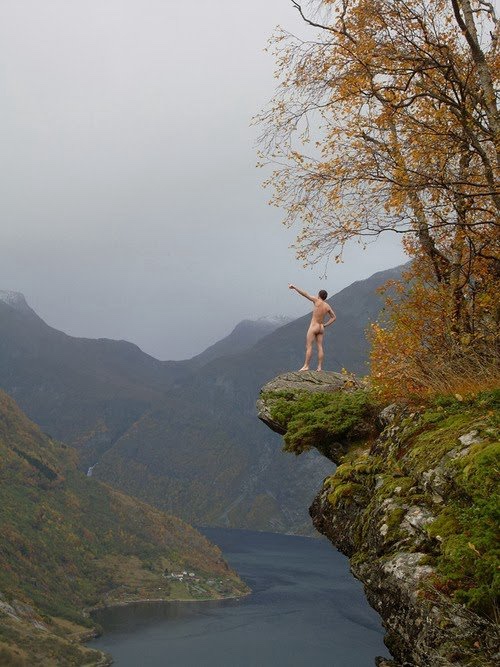
Alone
By Edgar Allan Poe
From childhood’s hour I have not been
As others were—I have not seen
As others saw—I could not bring
My passions from a common spring—
From the same source I have not taken
My sorrow—I could not awaken
My heart to joy at the same tone—
And all I lov’d—I lov’d alone—
Then—in my childhood—in the dawn
Of a most stormy life—was drawn
From ev’ry depth of good and ill
The mystery which binds me still—
From the torrent, or the fountain—
From the red cliff of the mountain—
From the sun that ‘round me roll’d
In its autumn tint of gold—
From the lightning in the sky
As it pass’d me flying by—
From the thunder, and the storm—
And the cloud that took the form
(When the rest of Heaven was blue)
Of a demon in my view—
About the Poem
Edgar Allan Poe’s early life was full of tragedy and by the time this poem is thought to have been written, despite his relatively young age, he had experienced a large amount of loss. Poe wrote “Alone” in 1829, shortly after the death of his foster mother, Frances Allan. The poem was not titled or published in Poe’s lifetime but was discovered after his death and published posthumously in 1875. Known for his darker-themed works, it perhaps makes sense in this context that where others see a blue sky, he often struggled to see past the “demon in his view.”
“Alone” is believed to be autobiographical. The narrator perceives his life and emotions differently to others which has led to him feeling isolated. In the poem, he is questioning why he sees things so differently. The major theme of “Alone” is of feeling isolated, seen as different, and being misunderstood. The beauty and irony of these feelings is one that many people can relate to, and the very act of expressing these feelings through poetry connects Poe with others who feel the same. Poe feels his intense imaginative life is a curse, forever setting him apart from other people. But it’s also a blessing, the source of his visionary power.
About the Poet
Along with Robert Frost and Emily Dickinson, Edgar Allan Poe is one of my favorite poets. As with Frost, what might seem to be a simple and straightforward poem has a lot more complexity. Poe always felt he was different, and he struggled to fit in. Poe mostly handled these feelings with destructive behavior, while Dickinson handles her feelings by being a recluse. All three poets expressed their feelings eloquently in their poems. While Frost is not usually known for darker themes like Poe is, he did write a few poems that make you contemplate your own mortality and the choices we make in life. Dickinson has many of the dark themes of Poe, though she is not primarily known for them. Her most famous poem, “Because I Could Not Stop for Death,” is definitely one of her more morbid prose.
Edgar Allan Poe was born on January 19, 1809, in Boston. Poe’s father and mother, both professional actors, died before the poet was three years old, and John and Frances Allan raised him as a foster child in Richmond, Virginia. John Allan, a prosperous tobacco exporter, sent Poe to the best boarding schools and, later, to the University of Virginia, where Poe excelled academically. After less than one year of school, however, he was forced to leave the university when Allan refused to pay Poe’s gambling debts.
Poe returned briefly to Richmond, but his relationship with Allan deteriorated. In 1827, Poe moved to Boston and enlisted in the United States Army. His first collection of poems, Tamerlane, and Other Poems (George Redway) was published that year. In 1829, he published a second collection entitled Al Aaraaf, Tamerlane, and Minor Poems (Hatch & Dunning). Neither volume received significant critical or public attention. Following his Army service, Poe was admitted to the United States Military Academy, but he was again forced to leave for lack of financial support, and because he may have been kicked out for showing up at formation naked among other mischievous events. He then moved into the home of his aunt Maria Clemm and her daughter, Virginia, in Baltimore.
Poe began to sell short stories to magazines at around this time, and, in 1835, he became the editor of the Southern Literary Messenger in Richmond, where he moved with his aunt and cousin Virginia. In 1836, he married Virginia, who was thirteen years old at the time. Over the next ten years, Poe edited a number of literary journals including the Burton’s Gentleman’s Magazine and Graham’s Magazine in Philadelphia and the Broadway Journal in New York City. It was during these years that he established himself as a poet, a short story writer, and an editor. He published some of his best-known stories and poems, including “The Fall of the House of Usher,” “The Tell-Tale Heart,” “The Murders in the Rue Morgue,” and “The Raven.”
After Virginia’s death from tuberculosis in 1847, Poe’s lifelong struggle with depression and alcoholism worsened. He returned briefly to Richmond in 1849 and then set out for an editing job in Philadelphia. For unknown reasons, he stopped in Baltimore. On October 3, 1849, he was found in a state of semi-consciousness. Poe died four days later of “acute congestion of the brain.” Evidence by medical practitioners who reopened the case has shown that Poe may have been suffering from rabies.
Poe’s work as an editor, poet, and critic had a profound impact on American and international literature. His stories mark him as one of the originators of both horror and detective fiction. Many anthologies credit him as the “architect” of the modern short story. He was also one of the first critics to focus primarily on the effect of style and structure in a literary work; as such, he has been seen as a forerunner to the “art for art’s sake” movement. Today, Poe is remembered as one of the first American writers to become a major figure in world literature.


 | noisilycool3bc985058… on Dr. McDreamy |
 | Joe on Dr. McDreamy |
 | poetrybeautiful3d840… on Dr. McDreamy |
| Joe on Dr. McDreamy |
| noisilycool3bc985058… on Dr. McDreamy |


As an Amazon Associate I earn from qualifying purchases. So, if you click on a link that takes you to Amazon.com, I may earn a commission.
Trust me, it isn’t much, but every little bit helps.








 The Closet Professor