

Monthly Archives: February 2024
Moment of Zen: Sleeping In




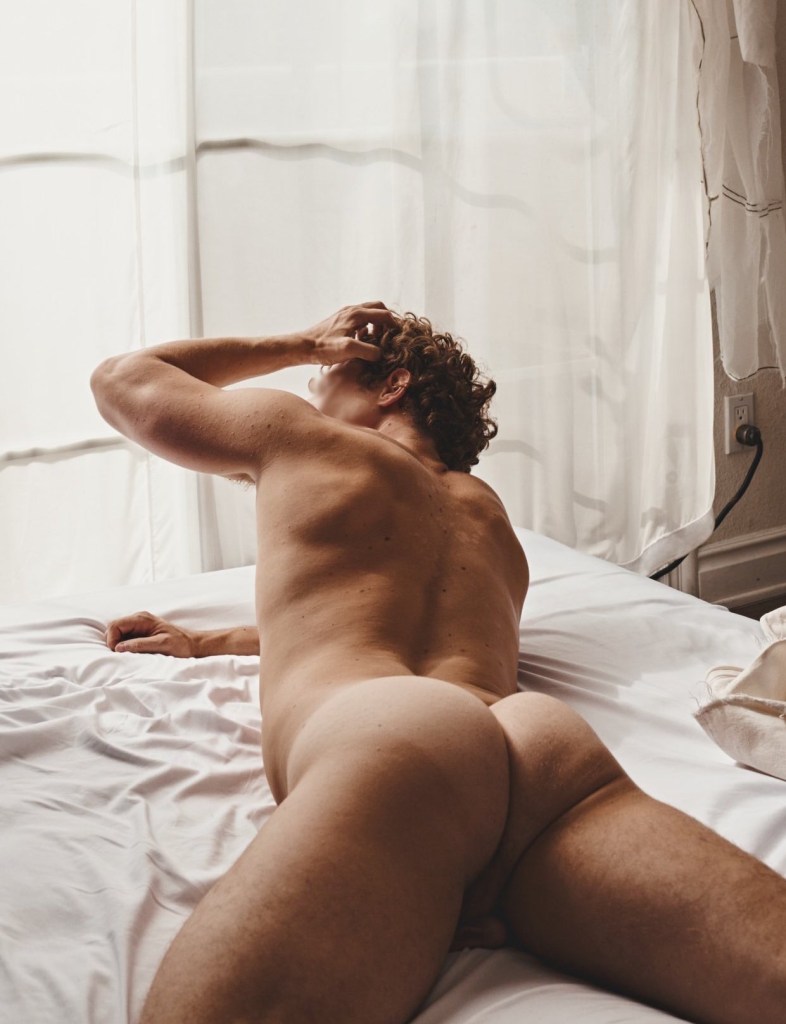
I slept until 6:30 this morning. I can’t remember the last time I slept that late, or the last time Isabella allowed me to sleep that late.

It’s Friday

It’s Friday, but it’s not the end of my work week. I have to go in tomorrow for a few hours to open up the museum for some tours that will be coming through. I really don’t mind. I’ve done tours for this particular group (there are different people each time, but they are on campus for the same reason), and it’s never bad. Tours only aggravate me when there is someone who has specific questions about weapons, engines, or other military minutiae that I don’t have an answer for. Usually, the person asking already has the answer and wants to show off how much they know. Usually, tours are very easy going.
I’ll also be giving a tour today, but I’ll have coworkers with me who can answer any difficult questions. I can tell stories about our artifacts all day long, but when it comes to specifications of a piece, I sometimes have issues. I’ve also never been good at remembering numbers, so that also makes those type of questions difficult.
Today is going to be another long Friday just like last Friday. At least I’ll get a good dinner at a nice restaurant tonight. I just hope I like the person I have to spend much of the day and evening with because I might have to deal with them a lot more in the future.
Anyway, that’s all the ramblings I have for today. I hope you have a wonderful weekend!

Time

The time you enjoy wasting is not wasted time.
—Bertrand Russell
People often have different definitions of what wasting time means. I know of a lot of people who were told when they were younger that they were wasting time because they were doing something they enjoyed. Maybe they were day dreaming, doodling, or even reading a book, but if you think about it, the imagination of poets and writers comes from their day dreams, great artists began as doodlers, and reading is how we learn. We agree with Bertrand Russell that if you enjoyed what you are doing, then you’re not wasting your time.
Bertrand Arthur William Russell, 3rd Earl Russell, OM, FRS (18 May 1872 – 2 February 1970) was a British mathematician, philosopher, and public intellectual.

Getting Over the Hump

I worked from home yesterday. Usually, I work from home on Fridays but last week and this week, we are having visitors to the museum that I have to be there to meet with. It will be another long Friday because I am taking our guest to dinner Friday night. Luckily, there are no major tasks to be done today or tomorrow. I have a meeting this morning and am meeting with a photographer this afternoon for him to take photos of one of our artifacts.
What I’d really like to do today is stay in bed and either read or lay in the dark. Last night as I was getting ready for bed, I started seeing an aura, a reliable sign that a migraine is coming. Since the second round of Botox injections, my migraines have been so much better, but nothing is likely to make them go away completely. With seeing the aura last night, it’s no surprise that I have the beginnings of a migraine. It’s been steadily getting worse the longer I’m awake.
If it gets significantly worse, I may not be at work all day, though I hope that doesn’t happen. As much as I’d like to stay home today, I have at least one thing to do today which I need access to my desktop computer for. The other reason I’m hoping it doesn’t get worse is that I really need to go by the grocery store on my way home today. It’s something I’ve been putting off that i should have done over the weekend. Going grocery shopping with a migraine is never a good idea because even with a list, I’ll still forget something in my rush to get in and out of the store.
Anyway, that’s all the babbling stream of consciousness I have for today. Have a great day, everyone!

Cold War

Cold War
By Randall Mann
If you can remember the cold war, you’re too old for me.
—Grindr profile
Because you’re twenty-two, and in your prime,
you silently refuse to date, or “date.”
When war was cold, I had a lovely time.
I messaged you and sent a shot of grime,
then shot some more. It must have been too late.
Because you’re twenty-two, and in your prime?
Perhaps. I’m shifting like a paradigm.
And all the new assumptions formulate
as if our war were cold. A lovely time:
I’ll exercise my stock, internal rhyme—
the currency is yours to circulate.
I’m forty-nine; my interest rate is prime.
Suppose that poverty is not a crime.
Suppose you more or less accommodate,
like war. When cold, we’ll have a lovely time.
Perhaps you’ll click on me in wintertime.
Proximity is constant; so is fate.
Was I twenty-two? Before my prime
the war was cold. I had a lovely time.
About this Poem
“When I read this epigraph on a Grindr profile, I laughed, dryly, and then wrote it down in my notebook. When I returned to it, the villanelle just sort of wrote itself. This poem is in conversation with, and takes a few gestures from, an uncollected villanelle, ‘Complaint,’ that I published in 2002.” —Randall Mann
About the Poet
Randall Mann is the author of six collections of poetry, most recently Deal: New and Selected Poems (Copper Canyon Press, 2023), as well as Proprietary (Persea Books, 2017) and Straight Razor (Persea Books, 2013). He lives in San Francisco.
A Note about Villanelles
The villanelle is a highly structured poem made up of five tercets followed by a quatrain, with two repeating rhymes and two refrains. Besides sonnets, the villanelle is my favorite poetic form.
Rules of the Villanelle Form
The first and third lines of the opening tercet are repeated alternately in the last lines of the succeeding stanzas; then in the final stanza, the refrain serves as the poem’s two concluding lines. Using capitals for the refrains and lowercase letters for the rhymes, the form could be expressed as: A1 b A2 / a b A1 / a b A2 / a b A1 / a b A2 / a b A1 A2.
History of the Villanelle Form
Strange as it may seem for a poem with such a rigid rhyme scheme, the villanelle did not start off as a fixed form. During the Renaissance, the villanella and villancico (from the Italian villano, or peasant) were Italian and Spanish dance-songs. French poets who called their poems “villanelle” did not follow any specific schemes, rhymes, or refrains. Rather, the title implied that, like the Italian and Spanish dance-songs, their poems spoke of simple, often pastoral, or rustic themes.
While some scholars believe that the form as we know it today has been in existence since the sixteenth century, others argue that only one Renaissance poem was ever written in that manner—Jean Passerat’s “Villanelle,” or “J’ay perdu ma tourterelle”—and that it wasn’t until the late nineteenth century that the villanelle was defined as a fixed form by French poet Théodore de Banville.
Regardless of its provenance, the form did not catch on in France, but it has become increasingly popular among poets writing in English. An excellent example of the form is Dylan Thomas’s “Do not go gentle into that good night.”
Contemporary poets, such as Randall Mann, have not limited themselves to the pastoral themes originally expressed by the free-form villanelles of the Renaissance and have loosened the fixed form to allow variations on the refrains. Elizabeth Bishop’s “One Art” is another well-known example; other poets who have penned villanelles include W. H. Auden, Oscar Wilde, Seamus Heaney, David Shapiro, and Sylvia Plath.


Authors
Recent Comments
furbirdsqueerly on Pic of the Day Joe on Pic of the Day noisilycool3bc985058… on Pic of the Day vandycolt on Moment of Zen: Reading noisilycool3bc985058… on Pic of the Day Top Posts & Pages




Amazon Associate

As an Amazon Associate I earn from qualifying purchases. So, if you click on a link that takes you to Amazon.com, I may earn a commission.
Trust me, it isn’t much, but every little bit helps.

 Joe
Joe


 The Closet Professor