





Migraines have their say
By Teri Ellen Cross Davis
Whitney cottage, Hermitage Artist Retreat
You could write about the windows
all nine of them. You could write about
the gulf, red tide strangling Florida’s
shore, the opaque eyes of dead fish
caught in the algal bloom. You could write
about the sky—long as a yawn, sky blue
chasing cerulean away, stretched wisps
of white determined to be the canvas
for another sunset showstopper. But the body
has its own narrative in mind. Neurons hustling
pain blank out any page. No writing can be done
when an electric snare corrals the brain. No ear
searching for song while one temple pulses
an arrhythmic lament. Mercifully there’s triptan,
a black curtain over this inflammatory act. Strike
through today, uncap the pen again tomorrow.
About this Poem
“I was diagnosed with migraines at thirteen. Before the breakthrough of triptans for treatment, I had to lie down for roughly three days in darkness with an ice pack. Now, with medication, when a migraine arrives, I only lose half a day to a full day to the pain. To have a migraine while attending an artist’s retreat felt like a special kind of theft of the time I had arranged away from work and family. I wanted to capture the tension between the migraine’s will and my own, how I sought to find inspiration in a darker moment.”—Teri Ellen Cross Davis
I have my first appointment with a new provider at the Headache Clinic this morning, so I thought this poem would be appropriate. I miss my former provider. She and I had a good relationship, and she seem to really understand my migraines. She listened, talked about stress and outside influences that were affecting the frequency of my migraines, and was not afraid to have me try new treatments. I thanked her one time for never giving up on trying to relieve my chronic migraines. She said that migraine treatments were a lot of trial and error. What works for one person doesn’t necessarily work for everyone. It was all about finding the right combination. I really hate that she moved away, and I have been without a provider there since October.
I hope I like this new provider. I like the two nurse practitioners who have been administrating my Botox treatments, and I hope I will be able to say the same for this new provider. I seem to have finally found a treatment plan that is working fairly well, so I hope I’m kept on the same regimen as I have been on for the past six months. The Botox plus the Qulipta seem to be help as a daily preventive medication and Anaprox, naratriptan, and/or hydroxyzine (the combination changes according to the severity of the migraine) usually help for acute/abortive treatments of individual migraines.
About the Poet
Teri Ellen Cross Davis is a Black American poet and the author of a more perfect Union (Mad Creek Books, 2021), winner of the Charles B. Wheeler Poetry Prize, and Haint (Gival Press, 2016), winner of the 2017 Ohioana Book Award for Poetry. She was a Cave Canem Fellow and currently works for the Folger Shakespeare Library in Washington, D.C. She lives in Silver Spring, Maryland.

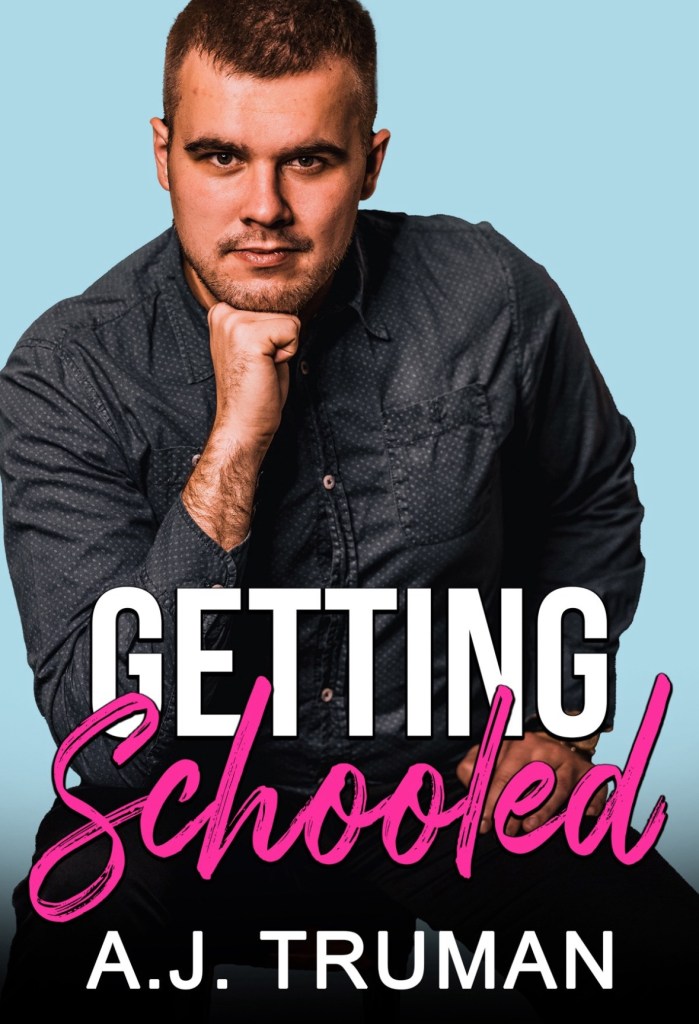
Warning: This post will be more graphic and talk about sex much more than I usually do.
The picture above is often a meme saying, “That Tasted Nothing Like Pineapple.” I’ve been reading a lot of gay romance books lately, and there are a few things that always make me roll my eyes when I read them.
The first one is when characters have a hands-free orgasm while having anal sex. Many of us know that being the bottom during sex can be a truly wonderful experience, but for me, it’s never been so outstanding that it caused me to have an orgasm with out any stimulation to my dick. Just saying. While I know it’s possible, it certainly doesn’t happen in the frequency it does during m/m romances. I know it’s a plot device to show that the sex is earth shatteringly good, but my goodness, these authors need to lay off on the hands-free orgasm. If a man did it as many times as some of the characters in these books, it’s more likely that they suffer from premature ejaculation instead of mind-blowing sex.
The other thing is that precum and cum is always referred to as tasting bitter. In real life people often describe semen as tasting salty, sweet, bitter, metal, sharp, or sour. The bitterness or saltiness because it has a more alkaline pH. The sweetness can be attributed to greater sugar content, especially glucose and fructose which give sperm their energy to move. One study suggested that people with diabetes may secrete more sugar into their semen giving it a sweeter taste. A metallic taste is because of the minerals and vitamins it contains.
In my personal experience, and maybe yours have been different, I’ve never experienced a man’s semen to taste bitter. These m/m romance authors mostly say that cum is bitter but also often say that it is salty, and that I can agree with. For me, I’ve usually thought that cum had a gamey or sweet taste, or maybe salty sweet. Precum has always tasted sweet to me. I’ve never considered it to be bitter. The truth is that the taste of semen varies from person to person.
Although many people insist that certain foods change the taste of their semen, there is no conclusive research to confirm this link. Anecdotally, some people believe that fruits, such as citrus fruits and pineapple, may improve the flavor of semen. Foods that produce a strong odor, such as broccoli and cauliflower, may make semen taste or smell worse. Likewise, foods that tend to change the appearance or smell of other bodily fluids, such as asparagus, may also change the taste of semen. One thing that does alter the taste of a man’s semen is hygiene. It is well established that taste and smell are linked, and in consequence, funky body odor can lead to it tasting funky.

With all that being said, out of my own curiosity, I pose the following questions: Does cum have a bitter taste like so many authors claim? I don’t understand why they always describe it as bitter. Why not say cum has a salty sweet flavor? Authors could describe the taste of cum in differing ways, yet they almost universally say it’s bitter.

Love suffers long and is kind; love does not envy; love does not parade itself, is not puffed up; does not behave rudely, does not seek its own, is not provoked, thinks no evil; does not rejoice in iniquity, but rejoices in the truth; bears all things, believes all things, hopes all things, endures all things. Love never fails.
—1 Corinthians 13:4-8
The world does not have as much love as it should. There is far too much hate in this world. Christians make up to 2.38 billion of the worldwide population of about 8 billion people, or about 30 percent of the world’s population. While there are around 10,000 distinct religions in the world, over three-quarters of the global population adheres to one of these four – Christianity (31 percent), Islam (24 percent), Hinduism (15 percent), and Buddhism (7 percent). Love is a universal theme of love found in all religious traditions, Buddhist, Christian, Islam, or others.
Love is not exclusive to any one religion and is a primary underlying principle found in religions worldwide. The concept of altruistic love challenges the spiritual person to “love your enemies” or to “love without thought of return.” First John 3:11 says, “For this is the message that you heard from the beginning, that we should love one another,” It is a love that flows out to others through compassion, kindness, tenderness, and charitable giving. First John 3:18, “My little children, let us not love in word or in tongue, but in deed and in truth.”
Buddhists have a path of compassion, where caring for others becomes the motivating force behind existence. Hindus have a branch of yoga, the heart-centered path, that leads to enlightenment through an overwhelming love for God that takes the form of loving all humanity. Eastern religions, such as Taoism and Confucianism, see transcendent love as essential to true wisdom. Love is a universal theme of love found in all religious traditions. As we realize that all religions have this spiritual principle of love at their core, we can develop a sense of shared humanity. The religious tradition of love should inspire all of us to grow in compassion and love for all people.
When the Pharisees asked Jesus, “Teacher, which is the great commandment in the law?” (Matthew 22:36), Jesus said to them, “‘You shall love the Lord your God with all your heart, with all your soul, and with all your mind.’ This is the first and great commandment. And the second is like it: ‘You shall love your neighbor as yourself.’ On these two commandments hang all the Law and the Prophets.” (Matthew 22:37-40) Yet, not all those who claim to be Christian follow these two laws. They may claim to follow them, but if you do not love your neighbor, then you do not have a love for God.
The hatred we see in the world comes from fear compounded by ignorance. First John 4:18 tells us, “There is no fear in love; but perfect love casts out fear, because fear involves torment. But he who fears has not been made perfect in love.” Fear often comes from misunderstanding and ignorance. It is the unknown that causes many people to be afraid, and fear often manifests itself in hatred. In 2 Timothy 1:7, Paul wrote to his fellow missionary Timothy, “For God has not given us a spirit of fear, but of power and of love and of a sound mind.” Those who hate are afraid of equality and love. Love is one of the primary virtues of Christianity along with faith, hope, and charity.
Love has always been considered central to the Christian faith. It refers both to the nature of God and to the orientation and quality of a Christian. The Bible challenges Jews and Christians with God’s command to love God, other humans, and their own selves. Frist John 4:11-12 says, “Beloved, if God so loved us, we also ought to love one another. No one has seen God at any time. If we love one another, God abides in us, and His love has been perfected in us.” In the three Abrahamic religions (Judaism, Christianity, and Islam), love has always been more than feeling, emotion, and passing sensation. The primary principle of all faiths is to show love and we do this by helping others. James 2:17 says, “Faith by itself isn’t enough. Unless it produces good deeds, it is dead and useless.”
The problem with the phrase “hate the sin, love the sinner” is the interpretation of sin. It is often said to the LGBTQ+ community to justify their claim to love us yet they pass laws and judgement that show their hatred for us. At the heart of sexual orientation is love. Who we love that is the only thing that should distinguish people who are straight, gay, lesbian, bisexual, any other of a myriad of sexualities, and it is loving ourselves that allows a person to accept themselves as transgender or queer. Those who are taught hatred or are the victims of hatred because of a particular faith, especially when done by people who claim to love us, causes many LGBTQ+ individuals to turn away from religion. We are taught to hate ourselves, and that hatred comes from fear. Whether that is fear of losing our family, being ostracized by our community, facing ridicule and shame for who we are, it all stems from people who do not have love in their hearts, and if they do not have love in their hearts, then they do not and cannot love God because it is hatred and fear that separates them from God’s love.
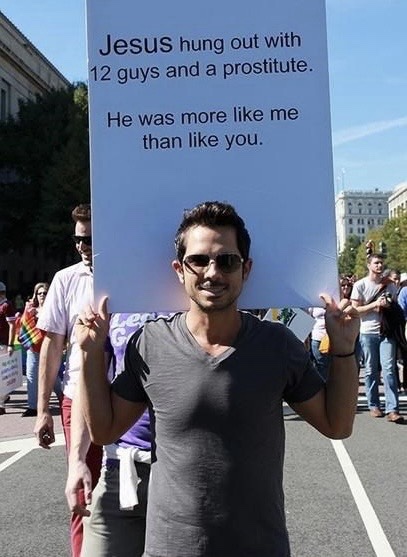
We cannot return that hatred as retribution. In Matthew 5:38-40, Jesus says, “You have heard that it was said, ‘Eye for eye, and tooth for tooth.’But I tell you, do not resist an evil person. If anyone slaps you on the right cheek, turn to them the other cheek also. And if anyone wants to sue you and take your shirt, hand over your coat as well.” Jesus goes on to say in Matthew 5:43-44, “You have heard that it was said, ‘Love your neighbor and hate your enemy.’ But I tell you, love your enemies and pray for those who persecute you.” I remember back in graduate school the hate group that call themselves Westboro Baptist Church came to my campus to protest and shout obscenities to those who they deemed unworthy of God’s love. A lot of people on campus staged a counter protest and engaged with these hateful people. I always felt that there was only one response to hate groups like Westboro Baptist Church, and that is to kneel and pray that God would deliver them from evil and show them the ways of His love. So, as I passed by, I stopped and said a prayer asking God to show them the light of his love. In my opinion, the best way to combat hatred is through love. If we show our love to those who hate us, then we are living by example, and isn’t that what Christianity is about? We are supposed to live by the example that Jesus set forth for us when he walked the earth. I have often seen the picture below of a gay man holding up a sign that says, “Jesus hung out with 12 guys and a prostitutes. He was more like me than you.” I’ve always loved that thought, because Jesus did live the way he wanted us to live.


 | noisilycool3bc985058… on Pic of the Day |
 | iameverywhere1 on Not Quite as Planned |
| iameverywhere1 on Pic of the Day |
| noisilycool3bc985058… on Not Quite as Planned |
 | Joe on Pic of the Day |



As an Amazon Associate I earn from qualifying purchases. So, if you click on a link that takes you to Amazon.com, I may earn a commission.
Trust me, it isn’t much, but every little bit helps.










 The Closet Professor