

Monthly Archives: April 2024
Pleasant Dreams

I had a weird night of sleep last night. It’s not like I didn’t sleep well; I slept really well and woke up refreshed this morning. However, what made it weird was that I feel like I was dreaming all night long, one dream after another. Some of you might say that everyone dreams during REM sleep, and that’s certainly true. I know I dream, but I never wake up feeling like I’ve been dreaming all night. I can’t remember any of the dreams, just vague flashes here and there this morning. Every so often, I vividly remember my dreams; the vast majority of the time, I do not remember any of my dreams.

One of those bits and pieces I remember was dreaming about the movie Cruel Intentions. I’m not sure why I was dreaming about this movie other than a friend and I were discussing the movie Friday night. I wouldn’t actually call it discussing the movie, I was mainly saying that this was one of my gay awakenings. There were certainly other things I saw or that happened that really cemented to me that I was gay, but the scene above in which Sebastian (Ryan Phillipe) drops his towel after getting out of the pool is one I will always remember vividly. Many gay men around my age will say that this scene was their gay awakening too. I think that’s what made this somewhat mediocre movie a cult classic. Oh, and my dream car has been a black vintage Jaguar XK140 convertible, like the one Sebastian drives in the movie.

Anyway, as I sit here drinking my tea, it’s nice to have the feeling that I slept well last night and had pleasant dreams. Whether we remember our dreams or not, I suspect we have all woken up some mornings knowing we had a night full of unpleasant dreams and nightmares. So, it’s very nice to wake up knowing that you had a restful night of sleep filled with pleasant dreams.

Comfort and Acceptance

Blessed be the God and Father of our Lord Jesus Christ, the Father of mercies and God of all comfort, who comforts us in all our tribulation, that we may be able to comfort those who are in any trouble, with the comfort with which we ourselves are comforted by God.
—2 Corinthians 1:3-4
I had a migraine last night, and it is still with me this morning. As it is Sunday, I was thinking about my weekly devotional. Did I even have the fortitude to write one this week? It made me think about what the Bible says about pain. The Bible speaks a lot about mental and metaphysical such as Revelation 21:4, “And God will wipe away every tear from their eyes; there shall be no more death, nor sorrow, nor crying. There shall be no more pain, for the former things have passed away.” The Bible discusses our grief and suffering many times and how it will one day end “In the Morning of Joy.”
However, other than the miracles Jesus performed healing the sick, not as much is said about physical pain and suffering. As I was searching for verses about physical pain, I came across 2 Corinthians 1:3-4, which says, God “comforts us in all our tribulation, that we may be able to comfort those who are in any trouble, with the comfort with which we ourselves are comforted by God.” While this may not be specifically about physical pain, it did remind me of some of the purposes of this blog. When I first started this blog, it was meant to be “A blog about LGBTQ+ History, Art, Literature, Politics, Culture, and Whatever Else Comes to Mind. The Closet Professor is a fun (sometimes tongue-in-cheek, sometimes very serious) approach to LGBTQ+ Culture” as the tagline says at the top of this blog, but as we do in life, it has taken a journey in a more varied direction.
One of those purposes was to be a place where LGBTQ+ Christians, especially those raised in the Church of Christ, could find a place of understanding and acceptance. Over the years, I have met some wonderful people who came across this blog while searching for what it means to be an LGBTQ+ Christian who wanted to keep their faith in the very conservative Church of Christ, and many of them told me that this blog helped them to understand their faith better and through it found personal acceptance. Some of those individuals became close friends of mine.
Being a welcoming place for LGBTQ+ Christians is something I consider a mission of my Sunday devotionals, but this has not been my sole objective for this blog. I have also chosen to be open and honest about the trials, tribulations, and treatments for my migraines. I am not in the medical profession, but I have experienced nearly every possible medical treatment for migraines, from antidepressants, anti-anxiety medications, beta blockers, calcium blockers, Botox injections, to newer CGRP treatments. I have taken a long list of preventative and abortive treatments for migraines.
In both of these instances, I have tried to give others an honest perspective and to let them know they are not alone. There are people out there who have suffered just like I have. I wanted this blog to be a place where others can hopefully find the same comfort with which I have been comforted by God. I may no longer attend church or formally pray, but I have kept a close relationship with God. I have an internal dialogue with God constantly. Yes, there are certainly times when I offer up a silent prayer for myself and others, because I follow Jesus’s instructions about prayer in Matthew 6:6-7, “But you, when you pray, go into your room, and when you have shut your door, pray to your Father who is in the secret place; and your Father who sees in secret will reward you openly. And when you pray, do not use vain repetitions as the heathen do. For they think that they will be heard for their many words.”
For me, faith is a very personal journey. I will never deny being a devout Christian. I will continue to share my spiritual mission every Sunday, but in my everyday existence, I believe that the best way to show my faith is by living in a way that I hope is an example of a true believer in Christ’s teachings.
So, with this blog, I attempt to provide comfort to others, whether that is through my personal journey as a faithful Christian, a sufferer of chronic migraines, or through stories of my mundane life, my love of poetry, or by giving examples of LGBTQ+ people and our allies throughout history (and, yes, also my appreciation for beautiful men). I’m not sure I’m successful in all those aspects, but I’ll continue to try to be a place of comfort and acceptance.






Prescott Townsend
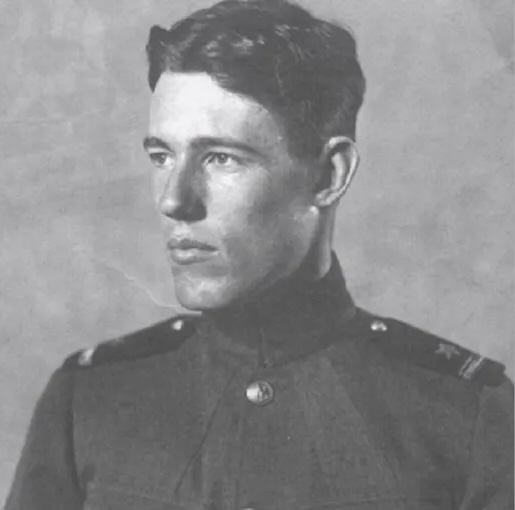
Prescott Townsend (1894-1973) was born into an old, wealthy Boston family. His mother was both a descendant of Myles Standish through her grandmother Susannah Perkins Staples (the sister of Yale Law School founder Seth Perkins Staples) and other Mayflower passengers, and the great-granddaughter of the American founding father Roger Sherman and his wife Rebecca Minot Prescott, through their son Roger Sherman, Jr. Townsend came out as a teenager, and his parents were accepting but told him to be cautious.
He attended the Volkman School, graduated in 1918 from Harvard University, and attended Harvard Law Schoolfor one year. He spent the summer of 1914 in logging camps in Montana and Idaho, and traveled to North Africa and the Soviet Union. After serving in World War I, Prescott lived in Paris for a time, becoming immersed in the bohemian culture of the era. He then “sought to establish an outpost of that culture” in his hometown of Boston and returned to Boston’s Beacon Hill neighborhood, where he began a relationship with theater producer Elliot Paul, with whom he founded the experimental Barn Theatre in 1922.
Paul introduced Townsend to numerous avant-garde creatives, including openly gay writer André Gide. Townsend operated speakeasies, restaurants, and theaters, cultivating a bohemian neighborhood on Beacon Hill’s Joy Street. He also spent time in Provincetown, where he became friendly with playwright Eugene O’Neill and other theater artists. He pioneered the popularity of A-frame houses, building several in Provincetown. He was later a founder of the Provincetown Playhouse, where the works of Eugene O’Neill were first performed.
Prescott was very happy to be a patron of the arts, and artists were very happy to take his money, However, the Great Depression ended all that.
By the 1930s, Prescott Townsend repeatedly addressed the Massachusetts legislature as an acknowledged homosexual man advocating for the repeal of sodomy legislation, urging the lawmakers “to legalize love.” He was indulged due to his family’s wealth and Boston Brahmin status, but he was ignored by lawmakers. While working at the shipyard during World War II, Townsend was arrested in 1943, for participating in an “unnatural and lascivious act.” He did not deny it, and was sentenced to eighteen months in the Massachusetts House of Corrections.
Shortly after, Prescott was officially stricken from both the New York and Boston Social Registers. In the 1950s, he held meetings at his home/bookstore, which he described as “the first social discussion of homosexuality in Boston.” In talks in Boston and Provincetown he promoted his “Snowflake Theory” of human personality and sexuality, stating that the human mind is like a snowflake in that no two are alike, and each has six opposing sides: I/You, He/She, Hit/Submit. He embraced a more in-your-face generation of activists in the late 1960s, marked by the uprising at New York City’s Stonewall Inn in 1969 and at age 76, he attended the first Pride parade in New York on the one-year anniversary of the Stonewall riots.
Toward the end of his life, his two remaining properties on the Hill were on its North Slope, traditionally the side where servants of patrician South Slope residents lived. He accommodated a motley collection of tenants, mostly young gay men, in an eight-unit building at 75 Phillips St. He always advocated for the outsider, the hippies, vagabonds, and runaway homeless queer youth his was a legacy of love, money and uplift.
Townsend died at age 78. He had, for years, been suffering from failing health brought on by Parkinson’s disease, and on May 23, 1973, his body was found in the Beacon Hill apartment of John Murray, who had been caring for him during the final years of his life. The police reported that “when we came in to take charge of the body, Mr. Townsend was found in a kneeling prayer position at his bedside.” Of his entire family, only one sister, a nephew and a great-nephew attended his memorial service at the Arlington Street Church.

Cernunnos
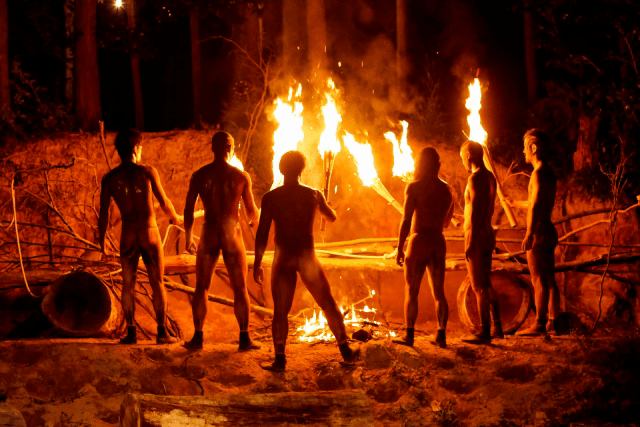
Last June, I went to a weekend escape to Easton Mountain, a gay men’s retreat in Greenwich, NY. One of the activities was a Cernunnos Fire Ceremony. The Cernunnos Ceremony is meant to tap into the energy of the wild ones in the woods that is meant to encourage a person to be free and listen to natures rhythms as a way of healing and self-expression. Cernunnos dates back to the ancient Celtic religion practiced freely in pre-Roman Europe. The picture above is of a modern Cernunnos Fire Festival, which is often performed nude in an effort to break down all barriers between nature and the body.
Cernunnos was a Celtic god who represented nature, flora, fauna, and fertility. He is frequently depicted with antlers, seated cross-legged, and is associated with stags, horned serpents, dogs, and bulls. He is usually shown holding or wearing a torc and sometimes holding a bag of coins (or grain) and a cornucopia. Cernunnos may have been one of the inspirations for depictions of Satan in Christian art and hero figures in the medieval literature of Wales and Ireland.
Cernunnos was perhaps the most important deity in the Celtic religion if we consider the frequency he is represented in ancient Celtic art from Ireland to Romania. Contrary to what many New Age beliefs, few facts are known about the Celtic religion, because there are no surviving native records of their beliefs. Evidence about their religion is gleaned from archaeology, Greco-Roman accounts (some of them hostile and probably not well-informed), and literature from the early Christian period.
The name Cernunnos originated because of a single instance of the name, an inscription and image on the 1st-century CE Nautae Parisiaci monument (see the image in the upper right of the inner cauldron below). It is also true that there were other Celtic gods with horns whose significance and associations remain unknown. It is important to restate that so little is known of Cernunnos that it is possible we are entirely misinterpreting representations of him in Celtic art. As the historian J. MacKillop notes: “our knowledge of Cernunnos is so tenuous that he may not be a divinity at all but rather a shaman-like priest with antlers affixed to his head”

With global warming, dependency on technology, and even modesty, our connection to nature is often lost. As warmer weather is slowly returning to Vermont, I am hoping to have the chance to do more hiking this summer. I wasn’t able to do so last year because of the floods in Vermont that made the local hiking trails treacherous. Hopefully, this summer will be different. I’d love to be able to connect with nature more, and the exercise will be nice too.


Authors
Recent Comments
furbirdsqueerly on Pic of the Day Joe on Pic of the Day noisilycool3bc985058… on Pic of the Day vandycolt on Moment of Zen: Reading noisilycool3bc985058… on Pic of the Day Top Posts & Pages




Amazon Associate

As an Amazon Associate I earn from qualifying purchases. So, if you click on a link that takes you to Amazon.com, I may earn a commission.
Trust me, it isn’t much, but every little bit helps.

 Joe
Joe


 The Closet Professor