

Monthly Archives: November 2024
My Bed Is Calling Me

This morning, my bed is calling me back to it. I would love nothing more than to just crawl back into my bed with its warm blankets and go back to sleep. If I did not have a class to teach this afternoon, I would call in sick with a migraine; however, instead, I took some medicine for the headache I woke up with this morning. I am hoping it will improve before I have to leave for work. Maybe after I have some breakfast and take a shower, I will feel more energized, but right now, my energy level is low.
At least, it’s Friday and tomorrow, I can go back to bed after feeding Isabella. I can do the same on Sunday and Monday, too. On Monday, I have a medical appointment at noon, and since it is up in Burlington, I am taking the whole day off. I need an extra day out of the office. Nothing bad has really happened, but work has been putting me in a bad mood this week. There are reasons for my grumpy mood, but I just need to get over it and go about my day.

Slow Week

It’s been a slow work week because there hasn’t been a lot for me to do. Today though will probably be different. I have several tasks that I need to complete today. I have two tours to do today and a class to prepare for tomorrow. I had my work from home day yesterday because I have to be at the museum tomorrow, my usual work from home day, to teach said class. I would rather stay home and crawl back into my bed, but alas, I have to go to work.

Last Week’s Election

For many LGBTQ+ individuals, the recent election of Donald Trump in 2024 may feel like a step backward, bringing about complicated emotions and concerns. For those of us who identify as gay, lesbian, bisexual, transgender, or queer, this election outcome can be a reminder of the challenges we face in securing lasting acceptance and equality. It may seem hopeless to many of us. I certainly feel that way, but I am trying to find something to be hopeful about in looking towards the future.
The first time Trump was elected, his administration often took stances that left LGBTQ+ people feeling vulnerable. From the debates over protections for LGBTQ+ employees to battles about health care access and the rights of transgender individuals, there was an undercurrent of uncertainty about whether our rights would be respected or reversed, especially with the current makeup of the Supreme Court, which has for several decades mostly protected our rights, but with a majority of ultraconservative justices, our rights are on the line. For some of us, it felt like a time of resilience and strength as we supported one another. But even that resilience can wear thin over time.
Now, in 2024, the news feels overwhelming or even triggering for those who felt we were just beginning to feel secure in our identities or equal in our rights. It’s not uncommon to feel depressed or anxious about what this election means for us and our loved ones. We know that the fight for equality will have to continue in new ways, with new challenges. In this moment, it’s crucial to reach out for support, to find community, and to look after our mental well-being.
For many LGBTQ+ individuals, this election is (or should be) a call to action. It cannot be a time for quiet reflection. We have to be vigilant in our struggle for equality. No matter what, it’s essential to recognize that we’re not alone. There are communities, organizations, and allies ready to stand beside us. Finding hope and comfort in shared spaces, whether online or in person, can help us navigate this complex and sometimes overwhelming time.

At the Mid Hour of Night

At the Mid Hour of Night
By Thomas Moore
At the mid hour of night, when stars are weeping, I fly
To the lone vale we loved, when life shone warm in thine eye;
And I think oft, if spirits can steal from the regions of air,
To revisit past scenes of delight, thou wilt come to me there,
And tell me our love is remembered, even in the sky.
Then I sing the wild song ’twas once such pleasure to hear!
When our voices commingling breathed, like one, on the ear;
And, as Echo far off through the vale my sad orison rolls,
I think, oh my love! ’tis thy voice from the Kingdom of Souls,
Faintly answering still the notes that once were so dear.
About this Poem
Thomas Moore’s poem “At the Mid Hour of Night” is a lyrical expression of love, longing, and memory. The poem captures a moment of deep nostalgia, where the speaker reflects on a lost love, filling the quiet night with a bittersweet yearning. The “mid hour of night” symbolizes a quiet, solitary time when one is most likely to be lost in thought. It represents a reflective moment when memories resurface.
The speaker reminisces about a past love, feeling the ghostly presence of their lover in the silence of the night. The imagery Moore uses evokes a dream-like, almost haunting quality, as if the speaker is visited by memories that cannot be fully grasped or held onto. His speaker’s longing reflects a deep emotional attachment to someone who is absent, suggesting either physical separation or the finality of death. The lines speak to the way love lingers in memory, refusing to fade even when the person is no longer present. Moore’s choice of words, like “phantoms” and the suggestion of a ghostly presence, gives the poem an ethereal quality, hinting that the lover’s memory might be more than just a thought—it’s almost as if the lover is truly there in spirit.
The line “The light of other days” suggests that past memories shine brightly in the speaker’s mind, illuminating the present with a light that is no longer physically there. This metaphor captures the power of memory to bring joy and sorrow, showing how love remains a part of one’s life even when it’s no longer tangible.
Ultimately, “At the Mid Hour of Night” explores the power of love to transcend time and space. The speaker’s love lives on in memories, as vivid and haunting as if it were a spectral presence. Moore’s poem speaks to the universal experience of missing someone and feeling their absence keenly, especially in quiet, reflective moments. The poem thus touches on the immortality of love, held within the mind and heart, and how deeply it intertwines with memory and longing.
About the Poet
Thomas Moore (1779–1852) was an Irish poet, singer, songwriter, and entertainer, renowned for his romantic poetry and Irish patriotic songs. Born in Dublin, Moore attended Trinity College and later moved to London, where he became well-known in literary circles. His works often celebrated Irish culture and history, most famously in Irish Melodies (1808–1834), a collection of lyrics set to traditional Irish tunes. His poems, like “The Last Rose of Summer” and “Oft, in the Stilly Night,” became widely popular for their lyrical beauty and emotional depth. Moore was also politically active, advocating for Irish nationalism and independence, which reflected in his writings. He is remembered as Ireland’s national bard, combining literary skill with a deep love for his homeland. Moore died in Wiltshire, England, on February 25, 1852.


Honoring LGBTQ+ Veterans

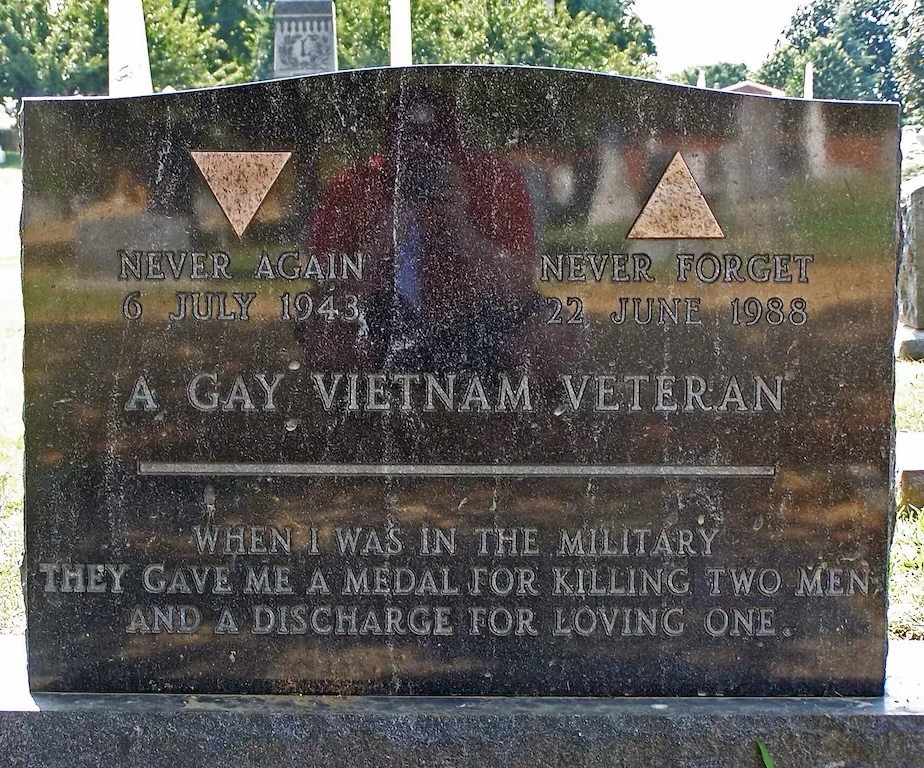
Veterans Day is a U.S. holiday observed annually on November 11 to honor and thank all military veterans for their service to the country. Originally called Armistice Day, it marked the end of World War I at 11 am on November 11, 1918. In 1954, it was renamed Veterans Day to recognize veterans of all wars and branches of service. In some countries, it was renamed Remembrance Day. Unlike Memorial Day, which honors those who died in military service, Veterans Day celebrates all who have served, both living and deceased. It’s a day to reflect on the sacrifices made by veterans to protect the freedoms and values of the United States. Today, we extend a special recognition to LGBTQ+ veterans who have made extraordinary sacrifices to protect our freedoms, often facing unique challenges and barriers along the way.
The military has historically been a challenging environment for LGBTQ+ service members, with policies like “Don’t Ask, Don’t Tell” (DADT) reminding us of a time when service members risked their careers—and even their freedom—by simply being open about their identities. The repeal of DADT in 2011 marked a significant step toward equality, but LGBTQ+ veterans have a longer history of service and sacrifice that deserves our recognition and respect.
LGBTQ+ veterans have served in every conflict in American history, often in silence, yet with a dedication to the mission and their comrades. Despite facing systemic discrimination, they have shown the same courage and commitment as their peers, contributing to our safety and national security. Their service is a testament to their resilience and a reminder of the strength that diversity brings to our armed forces.
Many LGBTQ+ veterans carry the additional burden of dealing with the consequences of historical discrimination. For some, this has meant fighting for proper benefits, receiving honorable discharges, or simply finding acknowledgment of their service. Thankfully, as awareness and support grow, resources are being created to help LGBTQ+ veterans access the care and recognition they deserve. These efforts are crucial as we work toward a future where all veterans are honored for their service, regardless of who they are.
Today, we honor LGBTQ+ veterans for their bravery, resilience, and sacrifice. They remind us that the pursuit of freedom and equality often requires courage not only on the battlefield but in everyday life. Let us continue to support and uplift LGBTQ+ veterans, ensuring they receive the honor, care, and respect they have always deserved.
Thank you to all LGBTQ+ veterans. Your service has made a difference, and your stories continue to inspire us all.


Authors
Recent Comments
Joe on Pic of the Day vandycolt on Pic of the Day furbirdsqueerly on Pic of the Day Joe on Pic of the Day noisilycool3bc985058… on Pic of the Day Top Posts & Pages



Amazon Associate

As an Amazon Associate I earn from qualifying purchases. So, if you click on a link that takes you to Amazon.com, I may earn a commission.
Trust me, it isn’t much, but every little bit helps.

 Joe
Joe


 The Closet Professor