

Monthly Archives: February 2025
Nothing Can Separate Us from God’s Love

“What, then, shall we say in response to these things? If God is for us, who can be against us?…For I am convinced that neither death nor life, neither angels nor demons, neither the present nor the future, nor any powers, neither height nor depth, nor anything else in all creation, will be able to separate us from the love of God that is in Christ Jesus our Lord.”
— Romans 8:3, 38-39
As LGBTQ+ people of faith, we sometimes face rejection—whether from family, church, or society. We may wonder: Does God still love me? Am I truly welcome in God’s embrace? Romans 8:31-39 offers a resounding YES to those questions. Paul reminds us that if God is for us, nothing can stand against us—not condemnation, not judgment, not rejection. He goes even further, declaring that absolutely nothing—not hardship, persecution, fear, or even death—can separate us from the love of Christ.
God’s love is not conditional. It does not depend on how others see us or even how we sometimes see ourselves. It is steadfast, unshakable, and unwavering. Jesus’ sacrifice is proof that we are deeply cherished, exactly as we are. When we face discrimination or self-doubt, we can hold on to this truth: We are more than conquerors through Him who loves us. God’s love is not reserved for a select few—it is for everyone, including LGBTQ+ people. We are not excluded from the grace, purpose, and beauty of God’s plan.
How does knowing that nothing can separate you from God’s love change the way you see yourself and your place in the world? Just as we often struggle with whether God loves us, we also struggle with self-acceptance. Messages from the world—sometimes even from churches—may tell us that we are unworthy, sinful, or somehow “less than.” But Romans 8:31-39 assures us that nothing can separate us from God’s love. This means that not only does God love us fully, but God also calls us to love ourselves as divine creations.
Loving ourselves is not selfish or prideful—it is a reflection of the way God sees us. Jesus reminds us of this in Mark 12:31 when He teaches, “Love your neighbor as yourself.” If we are to love others well, we must first love ourselves. That means embracing our identity, our gifts, and our worth, knowing that God made no mistake in creating us exactly as we are.
In 1 Samuel 16:7, when Samuel was sent to anoint the next king, he assumed God would choose someone strong and mighty. “But the Lord said to Samuel, ‘Do not consider his appearance or his height, for I have rejected him. The Lord does not look at the things people look at. People look at the outward appearance, but the Lord looks at the heart.’” This reminds us that God’s love and purpose are not based on societal expectations, but on the truth of who we are. God chose David, saying, “People look at the outward appearance, but the Lord looks at the heart.”
In John 21:15-19, Peter had denied Jesus three times and he felt ashamed and unworthy. Yet, Jesus restored him, showing that our mistakes and struggles do not separate us from God’s love. This reminds us to extend grace to ourselves, knowing that we are always welcome in God’s presence. But what does this mean for us? We were created by God, and He created us with a different sexuality than the majority of the world. We have not denied Christ; we have just sought his love. So, what does John 21:15-19 mean for us today? It means that by loving ourselves in the light of God’s love we are embracing our identity as God’s beloved, without shame. We are peaking kindly to ourselves and rejecting negative self-talk. We are surrounding ourselves with love—people, communities, and messages that affirm our worth, and we are caring for ourselves spiritually, mentally, and physically.











Almost Here

I am so glad to be back on my regular schedule, and this is my work from home day. Our idiot president said the other day, “Nobody’s going to work from home, they’re going to be going out, they’re gonna play tennis, they’re gonna play golf. They’re gonna do a lot of things—they’re not working.” The reporter who was presenting the story then went on to show the orange asshole playing golf. Just because he doesn’t not actually do any work other than sign executive orders that he didn’t write and make the most idiotic appointments, doesn’t mean that other people who are working from home aren’t doing their job. Most days that I’m working from home, I get more accomplished than when I’m at the office. No one is there to bother or interrupt me. And besides, the Oval Office, where the president is supposed to actually work is in the White House and is his home. Furthermore, he spends more time at Mar-a-Lago or his other properties than he does at the White House. Our president is the master of projection, which in psychology means a defense mechanism where an individual attributes their own unacceptable thoughts, feelings, and behavior on others. So, if you want to want to know the truth about anything orange slob says, just change the name of whoever he is talking about and replace it with his name. Nothing that ever comes out of his mouth is truthful, and everything is hateful. In one month, he’s done more damage to our country’s democracy than any president in history has done their whole term in office, and we have a depressing 47 more months to go.
Sorry! When I started this post it was supposed to be about the weekend being almost here and getting to enjoy spending the day with Isabella as she supervises me working at my desk. I got a bit sidetracked. I have things to do to prepare for next week. Most of it has to do with the class I’m teaching, but I’m sure other things will come up as well.

Getting Ready
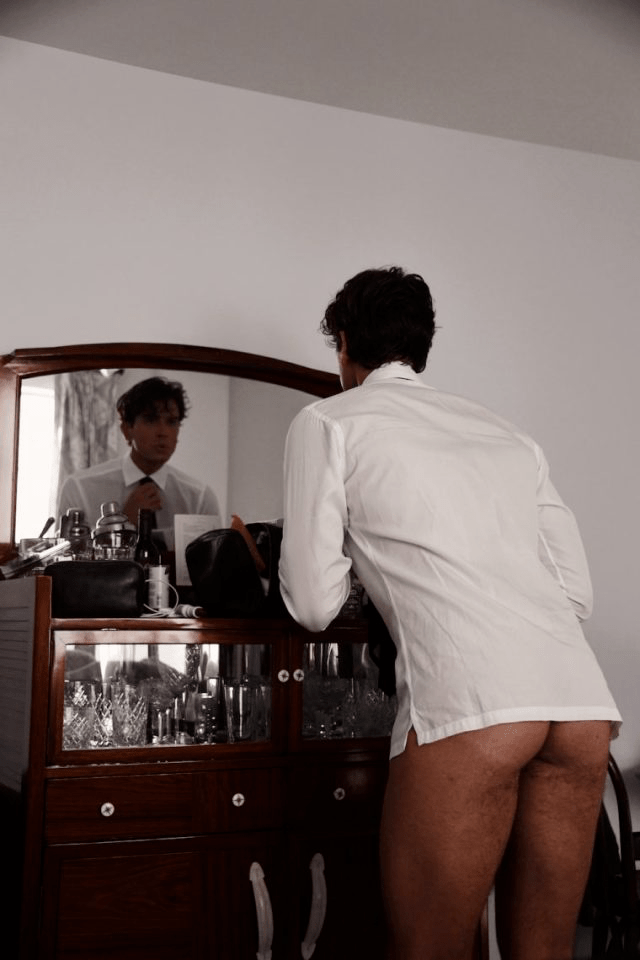
If I didn’t have a class today, I think I’d call in sick, not really because I am sick, though I probably do need a mental health day, but because I just want to crawl back into bed. Isabella started early this morning trying to wake me. I swear this cat knows when it’s a salmon day. I rotate through salmon, tuna, and chicken. Chicken is her least favorite and some days she turns her nose up at it, but salmon is by far her favorite. She’ll occasionally refuse to eat what I give her, but only once in all these years has she ever refused to eat salmon. It always seems like she’s most persistent to wake me in salmon days. Anyway, whatever the reason for her continued persistence this morning was, I’m awake now and will soon have to start getting ready for work. Thank goodness tomorrow is a work from home day.
Here’s your Isabella pic of the week (sorry that I forgot to post one last week). This picture clearly says, “Why? Why did you wake me? Why are you taking my picture? I’m going back to sleep!” If only she’d let me go back so sleep some mornings.


Art and the Naked Man
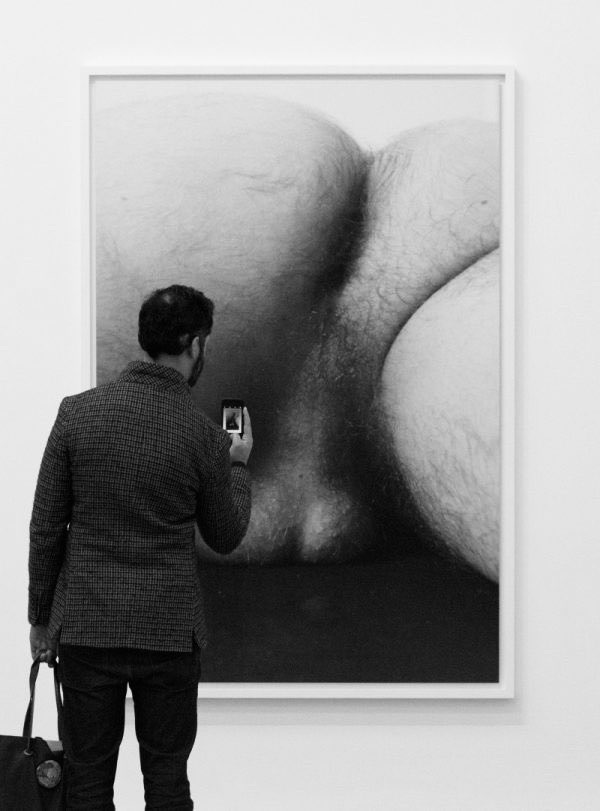
I post a lot of nude photography of men. I have always preferred images that look less professional or posed and I keep away from selfies, except in the pics of guys with cameras that I post on Tuesdays. Occasionally, I receive criticism for posting male nudes while at the same time talking about my faith each Sunday. I think the male body should be celebrated, and some of my readers come to see the photos I will post. If that means they also read my devotionals on Sundays, then it spreads the message I try to convey. That being said, I thought I’d start a weekly series on the male nude in art throughout the history. I doubt I will go in chronological order, but more of an introduction today focusing on the photography of male nudes.
Photography has been a crucial medium in LGBTQ+ art, providing a powerful way to explore identity, desire, and resistance. Male nude photography, in particular, has played a significant role in shaping the visual language of queer art, challenging societal norms, and creating spaces for LGBTQ+ expression. From the early coded works of the 19th century to the bold imagery of contemporary artists, male nude photography has been a key site of queer visibility and activism.
Art has been part of the appreciation of the male body throughout history. The male nude has been a central subject in the history of art, serving as a symbol of idealized beauty, power, and the human condition. In ancient Greece and Rome, male nude sculptures celebrated physical perfection and heroism, embodying philosophical ideals of harmony and virtue. During the Renaissance, artists like Michelangelo and Leonardo da Vinci revived classical traditions, using the male form to explore anatomy, movement, and divine inspiration. While religious and mythological themes often justified depictions of male nudity, these works also reflected shifting cultural attitudes toward masculinity, physicality, and artistic mastery.
In later centuries, the male nude became more controversial, especially in Western art, where shifting moral standards led to greater censorship. While female nudes remained common, male nudity was often restricted to academic studies or hidden in private collections. In the 19th and 20th centuries, artists like Édouard Manet, Egon Schiele, and later, queer photographers such as George Platt Lynes and Robert Mapplethorpe, used the male nude to challenge societal norms, explore eroticism, and assert LGBTQ+ visibility. Today, the male nude continues to be a powerful subject, reflecting changing perspectives on gender, identity, and artistic freedom.
Pic of the Day
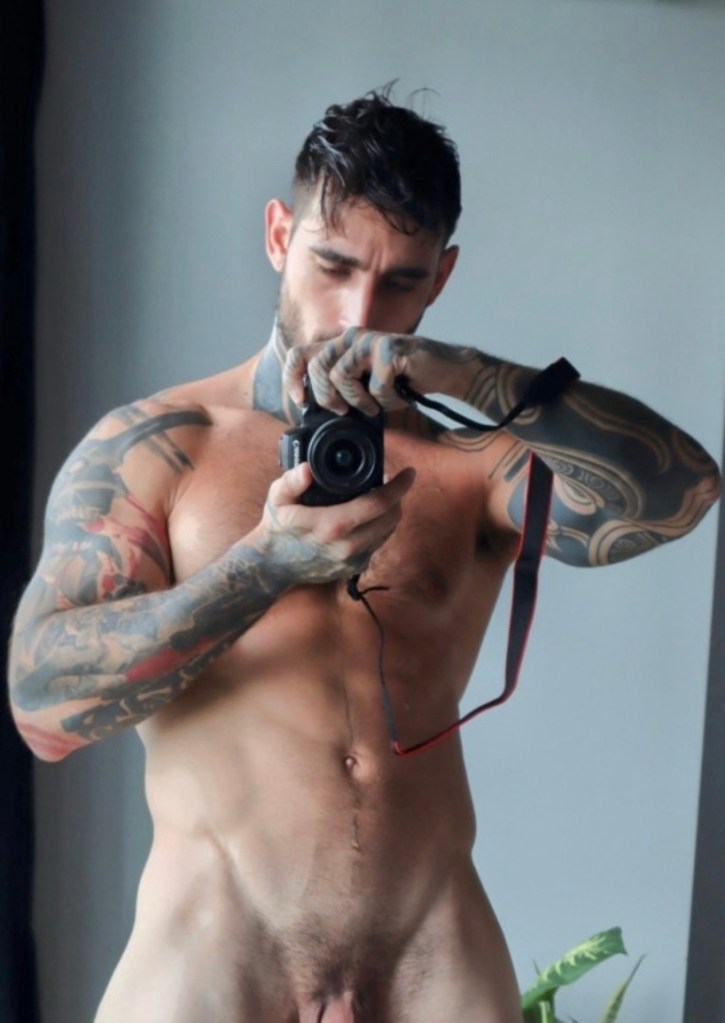
For the uncensored (and, dare I say, impressive NSFW) version, click “Continue Reading” below.
*And, before anyone comments on it, like most of you, I also don’t like the neck tattoo, but I did like the picture.
Continue reading

Authors
Recent Comments
noisilycool3bc985058… on Pic of the Day iameverywhere1 on Not Quite as Planned iameverywhere1 on Pic of the Day noisilycool3bc985058… on Not Quite as Planned Joe on Pic of the Day Top Posts & Pages



Amazon Associate

As an Amazon Associate I earn from qualifying purchases. So, if you click on a link that takes you to Amazon.com, I may earn a commission.
Trust me, it isn’t much, but every little bit helps.

 Joe
Joe


 The Closet Professor