
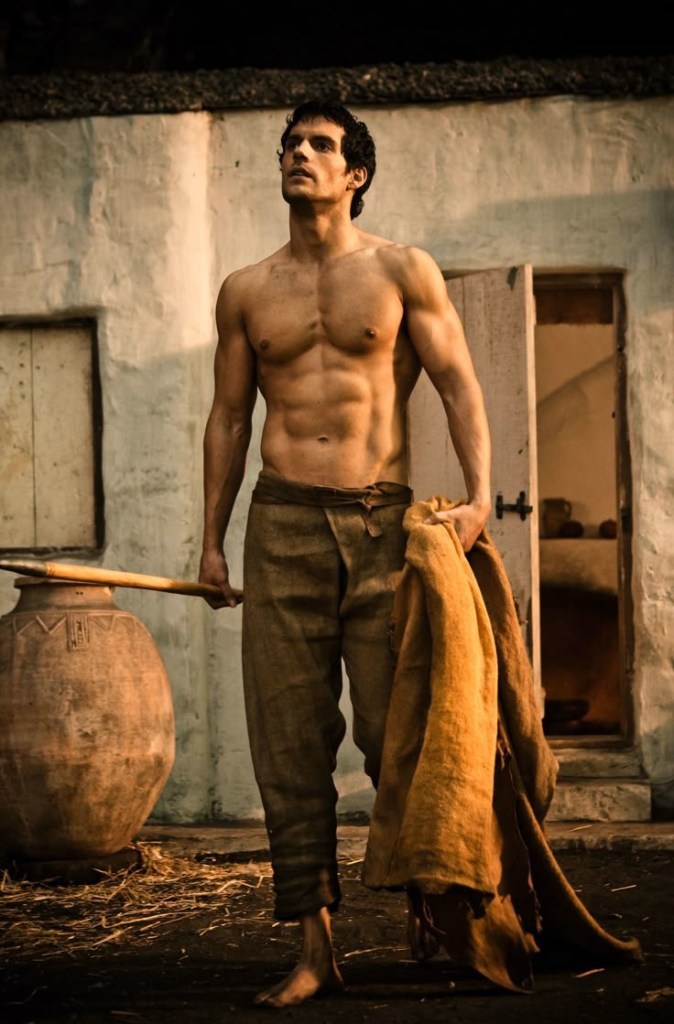
The idealized male physique, often described as an “inverted triangle” or “V-taper,” features broad shoulders, a narrow waist, and a strong, muscular build with low body fat, a physique seen in many male athletes, models, and actors. The ideal male body has evolved throughout history, with earlier periods valuing strength and athleticism, and more recent times emphasizing a lean, muscular look. Media and social trends play a significant role in shaping perceptions of the “ideal” male physique.
The idealized male aesthetic—emphasizing physical perfection, muscularity, and strength—has long served as a powerful tool for propaganda, shaped and reshaped to fit the political and cultural needs of various societies throughout history. This image of the “perfect man” functions not only as a model of physical excellence but also as a symbol of ideological values: power, discipline, dominance, and purity.

The roots of the male aesthetic ideal can be traced back to ancient civilizations like Greece and Rome. In Classical Greece, the male body was idolized in art and sculpture (e.g., Polykleitos’ Doryphoros), representing harmony, rationality, and civic virtue. Strength was linked to moral integrity and democratic citizenship. Rome adapted this, associating the powerful male body with imperial authority and conquest, as seen in statues of emperors like Augustus, who were idealized as youthful and godlike.
The Renaissance revived classical ideals, presenting the strong male body as a symbol of divine beauty and human potential. Artists like Michelangelo, with his David, reinforced the link between physical strength and spiritual or moral superiority. This era celebrated the “universal man”—physically capable, intellectually refined, and culturally elite.

As nationalism surged in the 19th century, the strong male body became central to shaping national identities. In Fascist Italy and Nazi Germany, propaganda weaponized the male aesthetic. Mussolini was often shown shirtless, working or posing, to convey virility, labor, and strength as core values of the state. Hitler’s regime promoted Aryan ideals through statues, films (like Leni Riefenstahl’s Olympia), and youth programs, equating physical perfection with racial superiority and moral righteousness.

In Soviet propaganda, the male worker or soldier, muscular and stoic, symbolized the power of the proletariat and the communist state. These images weren’t just about fitness—they were loaded with meaning: loyalty, discipline, and the ability to serve the state.
Even today, the muscular male figure continues to be used in propaganda, especially in authoritarian regimes. Leaders are often depicted engaging in rugged, physical activities—Vladimir Putin’s shirtless horse-riding is a modern example—projecting vitality, control, and masculinity as signs of leadership and national strength.

In the West, while the use of male aesthetics has shifted more toward consumer and celebrity culture, it still has political undercurrents. Military recruitment posters, sports ads, and action films all reinforce a vision of the male body as capable, heroic, and dominant.
Throughout history, the idealized male body has served not only as a cultural aspiration but also as a political weapon. Whether sculpted in marble or splashed across a billboard, it reflects the values and anxieties of the society that produces it—always more than flesh, always a symbol of something bigger.



 Joe
Joe





 The Closet Professor
April 9th, 2025 at 10:21 am
I certainly am in agreement with your post, Joe. On August 28, 2014 the ADVOCATE did a piece called “Posters of Nude Males” all of which were used in advertising. During the series “Spartacus” men with gym toned bodies (and perfect teeth) were constantly on display in what was quite frankly a laughable anachronism. I freely admit to watching soccer, rugby and Australian rules footy and Olympic diving precisely because of the form fitting and minimal uniforms. Our world churns out eye candy daily and that diminishes men who are don’t measure up. In the gay subculture the size of one’s penis is an additional criteria…which is good for “showers” but awful for “growers.”