
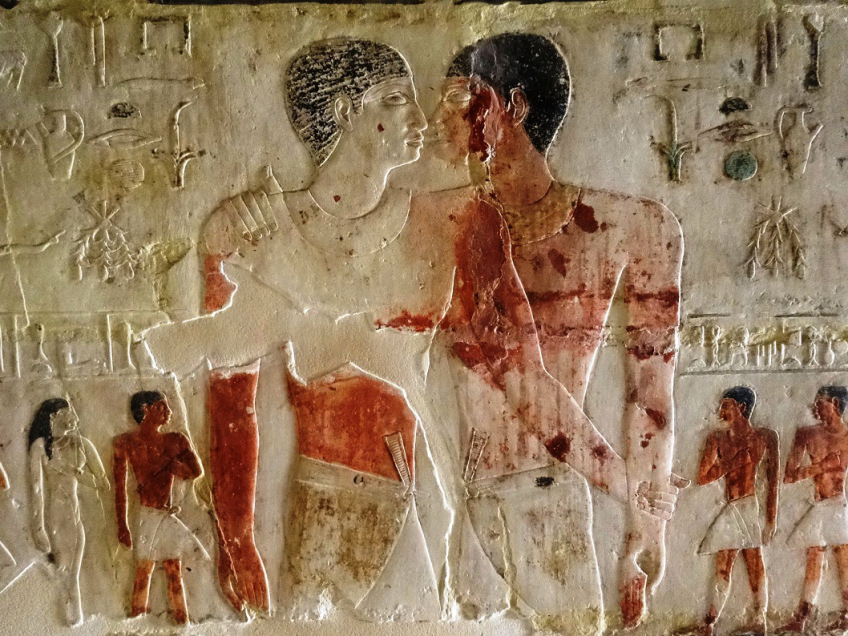
When we step into a museum gallery of Egyptian art, our eyes are often drawn first to the monumental: gilded sarcophagi, stone statues of gods and pharaohs, and painted papyri filled with hieroglyphs. Yet another thread runs quietly through these collections: the unclothed male body. Ancient Egyptian artists depicted nudity with striking frankness, and far from being taboo, it carried layered meanings about status, labor, youth, purity, and renewal.
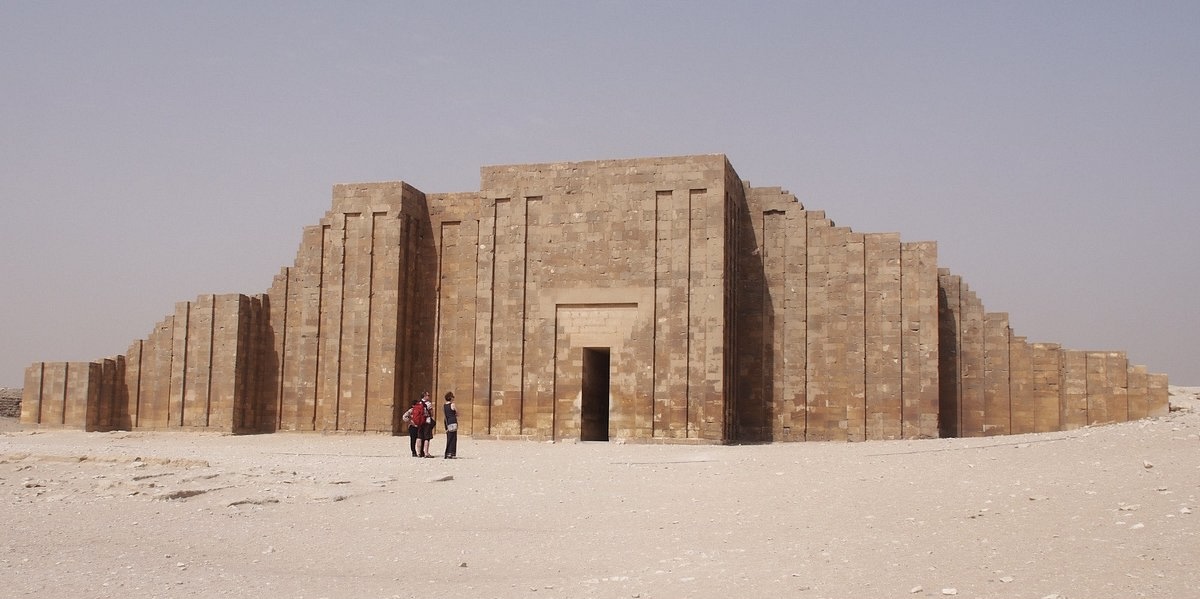
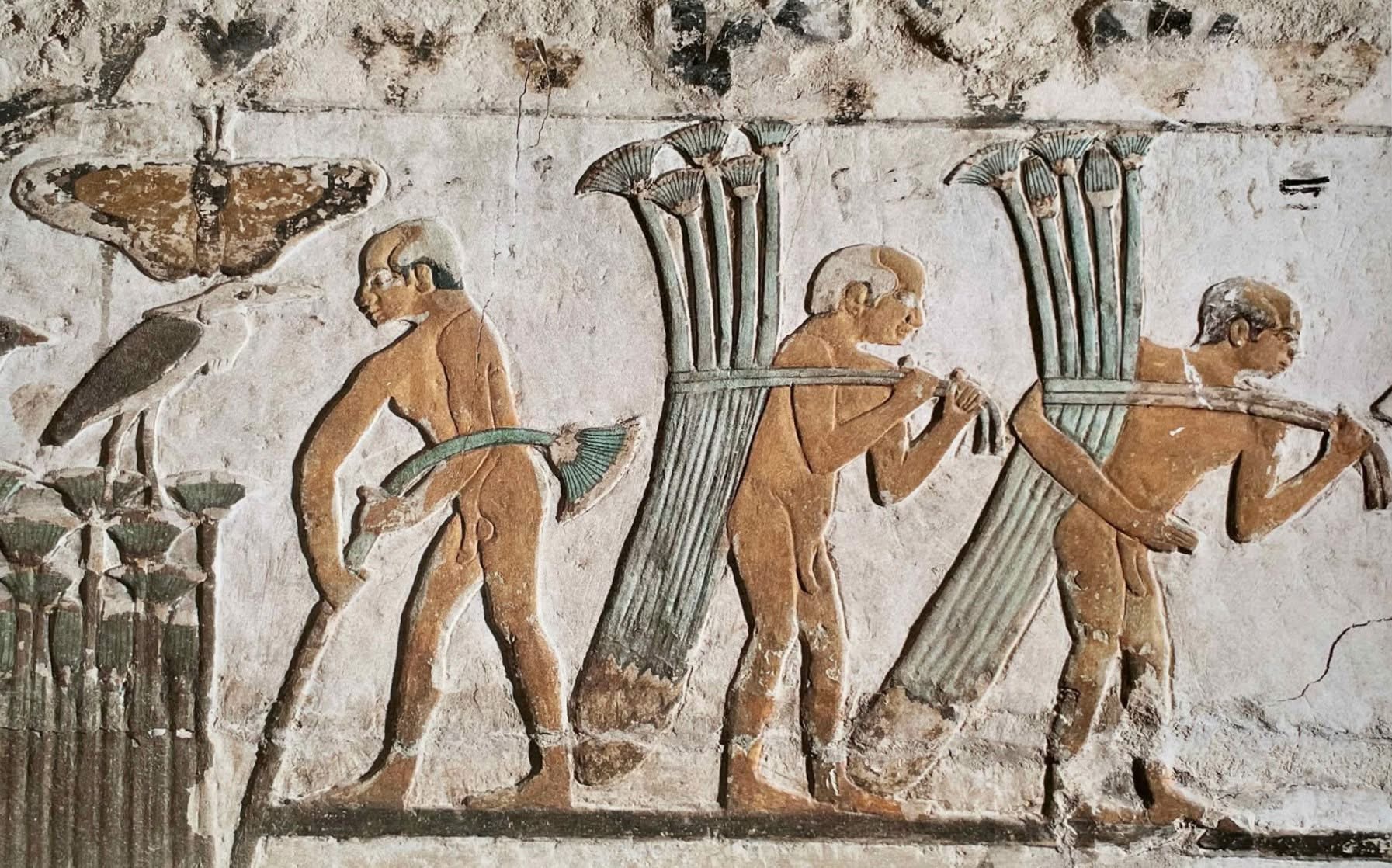
Unlike the Greeks, who later celebrated the nude as the pinnacle of beauty and heroism, the Egyptians approached nudity as a visual code. In Old Kingdom tombs, men engaged in physical work—farmers, boatmen, fishermen—are often shown nude or in the simplest of belts. The tomb of Ti at Saqqara (c. 2400 BCE) shows such figures, their lean musculature emphasizing vitality and their role in sustaining society. In contrast, Ti himself appears clothed in fine linen, his dress underscoring elite distinction.
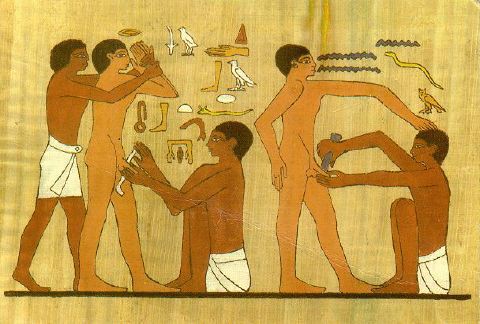
One particularly rare and fascinating relief from Saqqara, dating between 2350–2000 BCE, shows a circumcision ceremony in the tomb of Ankhmahor. Here, nude male figures are shown undergoing and performing the ritual—one of the few surviving artistic records of the practice in ancient Egypt. The nudity underscores both the ritual’s intimacy and its role in marking transition into maturity.
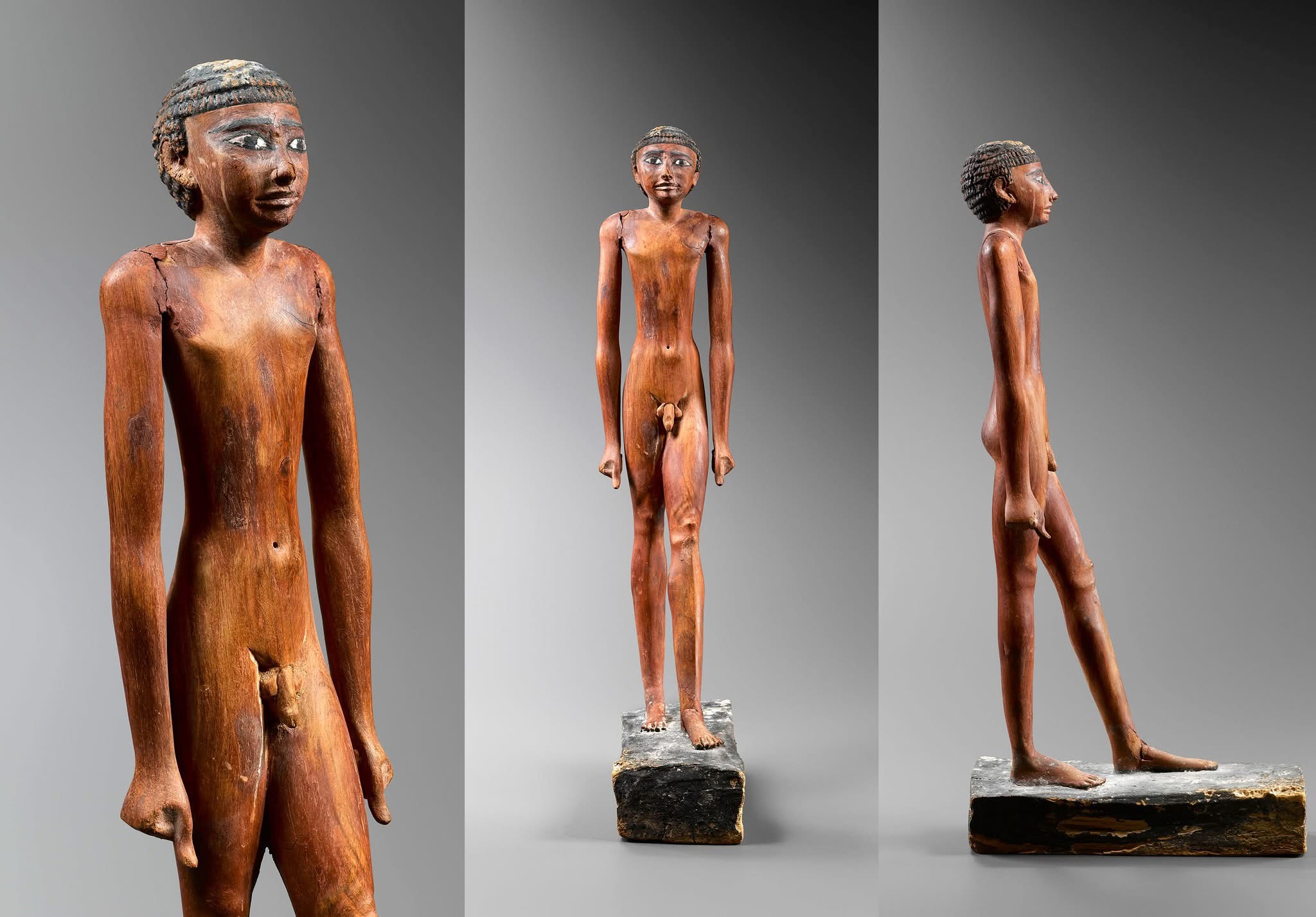
Sculpture also embraced this frankness. A striking wood and plaster figure from the Teti pyramid cemetery at Saqqara depicts a naked man, his body rendered with a simple, direct realism. Nudity here communicates not shame, but the humanity and vitality of the subject.
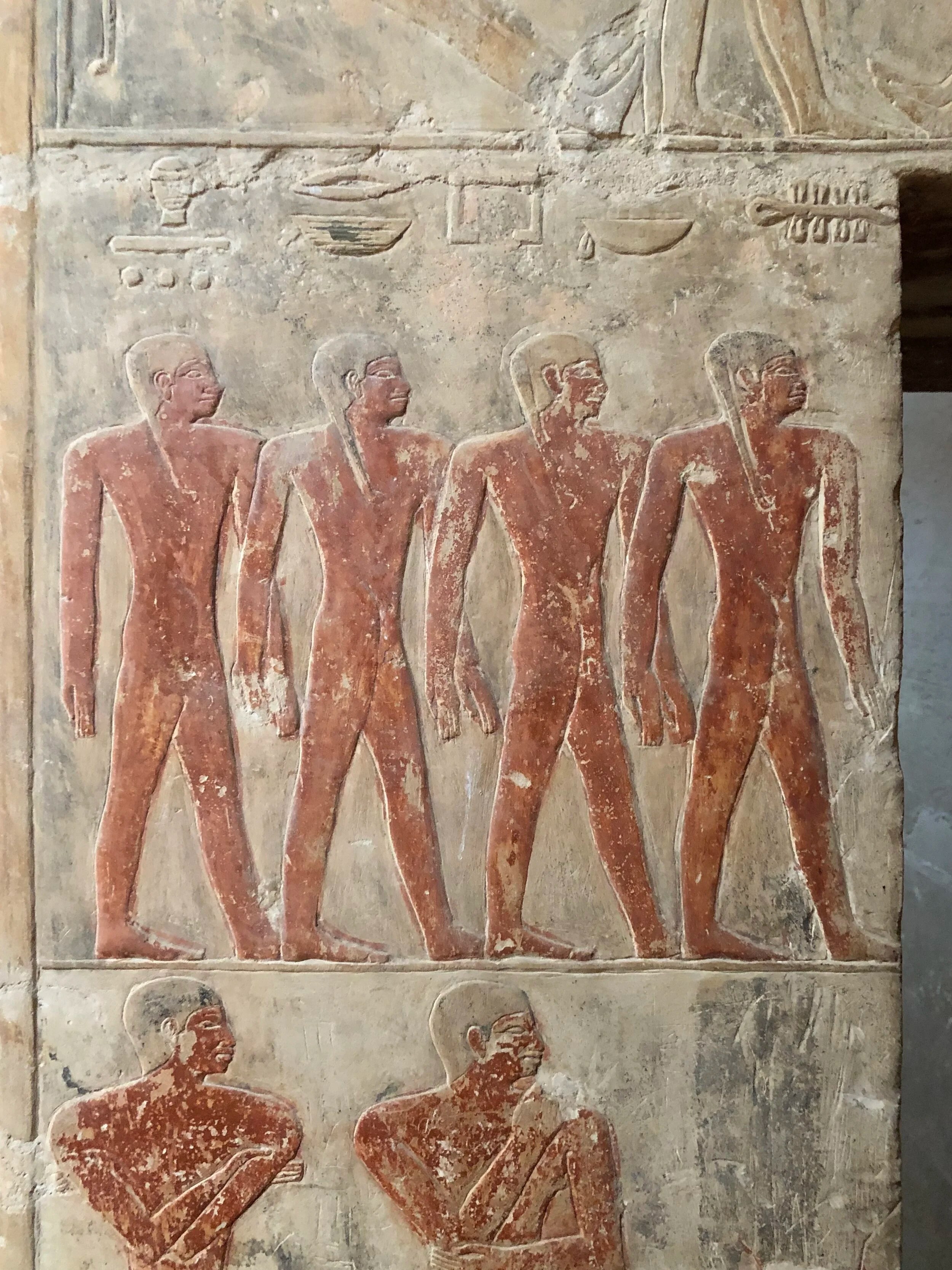
Children, meanwhile, were almost always represented nude, often with the distinctive side lock of hair. In the tomb of Mereruka, on a wall leading to the suite of his son Meryteti, reliefs show nude boys with this hairstyle—a clear marker of youth. Such depictions reinforced the cultural code that nudity signified a stage of life, unencumbered until maturity called for clothing and social role.
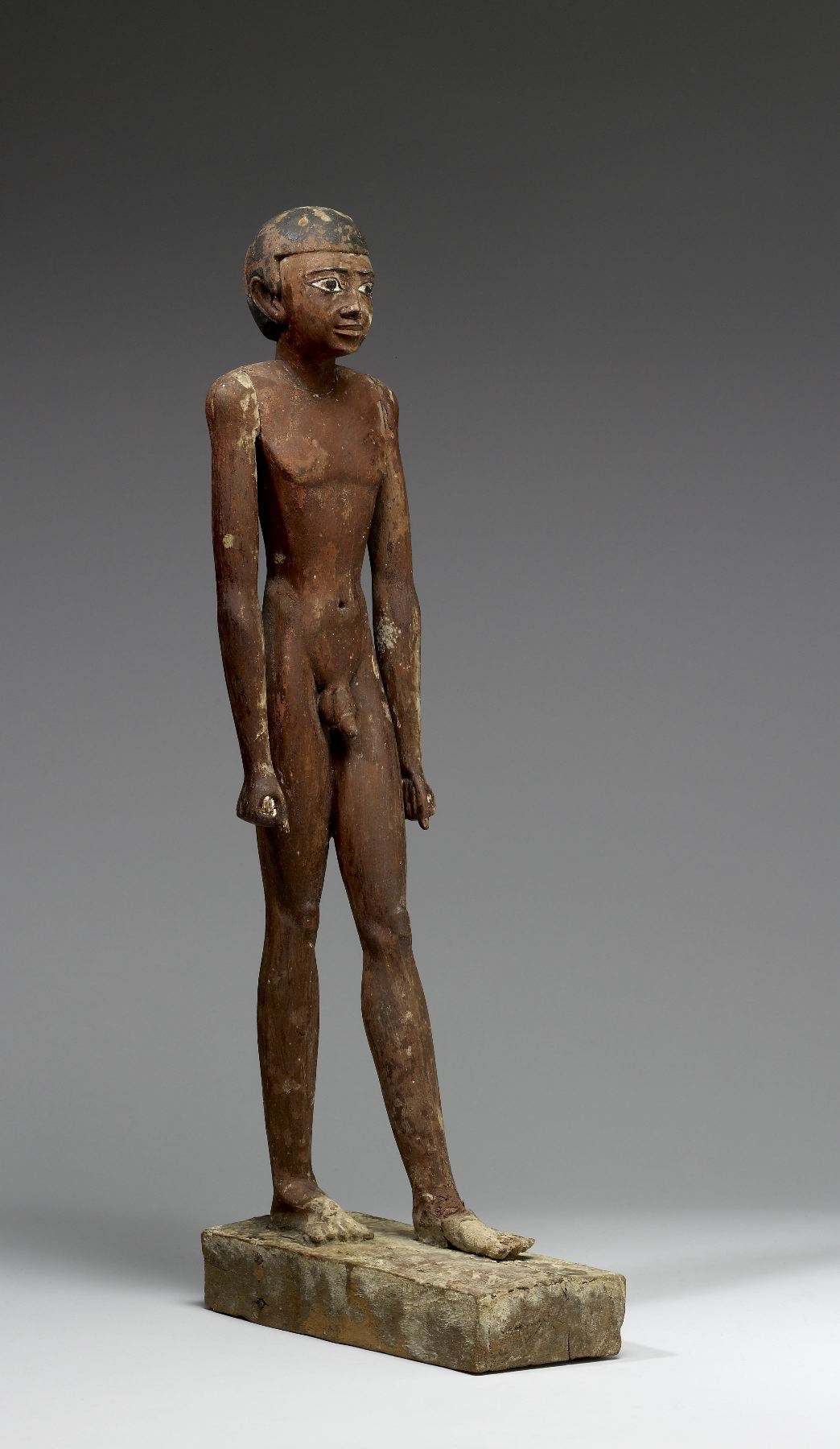
Even tomb owners themselves were not always portrayed clothed. For a brief period in the late Old Kingdom and the First Intermediate Period, there emerged a fashion of depicting the deceased nude before Osiris, lord of the underworld. These figures symbolized renewal and rebirth. A powerful example is the statue of the “sole companion Ha’a,” now at the Walters Art Museum, which shows the tomb owner nude in a stance of rejuvenation. His unclothed body is not vulnerable but potent—a symbol of life reborn.
Priests could also be represented nude in scenes of purification, where absence of clothing symbolized ritual purity. Nudity here functioned as a spiritual statement, aligning the physical with the sacred.
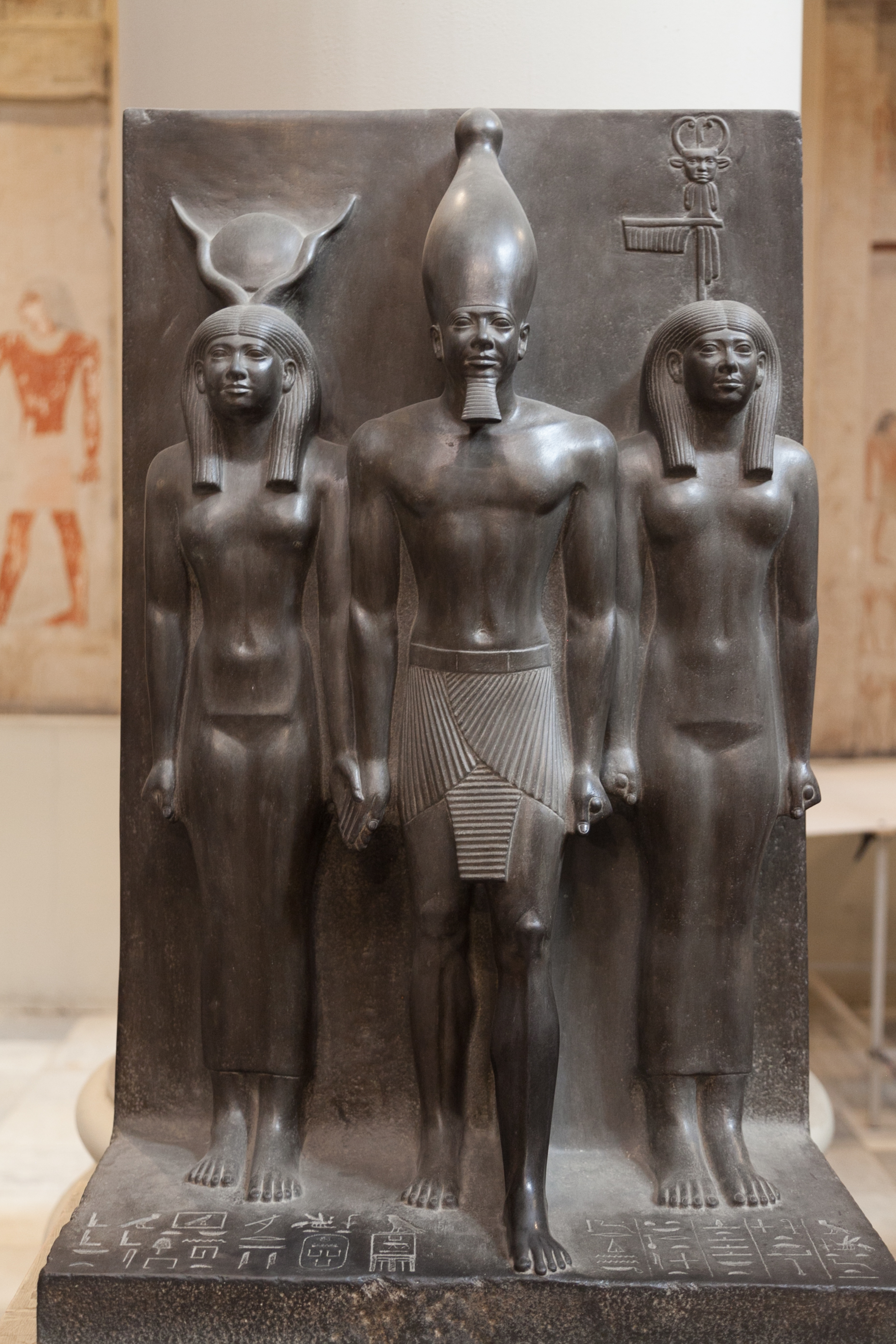
Even the kings, though usually shown in elaborate regalia, sometimes reveal the ideals of the nude body beneath. The famous triads of Menkaure (Mycerinus) from Giza (c. 2490 BCE) clothe the pharaoh in a kilt, yet the carving clings so closely that the idealized musculature beneath is practically a nude form.
It is worth remembering that erotic art did exist in Egypt—the Turin Erotic Papyrus (New Kingdom, c. 1150 BCE) leaves little doubt about the Egyptians’ playful side—but within tomb and temple contexts, nudity was symbolic rather than sensational. It marked youth, labor, ritual purity, or eternal renewal.
For us today, the honesty of these depictions can feel startling. To stand before the Ankhmahor relief in Saqqara, or to study the Walters’ statue of Ha’a, is to be reminded that the ancient Egyptians saw nudity not as scandalous, but as part of the visual language of life, death, and rebirth. For queer viewers especially, there’s something poignant here: the male body, shown frankly across centuries, becomes not just a record of status or ritual, but a reminder of continuity in human fascination with form, vitality, and beauty.
Where to See These Works Today
If you’d like to connect these ideas with objects you can actually view, here are a few key examples:
- The Tomb of Ankhmahor, Saqqara (2350–2000 BCE) – Relief of a circumcision scene (on-site in Egypt, reproductions in Cairo Museum).
- Wood and Plaster Nude Figure from the Teti Pyramid Cemetery, Saqqara – Egyptian Museum, Cairo.
- “The Sole Companion Ha’a” (late Old Kingdom / First Intermediate Period) – Walters Art Museum, Baltimore.
- Reliefs from the Tomb of Mereruka, Saqqara – On-site in Egypt, with reproductions in major collections like the Metropolitan Museum of Art.
- Statues of Menkaure (Mycerinus) with Hathor and Nome deities (c. 2490 BCE) – Museum of Fine Arts, Boston.
- Turin Erotic Papyrus (c. 1150 BCE) – Museo Egizio, Turin, Italy.



 Joe
Joe





 The Closet Professor
Thank you for commenting. I always want to know what you have to say. However, I have a few rules: 1. Always be kind and considerate to others. 2. Do not degrade other people's way of thinking. 3. I have the right to refuse or remove any comment I deem inappropriate. 4. If you comment on a post that was published over 14 days ago, it will not post immediately. Those comments are set for moderation. If it doesn't break the above rules, it will post.