Some mornings, the words just don’t want to come. Today is one of those mornings. I thought maybe I’d write an art history post, but nothing has clicked yet. Maybe tomorrow inspiration will strike, but today, I’m drawing a blank.
Part of the problem is that work has been so busy lately as I catch up from when I was out. Yesterday was productive—I actually managed to get quite a bit done—but by the time I got home, I was wiped out. It felt like I had run a marathon without leaving my desk. Of course, there’s still plenty more to tackle today. Somehow the pile never gets smaller, it just rearranges itself into new and interesting shapes.
Right now, though, I don’t exactly feel like conquering that pile. I’m sitting here, yawning, wishing energy would magically appear. But I also haven’t had coffee yet, and let’s be honest—without coffee, I’m basically running on fumes. A cup or two might just be the miracle cure. Isabella has already had her breakfast and is now looking far more content and energized than I feel. I swear that cat has better time management than I do. Her daily schedule mostly consists of sleeping, staring out the window at the birds, eating a snack, and then fitting in a few more naps before starting the whole cycle over again.
So here’s to coffee, to productivity (hopefully), and to finding a spark of inspiration when it decides to arrive. Maybe tomorrow I’ll have an art post to share, but for now, I’ll just share the honest truth of a sleepy morning trying to find its rhythm.
I’ve never been much of a fan of modernist poetry. Too often, it feels esoteric—odd for the sake of odd. When I used to teach American Literature, I would show my students two classic examples from Ezra Pound:
L’Art, 1910 by Ezra Pound
Green arsenic smeared on an egg-white cloth, Crushed strawberries! Come, let us feast our eyes.
A splash of color, yes, but more like a cryptic painter’s note than a poem—striking yet emotionally opaque. And then his most famous imagist fragment:
In a Station of the Metro by Ezra Pound
The apparition of these faces in the crowd; Petals on a wet, black bough.
Haunting, yes, but abstract and slippery, more an intellectual exercise than a window into human feeling.
Sixteen words about a piece of art with colors of green and red, fourteen words about a metro station—striking, but also elusive.
So when The American Academy of Poets’ Poem-a-Day recently featured Alfred Kreymborg’s “Those Everlasting Blues,” I expected something similar—another cryptic fragment of modernism. Instead, I was taken aback. This poem spoke to me in a way I didn’t anticipate. Beneath its simple diction and repetition, I heard the cry of a heart broken by longing. And in that ache, I recognized something deeply personal.
Since beginning this blog, I’ve been blessed with many wonderful friendships, like my cherished bond with Susan. But there have also been two men who, in different ways, claimed my heart. One lived far away and struggled with a debilitating illness; when he passed, I mourned but had known it was inevitable. The other’s loss, though, nearly destroyed me. He was a fragile young man who had begun to rebuild his life, and though he loved someone else, he also loved me—and I him. We spoke every day, ending each night with “I love you.” Then a tragic car accident cut his life short, and with it, a piece of my own heart.
Reading Kreymborg’s poem, I felt all of that loss return—the “everlasting blues” of loving someone you cannot keep. It reminded me that poetry’s power isn’t in being clever or obscure, but in giving voice to the things we ourselves can barely name.
Those Everlasting Blues By Alfred Kreymborg
There ain’t gonna be any more mad parties between you and me and it ain’t gonna be because I love you less but love you more. And there ain’t gonna be any more sad parties between us two because I’m gonna forget what I want till I see what I want is you. And I ain’t gonna find what you are till I find what it is that you want of me and how am I gonna see what it is till all of myself loves you. And I don’t really love you though I love you more than the world till I learn to swallow whatever you’d like me to do. And I ain’t gonna down whatever that little may be till I love me less and love you more and love you for yourself alone. If there ain’t gonna be any loving just you alone then it’s up to me to be taking myself and moving myself off home. And I’ll be dragging what’s left of me to my lonely room in the blue and never come back and never crawl back till I’m through just hugging me. And I ain’t no I ain’t gonna stop doing that as I ought to do till I’m ab- solutely and positively in love and in love with you. And when I’ve done that and done only that and done all of that for you you’ll hear me on the doorstep ringing at the doorbell for one more party for two. With nothing mad in it nothing sad in it but a long glad lifelong spree with me myself loving you yourself and you loving me for me.
When reading Alfred Kreymborg’s “Those Everlasting Blues” today, it’s easy to feel the poem pulsing with queer longing. The speaker aches for someone elusive, desired but never quite possessed. The repetition of “blues” and the sense of yearning that never resolves can strike a modern queer reader as deeply familiar: the pain of unspoken desire, of wanting someone who cannot—or will not—be fully yours.
Even though the poem is voiced as a woman’s lament for a man, nothing in the language itself insists on a heterosexual relationship. In fact, if we strip away the assumed gendering, the poem reads seamlessly as one man mourning his infatuation with another. Kreymborg’s plain, conversational diction keeps the focus on raw feeling rather than social convention, which makes the poem ripe for queer reinterpretation.
This is the power of queer reading: taking texts from the past and listening for the silences, the undercurrents, and the ways desire breaks through the boundaries of its time. For many queer readers today, Kreymborg’s “blues” could be the blues of any marginalized love—aching, unending, and yet profoundly human.
So does this mean Kreymborg himself was gay? Not necessarily. Biographically, there is no evidence he engaged in same-sex relationships. But “Those Everlasting Blues” belongs to his 1916 collection Manhattan Men, where he frequently wrote in other voices—shifting genders, adopting dramatic personae, and speaking through masks.
This “gender ventriloquism” was part of the larger modernist toolbox. Early twentieth-century poets often experimented with persona and dramatic monologue, inspired by classical models and energized by the free verse movement. Ezra Pound spoke through medieval troubadours, H.D. adopted mythic figures like Eurydice and Helen, and T.S. Eliot gave voice to Prufrock and Tiresias. For Kreymborg, writing in a woman’s voice allowed him to explore emotional registers that might have been difficult to express directly.
While his original intent may not have been queer, his willingness to blur identity in poetry—speaking as “the other”—is what allows queer readers to hear themselves in his work. The fluidity of voice makes his poetry feel like a space where hidden or forbidden desires could be expressed indirectly.
Whether or not Alfred Kreymborg personally shared the “everlasting blues” of same-sex longing, his poem gives us a vessel to pour that experience into. That is the beauty of queer reading: recognizing how art transcends the limits of biography and becomes a space where new meanings—our meanings—can flourish.
About the Poet
Alfred Kreymborg (1883–1966) was an American poet, playwright, editor, and anthologist who played a key role in the rise of literary modernism in New York. A central figure in Greenwich Village’s bohemian scene, he was the founding editor of Others: A Magazine of the New Verse (1915–1919), which introduced American audiences to avant-garde voices like Marianne Moore, William Carlos Williams, Wallace Stevens, and Mina Loy.
Kreymborg’s career was eclectic—he wrote poetry, drama, fiction, and memoirs, and even performed on mandolin in experimental productions. His work was often overshadowed by his more famous contemporaries, but he was a connector and promoter of new voices at a time when American poetry was breaking free from strict formal traditions.
Importantly, Kreymborg moved in circles that included many queer and queer-adjacent writers: Hart Crane, Djuna Barnes, and others who challenged conventional ideas of gender, sexuality, and identity in literature. While there is no evidence that Kreymborg himself identified as gay, his friendships and collaborations with these writers placed him in a cultural moment where queer creativity thrived beneath the surface.
Isabella decided I didn’t need to sleep in today. She woke me up way too early, and while that’s nothing unusual, I really wanted to stay asleep a bit longer and avoid the pain radiating down my leg. No such luck.
The good news is I took a vacation day today. The bad news—besides the pain—is that the only reason I took a vacation day is because of car trouble. I can’t get the car into the mechanic until tomorrow, and I don’t dare drive it anywhere else. So here I am, stuck at home, with no transportation except for that one hopeful trip to the shop tomorrow.
Honestly, with the way I feel this morning—leg pain and day two of a migraine—I probably could have taken a sick day. But since HR has managed to screw up some of my leave paperwork, I’m trying to be cautious. Until that gets fixed, I’m afraid my sick leave will get eaten up too quickly.
All I really want is to feel better. I’ve said that for years about my migraines, but at least with them, I’ve learned how to keep going and live my life. This back and leg pain is different. It makes even basic mobility a challenge, and that’s not something I can just push through as easily.
So today’s plan is pretty simple: hope the pain eases a bit, or at least that I can get some more sleep. That’s about all I’ve got in me for now.
I hope your Monday morning is starting off better than mine. Here’s to a smoother week ahead for all of us.
“Do you not know that your bodies are temples of the Holy Spirit, who is in you, whom you have received from God? You are not your own; you were bought at a price. Therefore honor God with your bodies.”
— 1 Corinthians 6:19–20
For many gay men, the body is a canvas. In our culture, there is often deep appreciation for youth, beauty, and the physical form—sometimes expressed in art, sometimes in fitness, sometimes in the mirror. There is nothing inherently wrong with taking joy in a healthy, attractive body. After all, Scripture tells us that our bodies are “fearfully and wonderfully made” (Psalm 139:14). We are temples of the Holy Spirit, precious in God’s eyes. Caring for our bodies—through exercise, rest, nourishing food, and avoiding harmful excess—can be an act of gratitude to God.
But a temple is meant to glorify God, not the temple itself.
Paul’s words in 1 Corinthians remind us that we “are not our own.” This isn’t a call to despise our bodies, nor to neglect them—it’s an invitation to steward them well. Honoring the temple means finding balance: “Let your gentleness be evident to all” (Philippians 4:5). Moderation keeps us from slipping into the extremes of neglect or obsession.
In the pursuit of health, some of us become caught in the endless chase for the perfect physique or the perpetual glow of youth. It’s easy to measure worth by the scale, the mirror, or the attention of others. But Proverbs 31:30 reminds us: “Charm is deceptive, and beauty is fleeting; but a person who fears the LORD is to be praised.” Our worth in God’s eyes isn’t measured in abs, hairlines, or skin elasticity. Even the most beautiful body will age, and that is not a failure—it’s part of the holy rhythm of life.
Scripture warns against vanity: “Do nothing out of selfish ambition or vain conceit. Rather, in humility value others above yourselves” (Philippians 2:3). When care for the body becomes worship of the body, we risk turning God’s temple into a shrine to ourselves.
Some of us live with scars, chronic illness, disability, or simply the normal changes of age. We may not match the glossy images that saturate social media and gay culture. But a temple need not be flawless to be holy. God doesn’t require marble perfection—He dwells gladly in weathered stone, in bodies that have been through joy, loss, and transformation.
Honoring our bodies might mean different things for each of us:
Scheduling regular check-ups with the doctor and dentist.
Eating balanced meals, but still enjoying dessert without guilt.
Moving our bodies in ways that bring joy rather than punishment.
Resting without shame.
Jesus Himself modeled balance. He fasted (Matthew 4:2) but also feasted (Luke 7:34). He withdrew for rest (Mark 6:31) but poured Himself out in service. Healthy habits matter, but so does the grace to live without fear of imperfection.
Paul writes in 1 Timothy 4:8: “For physical training is of some value, but godliness has value for all things, holding promise for both the present life and the life to come.” This is the healthy perspective: value the body, but not above all else. Care for it because it’s God’s dwelling place—but don’t let the mirror become your altar.
We are called to live fully in the bodies God has given us, honoring them through health, moderation, and gratitude. We can resist both the temptation to neglect our health and the temptation to idolize our appearance. A temple stands to draw people’s eyes toward God—not just toward its own beauty.
God made our bodies and called them good, and each of us carries within us a temple where the Spirit dwells. We are called to care for these temples in ways that honor Him—to nourish them, strengthen them, and allow them to rest—without bowing to vanity or living in fear. There is beauty in every stage of life, and holiness even in imperfection. When we live with this awareness, our lives—inside and out—can reflect God’s love and grace to the world.
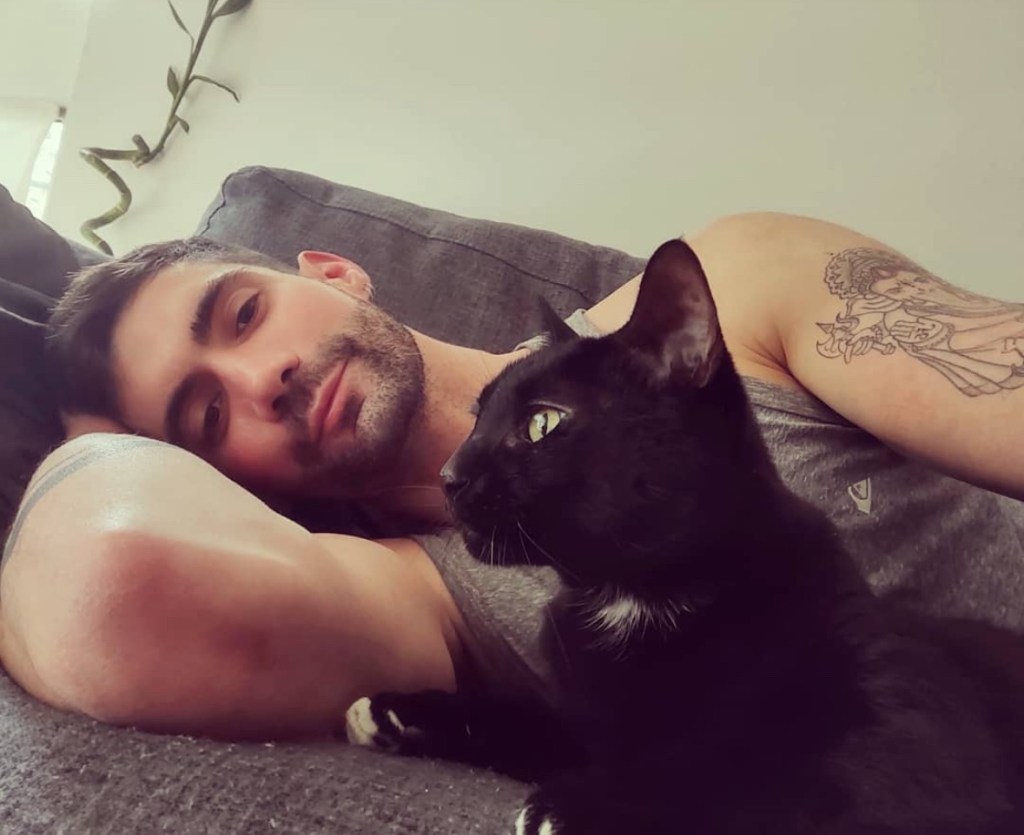
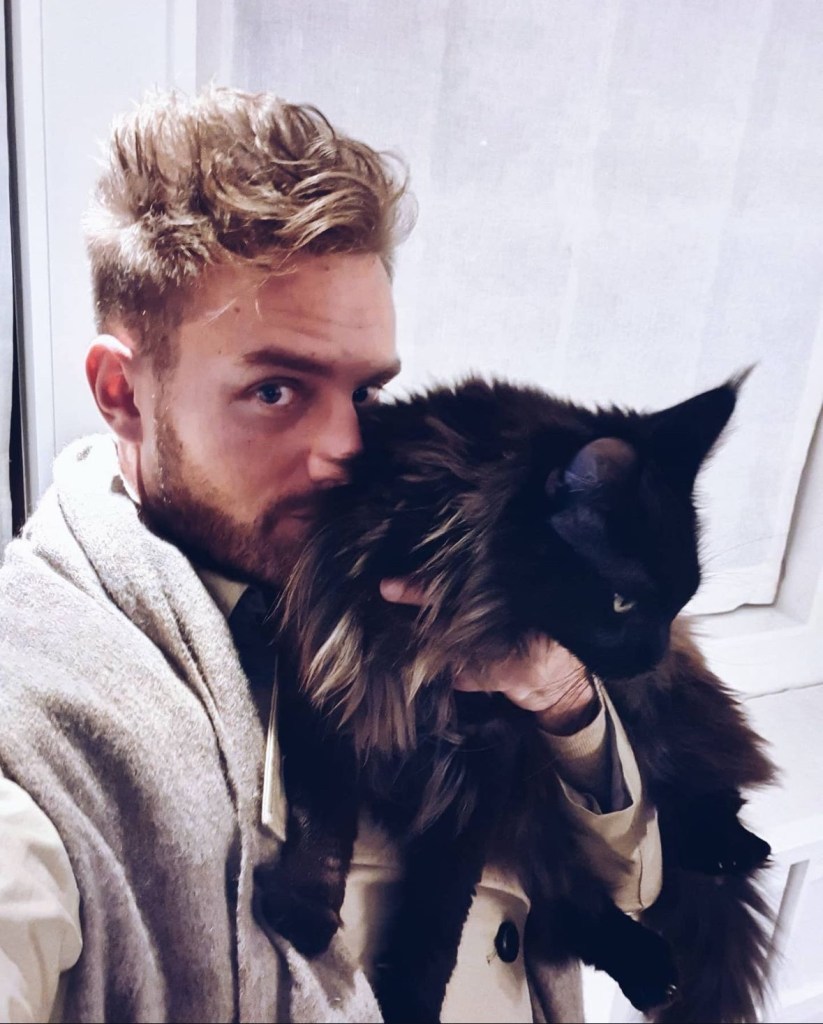
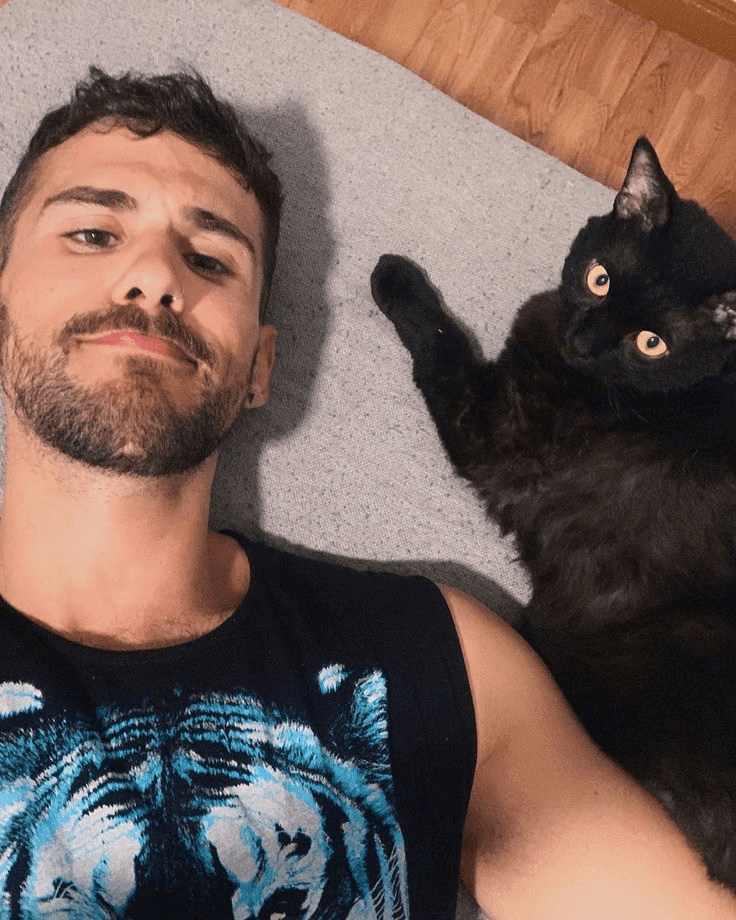
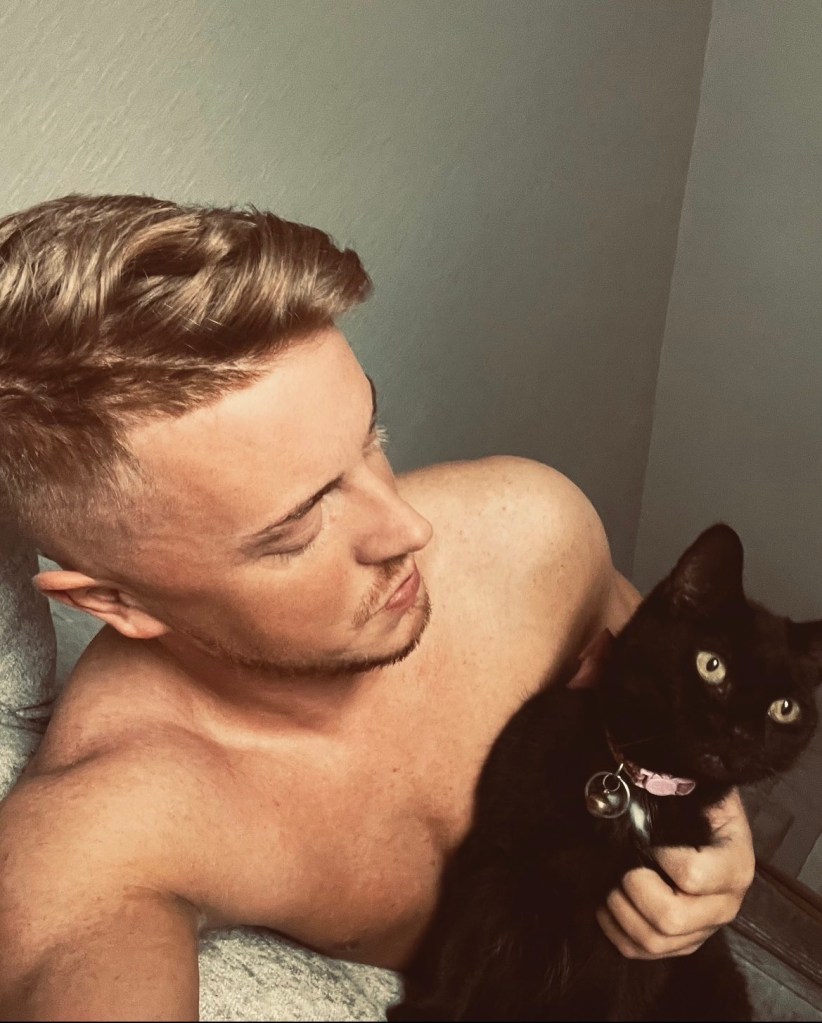
Tomorrow is National Black Cat Appreciation Day, but since tomorrow is Sunday—and I always post a devotional on Sundays—I thought today would be the perfect time to celebrate.
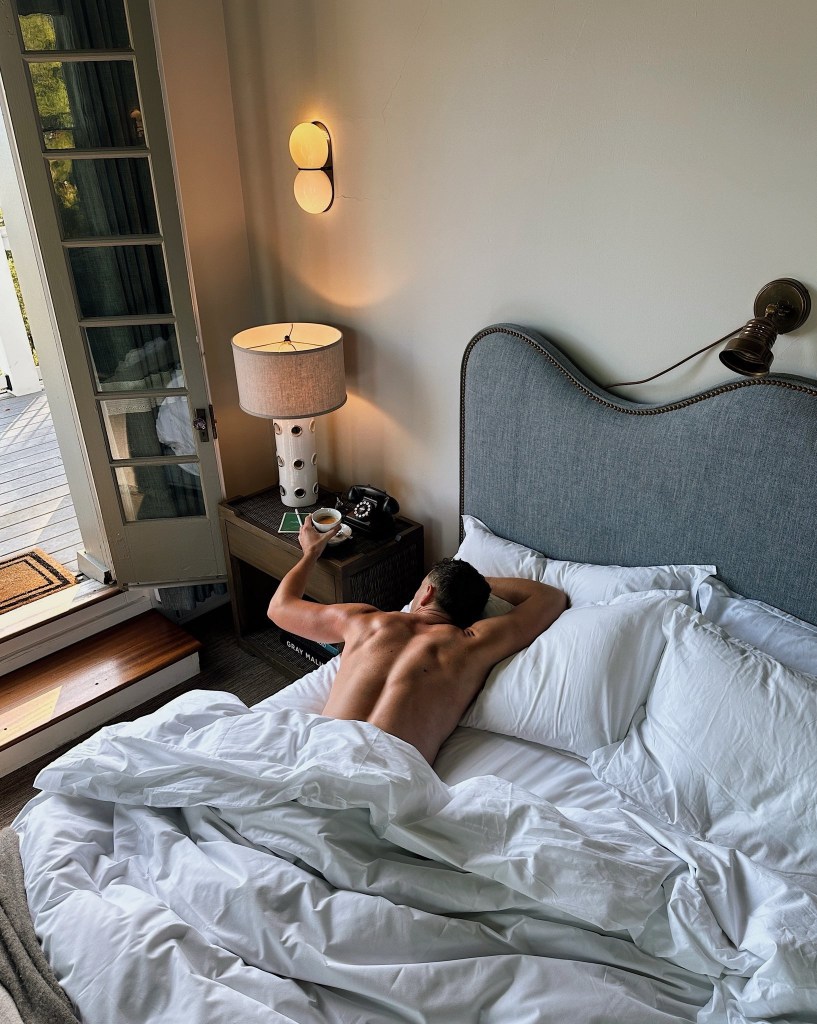
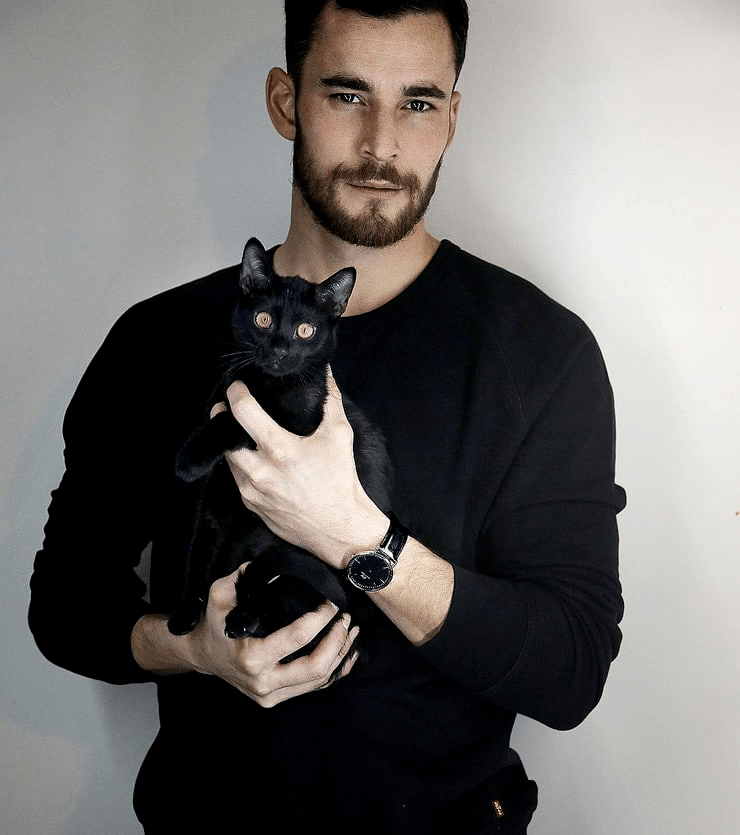
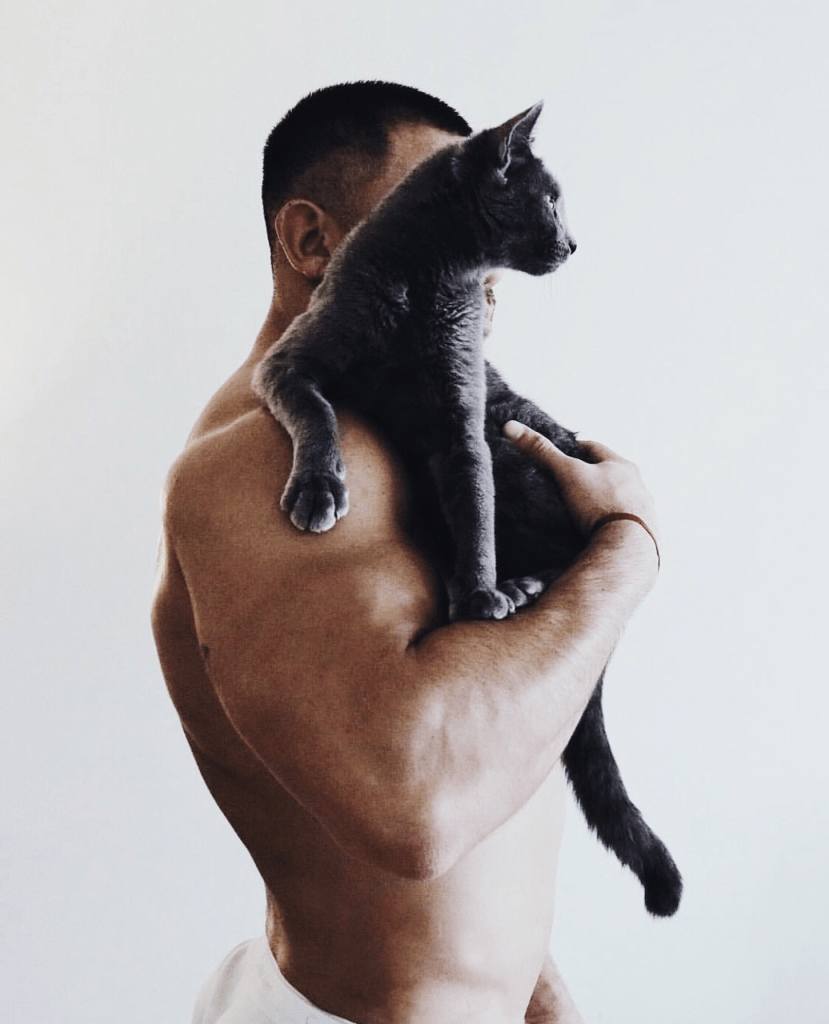
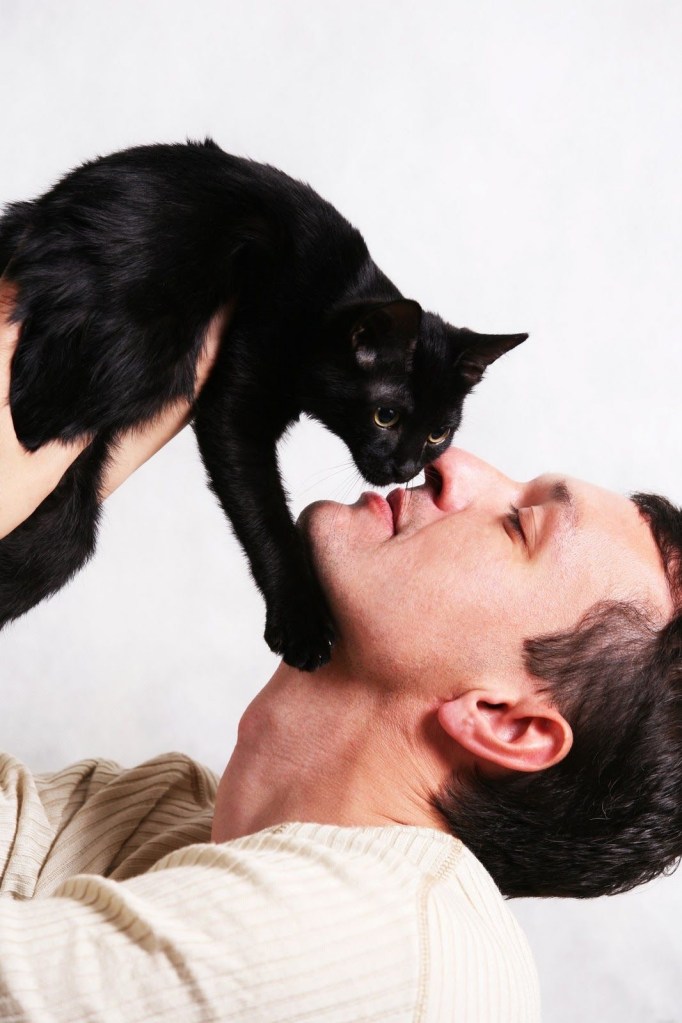
Black cats have long carried unfair superstitions, but in reality they’re elegant, mysterious, and endlessly charming companions. What better way to honor them than with a little appreciation of our own? What better way than to enjoy some lovely men photographed with their sleek black feline friends?
So, in anticipation of tomorrow, here’s your Saturday Moment of Zen: handsome men and beautiful black cats—a combination that feels like good luck to me.
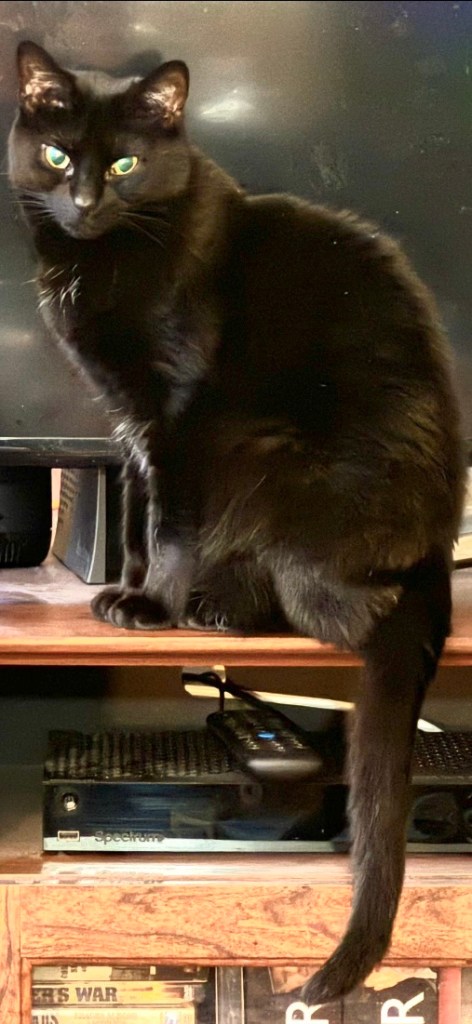
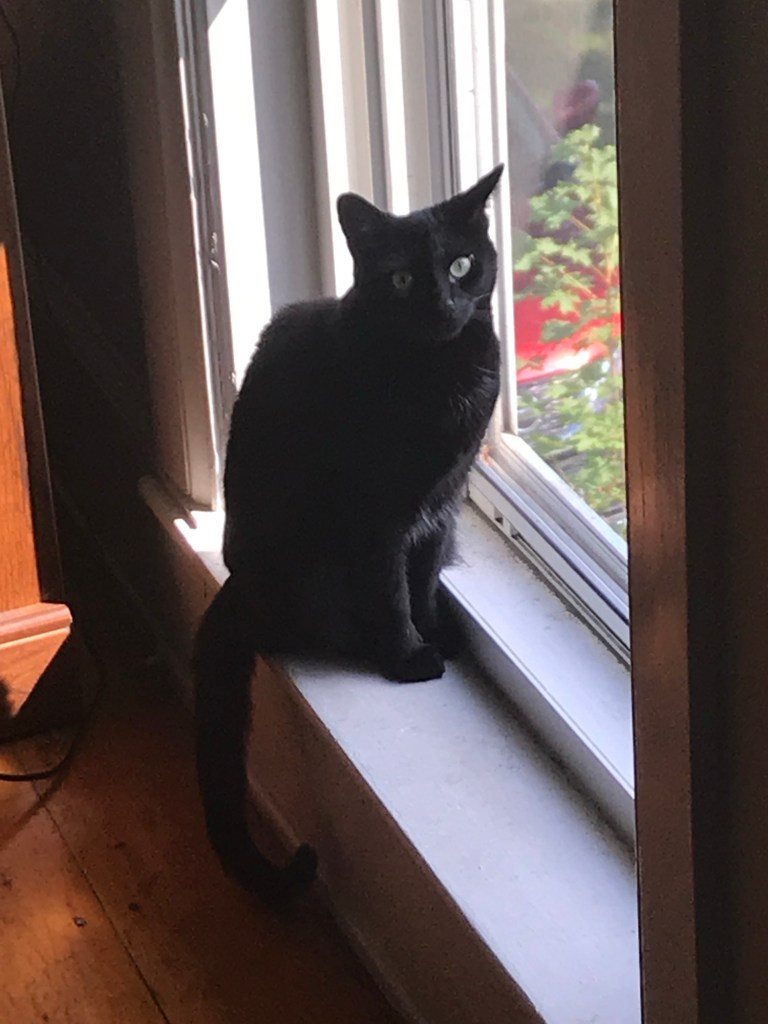
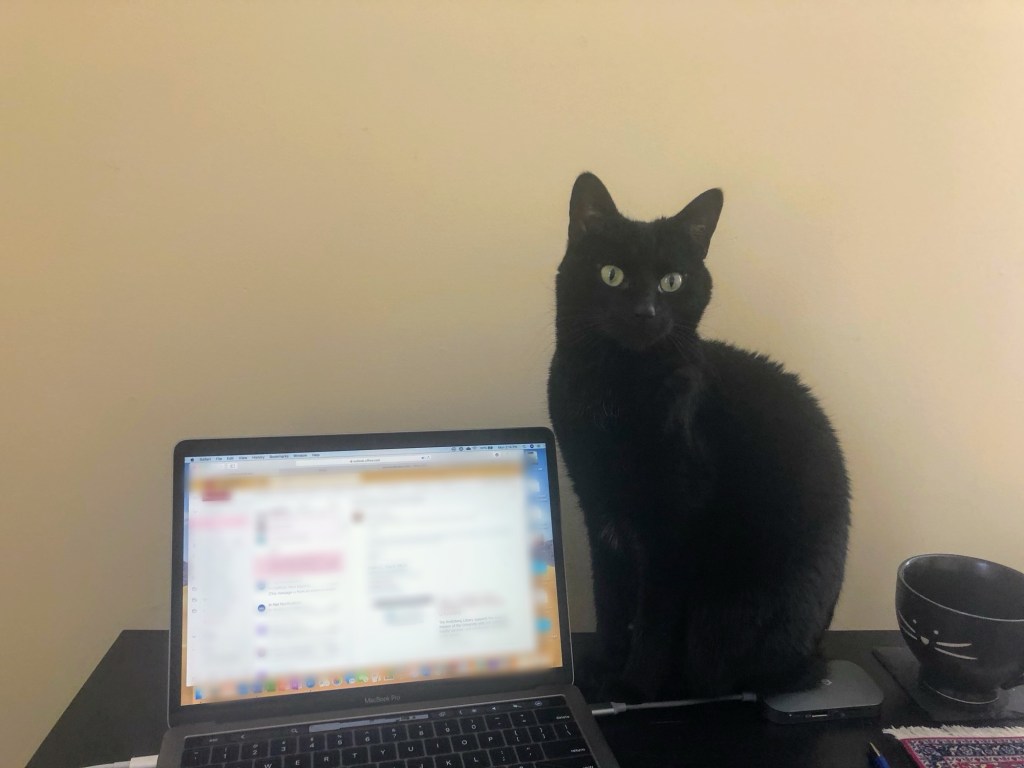
No National Black Cat Appreciation Day post would be complete without a nod to the queen of black cats—Isabella, who reigns supreme. 👑🐾
Queen Isabella in all her glory! Graceful, commanding, and regal.
Watching over her kingdom.
The real mastermind behind The Closet Professor.
A Tribute to the Original Queen
HRH, Queen Victoria (1998–2014)
Those of you who have followed the blog for a while may remember Queen Victoria, my beloved gray tabby Siamese mix who reigned in my life from 1998 to 2014. Though she was not a black cat, she ruled with strength and benevolence, and held my whole heart before Isabella came into my life.
This is a small tribute to the original queen, whose reign set the standard for grace, devotion, and love. In Isabella, I have found the perfect successor—different in color but equally commanding, equally cherished, and equally royal. Together, they remind me that our pets are not only companions, but sovereigns of our hearts and rulers of our homes.














 Joe
Joe




 The Closet Professor