
“For just as each of us has one body with many members, and these members do not all have the same function, so in Christ we, though many, form one body, and each member belongs to all the others.”
— Romans 12:4–5
“So now you are no longer strangers and foreigners. You are citizens along with all of God’s holy people. You are members of God’s family.”
— Ephesians 2:19
One of the hardest things about being LGBTQ+ is that so many of us have been made to feel like outsiders. Sometimes it’s been in our families, sometimes in our communities, and too often in our churches. That kind of rejection leaves scars. But when I read passages like these, I’m reminded that God doesn’t see us as strangers, outsiders, or “less than.” God sees us as part of the body, part of the family.
Romans 12 reminds us that the church is like a body—different members, different roles, but all working together. No part is useless, no part can say, “I don’t need you.” That means you, just as you are, bring something vital to the body of Christ. And Ephesians takes it a step further: we’re not just loosely connected, we’re family. Full citizens of God’s household. Not guests. Not outsiders. Family.
This is Christianity’s greatest strength—that people of every background, identity, and story are drawn together by God’s love into one body, one family. When LGBTQ+ people are excluded, that strength is weakened, because the body is not whole. Our gifts, our voices, our joy, and even our struggles are part of what makes the body of Christ stronger, more compassionate, and more complete.
That’s powerful when you’ve ever been told otherwise. 1 John 3:1 tells us, “See what great love the Father has lavished on us, that we should be called children of God! And that is what we are!” It doesn’t say some of us. It doesn’t say only the ones who fit a certain mold. It says we are God’s children, and that includes LGBTQ+ folks too.
Galatians 3:28 reminds us that all the old dividing lines—Jew or Gentile, slave or free, male or female—don’t hold sway in Christ. “You are all one in Christ Jesus.” For us today, that verse could just as easily say: gay or straight, trans or cis, single or married—you are all one in Christ Jesus.
And here’s the other side of it: when one of us hurts, the whole body hurts. 1 Corinthians 12:26 says, “If one part suffers, every part suffers with it; if one part is honored, every part rejoices with it.” So when LGBTQ+ people are rejected or mistreated, it isn’t just our pain—it’s the church’s pain. And when we live openly, joyfully, and authentically in God’s love, that joy is a gift that strengthens the whole body.
The Bible is also full of reminders that God takes what the world rejects and turns it into something essential. Psalm 118:22 says: “The stone the builders rejected has become the cornerstone.” And Jesus echoed this in Matthew 21:42: “Have you never read in the Scriptures: ‘The stone the builders rejected has become the cornerstone; the Lord has done this, and it is marvelous in our eyes’?” For anyone who’s ever felt pushed aside, those verses are a lifeline. What others reject, God makes foundational.
And so we’re called to do the same. Romans 15:7 tells us, “Welcome one another, therefore, just as Christ has welcomed you, for the glory of God.” That’s not a half-hearted welcome, not a “you can sit here, but stay quiet.” It’s a full, Christlike welcome that says: you belong, you matter, and we’re not whole without you.
Where do you most need to hear the reminder that you belong today? What unique gift or story do you bring that helps the body of Christ be more whole?



 Joe
Joe


 The Closet Professor
September 14th, 2025 at 6:50 am
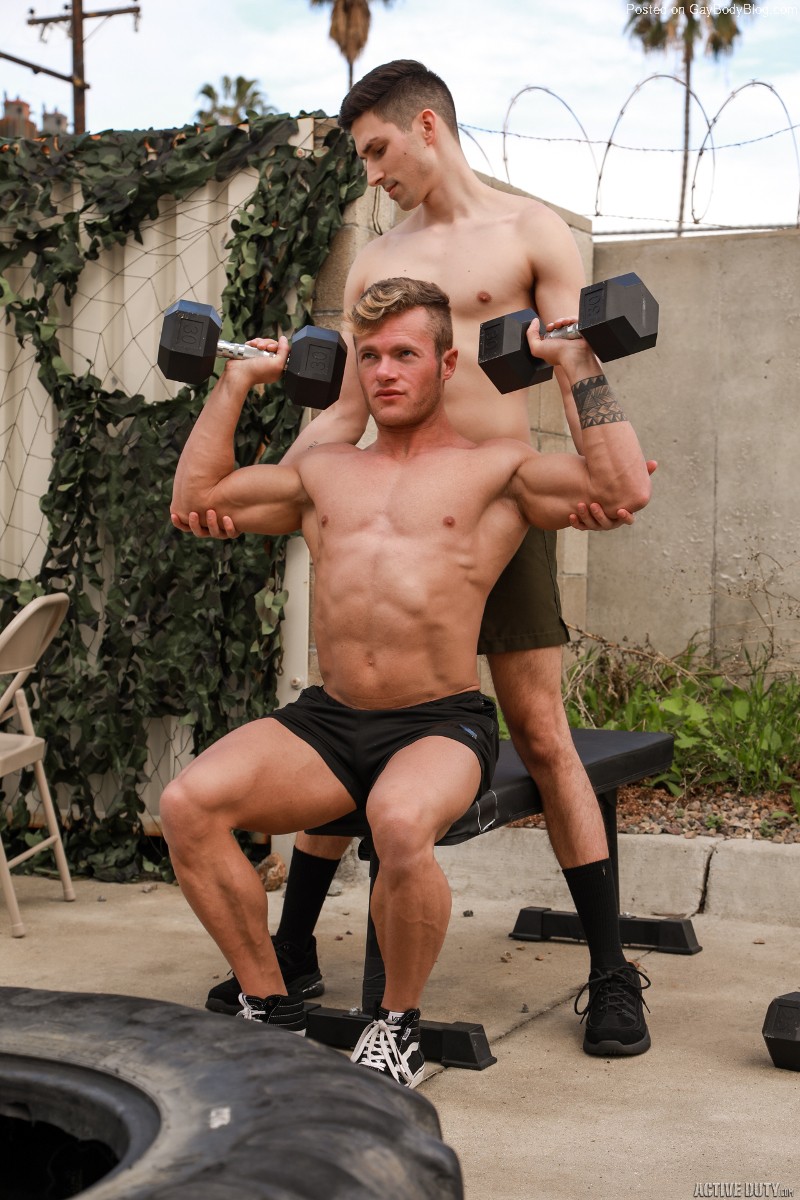
Joe, that is a lovely image this morning, apart from the barbed wire on the wall. It does not say much for the neighbours or the local community. I have only seen that in Johannesburgh where every house was almost a fort and drivers often carried a gun when out driving.
September 14th, 2025 at 7:36 am
It is a sad statement on society when we put up barbed wire to keep people out. I’ve always believed that people turn to violence when their lives lack the basic essentials. Even people we think must have been born evil or with wage or violence in their nature, they weren’t. I think all of that comes from circumstances that they encounter in their formative years, at least that’s what most psychologists would say.
If we take that to a wider national setting, both the United States and South Africa were countries created and built on inequity and inequality even though founding documents say otherwise, at least in the US, I’m not well versed in South African history.
September 14th, 2025 at 12:14 pm
Joe, I agree entirely. I was blessed with lovely intellectual parents. My dad was a diplomat and we were treated as gods abroad.
As for inequality, South Africa is even more unequal after Mandela came to power thanks to widespread corruption by their leaders.