
Monthly Archives: September 2025
A Quiet Day (Hopefully 🙏🏻)

I had planned an art history post for today, but honestly, I just haven’t been up to writing it. I’m working from home today, so maybe I’ll have some time to pull it together later. For now, though, I don’t have a lot to say.
Yesterday was rough—not only was I very busy at work, but my back gave me trouble all day. One of the issues with the bulging disk between my L4 and L5 is that it presses on the sciatic nerve on both sides, which is why I’ve had pain in my left leg for the past few weeks. Yesterday, however, it was my left leg and the lower left of my back that gave me the most grief. Add a migraine on top of that, and I was pretty miserable. It took me forever to fall asleep last night.
At least Isabella was kind enough to let me sleep until 5 a.m. Speaking of sleep, here’s one of my favorite photos of her napping—for the Isabella Pic of the Week.
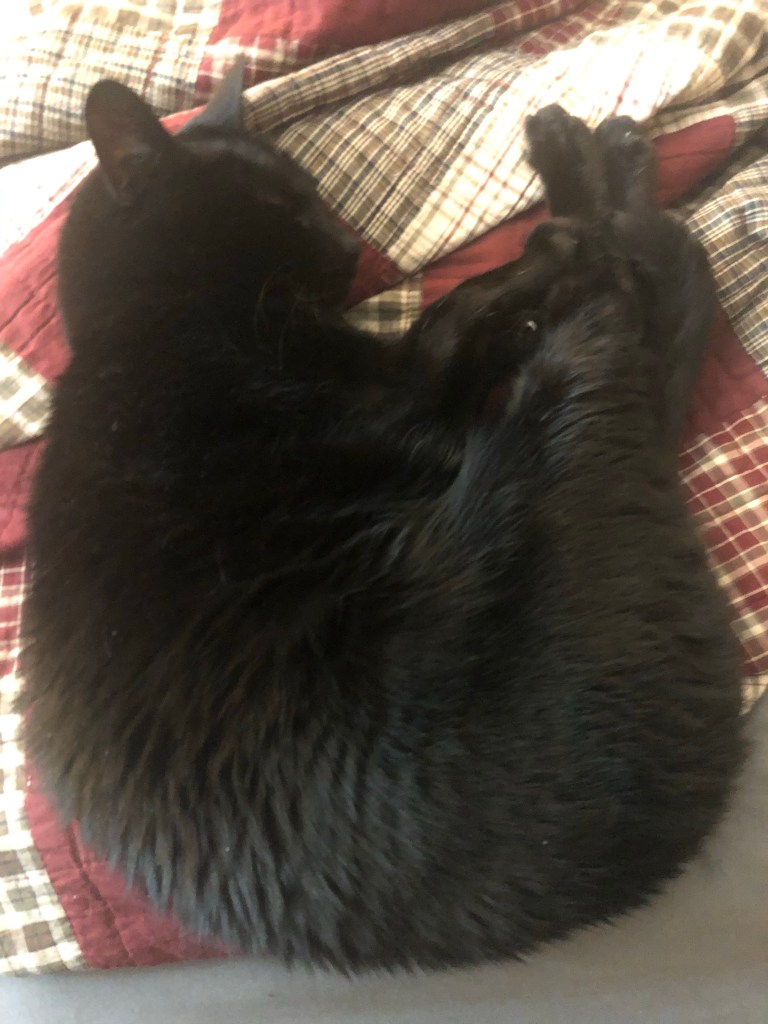
Even when the pain flares up and the days feel long, I’m grateful for the little comforts: working from home, a quiet morning, and the steady presence of Isabella. Sometimes those small mercies make all the difference.

Poème du 24 septembre (Poem of September 24)

Here is a bonus poem for the week. It was today’s Poem-a-Day from Poets.org.
Poem of September 24
By Samira Negrouche
translated from the French by the author
Who crosses into you when you cross
Who crosses when you don’t cross
Who doesn’t cross when you cross
Who crosses when you can’t cross
Who doesn’t cross when you don’t cross
Who doesn’t want to cross
Who thinks they’re crossing
Who doesn’t look at you while crossing
Who might take the time to look at you.
_____________________________________
Poème du 24 septembre
Qui traverse en toi quand tu traverses
Qui traverse quand tu ne traverses pas
Qui ne traverse pas quand tu traverses
Qui traverse quand tu ne peux pas traverser
Qui ne traverse pas quand tu ne traverses pas
Qui ne veut pas traverser
Qui croit traverser
Qui ne te regarde pas en traversant
Qui prendra peut-être le temps de te regarder.
About This Poem
“Written with eight other [poems], forming nine poems of nine lines, this poem is part of a public installation called Signs/Promises. It can be read as a geopolitical statement or as an intimate whisper to yourself or to someone else. It is an invitation to question and envision all the layers of displacement that are required to be able to cross a border—real or symbolic—to meet another. It reminds us how fragile the understanding of another reality can be and why we should keep remembering it, especially when we think we are aware.”—Samira Negrouche
About the Poet
Samira Negrouche is a writer, poet, and translator whose work has been translated into more than twenty languages. She is the author of several collections of poetry, including Pente Raide [Steep Slope] (Actes Sud, 2025), cowritten with Marin Fouqué. Negrouche’s book Le Jazz de oliviers [The Olive Trees’ Jazz] (Pleiades Press, 2020), translated by Marilyn Hacker, was short-listed for the 2021 National Translation Award, as well as the Derek Walcott Prize that same year. A translator from Arabic and English to French, as well as a medical doctor, Negrouche lives in Algiers.
Lows, Highs, and Hope

I saw my doctor yesterday for my annual physical. I know I’ve said this before, but he’s the first doctor I’ve ever felt completely comfortable with—and one I actually look forward to seeing. For the most part, all is well. My weight loss continues to progress, my blood pressure has improved enough that he lowered my medication, and my A1C (the test that measures average glucose levels over the past 90 days) came in at 4.3. That’s not bad for a non-diabetic, though he’d prefer mine be closer to 4.7. He also suggested I contact the sleep clinic because I may no longer need my CPAP. When I was in the hospital back in the spring and couldn’t wear a mask, I didn’t snore and my oxygen levels never dropped below 90%.
I’d talk about where I was versus where I am now, but I’ll admit I’m embarrassed about how bad things once were. The truth is, I was very depressed during those first few years after moving to Vermont. Just six weeks after arriving here, a close friend who had always encouraged me died suddenly, and it felt like my whole world collapsed. I was 1,200 miles (or more) away from everyone I’d ever known. I missed my family. I missed the food I’d grown up with. I’d broken up with the only boyfriend I’d ever had because I couldn’t face a long-distance relationship. My health worsened as I turned to food for comfort. Susan helped me through those years, but there were still nights I cried myself to sleep.
Over time, though, I began to find my footing. I eventually made some wonderful friends in Vermont, and I leaned on the recipes my mama and grandmama had taught me, cooking the foods I’d grown up with—sometimes with a healthier twist. Little by little, life started to feel more like home again.
My doctor was one of the first people in Vermont to really help me turn things around. He diagnosed me as diabetic and worked with me until I became a diet-controlled diabetic who no longer needed medication. He kept at me until I finally gave in and went to the sleep clinic to deal with my sleep apnea. He worked with me on my depression, adjusted my diabetic medications until we found one that helped me lose weight, and sent me to the headache clinic at Dartmouth where I finally got relief from the migraines that had controlled my life for so long. They haven’t gone away, but they’re nowhere near as intense as they once were.
It’s been a ten-year journey, and I still have health issues to manage—my liver, my back, my migraines—but my overall health is so much better than it used to be. I owe that progress to the patience, persistence, and genuine care of my doctor. Sometimes, that care goes far beyond prescriptions or test results. They might even cry with you when you break down in their office because your mother has been diagnosed with dementia. My doctor’s mother was facing a similar decline, and in that moment, he truly understood the pain and worry I was carrying.
Through the lows and the highs, what I’ve found most of all is hope—hope that healing is possible, hope that progress continues, and hope that life can feel good again when you have the right care beside you.

Nothing Gold Can Stay
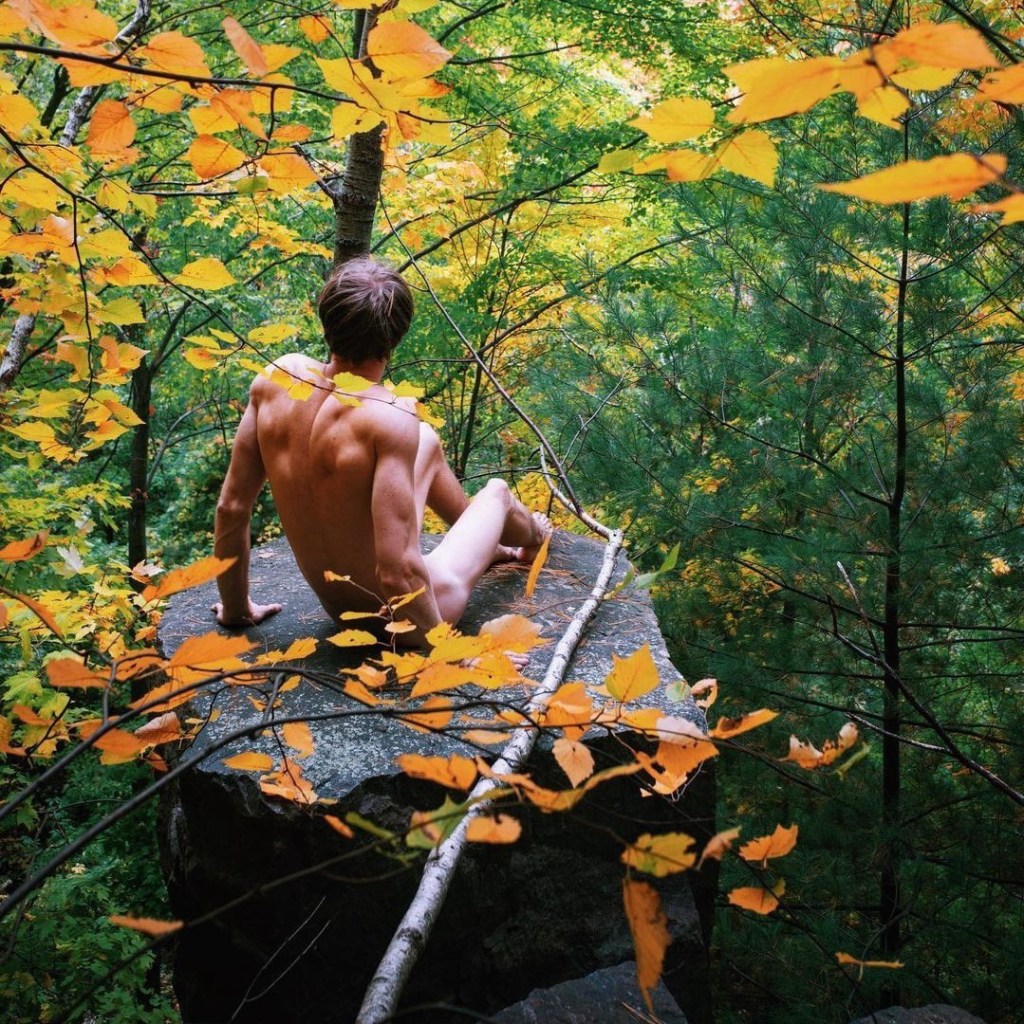
Nothing Gold Can Stay
by Robert Frost
Nature’s first green is gold,
Her hardest hue to hold.
Her early leaf’s a flower;
But only so an hour.
Then leaf subsides to leaf.
So Eden sank to grief,
So dawn goes down to day.
Nothing gold can stay.
About the Poem
Robert Frost is one of those poets who can take just eight short lines and capture the weight of beauty, loss, and the passing of time. “Nothing Gold Can Stay” is deceptively simple—something you might read once and think you’ve understood—but the more you sit with it, the more layers it reveals.
At its heart, the poem reminds us that nothing beautiful lasts forever. The first flush of spring, the gold of new leaves, the brilliance of dawn—all are fleeting. Frost connects this natural cycle to the story of Eden, suggesting that even the purest moments of perfection can’t be held onto. Time moves forward, and everything inevitably changes.
I think this poem resonates so strongly because we’ve all had moments we wish we could freeze. Whether it’s the joy of youth, the fire of first love, or even a golden autumn day in Vermont, those moments are precious precisely because they’re fleeting. Frost doesn’t just mourn that loss—he honors it. By recognizing impermanence, we’re reminded to hold on a little tighter, to notice the beauty while it’s here.
It’s no wonder that this poem has found its way into popular culture too—most famously in S. E. Hinton’s The Outsiders, where it becomes a message about innocence and holding on to what makes us shine before the world tries to wear it away.
For me, “Nothing Gold Can Stay” isn’t just about nature, or even about youth. It’s about the reminder that life itself is made of fleeting golden moments. We can’t keep them, but we can cherish them, and maybe that’s enough.
About the Poet
Robert Frost (1874–1963) is often remembered as one of America’s quintessential poets, though he spent nearly a decade in England before his work was first published. He returned to the U.S. just as his career was beginning to take off, and over the course of his life he became one of the most widely read and beloved poets of the 20th century.
Frost’s poetry is rooted in the landscapes and rhythms of rural New England. He wrote in plainspoken language, but beneath the simplicity lies a deep philosophical and emotional complexity. His poems often explore the tension between humanity and nature, the fleetingness of beauty, and the choices that shape our lives.
He won the Pulitzer Prize for Poetry four times, more than any other poet, and in 1961 he read at President John F. Kennedy’s inauguration. Despite his public persona as the homespun New England sage, Frost’s poetry frequently wrestles with darkness, loss, and impermanence—making “Nothing Gold Can Stay” a perfect example of his gift for distilling profound truth into the smallest of spaces.
For those of us in Vermont, Frost feels like a neighbor as well as a poet. He spent the last decades of his life here, teaching at Middlebury’s Bread Loaf School of English and writing in the Green Mountains he loved so well. He is buried in Bennington, Vermont, not far from where visitors can still walk the landscapes that inspired so much of his verse.

Autumn Leaves 🍁
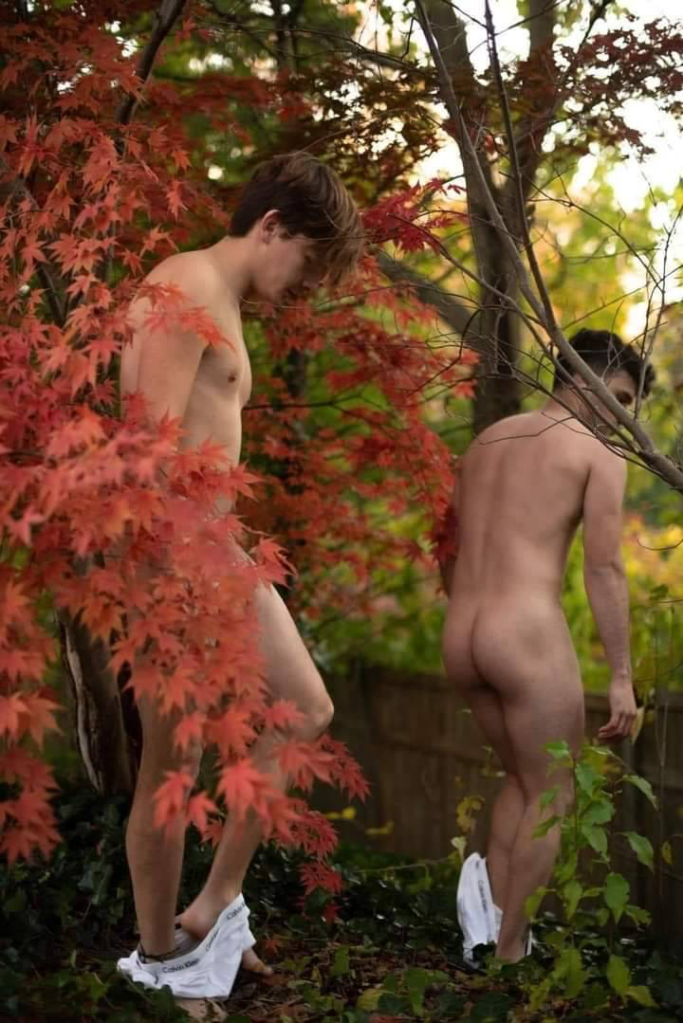
The falling leaves drift by my window
The autumn leaves of red and gold
I see your lips, the summer kisses
The sun-burned hands I used to hold
I’ve always loved this song. I think I first heard it on the Midnight in the Garden of Good and Evil soundtrack, which features only Johnny Mercer songs, since his house in Savannah is pivotal to the story. That soundtrack is still one of my favorites, and Mercer’s music never fails to strike a chord with me.
Today is the first day of autumn. Vermont is one of the most beautiful and scenic places in the world this time of year. People from all over the globe make their way here just to see the “autumn leaves of red and gold.” This year, though, they might be a little disappointed if they’ve visited before. With the drought Vermont and much of New England has faced, the colors aren’t quite as vibrant as they usually are. Still, if you’ve never seen Vermont in “leafing” season, it’s breathtaking. And truth be told, those postcards and pictures—like the classic images of Stowe—are often enhanced to make them more vibrant than what nature actually gives us. In reality, it’s more like the softer, subtler version you’ll see in the second picture of Stowe below.

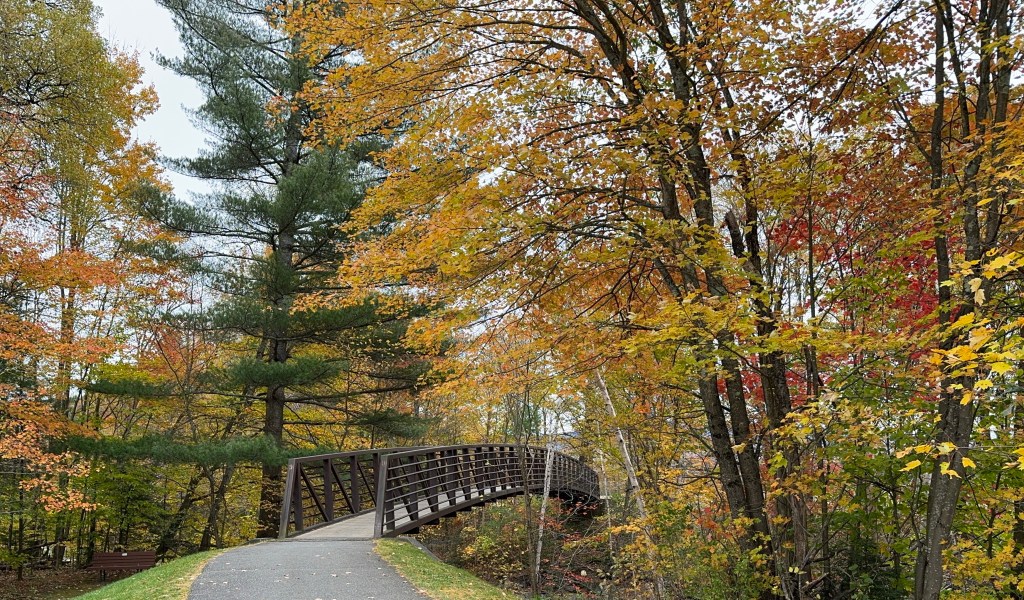
No matter what, autumn in Vermont is a season worth savoring. I hope everyone has a wonderful week and a scenic fall. And like Mercer’s lyrics remind us, each season carries its own beauty and its own memories—some bright, some bittersweet, but all worth holding close.



Authors
Recent Comments
noisilycool3bc985058… on Dr. McDreamy Joe on Dr. McDreamy poetrybeautiful3d840… on Dr. McDreamy Joe on Dr. McDreamy noisilycool3bc985058… on Dr. McDreamy Top Posts & Pages


Amazon Associate

As an Amazon Associate I earn from qualifying purchases. So, if you click on a link that takes you to Amazon.com, I may earn a commission.
Trust me, it isn’t much, but every little bit helps.

 Joe
Joe


 The Closet Professor