My vacation is officially more than halfway over, and I’m already dreading returning to work next week. The only silver lining is that it’ll be a short week—and most of it I’ll be entirely alone at the museum. There’s a certain peace in that, even if it also reminds me that the quiet is coming to an end.
All week, I’ve told myself I’d finally get back to working out. With the days free, I could go during daylight hours and maybe even run into my former trainer. After being out so long because of my back, I’ve become an expert at excuses—telling myself I’ll go after work (I never do) or that I’ll get up early and go before work (I definitely never do). But even this week, one thing after another has popped up and thrown off my plans.
Yesterday I even packed my gym clothes when I headed to the Headache Clinic. The plan was simple: do a little shopping, have lunch, and then swing by Planet Fitness before heading home. But the Botox had my head feeling tender, and a migraine settled in before the day was over. So instead of working out, I went home and took a nap. Not exactly the fitness comeback I envisioned.
This morning, though, I plan—there’s that word again—to go before lunch. I’ve got a dentist appointment this afternoon for the crown I’ve been putting off. The appointment is from 2 to 4 p.m., which means my mouth will still be comfortably numb right around dinner time. So either I skip dinner altogether or eat far later than I prefer. Either way, I suspect I won’t feel like doing much once I get home.
Staycations never quite go the way we imagine, do they? But at least for now, I still have a few slow hours ahead of me—and maybe, just maybe, I’ll make it to the gym today.
I have to make this one short today because I slept in a bit—one of the perks of being on vacation, even if it means I have a little less time to get myself going this morning. Honestly, I’m not complaining. A slow start felt good.
Even though I’m taking some vacation time this week, I would have had today off anyway because I’m heading down to the headache clinic for my next Botox appointment. The good news is they were able to get my insurance to approve treatments every ten weeks instead of every twelve. The helpful effects always wore off right around week ten, so I’m hoping this new schedule will keep the headaches at bay a little more consistently.
Fingers crossed—and coffee in hand—I’m off to get ready for the day. I hope your Tuesday is gentle and kind to you.
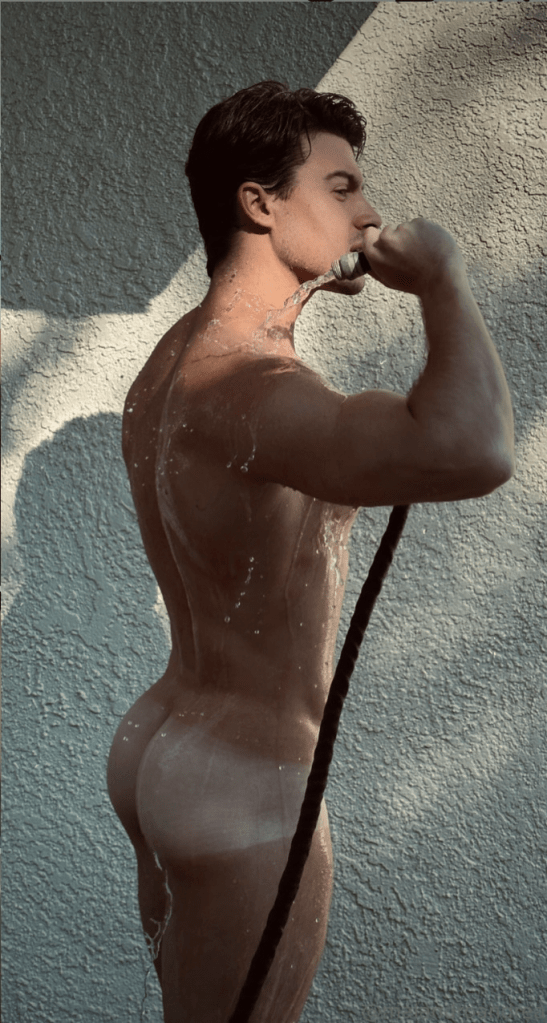
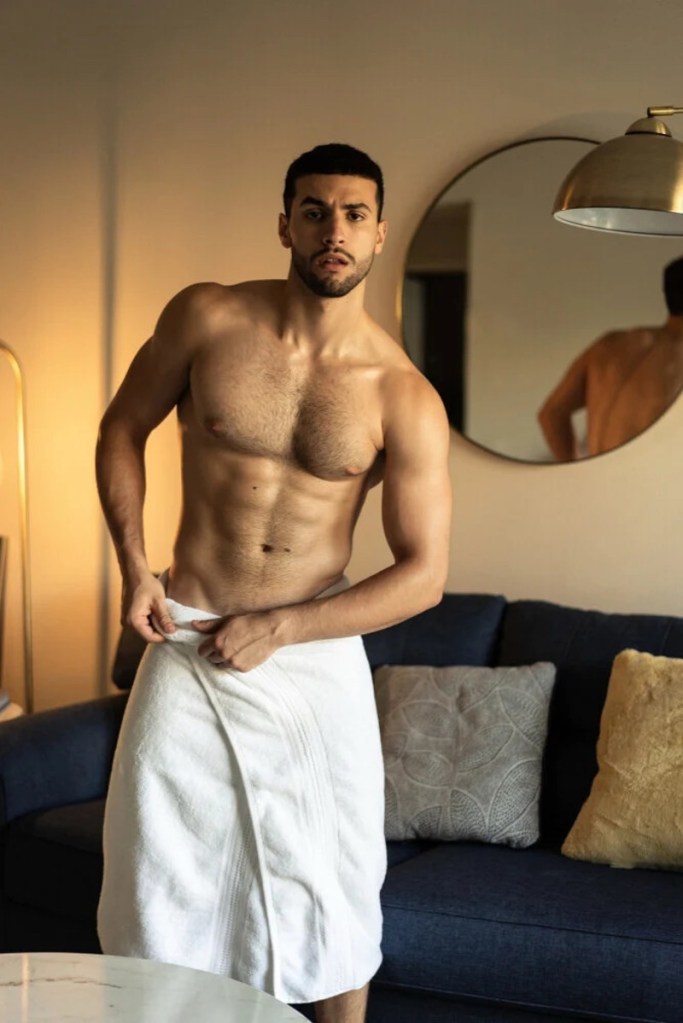
The college boys have pulled their shirts off and are playing football on the lawn. Their farmer tans pink in the afternoon sun. They toss
and jog, slight fake and almost tackle. One puts his face too close to another one’s stomach, grabs the guy’s waist—steady—to keep
from falling; then a damp armpit on the back of his neck, as a blond wraps his arm around him in a quick guy-hug. I am old- er and pretend not to see, furtive
in sunglasses, looking at them, past them, at them. I could ruin the game by watching the wrong way—professor gawking at students; even a shift between them
could change everything: a hand more than smacking an ass, someone pressed too long against a humid chest. Crash of skin, body pushing body into perfect crush.
Their biceps bulge, un-bulge, bulge again. It’s not that I want them. I’ve had enough men, and yet I can’t stop looking at them while trying not to look at them.
About the Poem
Aaron Smith has a way of holding up a moment—one we might otherwise dismiss as simple, ordinary, harmless—and revealing all the longing, all the humor, all the complicated ache underneath. His poem “Spring Rush” captures a scene many of us know all too well: young men tumbling across a sunlit lawn, roughhousing with the kind of careless intimacy that adulthood slowly chisels away.
The poem opens with a tableau of shirtless college boys playing football, their “farmer tans pink in the afternoon sun,” their bodies moving with effortless confidence. It’s a familiar choreography to anyone who has watched young men at play—how easily they invade each other’s space, how unselfconscious their closeness is, how they grab, steady, press, and laugh without a second thought. Smith catches each gesture with almost photographic clarity:
one puts his face too close to another one’s stomach… a blond wraps his arm around him in a quick guy-hug.
What he’s really capturing, though, is the speaker watching. Not intrusively, not predatory, but with a mix of wistfulness and restraint—half nostalgia, half desire, and a healthy dose of gay self-awareness. “I am older and pretend not to see,” he admits, slipping on the protection of sunglasses, watching but trying not to watch. Smith renders the tension of that gaze with startling honesty. He knows how easily a moment like this can break, how a look held too long can change the boys’ play, turning innocent roughhousing into something self-conscious, something policed.
It’s the familiar queer balancing act: seeing without being seen seeing.
One of the most poignant lines comes near the end:
It’s not that I want them. I’ve had enough men, and yet I can’t stop looking at them while trying not to look at them.
It’s a line that resonates with age, experience, and the complicated beauty of queer desire. Wanting isn’t always erotic; sometimes it’s longing for a kind of ease, a kind of freedom, a kind of uncomplicated belonging that many of us never got to fully inhabit in our younger years. The poem complicates the gaze—it’s not a hunger for the boys, but a hunger for the days when closeness wasn’t dangerous.
Spring Rush is tender, observant, and unflinchingly honest. It holds space for that bittersweet place where desire, memory, and self-restraint overlap—where we both relish and mourn the distance between who we were and who we have become.
About the Poet
Aaron Smith is an award-winning American poet known for his candid, queer-centered writing that blends desire, humor, vulnerability, and sharp cultural observation. A graduate of the MFA program at the University of Pittsburgh, he is the author of several acclaimed collections, including Blue on Blue Ground, Appetite, and Primer. Smith’s work often explores gay identity, aging, pop culture, and the messy intersections of intimacy and longing. His poems have appeared in Ploughshares, The Yale Review, Court Green, and Best American Poetry.
It’s Monday—but for once, I’m not dreading it. No alarms, no rushing around, no inbox waiting to ambush me. I have the whole week off, and it feels absolutely glorious.
Today, I get to relax. I might curl up on the couch and watch something mindless on TV, or maybe pick up a book I’ve been meaning to start. A nap is also a strong possibility—honestly, it’s at the top of the list.
I’m especially grateful that I don’t have anywhere I have to be. The snow that fell all day yesterday has left everything outside looking pretty but treacherous, and I’m perfectly content not to venture out in it. I do have a couple of small errands I could run later in the week… but only if the snow melts enough for driving not to feel like a circus act.
Mostly, though, I’m just going to enjoy this week-long vacation. No schedule. No pressure. Just me, some quiet time, and the luxury of slowing down.
Here’s to a peaceful Monday and a restful week ahead.
“For it is God’s will that by doing right you should silence the ignorance of the foolish. As servants of God, live as free people, yet do not use your freedom as a pretext for evil.”
—1 Peter 2:15–16
Some verses arrive like a steadying hand on the shoulder—quiet, firm, and full of clarity. I came across 1 Peter 2:15–16 recently through my “Verse of the Day” email, and it resonated with me in a way I didn’t expect. It calls us to live as free people, but not reckless ones; to live as God’s own, but not self-righteous; to do right in such a way that the loudest argument we ever make is the grace and kindness flowing through our lives.
As LGBTQ+ Christians, these verses strike a particular chord. For centuries, people have spoken about us with suspicion, ignorance, or outright hostility. But Scripture reminds us that doing good has a power all its own—a power that reveals the truth of God far more than arguments or debates ever could.
Jesus tells us in Matthew 7:12, “In everything do to others as you would have them do to you.” The Golden Rule is one of the clearest expressions of holy living, and it aligns beautifully with Peter’s reminder to “do right.” When we live lives shaped by kindness, integrity, compassion, and mercy—when we refuse cruelty even when it is used against us—we are practicing the freedom God has given us.
I try to live out that kind of freedom: not the freedom to do whatever I want, but the freedom to choose gentleness over anger, empathy over judgment, and grace over bitterness. I’m not always successful—some people make it very hard to be kind—but I try my best to live out God’s love as faithfully as I can.
As a gay Christian, I believe that living in a moral, loving, humane way becomes a quiet testimony—one that says to the world: every person is worthy of God’s love.
And in a time when many still use faith as a weapon against LGBTQ+ people, our goodness becomes a form of resistance, not to win approval, but to reflect Christ’s heart more clearly than any stereotype placed upon us.
Doing right silences ignorance not by humiliating others, but by proving false the stories they once assumed were true.
May we live freely, love boldly, and shine with the goodness that God plants in us—so that our lives themselves become a witness to God’s inclusive love.
No matter how the world labels us, doubts us, or presses us to shrink, God continues to call us into freedom—freedom rooted in goodness, compassion, and love. When we choose kindness in a world that often rewards cruelty, we participate in God’s quiet miracle of transformation. May we remember each day that our lives, imperfect yet sincere, can reveal a glimpse of God’s heart to someone who needs it.











 Joe
Joe





 The Closet Professor