
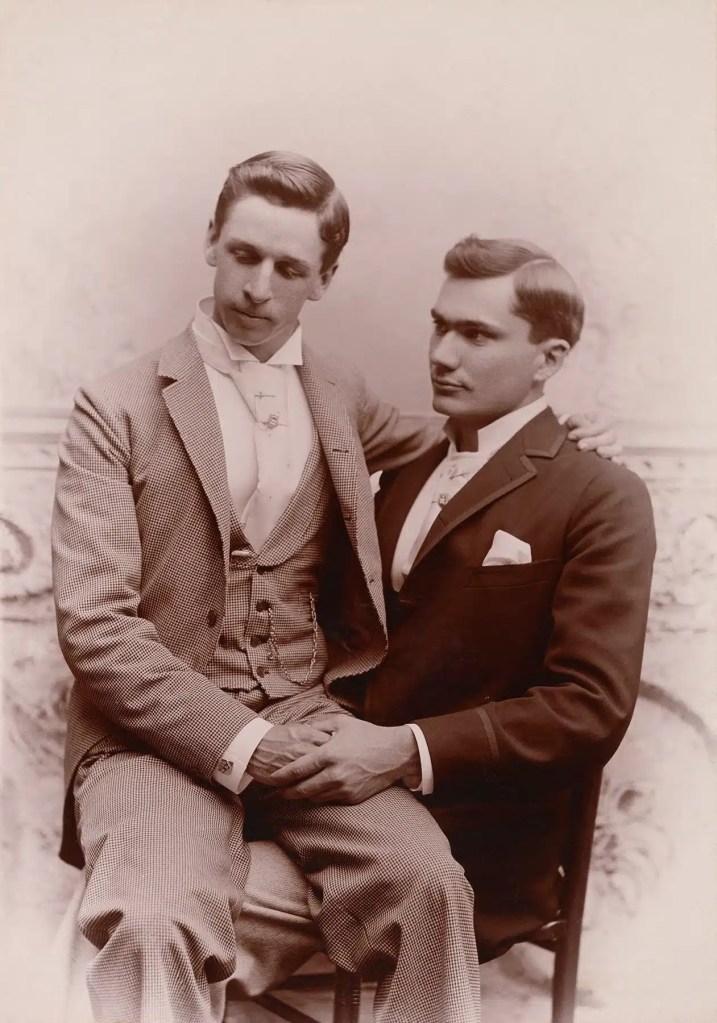
“It was deep April, and the morn]
By Michael Field
It was deep April, and the morn
Shakspear was born;
The world was on us, pressing sore;
My Love and I took hands and swore,
Against the world, to be
Poets and lovers ever more,
To laugh and dream on Lethe’s shore,
To sing to Charon in his boat,
Heartening the timid souls afloat;
Of judgment never to take heed,
But to those fast-locked souls to speed,
Who never from Apollo fled,
Who spent no hour among the dead;
Continually
With them to dwell,
Indifferent to heaven and hell.
⸻
About the Poem
There is something quietly defiant in this poem—something that feels almost like a vow whispered between two people standing just outside the world’s expectations.
“It was deep April,” the season of renewal, of rebirth—and on the morning of William Shakespeare’s birth, no less. That detail matters. It situates the poem in a lineage of art, as if the speaker and their beloved are consciously stepping into a tradition of creation, of beauty, of daring to live poetically in a world that often resists it.
“The world was on us, pressing sore.” That line lands with weight. It feels familiar. There are times—especially for those of us who have lived at the margins in one way or another—when the world presses in, insists on conformity, demands silence, or at least compromise.
And yet, the response here is not retreat. It is a kind of sacred rebellion.
“My Love and I took hands and swore…”
There’s intimacy in that gesture, but also resolve. To be “poets and lovers ever more” is not simply romantic—it is a declaration of identity. To choose love, to choose creativity, to choose joy in the face of pressure is itself an act of resistance.
The classical imagery deepens that sense of rebellion. To laugh on the shores of Lethe—the river of forgetting—to sing to Charon as souls cross into death: these are not somber, fearful images here. They are transformed. The lovers become companions even to the dead, offering courage, song, and presence.
And perhaps most striking of all: “Indifferent to heaven and hell.”
Not indifferent in the sense of apathy, but in the sense of freedom. A refusal to let external systems of judgment—whether divine or social—dictate the worth of their love or their art.
There’s something deeply moving about that. To live in such a way that love and creativity are not contingent on approval. To dwell, continually, among those who never fled from inspiration—those who chose life, even when the world pressed hard against them.
It is, in its own way, a quiet kind of salvation.
This poem is both a love poem and an artistic manifesto. Written in the late 19th century, it reflects a commitment not only to romantic devotion but to a shared life of creative purpose.
The reference to Lethe, Charon, and Apollo draws heavily on Greek mythology, situating the lovers within a timeless, almost mythic landscape. These allusions elevate their vow beyond the ordinary, suggesting that their love and their art participate in something eternal.
At its core, the poem rejects conventional measures of success or morality—“judgment,” “heaven,” and “hell”—in favor of a life guided by beauty, imagination, and mutual devotion. It celebrates a chosen community of kindred spirits: those who remain faithful to inspiration and refuse to become spiritually “dead.”
The poem’s tone is both lyrical and resolute, blending tenderness with quiet defiance.
⸻
About the Poet
“Michael Field” was not a single person, but the shared pseudonym of two women: Katharine Bradley and Edith Cooper, who were aunt and niece as well as life partners.
Writing together under a male pseudonym allowed them greater freedom in the literary world of Victorian England, where women writers—especially those exploring intense emotional and romantic themes—often faced limitations and scrutiny.
Their relationship was central to their work. Many of their poems, including this one, can be read as expressions of their shared life, their devotion to one another, and their commitment to art. In this sense, their writing is both deeply personal and quietly radical.
Today, Michael Field is increasingly recognized not only for literary merit but also for the significance of Bradley and Cooper’s partnership—a creative and romantic union that challenged the norms of their time while leaving behind a body of work marked by beauty, intellect, and emotional depth.



 Joe
Joe





 The Closet Professor
Thank you for commenting. I always want to know what you have to say. However, I have a few rules: 1. Always be kind and considerate to others. 2. Do not degrade other people's way of thinking. 3. I have the right to refuse or remove any comment I deem inappropriate. 4. If you comment on a post that was published over 14 days ago, it will not post immediately. Those comments are set for moderation. If it doesn't break the above rules, it will post.