
Monthly Archives: April 2026

Feet, Faith, and 4 a.m.

Holy Thursday always sneaks up on me a little.

It’s one of those days that sits in an in-between space—part of Holy Week, part of the lead-up to Good Friday, but often quieter, less defined in my mind than Easter Sunday or even Palm Sunday. And yet, it carries one of the most intimate and, frankly, unusual traditions in Christianity: the washing of feet.

I’ll be honest—feet have never really done anything for me. I know foot fetishes are a thing, and if that’s what someone is into, more power to them, but it’s never been my thing. There is, however, one small exception. In the summer, there is something undeniably attractive about a guy in shorts and flip flops—thongs, as some people call them—with a good tan and well-kept feet. I enjoy the look, I’ll admit that. But that’s about where it ends. Admiration, not participation.

Now, receiving a foot massage after a long day? That’s a different story. I don’t think there’s a person alive who doesn’t appreciate that. Giving one, however, is another matter entirely. I’ll pass on that, thank you very much.

All of this was on my mind this morning because today is Holy Thursday—also called Maundy Thursday—and in many traditions, especially in the Roman Catholic Church, there is the ritual of washing feet. It’s meant to symbolize humility and equality, recalling the moment when Jesus Christ washed the feet of his disciples during the Last Supper, on the night before his crucifixion.

It’s a striking image when you really think about it. A teacher, a leader—someone his followers believed to be the Son of God—kneeling down to do the work of a servant. Not just symbolically lowering himself, but physically, intentionally taking on a task that was considered beneath someone of his status.

That wasn’t a tradition I grew up with.

There weren’t many Catholics where I lived, and it certainly wasn’t something practiced in the Church of Christ. The first time I really became aware of foot washing as a religious act wasn’t in a cathedral or during Holy Week—it was driving past a small, plain church and being told, almost in passing, that they were “Foot Washing Baptists.”

That stuck with me.

Officially, they’re known as Primitive Baptists, a group that tries to hold closely to early Baptist traditions and theology often associated with figures like John Calvin. But what I remember wasn’t the theology—it was the practice. They would wash one another’s feet as part of their worship, usually after communion, or the Lord’s Supper as we always called it.

Even then, I remember thinking how unusual it seemed.

And yet, the more I’ve thought about it over the years, the more I realize how deeply human—and how deeply uncomfortable—that kind of ritual is meant to be. It breaks down barriers. It asks people to step out of their usual roles, their sense of dignity, their personal space, and to meet one another in a place of vulnerability and equality.

So here we are: Holy Thursday bringing together a strange mix of thoughts—foot washing as a sacred act, childhood memories of small churches and unfamiliar traditions, and, somehow, the modern reality that feet can also be the object of entirely different kinds of attention.

It’s funny how the mind works, especially at four in the morning. It wanders. It connects things that don’t seem like they should belong together. And sometimes, in those odd connections, something meaningful—or at least interesting—emerges.

Maybe that’s part of what today invites us to do. To sit with the unexpected. To consider humility in ways that feel a little uncomfortable. To remember that the most powerful acts of love and equality are often the least glamorous.

And maybe, just maybe, to appreciate that even something as ordinary—and, for some of us, as unappealing—as feet can carry a deeper meaning when placed in the right context.

🐈‍⬛   🐈‍⬛   🐈‍⬛

I swear sometimes Isabella can read a clock. More than once, she has started trying to wake me up at exactly 4:00 a.m., as if she’s got an internal alarm that’s more reliable than mine. I’ll post an Isabella Pic of the Week after this—because if she’s awake at 4 a.m., she has decided she should not be alone in that experience… and that it’s clearly time for her wet food.
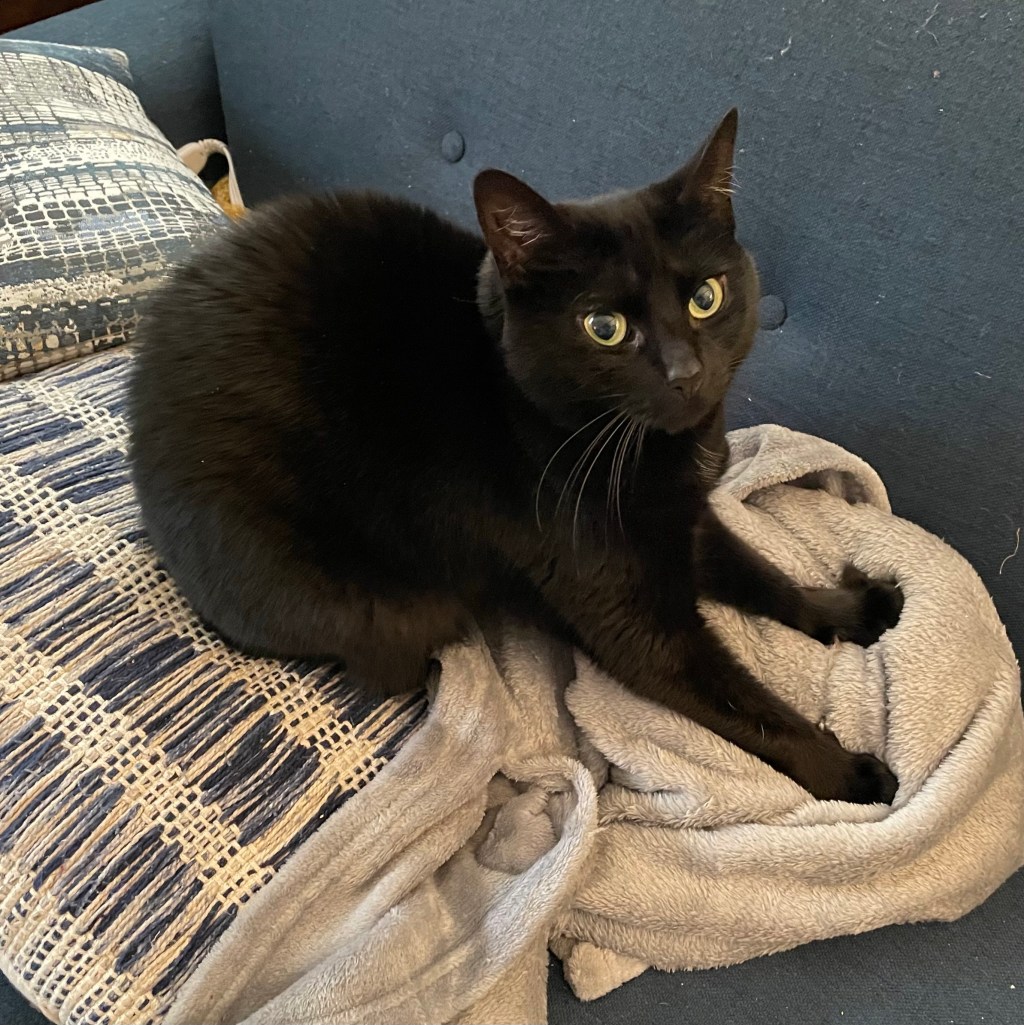

Pic of the Day


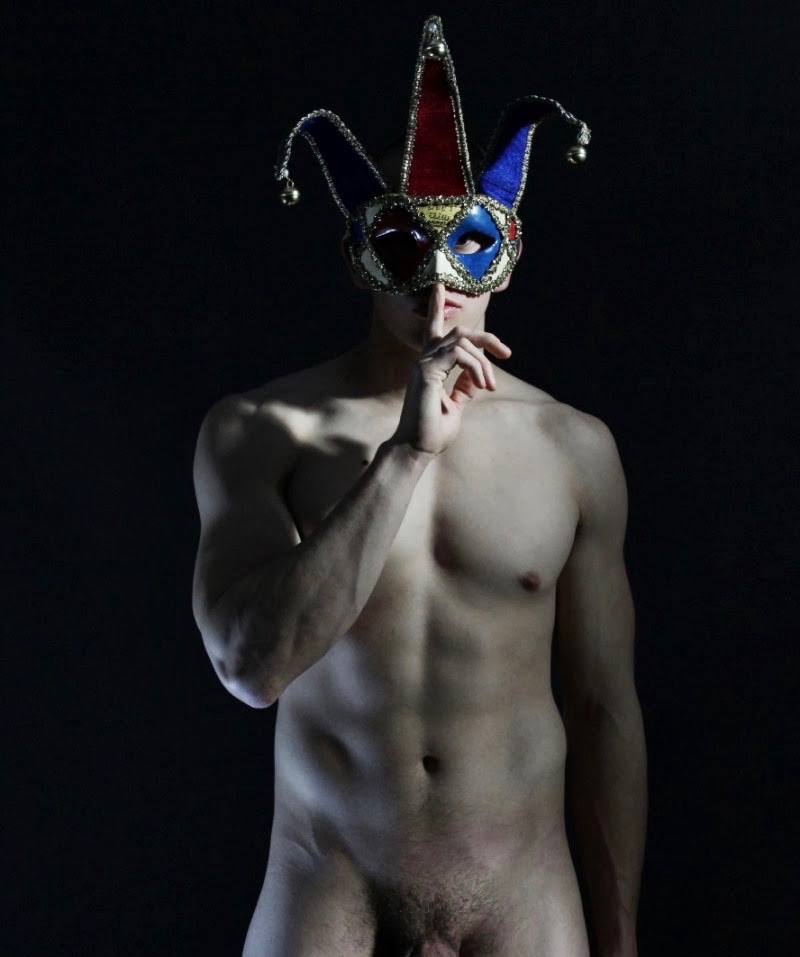
A Day for Fools

📰 Breaking News 📰 

The U.S. president signed an executive order declaring April 1 as “Donald Trump Day.” It will be a day when no one is allowed to speak a word of truth.

April Fools!

Thank goodness no holiday is being named after him—though, if we’re being honest, I wouldn’t entirely put it past him to try to declare a holiday named after himself. If he did, April 1 would be an appropriate day, since he is the biggest fool of all.

April 1 has always been one of those quietly delightful days—one where the rules loosen just a little, where humor takes center stage, and where we’re all reminded not to take ourselves too seriously.

The origins of April Fool’s Day are a bit of a mystery, but the most widely accepted explanation takes us back to 16th-century Europe. For centuries, many people celebrated the new year not on January 1, but around the end of March, often culminating on April 1. When Charles IX of France reformed the calendar in 1564 and moved the start of the new year to January 1, not everyone got the memo—or chose to follow it. Those who continued celebrating in early April were mocked, teased, and labeled “April fools.”

Over time, those teasing traditions evolved into something more playful. In France, people still celebrate poisson d’avril, or “April fish,” where children try to sneak paper fish onto someone’s back without them noticing. It’s harmless, a little silly, and entirely in the spirit of the day.

There’s also a deeper thread that connects April Fool’s Day to older spring traditions. Across cultures, the arrival of spring has long been associated with unpredictability—weather that can’t make up its mind, seasons shifting in unexpected ways. Festivals like Holi in India or Hilaria in Rome embraced laughter, disguise, and inversion of social norms. In that sense, April Fool’s Day feels like a continuation of something ancient: a moment when the world turns upside down, if only briefly.

Some of the most famous April Fool’s pranks in history are almost works of art in their own right. In 1957, the BBC aired a segment showing Swiss farmers harvesting spaghetti from trees. At the time, spaghetti wasn’t widely familiar in Britain, and many viewers believed it. Some even called in asking how they could grow their own spaghetti trees. It remains one of the most famous and successful pranks ever broadcast because it was delivered with complete seriousness.

Decades later, the BBC did it again, this time with a nature documentary revealing that penguins could fly. The visuals were convincing, the narration authoritative, and for a moment, it felt just plausible enough to make you wonder.

In 1996, Taco Bell took out full-page ads claiming they had purchased the Liberty Bell and renamed it the “Taco Liberty Bell.” People were outraged—until they realized it was April 1. The company later revealed it was all a joke, and the publicity was priceless.

And in more recent years, Google turned April Fool’s Day into something of an annual tradition, launching elaborate fake products like “Google Nose” or “Gmail Motion.” These pranks were often so well executed that people almost wished they were real.

Here in Vermont, we get an extra helping of fools—just a few months later. In Burlington, the “fools” come out around August 1 for the annual Festival of Fools, when street performers take over Church Street Marketplace and City Hall Park. Jugglers, acrobats, comedians, and buskers fill the streets with laughter and spectacle. It’s not about tricking people so much as delighting them—but it carries the same spirit: a celebration of humor, surprise, and a willingness to be entertained.

What all of these traditions and pranks have in common is not just deception, but delight. The best April Fool’s jokes don’t humiliate; they invite us in on the joke, even if it’s only after the fact.

And maybe that’s why the day endures.

In a world that often feels heavy, serious, and unrelenting, April Fool’s Day offers something rare: permission to laugh, to be a little gullible, to enjoy the absurd. It reminds us that not everything has to be optimized, productive, or even entirely true.

Sometimes, it’s enough to be surprised.

So if someone tries to send you on a ridiculous errand today, or you find yourself momentarily believing something just a little too strange to be real—take it in stride.

After all, we’re all fools today.

And maybe that’s not such a bad thing.

Continue reading


