
Veterans Day — November 11, 2026
Today, on Veterans Day, we honor the men and women who have served in the United States Armed Forces. We remember their sacrifices, their courage, and their willingness to serve a country whose freedoms have often come at a tremendous cost. However, among those veterans are countless LGBTQ+ Americans whose service has too often been overlooked, erased, or deliberately hidden. Today, I want to take a moment to honor them.
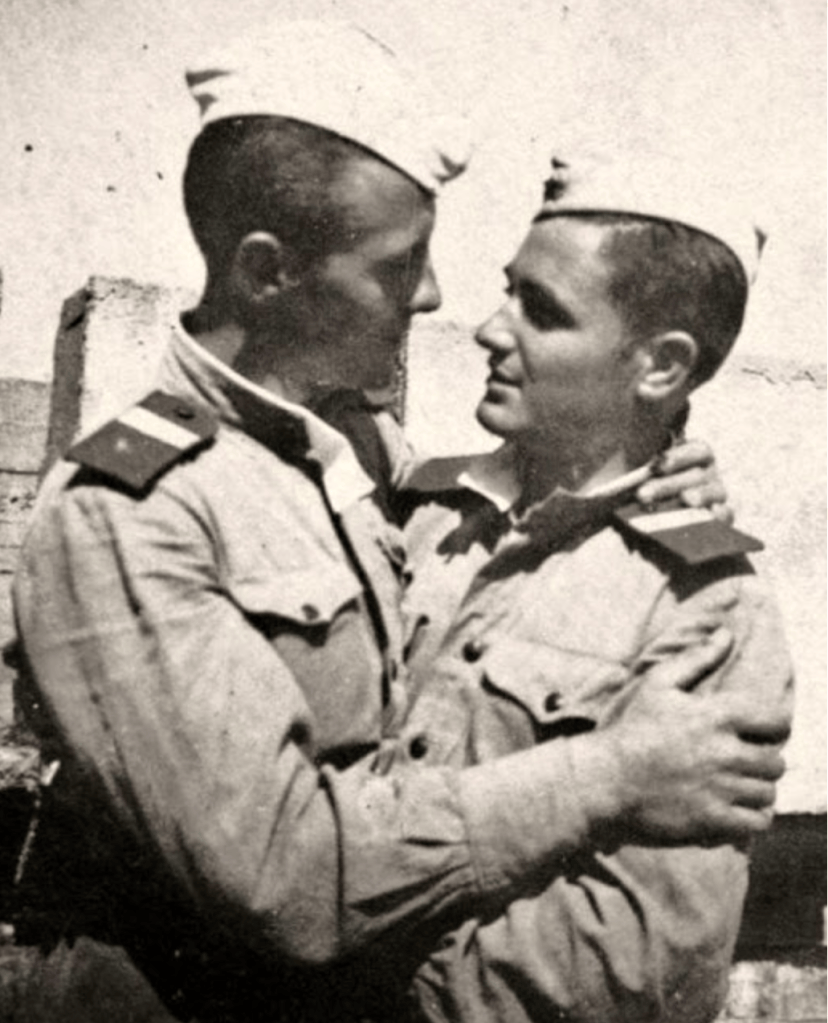
Throughout American history, LGBTQ+ individuals have served in every branch of the military, in every major conflict, and in virtually every capacity imaginable. They have fought in trenches, stormed beaches, flown combat missions, tended the wounded, and stood beside their fellow service members in moments of extraordinary danger. They have earned medals, received commendations, and made the ultimate sacrifice for their country. Yet, for much of our history, these same individuals were forced to conceal an essential part of who they were.
Imagine being willing to die for your country while knowing that the very institution you served could destroy your career simply because of whom you loved. Imagine fighting for freedom overseas while being denied the freedom to live openly at home.
For generations, that was the reality of LGBTQ+ military service.
During World War II, thousands of gay and lesbian Americans served with distinction, even as military policies treated homosexuality as grounds for exclusion and discharge. Some found a sense of belonging and community within the military that they had never experienced before, while others lived in constant fear of discovery. Their courage was no less remarkable because their country refused to acknowledge their identities.
One of the most notable examples was , a decorated Vietnam War veteran who earned a Purple Heart and Bronze Star. In 1975, Matlovich publicly challenged the military’s ban on gay service members. His photograph appeared on the cover of Time magazine beneath the words, “I Am a Homosexual.” His willingness to stand openly against discrimination helped bring national attention to the injustice faced by LGBTQ+ veterans.
Matlovich’s gravestone at Congressional Cemetery in Washington, D.C., bears a particularly powerful inscription: “When I was in the military, they gave me a medal for killing two men and a discharge for loving one.”
Those words capture the painful contradiction that defined military service for generations of gay Americans.
Even after the adoption of “Don’t Ask, Don’t Tell” in 1993, LGBTQ+ service members were still required to hide their identities. The policy was presented as a compromise, but in practice, it meant that gay, lesbian, and bisexual Americans could serve only so long as they remained silent about who they were. Thousands were discharged under the policy before its repeal took effect in 2011.
Transgender Americans have faced their own struggles for the right to serve openly, with military policies repeatedly changing and their ability to serve becoming a political battleground. In 2026, transgender service members and veterans continue to confront discrimination and uncertainty over whether their service and sacrifices will be respected.
What troubles me most is the fundamental injustice of asking someone to defend the freedoms of others while denying that person the same freedoms. Military service demands sacrifice, discipline, loyalty, and courage. None of those qualities depends upon sexual orientation or gender identity. A bullet does not distinguish between gay and straight. Neither does an enemy on the battlefield. The sacrifices made by LGBTQ+ service members are every bit as real as those made by their heterosexual and cisgender comrades.
As someone who works in a military history museum, I believe that preserving history means telling the stories of everyone who helped shape it. We cannot tell an honest history of the American military while ignoring the LGBTQ+ men and women who served within its ranks. Their stories belong alongside those of every other veteran, not separated into some footnote or treated as an uncomfortable exception.
We also owe a particular debt to those who served in silence. Many never had the opportunity to live openly. Some carried their secrets to their graves. Others were dishonorably or otherwise unjustly discharged, losing careers, benefits, and reputations because of prejudice rather than any failure of duty. Their service deserves recognition, and the injustices they endured should never be forgotten.
Veterans Day originated in the armistice that ended the fighting of World War I on November 11, 1918. It was intended as a day to remember the terrible human cost of war and to honor those who served. Over time, its meaning expanded to recognize all American veterans, living and dead.
That recognition must include LGBTQ+ veterans without qualification or hesitation.
Today, I honor the gay soldier who fought in the trenches of France, the lesbian nurse who cared for the wounded during World War II, the bisexual sailor who served during the Cold War, the gay Marine who fought in Vietnam, and the transgender service member who answered the call to serve despite knowing that their own government might reject them. I honor those who served openly and those who could not. I honor those who returned home and those who never did.
Above all, I honor their courage, not only in the face of the enemy, but also in the face of a society that too often refused to recognize their humanity.
Patriotism does not require silence in the face of injustice. In fact, I believe that loving one’s country means wanting it to live up to its highest ideals. The promise of liberty and equality is meaningless if we reserve it only for those who conform to someone else’s expectations.
On this Veterans Day, let us remember that LGBTQ+ veterans did not serve a different country, fight different wars, or make lesser sacrifices. They served the same flag, defended the same Constitution, and helped preserve the same freedoms that all Americans enjoy.
Their service was honorable. Their sacrifices were real. Their stories deserve to be told.
To every LGBTQ+ veteran, whether you served openly, in silence, or at great personal cost: thank you for your service. Thank you for your courage. And thank you for helping make this country a place worth fighting for.
You have always been part of America’s military history, and you deserve to be remembered as such.



November 11th, 2026 at 8:14 am
OH Joe
Today, many of those men and women who were duped by the U.S. government are marching in Washington D.C to condemn the leadership of this country, to condemn endless wars, and to say we are already against the next war. One ha ha, World War 1, the war to end all wars. Yeah okay. I guess it is true fools are fools are fools.
The late Jerimarie Liesegang the mother of Connecticut’s political Transgender movement, and I once discussed folks who say “Thank you for your service to veterans. Words that ring mostly hollow. We thought maybe just maybe if we stop with this, then folks would perhaps wake up.
One day, my partner, who served in Vietnam, was told by someone, “Thanks for your service,” and said, “Keep your thank you; no thanks to it.” You do not make me feel any better. I should ask you what you are doing to stop any more young men from having to go and fight in the slaughter fest of war—nothing, as most of you were and are as quiet as mice. Do not thank me, but question yourself and your role in war. It boils down to individual responsibility. A question: did you ever see a body after the boy or girl was hit with napalm? No, I didn’t think so, but ok big boy, give me another wave of your flag.
The soldier says war is horrible; well, now let’s ask: why then did you go and commit more horror? Why have you helped power to succeed in this all around the world? Again, you are responsible for the murder. I do not understand those who continue to say thank you. For what? You in America are no freer than before these endless wars that this country has fought and lost. Be honest: fought and lost, murder, destruction and mayhem, broken hearts, legs and minds. Thank you, Mr. stay-at-home; Mr. go fight, blinded by the light of falsehoods.
Amazing, really, when one gets past meaningless slogans. Meaningless slogans, much like hitting the like or love button on FB and thinking you have done your part for the liberation of humankind. Thank me for murdering people, thanks for allowing power to continue. Wave the flag, boys, hip hip hooray! Yeah, okay, boys and girls.
I have often said, now I don’t care if you are 90 or any years below; if you like war so much, if you praise those who conduct war, then go- yes, go- all of you go and fight, and as the old song said, “Leave the people here to sing.” And I bet after you all are swallowed up by war those of us left in song will figure out a way to stop this nonsense from ever happening again.