

Author Archives: Joe
About Joe

A Day for Fools
📰 Breaking News 📰
The U.S. president signed an executive order declaring April 1 as “Donald Trump Day.” It will be a day when no one is allowed to speak a word of truth.
April Fools!
Thank goodness no holiday is being named after him—though, if we’re being honest, I wouldn’t entirely put it past him to try to declare a holiday named after himself. If he did, April 1 would be an appropriate day, since he is the biggest fool of all.
April 1 has always been one of those quietly delightful days—one where the rules loosen just a little, where humor takes center stage, and where we’re all reminded not to take ourselves too seriously.
The origins of April Fool’s Day are a bit of a mystery, but the most widely accepted explanation takes us back to 16th-century Europe. For centuries, many people celebrated the new year not on January 1, but around the end of March, often culminating on April 1. When Charles IX of France reformed the calendar in 1564 and moved the start of the new year to January 1, not everyone got the memo—or chose to follow it. Those who continued celebrating in early April were mocked, teased, and labeled “April fools.”
Over time, those teasing traditions evolved into something more playful. In France, people still celebrate poisson d’avril, or “April fish,” where children try to sneak paper fish onto someone’s back without them noticing. It’s harmless, a little silly, and entirely in the spirit of the day.
There’s also a deeper thread that connects April Fool’s Day to older spring traditions. Across cultures, the arrival of spring has long been associated with unpredictability—weather that can’t make up its mind, seasons shifting in unexpected ways. Festivals like Holi in India or Hilaria in Rome embraced laughter, disguise, and inversion of social norms. In that sense, April Fool’s Day feels like a continuation of something ancient: a moment when the world turns upside down, if only briefly.
Some of the most famous April Fool’s pranks in history are almost works of art in their own right. In 1957, the BBC aired a segment showing Swiss farmers harvesting spaghetti from trees. At the time, spaghetti wasn’t widely familiar in Britain, and many viewers believed it. Some even called in asking how they could grow their own spaghetti trees. It remains one of the most famous and successful pranks ever broadcast because it was delivered with complete seriousness.
Decades later, the BBC did it again, this time with a nature documentary revealing that penguins could fly. The visuals were convincing, the narration authoritative, and for a moment, it felt just plausible enough to make you wonder.
In 1996, Taco Bell took out full-page ads claiming they had purchased the Liberty Bell and renamed it the “Taco Liberty Bell.” People were outraged—until they realized it was April 1. The company later revealed it was all a joke, and the publicity was priceless.
And in more recent years, Google turned April Fool’s Day into something of an annual tradition, launching elaborate fake products like “Google Nose” or “Gmail Motion.” These pranks were often so well executed that people almost wished they were real.
Here in Vermont, we get an extra helping of fools—just a few months later. In Burlington, the “fools” come out around August 1 for the annual Festival of Fools, when street performers take over Church Street Marketplace and City Hall Park. Jugglers, acrobats, comedians, and buskers fill the streets with laughter and spectacle. It’s not about tricking people so much as delighting them—but it carries the same spirit: a celebration of humor, surprise, and a willingness to be entertained.
What all of these traditions and pranks have in common is not just deception, but delight. The best April Fool’s jokes don’t humiliate; they invite us in on the joke, even if it’s only after the fact.
And maybe that’s why the day endures.
In a world that often feels heavy, serious, and unrelenting, April Fool’s Day offers something rare: permission to laugh, to be a little gullible, to enjoy the absurd. It reminds us that not everything has to be optimized, productive, or even entirely true.
Sometimes, it’s enough to be surprised.
So if someone tries to send you on a ridiculous errand today, or you find yourself momentarily believing something just a little too strange to be real—take it in stride.
After all, we’re all fools today.
And maybe that’s not such a bad thing.
Continue reading
Honeycrisp
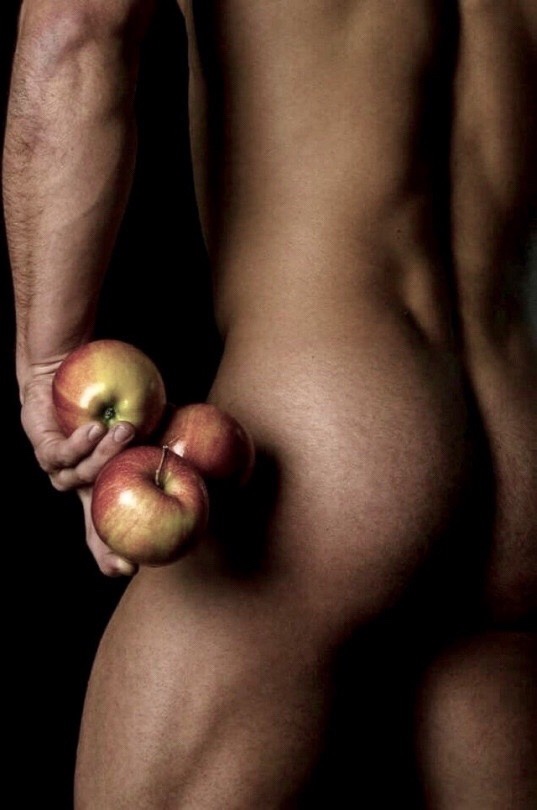
Honeycrisp
by January Gill O’Neil
My boyfriend will eat
an entire apple in one sitting.
Peel, pulp, core. Hands me
the stem when he’s done.
Seeds in his gut. The calyx
a dank star. An orchard grows
inside him. The tongue
that slicks the skin. Hands
perfumed with bruised sugar.
His kisses a tender lament.
The heart that glows. How he takes
everything the fruit offers
and leaves nothing
but the stem. I let my body
follow. Set my jaw soft.
Rapt, greedy, this devotion.
Tough armor. Red glow. Yellow
flesh. Every bite a fall
from grace.
🍎 🍎 🍎
About the Poem
January Gill O’Neil describes this poem as an exploration of appetite—of “devouring everything in sight”—and that idea pulses through every line. The apple is more than fruit; it becomes a symbol of desire, of intimacy, of giving oneself over completely. The act of eating is transformed into something almost sacred, almost dangerous.
There is something deeply sensual about the language: “tongue / that slicks the skin,” “hands / perfumed with bruised sugar,” “kisses a tender lament.” None of it is explicit, and yet it is undeniably intimate. The physical act of consumption mirrors emotional and romantic vulnerability. To love, the poem suggests, is to consume and be consumed—to take in everything another person offers, even knowing that such devotion leaves one exposed.
The final line—“Every bite a fall / from grace”—invokes the biblical image of the apple as forbidden fruit. Love, desire, and surrender become acts of both joy and risk. There is sweetness here, but also the awareness that to give yourself entirely to someone is to step beyond safety, beyond restraint.
I was struck most by O’Neil’s idea of “giving yourself over entirely to something—or someone—you just can’t get enough of.” There’s something beautiful and a little frightening in that kind of devotion.
While I don’t have a boyfriend, I recognize that instinct in myself. It’s the way I am with friends, with the people I care about. When I love—whether romantically or platonically—I tend to give fully, sometimes more than I probably should. I was raised to be kind, to be generous, to be present for others, and that often means offering my time, my attention, and my heart without holding much back.
There’s a vulnerability in that. Sometimes people appreciate it. Sometimes they take advantage. But I’m not sure I would want to love any other way. There is something honest—almost sacred—about giving freely, about not rationing care or affection.
Like the poem, that kind of love can feel like a kind of falling—unguarded, wholehearted, a little reckless. But it is also where the sweetness is.
🍎 🍎 🍎
About the Poet
January Gill O’Neil is an American poet known for her vivid imagery, emotional clarity, and exploration of identity, love, and everyday experience. Her work often blends the sensual with the reflective, grounding abstract emotions in tangible, physical details.
In “Honeycrisp,” O’Neil captures something both universal and deeply personal: the hunger for connection and the willingness to surrender to it. Her language invites the reader not just to observe, but to feel—to taste the sweetness, to sense the risk, and to recognize the quiet power of devotion.

A Small Shift to Start the Week

Monday has come again.
I slept in a bit this morning—until 5:00 a.m.—which, for me, almost counts as indulgent. The only reason for the extra rest is a slight adjustment to the day. I’m going into work late and will be leaving early for a dental appointment, which means working around the university’s leave policy. Since we now have to take leave in four-hour increments, even a short appointment requires a bit more reshuffling than it used to. There was a time when anything under two hours didn’t require leave at all, but like many things, that has changed.
It’s a small inconvenience in the grand scheme of things—just one of those minor bureaucratic realities that shape the rhythm of a workday. Nothing dramatic, nothing particularly frustrating. Just… different.
And maybe that’s what today feels like overall. Not rushed, not overwhelming—just slightly out of step with the usual routine.
There isn’t much more to say today. Just easing into the week, adjusting where needed, and moving forward.
Have a great week, everyone!

The Peace We Miss

“If you, even you, had only recognized on this day the things that make for peace! But now they are hidden from your eyes.”
— Luke 19:42
Palm Sunday is often imagined as a day of celebration—crowds gathering, branches lifted high, voices rising in praise as Jesus enters Jerusalem. It feels triumphant, almost jubilant, the kind of moment we expect to carry only joy. And yet, in the midst of that celebration, the Gospel of Luke offers us something quieter, more tender: Jesus pauses, looks at the city, and weeps.
There, in the middle of welcome and worship, there is sorrow.
Because Jesus does not see only what is before him. He sees what could have been. He sees a city capable of peace, a people capable of love, a world within reach of something better—and he knows it has gone unrecognized. Peace was there, present and possible, but it was missed. And that is what makes his words linger, what gives them their ache: “If you had only recognized… the things that make for peace.”
For many LGBTQ+ people of faith, that longing feels deeply familiar.
We know what it is to search for peace—not as an abstract idea, but as something personal and urgent. Peace in our own hearts, where questions of identity and worth have sometimes been met with silence or shame. Peace in our relationships, where love has not always been affirmed as holy. Peace in the spaces that were meant to be sanctuaries—churches, families, communities—that instead left us wondering if we truly belonged. We have stood at those gates, hoping to be seen, to be known, to be embraced, and too often we have felt the quiet heartbreak of being overlooked.
Like Jerusalem, those spaces did not always recognize “the things that make for peace.”And yet, Palm Sunday does not leave us there.
Beneath the grief is a truth that is as gentle as it is powerful: Jesus still sees. He sees the missed opportunities, the moments when love should have been offered freely but was withheld. He sees the harm done in the name of righteousness, the ways people have been turned away when they should have been welcomed in. And he weeps—not because there is something wrong with you, but because you deserved peace all along.
His tears are not condemnation. They are compassion.
But this story is not only about what others failed to see. It is also an invitation—quiet, persistent, and deeply personal. Because after enough rejection, it becomes easy to internalize the same blindness we have encountered. We begin to wonder if peace is really meant for us. We question whether love must be earned, whether we are too much or not enough, whether there is something about us that keeps us just outside the gates.
And in those moments, peace can feel hidden from our own eyes. Palm Sunday invites us to look again.
To recognize that your identity is not a barrier to God’s love, but part of how you reflect it in the world. To see that your capacity to love deeply, honestly, and courageously—often forged through struggle—is itself one of the very things that makes for peace. To trust that Christ enters your life not with judgment, but with tenderness, with understanding, and with an unwavering presence that refuses to let you go unseen.
Even when others have failed to recognize your worth, even when peace has felt distant or obscured,
God has never missed it. God has never missed you.
And the peace Christ speaks of—the peace that was once overlooked, the peace that still waits to be named and claimed—is not lost.
It is still yours to receive.












Authors
Recent Comments
Joe on Pic of the Day vandycolt on Pic of the Day furbirdsqueerly on Pic of the Day Joe on Pic of the Day noisilycool3bc985058… on Pic of the Day Top Posts & Pages



Amazon Associate

As an Amazon Associate I earn from qualifying purchases. So, if you click on a link that takes you to Amazon.com, I may earn a commission.
Trust me, it isn’t much, but every little bit helps.

 Joe
Joe


 The Closet Professor