
Author Archives: Joe
About Joe

From Glory to Grief: World War I Poetry and the Meaning of Veterans Day
“If I should die, think only this of me:
That there’s some corner of a foreign field
That is for ever England.”
— Rupert Brooke, “The Soldier”
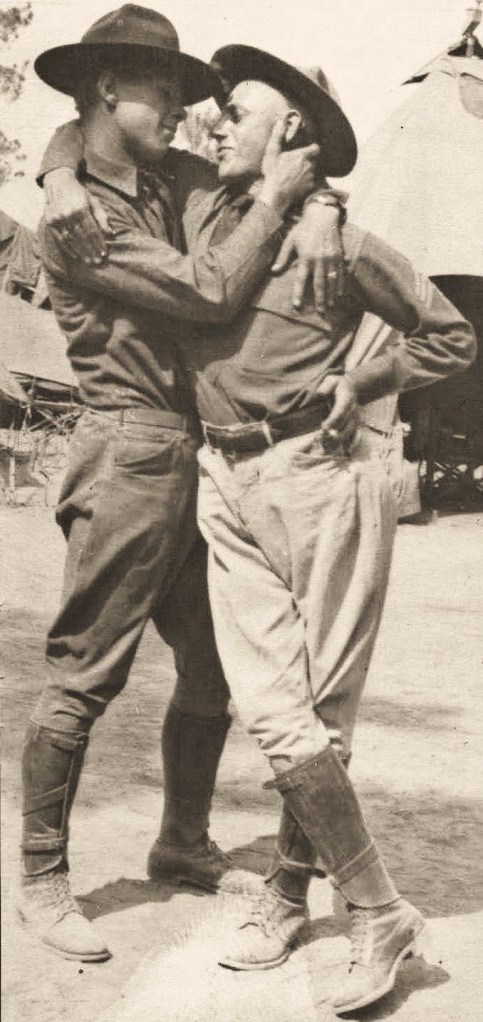
Each year on November 11, we pause to honor the men and women who have served in the armed forces. Known originally as Armistice Day, this date marks the end combat for World War I in 1918, when the guns finally fell silent on the Western Front. What began as a commemoration of peace after “the war to end all wars” evolved into Veterans Day in the United States—an annual moment of gratitude for all who have worn the uniform.
World War I not only reshaped geopolitics and society; it also transformed art and literature. Poetry, in particular, became the most immediate and emotional record of soldiers’ experiences. From the idealism of 1914 to the disillusionment of the trenches, poets captured both the nobility and the horror of modern warfare. Three poems—Rupert Brooke’s “The Soldier,” John McCrae’s “In Flanders Fields,” and Wilfred Owen’s “Dulce et Decorum Est”—trace the arc of changing attitudes among soldiers during the Great War.
⸻
The Soldier
By Rupert Brooke
If I should die, think only this of me:
That there’s some corner of a foreign field
That is for ever England. There shall be
In that rich earth a richer dust concealed;
A dust whom England bore, shaped, made aware,
Gave, once, her flowers to love, her ways to roam,
A body of England’s, breathing English air,
Washed by the rivers, blest by suns of home.
And think, this heart, all evil shed away,
A pulse in the eternal mind, no less
Gives somewhere back the thoughts by England given;
Her sights and sounds; dreams happy as her day;
And laughter, learnt of friends; and gentleness,
In hearts at peace, under an English heaven.
⸻
Rupert Brooke’s “The Soldier” (1914) reflects the early optimism of Britain’s entry into the war. Written before he ever reached the front lines, Brooke’s sonnet presents death in battle as noble and redemptive. The poem imagines the fallen soldier as eternally consecrating foreign soil with his English spirit—a vision steeped in idealism and romantic patriotism.
Brooke’s language is pastoral and spiritual: England is “richer dust,” “flowers,” and “laughter.” His tone conveys the belief that sacrifice in service of one’s country was beautiful and pure. Tragically, Brooke never witnessed the grim realities of trench warfare; he died of blood poisoning in 1915 on his way to Gallipoli. For many early in the war, his poems embodied a kind of naïve heroism that would soon fade in the face of unimaginable loss.
⸻
In Flanders Fields
By John McCrea
In Flanders fields, the poppies blow Between the crosses, row on row, That mark our place; and in the sky The larks, still bravely singing, fly Scarce heard amid the guns below. We are the Dead. Short days ago We lived, felt dawn, saw sunset glow, Loved and were loved, and now we lie, In Flanders fields. Take up our quarrel with the foe: To you from failing hands we throw The torch; be yours to hold it high. If ye break faith with us who die We shall not sleep, though poppies grow In Flanders fields.
⸻
By 1915, the tone of war poetry had begun to darken. Canadian army doctor John McCrae wrote “In Flanders Fields” after presiding over the funeral of a friend who died in battle. The poem’s haunting image of red poppies growing among soldiers’ graves made it one of the most famous pieces of war poetry ever written.
“In Flanders Fields” bridges two worlds: the patriotic call of Brooke’s generation and the emerging sorrow of a war that had already claimed millions. McCrae gives voice to the dead, who urge the living to “take up our quarrel with the foe.” Yet the repetition of poppies and crosses hints at the futility of such endless sacrifice. The poem’s enduring symbol—the poppy—has become a global emblem of remembrance, worn each November to honor veterans and the fallen alike. McCrae himself died of pneumonia in 1918, just months before the war ended.
⸻
Dulce et Decorum Est
By Wilfred Owen
Bent double, like old beggars under sacks,
Knock-kneed, coughing like hags, we cursed through sludge,
Till on the haunting flares we turned our backs,
And towards our distant rest began to trudge.
Men marched asleep. Many had lost their boots,
But limped on, blood-shod. All went lame, all blind;
Drunk with fatigue; deaf even to the hoots
Of tired, outstripped Five-Nines that dropped behind.
Gas! Gas! Quick, boys!—An ecstasy of fumbling
Fitting the clumsy helmets just in time,
But someone still was yelling out and stumbling
And flound’ring like a man in fire or lime
Dim through the misty panes and thick green light,
As under a green sea, I saw him drowning.
In all my dreams before my helpless sight
He plunges at me, guttering, choking, drowning.
If in some smothering dreams, you too could pace
Behind the wagon that we flung him in,
And watch the white eyes writhing in his face,
His hanging face, like a devil’s sick of sin,
If you could hear, at every jolt, the blood
Come gargling from the froth-corrupted lungs,
Obscene as cancer,
Bitter[note 1] as the cud
Of vile, incurable sores on innocent tongues,–
My friend, you would not tell with such high zest
To children ardent for some desperate glory,
The old Lie: Dulce et decorum est
Pro patria mori.
⸻
If Brooke and McCrae wrote from faith and duty, Wilfred Owen wrote from the mud, blood, and gas-filled trenches of the Western Front. His poem “Dulce et Decorum Est” (“It is sweet and fitting [to die for one’s country]”) exposes the brutal truth behind that patriotic ideal. Owen describes exhausted soldiers “bent double, like old beggars under sacks” and a gas attack that leaves a comrade “guttering, choking, drowning.”
By ending the poem with the biting phrase “The old Lie: Dulce et decorum est pro patria mori,” Owen rejects the glorification of war that poets like Brooke once embraced. His work gives a voice to the generation that witnessed industrialized slaughter on a scale never before seen. Owen was killed in action in November 1918—just one week before the Armistice.
During World War I, poetry became both a weapon and a refuge. Soldiers scribbled verses in trenches, hospitals, and letters home, using poetry to process trauma, question authority, and preserve humanity amid chaos. Newspapers published patriotic sonnets beside dispatches from the front, and later, the war poets’ raw testimonies helped shape public memory of the conflict.
The evolution from Brooke’s idealism to Owen’s bitter realism mirrors society’s loss of innocence. Through their words, we witness not just the cost of war, but the courage to speak truth against false glory.
The armistice signed on November 11, 1918, marked not only the end fighting in World War I but also the birth of a day of remembrance. In 1954, the United States renamed Armistice Day as Veterans Day to honor all those who have served, in every war and in peacetime. The poetry of Brooke, McCrae, and Owen reminds us why this day endures—not merely as a celebration of victory, but as a solemn reflection on sacrifice, service, and the cost of freedom.
A century later, these poems still speak across the silence of the graves and trenches. Brooke reminds us of the hope that sends soldiers to battle; McCrae gives us the grief that lingers after; Owen forces us to confront the truth of what war does to the human soul. Together, they form a poetic memorial as powerful as any monument of stone—a reminder that remembrance begins not with ceremony, but with empathy.
So this Veterans Day, as poppies bloom once more in our collective memory, may we honor not only the fallen, but also the living—those who have carried the burdens of service with courage, faith, and love.


From Tun Tavern to Netflix: Celebrating 250 Years of Marines
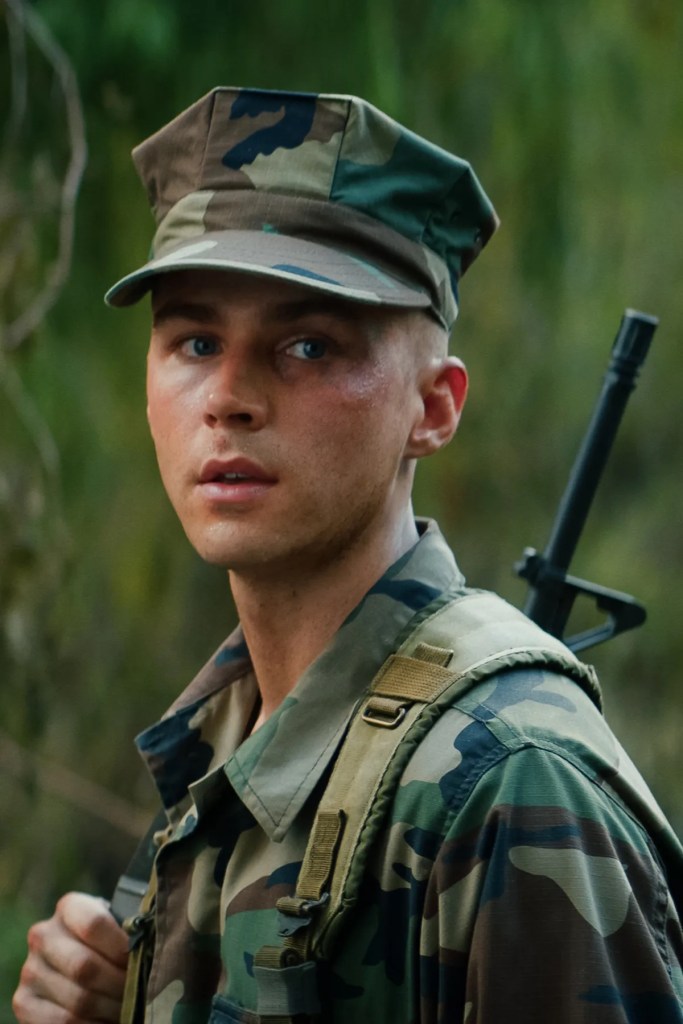
November 10, 2025, marks a truly historic milestone—the 250th birthday of the United States Marine Corps. Founded in 1775 at Tun Tavern in Philadelphia, the Marines have stood for courage, discipline, and an unshakable commitment to honor, duty, and brotherhood. Every year on this day, Marines around the world—past and present—celebrate their proud legacy. This year’s celebration carries even greater meaning as a quarter of a millennium of service is recognized.
In honor of that incredible legacy, I recently watched a new Netflix series that brings a very different but equally powerful perspective to the Marine Corps experience: Boots.
Based on the memoir The Pink Marine by Greg Cope White, Boots tells the story of a young gay man who joins the Marines—though, unlike the memoir which is set in the 1970s, the Netflix adaptation takes place in the 1990s, just before the era of “Don’t Ask, Don’t Tell.” What unfolds is a deeply moving, funny, and inspiring story about resilience, identity, and belonging.

The show stars Miles Heizer and Max Parker, two incredibly gorgeous gay men who both play gay men with honesty and heart. Their chemistry, vulnerability, and courage to portray queer characters in such a traditionally masculine military setting make the series truly special. Heizer brings his signature quiet intensity to the role, while Parker adds authenticity and depth to every scene.
Boots doesn’t just retell a coming-of-age story—it redefines what it means to serve, to find pride in oneself, and to carve out a space in a world that often tries to deny you one. For LGBTQ+ viewers, it’s especially meaningful to see this representation handled with respect, humor, and tenderness.
If you haven’t seen Boots yet, I highly recommend it. It’s beautifully written, well-acted, and emotionally resonant. And what better time to watch it than now—in honor of 250 years of the United States Marine Corps—a reminder that courage comes in many forms, and sometimes the bravest thing a Marine can do is to live truthfully.
Semper Fi—and happy birthday, Marines!

P.S. I have to admit—there’s just something undeniably sexy about Marines. And fun fact: every military man I’ve ever hooked up with has, coincidentally, been a Marine. Go figure.
Called Into the Light

“But you are a chosen race, a royal priesthood, a holy nation, God’s own people, in order that you may proclaim the mighty acts of him who called you out of darkness into his marvelous light.”
— 1 Peter 2:9
There is a transformation unfolding within the Church today—a long-awaited moment in which LGBTQ+ Christians are finally stepping out of the shadows and into God’s marvelous light. After nearly two thousand years, we are being seen not as outsiders, but as part of the royal priesthood Peter describes: God’s own people, chosen and beloved. In many congregations, the doors of affirmation have swung open, and the light pouring through them reveals the fullness of God’s love.
We, the people once told to hide our hearts, are now becoming a visible part of the body of Christ. As Jesus said, “You are the light of the world. A city built on a hill cannot be hidden” (Matthew 5:14). That light shines through us—through our authenticity, our resilience, and our love. When we live openly and faithfully, we help the Church itself become that shining city, showing the world that God’s love embraces all who seek it.
Paul’s prayer in Ephesians 1:18 asks that “the eyes of your heart may be enlightened” so that we may truly know the hope to which we are called. That enlightenment happens each time we recognize that God’s light is not limited or conditional—it has always included us. The more we see ourselves as God sees us—holy, beloved, and radiant—the more we are able to reflect that light into the world.
To be called into the light is not only to be affirmed but also to become bearers of hope. We are invited to live as witnesses of God’s inclusive grace, proclaiming through our words and our lives that love is stronger than fear and light always overcomes darkness.
May the eyes of our hearts be opened this week to see the light that has always been shining within us. May we walk confidently as God’s chosen people, reflecting divine love into every corner of the world, until all God’s children stand together in that marvelous light that cannot be hidden.










Conference: Day 3

Today is the final day of my conference, and I am more than ready to go home. Wednesday night, I got a touch of food poisoning—at least I think that’s what it was—from the sushi place where we had dinner. Yesterday was a rough one. I went to one session and managed to get lunch with some friends, but that feeling of “better” quickly disappeared. I ended up back in my room for the rest of the afternoon and skipped dinner entirely.
This morning, I’ll repack my bags, get dressed, and head down for breakfast. I’m a little aggravated that this hotel doesn’t start serving breakfast until 7 a.m. I like to eat shortly after I get up, and it’s not like their breakfast is anything to write home about anyway.
I’ve got several sessions to attend today and a closing lunch before we head home. Last year, my coworker decided to skip the closing lunch and drive back early. I’m hoping we do the same today.
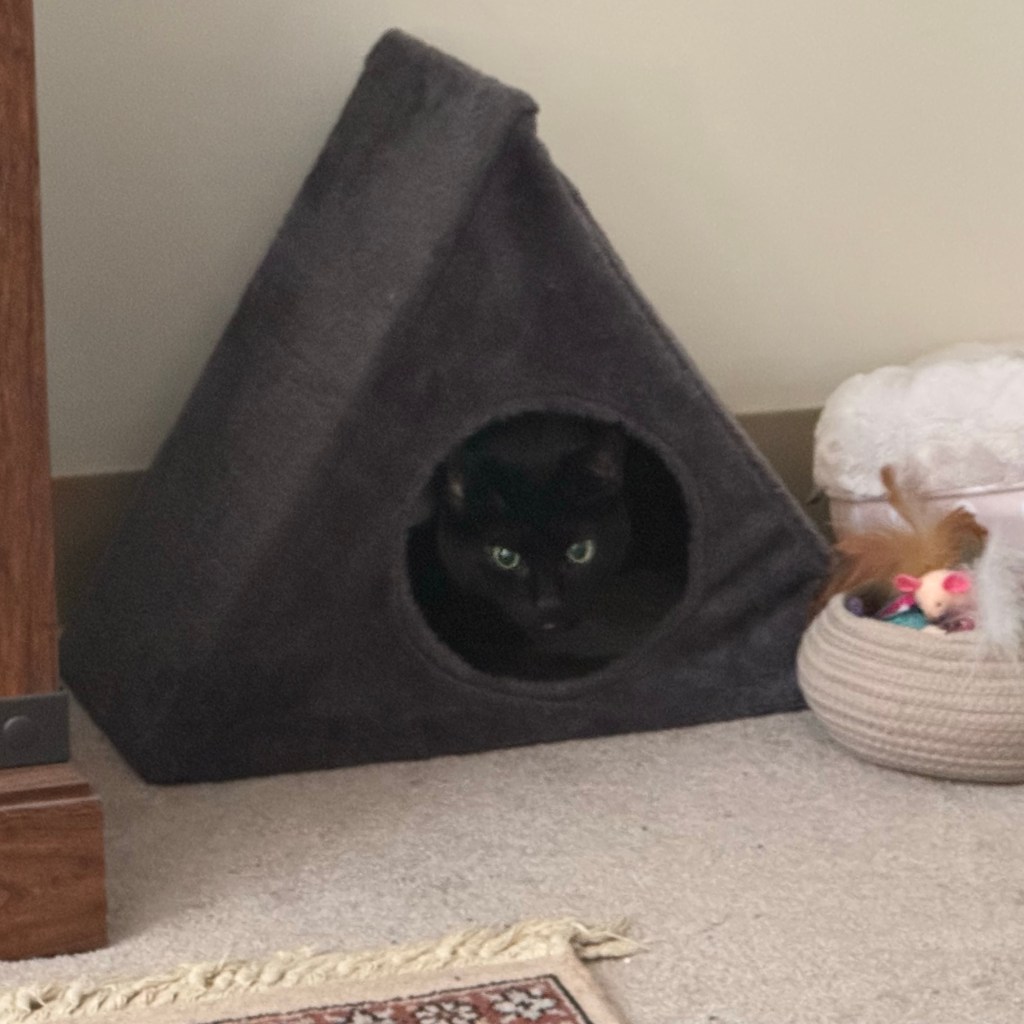
Isabella will no doubt have plenty to say when I walk in the door. She’s always very vocal when I’ve been away and disrupted her routine. Some cats pout or act mad when you come home, but not Isabella—she’s just happy to see me. And honestly, I’ll be just as happy to see her.
I haven’t posted one in a while, so here’s an Isabella Pic of the Week:


Authors
Recent Comments
noisilycool3bc985058… on Pic of the Day Joe on Pic of the Day noisilycool3bc985058… on Pic of the Day iameverywhere1 on Pic of the Day noisilycool3bc985058… on Pic of the Day Top Posts & Pages




Amazon Associate

As an Amazon Associate I earn from qualifying purchases. So, if you click on a link that takes you to Amazon.com, I may earn a commission.
Trust me, it isn’t much, but every little bit helps.

 Joe
Joe


 The Closet Professor