

Author Archives: Joe
About Joe

Thanksgiving
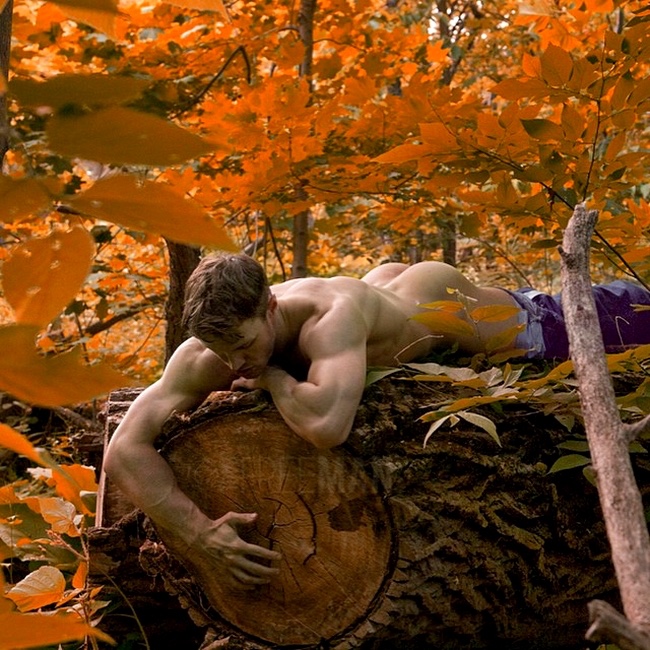
Thanksgiving
By James Whitcomb Riley – 1849-1916
Let us be thankful—not only because
Since last our universal thanks were told
We have grown greater in the world’s applause,
And fortune’s newer smiles surpass the old—
But thankful for all things that come as alms
From out the open hand of Providence:—
The winter clouds and storms—the summer calms—
The sleepless dread—the drowse of indolence.
Let us be thankful—thankful for the prayers
Whose gracious answers were long, long delayed,
That they might fall upon us unawares,
And bless us, as in greater need we prayed.
Let us be thankful for the loyal hand
That love held out in welcome to our own,
When love and only love could understand
The need of touches we had never known.
Let us be thankful for the longing eyes
That gave their secret to us as they wept,
Yet in return found, with a sweet surprise,
Love’s touch upon their lids, and, smiling, slept.
And let us, too, be thankful that the tears
Of sorrow have not all been drained away,
That through them still, for all the coming years,
We may look on the dead face of To-day.
About the Poet
James Whitcomb Riley was born in Greenfield, Indiana, on October 7, 1849. He left school at age sixteen and served in a variety of different jobs, including as a sign painter and with a traveling wagon show. He was the author of several books of poetry, including Home-Folks (Bowen-Merrill, 1900), The Flying Islands of the Night (Bowen-Merrill, 1892), and Pipes o’ Pan at Zekesbury (Bobbs-Merrill, 1888). He also served on the staff of two local newspapers, the Anderson Democrat and, later, the Indianapolis Journal. Riley was known as “the poet of the common people” for his frequent use of his local Indiana dialect in his work. He died in Indianapolis, Indiana, on July 22, 1916.

A Week of Thanks

We always have the option to look at this world as a glass half full or a glass half empty. It’s in my nature to look at the world as a glass half empty, but I try to be more positive and optimistic. We could dwell on a pessimistic view of our lives and the world that surrounds us, or we could look at what surrounds us and be thankful for what we have. Thursday is Thanksgiving in the United States, and this week I want to dwell on what is good in my life.

Meditation

But his delight is in the law of the LORD; and in his law doth he meditate day and night.
—Psalm 1:2
In a world filled with distractions and so many voices vying for our attention it is important to remember the words of the Psalmist. He urges us to meditate on God’s words day and night. You can find new joy when you discover more about who God is by spending time reading His book.
The world can be a stressful place and if it has you anxious, tense and worried, consider trying meditation. Spending even a few minutes in meditation can restore your calm and inner peace. Anyone can practice meditation. It’s simple and inexpensive, and it doesn’t require any special equipment. And you can practice meditation wherever you are—whether you’re out for a walk, riding the bus, waiting at the doctor’s office or even having your morning cup of coffee or tea..
Meditation has been practiced for thousands of years. It originally was meant to help deepen understanding of the sacred and mystical forces of life. These days, meditation is commonly used for relaxation and stress reduction, but we can still use it to bring ourselves closer to God and let him help heal us of the what stresses us out. Meditation is a type of mind-body complementary medicine. It can produce a deep state of relaxation and a tranquil mind. God can help with that. Hosea 6:1 tells us, “Come, and let us return to the Lord; For He has torn, but He will heal us; He has stricken, but He will bind us up.” In the first verse of the hymn “The Lilly of the Valley,” we sing:
I have found a friend in Jesus-
He’s ev’rything to me,
He’s the fairest of ten thousand to my soul;
The Lily of the Valley- in Him alone I see
All I need to cleanse and make me fully whole.
In sorrow He’s my comfort, in trouble He’s my stay,
He tells me ev’ry care on Him to roll;
He’s the Lily of the Valley, the Bright and Morning Star,
He’s the greatest of ten thousand to my soul.
During meditation, you can focus your attention on God’s Word and His Plan for us and eliminate the stream of jumbled thoughts that may be crowding your mind and causing stress. This process will result in enhanced physical and emotional well-being. Meditation can give you a sense of calm, peace, and balance that can benefit both your emotional well-being and your overall health. And these benefits don’t end when your meditation session ends. Meditation can help carry you more calmly through your day and may help you manage symptoms of certain medical conditions. When you meditate, you may clear away the information overload that builds up every day and contributes to your stress.
By meditating, you can Gain a new perspective on stressful situations! And God can help you build skills to manage your stress. You can increase your awareness of God in your life and reduce negative emotions, increase patience and tolerance. God can guide you through meditation to heal what ails you. He can be your comfort if you just allow Him to guide you to better awareness. Take a moment to look up to God for his guidance and for the comfort He can provide.



Into the Cave
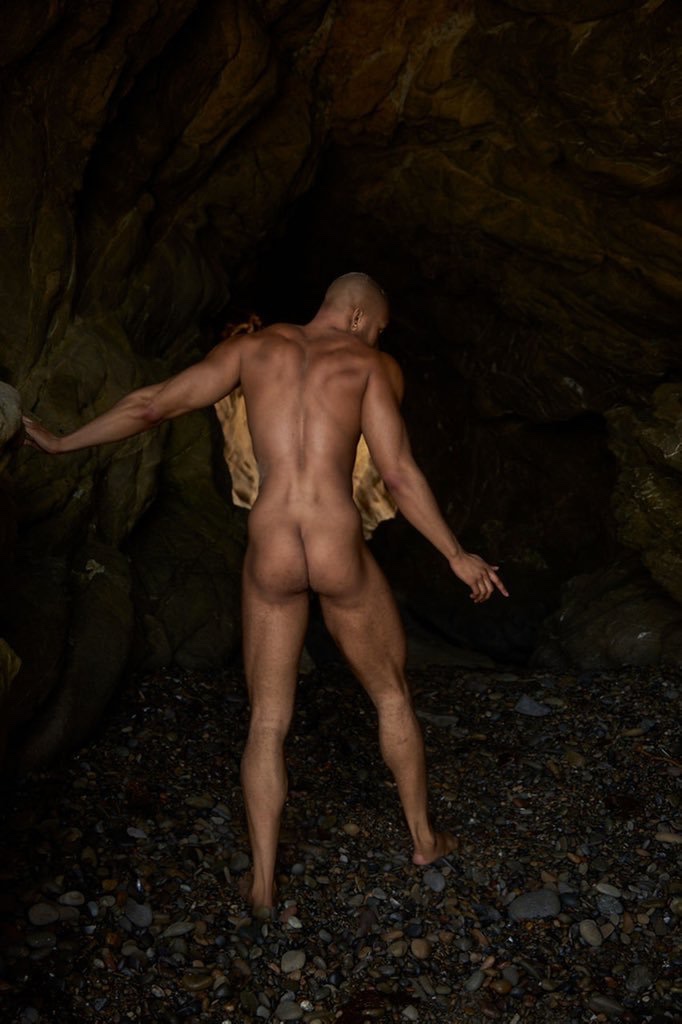
Yesterday, I was reading an article in The New Yorker by Morgan Meis about the discovery of the world’s oldest cave painting. It was a fascinating story of how an archeological team in Indonesia’s island of Sulawesi was exploring a remote valley. There were no roads into the valley, and there was nothing on their maps to suggest a way through the bush and mountain peaks. It sounded like a real archeological adventure into the unknown. Their maps show few signs of habitation in the valley. The team asked for directions anytime they encountered anyone, and they felt as if they were continually lost. Eventually they were able to find a path through a cave that led into this hidden valley, which the archeologists continue to call the “secret valley”—a term they use to protect the caves, which they don’t want to be easily found. The Lascaux cave found in Montignac, France was closed to the public in 1963, because their condition was deteriorating due to the exhalations of the 1,200 visitors per day, the presence of light, and changes in air circulation creating problems that threatened the preservation of the cave. Keeping the Indonesian valley secret is the only way at this time to preserve what the archeological team found.
The area of the secret valley was inhabited by an especially isolated group of Bugis people, an ethnic group of southern Sulawesi who I found to be a very interesting people because they recognize five separate genders. These Bugis claimed never to have seen a single Westerner in their valley. Something I will get back to in a minute. The archeological team began to explore the caves in the area and, a few days later, one of the archeologists entered one of them alone. There he found a spectacular painting of a Sulawesi warty pig, a medium-sized, hairy boar with small pointy ears and short legs. Near the rear of the pig was painted silhouettes of two human hands. The archeologist recognized that the artwork was very old, but just how old, he did not know. Technology was rough in to test the age of the painting using uranium-series dating. The answer was astonishing: the painting of the warty pig was at least 45,500 years old. This makes it the oldest known example of figurative cave art in the world. The cave paintings at Lascaux are estimated at around 17,000 years. The famous animal paintings in the Chauvet cave, of France, previously thought to be the oldest, are dated at around thirty-five thousand years old; the Sulawesi warty pig outdoes them by roughly ten thousand years.
All of this was fascinating, but what struck me about the article was one sentence: “The area was inhabited by an especially isolated group of Bugis people, an ethnic group of southern Sulawesi who recognizes five separate genders.” While the cave paintings are fascinating and add to the history of early humans, I find the concept of societies that accept more than two genders to be interesting, and I knew I had to do more research on this.
The Bugis people are the most numerous of the three major ethnic groups of South Sulawesi, Indonesia, with about 3 million people. Most Bugis are Muslim, but many pre-Islamic rites continue to be honored in their culture, including the view that gender exists on a spectrum. In contrast to the idea of only two genders (male and female), Bugis society recognizes five genders: makkunrai, oroané, bissu, calabai, and calalai. The concept of five genders has been a key part of their culture for at least six centuries. Oroané are comparable to cisgender men, makkunrai to cisgender women, calalai to transgender men, and calabai to transgender women, while bissu are androgynous or intersex and revered shamans or community priests.
Native American societies often recognized three genders: male, female, and two spirit similar to the Bugis concept of bissu. For one to be considered bissu, all aspects of gender must be combined to form a whole. It is believed that you are born with the propensity to become a bissu, revealed in a baby whose genitalia are ambiguous. These ambiguous genitalia need not be visible; a normative male who becomes a bissu is believed to be female on the inside. This combination of sexes enables a ‘meta-gender’ identity to emerge. However, ambiguous genitalia alone do not confer the state of being a bissu. The person must also learn the language, songs and incantations, and have a gift for bestowing blessings in order to become bissu. They must remain celibate and wear conservative clothes.
Bugis society has a cultural belief that all five genders must coexist harmoniously; but by 2019 the numbers of bissu had declined dramatically, after years of increasing persecution and the tradition of revering bissu as traditional community priests. Bissu have mostly survived by participating in weddings as maids of honor and working as farmers as well as performing their cultural roles as priests. Hardline Islamic groups, police, and politicians have all played their part in Indonesia’s increased harassment and discrimination of nonheterosexuals. After independence in 1949, the ancient Bugis kingdoms were incorporated into the new republic and bissus’ roles became increasingly sidelined. A regional Islamic rebellion in South Sulawesi led to further persecution. As the atmosphere became increasingly hostile to nonheterosexuals, fewer people were willing to take on the role of bissu.
According to the Bugis gender system, calabai are generally assigned male at birth but take on the role of heterosexual females. Their fashions and gender expression are distinctly feminine but do not match that of “typical” heterosexual women. Calabai embrace their femininity and live as women, but do not think of themselves as female, nor wish to be female or feel trapped in a male’s body, and they are respected by society. They are supported by family, and men accept them as males, living in feminine embodiment. The calalai are assigned female at birth but take on the roles of heterosexual males. They dress and present themselves as men, hold masculine jobs and typically live with female partners to adopt children.
The concept of five genders is not as fluid as a full spectrum of gender. The Bugis concept is more rigid than many who reject the idea of a gender binary. Along with cisgender males and cisgender females are transgender men and transgender women, nonbinary, genderfluid, genderqueer, and agender individuals, among many other possible definitions. Some experts suggest that there may be 100 genders or more and different cultures may use different identifications for one gender or another. The key, advocates suggest, is not pinning down a definitive list of gender possibilities but to be accepting of everyone’s declared gender.


Authors
Recent Comments
JD on At Last noisilycool3bc985058… on Pic of the Day noisilycool3bc985058… on Pic of the Day noisilycool3bc985058… on Playing Host noisilycool3bc985058… on Pic of the Day Top Posts & Pages




Amazon Associate

As an Amazon Associate I earn from qualifying purchases. So, if you click on a link that takes you to Amazon.com, I may earn a commission.
Trust me, it isn’t much, but every little bit helps.

 Joe
Joe


 The Closet Professor