

Author Archives: Joe
About Joe

Health Update

Neurologist, São Paulo, Brazil
I mentioned Monday that I was going to the doctor for my quarterly diabetes check-up. I had an excellent report. My weight is down a few more pounds; my blood pressure was good; and my A1c (a measurement of your average blood glucose, or blood sugar, level over the past three months) was 6.0. To put that into perspective for those of you not familiar with A1c readings:
- A person who does not have diabetes has an A1c result of less than 5.7%.
- A person with pre-diabetes has an A1c of 5.7% to 6.4%.
- A person with diabetes has an A1c level of 6.5% or higher.
This does not mean that I am back to being pre-diabetic, but it does mean that the medicine I am taking is working. The only issue has been that my blood sugar readings have gone down to nearly hypoglycemic (low blood sugar) levels a few times, so my doctor cut back on my medicine by a little bit.
In addition, my blood test results for everything else came back normal. I have no idea what my levels are on any of the other tests because I cannot access them electronically as I usually do. I know they came back normal because my doctor called and told me that everything looked very good. I did not ask for details because my county (he is the only doctor in my town) is having a surge in COVID-19 cases. Thus he is swamped right now. As I mentioned on Monday, his office has no working computers because of the cyberattack, so he has to write everything by hand and use paper charts. I did not want to add any more work for him by asking him to explain all my levels when I wouldn’t remember them five minutes later anyway. It was bad enough he was calling after 5:30 pm when he should have been on his way home.
My doctor has done a great deal to keep our little town mostly safe from the pandemic. Vermont has not been hit as hard as many other states, and we have been fortunate, but that appears to be rapidly changing as our positive case numbers are rising daily. Currently, we are not allowed to have people gathered together from different households. Since the beginning of the pandemic, my doctor has gone on Front Porch Forum (FPF) to update the community on the state of the pandemic in our area and urge people to follow safety protocols. I doubt many of you know what FPF is, especially since it is something unique to Vermont.
Each day Vermonters use FPF to connect with their neighbors and the community by sharing postings. We get the postings through email or a cell phone app. FPF has nearly 160,000 members, or just under a quarter of the state’s population, and FPF is now available in all 251 Vermont towns. Whether it’s a lost dog or car, someone has too many roosters and wants to give some away, the theft of a pride flag, or vandalism of a BLM sign, people post to FPF. More importantly, it’s where our legislators give updates, the town and school board post their minutes, and where my doctor can urge people to follow pandemic safety protocols. I find out so much about what is going on in town through FPF. It’s also local. You have to have an address to use the service, and it ties you to the announcements for that town. I used FPF to find my first apartment. I signed up using the university’s address since I didn’t have a local address of my own.


November

November
By Edward Thomas
November’s days are thirty:
November’s earth is dirty,
Those thirty days, from first to last;
And the prettiest thing on ground are the paths
With morning and evening hobnails dinted,
With foot and wing-tip overprinted
Or separately charactered,
Of little beast and little bird.
The fields are mashed by sheep, the roads
Make the worst going, the best the woods
Where dead leaves upward and downward scatter.
Few care for the mixture of earth and water,
Twig, leaf, flint, thorn,
Straw, feather, all that men scorn,
Pounded up and sodden by flood,
Condemned as mud.
But of all the months when earth is greener
Not one has clean skies that are cleaner.
Clean and clear and sweet and cold,
They shine above the earth so old,
While the after-tempest cloud
Sails over in silence though winds are loud,
Till the full moon in the east
Looks at the planet in the west
And earth is silent as it is black,
Yet not unhappy for its lack.
Up from the dirty earth men stare:
One imagines a refuge there
Above the mud, in the pure bright
Of the cloudless heavenly light:
Another loves earth and November more dearly
Because without them, he sees clearly,
The sky would be nothing more to his eye
Than he, in any case, is to the sky;
He loves even the mud whose dyes
Renounce all brightness to the skies.
About the Poet:
If the war goes on I believe I shall find myself a sort of Englishman, though neither poet or soldier’
– Letter to Walter de la Mare, 30th August 1914
Philip Edward Thomas (3 March 1878 – 9 April 1917) was a British poet, essayist, and novelist. Scholars consider him a war poet, although few of his poems deal directly with his war experiences. His career in poetry only came after he had already been a successful writer and literary critic. In 1915, he enlisted in the British Army to fight in the First World War and was killed in action shortly after arriving in France.
Thomas thought that poetry was the highest form of literature and regularly reviewed it, but he only became a poet himself at the end of 1914 when living at Steep, East Hampshire. He initially published his poetry under the name Edward Eastaway to disguise his identity due to his fame as a critic. Robert Frost, who was living in England at the time, encouraged Thomas (then more famous as a critic) to write poetry, and their friendship was so close that the two planned to reside side by side in the United States. Frost’s most famous poem, “The Road Not Taken,” was inspired by walks with Thomas and Thomas’s indecisiveness about which route to take.
Thomas enlisted in the Artists Rifles in July 1915, despite being a 37-year-old married man who could have avoided enlisting. He was unintentionally influenced in this decision by his friend Frost, who had returned to the U.S. but sent Thomas an advance copy of “The Road Not Taken.” Frost intended the poem as a gentle mocking of Thomas’ indecision, particularly the indecision that Thomas had shown on their many walks together; however, most audiences took the poem more seriously than Frost intended. Thomas similarly took it seriously and personally. The poem allowed Thomas to be decisive and enlist.
Thomas was promoted to corporal, and in November 1916 was commissioned into the Royal Garrison Artillery as a second lieutenant. He was killed in action soon after arriving in France at Arras on Easter Monday, 9 April 1917. To spare the feelings of his widow, Helen, she was told the fiction of a “bloodless death,” i.e., that Thomas was killed by the concussive blast wave of one of the last shells fired as he stood to light his pipe and that there was no mark on his body. However, a letter from his commanding officer Franklin Lushington written in 1936 (and discovered many years later in an American archive), states that in reality, the cause of Thomas’s death was being “shot clean through the chest.” W. H. Davies, the Welsh poet and Thomas’s close friend, was devastated by his death and immortalized him in a poem, “Killed in Action (Edward Thomas).”
Killed in Action (Edward Thomas)
By W. H. Davies
Happy the man whose home is still
In Nature’s green and peaceful ways;
To wake and hear the birds so loud,
That scream for joy to see the sun
Is shouldering past a sullen cloud.
And we have known those days, when we
Would wait to hear the cuckoo first;
When you and I, with thoughtful mind,
Would help a bird to hide her nest,
For fear of other hands less kind.
But thou, my friend, art lying dead:
War, with its hell-born childishness,
Has claimed thy life, with many more:
The man that loved this England well,
And never left it once before.
Thomas is buried in Agny military cemetery on the outskirts of Arras. He did not live to see Poems (1917), a collection of his poetry published under his pseudonym, Edward Eastaway. In just under two years, he had written over 140 poems. On 11 November 1985, Thomas was among 16 Great War poets commemorated on a slate stone unveiled in Westminster Abbey’s Poet’s Corner. The inscription, written by fellow poet Wilfred Owen, reads: “My subject is War, and the pity of War. The Poetry is in the pity.”

Doctor’s Appointment

I have an 8 am doctor’s appointment this morning. It’s my trimonthly diabetes checkup. It’s probably going to be a bit of a different experience than usual, and no, I am not talking about COVID-19 procedures. I am used to those by now. Some of you may have heard in the national news about the FBI investigating more than two dozen ransomware attacks at hospitals around the country on October 28. The FBI believes an Eastern European group, known within the security industry as UNC-1878, is thought to be behind the cyberattacks, though they aren’t releasing much information at the moment. The attacks impacted hospitals in Oregon, New York, California, as well as Vermont. My doctor’s office is part of the University of Vermont Health Network, one of the hospitals attacked.
What does this mean for my doctor’s visit? It means that they are back to using paper charts. When I went for physical therapy last week (her clinic is in the same network), I asked her what was going on. She was not able to use her laptop like she usually does during our sessions. She has to write down all her notes and, after the visit, put them into the computer in her office. She said that her office wasn’t as impacted as much because they have not migrated to the new system yet, but my doctor’s office was having a really tough time. They had wholly integrated into the new system, and it is not known when operations will return to normal.
The University of Vermont Medical Center has regained access to some medical records, but the outlying clinics seem to still be a work in progress. According to the news, IT staff restored access to the “read-only” medical records on Thursday, meaning that nurses and doctors can view patients’ medical histories, prescriptions, and past appointments through Oct. 28. That is good news, but so far, IT staff members have cleaned and restored only 1,000 of the network’s 4,500 computers. They hope the system will be running normally by the end of November, but no one has been given a definitive timeline.
It will be interesting to see how this is going to proceed today. The good news is that my fasting blood sugar readings have been very good with the new medication I have been taking over the past three months, so hopefully, I will have a better A1C. It’s been up a little the past week because of the abscessed tooth, as being sick tends to raise your blood sugar. Also, I need to discuss this antibiotic’s side effects with him and see if he thinks I should call my dentist about the continued pain in my tooth. I am afraid the infection is coming back or may have spread to a tooth next to it. It is still hurt, though less, all day yesterday. Besides my better blood sugar readings, my hip seems to be doing much better. I am not having anywhere near the amount of pain I have been having. I hope the lessening of hip pain is reality because when there are multiple pain sites, the most painful area is my tooth—the other pain sites can seem less.
I have a lot to talk to my doctor about, so I hope he has the time in his schedule. If he doesn’t have the time, I will likely never know it. He has never rushed me out of his office. I have had doctors do that before. They get you in, and they get you out as soon as possible. My current doctor has always talked to me, let me ask as many questions as I need to, and explains things very well. To me, the ability to listen is a sign of a good doctor. My doctor has also done a lot to improve my health. He keeps a close eye on my depression, my headaches, and my blood sugar. He is also the one who helped convince me to go to the sleep clinic for sleep apnea. I used to know a lot of people who would depend on those doc-in-a-box places for their medical care, but it is so important to have a primary care physician who knows your medical history and cares that you are healthy.
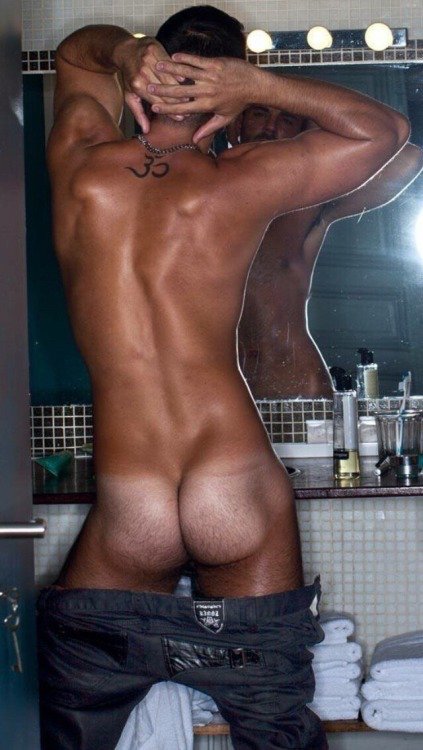
*The picture above is of Dr. Tyler Hendricks, MD, who is a Family Medicine Specialist in Fort Myers, Florida. He also happens to be a model. You can see more of him on his Instagram @tylerjh. I’d let him poke and prod me any day.

Righteousness

The righteousness of the perfect shall direct his way: but the wicked shall fall by his own wickedness. The righteousness of the upright shall deliver them: but transgressors shall be taken in their own naughtiness. When a wicked man dieth, his expectation shall perish: and the hope of unjust men perisheth. The righteous is delivered out of trouble, and the wicked cometh in his stead. An hypocrite with his mouth destroyeth his neighbour: but through knowledge shall the just be delivered. When it goeth well with the righteous, the city rejoiceth: and when the wicked perish, there is shouting. By the blessing of the upright the city is exalted: but it is overthrown by the mouth of the wicked. He that is void of wisdom despiseth his neighbour: but a man of understanding holdeth his peace. A talebearer revealeth secrets: but he that is of a faithful spirit concealeth the matter. Where no counsel is, the people fall: but in the multitude of counsellors there is safety. He that is surety for a stranger shall smart for it: and he that hateth suretiship is sure.
— Proverbs 11:5-15
I personally have faith that Joe Biden will make a great president. He has the contacts in Washington to hopefully get things done. Of course, it will be easier if both Democratic candidates win their run-off races in Georgia. However, the first few months will undoubtedly be difficult because he will enter the presidency in the middle of an ever-worsening pandemic and replace a president who refuses to concede or allow for Biden’s transition team to move forward. Republicans are claiming that Trump has the right to move through the court system to delegitimize the election. They claim, “What harm could it do?” The symbolism of a graceful concession is more important than the nuts and bolts of the handoff, especially for a president-elect with Biden’s vast experience, though especially in this pandemic, the nuts and bolts do matter. Hebrews 11:1 defines faith as “the substance of things hoped for, the evidence of things not seen.” Trump is petulantly weakening a divided nation’s faith in its hoped-for and unseen foundational ideals—and of all the terrible things this awful man has done to our country, this could be the worst.
What America is now experiencing is a massive failure of character—a nationwide blackout of integrity—among elected Republicans. From the president, a graceless and deceptive insistence on victory after a loss that was not even close. From congressional Republicans, a broad willingness to conspire in President Trump’s lies and slander the electoral system without considering the public good. Only a few have stood up against Republican peer pressure of contempt for the constitutional order. How could such a thing happen in the Republican Party? It is not an anomaly. It is the culmination of Trump’s influence among Republicans and White evangelical Christians in particular. Their primary justification for supporting Trump—that the president’s character should be ignored in favor of his policies—has become a serious danger to the republic. Trump never even presented the pretense of good character. His revolt against the establishment was always a revolt against the ethical ground rules by which the establishment played. When he mocked a reporter with a disability, urged violence at his rallies, or attacked a Gold Star family, Republicans accepted it as part of the Trump package. And some of his most impassioned defenses came from White evangelicals.
We have a serious problem in this country, and at the heart of that is White evangelicals. Evangelicalism has four distinctive aspects to their faith: conversionism (being “born again”), Biblicism (belief in biblical inerrancy and/or infallibility), crucicentrism (the belief that Christ died as a substitute for sinful humanity), and activism (includes preaching and social action). Two of these have become incredibly dangerous because of their interpretation by evangelicals: Biblicism and activism. Under Biblicism, they ignore all discussion of the Bible begin filled with allegory and metaphors. They believe it is entirely literal. The most significant problem with this is that they ignore the original language and meaning of the Bible, and they pick and choose what parts of the Bible they want to follow and which they would like to ignore. One example is the use of the word “homosexual” in the New Testament. The term “homosexual” is of modern origin, and it wasn’t until about a hundred years ago that it was first used. There is no word in biblical Greek or Hebrew that is equivalent to the English word homosexual. The 1946 Revised Standard Version (RSV) of the Bible was the first translation to use the word homosexual. However, evangelicals latched on to this translation’s use of homosexual for terms that were never meant to mean homosexual as we understand it today. Romans 1:24-27, 1 Corinthians 6:9, and 1 Timothy 1:10 are all used to condemn the LGBTQ+ community. However, these verses referred to temple prostitutes, male prostitutes, and pederasts, respectively. Yet, even though Jesus explicitly condemns divorce in Matthew 5:32 and Luke 16:18, White evangelicals are more likely than the average American to leave a marriage, with 17.2 percent being currently divorced. Despite their strong pro-family values, evangelical Christians have higher than average divorce rates being more likely to be divorced than Americans who claim no religion. White evangelicals also use these beliefs to excuse their discrimination against racial and sexual minorities.
White evangelicals were once seen as America’s pious and moral authority but have now become the least strict chaperone of Trump’s corruption. Under the president’s influence, White evangelicals went from the group most likely to believe personal morality matters in a politician to the least likely group. “We’re not electing a pastor in chief,” explained Jerry Falwell Jr., the disgraced former president of Liberty University. Robert Jeffress, the pastor of the Islamophobic, anti-Semitic, racist, and anti-LGBTQ+ First Baptist Dallas, argued that “outward policies” should matter more than “personal piety.” Ralph Reed of the Faith and Freedom Coalition made his case for Trump’s reelection based on conservative deliverables. “There has never been anyone,” Reed said, “who has defended us and who has fought for us, who we have loved more than Donald J. Trump.” This is politics at its most transactional. Trump was being hired by evangelicals to do a job — to defend their institutions, implement pro-life policies, and appoint conservative judges. The character of the president was irrelevant so long as he kept his part of the bargain. Which, sadly, Trump mostly did.
But now we know what a president without character looks like amid a governing crisis. We see a dishonest president, spinning lie after lie about the electoral system. We see a selfish president incapable of preferring any duty above his own narrow interests. We see a reckless president, undermining the transition between administrations and exposing the country to risk. We see a vain president unable to responsibly process an electoral loss. We see a corrupt president, willing to abuse federal power to serve his own ends. We see a spiteful president, taking revenge against officials who have resisted him. We see a faithless president, indifferent to constitutional principles and his oath of office. There is nothing in Donald Trump that Jesus might find redeemable. If you made a list of everything that Jesus taught, you could make a list of Trump’s character and see the opposite of everything Jesus wanted for humanity.
Two lessons can be drawn from the Republican failure of moral judgment. First, democracy is an inherently ethical enterprise. Yes, politics has a transactional element. But those transactions take place within a system of rules that depend on voluntary obedience. Our electoral system and our presidential transition process have flaws and holes that an unprincipled leader can exploit, which is a good reason to prefer principled leaders. And second, U.S. politics would be better off if White evangelicals consistently applied their moral tradition to public life. Not only Christians, of course, can stand for integrity. But consider what would happen if White evangelicals insisted on supporting honest, compassionate, decent, civil, self-controlled men and women for office. The alternative is our current reality, in which evangelicals have often been a malicious and malignant influence in U.S. politics.
White evangelicals are only 15 percent of the population, but their share of the electorate was 28 percent, making them a disproportionately vocal and influential group within American politics. White evangelicals have, in effect, skewed the electorate by masking the rise of a young, multiracial, and mostly secular voting population. Unfortunately, the White evangelicals’ overperformance also shows why the racist appeal Trump made in this campaign was effective. White evangelicals were fired up like no other group by Trump’s encouragement of white supremacy. Pre-election, 90 percent said they would vote, and nearly half of those voting for Trump said virtually nothing he could do would shake their approval. There was little evidence of differences among White evangelicals by gender, generation, or education. The good news might be that they are, as a group, dying out (median age in the late 50s), and their views are hardly recognizable to many other Americans. Majorities of White evangelical Protestants don’t see the pandemic as a critical issue (they’re less likely than others to wear masks), believe society has become too “soft and feminine,” oppose same-sex marriage, think Trump was called by God to lead, and don’t believe he encouraged white supremacist groups.
The unholy alliance of White evangelicals and Donald Trump is what a purely transactional politics has actually delivered — a lawless leader resisting a rightful electoral outcome. He is endangering American national security by causing chaos and instability in the United States at a time when our economy is on the brink, and a pandemic is raging stronger every day. The only adequate response, as President-elect Joe Biden seems to realize, is a politics of character. Let’s hope that politicians on both sides of the aisle realize they must work with Biden to heal the soul of the nation.




Authors
Recent Comments
noisilycool3bc985058… on Pic of the Day noisilycool3bc985058… on Moment of Zen: A Room with a… Joe on Ah, Montreal… Joe on Ah, Montreal… iameverywhere1 on Ah, Montreal… Top Posts & Pages



Amazon Associate

As an Amazon Associate I earn from qualifying purchases. So, if you click on a link that takes you to Amazon.com, I may earn a commission.
Trust me, it isn’t much, but every little bit helps.

 Joe
Joe


 The Closet Professor