I began my life in the South and for five years lived as a closeted teacher, but am now making a new life for myself as an oral historian in New England. I think my life will work out the way it was always meant to be. That doesn't mean there won't be ups and downs; that's all part of life. It means I just have to be patient. I feel like October 7, 2015 is my new birthday. It's a beginning filled with great hope. It's a second chance to live my life…not anyone else's.
My profile picture is "David and Me," 2001 painting by artist Steve Walker. It happens to be one of my favorite modern gay art pieces.
If wishes were horses, beggars would ride. If turnips were watches, I’d wear one by my side. If “ifs” and “ands” were pots and pans, There’d be no work for tinkers’ hands.
—Scottish proverb
I grew up watching reruns of I Dream of Jeannie and Bewitched. I’ll admit I often dreamed of either having my own Jeannie like Tony Nelson or having magical powers like Samantha Stephens. When I was bullied in school, my favorite fantasy was that with a twitch of my nose, a quick nod of my head, or even a wave of my hand, I could slam those bullies against the wall and cause them extreme pain. That may sound pretty violent, but I wanted the magical powers so that they would remember the pain but have no lasting effects from it. Maybe then, they would learn the pain they caused others. It was a frequent fantasy of mine.
I have often wondered what I would wish for if I had just three wishes. I suspect many of us have had that thought. If I were to make a grand gesture with my wishes, I’d wish for world peace, equality and acceptance for all, and that people would get the chance they deserve in life. That last one could backfire as in the old three wishes jokes. The three wishes joke (or genie joke) is a joke in which a character is given three wishes by a genie and fails to make the best use of them. Typical scenarios include releasing a genie from a lamp or crossing paths with the devil. The first two wishes go as expected in the jokes, with the third wish being misinterpreted or granted in an unexpected fashion that doesn’t reflect the wish’s intent.
Suppose I were to be purely selfish with my wishes. In that case, I’d wish to be the man I always dreamed of being: more intelligent*, taller, more handsome, physically fit with a great butt, a great head of hair, one skin tone (my vitiligo is another source of embarrassment for me), and like most men, more endowed. The second wish would be to have all the money I’ll ever need in life. I wouldn’t need to be a billionaire, just wealthy enough to live very comfortably, not have to work, and be able to travel the world. My final wish would be to find the love of my life and live happily ever after with him.
For my whole life, when I have seen the first star of the night, I have always said silently to myself:
Starlight, star bright, The first star I see tonight; I wish I may, I wish I might, Have the wish I wish tonight.
Since I was a teenager, I have always secretly said the same wish each time: to find someone who I will fall in love with and vice versa. This particular wish was partially how I dealt with my burgeoning sexuality. Part of my wish was always that if it was a man, then I’d know it was the right thing, and if it was a woman, then that was the right thing. Now I simply just wish for the man of my dreams, someone I will have a wonderful relationship with for the rest of our lives. So far, it hasn’t come true, but I will keep wishing on that star.
Of course, I have had various other wishes throughout my life. I’ve wished that loved ones who have died were alive again. I’ve wished that I had met friends earlier in life. I’ve wished that my parents were more accepting of my sexuality. At times, I even wished that I were dead; depression will do that to you. Of course, I’ve also wished that I had finished my Ph.D., or that I could become a perpetual student and travel the world learning new things. I’ve even wished for awful things to happen to our current president and his soulless minions. While I’d love to have three wishes, I’m not sure if I would take the selfless route or the selfish route, but I wouldn’t want to be greedy and have an endless supply of wishes. Maybe five or six wishes would be enough.
If you had three wishes and only three wishes, what would they be? Would you benefit yourself or help others? Would you advance your career, health, or financial well-being, or would you further your social, emotional, or spiritual needs? Would you blow through your wishes right away, or would you hold a few in reserve? You may be thinking this is a silly or cliché question, but our answers can be quite telling. For example, what do your wishes say about your priorities? Do they focus on possessions or enhance your relationships? What do your wishes say about your current situation versus your ultimate goals? Are your wishes far-fetched or clearly within your grasp?
*By “more intelligent,” I mean that I wish I could read quicker (I’ve always been a slow reader) and retain more of what I read. If you were to get to know me in person, you’d find out that I have a LOT of trivial knowledge in my head that emerges at random intervals. However, I am terrible with dates and names. For a historian, my mind is not chronological. I get mixed up on things very easily.
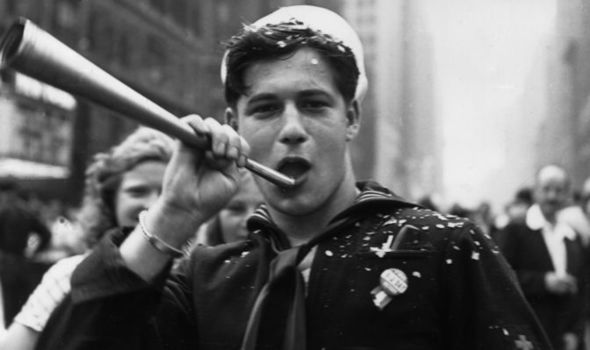
It started 81 years ago yesterday with the German invasion of Poland and ended 75 years ago today with Japan signing the Instrument of Surrender. World War II was the bloodiest conflict in human history. The world breathed an enormous collective sigh of relief. Celebrations broke out across the free world as a result of the war finally and truly being over. The dark war years gave birth to a new, optimistic future as the world looked hopefully towards an existence without world wars and massive human suffering.
Seventy-five years ago today, the formal ceremonies marking Japan’s surrender, took place aboard the USS Missouri. Early on Sunday, September 2, 1945, aboard the new 45,000-ton battleship USS Missouri and before representatives of nine Allied nations, the Japanese signed their surrender. At the ceremony, General Douglas MacArthur stated that the Japanese and their conquerors did not meet “in a spirit of mistrust, malice or hatred but rather, it is for us, both victors and vanquished, to rise to that higher dignity which alone benefits the sacred purposes we are about to serve.”
Despite these words, none of the high-ranking officers saluted any of the Japanese delegates. General Carl A. Spaatz later revealed that US planes had been ready with bombs to halt any last-minute treacherous act by Japan. Seeing a deck full of high-ranking Allied officers on the USS Missouri might have presented a tempting target for a final suicide attack.
Why was the USS Missouri chosen as the location for the Japanese surrender to take place? After all, the battleship had served for less than a year in the Pacific War. It was the last battleship commissioned into the United States Navy, although not the last laid down. The Missouri participated in several operations in the last year of the war, including the bombardments of Iwo Jima, Okinawa, and Japan. For the rest of the time, she escorted US carrier groups, protecting them from attacks. In May 1945, the Missouri became the flagship for Admiral Bull Halsey’s 3rd Fleet. In this capacity, Missouri led the Allied armada that entered Tokyo Bay on August 29, 1945.
Numerous distinguished ships were present at the surrender. The USS South Dakota had perhaps the most illustrious record among the battleships, having served in the Pacific theater since 1942. The USS West Virginia had survived Pearl Harbor. The HMS Duke of York and the HMS King George V each had sunk a German battleship (the Scharnhorst and the Bismarck, respectively). The Japanese ship HIJMS Nagato and a few other Japanese ships were also present. The ships most responsible for the Allied victory over Japan, the fleet carriers of the US Navy, remained at sea during the surrender, in effect guaranteeing Japanese compliance. The single most deserving ship, USS Enterprise, had suffered kamikaze damage late in the war and was off the coast of Washington state.
So, why the Missouri, a ship that had a respectable but not particularly distinguished war record? The quickest answer is that she was the Third Fleet’s flagship and that it made the most sense to have the surrender ceremony on the flagship. Also, President Harry S Truman had a personal connection with the ship. His daughter, Margaret, had christened the hull at its launching, and Truman hailed from Missouri, which is the likely reason for the ship being chosen. It is also worth noting that Missouri had more available deck space than most of the other options.
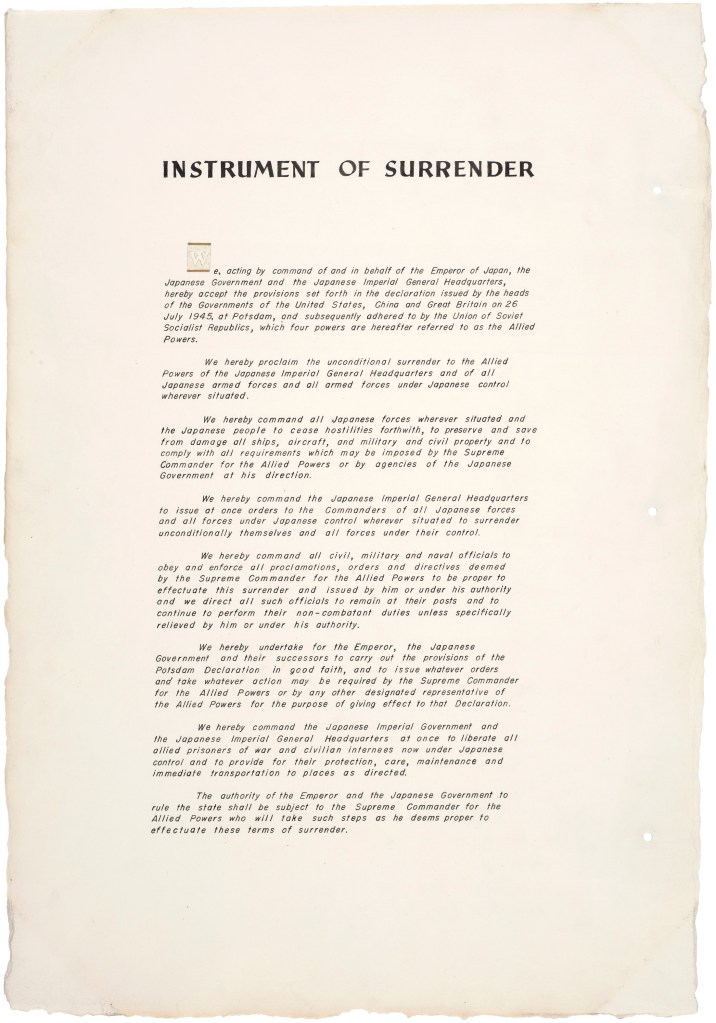
With the USS Missouri in Tokyo Bay as the setting, the Japanese representatives signed the official Instrument of Surrender, prepared by the War Department, and approved by President Truman. It set out in eight short paragraphs the complete capitulation of Japan. The opening words, “We, acting by command of and in behalf of the Emperor of Japan,” signified the importance attached to the Emperor’s role by the Americans who drafted the document. The short second paragraph went straight to the heart of the matter: “We hereby proclaim the unconditional surrender to the Allied Powers of the Japanese Imperial General Headquarters and of all Japanese armed forces and all armed forces under Japanese control wherever situated.”
The Japanese envoys Foreign Minister Mamoru Shigemitsu and General Yoshijiro Umezu signed their names on the Instrument of Surrender. The time was recorded as 4 minutes past 9 o’clock. Afterward, General Douglas MacArthur, Commander in the Southwest Pacific and Supreme Commander for the Allied Powers, also signed. He accepted the Japanese surrender “for the United States, Republic of China, United Kingdom, and the Union of Soviet Socialist Republics, and in the interests of the other United Nations at war with Japan.”
After the formal surrender, investigations into Japanese war crimes began quickly, and many members of the imperial family pressured Emperor Hirohito to abdicate. However, at a meeting with the Emperor later in September, General MacArthur assured him he needed his help to govern Japan, and so Hirohito was never tried. Legal procedures for the International Military Tribunal for the Far East were issued on January 19, 1946, without any imperial family member being prosecuted. Following the signing of the instrument of surrender, several other surrender ceremonies took place across Japan’s remaining holdings in the Pacific from September 2-12.
The logistical demands of the surrender were formidable. After Japan’s capitulation, more than 5.4 million Japanese soldiers and 1.8 million Japanese sailors were taken prisoner by the Allies. The damage done to Japan’s infrastructure, combined with a severe famine in 1946, further complicated the Allied efforts to feed the Japanese POWs and civilians. It was not until 1947 that all prisoners held by the United States and Great Britain were repatriated. As late as April 1949, China still held more than 60,000 Japanese prisoners.
The state of war between most of the Allies and Japan officially ended when the Treaty of San Francisco took effect six and a half years later on April 28, 1952. Japan and the Soviet Union formally made peace four years later, when they signed the Soviet–Japanese Joint Declaration of 1956.
In his speech announcing the signing of the Instrument of Surrender, Truman honored the sacrifices made during the war:
Our first thoughts, of course — thoughts of gratefulness and deep obligation — go out to those of our loved ones who have been killed or maimed in this terrible war. On land and sea and in the air, American men and women have given their lives so that this day of ultimate victory might come and assure the survival of a civilized world. No victory can make good their loss.
We think of those whom death in this war has hurt, taking from them fathers, husbands, sons, brothers, and sisters whom they loved. No victory can bring back the faces they long to see.
Only the knowledge that the victory, which these sacrifices have made possible, will be wisely used can give them any comfort. It is our responsibility – ours, the living – to see to it that this victory shall be a monument worthy of the dead who died to win it.
Indeed, we should never forget the sacrifices of the men and women who died in the Second World War.
I sit in one of the dives On Fifty-second Street Uncertain and afraid As the clever hopes expire Of a low dishonest decade: Waves of anger and fear Circulate over the bright And darkened lands of the earth, Obsessing our private lives; The unmentionable odour of death Offends the September night.
Accurate scholarship can Unearth the whole offence From Luther until now That has driven a culture mad, Find what occurred at Linz, What huge imago made A psychopathic god: I and the public know What all schoolchildren learn, Those to whom evil is done Do evil in return.
Exiled Thucydides knew All that a speech can say About Democracy, And what dictators do, The elderly rubbish they talk To an apathetic grave; Analysed all in his book, The enlightenment driven away, The habit-forming pain, Mismanagement and grief: We must suffer them all again.
Into this neutral air Where blind skyscrapers use Their full height to proclaim The strength of Collective Man, Each language pours its vain Competitive excuse: But who can live for long In an euphoric dream; Out of the mirror they stare, Imperialism’s face And the international wrong.
Faces along the bar Cling to their average day: The lights must never go out, The music must always play, All the conventions conspire To make this fort assume The furniture of home; Lest we should see where we are, Lost in a haunted wood, Children afraid of the night Who have never been happy or good.
The windiest militant trash Important Persons shout Is not so crude as our wish: What mad Nijinsky wrote About Diaghilev Is true of the normal heart; For the error bred in the bone Of each woman and each man Craves what it cannot have, Not universal love But to be loved alone.
From the conservative dark Into the ethical life The dense commuters come, Repeating their morning vow; “I will be true to the wife, I’ll concentrate more on my work,” And helpless governors wake To resume their compulsory game: Who can release them now, Who can reach the deaf, Who can speak for the dumb?
All I have is a voice To undo the folded lie, The romantic lie in the brain Of the sensual man-in-the-street And the lie of Authority Whose buildings grope the sky: There is no such thing as the State And no one exists alone; Hunger allows no choice To the citizen or the police; We must love one another or die.
Defenceless under the night Our world in stupor lies; Yet, dotted everywhere, Ironic points of light Flash out wherever the Just Exchange their messages: May I, composed like them Of Eros and of dust, Beleaguered by the same Negation and despair, Show an affirming flame.
“September 1, 1939,” as its title signals, was written by W.H. Auden in the days immediately following Germany’s invasion of Poland, which marked the start of World War II. Auden had left his native England and moved to New York City some nine months earlier, and the famous opening lines of the poem are rooted in the dingy geography of his new home.
This poem achieved great resonance after the events of September 11, 2001—it was widely reproduced, recited on NPR, and interpreted with a link to the tragic events of that day. But it captured Auden’s reaction to the outbreak of World War II. The poem expresses anger and sadness towards those events, and it questions the historical and mass psychological process that led to the war. It focuses on the political psychosis of the German people, echoing a few lines of Nietzsche (“Accurate scholarship can / Unearth the whole offence / From Luther until now / That has driven a culture mad”). It then turns to the effect that this war will have on the world and its people, again with psychological overtones.
The poem was first published on 18 October 1939 in the American magazine, the New Republic. Auden had arrived in New York with his friend and fellow writer Christopher Isherwood. The two men quickly established themselves on the US literary scene: schmoozing, partying, making contact with editors, and undertaking speaking and lecturing engagements. In April 1939, Auden had met an 18-year-old, Chester Kallman, 14 years his junior, who was to become his life partner: in the new world, Auden was making a new life for himself. Back in Europe, meanwhile, the storm clouds were gathering.
W. H. Auden wrote the poem while visiting the father of his lover Kallman in New Jersey. Dorothy Farnan, Kallman’s father’s second wife, in her biography Auden in Love (1984), wrote that it was written in the Dizzy Club, an alleged gay bar in New York City, as if the statement in the first two lines, “I sit in one of the dives / On Fifty-second Street,” were literal fact and not conventional poetic fiction (she had not met Kallman or Auden at the time). Auden later clarified that the poem’s beginning in Manhattan, “in one of the dives on Fifty-second Street,” was, in fact, the Dizzy Club at 62 West 52nd Street.
Auden hated the poem and believed it to be of poor quality. Despite this, the poem became famous and widely popular. E. M. Forster wrote, “Because he once wrote ‘We must love one another or die’ he can command me to follow him” (Two Cheers for Democracy, 1951). Soon after writing the poem, Auden began to turn away from it, apparently because he found it flattering to himself and his readers. In 1957, he wrote to the critic Laurence Lerner, “Between you and me, I loathe that poem” (quoted in Edward Mendelson, Later Auden). He resolved to omit it from his further collections, and it did not appear in his 1966 Collected Shorter Poems 1927–1957.
In the mid-1950s, Auden began to refuse permission to editors who asked to reprint the poem in anthologies. In 1955, he allowed Oscar Williams to include it complete in The New Pocket Anthology of American Verse but altered the most famous line to read, “We must love one another and die.” Later, he allowed the poem to be reprinted only once, in a Penguin Books anthology Poetry of the Thirties (1964), with a note saying about this and four other early poems, “Mr. W. H. Auden considers these five poems to be trash which he is ashamed to have written.”
In Star Trek: Deep Space Nine, there is one brief mention of a group that has always stuck in my head: the Soulless Minions of Orthodoxy. I don’t know why it is, but the term Soulless Minions of Orthodoxy just gets stuck in my head. It’s only mentioned once in all of Star Trek history and usually goes mostly unnoticed. If the group ever “existed” in the Star Trek universe, it is only mentioned once in the episode “In the Cards” by a mad scientist named Doctor Elias Giger. Giger blamed his colleague Dr. Bathkin’s untimely death in a shuttlecraft on the “soulless minions of orthodoxy.” While Giger never explained who the group is, some fans have theorized that the “minions of orthodoxy” are those within the Federation’s scientific establishment who are unwilling to accept any challenge to their perceptions of what represents good science and bad science.
In a way, we are fighting against our own political Soulless Minions of Orthodoxy composed of conservative politicians and the Republican Party’s religious right. The definition of conservative is, in essence, orthodoxy. The Merriam-Webster Dictionary defines Orthodoxy as “of, relating to, or constituting any of various conservative religious or political groups.” The first established use of the term conservative in a political context originated in 1818 with François-René de Chateaubriand during the period of Bourbon Restoration that sought to roll back the policies of the French Revolution. Historically associated with right-wing politics, the term has since been used to describe a wide range of views. There is no single set of policies regarded as conservative because the meaning of conservatism depends on what is considered traditional in a given place and time.
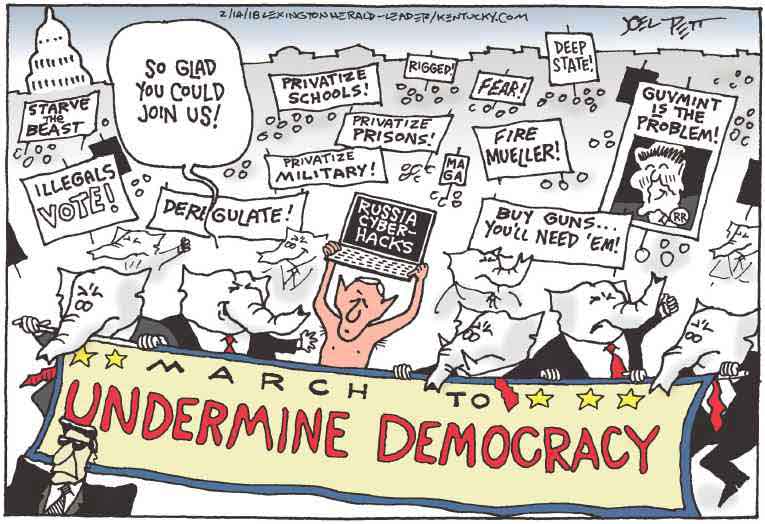
Conservatism in the United States has evolved to advocate American traditions (good or bad), Christian values (mostly those perverted by evangelicals and fundamentalists), pro-business policies, opposition to trade unions, strong national defense, free trade, anti-communism, pro-individualism, and American exceptionalism. In the last few decades, the Republican Party has engaged in battles championed by the religious right over abortion, euthanasia, contraception, pornography, gambling, obscenity, state-sanctioned prayer in public schools, textbook contents (concerning creationism), LGBTQ+ rights, and sexual education. Adding in their aversion to scientific evidence (such as climate change or public health), voting rights, and intelligence, you get the present-day Republican Party. When they chose Donald Trump as their leader, they became a party opposed to the truth and reason. Last week’s Republican National Convention was a tale of a resurgent economy, a deadly virus defeated, and a benevolent and wise President who was a champion of Black Americans, and women, and a guardian of constitutional values. Yet, none of it was true, but Trump supporters will believe it because Trump and Fox News tell them.
Recently, Tim Alberta, the chief political correspondent for POLITICO, who is described as “the most skilled political reporters of his generation,” wrote about the Republican Party’s meltdown. Alberta wrote that:
Earlier this month, while speaking via Zoom to a promising group of politically inclined high school students, I was met with an abrupt line of inquiry. “I’m sorry, but I still don’t understand,” said one young man, his pitch a blend of curiosity and exasperation. “What do Republicans believe? What does it mean to be a Republican?”
However, there was a problem when Alberta tried to answer the question. He didn’t know what today’s Republicans believe. In recent years, the GOP core beliefs of limited government, free enterprise, moral integrity, fiscal restraint, and global leadership have gone from adaptable to disposable. The lack of vision became even more apparent when last week’s Republican National Convention, which not only nominates a presidential ticket but also writes the party’s platform, chose not to write a platform this year. In good old Trump fashion, the RNC decided to copy and paste the one form 2016. Why was this the case? Simply, it’s because the Republican Party, as we knew it, no longer exists. It has become a cult of personality, wholly centered on Donald Trump. It has become the Party of Trump. The whim of Trump now defines policies and beliefs. Republican leaders in Congress have turned into puppets whose strings are tightly controlled by Trump, who runs the government in a manner more akin to a mafia boss than a president.
Every four years, political parties hold presidential nominating conventions which give occasion to assess the party’s ideas, its principles, and its vision for governing. That is what the party platform is designed to do. Recent iterations of the Republican ideology have been easy to define. Ronald Reagan’s party wanted to end communism and destroy the bureaucratic red tape of big government. George W. Bush’s party aimed to project compassion and fortitude, educating poor Americans, and treating AIDS-stricken Africans, while simultaneously confronting the advance of Islamic terrorism. However flawed the policies, however unsuccessful their execution, a tone was set from the top-down. They stood for something clearly defined, even if the party members did not always practice the platform.
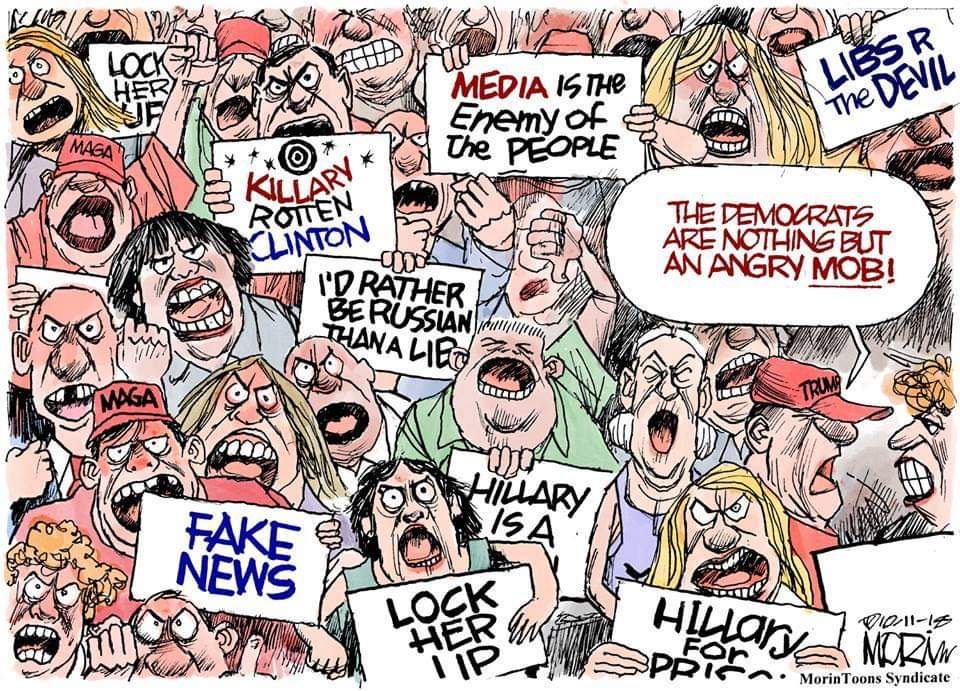
If you consider the Bill of Rights, the Declaration of Independence, the Constitution, each is about ideas. Political parties were supposed to be about ideas. It can now be said that Donald Trump’s party is the very definition of a cult of personality. It stands for no particular ideal; it possesses no organizing principle. It represents no detailed vision for governing. Instead, the lack of a platform is now characterized by a lazy, identity-based populism that draws from the lowest common denominator. The Republican Party of Trump is all about firing up his base. It is a political wave of anger. Just look at that crazy speech by Kimberly Guilfoyle last week at the RNC. It has also become a party that shrugs responsibility for its actions or lack of actions. In the words of Trump: “It is what it is” and “I don’t take responsibility at all.”
Kellyanne Conway was recently asked about the link between a 17-year-old charged with homicide after two people were killed and another seriously wounded by gunfire amid a night of rioting in Kenosha, WI, and a Trump rally in Des Moines, IA. Kyle Rittenhouse, the suspect in the shootings, has a social media presence filled with him posing pictures of himself with weapons, posting “Blue Lives Matter,” and supporting Trump. Footage from the Des Moines rally on January 30 shows Rittenhouse feet away from the president, in the front row, to the left of the podium. He posted a TikTok video from the event. The ties to Trump’s rhetoric are clear and even backed up by Trump acolyte Tucker Carlson who said on his show, “How shocked are we that 17-year-olds with rifles decided they had to maintain order when no one else would?” However, when Conway was asked about any link, she stated the White House is “not responsible for the private conduct of people who go to rallies.”
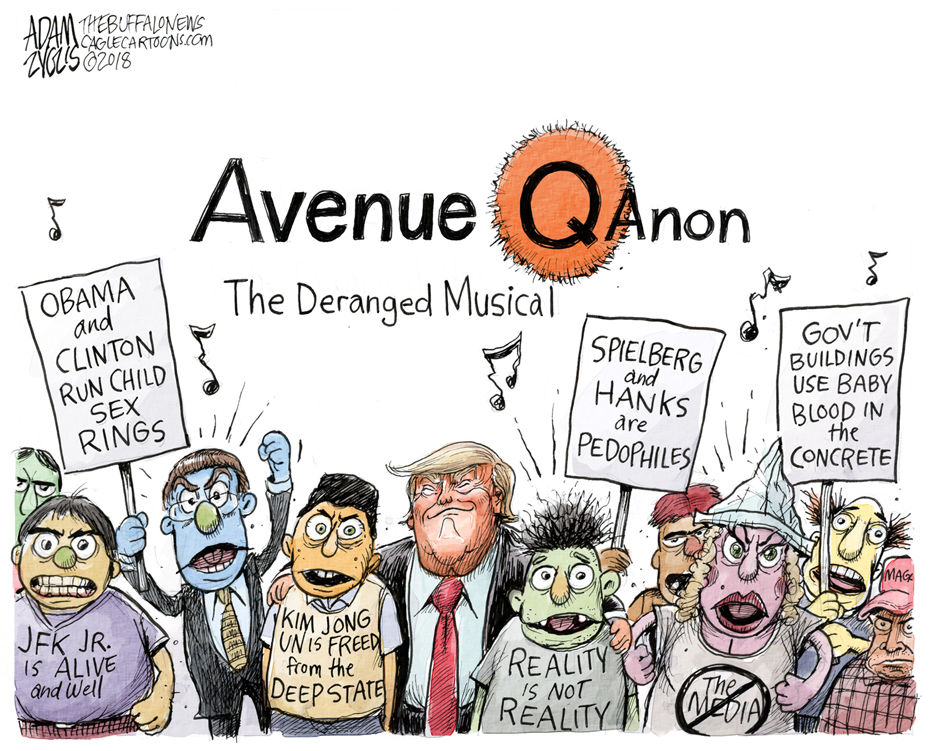
The incident raises the question of the extent to which the inflammatory approach the president has taken towards racial tension and violence has influenced the actions of impressionable individuals at a volatile moment. While at one time even Republicans denounced white nationalist extremists and fringe right-wing militia groups, the president now praises them because they support him. One of Trump’s most dangerous supporters might be the conspiracy theorists of QAnon. The group was once a fringe phenomenon that most people could safely ignore. But in recent months, it has gone mainstream. Twitter, Facebook, and other social networks have been flooded with QAnon-related false information about Covid-19, the Black Lives Matter protests, and the 2020 election. QAnon supporters have also been trying to attach themselves to other activist causes, such as the anti-vaccine and anti-child-trafficking movements, to expand their ranks. These people are frightening to me as they believe a set of internet conspiracy theories that allege, falsely, that the world is run by a cabal of Satan-worshiping pedophiles who are plotting against Donald Trump while operating a global child sex-trafficking ring. The beliefs only get scarier from there. See the New York Times article on “What is QAnon?” if you want to read some genuinely chilling stuff. During a White House news conference supposedly about the coronavirus, Trump recently said that he had “heard these are people that love our country.” He continued by saying, “So, I don’t know really anything about it other than they do supposedly like me,” which appears to be enough to validate the group’s beliefs in his eyes.
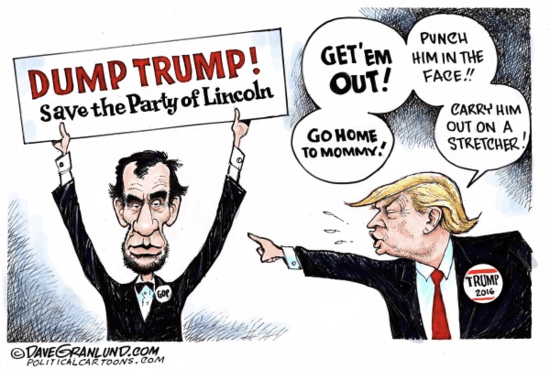
The most significant problem with most Trump supporters is either willful ignorance or a total disregard for the rule of law. Willful ignorance is nothing new and has afflicted humankind for centuries. We all prefer the familiar to the unfamiliar, and many crave conformity. Some of us strive for the differences that make us a diverse nation of E. Pluribus Unum. The problem that the Republican Party is currently facing is that it cannot fix a problem they refuse to acknowledge publicly. The Lincoln Project has been very outspoken and critical of the Trump administration and has vowed to hold accountable those who violate their oaths to the Constitution and put others before Americans. But is The Lincoln Project enough to halt the insanity of the Republican Party led by Trump?
We often surround ourselves with people who think like us and share our ideals and values, so most Trump supporters only watch Fox News and refuse to watch any other news source. They do not want to hear something contrary to what they want to believe and do not want to listen to evidence that challenges what they desire to be true. In this, I am a little hypocritical because I refuse to watch Fox News. I get so angry at the lies and propaganda they espouse, so I also refused to watch the RNC last week. However, I attempt to remain objective and occasionally see commentators on CNN or MSNBC that I think become a little too hyperbolic in their commentaries, but when they report on facts, they are facts not lies and that’s the difference.
Republicans, and Trump supporters, especially, want to protect their sheltered experiences, white bread relationships, and backward ideas, values, and beliefs. They found in Trump an angry man who voiced their fears of change and allowed him to construct a world around them that makes his supporters feel safe and blinded them to valuable information, facts, and behaviors that should alarm any American. People in the Trump administration and Republicans in Congress have stayed silent when they should have spoken out or questioned Trump’s actions for fear of being criticized, rebuked, tweeted about derogatorily by Trump. Some like former chief of staff at Trump’s Department of Homeland Security, Miles Taylor, have spoken out against Trump’s dangers. Still, there are too many who are either too afraid of the president or enjoy the privileges of being in the Trump administration. Trump’s minions have overlooked threats and dangers to justice, health, and national security that should have otherwise been obvious. They have blocked out the uncomfortable realities of the profiteering and lawlessness within the Trump administration to save themselves from the hard evidence that contradicts their beliefs.
There will come a day of reckoning for the Republican Party. I hope that day will be November 3, 2020, when Democrats retake the White House and the Senate while retaining the House of Representatives. Then we can work to reclaim the judiciary. If this happens, there will be another day of reckoning in the future when historians look back on the Trump administration and the Senate under Mitch McConnell. They will be judged, and they will be found lacking. Let’s look at a few statistics that the Republican Party won’t admit are true. The United States makes up 4.25 percent of the world’s population, yet we have 24 percent of the world’s COVID-19 cases and 22 percent of COVID-19 deaths. Yet, to hear Republicans tell it, we are doing the best of any country in the world. It simply isn’t true. Cities are rioting all over the country over racial injustice, and all Trump can do is blame it on Democratic controlled city governments, which is also untrue. Furthermore, in January 2017 when Trump took office, the unemployment rate was 4.7 percent. The latest unemployment rate statistics has it at 10.2 percent. In January 2017, the GDP was $19.49 trillion. Today, the GDP is $19.41 trillion. Yet, we have the best economy according to Trump. Again, it simply isn’t true.
While the economic numbers are largely due to the pandemic, they clearly show how badly the Trump administration has handled the situation. The Democrat controlled House of Representatives approved a $3 trillion relief package back in May. Senate Republicans and administration officials waited until the end of July to unveil a $1 trillion proposal that went nowhere because the Trump administration refused to negotiate. The administration dramatically stopped negations saying the House Democrats refused to negotiate, when they had already made numerous concessions. This was done all so that Trump could magnanimously sign four executive orders and memorandums that accomplished very little. One would give a tax holiday for workers, but they would be still required to pay those taxes in April. Another allocated FEMA relief funds to pay an extra $300 in unemployment benefits, but only for those who listed their job loss as being caused by the pandemic. A third would set a moratorium on evections, but only on a few mortgages held by the federal government. The last one is probably the only one that will deliver the results. It will continue to pause loan payments and interest on federally held student loans through the end of 2020.
It is my hope that the Republican Party will lose so badly in the 2020 election that they reassess their priorities and disavow Trump for nearly destroying the Party. More likely, the Republicans will double down on their rhetoric and claim, without any evidence, because there won’t be any, that there were massive election fraud and ballot tampering. At that point, their loyal followers, those soulless minions of Trump, will believe them. If that happens, we have to be careful, because just as the Freedom Caucus is worse than the Tea Party, the next Republican leader could be worse than Trump. Political parties seem to try to move to the extreme, not moderation when they need reform. We can only hope that if that happens, enough people will remember the horrors of the Trump years and finally begin to moderate the Party.
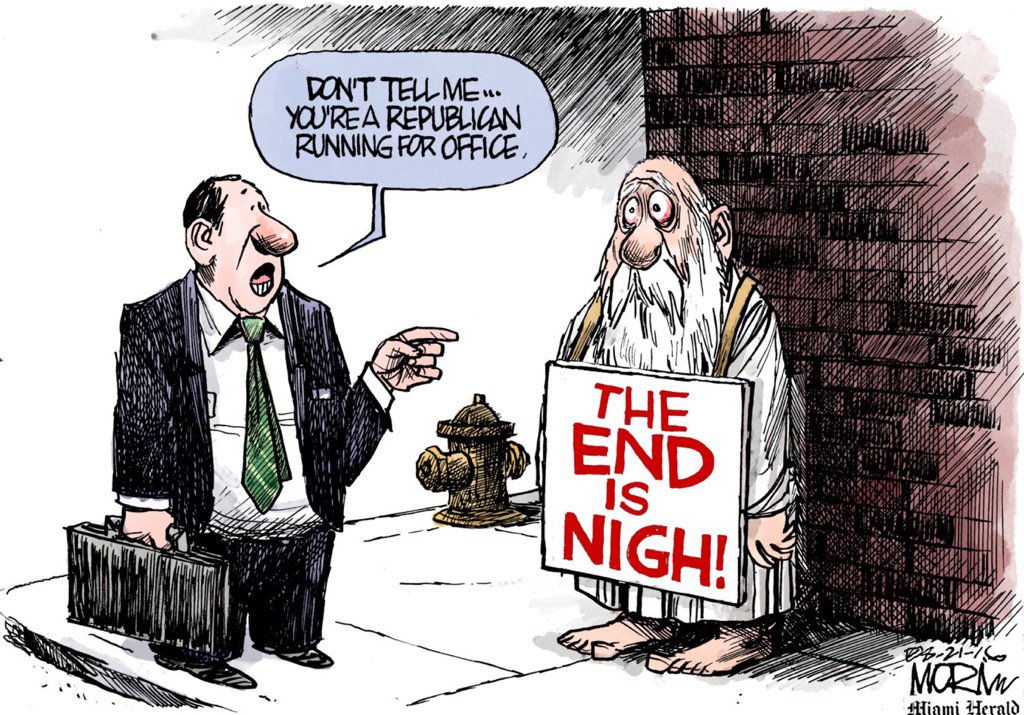
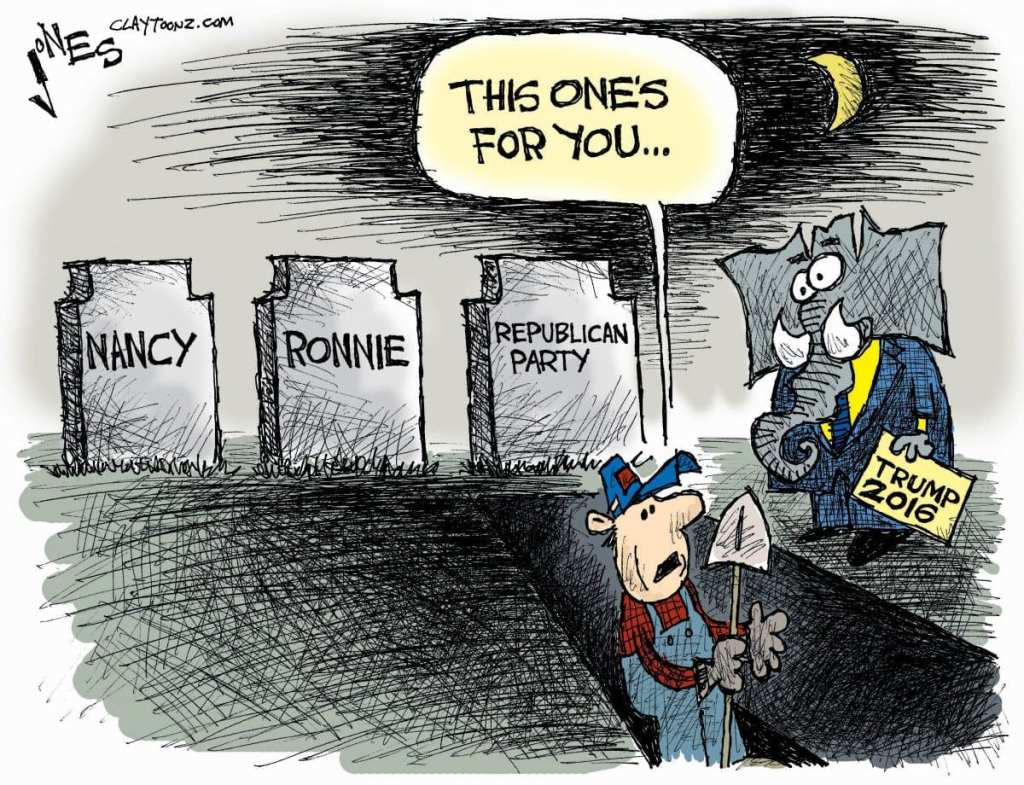
The ideology, whether you agreed with it or not, of the Republican Party, has been replaced with Trumpism, a cult of personality, and his followers have become soulless minions of orthodoxy believing that Trump will restore a time before liberals began to make America a better place to live and achieve the American Dream. I’m not sure if that means before 1933 when FDR became president and ushered in the New Deal or some fantasy of American conservatives analogous to the Confederacy and its Lost Cause. Regardless of political party affiliation, Americans need to wake up and realize that another four years of Trump leadership will mean the end of American democracy. Republicans need to wake up and realize that four more years of Donald Trump will be the Republican Party’s demise. Republicans could turn on Donald Trump and reestablish some semblance of the Grand Old Party, but I only see that happening if Trump loses in November. Still, suppose they continue with Donald Trump’s cult of personality. In that case, the party will implode and become Republican in name only and nothing more than a group of Soulless Minions of Trump. While the death of the Republican Party’s hate-filled ideology wouldn’t bother me, the replacement with an ideology based on anger, lies, and hatred is not what America needs. If the Republican Party continues, it needs to moderate and become a party of compassion, not something I believe will happen.
What might be the hardest for America is when the next generation asks their parents and grandparents why they supported Donald Trump. When that day comes, I suspect there will be a lot of Americans who will rewrite their own history and say they never supported Donald Trump. Some will claim it wasn’t as bad as historians claim. There will be those who will still be Trump enthusiasts and revisionists. Still, I suspect the majority will deny they were ever a party to the destructive administration of Donald Trump.
“For I know the plans I have for you,” declares the Lord, “plans to prosper you and not to harm you, plans to give you hope and a future.”
—Jeremiah 29:11
As we journey through a tumultuous 2020 and enter into an unknown of what the rest of 2020 will bring us, it is helpful to remember that God has a plan for our lives. Jeremiah 29:11 is just such a reminder.
Many Christians know and cling to this verse by itself. But when we understand its historical and literary context, most will find that it takes on a more profound, more relevant, and even more powerful meaning for their lives. Context is always important in understanding a passage of scripture. Often scripture is taken out of context and given a meaning entirely different from its intended purpose.
For historical context, Jeremiah spoke these words to Jews. They were under the domination of the Egyptian and then Babylonian Empires. Under the Babylonians, the Jews were sent into exile from Jerusalem to Babylon. We can only imagine what it would be like to live under your enemies’ domination and then to be forced by those enemies to leave your homeland and settle in a foreign country.
For the literary context, the previous chapter tells us that Jeremiah has just denounced the false prophet Hananiah. God had commanded Jeremiah to wear a yoke as a sign of the impending captivity, humiliation, and servitude of the Jewish people by the Babylonians. Hananiah told the people that God would break Babylon’s yoke, freeing the people to return home within two years. To make his point, Hananiah took the yoke from Jeremiah’s neck and broke it as a token that the yoke, which had been imposed by Nebuchadnezzar on Israel, would also soon be broken.
Hananiah’s prediction sounded reasonable at the time. This event occurred in about 594 B.C. when Nebuchadnezzar was occupied in a battle against Egypt and could pay little attention to his client-state Judah. Rumors spread that Babylon was weakening. So, Hananiah’s message undoubtedly sounded appealing to the people, but it was a lie. God commanded Jeremiah to tell Hananiah to replace the wooden yoke with an iron one. The yoke to be endured by the Israelites would be stronger than the former one had been. Jeremiah prophesized that Jewish people would live in Babylon for at least 70 years. He is warning them so that they would settle down, build houses, marry, and even pray for the city’s peace and prosperity in which they now found themselves.
When understood in context, we discover that the words of Jeremiah 29:11 were spoken to people in the midst of hardship and suffering; people who were likely desiring a quick rescue like the one Hananiah tried to persuade them to believe. But God’s response is not to provide an immediate escape from the problematic situation. Instead, God promises that He had a plan for the Jewish people to succeed in their current circumstances.
When facing difficult situations today, we can take comfort in Jeremiah 29:11 knowing that it is not a promise to immediately rescue us from hardship or suffering, but rather a guarantee that God has a plan for our lives. Regardless of our current situation, He can work through it to help us thrive and give us hope for the future.
Furthermore, Christians can take comfort in knowing that God promises to be there for us in the most challenging situations. For in the verses immediately following Jeremiah 29:11, God proclaims through Jeremiah that when you “call on me and come and pray to me… I will listen to you. You will seek me and find me when you seek me with all your heart” (Jeremiah 19:12-13).























 Joe
Joe




 The Closet Professor