

Author Archives: Joe
About Joe


The Early Days of the Gay Internet

On Wednesday’s post, RB commented:
You were coming of age before gay internet. For guys who were 18 even in 2005, the internet/mobile apps made it fairly easy to meet other guys. It seems you didn’t have this advantage. How did you finally connect with other gay guys? How did your first experience with a guy happen? How did you feel about it?
These are good questions, but I didn’t think I could do them justice in a comment. They do limit the number of characters you can use so I decided I’d write a post to answer RB’s questions.
I first used the Internet in 1997 when I was taking an undergrad class on Medieval England. Our professor taught us how to do scholarly research on the Internet. It was still in its infancy. We had to use the university library’s Internet lab for access. Thankfully, the Medieval archives had begun early on to digitize their collections for researchers. For those of you who might be curious, here is a short timeline of Internet availability during the 1990s:
- 1991: CERN introduced the World Wide Web to the public.
- 1992: The first audio and video were distributed over the Internet. The phrase “surfing the Net” was first popularized.
- 1993: The number of websites reached 600. The White House and United Nations went online.
- 1994: Netscape Communications was born. Microsoft created a Web browser for Windows 95. Yahoo! was created but was not incorporated until March 1995.
- 1995: Compuserve, America Online (AOL), and Prodigy began providing Internet access. Amazon.com, Craigslist, and eBay went live. The first online dating site, Match.com, launched.
- 1998: The Google search engine was born changing the way users engage with the Internet.
As you can tell from the timeline, this was all new stuff in 1997. It would be three more years before I had Internet service, and that was after I moved to Mississippi for graduate school in 2000. Occasionally, I would housesit for a doctor I knew; he had Internet access through AOL. I also had Internet access at work, but mostly I used that to order from Amazon.com which I think back then only sold books. It meant a new world of gay literature to discover as the local Barnes and Noble was somewhat limited in their inventory.
When I was still an undergraduate, the only way to meet gay people in Alabama or Mississippi was online. Well, you could hang out at Oak Park in Montgomery to meet men, but the Montgomery police always seemed to be rounding up gay men there. Montgomery had a gay bar for a short while, but no way was I was going in there. I also had no desire to hook-up with any of the out gay guys at college. There were only a few that I knew of anyway, and they all seemed to work on the student newspaper. The irony is the last girlfriend I had also worked on the student newspaper, but she never introduced me to anyone else on the paper.
My first-time meeting with a man is an unpleasant story. When I was living by myself in Mississippi, 200 miles away from my family, I began to explore the Internet to meet men. I met a guy on one of the websites which I doubt exists anymore. We decided to meet up. I knew he was older; in fact, he was closer to my father’s age. He also lived in the next town. This was before I’d come out to anyone, so I was being discreet. It was the worst date you can imagine. The only way it could have been worse would have been if he’d murdered me. Due to an injury, he had a penile implant, but insisted on topping me. He was also a cross-dresser. I have no problem with transvestites; to each his or her own. It’s just that I am not one of them. Yet after we had sex, he insisted I too put on a woman’s nightgown. And then there was his kissing. They were very wet slobbery kisses. That was bad enough, but he had the gall to tell me I was a bad kisser, and someone should teach me how to kiss properly. Now here’s the thing, I had kissed a fair number of girls by then, and all of them had remarked on what a good kisser I was. He is the ONLY person to ever say anything even remotely negative about any of my oral skills. I was mortified. I never should have met up with this guy. There is so very much more to this story, but I’d prefer not to describe it except to add, it would be over a year before I even attempted to meet up with another guy after this horrific experience.
The first time I went into a gay bar was in New Orleans. A friend took me to one while we were at an academic conference there. She had been the first person I’d ever come out to, and she wanted to take me to the gay section of New Orleans. We went to Oz, which is the club where drag queen Bianca Del Rio, the season 6 winner of RuPaul’s Drag Race, got her start. Sadly, I never saw her perform. At first, we just sat at the bar while my friend put money in the underwear of men dancing on the bar as if she was feeding coins into a slot machine; I enjoyed the eye candy. We then went to dance a bit. I still remember walking into the room where the dance floor was (OZ is smaller now than it used to be thanks to Katrina). The smell of the men in that room was intoxicating; that smell still turns me on. This was also when everyone at my grad school found out I was gay. For about the next week, the news of my sexuality spread like wildfire. It wasn’t that I’d hooked-up with anyone that night. I was just the subject of gossip for about a week. Except for one professor, it was all overwhelmingly positive.
Maybe a year after that, my best friend who now lives in Texas but went to grad school with me, took me to the gay bar near our university. She was a local. When we went in (the bar was never overly busy), she saw some guys she knew who almost immediately began hitting on me; I was fresh meat after all. One was totally tweaked out, so we left him alone. The other guy was nice and had gone to high school with my friend. Before the end of the night, we were making out. That night, I went home with him, and unlike my first sexual experience with a man, this was fantastic. I never knew sex could be that good, nor did I know my legs could go behind my head. It turned out to be a one-night stand, but it was fun. We exchanged numbers but he never responded so I dropped it. Later, I found out sex could be even better than that.
From then on, I often met guys online. Gay.com, AOL Gay Chat, and Yahoo! Messenger were all ways to connect with guys back in the early 2000s. I have rarely been with a person I did not meet online first. Furthermore, I only saw one of those guys more than once. We became, what you’d call “fuck buddies.” We never really got to know each other; we just enjoyed having sex with one another. I knew what he did for a living, and he knew what I did, but little other information was exchanged. The last time we hooked up, I found out he had a girlfriend and that was the end of that. Once I moved back to Alabama, meeting guys online essentially dried up. I did meet a few guys, but when I started teaching at the private school, I had to be extremely careful.
The few guys I did meet were either on Grindr or OkCupid. OkCupid is where I met the boyfriend with whom I had my longest relationship. Things were going well until I got released from my teaching contract and found my current position in Vermont. When I told my boyfriend I had lost my job, he surprised me with dinner at the restaurant on top of Mount Cheaha, the highest natural point in Alabama. We had taken a vacation there the previous spring break. It was a very romantic gesture.
In the early days of my coming out, the Internet was available, and I used it, but mobile apps did not exist. It wasn’t as easy to meet other guys as it is today. And, there weren’t a lot of gay bars in Alabama or Mississippi. New Orleans and Mobile had gay districts, but they were about two hours away. That’s not realistic for a night out. During my time in grad school, there were a couple of nearby gay bars; when one would close, another would open a few months or a year later. We never had more than one gay bar at a time. I guess you could say my generation and especially my geographic location proved to be a disadvantage. It was also a time when gay bars were struggling because men were meeting other men through the Internet and not at bars. But eventually, I did connect with gay guys on the Internet; sometimes it went well, sometimes not. One of the things I’d like more than anything is a gay friend who lived nearby. I’ve never had a gay friend; all my friends have been straight. My first experience with a guy was an utter disaster and probably scarred me for a long time. I am trying to be more outgoing these days, but with the pandemic, there has been a halt to that.

Bosom Friends

I don’t often write book reviews on this blog. I used to write them with more frequency years ago, but now I only review one or two books a year at most. However, when I do post a book review, it’s because there is something significant I want to relay to my readers. Such is the case with the following book. I finished reading Bosom Friends: The Intimate World of James Buchanan and William Rufus King by Thomas J. Balcerski a few days ago. It is a fascinating account of the perceptions of masculinity in the early 1800s, and how those perceptions have evolved over time. Here is the book’s description from Amazon.com:
The friendship of the bachelor politicians James Buchanan (1791-1868) of Pennsylvania and William Rufus King (1786-1853) of Alabama has excited much speculation through the years. Why did neither marry? Might they have been gay? Or was their relationship a nineteenth-century version of the modern-day “bromance”?
In Bosom Friends: The Intimate World of James Buchanan and William Rufus King, Thomas J. Balcerski explores the lives of these two politicians and discovers one of the most significant collaborations in American political history. He traces the parallels in the men’s personal and professional lives before elected office, including their failed romantic courtships and the stories they told about them. Unlikely companions from the start, they lived together as congressional messmates in a Washington, DC, boardinghouse and became close confidantes. Around the nation’s capital, the men were mocked for their effeminacy and perhaps their sexuality, and they were likened to Siamese twins. Over time, their intimate friendship blossomed into a significant cross-sectional political partnership. Balcerski examines Buchanan’s and King’s contributions to the Jacksonian political agenda, manifest destiny, and the increasingly divisive debates over slavery, while contesting interpretations that the men lacked political principles and deserved blame for the breakdown of the union. He closely narrates each man’s rise to national prominence, as William Rufus King was elected vice-president in 1852 and James Buchanan the nation’s fifteenth president in 1856, despite the political gossip that circulated about them.
While exploring a same-sex relationship that powerfully shaped national events in the antebellum era, Bosom Friendsdemonstrates that intimate male friendships among politicians were–and continue to be–an important part of success in American politics.
In the American Historical Review, the leading peer reviewed journal for books on American History, Andrew L. Slap, Professor of History at East Tennessee State University, wrote:
“Balcerski impressively balances the personal and the worldly to produce an original and engaging study both of two men and of the wider antebellum world which they lived in and helped shape….This is certainly the definitive account of the intimate friendship between Buchanan and King. In addition, Balcerski makes important original contributions to our understanding of male friendships and politics in the antebellum United States. This is an excellent first book from a promising young scholar.”
Thomas J. Balcerski is an Associate Professor of History at East Connecticut State University who specializes in Early American History, Manhood and Gender, and U.S. Presidents and First Ladies. Bosom Friends shows his expertise in the study of Manhood and Gender as the book spends a considerable amount of time discussing intimate male friendships in the antebellum period, how those friendships were used by early American politicians, and how such a close friendship could be used against them. From the outset, Balcerski tells the reader he is not going to make a case for the sexuality of Buchanan or King. Instead, he aims to use the historical record to tell about the “bosom friendship” of these two men. The Cambridge Dictionary describes a bosom friend as a friend that you like a lot and have a very close relationship with; someone you can be very close with and confide everything in. It seems this is what Buchanan and King had for a number of years while they lived in the same boardinghouses.
The two men were so close they were referred to as the Siamese Twins. Political opponents often attacked their manhood and suggested they were romantically involved. But were they? In my opinion, they most likely were not sexual partners. I suspect King may have been romantically invested in Buchanan, but it doesn’t appear Buchanan felt the same way. King was described as handsome and fashionably dressed. Some even compared him to Lord Byron. He was said to have been the epitome of manners, and a perfect example of Southern male chivalry right down to his involvement in several near duels. Buchanan, on the other hand, was always flirting with younger women. Furthermore, Buchanan appeared to hold friendships in high esteem when it would help him politically. His friendship with King seems to have been strongest when King was most powerful politically. When the tables were turned with Buchanan’s appointment as Secretary of State, and King’s appointment as Minister to France, King became Buchanan’s subordinate and their relationship began to deteriorate.
By the mid-1840s and early-1850s, King and Buchanan both vied for the offices of Vice President or President on the Democratic ticket. Instead of their tight friendship, their political ambitions seemed to get in the way. King supported Buchanan’s aspirations to higher office, but when King was nominated for Vice President, Buchanan largely kept silent. King was the first to hold one of the two top elected positions, but he never really served after he was elected. He died just six weeks after being sworn in as Vice President. Buchanan received the 1856 nomination for President, which proved disastrous for the nation as he saw the break-up of the country under his watch.
The book brought up two questions for me: 1) Was there a romantic relationship between King and Buchanan? and 2) What would have happened if King had lived to see the Civil War? The first is left up to the reader to decide, and the second isn’t addressed at all as this is not a “what if” type of book. Unlike some historians of Buchanan, Balcerski keeps to the facts and leaves conjecture to the reader. Little archival information on King still exists. There is one box of King Family Papers at the Alabama Department of Archives and History, but little else except in the Papers of James Buchanan. Both men had nieces who tried to preserve their uncles’ legacies. Buchanan’s niece was far more successful at preserving his documents, but not at rehabilitating his reputation. King’s plantation, Chestnut Hill, just outside of Selma in what was King’s Bend, was burned and ransacked during the Civil War as Union troops advanced through Alabama from Selma to Montgomery. King’s niece wrote to Buchanan’s niece stating there was a box of letters her uncle had received from Buchanan, but they were at the old plantation home. She had recently relocated to Camden, Alabama, and whatever happened to those letters is lost to history. They could have burned or perished in one of the frequent area floods of the plantation. Some have speculated the nieces burned the letters containing the most intimate details, but that is supposition. There is no proof.
The fact is King’s personal life has mostly been lost to history. One thing that remains, Buchanan is the only one of the two who seemed to show any regular interest in a woman. King supposedly fell instantly in love when he met the future Czarina of Russia, Maria Feodorovna. He repeated throughout his life he had loved once but could not love again when retelling the story of the meeting. So, to answer the question whether Buchanan and King were a romantic couple, you’ll have to read the book and decide. It does seem to be the definitive book on the relationship and is free of any bias.
Now comes my own speculation. If King had lived through the Civil War, would he have been chosen as the Confederate President instead of Jefferson Davis? He was certainly the most powerful and influential Southern politician of his time. If he had been chosen, I think it is unlikely he would have moved the capital from Montgomery to Richmond. Could the Confederate capital having a more central location changed the course of the war? Would it have influenced Virginia’s decision to secede? There is no doubt King was pro-slavery, but he was also an ardent unionist. So, would he have had enough influence to calm the tempers of the day? With his intimate friend Buchanan as President, could he have even helped prevent the war? One thing is certain, had King lived through the Civil War, he would have been at the heart of the secession crisis. The question is, what side would he have been on and what role would he have played?
If you have an interest in American political history in the years preceding the Civil War, I think you would enjoy this book. Also, if you want a better understanding of early American male bonding and masculinity, you will also enjoy this book. There are still questions about King and Buchanan, but those questions are ultimately unanswerable due to the lack of historical resources. We have no idea what went on in the bedrooms of these two politicians, but I suspect it is unlikely anything happened as they always lived with other people in their various boardinghouses. My ultimate suggestion, then, is to just read the book and enjoy it.
Here’s a piece of trivia for you: the land where King’s plantation, Chestnut Hill, once occupied is now owned by Buchanan Lumber Mobile Inc. of Mobile, Alabama.
For short biographies of the two men, click “Continue reading” to see the rest of the post.

My Sexuality, Early Dating Years, Etc.
When I was growing up, I only knew of two possibilities when it came to with whom I would spend my life: I’d either marry a girl or I’d remain single. From about first grade through my senior year, I had a “crush” on a girl in my class. She was smart; I was smart. I thought we’d make a perfect pair. And it didn’t hurt that she was pretty. To a six-year-old, this all made sense. It was what was expected of me. I also thought I’d be a wealthy lawyer, but I ended up changing my mind about that too.
Then came seventh grade. Within the first week of that school year, and it may have been the first day, some of the guys in class started picking on me. I was constantly bullied and called gay slurs. Some of the girls even talked behind my back. But that same year, we got a new boy in our class. He was blond, blue-eyed, and beautiful. The new guy made them stop. When he was around, he protected me from the bullies. Without realizing it, I had my first boy crush from that day forward. I basically worshipped this kid. He was my hero. He was a genuinely good guy.
As I’ve said before, I never contemplated being gay until college although I had fantasized about a number of guys once I’d had my sexual awakening. However, that new kid in seventh grade was the person who almost always fueled my sexual fantasies. Thinking back on it, he probably fueled my whole sexual awakening. I was utterly delusional, though. I had no awareness I was gay. I never, or rarely ever, fantasized about girls. It was always guys, and always the guys who were nice to me. Being kind was and still is a sure way to my heart.
The ironic thing was the new guy and the girl I’d had a crush on eventually became a couple and have been married for nearly 25 years. He’s put on a few pounds but not much, and he’s still just as handsome. They have beautiful children too. The girl hasn’t changed one bit. She still looks like she did all through school. She had a twin sister who went to college with me, and I ended up going out on a few dates with her. She too still looks the same as she did in school. All the other people I went to school with are basically unrecognizable to me when I see them on Facebook.
Probably the strangest thing in my dating life occurred in my junior year of high school. I knew a girl who had been my best friend since I was five. Even though we lived in different towns much of our school years, we stayed pen pals. I’ll get back to her in a minute. In high school, I worked for a short time at a Subway restaurant. I ended up asking one of my coworkers to go to the homecoming dance. We were an odd pair; she was beautiful and quite popular, and I was the nerdy fag. Some of her friends had nasty things to say about us going to the dance together. My coworker basically told them to fuck off; she thought I was nice.
That same fall, my earlier-mentioned best friend was dating an older guy who was one of the most handsome guys I’ve ever laid eyes on; he was fucking gorgeous and so sexy. He also had big muscles and a big dick, which I heard about from my best friend. (I knew the dick size of everyone she dated.) He took my best friend to the homecoming dance. Little did my best friend and I know that a few months later, my date and her date would hook up, and my date got pregnant. They literally ended up having a shotgun wedding; her father, with a gun pointed at the guy, forced them to get married. They had several kids and lived somewhat happily for a little while, but eventually got divorced. Then he had a logging accident which left him paralyzed. He eventually died from his injuries. These days, she’s remarried to a much older man and is a successful real estate agent. I’m still friends with her on Facebook; she used to send me housing listings she thought I should look into. I’m pretty sure she used Facebook to get her real estate business up and running. Her oldest two sons, who are now in college, look so much like their father.
By the way, that best friend of mine growing up always considered herself a Republican. These days, she is the biggest Trump supporter I know, and we rarely speak to each other. When we do talk, it’s through Facebook, and it’s only to argue politics. I keep her muted so I don’t have to read about whatever stupid conspiracy theory she currently believes. It’s really disgusting how much she supports Trump. Last Christmas, she wrapped all her children’s presents in Trump wrapping paper. I was appalled to know such a thing even existed.
I shouldn’t be surprised, though, by her support of Trump. Their morals are about the same. In high school, she had sex with any guy who would look her way. (I don’t say that to slut shame; I’d have done the same thing if I’d been out and had the opportunity.) And yes, that included me, not one of my prouder moments. It was also one of my most traumatic sexual encounters, but that’s a story for a different post. Let’s just say, she could be very manipulative. For instance, she purposely got pregnant by her first husband before they married and were both in high school so he’d have to marry her and not go off to college. I believe she’s now on her fourth husband. She’s been a bit silent on Facebook lately. She’s a nurse at the largest hospital in Montgomery. I wonder if she sees Trump differently because of his disastrous handling of the pandemic. I suspect not.
I know there were at least a half dozen guys I had crushes on in high school, yet I never would have called them crushes back then. It wasn’t until I took psychology in my senior year in college that my mindset about being heterosexual would change. Back then, I thought my crushes were a form of admiration, a desire to be like them. Also by then, I had discovered the internet and gay porn, but I still couldn’t admit to myself I was gay. I thought maybe I was bisexual, but definitely not gay. My world view changed in that psychology class. My professor asked us to submit questions anonymously on any topic related to psychology. He’d spend the last few minutes of each class answering some of the questions. One day, someone (not me) submitted a question asking if there was a way to tell if you were heterosexual or homosexual. This was the late 1990s in Alabama. It was a legitimate question. I could not have been the only person clueless about their sexuality. Someone else had asked the question after all. The professor told the class to consider whether we fantasized or dreamed predominantly about people of the opposite sex, the same sex, or both equally. That could be an indication you were either heterosexual, homosexual, or bisexual. Thinking back on it, he was progressive for Alabama at that time. Hell, he’d be considered progressive for Alabama today. It was then I realized girls were never a part of my fantasies or dreams. It finally began to dawn on me I was probably gay. I was horrified at the prospect.
When you are raised with no alternative to being heteronormative, it can be difficult coming to terms with a sexuality that doesn’t meet that ideal. Anything else is out of the question. Let’s not forget, I grew up in the 1980s and 1990s when AIDS was a scary thing. My mother had me believing all gay men had AIDS. It’s amazing I ever came out at all, but I’d always been more liberal-minded than those around me when I was growing up. Nowadays, I’m considered somewhat conservative in Vermont. Who knew?
I’ve known a lot of men over the years who have been confused about their sexuality. Some even married women. Some got divorced later in life and have since come out; others remained married. I dated one girl in college and when that ended, I never dated another woman. I was still trying to figure out my sexuality, and once I did, I knew I’d never marry a woman. I’ve always believed if I did get married, she’d be miserable, and I’d be miserable. I know that is not the case for everyone, but it’s how I feel about myself. We all make choices in our lives, and for some, those choices work out for the better; for others, it does not. Part of my philosophy on marrying a woman probably comes from the lawyer I used to work for in college. She never married. She once told me she didn’t get married because of a lack of opportunity; she’d been proposed to on numerous occasions. Each time a man proposed to her she considered whether she could see herself getting a divorce. Every time, the answer was yes, so she remained single. She died alone a few years ago from a heart attack.
I’m not crazy about the thought of dying alone. But I’ve decided, if it happens, it happens. Sometimes, I feel I’ve wasted my best years being in the closet. That is why I advocate for people to love their children no matter what and to encourage them to feel comfortable no matter their sexuality. Maybe if things had been different, maybe if my parents and family had been more understanding, maybe if homosexuality had been more acceptable back then… But that is something I will never know. I am happy it is easier today for kids to come out and at a young age. However, I do know that is not the case for everyone: gay people in the South still have a difficult time; Mormon kids may have it the worst. I pray for the day when all expressions of sexuality are accepted, when we can live in a more equal and welcoming world.
Untitled Poem
Untitled Poem
When wit, and wine, and friends have met
And laughter crowns the festive hour
In vain I struggle to forget
Still does my heart confess thy power
And fondly turn to thee!
But Octavia, do not strive to rob
My heart, of all that soothes its pain
The mournful hope that every throb
Will make it break for thee!
—attributed to Edgar Allan Poe
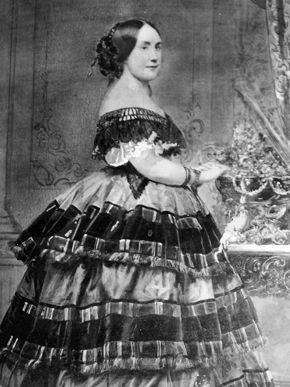
Octavia Walton Le Vert was born at her maternal grandmother’s home, Belle Vue, near Augusta, Georgia. She spent her early years in Georgia and was educated by her mother and paternal grandmother. In 1821, her family moved to Pensacola, Florida, where Le Vert learned French, Spanish, and the local Seminole dialect. During her father’s long tenure in Florida, her mother frequently took the children on tours along the Eastern Seaboard. Historians and literary scholars believe that it was during one of these trips in the late 1820s that Octavia Walton Le Vert encountered Edgar Allan Poe, with whom she continued correspondence until his death. After her death the poem above, the text of which was authenticated as being written in Poe’s hand, was found in one of her personal albums. The date “May 1, 1827” was written in her hand on the poem. While traveling with her mother and brother in 1832, Le Vert shared an Alabama stagecoach with writer Washington Irving, who encouraged her to begin keeping a journal. The following year, she made her social debut in Washington, D.C. She also attended Congressional debates and became friends with Senator Henry Clay.
In 1835, Le Vert’s family moved from Pensacola to Mobile, Alabama, and she met and married a local doctor, Henry Strachey LeVert. Dr. LeVert spelled his last name as one word, but Octavia soon changed that and began having people call her Madame Le Vert. While in Mobile, she became known as the “Countess of Mobile,” because of her reputation as one of the nation’s leading socialites during the 1850s. The couple entertained widely, including in their circle theatrical and literary figures. As the quintessential Southern hostess who reigned over Mobile society before the Civil War, Le Vert held lavish parties in her mansion downtown on Government Street and entertaining notables from America and Europe.
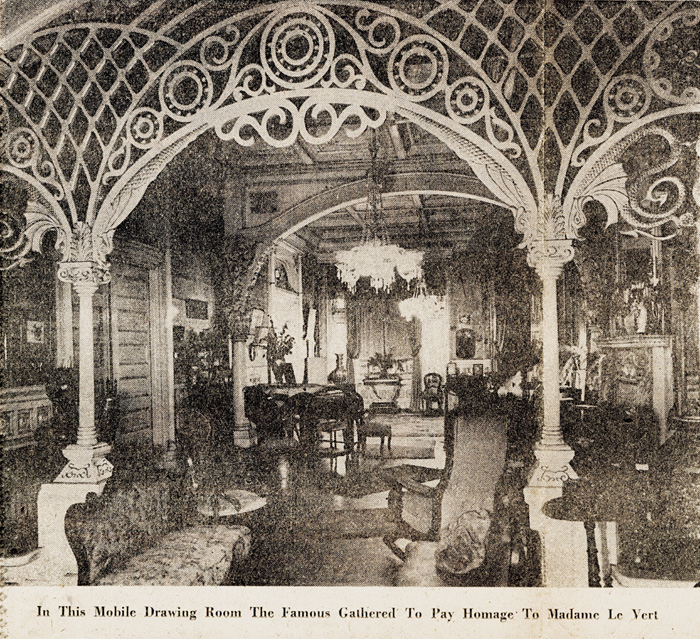
Madame Le Vert’s pen pals included Henry Clay, Washington Irving, Edgar Allan Poe and General P.G.T. Beauregard. She was so close to Clay, who visited her in Mobile in 1844, that she wrote a eulogy for his funeral, for which Irving commended her. Le Vert made two trips to Europe in the mid-1850s. Some of her letters about her experiences were published in newspapers, and Le Vert was persuaded by friends to create a book from her letters and journal entries. Souvenirs of Travel was published in 1857. Millard Fillmore, the 13th U.S. president, was her escort at some of her appearances at parties in Europe. During her travels, she was presented to Queen Victoria and Prince Albert in London. She joined the guests at the court of Napoleon III in Paris and attended the New York ball in honor of the Prince of Wales, later King Edward VII. She was also a guest of Robert and Elizabeth Barrett Browning in Florence.
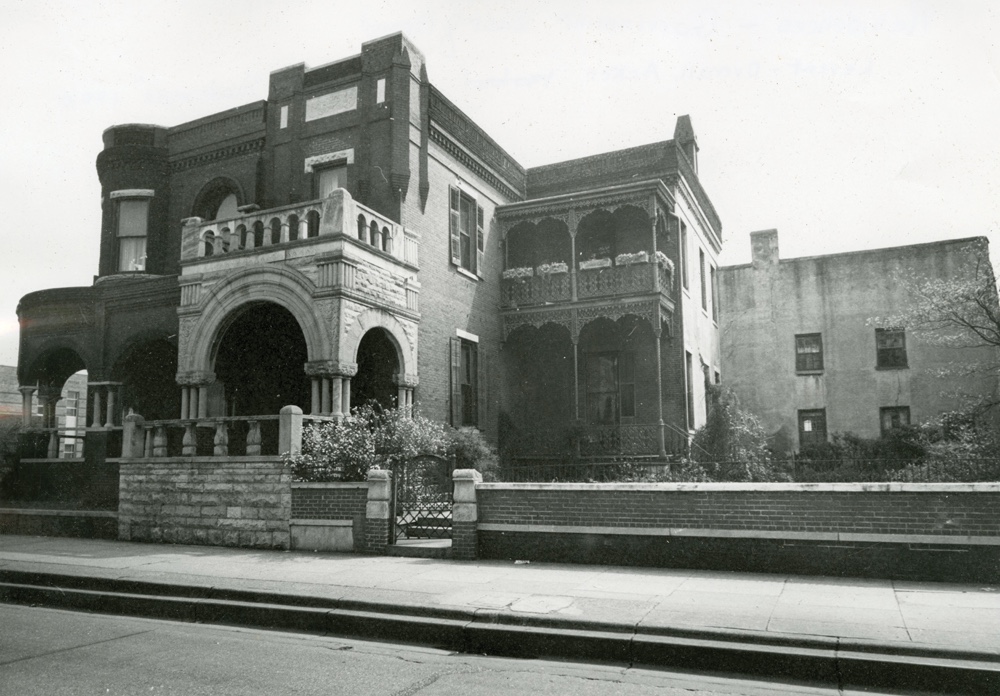
During the Civil War, the citizens of Mobile became suspicious of Mobile’s leading socialite believing she sympathized with the Yankees. At the very least, she was known to be opposed to secession and slavery. Le Vert was far more cosmopolitan and educated than many of her peers in Mobile, which I am sure caused some jealousy. As the city received news of Appomattox, Le Vert committed a major faux pas when she ran to the nearby home of Admiral Raphael Semmes to cheer about General Robert E. Lee’s surrender. Legend has it that Semmes’ daughter angrily asked her to leave the premises. Her attempts to befriend the occupying troops only made things worse; her neighbors were horrified when she entertained Yankee officers in her home. For this, Le Vert was ostracized by Mobile society, and she soon left to visit friends in the North.
Along with many other wealthy Southerners, she became destitute after the war – her husband had died in 1864. In 1869, she moved to Augusta, Georgia to live with relatives in her birthplace, Belle Vue. Le Vert spent several years in the mid-1870s traveling as a public lecturer, but she returned to Belle Vue in 1876 and she died there of pneumonia the following year.
I first came across the story of Octavia Walton Le Vert when I was conducting dissertation research at the Alabama Department of Archives and History. I was searching for Alabamians who had traveled to Italy and left behind firsthand accounts. During this research I came across Le Vert’s diary from 1846-1860. The diary contained descriptions of Le Vert’s travels in Italy and other places in Europe. Her European experiences made a lasting impression on her. The poverty and misery experienced by European working women led her to work for the welfare of women working in sweat shops, cotton fields, and theatre troupes, as wells as those pioneering new fields for women. Le Vert is largely forgotten today, and her home in Mobile was demolished. She was a very interesting woman who spoke many languages and travelled widely. Too bad more people don’t know about her.
Pic of the Day
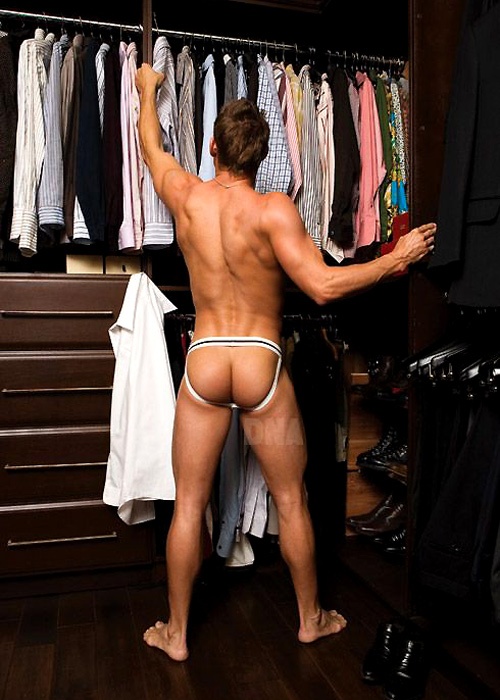
When I first saw this picture, the words “Choices, Choices” popped in my mind. As we get nearer to Joe Biden announcing his VP pick, I thought this was appropriate.
It’s official. The choice has been made.



Authors
Recent Comments
noisilycool3bc985058… on Pic of the Day noisilycool3bc985058… on Moment of Zen: A Room with a… Joe on Ah, Montreal… Joe on Ah, Montreal… iameverywhere1 on Ah, Montreal… Top Posts & Pages



Amazon Associate

As an Amazon Associate I earn from qualifying purchases. So, if you click on a link that takes you to Amazon.com, I may earn a commission.
Trust me, it isn’t much, but every little bit helps.

 Joe
Joe


 The Closet Professor