

Author Archives: Joe
About Joe

The Meaning of Easter
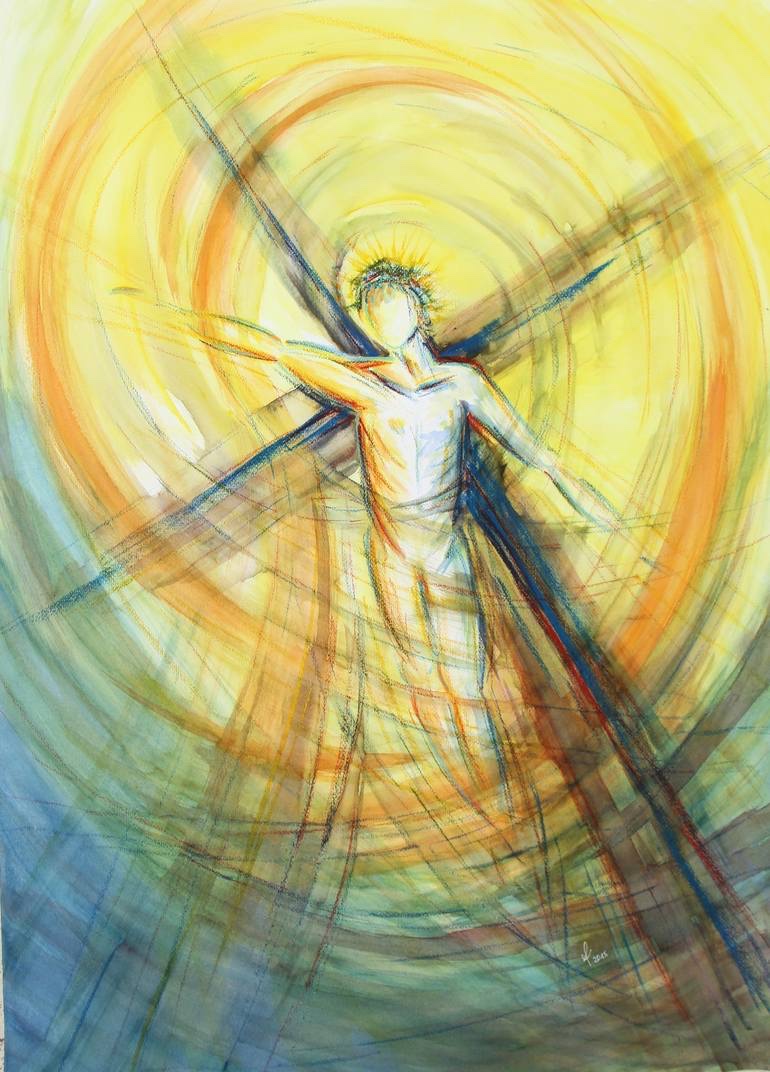
The Passion of Christ, from the Latin patior meaning “suffer,” refers to those sufferings our Lord endured for our salvation from the agony in the garden of Gethsemane when he asks God to spare him from the coming misery and then resigns himself to the will of the Father through to His crucifixion on Calvary. The Four Gospels tell us the story of the Passion and provide the details of our Lord’s final days. The Passion is to some extent corroborated by contemporary Roman historians — Tacitus, Suetonius and Pliny the Younger.
After the Last Supper, Jesus went to the Garden of Gethsemane at the Mount of Olives. Our Lord prayed, “Father, if it is your will, take this cup from me; yet not my will but yours be done” (Luke 22:42). Jesus knew the sacrifice He faced. He prayed so intensely that “his sweat became like drops of blood falling to the ground” (Luke 22:44). There is little doubt as to why the Father sent an angel to strengthen Him (Luke 22:43). It was in the garden that Judas Iscariot kissed Jesus to identify him to the arresting officers.
Jesus was then arrested and tried before the Sanhedrin presided over by the High Priest Caiphas. Responding to their questions, He proclaimed, “Soon you will see the Son of Man seated at the right hand of the Power and coming on the clouds of heaven” (Matthew 26:64). For this statement, He was condemned to death for blasphemy, and was then spat upon, slapped, and mocked. While the Sanhedrin could condemn our Lord to death, it lacked the authority to execute; only Pontius Pilate, the Roman governor, could order an execution.
The Jewish leaders, therefore, took Jesus to Pilate. The Jewish leaders told Pilate not that Jesus had committed blasphemy in their eyes, but told Pilate, “We found this man subverting our nation, opposing the payment of taxes to Caesar, and calling Himself the Messiah, a king” (Luke 23:2). Why did they not mention the charge of blasphemy? Pilate did not care if Jesus wanted to be a messiah, a prophet, or a religious leader; however, if Jesus wanted to be a king, He threatened the authority of Caesar. An act of rebellion, treason or subversion against Rome had to be punished quickly and severely. So, Pilate asked, “Are you the king of the Jews?” (Luke 23:3).
Pilate could not find conclusive evidence to condemn Jesus. Pilate challenged the chief priests, the ruling class, and the people, “I have examined Him in your presence and have no charge against Him arising from your allegations” (Luke 23:14). When offering to release a prisoner, Pilate asked the crowd about Jesus: “What wrong is this man guilty of? I have not discovered anything about Him that calls for the death penalty?” (Luke 23:22). Even Pilate’s wife pleaded with him not to interfere in the case of “that holy man” (Matthew 27:19). Pilate then asked the crowd what he should do: Should he spare “Barabbas, or Jesus which is called Christ?” (Matthew 27:17). The crowd indicated that Jesus should be crucified. Pilate then washed his hands and declared himself innocent of the blood of Jesus.
Pilate then had Jesus scourged (John 19:1). The Romans used a short whip with several single or braided leather thongs. Iron balls or hooks made of bones or shells were placed at various intervals along the thongs and at their ends. The person was stripped of his clothing and whipped along the back, buttocks and legs. The scourging ripped the skin and tore into the underlying muscles, leaving the flesh in bloody ribbons. The victim verged on circulatory shock and the blood loss would help determine how long he would survive on the cross. To enhance the scourging of our Lord, the soldiers added other tortures: crowning Him with thorns, dressing Him in a purple cloak, placing a reed in His right hand, spitting upon Him, and mocking Him, “All hail, king of the Jews!” (Matthew 27:27-31).
The Romans had perfected crucifixion, which probably originated in Persia, to produce a slow death with the maximum amount of pain. Crucifixion was reserved for the worst of criminals; those who had committed crimes against the Roman Empire. Ordinary criminals would have been beheaded as Paul was in Rome by orders of Nero. Crucifixion was so awful that Cicero (d. 43 BC) introduced legislation in the Roman Senate exempting Roman citizens from crucifixion; therefore St. Paul was beheaded rather than crucified for being a Christian. Jesus, however, was not a Roman citizen and thus could be crucified.
Jesus carried his own cross to further weaken him. Since the entire cross weighed around 300 pounds, he usually carried only the horizontal beam weighing 75-125 pounds to the place of execution where the vertical beams were already in place. A military guard headed by a centurion led the procession. A soldier carried the titulus which displayed the victim’s name and his crime and was later attached to the cross (Matthew 27:37). For Jesus, the path from the praetorium to Golgotha was about 1/3 of a mile, and He was so weak Simon of Cyrene was forced to assist Him (Matthew 27:32).
Upon arriving at the place of execution, the law mandated the victim be given vinegar mixed with gall (Matthew 27:34). Gall was a poison and would have hastened death and the suffering on the cross. Jesus refused the drink probably because he did not want to die from poisoning or have his senses numbed while on the cross. He knew He had to shed his blood and suffer for Him to become the supreme sacrifice for the sins of all men. His hands were stretched over the horizontal beam and either tied, nailed or both. Archeological evidence reveals the nails were tapered iron spikes approximately seven inches in length with a square shaft about 3/8 of an inch. The nails were driven through the wrist between the radius and the ulna to support the weight of the person. The horizontal beam was affixed to the vertical beams, and the feet were then tied or nailed directly to it or to a small footrest.
As the victim hung on the cross, the crowds commonly tormented him with jeers (Matthew 27:39-44). The Romans oftentimes forced the family to watch to add psychological suffering. The soldiers divided the man’s garments as part of their reward (Matthew 27:35). The victim would hang on the cross anywhere from three hours to three days. The horrors of crucifixion caused it to be one of the most torturous forms of execution. Perhaps,therefore, Jesus spoke only tersely from the cross. He is said to have uttered only a few phrases which differ from gospel to gospel. In Matthew and Mark: “My God, My God, why have you forsaken me?” In Luke: “Father, forgive them, for they know not what they do.” “Truly, I say to you, today you will be with me in paradise.” and “Father, into your hands I commit my spirit.” (This final sentence were His last words as recorded by Luke.) In John: “He said to His mother, “Woman, behold thy son!” He then turned to the disciple and said, “Behold thy mother!” And from that hour that disciple took her into his own home. After this, Jesus, knowing all things were now accomplished, that the scripture might be fulfilled,said, “I thirst” just before a wetted sponge, mentioned by all the Canonical Gospels, is offered. And finally, “It is finished.”
To hasten death, the soldiers would break the legs of the victim though when the soldiers came to break Jesus’ legs, they found him already dead. (John 19:32-33). When he appeared dead, the soldiers insured the fact by piercing the heart with a lance or sword; the soldiers did not pierce Jesus’ heart, but pierced his side instead which may have entered his heart, and from which flowed blood and water (John 19:34). Commonly, the corpse of the crucified was left on the cross until decomposed or eaten by birds or animals; however, Roman law allowed the family to take the body for burial with permission of the Roman governor. In Jesus’ case, Joseph of Arimathea asked Pilate for Christ’s body to which Pilate agreed. Jesus was then taken from the cross, and because it was late on a Friday, there was no time to prepare the body for burial, and He was placed in the tomb.
What we celebrate today is not the Passion, but what happened next, the Resurrection. The Resurrection of Jesus Christ is the cornerstone of our Christian faith. The Resurrection of Christ had been predicted in the Old Testament and by Christ Himself. Early on the Sunday morning after the death of Jesus on the cross, Mary Magdalene and several other women went to the tomb with the spices they had prepared. When they arrived, they found the tomb had been opened already. When they went in, they did not find Jesus’ body, and they wondered what had happened.
Suddenly, two angels in dazzling white clothes appeared. The women were terrified, but the angels said to them, “Why do you look for the living among the dead? He is not here; He has risen! Remember how He told you He would be turned over to sinful men, be crucified, and rise again on the third day?” While the Gospels disagree on what exactly happened next, it seems the women ran back to tell Jesus’ apostles what they had seen. Peter and one other apostle went to the tomb to see for themselves. They looked in and saw the linen cloths that Jesus’ body had been wrapped in but nothing else. Then they went home, amazed and confused.
Luke and John both describe at length Jesus’ post-Resurrection appearances to his followers. (Mark mentions these briefly as well.) Jesus’ appearance before “doubting Thomas” and the other disciples (in John and in Luke) are well known and contain a few details. For instance, Jesus appeared “when the disciples were together, with the doors locked for fear of the Jewish leaders.” A minor sentence, but one that communicates the terror and bewilderment that must have plagued the disciples in the immediate aftermath of Jesus’ crucifixion.
Matthew and Mark both close with the “Great Commission,” Jesus’ instructions to his disciples to go out into the world and spread the good news of salvation:
Then Jesus came to them and said, “All power is given unto me in heaven and in earth. Go ye therefore, and teach all nations, baptizing them in the name of the Father, and of the Son, and of the Holy Ghost: Teaching them to observe all things whatsoever I have commanded you: and, lo, I am with you always, even unto the end of the world.” (Matthew 28:18-20)
This passage has long been the basis of the Christian emphasis on sharing the Gospel with the world through evangelism and missionary work.
The Bible Story of the Ascension of Jesus, found in the first chapter of Acts, describes the ascent of Christ from the Earth to the Heavenly realm. According to Acts, the Ascension of Jesus takes place 40 days after the Resurrection in the presence of his disciples. Christ is risen after advising them to stay in Jerusalem until the arrival of the Holy Spirit. As he rises, a cloud obscures him from their view, and two men in white arrive to tell them that he will return “in the same way you have seen him go into heaven.” In Christian doctrine, the Ascension is correlated with the Deification of Jesus, meaning that through his Ascension, Jesus took his seat at the right hand of God: “He ascended into heaven, and is seated at the right hand of God the Father Almighty.”
The Resurrection of Jesus and His Crucifixion are the central historical events in the Christian faith. Without the Resurrection there would be no Christianity. “If Christ has not been raised,” wrote St. Paul, “then our preaching is in vain and your faith is in vain” (1 Corinthians 15:14). The foundation of all Christian doctrine hinges on the truth of the Resurrection. Jesus said, ” I am the Resurrection, and the Life: he that believe in Me, though he were dead, yet shall he live: And whosoever live and believe in Me shall never die.” (John 11:25-26) Without the Resurrection, Jesus could have been thought of as simply a great teacher and a good man. But after he rose from the dead, his followers knew for certain that he was who he had claimed to be—the Resurrection and the Life, the Savior of the world.
The painting at the top of the post is titled “resurrection” by Oliver Pfaff.



Laughter in an Age of Pandemics

This is an article by Michael A. Genovese, a Director for the Institute for Leadership Studies in the Loyola Marymount University (Los Angeles, CA) that I wanted to share with you.
In the 1941 movie classic Sullivan’s Travels, successful movie director John L. Sullivan, played by Joel McCrea, laments the fact that in the midst of the misery caused by the Depression and War, he is making frivolous films such as Ants In Your Pants, 1939. Sullivan rebels. He decides to pose as an average citizen and go out among the people to see what they are like, what they want, and how he can be of service to humanity. After a series of troubles along the way, Sullivan happens upon the sound of laughter. He searches for the source and finds a group of down and out men hysterically laughing at a silly cartoon. Eureka! Sullivan realizes the error of his ways. The people don’t want serious, ponderous social criticism, they want to laugh, escape, lose themselves for just a few moments, forget about the troubles they face and have a good time. The movie’s point is driven home by Sullivan in the final lines of the film: “There’s a lot to be said for making people laugh. Did you know that’s all some people have? It isn’t much, but it’s better than nothing in this cockeyed caravan.”
During World War II, the commissioner of baseball, Judge Kenesaw Mountain Landis, sent President Franklin D. Roosevelt a letter offering to cancel the baseball season if the President so wished. Roosevelt, in a January 15, 1942 letter, told the commissioner that baseball must go on. The people needed it in the midst of the troubles of the war. Baseball brought joy to millions of anxious Americans. The game had to go on.
When things go from bad to worse, we have essentially two choices: let it defeat us or rage against the madness and laugh. Laughter is good medicine for virtually anything that ails us. And in this age of pandemics, where social distancing removes the tactile from our daily lives, and forces us to hibernate in isolation, we social animals hunger for the embrace of others. Stripped of the direct contact with others, we search to fill the void. Laughter helps. True, things aren’t very funny just now, but life remains ironic, silly, discombobulated, and downright hysterical – if you wish to see things that way. And if you do, it will help see you through this insanity. In a world where the Trump Covfefe Panic Index has exploded off the charts, we all need distractions from the misery that surrounds us. And speaking of distractions, I find myself suffering from Kardashian Withdrawal Syndrome. My social grounding has been torn out from under me.
As our politicians inadvertently spread fear and anxiety, we search for security and hope. There was a time when FDR could remind us that the only thing, we had to fear was fear itself. But today, watching Donald Trump bumble and fumble his way through a press briefing on the coronavirus, we are left dumbfounded and with a feeling of “Oh Dear Lord, all is lost if this guy is in charge.” Yes, we get the occasional chuckle, as when Dr. Fauci stands behind as the daily press briefing while the President is speaking, shakes his head, looks down at this feet and invites us to imagine the thought bubble over his head that reads “What the [bleep] is wrong with this moron?” But that is little consolation. Trump, who is wrapped tighter than an airport sandwich, actually inspires fear and anxiety every time he opens his mouth. His credibility has disappeared faster than cupcakes at a pot party, and as each member of Team Trump – crammed together in a very non-socially distanced way – goes up to the microphone, bows and makes the ritual “You are doing a wonderful job, Dear Leader” before delivering the bad news about a pandemic out of control, we cringe and think, “Life under Trump is like running through hell wearing a gasoline bathing suit.” Trump’s disappointing response to the coronavirus has been as welcome as an ingrown toenail. Our president who used to say “I alone can fix it” has been revealed as a fraud. He does however have the Midas Touch… everything he touches turns to mufflers.
This president may be a joke, but it is no laughing matter. In this, Marx was right. Of course, I refer to Groucho Marx, who said that the problem with political jokes is that they keep getting elected. Can President Trump lead us out of this crisis? That’s about as likely as Mike Pence marrying Cardi B. And while the President says that he is doing a tremendous job (and that is why I do not let my students grade their own exams), and that he would give himself an “A” grade for his handling of the crisis, in reality the case for Trump handling this crisis well has fallen apart faster than a third-grade science project.
If President Trump cannot provide decisive leadership in this crisis, at least we can laugh, and at this time, laughing at and not with President Trump is a tiny bit comforting. Our hope is that governors and mayors can lead us through the crisis. President Trump is AWOL on this, and perhaps we are all the better for that (OK, we aren’t better off for that, but if he can’t lead the least he can do is get out of the way).
We are all struggling, and we all need the distractions that only absurdity can provide. If we take President Trump seriously, we are lost. And so our only option is to turn away from our president and turn to each other for comfort, solace, and hope. Social distancing makes that a bit harder, but we are a strong, resilient people. We have been through worse than this. So, laugh now and then; see the silly, the absurd and the comic in life. And remember, always remember, we are all in this together and we can get through this together. Reach out to your friends, your neighbors (at a safe distance, of course) and spread hope. It is better than despair.

Students of history, your professors have prepared you for such a time as this!

This was written by John Fea, a professor of history and chair of the history department at Messiah College in Mechanicsburg, Pennsylvania, and a scholar of early American history and American religious history, he is the author of several books. This article is a bit long, but I think it’s worth reading.
Students of history, your professors have prepared you for such a time as this!
The study of history offers an approach to the world necessary for the creation of good citizens in a democratic society. In school, most of us probably recall taking some sort of “civics” courses that taught us things about the United States government. We learned about the importance of voting, the system of checks and balances, and some basic information about our constitutional rights.
This kind of knowledge is essential and useful. But taking a course, or memorizing some facts about the system of government, does not make us citizens with an understanding of our roles, power and obligations in those systems. And citizenship is what we need at this moment.
Good students and teachers of history understand full well that history is more than just “the facts.” Yet even they may fail to grasp the role of history within civic education. Too often young people are taught to engage public life for the purpose of defending their rights or, to put it in a negative way, their self-interests. This approach to citizenship education, as historian Robert Ketcham writes in his 1987 book Individualism and Public Life, “would be intricate knowledge of how the system really works and shrewd understanding of how and where to exert pressure to achieve particular objectives.”
Such a rights-based approach, an operating manual for the civic machine, is a vital part of citizenship, but it does not help us in a time when sacrifice is essential. The coronavirus pandemic demands a citizenship that places a commitment to the public good over self-interest. Yes, we have a right to spend Spring Break partying in Florida, eat meals in restaurants, and buy as much toilet paper as we may afford, but citizenship also requires obligation, duty, and responsibility. Sometimes the practice of these virtues means that we must temporarily curb our exercise of certain rights. We must think of others and their needs.
Historians think critically about their world, and about how they can reliably know it. They will evaluate the information they receive about the coronavirus and develop insight into which sources they can trust and which they can’t. In a time when news and information about this virus is changing and developing at a rapid rate, context becomes very important. News that came across our feeds two days ago may no longer be relevant today. Historians’ work revolves around building a context for knowledge out of disparate documents and sources and demands revising and reframing knowledge in light of new discovery. Odd as it may seem, the skill of building knowledge from an archive of old documents is the same skill of sorting the flood of electronic information.
Historians are also able to put this pandemic in a larger context. Type the words “1918 Influenza” into your web browser and you will find opinion essays, interviews and news articles written by or featuring dozens of historians trying to help us make sense of the present by understanding the past. They can, at times, alert us to potential present-day behavior by reminding us of what happened in an earlier era.
The study of history also cultivates the virtues necessary for a thriving democracy. In his book Historical Thinking and Other Unnatural Acts, Stanford historian Sam Wineburg argues convincingly that it is the strangeness of the past that has the best potential to change our lives in positive ways. Those who are willing to acknowledge that the past is a foreign country–a place where they do things differently than we do in the present–set off on a journey that has the potential to transform themselves and their society.
An encounter with the past in all of its fullness teaches us empathy, humility, and selflessness. We learn to remove ourselves from our present context in order to encounter the culture and beliefs of others who live in this “foreign country.”
Sometimes the people we meet in the past may appear strange when compared with our present sensibilities. Yet the discipline of history requires that we understand them on their own terms, not ours.
History demands we set aside our moral condemnation about a person, ideal or event from the past in order to understand it. It thus, ironically, becomes the necessary building block of informed cultural criticism and political commentary. It sharpens our moral focus and places our ethical engagement with society in a larger context.
One cannot underestimate how the virtues learned through historical inquiry also apply to our civic life. The same skills of empathy and understanding that a student or reader of history learns from studying the seemingly bizarre practices of the Aztec Empire might also prove to be useful at work when we don’t know what to make of the beliefs or behavior of the person in the cubicle next to us.
The study of the past has the potential to cure us of our narcissism. The narcissist views the world with himself at the center. While this a fairly normal way to see the world for an infant or a toddler, it is actually a very immature way of viewing the world as an adult.
History, to quote Yale historian John Lewis Gaddis, “dethrones” us “from our original position at the center of the universe.” It requires us to see ourselves as part of a much larger human story. When we view the world this way, we come face-to-face with our own smallness, our own insignificance.”
As we begin to see our lives as part of a human community made up of both the living and the dead, we may start to see our neighbors (and our enemies) in a different light. We may want to listen to their ideas, empathize with them, and try to understand why they see the world the way they do. We may want to have a conversation (or two) with them. We may learn that even amid our religious or political differences we still have a lot in common. We also may gain a better understanding into why their ideas must be refuted.
This is a time for engaged citizenship and regard for our fellows along with ourselves. The study of history reminds us that we are all in this together.




Authors
Recent Comments
iameverywhere1 on Pic of the Day noisilycool3bc985058… on Pic of the Day noisilycool3bc985058… on Moment of Zen: A Room with a… Joe on Ah, Montreal… Joe on Ah, Montreal… Top Posts & Pages




Amazon Associate

As an Amazon Associate I earn from qualifying purchases. So, if you click on a link that takes you to Amazon.com, I may earn a commission.
Trust me, it isn’t much, but every little bit helps.

 Joe
Joe


 The Closet Professor