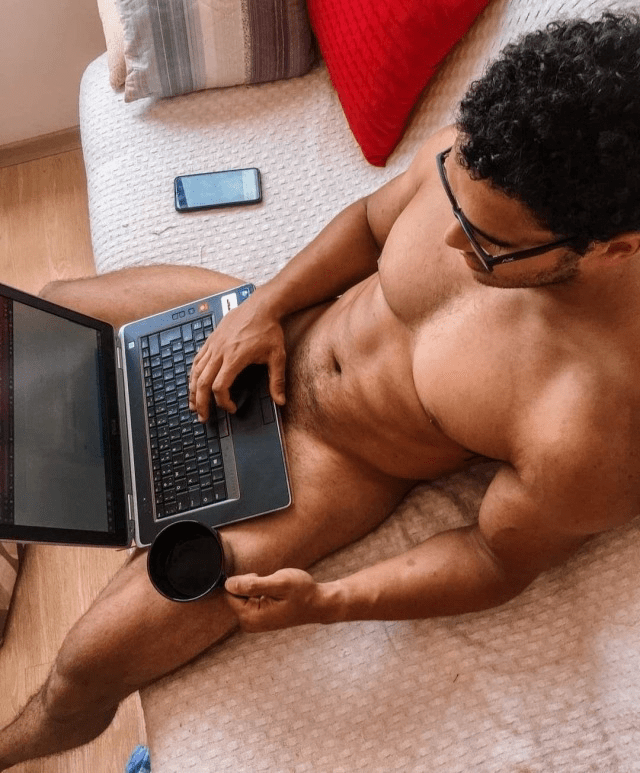
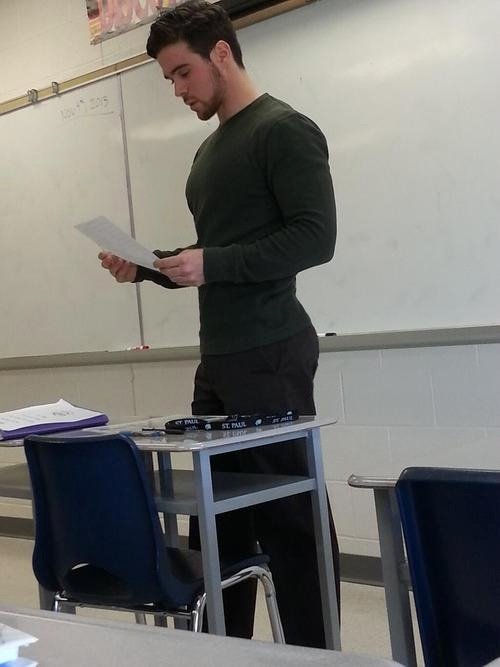
Although I’ll be dressed and in my office, I will probably have the same look as this guy all day today. I need to catch up on grading. I love teaching, but I have always loathed grading. For one thing, it takes up a lot of time, and I don’t like giving bad grades, though I think any good teacher would hate giving bad grades I know there are some who get joy out of it, but if students are making bad grades, a lot of that reflects back on how well a teacher is doing their job.
Also, modern technology like texting, tweeting, etc. has caused many people to write in a modern and often perplexing shorthand, and people get out of the habit of writing complete sentences. An emphasis on teaching writing is not what students are used to anymore. That being said, this is usually an issue with freshman. None of my students are freshmen, and thus are further along in their studies.
It’s also hard to get students into discussions in class or to ask questions. I get that. I was a very shy and not a confident student. I was a good and attentive student, but I was always afraid I’d say something dumb. So, I mostly kept quiet. To make up for this, I have my students write journal entries each week, that I “grade at random,” which translates to, I’ll grade them when I have to. Well, I need to catch up on grading their journals. Usually, it’s mostly pretty interesting because I get to see what my students are thinking about and learning in class.
I should have been grading all weekend, but I’ve had a migraine and kept putting it off. So, I need to get caught up today and turn in midterm grades. Luckily, I will be the only one in the office today and can concentrate on grading.
The students are back on campus, and classes start today. Because I’m teaching a Tuesday/Thursday class, today will be my first day of class. I think my university has the strangest schedule. It seems ridiculous to start classes on a Thursday. I know they have to have a certain number of class days, but they could have started on a Monday and extend the last day of class two more days. It’s also odd that they have exams every day of the week, including Saturday and Sunday. In fact, my final exam is scheduled for a Sunday morning.
I’m nervous about my first day of class, but I always am, no matter what I’m teaching. I pray it goes well. I plan for the first day of class to be a get-to-know each other discussion, and I’m not the best at leading discussions. However, I feel like this is the best way to introduce them to the subject of the course. I just hope I can get them to talk. That’s always the hardest part. I think it will help that there is no right or wrong answer. I’ll see how it goes.
Thank goodness, I am working from home today. We got more snow last night, and I really don’t want to get out in it. Plus, I went to bed early last night because of a bad migraine. I was actually on the couch watching Jeopardy, and I fell asleep before seeing Final Jeopardy. I love watching Jeopardy, so for me to fall asleep during it, it should be a sign that I was really feeling awful. I still have the same migraine this morning.
I have a few work things I need to do today, but it’s mainly to answer some emails. However, I also need to complete some final preparations for my class that starts next week. I am both excited and anxious about my class. I have taught World History, American History, and Art History, but I have never taught a college class that I have designed myself, and especially one without a textbook. No textbook exists for what I am teaching. I have created classes from scratch for high school classes but not for college and especially not for a mix of undergraduate and graduate students. It’s a subject I know a lot about, and probably one of the few experts today on this particular subject, but it’s all rests on me. It’s a new experience and while I know my subject, I think most of us can agree that a fair amount of anxiety goes with all new experiences.
One last thing, my visit with my doctor went well yesterday. There were several things I wanted to discuss with him, and it all went well. There was a new medicine I was hoping to talk to him about for my sleep apnea, and he actually brought it up first. I have trouble with waking up with a headache due to my CPAP, so I would love to be able to sleep without it. Also, I have had shoulder pain for several months. He told me it was a rotator cuff injury, but not a tear, so it won’t need surgery (this was my biggest fear), just physical therapy and a possible injection if PT is not enough. We also discussed my mother’s dementia. He understood what I was going through because he is going through a similar situation with his own mother. All in all, it was a good visit. My A1C, heart, and lungs are all good. I did not have a comprehensive metabolic panel done, but that will be done at my next visit in four months.
I forgot to add this to yesterday’s post, but here’s your Isabella pic of the week:
“The painful part of being a queer kid is not in the knowing you’re queer, it’s in the not knowing. You know you’re different but you don’t know why. The other kids know you’re different too, in fact, they never let you forget it. But no one gives you a language for it. No one gives you a mirror. And so you just sit there, quietly, being different. Not fitting. Trying to be invisible. And so you are, truly, alone.”
I recently saw the above quote, and sadly, I don’t know who said it. However, if you grew up LGBTQ+, and I know most of you did, you can probably identify with this. I didn’t understand how I was different when I was young, I just knew that everyone said so. I also knew I was attracted to guys, but I “knew” I wasn’t supposed to be and kept telling myself that I just admired how they looked or acted and wished I was the same way. I had no words for it because either no one spoke about gay people or it was such an awful thing that it never occurred to me that I was that way too.
Growing up, there was never even the slightest question as to whether I would go to college. No one could imagine I wouldn’t. The same was true about being gay. It was never something that I contemplated I could be. Kids used to call me gay, a fag, a queer, or a sissy, but I never thought any of those words pertained to me. They were just insults and hurtful. They made fun of the way I talked, walked, or moved my hands. Other kids made all of this sound so awful. I knew I was different, but I didn’t have the words to express how I was different. I think I knew that I didn’t want to be gay, a faggot, a queer, or a sissy. I also didn’t know how to change the way sound of my voice, how I walked, or my hand gestures. I tried, but to deepen my voice, it hurt my throat. Trying to walk more “manly” or not be expressive with my hands were done so unconsciously that it was a struggle to concentrate on not moving the way I moved.
Knowing I was different resulted in a few things that shaped my life. It made me incredibly shy and quiet, two things I’ve somewhat grown out of, though I can still be shy and quiet with people I don’t know. Being different and bullied caused a lifelong struggle with depression. It also encouraged me to hide in the world of books and to bury myself into studying. I read constantly, and I always made sure I got the best grades. Being smart though was a blessing and a curse. It was praised by some, but others just used it as another way to prove I was different. However, being smart was going to be my ticket out of my small hometown. They could make fun of me for being smart, but I never felt ashamed of that.
I didn’t begin to understand how I was different until college. I was able to do research on the internet. I could read books in private that helped me understand. I think one of the turning points was when I took an “Intro to Psychology” class. I can’t say I learned a lot from that class, but the professor allowed us to submit anonymous questions that he’d take time at the end of class to answer. Someone, and it was not me, asked, “How do you know if you’re gay?” The professor said that the subconscious mind can tell us a lot about ourselves, so think about what you dream. He said to ask ourselves what we dreamed at night. When we dreamed about a romantic partner or sex, was it about someone of the opposite or same sex? It made me think and to realize that I had never once in my memory dreamed of being with a girl. It was always a guy.
Many southern states are enacting “Don’t Say Gay” laws which prohibit teachers in elementary (and sometimes secondary) schools to discuss anything LGBTQ+. They are also banning books in libraries that discuss diversity. They are removing any of the resources kids need to understand why they are different and so alone. LGBTQ+ kids are more likely than straight kids to take their own life. If they could have a teacher they could talk to, adults who discussed with kids the diversity of sexuality, or the library had books a kid could read to help them understand, then maybe they’d realize they weren’t alone. If they saw that “Gay Is Ok,” then maybe they wouldn’t be so distraught and take their own life once they figured out why they are so different. I’d say that I don’t understand why homophobic politicians can’t see that they are killing kids by censoring what they can learn, but they wouldn’t care. These politicians tell themselves that if they keep kids ignorant of who they are, they can prevent them from being different. It doesn’t work that way. Instead, it harms these kids because they don’t understand or have the words to understand their feelings. I wish they would understand that this causes kids to harm themselves, but I also realize that these same politicians don’t care. If LGBTQ+ kids take their own life, then it’s one less person who doesn’t conform to their narrow minded beliefs.
Education, empathy, and understanding are some of the most important needs of young people. Those who are different and are forced to hide their true selves need to know that there is nothing wrong with them.
Yesterday, the governor of Alabama made ignorance a requirement at public universities in her state. Gov. Kay Ivey signed SB129, known as the “divisive concepts” bill, into law Wednesday. The law will become effective Oct. 1, 2024. The law lists eight so-called “divisive concepts,” with most covering topics related to race, ethnicity, sex, religion and national origin. A dumbass Republican state senator from Pike Road, Alabama, Will Barfoot, introduced the bill. (By the way, Pike Road is not even a real town. It fought to be declared a city because a bunch of rich racist white people didn’t want to be part of the city of Montgomery, so the took Montgomery to court to keep from being part of a city that was as diverse as Montgomery.) Barfoot stated nothing in the legislation prevents the accurate teaching of history. Educators who knowingly “compel” students to believe certain banned ideas, however, could be terminated or disciplined at the discretion of college and school board leaders. In other words, any professor could be fired for teaching diversity, education, and inclusion, or DEI. That being the case, no public institution in Alabama should be allowed to call themselves a university. The word university (from the Latin universitas meaning ‘a whole’) is derived from the Latin phrase universitas magistrorum et scholarium, which roughly means “community of teachers and scholars.” How can any institution have a “community of teachers and scholars” without teaching diversity? It’s insane, ignorant, and, above all, hateful.
I hope my undergraduate institution, which is in Montgomery, will find a way to fight or ignore the new law. It was always a liberal institution, and a core aspect of my history degree was studying the Civil Rights Movement which began in Montgomery. It’s a sad and depressing day when a university is no longer allowed to teach the “whole” of the knowledge available. Censorship like that found in SB129 is one step closer to a dictatorship.
I am ashamed of my home state. Vermont isn’t perfect either, but at least it is welcoming to all kinds of people.
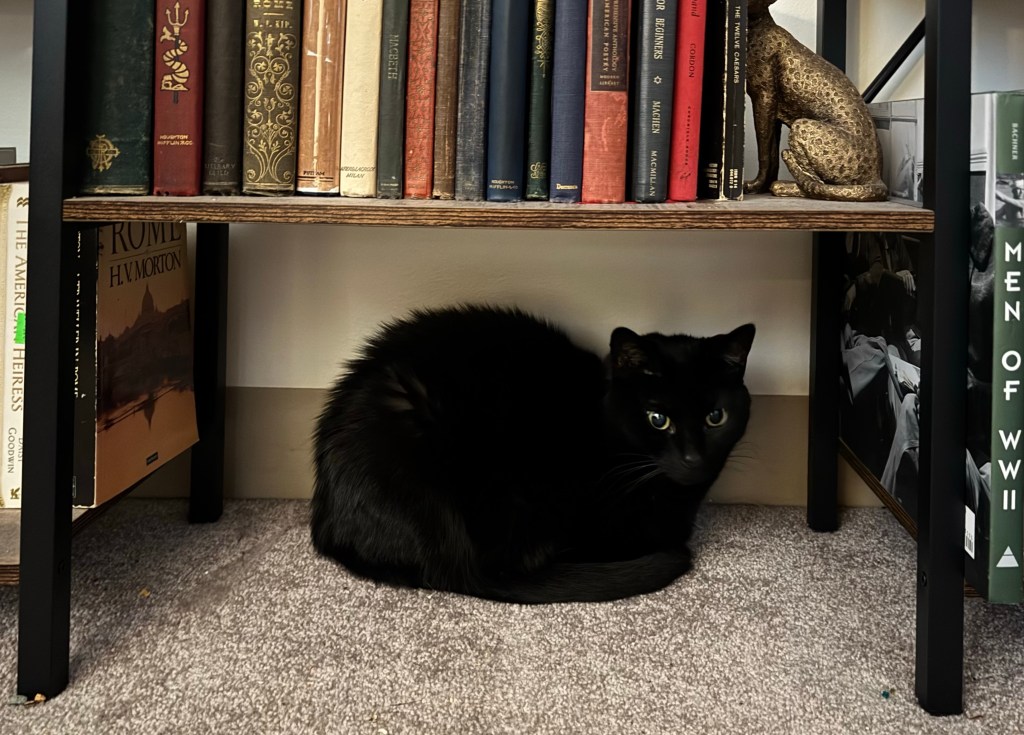
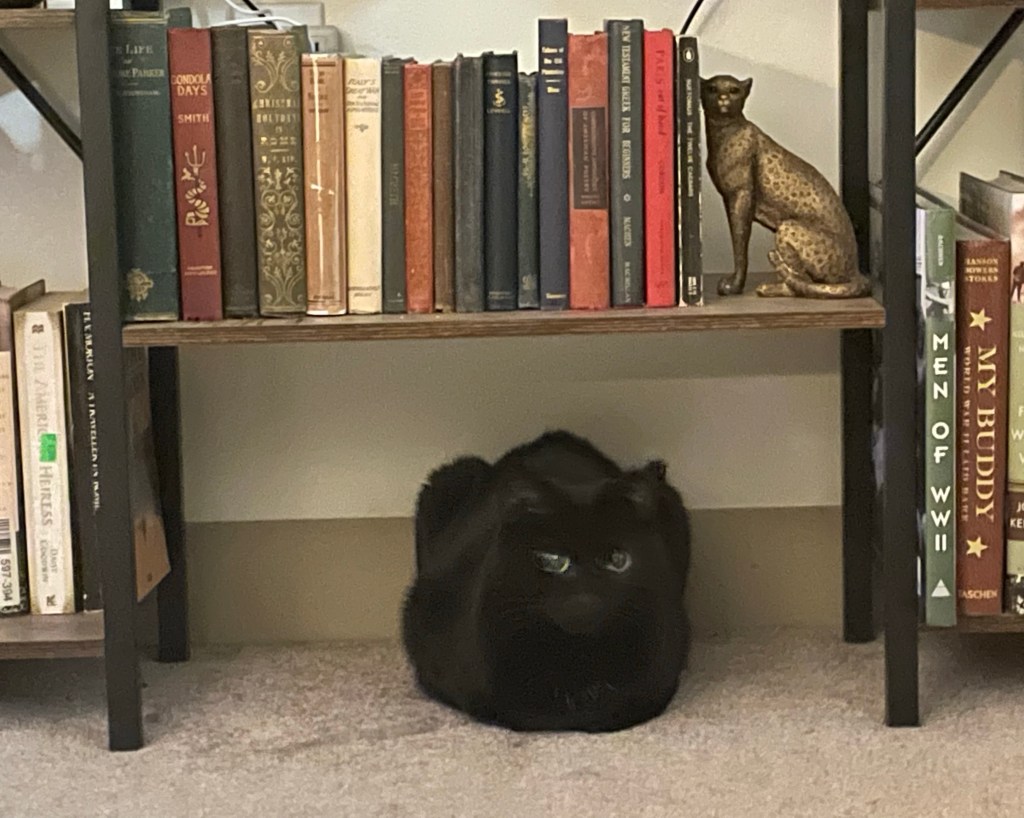
And now, to bring a little levity to this discussion, I wanted to show you that at least Isabella is not scared of a little knowledge.
Whether Isabella wakes me up at 4:00 am or 4:30 am doesn’t really matter that much. I can rarely sleep past 5:00 am anyway. It seems to be only the days when I want to wake up early and get moving that I seem to always sleep a little later and am moving very slowly when I do get out of bed. Of course, Isabella doesn’t allow me to move too slowly because as soon as she sees me sit on the side of the bed, she’s ready to have her wet food in her bowl. She can be very impatient.
Today (I’m actually writing this before I went to sleep last night), I’m hoping is a day that I will wake up early and get moving. I teach on Tuesday and Thursday mornings, and I like to get up and go over my lecture before class. I usually go over the first part while I’m eating breakfast, and then, I do my best to get to work early so I have some quiet time at work before anyone arrives to finish going over my notes and get ready for class.
Teaching this class has been a lot of work this semester because I’m teaching something I’ve never taught before, so there are no previous lecture notes or anything else to make things easier. I only have a few more weeks of class, and I know I’ll miss teaching when this semester is over. I realized years ago that I did not want to teach full time, and usually the classes I teach for other professors let me still be in the classroom some.
I really do love teaching and getting to know my students. When I teach for other professors, I get to see the students for one or two classes, and that’s it. Having a full semester with the same group of students has been nice. I hope that I will be teaching at least one class every academic year, but we’ll see if that happens. The extra money is nice too. It’s been a lot work, long days and early mornings preparing for this class, but it really has been a joy teaching this semester. I’ve had a great group of students, and that always makes a huge difference.
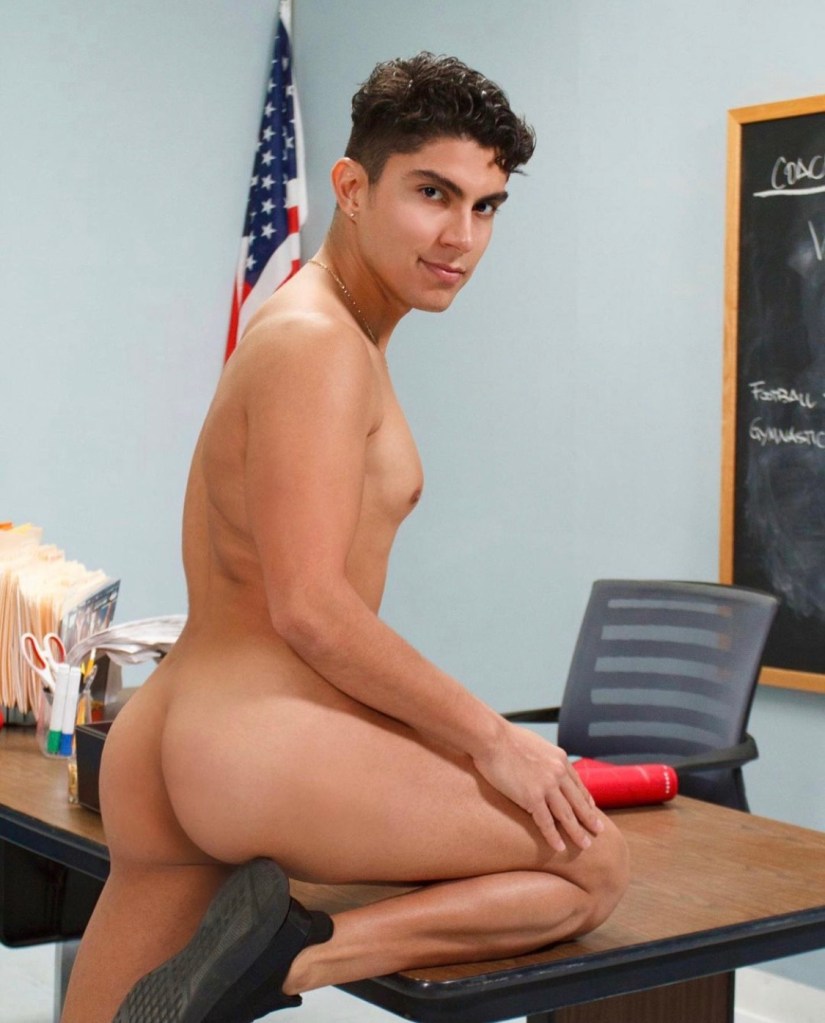
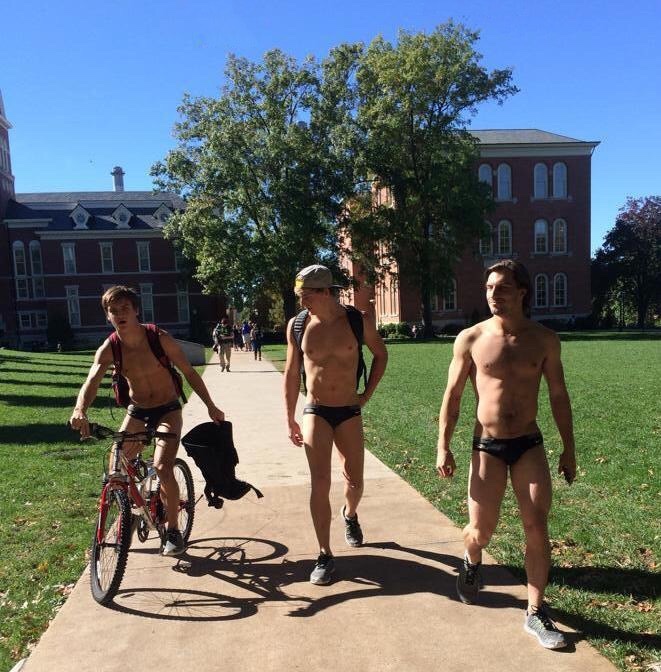
First, you’ll never see students on my campus dressed this way. Maybe if they are on the swim or dive team, but they they wouldn’t be out on campus like this. Rarely do I ever see guys without their shirts. It’s probably the only thing I miss about campuses in the South.
Anyway, my first class seemed to go well yesterday, and I think I have a good group of students. It’s a small class, but once I get them all more comfortable in the class, I think we’ll get some good discussions going. I have my second class tomorrow, and then I’ll be teaching various classes nearly all day every day for the next two weeks. As I said the other day, it will slow down some after September, but it’s a marathon over the next month. After that, it will be a series of sprints for the rest of the semester. At least I get a three day weekend to rest before the “marathon” begins.
Something I never thought I’d see in Alabama has happened. The Magic City Acceptance Academy opened its doors to 200-plus students on its Homewood (a suburb of Birmingham) campus. The public charter school’s mission statement pretty much says it all: “The Magic City Acceptance Academy facilitates a community in which all learners are empowered to embrace education, achieve individual success, and take ownership of their future in a safe, LGBTQ-affirming learning environment.”
The school had faced some issues with getting a city charter. Birmingham City Schools refused to allow the school in their district. Instead, Homewood granted them the charter to build the school in their city. The school welcomed its first students on Aug. 31. And while an LGBTQ-affirming learning environment is part of its mission statement, MCAA welcomes all students in grades 6-12.
“All is good up on the hill,” said principal Michael Wilson, Ph.D. “We’re just glad our students are feeling they’re safe themselves. In a couple of days, no telling how much they are going to open up.” Wilson continues saying, “It’s not all about sexuality and gender. We have kids who have been bullied for other reasons, and they just wanted a new start, and that’s why they’re here. We’ve got some kids that their parents felt their special needs weren’t being met, and they brought them to us. We’re working with our special needs teacher and looking at their educational plans to make sure we meet all their needs.” Growing up in Alabama and later teaching there, I’ve known and seen the bullying firsthand that comes with being a kid who others consider not “normal.” It’s so wonderful to see that these kids will hopefully experience a much better atmosphere for their education.
Sadly, a school of this type in Alabama requires extra security. The administrators know that there people out there who would feel such a progressive middle school and high school had no right to exist. Wilson said they would be “diligent about protecting” their space and their building. Wilson further said, “It took a lot for us to earn the right to be here, and we’re not about to give that away to somebody with an agenda that is just opposite of ours. We have as much right to exist as they do, especially when it comes to meeting the needs of children. Of students. They deserve the right to feel safe in a learning space that values them as kids and as students, and that’s what we’re determined to provide, and with all the resources other students have.” It also doesn’t hurt that the Homewood Police Department is directly across the street.
Rarely do I hear uplifting stories out of the state where I grew up, but it’s a wonderful experience when it happens. I wish MCAA and their students the best in their endeavors. I usually don’t favor charter schools because they give public funds to private schools and many of them are not of the quality they should be, but when it comes to schools like MCAA, I am all for the charter school system. These kids would not have had the opportunity to study in an affirming environment where they can feel safe if they were attending public school in Alabama. The one drawback is that admittance to the school is based on a lottery system, and there does seem to be more demand than what the school can accommodate. Also, many kids are not out and therefore cannot ask their parents to send them to MCAA. These are probably the same kids who get bullied and are too afraid to tell their parents or teachers about it.
This past Pride month, as revelers hit the streets to celebrate LGBTQ+ history, Republican state legislatures were hard at work trying to erase it. And it’s not just momentous events like the Stonewall riots or towering figures like Harvey Milk that could be wiped from classroom instruction. In public schools in Tennessee, Arkansas, and Montana, it may soon become illegal even to mention Bayard Rustin, the openly gay co-organizer of the 1963 March on Washington, or educate kids about the AIDS crisis. Republicans don’t want our nation’s children to know that a gay black man organized one of the most pivotal events in the Civil Rights Movement, and they still insist that AIDS is the result of/punishment for immoral behavior.
In May, Tennessee became the first state to pass what queer-rights advocates have branded as “Don’t Say Gay” laws, which either forbid the teaching of LGBTQ+ history in K-12 schools outright or allow parents to choose whether their children participate in lessons that include it. Within days, Montana followed suit. Yet another bill in Arkansas awaits the signature of the state’s Republican governor. Similar bills have been considered in West Virginia, Iowa, and Missouri. Red-state legislatures are introducing more proposals to hinder education.
Akin to bans on the teaching of critical race theory (If you are not familiar with what critical race theory means [check out the link above and see note below*]. It’s been around for forty years and is merely teaching history as it should be taught.), these laws seek to preserve the myth that the story of America is one of destined progress and unblemished virtue. These laws claim that we stand exceptional among nations as the gleaming embodiment of democracy and, in turn, imply that a significant number of us do not matter. In particular, legislation forbidding the teaching of LGBTQ+ history aims to solidify what remains of society’s moral disapproval of LGBTQ+ people and endangers LGBTQ+ youth who are most susceptible to suicide.
The Republican efforts are a false representation of the past. They want to pretend that LGBTQ+ people have never even existed. They do not want students to question their Pollyanna view of American history. They do not want to open up questions about the failures of the past to allow students to question whether the United States is living up to the goals of the republic—”We the People of the United States, in Order to form a more perfect Union, establish Justice, insure domestic Tranquility, provide for the common defence, promote the general Welfare, and secure the Blessings of Liberty to ourselves and our Posterity.” This whitewashing of history is less about the past than about not wanting to change the present, to hold in place the status quo, and not allow for genuine moments of debate and change. I have always believed that education is more about teaching students how to think critically than it is about memorization.
The Organization of American Historians and the American Historical Association released a joint statement in May condemning the recent spate of “Don’t Say Gay” bills, which the organizations say perpetuate homophobia, distort the historical record, and deprive students—LGBTQ+ and not—of a complete education. Among the many dangers of these laws is that they will create a two-tiered system that will harm students by keeping them from learning about the complexity of our larger society and their place in it, depriving them of a fully rounded education. Maybe if I and those of my generation had been taught just a little LGBTQ+ history, we would not have spent so much of our lives questioning our sexuality or hating ourselves for the way we were born. Teaching tolerance raises self-esteem, and if our sexualities were not constantly demonized, then maybe, just maybe, there would be fewer suicides by LGBTQ+ youths.
Politically, the bills reflect the resurgence of culture-war politics at the state level now that Republicans are out of power in Congress and the White House and the religious right’s expanding moral panic over the advancement of LGBTQ+ rights. As with the bill in Arkansas, the laws in Tennessee and Montana are in one sense narrow—designed, it seems, to invite legal challenges when an overwhelmingly conservative Supreme Court is inclined to grant religious exemptions. In Tennessee, parents must now be given thirty days’ notice to examine any curriculum materials related to sexual orientation or gender identity. They can request their children be pulled from such instruction. Montana gives parents forty-eight hours to “withdraw the child from a course of instruction, a class period, an assembly, an organized school function regarding human sexuality.” A similar notification law in Arkansas requires school districts to tell parents in writing about “instruction of any kind” about “sex education, sexual orientation, and gender identity.”
The emphasis on telling teachers what they can and cannot teach is totalitarianism at its worse. What will happen when a student asks a teacher about Bayard Rustin, Harvey Milk, the Stonewall Riots, AIDS, etc.? Will that teacher have to say, “The law does not allow us to discuss this in class without your parents’ prior permission”? Critical thinking, along with intellectualism, is the enemy of conservatives and the religious right. Just think of Christianity before the Reformation and the Catholic Church’s fear of translations of the Bible in the vernacular, especially as literacy become more common between 1500 and 1800. Conservatives have often feared education throughout history. The elite could be educated, but everyone else was discouraged from education. Conservatives realized that expanded educational opportunities led to greater knowledge and could lead to the questioning of authority. Now conservatives often fear that knowledge could lead to equality and greater power in the hands of the masses. Republicans in the United States know that if more people have access to voting, they stand a lesser chance of winning elections.
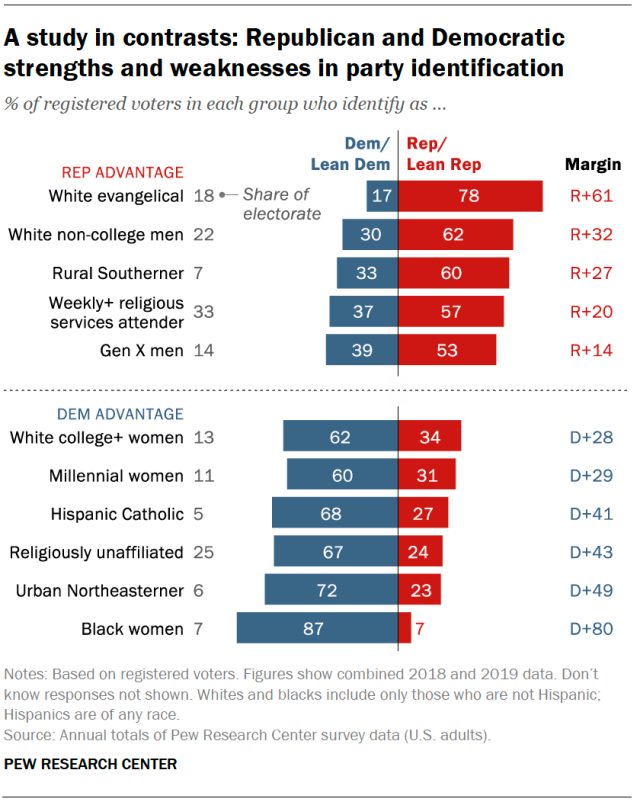
According to the Pew Research Center, Democrats hold advantages in party identification among blacks, Asians, Hispanics, well-educated adults, and Millennials. Republicans have leads among whites – particularly white men, those with less education, and evangelical Protestants – as well as members of the Silent Generation. Just 36 percent of registered voters have a four-year college degree or more education; a sizable majority (64 percent) have not completed college. Democrats increasingly dominate in party identification among white college graduates – and maintain wide and long-standing advantages among black, Hispanic, and Asian American voters. Republicans increasingly dominate party affiliation among white non-college voters, who continue to make up a majority (57 percent) of all GOP voters.
*Here is one example of critical race theory: the Servicemen’s Readjustment Act of 1944, a.k.a. the G.I. Bill. African American veterans benefited less than others from the G.I. Bill, and it was designed that way. The G.I. Bill aimed to help American World War II veterans adjust to civilian life by providing them with benefits including low-cost mortgages, low-interest loans, and financial support. African Americans did not benefit nearly as much as White Americans. The law was deliberately designed to accommodate Jim Crow laws. Banks and mortgage agencies refused loans to blacks, making the G.I. Bill even less effective for non-whites. Once they returned from the war, blacks faced discrimination and poverty, which represented a barrier to harnessing the mortgage and educational benefits of the G.I. Bill, because labor and income were immediately needed at home. Most southern universities refused to admit blacks until the Civil Rights revolution. Colleges accepting blacks in the South (numbering about 100) were of lower quality, with 28 classified as sub-baccalaureate. Only seven states offered post-baccalaureate training, while no accredited engineering or doctoral programs were available for blacks. By 1946, only one-fifth of the 100,000 blacks who had applied for educational benefits had been registered in college. Furthermore, historically black colleges and universities (HBCUs) came under increased pressure as rising enrollments and strained resources forced them to turn away an estimated 20,000 veterans. Though blacks encountered many obstacles in their pursuit of G.I. benefits, the bill greatly expanded the population of African Americans attending college and graduate school. In 1940, enrollment at Black colleges was 1.08 percent of total U.S. college enrollment. By 1950 it had increased to 3.6 percent. However, these gains were limited almost exclusively to Northern states, and the educational and economic gap between white and black nationally widened under the effects of the G.I. Bill. With 79 percent of the black population living in southern states, educational gains were limited to a small part of black America.
Did any of you learn this in school? Is there harm in teaching failures in history? If we do not know about the failure to live up to the ideals of the Declaration of Independence or the Constitution, then how can we begin to correct these mistakes and move forward? And this fear, my friends, is what the Republicans (and conservatives throughout history) fear the most: progress and equality.
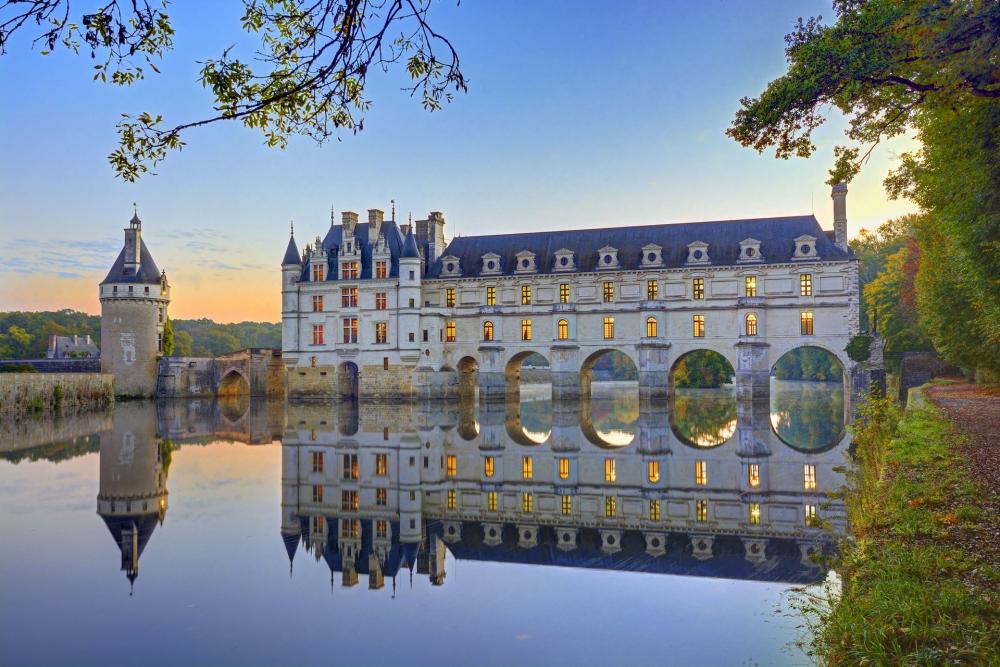
The picture above reminds me of a trip I took to France as part of a study abroad program with my graduate school in 2005. At the time I went, I had no idea that my world, and the world of so many in Mississippi and Louisiana, would be turned upside down by Hurricane Katrina. I also had no idea that ten years later, this trip, which involved a class about oral history and public history, would be instrumental in securing me a new job in Vermont.
We spent several weeks in the Loire Valley touring the fabulous chateaux before spending a week in Paris to further our public history class by touring the museums in the city. We toured the châteaux of Chenonceau, Amboise, Chambord, Blois, and Clos Lucé, as well as the cathedrals of Tours and Orléans. We stayed in the Pontlevoy Abbey, which was the abbey of Cardinal Richelieu. In Paris, we toured the Louvre, Musée d’Orsay, Musée de Cluny, Notre-Dame, Sacré-Cœur, and the Eiffel Tower, among many other sites in the city.
While in the Loire Valley, we also conducted oral histories with locals in the area. Our professor split us into two groups for the oral histories. Since I had taken classes in oral history before, I was sent with one group to supervise and help the other interviewers, while our professor went with the other group. It was a great experience as the Loire River had been the dividing line between Vichy France and Occupied France during World War II. Many spies used the châteaux, especially the beautiful Chenonceau, a château built across the River Cher, to pass messages back and forth across enemy lines.
Beautiful Chenonceau
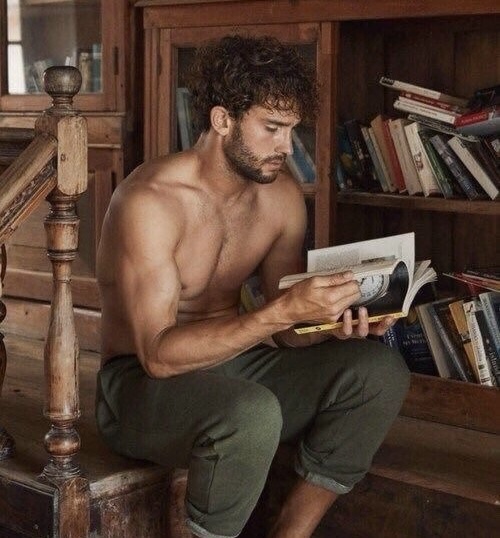
However, while maybe you enjoyed this journey down memory lane, you’re probably wondering how the image above reminded me of this trip. One night, we went to one of the nearby towns on the Loire River to have dinner at a riverside cafe. There was a beach between the restaurant and the river.
After we had eaten and some of us had a little too much wine, including my staunchly Baptist professor, my professor decided after dinner that he wanted to swim across the river. He took off his shoes and socks and his shirt, handed them to me with the keys to the car, and told me to meet him on the other side of the river. Then, he proceeded to jump in the river and backstroke his way across. We got in the car, and I drove across the bridge to wait for him to swim across the river.
If the guy above had gray hair, he’d look a lot like my professor. He was very handsome, and the background does look like the restaurant we had eaten. My professor was fun on this trip. Though a staunch Baptist, he let himself be a bit freer in France. He was a lot of fun.
One night, we went to a place called Ben’s Blues Bar in Blois. Ben, the owner, loved the blues and all things Mississippi, so he was always very friendly to the study abroad students from my Mississippi university. Back then, I’d still drink beer, and Ben suggested I try Chambord Beer (I know most people think of the liqueur, but they make a beer as well). It came in a weizen glass with an image of the Château de Chambord etched on the side.
My professor asked me how it tasted. I handed it to him and said, try it. He said, “Mmm, fruity.” I replied, “Just like me.” He knew I was gay and didn’t have a problem with it, but I caught him off guard, and he blushed. We all had a good laugh about it, mainly because it was so unexpected coming from me, who was always a little quiet.
By the way, I told Ben how much I loved the glass. He went back behind the bar and brought me back a clean one and said, “Yours to keep.” I still have that glass, and I love it.
That trip was wonderful. I had so much fun. The people of the Loire Valley are such friendly people. I can’t quite say the same about everyone I met in Paris. All in all, the trip was fantastic and memorable.







 Joe
Joe





 The Closet Professor