Category Archives: Gay Icon

Mimosas and Mame

Yesterday, I had a nice relaxing day. Something I have needed for weeks. I am visiting a friend of mine, and we went to brunch after we got up late Sunday morning. After crab cakes, eggs, Cajun potatoes, cheese grits, and mimosas, we decided to head back home, take a nap, then went for sushi for dinner. The food was wonderful, so we decided to make the best of the evening and had more mimosas while watching Auntie Mame, one of our favorite movies.

The movie Auntie Mame is centered on the main character, Mame, an unconventional individualist socialite from the roaring 20’s. When her brother dies, she is forced to raise her nephew Patrick. However, Patrick’s father has designated an executor to his will to protect the boy from absorbing too much of Mame’s rather unconventional perspective. Patrick and Mame become devoted to each other in spite of this restriction, and together journey through Patrick’s childhood and the great depression, amidst some rather zaney adventures.

The movie was based on the book by Patrick Dennis. Patrick Dennis was an American author, whose novel Auntie Mame: An Irreverent Escapade (1955) was one of the bestselling American books of the 20th century. In chronological vignettes “Patrick” recalls his adventures growing up under the wing of his madcap aunt, Mame Dennis. Dennis wrote a sequel, Around the World with Auntie Mame, in 1958.

Throughout his life, Dennis struggled with his bisexuality, later becoming a well-known participant in Greenwich Village’s gay scene.

Dennis’ work fell out of fashion in the 1970s, and all of his books went out of print. In his later years, he left writing to become a butler, a job that his friends reported he enjoyed. At one time, he worked for Ray Kroc, the founder of McDonald’s. Although he was at long last using his real name, Edward Everett Tanner III, he was in essence working yet again under a pseudonym; his employers had no inkling that their butler, Tanner, was the world-famous author Patrick Dennis.

He died from pancreatic cancer in Manhattan at the age of 55 in November 1976.

At the turn of the 21st century there was a resurgence of interest in his work, and subsequently many of his novels are once again available. His son, Dr. Michael Tanner, wrote introductions to several reissues of his father’s books. Some of Dennis’ original manuscripts are held at Yale University, others at Boston University.


Oscar Wilde and Lord Alfred Douglas

Oscar and Bosie, as his friends called Lord Alfred Douglas, met in Chelsea when Bosie was 22 and Wilde 15 years his elder. Oscar immediately became enamored with Bosie who was thrilled that such a literary genius was interested in him.  Bosie referred to Wilde as “the most chivalrous friend in the world” and was willing to forsake his birthright for the friendship. They exchanged letters, with some of Wilde’s containing what could be interpreted as expressions of passionate love.

“It is a marvel that those red-roseleaf lips of yours should be made no less for the madness of music and song than for the madness of kissing,” Wilde wrote to Lord Alfred in 1893. “Your slim gilt soul walks between passion and poetry.”

Bosie knew of Wilde’s affection for him early on and succeeded in using it to his advantage. He relied on Wilde’s money when his own ran out and would pout and threaten self-injury when Wilde complained of his behavior or criticized his literary skills. For the length of their relationship, Lord Alfred used Oscar’s love for him as a means to get what he wanted. In the end, Wilde sacrificed himself to protect Lord Alfred, who remained a loyal, yet manipulative, friend.

For Wilde, who was much more low-key about his sexuality, it was a love-hate relationship, almost akin to the moth and flame. He lusted for Lord Alfred, but knew that Bosie would only hurt him. His head told him the cost of Bosie’s love was too expensive, his heart considered it a bargain.

“Wilde wanted a consuming passion,” Ellman wrote. “He got it and was consumed by it.”

When Wilde was put on trial for his homosexuality, Edward Carson questioned Wilde about two poems written by Lord Douglas that appeared in the issue of The Chameleon that contained Wilde’s “Phrases and Philosophies for the Use of the Young.”  The two poems were “Two Loves” and “In Praise of Shame.”

Two Loves
Lord Alfred Douglas

I dreamed I stood upon a little hill,
And at my feet there lay a ground, that seemed
Like a waste garden, flowering at its will
With buds and blossoms. There were pools that dreamed
Black and unruffled; there were white lilies
A few, and crocuses, and violets
Purple or pale, snake-like fritillaries
Scarce seen for the rank grass, and through green nets
Blue eyes of shy peryenche winked in the sun.
And there were curious flowers, before unknown,
Flowers that were stained with moonlight, or with shades
Of Nature’s willful moods; and here a one
That had drunk in the transitory tone
Of one brief moment in a sunset; blades
Of grass that in an hundred springs had been
Slowly but exquisitely nurtured by the stars,
And watered with the scented dew long cupped
In lilies, that for rays of sun had seen
Only God’s glory, for never a sunrise mars
The luminous air of Heaven. Beyond, abrupt,
A grey stone wall. o’ergrown with velvet moss
Uprose; and gazing I stood long, all mazed
To see a place so strange, so sweet, so fair.
And as I stood and marvelled, lo! across
The garden came a youth; one hand he raised
To shield him from the sun, his wind-tossed hair
Was twined with flowers, and in his hand he bore
A purple bunch of bursting grapes, his eyes
Were clear as crystal, naked all was he,
White as the snow on pathless mountains frore,
Red were his lips as red wine-spilith that dyes
A marble floor, his brow chalcedony.
And he came near me, with his lips uncurled
And kind, and caught my hand and kissed my mouth,
And gave me grapes to eat, and said, ‘Sweet friend,
Come I will show thee shadows of the world
And images of life. See from the South
Comes the pale pageant that hath never an end.’
And lo! within the garden of my dream
I saw two walking on a shining plain
Of golden light. The one did joyous seem
And fair and blooming, and a sweet refrain
Came from his lips; he sang of pretty maids
And joyous love of comely girl and boy,
His eyes were bright, and ‘mid the dancing blades
Of golden grass his feet did trip for joy;
And in his hand he held an ivory lute
With strings of gold that were as maidens’ hair,
And sang with voice as tuneful as a flute,
And round his neck three chains of roses were.
But he that was his comrade walked aside;
He was full sad and sweet, and his large eyes
Were strange with wondrous brightness, staring wide
With gazing; and he sighed with many sighs
That moved me, and his cheeks were wan and white
Like pallid lilies, and his lips were red
Like poppies, and his hands he clenched tight,
And yet again unclenched, and his head
Was wreathed with moon-flowers pale as lips of death.
A purple robe he wore, o’erwrought in gold
With the device of a great snake, whose breath
Was fiery flame: which when I did behold
I fell a-weeping, and I cried, ‘Sweet youth,
Tell me why, sad and sighing, thou dost rove
These pleasent realms? I pray thee speak me sooth
What is thy name?’ He said, ‘My name is Love.’
Then straight the first did turn himself to me
And cried, ‘He lieth, for his name is Shame,
But I am Love, and I was wont to be
Alone in this fair garden, till he came
Unasked by night; I am true Love, I fill
The hearts of boy and girl with mutual flame.’
Then sighing, said the other, ‘Have thy will,
I am the love that dare not speak its name.’

In Praise of Shame

Lord Alfred Douglas

Last night unto my bed bethought there came
Our lady of strange dreams, and from an urn
She poured live fire, so that mine eyes did burn
At the sight of it.  Anon the floating fame
Took many shapes, and one cried: “I am shame
That walks with Love, I am most wise to turn
Cold lips and limbs to fire; therefore discern
And see my loveliness, and praise my name.”

And afterwords, in radiant garments dressed
With sound of flutes and laughing of glad lips,
A pomp of all the passions passed along
All the night through; till the white phantom ships
Of dawn sailed in. Whereat I said this song,
“Of all sweet passions Shame is the loveliest.”

At the trial, Wilde was asked if he saw any improper suggestions in the two poems.  Wilde’s response to Carson’s question as to what was “the love that dare not speak its name” provided one of the most memorable moments of a memorable trial.

What is “the love that dares not speak its name?”

Wilde: “The love that dares not speak its name” in this century is such a great affection of an elder for a younger man as there was between David and Jonathan, such as Plato made the very basis of his philosophy, and such as you find in the sonnets of Michelangelo and Shakespeare. It is that deep spiritual affection that is as pure as it is perfect. It dictates and pervades great works of art, like those of Shakespeare and Michelangelo, and those two letters of mine, such as they are. It is in this century misunderstood, so much misunderstood that it may be described as “The love that dares not speak its name,” and on that account of it I am placed where I am now. It is beautiful, it is fine, it is the noblest form of affection. There is nothing unnatural about it. It is intellectual, and it repeatedly exists between an older and a younger man, when the older man has intellect, and the younger man has all the joy, hope and glamour of life before him. That it should be so, the world does not understand. The world mocks at it, and sometimes puts one in the pillory for it.

Since Saturday is St. Patrick’s day, I wanted to post poetry by Ireland’s most famous literary homosexual.  The poems above are by Lord Alfred Douglas, Wilde’s lover, but I also wanted to add a poem by Wilde himself, and this is one of my favorites.

The True Knowledge
Oscar Wilde

Thou knowest all; I seek in vain
What lands to till or sow with seed –
The land is black with briar and weed,
Nor cares for falling tears or rain.

Thou knowest all; I sit and wait
With blinded eyes and hands that fail,
Till the last lifting of the veil
And the first opening of the gate.

Thou knowest all; I cannot see.
I trust I shall not live in vain,
I know that we shall meet again
In some divine eternity.


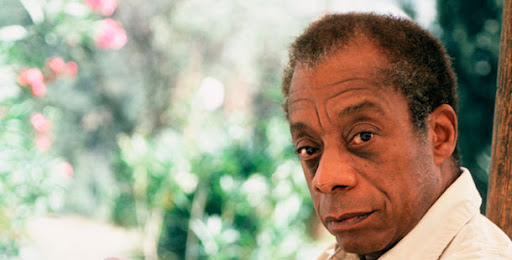
James Baldwin

February is Black History Month, and I can’t believe that I have not blogged at all about gay black men. I hope that this post will make up a little for it. As a gay man in the South, there were not a lot of resources out there to help me come to terms with my homosexuality. So, I did the only thing that I could (the Internet was a very new resource at the time and not something that I had access to very often) so I did the next best thing, I read everything I could find. To search for something to read, I went to Barnes & Noble to find any books on being gay. Giovanni’s Room by James Baldwin, about a white American expatriate who must come to terms with his homosexuality, was one of two books that I found. The other was Nightswimmer by Joseph Olshan. This was my first attempt at trying to understand. Both of these books still hold a special place in my heart. However, in honor of Black History Month, I want to talk about James Baldwin.

James Baldwin’s novels include Go Tell It on the Mountain (1953), probably his most famous book, Giovanni’s Room (1956), and Another Country (1962), about racial and gay sexual tensions among New York intellectuals. As an openly gay man, he became increasingly outspoken in condemning discrimination against lesbian and gay people.

Although he spent a great deal of his life abroad, James Baldwin always remained a quintessentially American writer. Whether he was working in Paris or Istanbul, he never ceased to reflect on his experience as a black man in white America. In numerous essays, novels, plays, and public speeches, the eloquent voice of James Baldwin spoke of the pain and struggle of black Americans and the saving power of brotherhood.

James Baldwin was born in Harlem in 1924. The oldest of nine children, he grew up in poverty, developing a troubled relationship with his strict, religious father. As a child, he cast about for a way to escape his circumstances. As he recalls, “I knew I was black, of course, but I also knew I was smart. I didn’t know how I would use my mind, or even if I could, but that was the only thing I had to use.” By the time he was fourteen, Baldwin was spending much of his time in libraries and had found his passion for writing.

During this early part of his life, he followed in his father’s footsteps and became a preacher. Of those teen years, Baldwin recalled, “Those three years in the pulpit — I didn’t realize it then — that is what turned me into a writer, really, dealing with all that anguish and that despair and that beauty.” Many have noted the strong influence of the language of the church on Baldwin’s style, its cadences and tone. Eager to move on, Baldwin knew that if he left the pulpit he must also leave home, so at eighteen he took a job working for the New Jersey railroad.

After working for a short while with the railroad, Baldwin moved to Greenwich Village, where he came into contact with the well-known writer Richard Wright. Baldwin worked for a number of years as a freelance writer, working primarily on book reviews. Though Baldwin had not yet finished a novel, Wright helped to secure him a grant with which he could support himself as a writer in Paris. So, in 1948 Baldwin left for Paris, where he would find enough distance from the American society he grew up in to write about it.

After writing a number of pieces that were published in various magazines, Baldwin went to Switzerland to finish his first novel. Go Tell It on the Mountain, published in 1953, was an autobiographical work about growing up in Harlem. The passion and depth with which he described the struggles of black Americans was unlike anything that had been written. Though not instantly recognized as such, Go Tell It on the Mountain has long been considered an American classic. Throughout the rest of the decade, Baldwin moved from Paris to New York to Istanbul, writing Notes of a Native Son (1955) and Giovanni’s Room (1956). Dealing with taboo themes in both books (interracial relationships and homosexuality, respectively), Baldwin was creating socially relevant and psychologically penetrating literature.

Being abroad gave Baldwin a perspective on his life and a solitary freedom to pursue his craft. “Once you find yourself in another civilization,” he notes, “you’re forced to examine your own.” In a sense, Baldwin’s travels brought him even closer to the social concerns of contemporary America. In the early 1960s, overwhelmed with a responsibility to the times, Baldwin returned to take part in the civil rights movement. Traveling throughout the South, he began work on an explosive work about black identity and the state of racial struggle, The Fire Next Time (1963). For many, Notes of a Native Son and The Fire Next Time were an early and primary voice in the civil rights movement. Though at times criticized for his pacifist stance, Baldwin remained throughout the 1960s an important figure in that struggle.

After the assassinations of his friends Medgar Evers, Reverend Martin Luther King, Jr., and Malcolm X, Baldwin returned to France where he worked on a book about the disillusionment of the times, If Beale Street Could Talk (1974). Many responded to the harsh tone of If Beale Street Could Talk with accusations of bitterness. But, even if Baldwin had encapsulated much of the anger of the times in his book, he always remained a constant advocate for universal love and brotherhood. During the last ten years of his life, Baldwin produced a number of important works of fiction, non-fiction, and poetry, and turned to teaching as a new way of connecting with the young. By his death in 1987, James Baldwin had become one of the most important and vocal advocates for equality. From Go Tell It on the Mountain to The Evidence of Things Not Seen (1985), James Baldwin created works of literary beauty and depth that will remain essential parts of the American canon.


Compton’s Cafeteria Riot

The Compton’s Cafeteria Riot occurred in August 1966 in the Tenderloin district of San Francisco. This incident was the first recorded transgender riot in United States history, preceding the more famous 1969 Stonewall Riots in New York City by three years.

Compton’s Cafeteria was one of a chain of cafeterias, owned by Gene Compton, in San Francisco from the 1940s to the 1970s. The Compton’s at 101 Taylor Street in the Tenderloin was one of the few places where transgender people could congregate publicly in the city, because they were unwelcome in gay bars at that time. Because cross-dressing was illegal, police could use the presence of transgender people in a bar as a pretext for making a raid and closing the bar down.

Many of the militant hustlers and street queens involved in the riot were members of Vanguard, the first known gay youth organization in the United States, which had been organized earlier that year with the help of radical ministers working with Glide Memorial Church, a center for progressive social activism in the Tenderloin for many years. A lesbian group of street people was also formed called the Street Orphans.

On the first night of the riot, the management of Compton’s called the police when some transgender customers became raucous. When a police officer accustomed to manhandling the Compton’s clientele attempted to arrest one of the transwomen, she threw her coffee in his face. At that point the riot began, dishes and furniture were thrown, and the restaurant’s plate-glass windows were smashed. Police called for reinforcements as the fighting spilled into the street, where a police car had all its windows broken out and a sidewalk newsstand was burned down.

The next night, more transgender people, hustlers, Tenderloin street people, and other members of the LGBT community joined in a picket of the cafeteria, which would not allow transgender people back in. The demonstration ended with the newly installed plate-glass windows being smashed again.

In the aftermath of the riot at Compton’s, a network of transgender social, psychological, and medical support services was established, which culminated in 1968 with the creation of the National Transsexual Counseling Unit, the first such peer-run support and advocacy organization in the world.

Gay History Project


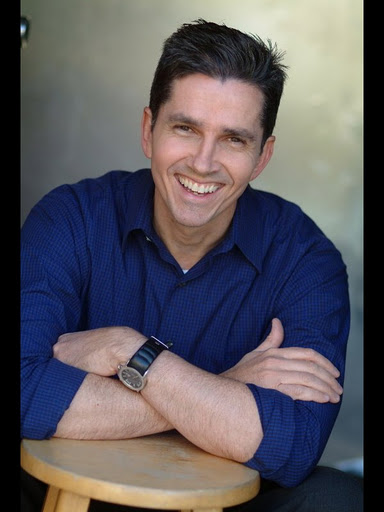
Bob Smith

The church says we should get down on our knees and repent. Well, excuse me, but didn’t being on my knees cause most of my sins? — Bob Smith

My high school had a Head Start program for homosexuals, it was called Drama Club. — Bob Smith

In college I experimented with heterosexuality: I slept with a straight guy. I was really drunk. — Bob Smith

Bob Smith is an American comedian and author. Smith, born in Buffalo, New York, was the first openly gay comedian to appear on The Tonight Show and the first openly gay comedian to have his own HBO half-hour comedy special. Smith, along with fellow comedians Jaffe Cohen and Danny McWilliams, formed the comedy troupe “Funny Gay Males” in 1988.

With Funny Gay Males, Smith is the co-author of Growing Up Gay: From Left Out to Coming Out (1995). Smith is also the author of two books of biographical essays. Openly Bob (1997) received a Lambda Literary Award for best humor book. Way to Go, Smith! (1999) was nominated for a Lambda in the same category. Smith published his first novel, Selfish and Perverse, in 2007.


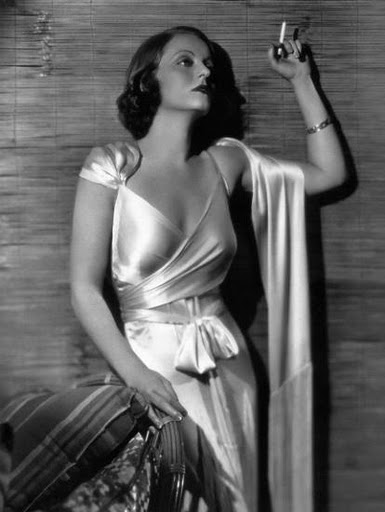
Tallulah Bankhead: Gay Icon

Tallulah Brockman Bankhead was born on January 31st, in Huntsville, Alabama, to William Brockman Bankhead and Adelaide Eugenia Bankhead in 1902. The Bankheads were a formidable political family. Her father, grandfather, and uncle were all respected, influential statesmen. Tallulah’s mother, “Ada” of Como, Mississippi, was visiting Huntsville to buy a wedding dress when she first met William Bankhead. They fell hard and fast. Needless to say, Ada’s previous wedding was cancelled. They married on January 31st, 1900, in Memphis, Tennessee.

Tallulah’s older sister, Eugenia, was born a year before she was, in 1901. Her mother, sadly, died only three weeks after Tallulah’s birth. On her deathbed she told her sister-in-law, “Take care of Eugenia, Tallulah will always be able to take care of herself.” Devastated by his wife’s death, William sent Eugenia and Tallulah to Jasper, Alabama, to live with their grandmother. The two would divide their time between her and aunt Marie Owen in Montgomery.

Though certainly pretty in her own right, Tallulah’s sister was more conventionally beautiful, so Tallulah felt the need to get attention in her own ways : singing, reciting, acrobatics, tantrums and holding her breath tell her face turned blue. Often grandmother would “calm her down” by dousing her with a bucket of water. This was long before ADD had been discovered. At the age of 15 Tallulah came into her own, and while her older sister Eugenia was getting married (at 16) she had much more grand designs for the future.

An avid reader of movie magazines, Tallulah spotted a contest for aspiring screen stars. Twelve winners would receive a trip to New York and roles in a film on the strength of their photograph alone. She was so excited she sent her picture without any contact information, and when Picture Play ran the shot with the caption : “Who is she?” her father replied with another copy of the photo and a letter of confirmation. A couple of tantrums later, he agreed to let Tallulah go to New York along with her aunt as chaperone.

In New York City Tallulah and the eleven others got the royal treatment. She got her first taste of film and stage acting and was hooked. Her early performances at this time were not especially noteworthy, indeed, her career was checkered with hits and misses epic and trivial. It was at this time that she became used to the glamorous, high-octane, dissolute lifestyle of actors and artists. It wasn’t long before she and her aunt moved into the Algonquin, with its parade of celebrities and geniuses from a myriad of disciplines. For the most part she preferred the stage, where the nuances of her one-of-a-kind demeanor and zeal for life came through in abundance. She attended parties and found small stage parts until she reached the age of consent, at which time (at the urging of an astrologer) she left New York for London where she was invited to star in a play.

For seven years Bankhead was the toast of London. British audiences adored her, whether the content was classy or tawdry. A group of aficionados who emulated Tallulah (gallery girls) would cheer whenever she made an entrance and, delighted, she would wave back at them, saying, “Thank you dahlings.” She was an extremely accessible star and would happily greet her fans at the stage door, signing autographs, inquiring as to their health, sometimes even making them guests in her home. She bought a large home with a team of servants she often treated more like companions, gabbing with them until all hours and playing bridge, which she loved. Attempting to match the film success of other exotic beauties such as Greta Garbo and Marlene Dietrich, Paramount lured her away from England. Dubious though she was, the money was simply too good to pass up (especially in the midst of mounting debts).

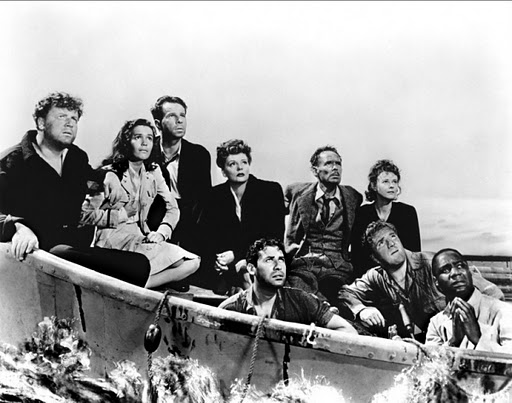
In January of 1931, Tallulah Bankhead sailed to the studios Paramount kept in New York and working for the first time with George Cukor. The film was called The Tarnished Lady and was followed by two more, My Sin and The Cheat, all three of which lacked sparkle or pop. She moved on to Hollywood to see if she could do any better. Riding with her on the train was Joan Crawford and her husband, Douglas Fairbanks, Jr. Tallulah told her, “Dahling, you’re divine. I’ve had an affair with your husband. You’ll be next.” Sadly her experiences with film acting were mostly disappointing with one exception, Alfred Hitchcock’s Lifeboat. Many fans came to know her solely from this one movie and her performance in it was implacable and memorable. Apparently Hitchcock knew just how to put Bankhead’s talents to their best use.

After her debacle with the movies, Tallulah returned to the stage, and the theatre is where she made her mark. She triumphed in numerous roles, including the conniving Regina Giddens in Lillian Hellman’s The Little Foxes, Sabina in Thornton Wilder’s epic comedy of survival, The Skin of our Teeth, and Noel Coward’s Private Lives. In 1952, she was hostess to a wildly popular radio variety show in which she bantered with guests such as Marlene Dietrich, George Sanders and Earl Wilson.

Her trademark whiskey voice (more like molasses, really) coupled with her dry wit and impeccable timing made The Big Show a ringing success. Tallulah continued to perform in various venues. The Sands Hotel in Las Vegas paid her a generous $20,000 per week to perform in a one-woman show which included monologues, songs and poem readings. She went on to play heroines of Tennessee Williams in A Streetcar Named Desire and The Milk Train Doesn’t Stop Here Anymore, but neither ever quite left the ground. She had great successes in all mediums, including television, when they found just the right fit for Bankhead’s ingenious flare for the wicked and outré.

Tallulah Bankhead was always very frank and forthcoming about her sexual appetites. She never hedged about her openness to taking lovers of both genders. “My father warned me about men and booze but he never said anything about women and cocaine.” She purportedly had liaisons with Billie Holliday, Eva La Galliene, Marlene Dietrich, Mercedes de Acosta, Hattie McDaniel and wisecracking comic actress from Brooklyn, Patsy Kelly, probably best known for a supporting role in Rosemary’s Baby. Embroidery aside, Tallulah, who certainly never hid her attraction to men, took her female friendships very seriously, imbuing them with playfulness and devotion. Some, apparently had romantic components while some did not.


In Boze Hadleigh’s 1994 book, Hollywood Lesbians, Patsy Kelly confirmed that she and Tallulah had been lovers as well as friends. Bankhead never stayed with any one paramour for very long, though Kelly lived with her in her mansion (Windows) in Bedford, New York, for many years. Of the numerous subjects featured in Hadleigh’s book, Kelly was one of the few to be absolutely direct, describing herself as a dyke and enumerating her own numerous affairs. When Hadleigh asked her to discuss Greta Garbo she said, “Talking about Garbo is like talking about Asia. What would you like to know?”

Tallulah Bankhead led a life of rapturous adventure and sensual celebration, peppered with skewed humor and a penchant for the outspoken. She frequently hired friends as employees (the dividing line nearly invisible) and loved to have young, handsome gay men act as her valet, mixing drinks and drawing her baths. Her parties and quips were the stuff of legend, and while she felt emotions with grandeur, she took disappointments in stride. When she was diagnosed in earlier days with a nearly fatal case of gonorrhea, she mischieviously (though perhaps not without cause) blamed Gary Cooper. She died at the age of 62, December 12th, 1968, ending a raucous, tempestuous life. And she never wasted a moment of it.

Continue reading on Examiner.com Queer Brilliance. Tallulah Bankhead : Southern, decadent and enduring queer icon – Dallas GLBT Arts | Examiner.com http://www.examiner.com/glbt-arts-in-dallas/queer-brilliance-tallulah-bankhead-southern-decadent-and-enduring-queer-icon#ixzz1dwLeHJgQ


LGBT History Month Icons Oct. 29th – 31st

Lilli Vincenz – Saturday, October 29th
“We were laying the groundwork for what we hoped would be later activism that would give homosexuals equal rights.”
Lilli Vincenz is a Gay Pioneer. Each July 4th from 1965 to 1969, she participated in the Annual Reminders at Independence Hall and the Liberty Bell that launched the LGBT civil rights movement. More

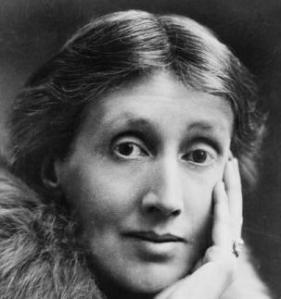
Virginia Woolf – Sunday, October 30th
“Language is wine upon the lips.”
Virginia Woolf was an accomplished 20th century English author. She published nearly 500 essays and nine novels. More

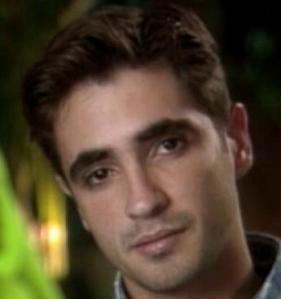
Pedro Zamora – Monday, October 31st
“As gay young people, we are marginalized. As young people who are HIV-positive and have AIDS, we are totally written off.”
Pedro Zamora was an AIDS activist who appeared on MTV’s “The Real World.” He brought national attention to HIV/AIDS and LGBT issues. More


LGBT History Month Icons Oct. 26th – 28th

Dan Savage – Wednesday, October 26th
“I thought, when I was a kid, that my mother and father would be devastated if I ever told them I was gay.”

Dan Savage is an award-winning author and journalist. He launched the “It Gets Better” video project to combat bullying and prevent LGBT teen suicides. More

Amanda Simpson – Thursday, October 27th
“I’d rather not be the first but someone has to be.”

Amanda Simpson, the first openly transgender female presidential appointee, holds a top-level position in the U.S. Department of Defense. More

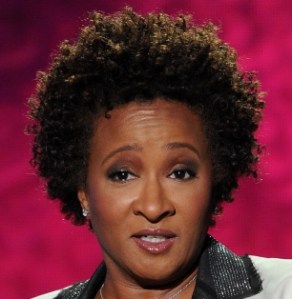
Wanda Sykes – Friday, October 28th
“They pissed off the wrong group of people. Instead of having gay marriage in California, we’re going to get it across the country.”

Wanda Sykes is an Emmy Award-winning comedian and actor praised for being one of the most entertaining women of her generation. More


LGBT History Month Icons Oct. 22nd – 25th

Ricky Martin – Saturday, October 22nd
“I am a fortunate homosexual man. I am very blessed to be who I am.”
Ricky Martin is a Grammy Award-winning pop singer who has sold more than 60 million albums. More

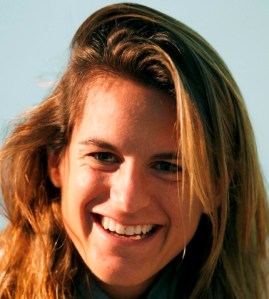
Amelie Mauresmo – Sunday, October 23rd
“Whether it’s in the right way or sometimes the wrong way, you learn about life and its lessons.”
Amélie Mauresmo was the World No. 1 tennis player. She won two Grand Slams and an Olympic Silver medal. More

Constance McMillen – Monday, October 24th
“Stand up like I did. It was hard but it was worth it.”
After being denied permission to bring her girlfriend to the prom, Constance McMillen successfully took legal action. More

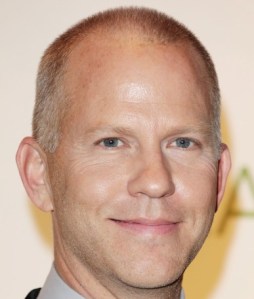
Ryan Murphy – Tuesday, October 25th
“I dealt with my sexuality at a very early age. I didn’t have a struggle, and I know so many people who were terrified of dealing with it.”
Ryan Murphy is the creator of “GLEE” and an award-winning director, writer and producer. More


LGBT History Month Icons Oct. 19th – 21st

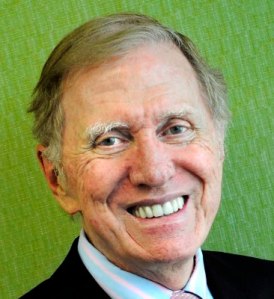
Michael Kirby – Wednesday, October 19th


“If every gay person in Australia stood up and said this is me, get over it, the whole shabby charade would be finished.”
Michael Kirby is the world’s first openly gay justice of a national supreme court. More

Victoria Kolakowski – Thursday, October 20th


“I have been very fortunate to have a successful career as a public servant, and I feel an obligation to serve my community as a role model as well.”
Victoria Kolakowski is the first openly transgender person to be elected a trial judge in the United States. More

Dave Kopay – Friday, October 21st


“I hear from people all over the world that my coming out has empowered them in their search for self.”
Dave Kopay is the first NFL payer and one of the first professional athletes to come out. More