Category Archives: Gay Icon

On His Queerness

On His Queerness

When I was young and wanted to see the sights,
They told me: ‘Cast an eye over the Roman Camp
If you care to.
But plan to spend most of your day at the Aquarium –
Because, after all, the Aquarium –
Well, I mean to say, the Aquarium –
Till you’ve seen the Aquarium you ain’t seen nothing.’

So I cast my eye over
The Roman Camp –
And that old Roman Camp,
That old, old Roman Camp
Got me
Interested.

So that now, near closing-time,
I find that I still know nothing –
And am still not even sorry that I know nothing –
About fish.

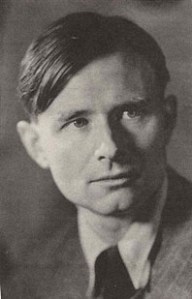
— Christopher Isherwood

For a biography of Christopher Isherwood, click on “Read More” below.

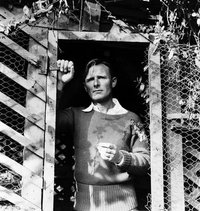
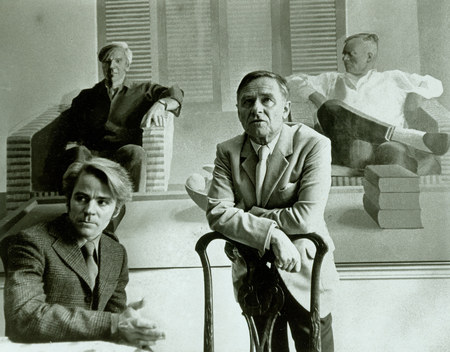
Christopher Isherwood (1904-1986) was a British-born American writer who worked in many genres, including fiction, drama, film, travel, and autobiography. He was especially esteemed for his stories about Berlin in the early 1930s.


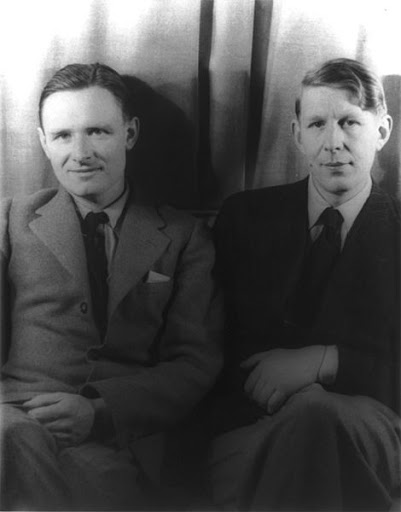
The son of a career military officer, Christopher Isherwood was born in High Lane, Cheshire, England, on August 26, 1904. He attended the Repton School from 1919 to 1922 and Cambridge University from 1924 to 1925. His university year was significant because it was at Cambridge that he met Wystan Hugh Auden, with whom he later collaborated on several literary projects, and because it was there that he became a practicing homosexual, an orientation which played an important role in his personal and artistic life.

Leaving the university without a degree, Isherwood worked for a year as the secretary to French violinist Andre Mangeot and as a private tutor in London. In his spare hours he worked on his first novel, which was published as All the Conspirators in 1928.

Scenes of a Crumbling Germany

In 1929 he went to Germany to visit Auden, who was living there, and was attracted to life in the crumbling Weimar Republic, and particularly to the sexual freedom that existed. As he so succinctly put it in his 1976 book Christopher and His Kind 1929-1939, “Berlin meant Boys.” He was not long in establishing a liaison with Berthold “Bubi” Szczesny, a bisexual ex-boxer, which lasted until Szczesny was forced to leave the country. Among the young men he met subsequently was one from the working class section of Berlin; he took a room with this boy’s family for a time and so became familiar with day-to-day living among the urban proletariat.

At first his stay in Germany was financed through an allowance provided by his only wealthy relative, his uncle Henry Isherwood. His uncle was also homosexual and seemed happy to assist his nephew in the quest for companions. Eventually, however, Uncle Henry stopped his remittances, and Isherwood paid his way by tutoring in English; in this way he met Berliners from the upper classes.

All this provided background for his most successful work, The Last of Mr. Norris (1935), Sally Bowles (1937), and Goodbye to Berlin (1939), all collected under the title The Berlin Stories in 1945. In these novellas and short stories he presented an in-depth portrait of life in Germany’s capital as the republican center collapsed, the Communists tried desperately to stem the rightist tide, and the Nazis came to power.

He began in “A Berlin Diary (Autumn 1930)” with an almost offhand observation about Fráulein Hippi, a student whom the narrator is tutoring in English: “Like everyone else in Berlin, she refers continually to the political situation, but only briefly, with a conventional melancholy…. It is quite unreal to her.” In “Sally Bowles,” he mentioned the closing of two major banks and noted: “One alarmist headline stood out boldly, barred with blood-red ink: ‘Everything Collapses’.”

In “The Nowaks,” about a working class family, he described their neighborhood in this way: “The entrance to the Wassertorstrasse was … a bit of old Berlin, daubed with hammers and sickles and Nazi crosses and plastered with tattered bills….” The political pressures are seen increasing in “The Landauers,” about a well-to-do Jewish family: “One night in October 1930, about a month after the Elections, there was a big row on the Leipzigerstrasse. Gangs of Nazi toughs turned out to demonstrate against the Jews. They … smashed the windows of all the Jewish shops.” Finally, in “A Berlin Diary (Winter 1932-33),” the narrator observes: “Schleicher has resigned. Hitler has formed a cabinet…. Nobody thinks it can last until the spring.”

The Berlin stories were picked up by playwright John van Druten, who was struck by a sentence in “A Berlin Diary (Autumn 1930)”: “I am a camera, with its shutter open, quite passive, recording not thinking.” He wrote the play I Am a Camera, centering on Sally Bowles, of whom Alan Wilde wrote: “Sally’s charm is her naíveté, … her total capacity for self-deception and self-contradiction, … her ability to accommodate herself to each new situation….” I Am a Camera in turn became the musical Cabaret (1967), with book by Joe Masteroff and lyrics by Fred Ebb, which was produced both on stage and in film.

Isherwood of course became fluent in German and got acquainted, as did Auden, with the expressionist drama of such important figures as Ernst Toller, Georg Kaiser, and Bertolt Brecht. This led the two British artists to collaborate on three expressionist plays: The Dog Beneath the Skin (1935), The Ascent of F6 (1937), and A Melodrama in Three Acts: On the Frontier (1938), of which the first two are generally considered the more successful.

Move to the United States

Isherwood and Auden travelled to China in 1938 and in 1939 worked together on Journey to a War. In that same year, the year World War II began, both came to America, a move which made them anathema to many Britons. Indeed, even three years later in Put Out More Flags novelist Evelyn Waugh, christening them Parsnip and Pimpernell, commented, “What I don’t see is how these two can claim to be contemporary if they run away from the biggest event in contemporary history.”

During World War II Isherwood wrote scripts for Metro-Goldwyn-Mayer, Warner Brothers, and 20th Century Fox film studios; worked for a year in a refugee center in Haverford, Pennsylvania; and became a resident student of the Vedanta Society of Southern California and co-editor of the group’s magazine Vedanta and the West.

He became increasingly involved in the Vedantist religion, editing the volumes Vedanta for the Western World in 1945 and Vedanta for Modern Man in 1951 and writing An Approach to Vedanta in 1963, Ramakrishna and His Disciples in 1965, and Essentials of Vedanta in 1969. He explained its basic tenets in the 1963 work as follows: “We have two selves – an apparent, outer self and an invisible, inner self. The apparent self claims to be an individual and as such, other than all other individuals…. The real self is unchanging and immortal.”

Isherwood did not confine himself solely to religious writings, however. He authored such novels as Prater Violet (1945), The World in the Evening (1954), A Single Man (1964), and A Meeting by the River (1967), which he dramatized in 1972. He also wrote the travel book The Condor and the Cows (1949), autobiographical volumes, and the collection of stories, articles, and poems titled Exhumations (1966). Additionally, he taught at Los Angeles State University, the University of California at Santa Barbara, and the University of California at Los Angeles and wrote film scripts.

Isherwood’s status in modern literature was best summarized by G. K. Hall: “Christopher Isherwood has always been a problem for the critics. An obviously talented writer, he has refused to exploit his artistry for either commercial success or literary status…. Isherwood was adjudged a ‘promising writer’ – a designation that he has not been able to outrun even to this day. It is still a clicheé of Isherwood criticism to say that he never fulfilled his early promise….In any case, five decades of Isherwood criticism present a history of sharply divided opinion.”

Isherwood, who became an American citizen in 1946, lived and worked in southern California until his death from cancer January 4, 1986.

Further Reading

Much personal information is in his autobiographical Christopher and His Kind (1976). In G. K. Hall’s Christopher Isherwood: A Reference Guide (1979) the reader will find a comprehensive listing of all works by and about the subject.

Additional Sources

Finney, Brian, Christopher Isherwood: A Critical Biography, New York: Oxford University Press, 1979.

Fryer, Jonathan, Isherwood, Garden City, N.Y.: Doubleday, 1978, 1977.

Fryer, Jonathan, Isherwood: A Biography of Christopher Isherwood, London: New English Library, 1977.

Isherwood, Christopher, Christopher and His Kind, 1929-1939, London: Eyre Methuen, 1977; New York: Farrar, Straus Giroux, 1976.

Isherwood, Christopher, My Guru and His Disciple, New York, N.Y.: Penguin Books, 1981.

King, Francis Henry, Christopher Isherwood, Harlow Eng.: Published for the British Council by Longman Group, 1976.

Lehmann, John, Christopher Isherwood: A Personal Memoir, New York: H. Holt, 1988, 1987.

Read more: http://www.answers.com/topic/christopher-isherwood#ixzz1V3BQq8vY


May-December Romances

The term “May-December Romances” refers to a romantic pairing where one person is significantly older than the other. The age difference is at least a decade, but often more. The phrase comes from the younger person being in the “spring” of his or her life (i.e., May), while the older partner is in his or her “winter” (i.e., December). In the gay community there often seems to be  a focus on youth, but when a gay man is out of their twenties, does age really matter anymore?

Several weeks ago someone requested a commentary on age differences. There are no real moral or ethical implications of dating a person older or younger than yourself. Most people do find an attraction to someone a few years older or younger. However, in this email that I received the man was referring to age differences of 10, 20, or 30 years. He is in his sixties and his partner is in his forties.

The first thing that needs to be determined is if there is an unhealthy reason for not choosing a person of ones similar age. This would be true of the predatory adult who needs to control and manipulate another person and therefore seeks a weaker type of person who sometimes is also younger. This type of predatory person is dangerous and may be violent. Though I don’t know a great deal about their relationship, the man that emailed me seemed very happy with his relationship and did not give any indication that there were any unhealthy reasons for their relationship, and I can’t see any reason that there should be.

I have no experience myself with a May-December relationship, but I know several men who are older than me, that if they lived closer to me, I would be all over them. An intelligent, cultured is the type of relationship that I have always wanted. I have no desire to be a gold-digger or a boy-toy (which I am too old for anyway), but to have a mature relationship that is not all about sex (though sex is a consideration in the equation) is the type of relationship I have always desired. Whether the person is older, younger, or the same age as I am, it is the connection of the minds that means more to me.

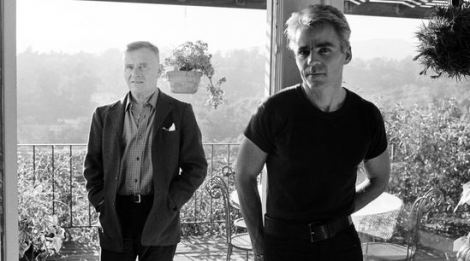
One of the most famous gay May-December romances is probably that of Christopher Isherwood and Don Bachardy. At forty-eight years old and already an esteemed British writer, Christopher Isherwood met 18-year-old Don Bachardy at Will Rogers State Beach in October 1952 and by early the next year, the two had begun an intimate relationship that lasted until Isherwood’s death in 1986. They were a high-profile, openly gay couple whose meeting coincided with one of the most homophobic decades in American history, the era of McCarthyism, when homosexuals were being driven out of the State Department.

Yet to the gay community at large, as well as those who were casually acquainted with the couple, Isherwood and Bachardy seemed to live an enviably idyllic existence in their hillside Santa Monica home, where they entertained the leading figures of the world of arts and letters, and the movie stars that Bachardy once sought out for autographs. For all that seeming perfection, Guido Santi and Tina Mascara’s loving yet clear-eyed documentary, “Chris & Don: A Love Story,” reveals that the couple worked hard and long to achieve their bliss.

Nowhere in this fine, quiet, richly-sourced documentary is the phrase “gay marriage” ever uttered. But then, the relationship at hand spanned three pre-political decades until 1986, when Christopher Isherwood died in L.A. Today, in the same gloriously sunny, cozy Santa Monica cottage they shared, his surviving partner Don Bachardy, a portrait artist, leafs through dozens of often nude sketches made during Isherwood’s last days—and even after his death. It seems perfectly natural, and the film includes even more dazzling visual records—photos and color home movies from Venice in the ’50s and of mingling with the stars back home (including Igor Stravinsky, Truman Capote, Tennessee Williams, Aldous Huxley, David Hockney, and John Boorman). And in a nice nod to Cabaret, which made Isherwood’s fortune, Michael York reads from the author’s letters and diaries. Chris and Don met at ages 49 and 18, respectively, on the beach, where Don and his older brother (also gay) were trolling for sugar daddies. Was that so wrong? Their relationship—and this movie—prove otherwise. Boorman comments, “Isherwood had succeeded in cloning himself.” To which Bachardy, speaking in the third person, agrees: “It was exactly what the young boy wanted.”


Marriage Is So Gay

There has recently been some controversy over a lesbian couple who took their children to Dollywood’s water amusement part Splash Country. One of the mothers was asked to turn her t-shirt inside out because it said “Marriage is so gay” on it. A lesbian couple who was entering the park with friends were asked to make the change by a worker who said the phrase “Marriage is so gay” might offend some patrons and that it is a “family park.” The couple obliged the employee, then registered a complaint with Dollywood. Dollywood has received a lot of flack over this issue. There are a few observations that I would like to make on this subject.

First of all, Dolly Parton who is the co-owner of Dollywood has been outspoken in the past about gay rights and gay marriage. Dolly has a rather large gay fan base. I for one have always been a big fan of Dolly Parton. In a 2009 interview with Joy Behar, Dolly stated her views on gay rights and gay marriage. See the video below:

Dolly is certainly not the conservative county music star that most of us see and hear about. Dolly seems more socially liberal than conservative. When asked by Bill O’Reilly if she was a conservative she told him “Not really, I’m more patriotic than political.” Dolly’s fan base covers a large range -she has both straight fans and gay fans. She has said, “I think it’s great when people accept themselves for exactly who they are and accept other people. I think that’s the key to happiness and success. It doesn’t matter who you are, as long as you do that really good. We’re all God’s children. He loves us all the same. We have to learn to love each other and ourselves a little better.”

Dolly Parton has responded to the gay marriage T-shirt controversy. Earlier this month, Dollywood front gate attendants asked Olivier Odom to turn her “marriage is so gay” shirt inside out for violating the park’s dress code. Parton issued the following statement to ABC on Friday:

“I am truly sorry for the hurt or embarrassment regarding the gay and lesbian t-shirt incident at Dollywood’s Splash Country recently. Everyone knows of my personal support of the gay and lesbian community. Dollywood is a family park and all families are welcome,” she wrote to ABC. ABC reports that Parton’s statement went on to explain that the dress code rules are enforced to protect the person wearing the shirt and keep park disturbances to a minimum.  Parton concludes in writing, “I am looking further into the incident and hope and believe it was more policy than insensitivity. I am very sorry it happened at all.”  As a bit of a side note, Dollywood has gay days similar to those at the Disney Theme Parks (at least they were doing so a few years ago, I’m not sure if they still do or not).

I have been to Dollywood several times when I was younger. We used to go to the mountains (that would be the Great Smokey Mountains for my family) about every other summer. Dollywood is on the East Tennessee side of the Great Smokey Mountain National Park. It was always a fun place to go, but make no mistake, it was a bit of a redneck heaven. It is in East Tennessee, Pigeon Forge to be exact, which is a bit of a country music paradise. Not all of the people there are rednecks but there are quite a number who are, some are just good country folk. The thing is, you know what kind of place you are going. I personally would not have worn a gay rights t-shirt, but then that’s me. I am not one to wear something as a political statement or wear something just to be noticed. That being said, the amusement park has stated that they asked the woman to turn her shirt inside-out because of their dress code. I don’t think the park was making any sort of statement against gay marriage. The printing on the shirt highlighted the words “so gay” in a way that made it look derogatory. A kid would likely not understand the play on words. Business Week reported that the couple, Jennifer Tipton and Olivier Odom, said they objected to the employee stating that it is a “family park” as a reason for her to have to hide the shirt. Apparently the couple took it personally and felt they were not looked at as a family. I think it’s likely the standard line when asking any guest to remove offending apparel.

That being said, I have never been comfortable with people derogatory phrases and turning them into empowering statement. A friend of mine used to use the phrase, “That’s so gay” all the time. I was the first gay person he had ever really knew was gay. I explained to him why I disliked the use of the phrase and he realized that it was derogatory and stopped. In fact, he quit allowing other friends of his to use the phrase when around him. I have also never been comfortable with the word faggot. I know that some gay people now use it as an empowering word, but for me it reminds me of all the times that I heard it in the most derogatory fashion and was so often called a faggot or a fag. I don’t like the word. I don’t like to read it. I don’t like to write it. I don’t like to hear it. I’ve gotten better at hearing the word queer, but I doubt I will ever get over flinching when I hear the word faggot.

African-Americans have been doing the same thing with the N-word. I detest that word, and I am white. I heard it far too often in a derogatory way growing up in the South. Yet, black people don’t want us to call them nigger, yet they will use it themselves. I received a text message the other day on my phone that read, “Damn you act like you don’t no a nigga.” The fact is that I did not know the person. It was a wrong number, but I would assume that the person was black. I have no proof of that though.

The lesbian woman wearing the shirt seems to me like cafeteria-style political correctness on the part of the couple, in the same way the person who texted me did. We want people to stop using words in an inflammatory manner, but we still want to be able to poke at something when it’s all in good fun. This one has to be all or nothing. Either kids continue to call something or someone “gay” in a derogatory manner or we stop it now. All of us.

How do you feel about inflammatory/derogatory speech when it is used in an empowering way?


Song by Allen Ginsberg

Song 

The weight of the world
is love.
Under the burden
of solitude,
under the burden
of dissatisfaction

the weight,
the weight we carry
is love.

Who can deny?
In dreams
it touches
the body,
in thought
constructs
a miracle,
in imagination
anguishes
till born
in human–
looks out of the heart
burning with purity–
for the burden of life
is love,

but we carry the weight
wearily,
and so must rest
in the arms of love
at last,
must rest in the arms
of love.

No rest
without love,
no sleep
without dreams
of love–
be mad or chill
obsessed with angels
or machines,
the final wish
is love
–cannot be bitter,
cannot deny,
cannot withhold
if denied:

the weight is too heavy

–must give
for no return
as thought
is given
in solitude
in all the excellence
of its excess.

The warm bodies
shine together
in the darkness,
the hand moves
to the center
of the flesh,
the skin trembles
in happiness
and the soul comes
joyful to the eye–

yes, yes,
that’s what
I wanted,
I always wanted,
I always wanted,
to return
to the body
where I was born.

Allen Ginsberg


For more on Allen Ginsberg, click “More” below.

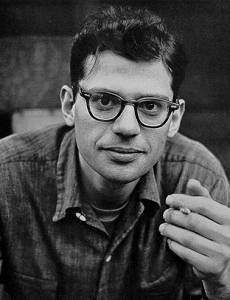
Allen Ginsberg, the visionary poet and founding father of the Beat generation inspired the American counterculture of the second half of the 20th century with groundbreaking poems such as “Howl” and “Kaddish.” Among the avant-garde he was considered a spiritual and sexually liberated ambassador for tolerance and enlightenment. With an energetic and loving personality, Ginsberg used poetry for both personal expression and in his fight for a more interesting and open society.
Allen Ginsberg was born in Newark, New Jersey on June 3, 1926. As a boy he was a close witness to his mother’s mental illness, as she lived both in and out of institutions. His father, Louis Ginsberg was a well-known traditional poet. After graduating from high school, Ginsberg attended Columbia University, where he planned to study law. There he became friends with Jack Kerouac and William Burroughs. Together the three would change the face of American writing forever.

With an interest in the street life of the city, Kerouac, Ginsberg and Burroughs found inspiration in jazz music and the culture that surrounded it. They encouraged a break from traditional values, supporting drug-use as a means of enlightenment. To many, their shabby dress and “hip” language seemed irresponsible, but in their actions could be found the seeds of a revolution that was meant to cast off the shackles of the calm and boring social life of the post-war era. While a nation tried desperately to keep from rocking the boat, Allen Ginsberg and the Beats saw the need for a more vibrant and daring society.
One of the primary first works of the Beats was Ginsberg’s long poem “Howl.” In an age plagued by intolerance, “Howl” (1956) was both a desperate plea for humanity and a song of liberation from that intolerant society. Ginsberg’s use of a gritty vernacular and an improvisational rhythmical style created a poetry which seemed haphazard and amateur to many of the traditional poets of the time. In “Howl” and his other poems, however, one could hear a true voice of the time, unencumbered by what the Beats saw as outdated forms and meaningless grammatical rules.
For its frank embrace of such taboo topics as homosexuality and drug use, “Howl” drew a great deal of criticism. Published by City Lights, the San Francisco based publisher of many of the Beats, the book was the subject of an obscenity trial. Eventually acquitted of the charges, City Lights came out with Ginsberg’s second book in 1961. “Kaddish, And Other Poems,” often considered Ginsberg’s greatest work, dealt again with a deep despair and addressed Ginsberg’s closeness with his mother while she was hospitalized and fighting insanity. The raw nature of the subject matter and Ginsberg’s desperate emotions found a perfect home in his poem “Kaddish.” Of “Kaddish,” Ginsberg wrote “I saw my self my own mother and my very nation trapped desolate…and receiving decades of life while chanting Kaddish the names of Death in many mind-worlds the self seeking key to life found at last our self.”
Throughout the 1960s, Ginsberg experimented with a number of different drugs, believing that under the influence he could create a new kind of poetry. Using LSD, peyote, marijuana and other drugs he attempted to expand his consciousness and wrote a number of books under the influence including the “Yage Letters” with William Burroughs. For much of the youth of the day, Ginsberg’s embrace of illegal drugs and unrestrained sexuality made him a central figure in the rebelling movements of the time. More than any other American poet of the 20th century, Ginsberg used his popularity for social change. Coining the phrase “flower power,” Ginsberg encouraged protesters of the 1960s to embrace a non-violent rebellion. By the 1970s, his fame had grown enormously, and though he cast aside drug use for an interest in Buddhism and yogic practices, he remained important to newly-formed youth movements.
By the 1980s, Ginsberg was the most famous living American poet. As a writer he continued to publish challenging and personal verse and as a celebrity he maintained an international presence as a spokesperson for peace and tolerance—working often as a teacher and lecturer . In the last decade of his life, Ginsberg wrote and performed at the prolific rate of his youth. He had sold millions of books and had often expanded into other genres. Among the collaborators of his final years were members of the bands Sonic Youth and U2. He died on April 5, 1997 at the age of seventy. At the time of his death, “Howl” had been reprinted more than fifty times, and the words of William Carlos Williams’ introduction still rang true—”This poet sees through and all around the horrors he partakes of in the very intimate details of his poem. He avoids nothing but experiences it to the hilt. He contains it. Claims it as his own—and, we believe, laughs at it and has the time and affrontery to love a fellow of his choice and record that love in a well-made poem.”


One Year Anniversary

One year ago today, I began writing this blog.  If you didn’t know, I have another blog, that is definitely NSFW.  I had started the other blog as a place to put all of the porn that had accumulated on my hard drive, and as I found that I enjoyed blogging, I started to do some (somewhat) intellectual posts about gay history.  Some people loved them, most who read that blog didn’t much care, they were only there for the pictures and other naughty stuff.  So I decided to start another blog, one dedicated to GLBT Studies: History, Art, Literature, Politics, and Culture, with a wide range of topics that interested me and hopefully you.  I started by transferring most of the old history and cultural posts from my other blog to this one, and then this one took on a life of its own.  I think that I have been somewhat successful in doing this.  I still get roughly a tenth of the readers on this blog than on my other blog, but even though some of you read both, mostly each blog is geared toward a different type of reader:  the smut set and the smart set.

So when my one year anniversary was pending, I asked my readers for suggestions for this post.  I got several awesome suggestions, some of which will be future posts.  The one that most agreed was the best was from Writer, who suggested that I do a post on important gay events that coincide with today.  So I did a little search and surprisingly found a number of things. First thing first, we will look at some important birthdates.  Not all of which are gay, but do have a gay theme to them.

George Washington Carver is believed to have been born on this day in 1864 (according to some sources; the year and date are often disputed).  Carver was known as a botanist at the Tuskegee Institute in Tuskegee Institute.  His most important contributions were in the field of sweet potatoes (at least 118 uses), peanuts (over 300 uses, one reputed to be peanut butter), and soybeans, and he was an early advocate of crop rotation in the South. Why is he on this list of GLBT important dates?  Carver never married, and there is little documented information about his private life. He is included in the encyclopedia glbtq: An Encyclopedia of Gay, Lesbian, Bisexual, Transgender, and Queer Culture and books such as Out in All Directions: The Almanac of Gay and Lesbian America. Carver never married or expressed interest in dating women. While he taught at Tuskegee, there were reportedly rumors about his sexuality. Late in his career, Carver established a life and research partnership with the scientist Austin W. Curtis, Jr. The two men kept details of their lives discreet.  Carver bequeathed to Curtis his royalties from an authorized 1943 biography by Rackham Holt. After Carver died in 1943, Curtis was fired from Tuskegee Institute. He left Alabama and resettled in Detroit. He manufactured and sold peanut-based personal care products

Next on the list of birthdays is Oscar Hammerstein II, who was born July 12, 1895.  Although he was married with children and there is no indication that he was gay, he is one of the greatest contributors to the classic American musicals of Rodger and Hammerstein.  Hammerstein contributed the lyrics to 850 songs, according to The Complete Lyrics of Oscar Hammerstein II, edited by Amy Asch. Some well-known songs are “Ol’ Man River” from Show Boat, “Indian Love Call” from Rose Marie, “People Will Say We’re in Love” and “Oklahoma” (which has been the official state song of Oklahoma since 1953) from Oklahoma!, “Some Enchanted Evening”, from South Pacific, “Getting to Know You” from The King and I, and the title song, “The Sound of Music” as well as “Climb Ev’ry Mountain” and “Edelweiss”, which was the last song he wrote before his death.  Yes, the love of musicals is a stereotype of gay men, but I do love musicals and couldn’t resist including him in this list.

The next GLBT oriented birthday is that of Cheyenne Jackson (born July 12, 1975), the  American television and Broadway actor and singer.  He is openly gay and an LGBT rights supporter, as well as an ambassador for amfAR (The Foundation for AIDS Research) and the national ambassador for The Hetrick-Martin Institute. Jackson’s partner, Monte Lapka, is a physicist; they have been together since 2000.

And just as an aside, Julius Caesar was born on this day in 100 BC.  Some contemporary historians and political enemies claimed that he was “every woman’s man, and every man’s woman.” Also, Richard Simmons, the fitness and weight loss guru was born on this day in 1942.  Need I say why he is included on this list.

Other events today in GLBT History…

1730: In Frisia, a part of the Netherlands, Caspar Abrahams Berse is arrested after being accused of sodomy. He begged the policeman who arrested him to kill him, saying that he would later be executed.

1940: A directive from the Reich Main Security Office mandates that any homosexual who had seduced more than one partner would be put into protective custody (a concentration camp). Evidence of a sexual act was often absent in meeting the criteria.

1950: Elsie de Wolfe, socialite and premier designer, dies at age 85. She liked to call herself the first interior decorator, and actress, and madly in love with her husband, but was none of them. The interior arts had been developed long before her, her “modeling” of outrageous clothes on Broadway hardly made her an actress, and she was in fact in love with socialite Elizabeth Marbury. Elsie’s husband didn’t mind though, as he was gay, too.

1972: Jim Foster of San Francisco and Madeline Davis of New York become the first openly gay delegates at the Democratic National Convention.

1986: The International Lesbian & Gay Association votes almost unanimously not to revoke the membership of the South African Gay Association after testimony from a representative who stated that the organization is opposed to apartheid.

1998: The New York Times reports on the murder of Ali Forney, a 22-year-old homeless, black, gay transvestite who supported himself by occasionally working as a prostitute. He was the third transvestite prostitute to be murdered in New York City in 14 months.

1998: Poland’s gay pride demonstration is cancelled because city authorities refused to issue the necessary permits.

1999: Miller Brewing Company cancels a beer ad featuring shirtless male models on San Francisco based gay cable show QTV’s “Xposure” program.

2002: A Canadian court for the first time rules in favor of recognizing same-sex marriages when the Ontario Superior Court rules that prohibiting gay couples from marrying is unconstitutional. The court gives the province of Ontario two years to extend marriage rights to same-sex couples, but two weeks later the federal government steps in to appeal the ruling.

Today in LGBT History–July 12 – National Grassroots Equality | Examiner.com http://www.examiner.com/grassroots-equality-in-national/today-lgbt-history-july-12#ixzz1Rnylm9me


You Will Be Missed…

Justin at A Gay College Guy in Virginia has decided to stop blogging.  He will greatly be missed.  I have been reading his blog almost since the beginning, and have enjoyed every post.  Justin created a blog that every personal blog should strive for:  his blog was funny, a great read, sometimes it could pull at your heartstrings, but never failed to inspire.  I was not out during college, but he was and I was able, in a way, to live vicariously through him.  He is part of the reason I started blogging.

I doubt my blog will ever be as personable as his was.  First of all, not much exciting happens in my life.  The lives of most teachers and academics are not terribly exciting.  Since Justin started blogging, there have been many who have tried to emulate him, but his style was one of a kind.  I would not have wanted it any other way.

Justin will be missed not only by me, but by many others who read his blog.  As I am sure many of you will, I wish him the best of luck in his future.  Justin is a special guy, and I am sure he will go far and continue to inspire others for many years to come.

Justin said on his last post that he will leave his blog up for another week or so and then he plans on deleting it.  If you have never read Justin’s blog, I suggest you check it out while you can.


Expostulation and Reply

Expostulation and Reply
WHY, William, on that old grey stone,
Thus for the length of half a day,
Why, William, sit you thus alone,
And dream your time away?

"Where are your books?--that light bequeathed
To Beings else forlorn and blind!
Up! up! and drink the spirit breathed
From dead men to their kind.

"You look round on your Mother Earth,
As if she for no purpose bore you;
As if you were her first-born birth,
And none had lived before you!"

One morning thus, by Esthwaite lake,
When life was sweet, I knew not why,
To me my good friend Matthew spake,
And thus I made reply:

"The eye--it cannot choose but see;
We cannot bid the ear be still;
Our bodies feel, where'er they be,
Against or with our will.

"Nor less I deem that there are Powers
Which of themselves our minds impress;
That we can feed this mind of ours
In a wise passiveness.

"Think you, 'mid all this mighty sum
Of things for ever speaking,
That nothing of itself will come,
But we must still be seeking?

"--Then ask not wherefore, here, alone,
Conversing as I may,
I sit upon this old grey stone,
And dream my time away.
William Wordsworth (1798)

Jeff Wilfahrt always reads a poem by William Wordsworth when he visits his son’s grave.

On January 27, 2011, America lost it’s first known gay soldier since the repeal of DADT.  Cpl. Andrew Wilfahrt, a gay Minnesota man who went back in the closet to join the military, died while on patrol in Afghanistan when an IED exploded during an attack on his unit. He was 31. And his mother loved him very, very much.

Believed to be the first gay Minnesota soldier to die in the Iraq and Afghanistan wars, Wilfahrt (pronounced WIHL’-furt), who enlisted in the Army in January 2009 and was deployed to Afghanistan that July, “was a gentle soul,” says his mother Lori. “He was very kind and compassionate. He was interested in a lot of things, but more at a level of detail than what I think most people pursue something. He was fascinated with numbers, and patterns with numbers and palindromes. He would often spot a series of numbers and say, ‘Well, if you add up your birthday and your birthday it equals this.’ Or, ‘All of our birthday dates combined equals our home address.’ Just odd things like that.”
He joined the military, Lori says, because he “tried to grow up. He really turned out to be an interesting, wonderful young man. But I think he still sought something else. He was looking for a purpose, a life of meaning.”
As for his sexuality, being gay and joining the military concerned Lori “a lot. I think it concerned him as well. He spent a lot of time thinking about it and he came to terms with it. He knew he would have to go back in the closet, that he would have to keep that to himself. And he did, for at least part of his stay in the Army. But when I talked to him (or when he wrote maybe) when he was in Afghanistan, he said nobody cares. He said, ‘Everybody knows, nobody cares.’ He said, ‘Even the really conservative, religious types, they didn’t care either.’ He said it’s about something else.”
I used the poem above because his father, who along with Wilfahrt mother are fighting for gay marriage in Minnesota, reads a Wordsworth poem each time he visits his son’s grave.  A lover of literature, Jeff, Andrew’s father, always brings a collection of William Wordsworth.  As he sits on the marble stone commemorating his son, he reads aloud from a collection of Wordsworth. His wife Lori sits on the ground nearby.
Lori and Jeff Wilfahrt, parents of Andrew Wilfahrt, a gay Army Corporal killed in Afghanistan earlier this year, continue honoring their son’s memory in the best way possible: fighting for LGBT equality, especially in Minnesota, a state that may vote to ban gay marriage in 2012.


“I hope my son didn’t die for human beings, for Americans, for Minnesotans who would deny him civil rights,” Mr. Wilfahrt recently said in a speech about Andrew.

Watch as the Wilfahrts discuss their son’s life, including being accepted as openly gay in the army, and explain why they’re playing the “trump card” to get straight people on board with pro-gay policies.


Read more:


Dorothy Parker

Most people don’t identify Dorothy Parker as a gay icon, but I think she should be.  Dorothy Parker (August 22, 1893 – June 7, 1967) was an American writer and poet, best known for her caustic wit, wisecracks, and sharp eye for 20th century urban foibles. From a conflicted and unhappy childhood, Parker rose to acclaim, both for her literary output in such venues as The New Yorker and as a founding member of the Algonquin Round Table. Her letters, short stories, and articles are all brilliantly witty and I strongly recommend her work!  She is probably best known for her witty remarks, which are some of my favorites.  She was the ultimate smartass, with a quick wit, and I only wish I was as great a wordsmith as she was.  Here are her top twenty quotes from Listverse, though I have revised it by substituting a few with my favorites that they did not mention (including the first):

  1. Heterosexuality is not normal, it’s just common.
  2. Wit has truth in it; wisecracking is simply calisthenics with words.
  3. You can’t teach an old dogma new tricks.
  4. I’m never going to accomplish anything; that’s perfectly clear to me. I’m never going to be famous. My name will never be writ large on the roster of Those Who Do Things. I don’t do anything. Not one single thing. I used to bite my nails, but I don’t even do that any more.
  5. I might repeat to myself slowly and soothingly, a list of quotations beautiful from minds profound — if I can remember any of the damn things.
  6. That would be a good thing for them to cut on my tombstone: Wherever she went, including here, it was against her better judgment.
  7. I require only three things of a man. He must be handsome, ruthless and stupid.
  8. Take care of luxuries and the necessities will take care of themselves.
  9. Money cannot buy health, but I’d settle for a diamond-studded wheelchair.
  10. The two most beautiful words in the English language are ‘cheque enclosed.’
  11. The cure for boredom is curiosity. There is no cure for curiosity.
  12. I don’t care what is written about me so long as it isn’t true.
  13. All I need is room enough to lay a hat and a few friends.
  14. I like to have a martini, Two at the very most. After three I’m under the table, after four I’m under my host.
  15. Ducking for apples — change one letter and it’s the story of my life.
  16. I’ve never been a millionaire but I just know I’d be darling at it.
  17. If you want to know what God thinks of money, just look at the people he gave it to.
  18. When asked to use the word horticulture during a game of Can-You-Give-Me-A-Sentence, Parker replied: You can lead a horticulture, but you can’t make her think.
  19. Of Ayn Rand’s Atlas Shrugged, Parker said: “This is not a novel to be tossed aside lightly. It should be thrown with great force.”
  20. I’ve been too fucking busy – or vice versa. (in response to a letter from her editor asking for more stories during her honeymoon)

Storm Heaven and Protest

About six weeks ago, a new reader of this blog wrote to me and asked if I had ever written a post about John Rechy. I replied that I had not, mainly because I had never read any of this work.  If I am going to write about an author, I want to be familiar with his work. So I looked up some of Rechy’s essays, found them interesting and then ordered his most acclaimed book, City of Night.  The book came, but I was in the midst of wrapping the year up at the high school where I teach and with final projects and finals with my college class that I teach at night.  To say that I was busy would have been an understatement.  I had spent the five months since Christmas reading Steve Berry’s The Emperor’s Tomb. I’m a slow reader, but generally not that slow.  I enjoyed the book, but I would get home from work, finish some of the work I had at home to do: cook, clean, grade papers, watch a little TV, etc.  By the time I lay down to go to sleep, when I generally do some reading before bed, I was too damn tired to pick up a book, so The Emperor’s Tomb largely sat unread until school was over, then it didn’t take much to finish it.

Finally, I could delve into John Rechy’s City of Night.  I sat down with it and began to read, but at first I found it terribly difficult.  Maybe it’s the way he writes “didnt” for “didn’t,” “hes” for “he’s,””youll” for “you’ll.” Things like that drive me crazy as a teacher. At first I thought it was a typographical error, but then I realized that many errors wasn’t possible for a publisher, especially with words capitalized here and there seemingly without rhyme or reason.  Then I realized that this was Rechy’s style.  He used this type of grammar to emphasize various points and follow the cadence of the speaker.  I thought it would drive me crazy, and I almost put the book down to read later (which would probably mean never).  Luckily, I continued to read. 

“The City is of Night: perchance of Death, But certainly of Night…”

cityofnight_240City of Night is a novel about loneliness, about love and the ceaseless, furtive search for love. Set in the seamy, neon-lighted world of honky-tonk USA—Times Square in New York, Pershing Square in Los Angeles, Hollywood Boulevard, Chicago, and the French Quarter of New Orleans–and dealing with a little-known world of hidden sex and the hustlers, drag queens, and butch homosexuals who inhabited these worlds.  One of the main reasons I originally continued reading the book was to get to the section about New Orleans, a city which I love dearly.  I couldn’t bring myself to just skip to that part of the book, so I ventured on.

This book is a journey by a nameless narrator, through this clandestine world of furtive love. roberts3His journey takes him through the major cities of the United States, and through the lives of an extraordinary collection of characters who dwell either in this world or on its fringes: Pete, the “youngman”—or male hustler–at 42nd Street, who like the other youngmen goes with men for money but with women to prove his masculinity intact; the bedridden Professor, author of many books, for whom the only book that matters is the scrapbook of the Angels he has collected through the years in many countries; Miss Destiny, the queen of them all, with his-her endless succession of faithless husbands; Sergeant Morgan, the terror of Pershing Square, the cop who cracks down hard on the gay scene but has tried more than once to make it with those he arrests; “Mom” the New Yorker whose fetish is cooking for the male hustlers he takes home and undresses; Skipper, A Very Beautiful Boy, once beloved of one of Hollywood’s top directors, who now carries his yellowed pictures and clippings in an often-renewed envelope; Lance O’Hara, not long ago the most sought-after star in the Hollywood heaven, now openly pursuing a youngman a decade or two his junior, and groveling to get him; Neil and his world of masquerade.

The most fascinating and interesting characters throughout the book were not the ones mentioned above but the characters of Chuck the Cowboy and Jeremy, though Sylvia is also a beautiful and tragic character worthy of a note.  To be honest, I found most of the other character to be sad and/or creepy—for lack of a better word.  tumblr_llec7cLA1M1qh7mnvo1_1280Chuck’s lackadaisical attitude about life was just so carefree, listless, lacking enthusiasm and determination and carelessly lazy.  He is described as:

…sitting there complacently in the lazy afternoons, in the same spot, shoulders hunched, hands holding on the railing, balancing himself—long, lanky legs locked loosely under the bar by booted toes as if on a fence, on a ranch, sandy hair jutting out from a widehat over long sideburns—as he looks at the passing scene of Pershing Square with what I would usually think was amusement—but wonder, occasionally, Is it more like bewilderment?…

Chuck is one of those characters that is also lonely, like all of the characters in the book, but he has perfected the none caring attitude of the hustler and his masculine veneer.  The story he tells of when he left home and the night out with his mother is one of the most enjoyable sections of the book.  Probably, because I have known women like his mother.  The mother who took on the role of mother and father in the family.

The New Orleans depicted in the last chapter of City of Night is not the Tennessee Williams version of New Orleans.  In some ways it does have the seediness of A Streetcar Named Desire, but none of the false gentility of Blanche.  It is purely a “city of the night” taking place in a Mardi Gras celebration of the past. Sylvia is one of the earliest New Orleans characters that we meet in this section of the book, and though she is a favorite character of mine, I will not say much about her.  Her story needs to be read in its entirety, not summarized by me, and I hope that after reading this post, you will go out and read City of Night.  The other New Orleans character is Jeremy, who appears at the end of the book and in a way opens up the book for better understanding.  Once you have read the section on Jeremy, the book is a much more worthwhile read, but it still leaves you with a certain sadness.

Into the Night with John Rechy
John Rechy stated that “City of Night began as a letter to a friend of mine after I had been to New Orleans. city-of-night-rechy-johnI wrote City of Night because they were my experiences hustling, and it began as a letter. I didn’t think of it as a book.”  I did not read the introduction before reading the book, which is not normal for me. I usually delve into the introduction first, but in this case, and for what ever reason, I did not read the introduction first.  I read the introduction after completing the book, and it made all the difference.  I would suggest that for anyone.  Read the book, then read the introduction.  It made for a much more fascinating read this way.  In his novels about hustling, preeminently City of Night and Numbers, John Rechy moves from the world of homosexual behavior into the world of gay identity. Rechy was born in El Paso, Texas, in 1934. His parents, Mexican aristocrats, fled to avoid persecution during the purges of Pancho Villa. Rechy studied journalism at Texas Western College and the New School for Social Research in New York before serving in Germany in the U.S. Army.

Afterward, Rechy relocated to New York and began a period of hustling and drifting that inspired much of his early writing. Rechy’s first novel, City of Night (1963), began as a letter to a friend about his experiences at Mardi Gras and was then reworked into a short story for Evergreen Review.
obscene_03Rechy’s reputation as a gay writer rests primarily on City of Night, which documents the wanderings of a nameless male hustler from El Paso, to New York, Los Angeles, and New Orleans. This narrative is punctuated by recollections of the narrator’s childhood in El Paso.  Originally, Rechy had chosen the title “Storm Heaven and Protest” (hence the title of this post) for his first novel, but his editor wisely suggested that the book take its name from the title of the intermittent chapters throughout the book that links the various characters together.

When John Rechy published his first novel, City of Night, he was still earning his living as a prostitute on the streets of Los Angeles. It made sense: he didn’t expect a book that dealt with underground gay life in America to make him much money, and it’s a foolish writer who gives up the day job (or in Rechy’s case, the night job) with the first flush of publication.

To Rechy’s astonishment, and despite the best efforts of homophobic critics, the book was a smash and money started rolling in. But Rechy still couldn’t leave the streets. “It caught me out completely,” says Rechy, now 77, and still living in Los Angeles. “I was bewildered. I did nothing at all to promote the book, even to the extent of denying that I wrote it. I felt that if I left the streets as soon as I had some success, I’d be betraying the world that I wrote about. And the truth is that I couldn’t give it up. I’d been hustling for so long that it was a habit.”

“It got ridiculous,” says Rechy. “People hit on me all the time, far more than I say in the book. Looking back, I can see it was my own fault – I projected a very sexual image, Numbers Rechyand I shouldn’t have been surprised when people responded.” Ridiculous it may have been, but the masquerade continued well into Rechy’s thirties. “In the 1970s, when I was teaching at UCLA, I’d finish my evening classes, then change my clothes somewhat and go down to hustle on Santa Monica Boulevard. One night, a student saw me down there and said ‘Good evening, Professor Rechy. Are you out for an evening stroll?’.” I’m sure he was thinking what I think some of the time: “I can’t do anything or go anywhere without running into my students.” Only in the 1970s could a man be both a hustler and a professor. Really, can you imagine if a professor was a hustler in this age of internet technology?  I can just imagine what his ratings on RateMyProfessor.com would be like: “Professor Rechy is a great professor, very interesting.  And if you want to see him out of the classroom, just go to Pershing Square or Santa Monica Boulevard where for $20 you can having him for an evening.” Of course, he would also have plenty of chili peppers, and I am sure that the ratings would be high.  I’ve gotten a little off subject.

Rechy kept writing throughout the 1970s and 1980s, detailing the ups and (mostly) downs of his compulsive sex life in Numbers, Rushes and the non-fiction polemic The Sexual Outlaw. But it was City of Night that made his name, and on which his reputation rests. It’s an American classic, with its loner hero, its juke joints and neon signs, its restless shifting from city to city, bed to bed; a hybrid of On the Road and Catcher in the Rye.

RechyGala(2)10.03He has lectured at Harvard, Yale, Duke, UCLA, USC, Occidental College, University of Northern Illinois, among other academic institutions. He was the keynote speaker at the 1999 Writers’ Conference at UCLA and at the 1990 Out/Write National Writers Conference at San Francisco. He has been a key participant at numerous other literary conferences, including the 1999 Los Angeles Times Book Festival, the Guadalajara International Book Fair, Miami Book Fair, and New Orleans Literary Festival.

He has written essays for The Nation, Los Angeles Times Books, Washington Post Book World, The Saturday Review, New York Times Book Review, San Francisco Chronicle, The Philadelphia Inquirer, Dallas Morning News, London Magazine, Evergreen Review, New York Magazine, The Advocate, Mother Jones, Premiere, and many other national publications.

Of Mexican-Scottish descent, he makes his home in Los Angeles, California, where he teaches literature and film courses, for writers, in the graduate division of the University of Southern California.

Important? Inspirational? YES! NO! MAYBE!…

City of Night is the first book of its kind.  The homosexual subculture of the late 1950s and early 1960s was a dangerous time.  415290930_e28e194424Homosexuality and homosexual sex were illegal in the United States and the life of a hustler was certainly not picnic in the park.  While doing some research on John Rechy and City of Night, I came across a review written by Antonio W. Wilson of the book of Outlaw: The Lives And Careers Of John Rechy by Charles Casillo form the literary journal RALPH.  Wilson was not a big fan of John Rechy and had never been able to get through City of Night for much the same reason as I almost put the book down myself, but as he states at the end of the review: “But there is another side to the John Rechy story. I showed this review to a friend of mine who had read him many years ago. This is what he had to say about that time of his life”:

John Rechy was very important to me back when I was coming out, at age 40. He opened up a world of possibilities — anonymous sex, T-rooms, hustlers, dirty book-store sex, cruising, rough trade and other goodies. I am proud to say that I went out and lived for a while on Rechy’s wild side.

    Night people are different from day ones. They break all the rules. They do endless self destructive things. To the world we were brought up in they are scum, losers, dangerous. They make up a kind of fraternity of night men like themselves — druggies, drug dealers, hustlers, bartenders, cops and robbers. Sexy boys from West Virginia who will soon be dead (and this was before AIDS) dead of something — OD, knife fight, car crash. Once you are accepted in the fraternity it is a very, very seductive life. Harsh; no social pretense.

Bibliography:

  1. “A Substantial Artist” and “City of Night” from JohnRechy.com.
  2. Bredbeck, Gregory W. “Rechy, John” Ed. Claude J. Summers. glbtq: An Encyclopedia of Gay, Lesbian, Bisexual, Transgender, and Queer Culture. 2002 www.glbtq.com/literature/rechy_j.html.
  3. “John Rechy” Wikipedia.
  4. Savage, Jon. “John Rechy’s City Of Night and Stonewall @ 40”
  5. Smith, Rupert.  “Midnight cowboy: John Rechy recalls 40 yeas of hustle” Independent.co.uk. 27 April 2008.
  6. Wilson, Antonio W. Review of Outlaw: The Lives And Careers Of John Rechy by Charles Casillo. R A L P H: The Review of Arts, Literature, Philosophy and the Humanities, Volume XXXIV, Number 4: Mid-Spring 2003. (http://www.ralphmag.org/BY/john-rechy.html).

Thanks Andrew, for suggesting this book to me.

Federico García Lorca

ecc136e4c1c9b6e1_LittleAshes750I recently watched the movie Little Ashes, a 2009 Spanish-British drama film, set against the backdrop of Spain during the 20s and 30s, as three of the era’s most creative young talents meet at university and set off on a course to change their world. Luis Buñuel watches helplessly as the friendship between Salvador Dalí and the poet Federico García Lorca develops into a love affair.  Years ago, I had read a book about García Lorca and had found him to be fascinating, so I wanted to see this movie.  (I’ve always found Dalí to be a little strange, I had to watch the film Buñuel co-wrote and directed with Dalí, Un chien andalou (1929), or An Andalusian Dog.  No matter how much I try I cannot forget the scene in which Simone Mareuil’s eye is seemingly split open with a razor blade. It still freaks me out to think of it.)
García Lorca’s death had been mentioned and discussed in the novel Wild Man by Patricia Nell Warren.  It always saddened me that this genius had been murdered by Franco’s death squad because of his political views and possible homosexuality.  Therefore, after seeing the movie Little Ashes, I wanted to do a post about his poetry.  Whether his poetry is about repressed homosexuality or not, is really not for me to say.  I am not an expert on his poetry.  I merely find it beautiful and wanted to present it with my interpretation.
Salvador-Dali-Federico-Garcia-Lorca-salvador-dali-from-little-ashes-6459167-800-600As for García Lorca’s homosexuality or bisexuality, I don’t think there is much of a historical debate about it.  While it is widely acknowledged that Lorca was infatuated with Dalí, for years the artist denied entering into a relationship with Lorca.  Dalí stated:

He was homosexual, as everyone knows, and madly in love with me. He tried to screw me twice …. I was extremely annoyed, because I wasn’t homosexual, and I wasn’t interested in giving in. Besides, it hurts. So nothing came of it. But I felt awfully flattered vis-à-vis the prestige. Deep down I felt that he was a great poet and that I owe him a tiny bit of the Divine Dalí’s asshole. He eventually bagged a young girl, and she replaced me in the sacrifice. Failing to get me to put my ass at his disposal, he swore that the girl’s sacrifice was matched by his own: it was the first time he had ever slept with a woman.

Writer Philippa Goslett supposes:

It’s clear something happened, no question… When you look at the letters it’s clear something more was going on there… It began as a friendship, became more intimate and moved to a physical level but Dalí found it difficult and couldn’t carry on. He said they tried to have sex but it hurt, so they couldn’t consummate the relationship.

Federico García Lorca Biography from Poets.org

3894e1b1-2a2c-472a-994b-9dfe63a86ca9Federico García Lorca is possibly the most important Spanish poet and dramatist of the twentieth century. García Lorca was born June 5, 1898, in Fuente Vaqueros, a small town a few miles from Granada. His father owned a farm in the fertile vega surrounding Granada and a comfortable mansion in the heart of the city. His mother, whom Lorca idolized, was a gifted pianist. After graduating from secondary school García Lorca attended Sacred Heart University where he took up law along with regular coursework. His first book, Impresiones y Viajes (1919) was inspired by a trip to Castile with his art class in 1917.
In 1919, García Lorca traveled to Madrid, where he remained for the next fifteen years. Giving up university, he devoted himself entirely to his art. He organized theatrical performances, read his poems in public, and collected old folksongs. During this period García Lorca wrote El Maleficio de la mariposa (1920), a play which caused a great scandal when it was produced. He also wrote Libro de poemas (1921), a compilation of poems based on Spanish folklore. Much of García Lorca’s work was infused with popular themes such as Flamenco and Gypsy culture. In 1922, García Lorca organized the first “Cante Jondo” festival in which Spain’s most famous “deep song” singers and guitarists participated. The deep song form permeated his poems of the early 1920s. During this period, García Lorca became part of a group of artists known as Generación del 27, which included Salvador Dalí and Luis Buñuel, who exposed the young poet to surrealism. In 1928, his book of verse, Romancero Gitano (“The Gypsy Ballads”), brought García Lorca far-reaching fame; it was reprinted seven times during his lifetime.
1928In 1929, García Lorca came to New York. The poet’s favorite neighborhood was Harlem; he loved African-American spirituals, which reminded him of Spain’s “deep songs.” In 1930, García Lorca returned to Spain after the proclamation of the Spanish republic and participated in the Second Ordinary Congress of the Federal Union of Hispanic Students in November of 1931. The congress decided to build a “Barraca” in central Madrid in which to produce important plays for the public. “La Barraca,” the traveling theater company that resulted, toured many Spanish towns, villages, and cities performing Spanish classics on public squares. Some of García Lorca’s own plays, including his three great tragedies Bodas de sangre (1933), Yerma (1934), and La Casa de Bernarda Alba (1936), were also produced by the company.
In 1936, García Lorca was staying at Callejones de García, his country home, at the outbreak of the Civil War. He was arrested by Franquist soldiers, and on the 17th or 18th of August, after a few days in jail, soldiers took García Lorca to “visit” his brother-in-law, Manuel Fernandez Montesinos, the Socialist ex-mayor of Granada whom the soldiers had murdered and dragged through the streets. When they arrived at the cemetery, the soldiers forced García Lorca from the car. They struck him with the butts of their rifles and riddled his body with bullets. His books were burned in Granada’s Plaza del Carmen and were soon banned from Franco’s Spain. To this day, no one knows where the body of Federico García Lorca rests.

Selected Sources:

  1. Smith, David (October 28, 2007). “Were Spain’s two artistic legends secret gay lovers?”. The Guardian (London). Retrieved May 11, 2010.
  2. Bosquet, Alain, Conversations with Dalí, 1969. p. 19–20. (PDF format)
  3. Federico García Lorca.” Poets.org – Poetry, Poems, Bios & More. Web. 22 Apr. 2011.