Category Archives: History

Merry Christmas!

And it came to pass in those days, that there went out a decree from Caesar Augustus that all the world should be taxed. (And this taxing was first made when Cyrenius was governor of Syria.) And all went to be taxed, every one into his own city. And Joseph also went up from Galilee, out of the city of Nazareth, into Judaea, unto the city of David, which is called Bethlehem; (because he was of the house and lineage of David:) To be taxed with Mary his espoused wife, being great with child. And so it was, that, while they were there, the days were accomplished that she should be delivered. And she brought forth her firstborn son, and wrapped him in swaddling clothes, and laid him in a manger; because there was no room for them in the inn.

And there were in the same country shepherds abiding in the field, keeping watch over their flock by night. And, lo, the angel of the Lord came upon them, and the glory of the Lord shone round about them: and they were sore afraid. And the angel said unto them, Fear not: for, behold, I bring you good tidings of great joy, which shall be to all people. For unto you is born this day in the city of David a Saviour, which is Christ the Lord. And this shall be a sign unto you; Ye shall find the babe wrapped in swaddling clothes, lying in a manger. And suddenly there was with the angel a multitude of the heavenly host praising God, and saying,

     Glory to God in the highest, and on earth peace, good will toward men.

And it came to pass, as the angels were gone away from them into heaven, the shepherds said one to another, Let us now go even unto Bethlehem, and see this thing which is come to pass, which the Lord hath made known unto us. And they came with haste, and found Mary, and Joseph, and the babe lying in a manger. And when they had seen it, they made known abroad the saying which was told them concerning this child. And all they that heard it wondered at those things which were told them by the shepherds. But Mary kept all these things, and pondered them in her heart. And the shepherds returned, glorifying and praising God for all the things that they had heard and seen, as it was told unto them.

—Luke 2:1-20

For most of American history, Christmas was not a celebrated holiday, especially here in New England. In the early 17th century, a wave of religious reform changed the way Europeans celebrated Christmas. When Oliver Cromwell and his Puritan forces took over England in 1645, they vowed to rid England of decadence and canceled Christmas as part of their effort. By popular demand, Charles II was restored to the throne and, with him came the return of the popular holiday. The pilgrims were English separatists that came to America in 1620 and even more orthodox in their Puritan beliefs than Cromwell. As a result, Christmas was not a holiday in early America. From 1659 to 1681, Boston outlawed the celebration of Christmas. Anyone exhibiting the Christmas spirit was fined five shillings. By contrast, in the Jamestown settlement, Captain John Smith reported that Christmas was enjoyed by all and passed without incident. After the American Revolution, English customs fell out of favor, including Christmas. In fact, Christmas wasn’t declared a federal holiday until June 26, 1870.

It wasn’t until the 19th century that Americans began to embrace Christmas. Americans re-invented Christmas and changed it from a raucous carnival holiday of the Middle Ages into a family-centered day of peace and nostalgia. The early 19th century was a period of class conflict and turmoil. During this time, unemployment was high, and gang rioting by the disenchanted classes often occurred during the Christmas season. In 1828, the New York city council instituted the city’s first police force in response to a Christmas riot, which inspired certain members of the upper classes to begin to change the way Americans celebrated Christmas.

In 1819, best-selling author Washington Irving wrote The Sketch Book of Geoffrey Crayon, Gent., commonly referred to as The Sketch Book, is a collection of 34 essays and short stories. It was published serially throughout 1819 and 1820. The collection includes two of Irving’s best-known stories, attributed to the fictional Dutch historian Diedrich Knickerbocker: “The Legend of Sleepy Hollow” and “Rip Van Winkle.” It also marks Irving’s first use of the pseudonym Geoffrey Crayon, which he would continue to employ throughout his literary career. In the fifth installment of The Sketchbooks, Irving features Squire Bracebridge, who invited peasants into his home for the holiday. In the first story, simply titled “Christmas,” Crayon reflecting on the meaning of Christmas and its celebration. The second story in the collection, “The Stage-Coach,” tells of Crayon’s ride with the Bracebridge children to their country manor, Bracebridge Hall, where he is invited to stay for Christmas. In the next story, “Christmas Eve,” Crayon celebrates the holiday at Squire Bracebridge’s home. It is followed by “Christmas Day,” which details Christmas festivities—allegedly in the old tradition—continue at Bracebridge Hall. The third story about the Bracebridge Christmas is “Christmas Dinner,” in which Crayon enjoys old English hospitality at the Bracebridge Christmas dinner table. 

These stories portrayed an idealized and old-fashioned Yule celebration at an English country manor. Irving’s stories depicted harmonious warm-hearted English Christmas customs he observed while staying in Aston Hall, Birmingham, England. In contrast to the problems faced in American society, the upper class and peasants mingled effortlessly. In Irving’s mind, Christmas should be a peaceful, warm-hearted holiday bringing groups together across lines of wealth or social status. Irving’s fictitious celebrants enjoyed “ancient customs,” including the crowning of a Lord of Misrule. Irving’s book, however, was not based on any holiday celebration he had attended. Many historians say that Irving’s account actually “invented” tradition by implying that it described the season’s authentic customs. Except for Pennsylvania German Settlers, who were enthusiastic celebrators of Christmas, Irving contributed to a revival of traditions in the United States. Charles Dickens later credited Irving as an influence on his own Christmas writings, including the classic A Christmas Carol.

Popular American customs include exchanging gifts, decorating Christmas trees, sending holiday cards, attending church, sharing meals with family and friends, and, of course, waiting for Santa Claus to arrive. None of these traditions are uniquely American but are actually the adoption of traditions from the variety of cultures that make up the melting pot that is the United States. As Americans began to embrace Christmas as a perfect family holiday, old customs were unearthed. People looked toward recent immigrants and Catholic and Episcopalian churches to see how the day should be celebrated. In the next 100 years after The Sketchbooks were published, Americans built a Christmas tradition all their own that included pieces of many other customs. Although most families quickly bought into the idea that they were celebrating Christmas how it had been done for centuries, Americans had re-invented a holiday to fill the cultural needs of a growing nation. 

As Americans continue to embrace their cultural heritage, new traditions are continually being added. Christmas is a celebration of the Nativity—the birth of Jesus—but it is also a celebration of what makes America great: its vast diversity and amalgamation of cultures. This Christmas, let us not think of our differences but what we have in common. We have suffered a great deal this year, but there is light at the end of the tunnel. 

As Americans continue to embrace their cultural heritage, new traditions are continually being added. Christmas is a celebration of the Nativity—the birth of Jesus—but it is also a celebration of what makes America great: its vast diversity and amalgamation of cultures. This Christmas, let us not think of our differences but what we have in common. We have suffered a great deal this year, but there is light at the end of the tunnel. 

Merry Christmas To All

&

To All A Happy New Year!


Pic of the Day

The legend of Santa Claus can be traced back to a monk named St. Nicholas, who was born in Turkey around 280 A.D. St. Nicholas gave away all of his inherited wealth and traveled the countryside helping the poor and sick, becoming known as the protector of children and sailors.

St. Nicholas first entered American popular culture in the late 18th century in New York, when Dutch families gathered to honor the anniversary of the death of “Sint Nikolaas” (Dutch for Saint Nicholas), or “Sinter Klaas” for short. “Santa Claus” draws his name from this abbreviation.

In 1822, Episcopal minister Clement Clarke Moore wrote a Christmas poem called “An Account of a Visit from St. Nicholas,” more popularly known today by its first line: “‘Twas The Night Before Christmas.” The poem depicted Santa Claus as a jolly man who flies from home to home on a sled driven by reindeer to deliver toys.

The iconic version of Santa Claus as a jolly man in red with a white beard and a sack of toys was immortalized in 1881 when political cartoonist Thomas Nast drew on Moore’s poem to create the image of Old Saint Nick we know today.

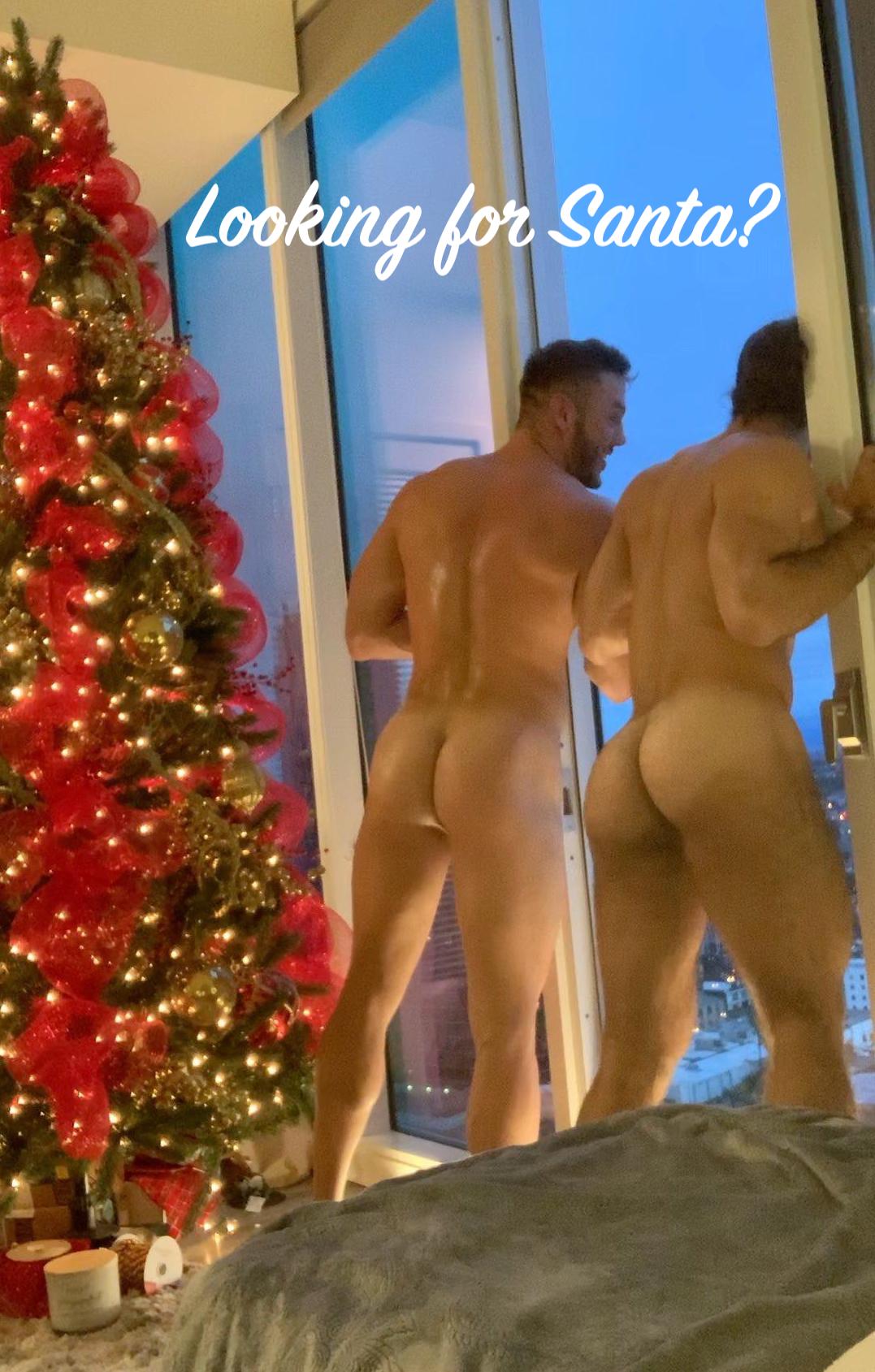
I like the version above a little better. I’d love a visit from this sexy Santa Claus tonight. His elves are welcomed too.


Looking for Santa

On November 30, 1955 (exactly 22 years before I was born), U.S. Air Force Colonel Harry Shoup was monitoring the skies above Alaska for Soviet fighter jets and intercontinental ballistic missiles (ICBM) that could deliver a nuclear weapon to the United States. He was stationed at Continental Air Defense Command (CONAD), and suddenly the dreaded red phone rang in his office rang. The red telephone was the hotline that directly connected his command post in Colorado Springs, Colorado, to the Pentagon. Shoup knew that a call over the top-secret hotline wouldn’t be good news and thought America’s worst Cold War fears were about to be realized. Shoup feared the caller might be the president or a four-star general warning of an atomic attack on the United States.

He answered in his finest military cadence, “Yes, sir, this is Colonel Shoup.” Only silence greeted the colonel. So, he repeated, “Sir, this is Colonel Shoup.” Still nothing. “Sir, can you read me, alright?” Shoup asked before he received a most unexpected reply from the soft voice of a child.

“Are you really Santa Claus?”

Shoup’s eyes immediately scanned the operations center. Who could this prankster be? CONAD was the deadly serious heart of America’s defense against aerial assault and was hardly the venue for a practical joke. The colonel was not amused. “Would you repeat that, please?” Shoup barked. On the other end of the line, he heard the frightened youngster sobbing and realized this was no joke. Some mix-up had compromised the top-secret hotline. Rather than admitting he was not Santa Claus, the 38-year-old father of four quickly assumed the part of jolly old St. Nick and listened to a Christmas wish list before asking to speak to the caller’s mother.

The mother informed the colonel that her child had dialed the phone number listed in a Sears Roebuck advertisement in the local Colorado Springs newspaper. The advertisement featured an illustration of Santa Claus and an invitation to call him on his private phone any time, day or night. There was a problem with that printed phone number, however. It had one digit wrong, causing it to be Shoup’s top-secret phone number. The phone is ringing off the hook. Instead of reaching the Santa standing by at the Sears Toyland, the children of Colorado Springs had instead connected with one of America’s most sensitive military installations. Shoup called AT&T and said to give Sears that phone number and get him a new one, but in the meantime, he had to have servicemen answer the calls.

When President Dwight D. Eisenhower formed CONAD in 1954 to provide early warning of an aerial attack from enemies such as the Soviet Union, he tasked the joint military command with scanning the skies for “reds” flying bomber planes, not a man in a red suit. “There may be a guy called Santa Claus at the North Pole, but he’s not the one I worry about coming from that direction,” Shoup later told the International News Service. Still, the wrong number put the Colorado command post in a holiday mood and sparked a festive idea to soften its hard-edged public image. 

Intending to make its mission a little less scary to the American public, CONAD issued a press release that appeared in newspapers around the country on Christmas Eve, letting “good little boys and girls” know that it was tracking a big red sleigh approaching from the North Pole. The command said that first reports from its radar and ground observation outposts indicated that Santa Claus was traveling at 45 knots per hour at an altitude of 35,000 feet. The release also contained a bit of propaganda that reassured children that American forces would “guard Santa and his sleigh on his trip to and from the U.S. against possible attack from those who do not believe in Christmas.” That was a clear allusion to the atheistic Soviets and their fellow Communists.

When Shoup visited his troops on Christmas Eve to distribute cookies, he looked up at the three-story-tall map of the North American continent that dominated the operations center to see that someone had sketched Santa’s sleigh descending from the North Pole alongside the unidentified objects detected in American airspace. The idea for the Santa Tracker was born as Shoup looked at that map on December 24, 1955. The colonel had a knack for public relations, so he arranged a phone call with a local radio station to report that CONAD had spotted an unidentified flying object that looked like a sleigh. Other radio stations then began to phone in to get the latest update on Santa’s location, and a Christmas tradition was cemented. The Santa Tracker grew bigger and better each year, and Shoup became known as the “Santa Colonel,” a nickname he embraced with pride.

In 1958, the Santa Tracker’s responsibility was transferred from CONAD to the North American Aerospace Defense Command (NORAD) after the United States and Canada joined forces for the continent’s nuclear defense. Now officially known as “NORAD Tracks Santa,” the operation has evolved with technology and the times. During the 1960s, NORAD mailed vinyl records to radio stations that featured pre-recorded reports on Santa’s progress and holiday music from its in-house orchestra. In the 1970s, NORAD took to the airwaves with television commercials.

I have to admit that reading this story brought tears to my eyes. I remember going to my grandparent’s house every Christmas Eve. We would eagerly watch the TV for updates on Santa’s arrival. The weathermen at WSFA (the NBC affiliate in Montgomery, Alabama) would update the track of Santa on the radar every so often that evening. Those Christmas Eves with my grandparents were always a special time for me. We would leave their house and go to the home of either my other grandmother or one of her siblings for another Christmas Eve celebration, where we would have a huge meal with all of the extended family from my dad’s side. My mother’s family’s Christmas was a smaller occasion, and my Granny usually only fixed finger foods, so by the time we go to my Grandmama’s family’s Christmas, we were starving for some real food. After we left that Christmas party, we’d go home, check the news one more time to see where Santa was, and then it was off to bed. The next morning, my sister would be up before sunrise waking my parents and me to see what Santa had brought us. My father’s parents and sister would then come over for breakfast and spend most of the day with us as we played with our new toys. Those are some of my fondest memories of Christmas.

In today’s digital age, Santa’s real-time progress can be monitored on social media, on smartphones and tablets through the official app, and on the NORAD Tracks Santa website, which is available in eight languages. As of 2017, Amazon Echo users can ask Alexa for Santa’s whereabouts. According to Royal Canadian Navy Lieutenant Marco Chouinard, a NORAD spokesperson, more than 1,500 active-duty military and civilian volunteers from the United States and Canada, including Shoup’s daughter Terri Van Keuren, will spend this Christmas Eve in Colorado Springs fielding inquiries from around the world. “In some cases, three generations have been doing this. It’s part of their Christmas tradition,” Chouinard says. With more than 150,000 calls expected this year, the phones are sure to be jingling at NORAD just as they were in 1955. Only this time, the hotline won’t bring any surprises.

Beginning today at 6:00 a.m. Eastern Time as I am posting this, kids of all ages can call 1-877-HI-NORAD or send an e-mail to noradtrackssanta@outlook.com to receive updates on Santa’s location.


Discrimination

“Sometimes, I feel discriminated against, but it does not make me angry. It merely astonishes me. How can any deny themselves the pleasure of my company? It’s beyond me.”

– Zora Neale Hurston

I think we all face some type of discrimination at points in our lives. Maybe it’s because of our race, gender, sexuality, or even our weight. I also know that it makes me angry when it has happened to me. Even when someone does it as a “joke,” it doesn’t feel like a joke, but I admit, sometimes I laugh along with them to keep from being devastated. Also, I sometimes make the jokes myself, to beat them to what I know will come eventually. Often, we are so divided about our differences that we forget to see that we are all human. We have much more in common than we have differences. When someone points out our differences in a derogatory or even playful way, it can sometimes be very hurtful. Sometimes though, separation is warranted.

Senator Mike Lee, R-Utah, blocked two proposals on Thursday to create Smithsonian museums for Latino and women’s history from unanimously passing the Senate, saying there’s been too much “balkanization” in the country. Claiming “the last thing we need is to divide an already divided nation further,” Lee blocked proposals to establish the National Museum of the American Latino and the American Women’s History Museum. Supporters of the bipartisan bills to add these museums to the existing Smithsonian Institution collection had hoped to get approval on a voice vote, but as allowed under Senate rules, Lee blocked the bills. The bill could still pass, but it is unlikely to be accomplished by the end of the year.

I have to admit, I am torn over the issue of having Smithsonian museums for American-Indians, African-Americans, Latinos, and women (I’m sure there will eventually be one for LGBTQ+ as well). Let me explain my reason for being torn, and it has to do with what was presented to me by a Smithsonian curator (I work for a Smithsonian Affiliate). The Museum of American History was established to tell the story of the United States, not just white male elites. Their mission statement reads, “Empowering people to create a just and compassionate future by exploring, preserving, and sharing the complexity of our past.” It was created for everybody and to tell the complex and unique story of the United States of America. However, if new museums are always split from the Museum of American History, what story is left for the main museum? The most important artifacts will go to the various museums. I believe they should have expanded the Museum of American History to include areas devoted to each group instead of separating them and creating museums spread across the nation’s capital.

I will admit that the only Smithsonian I have been to is the Museum of the American Indian and the National Portrait Gallery. They were the only museums we had the time to visit when I was there. (I was only there for the morning as we flew in early and had an afternoon appointment to pick up some artifacts in Arlington.) I’d love to see all of the Smithsonian museums. I can speak only of my opinion, but I think the Museum of the American Indian, whose mission statement says, “In partnership with Native peoples and their allies, the National Museum of the American Indian fosters a richer shared human experience through a more informed understanding of Native peoples” does a poor job of representing all Native Americans. The five major tribes of the South (aka the Five Civilized Tribes, what an awful connotation that has) are hardly represented. It was impossible to find my Native American heritage (two of my great grandmothers were Native American: one was Creek; the other Cherokee) represented anywhere in the museum. No matter what the Smithsonian does, they will never be able to capture the whole story in the nearly two dozen Smithsonian museums, galleries, and gardens (also one zoo).

With the Smithsonian’s mission statement being, “The increase and diffusion of knowledge.” They have a lot to cover. So the dilemma remains, do they try to put everything in one museum, or do they establish numerous museums as they have to try and cover as much as possible? I think, for the most part, they are doing the best they can. What I disagree with Senator Lee with the most is his statement that the museums dedicated to the history of Native Americans and African Americans were separately built because those groups were “uniquely, deliberately, and systemically excluded” from history. I believe this is true of women and Latinos, as well. Senator Bob Menendez, D-N.J., who has been advocating for the National Museum of the American Latino for years, argued: “We have been systematically excluded.” Menendez said passionately on the Senate floor, “Believe me, we have been. And the only righteous way to end that exclusion is to pass this bill.”

The fact of the matter is that the Smithsonian is raiding its own museums, especially the Museum of American History, to create these other more inclusive museums. Also, consider which museum tells the story of African-American, Native American, or Latina women? Does that mean that the American Women’s History Museum will only cover white women? There isn’t an easy answer, but I think that the Smithsonian is doing the best they can to preserve the history of the and art of the United States. The curators at the Smithsonian have a difficult job when deciding what will stay at the Museum of American History and which will go to one of the other museums. I think the Smithsonian will get the National Museum of the American Latino and the American Women’s History Museum appropriations. I also hope that they will move to create a Smithsonian museum for LGBTQ+ history and culture. 

One of the most significant problems with what Lee did was that he was the ONLY senator to vote against the proposal. I honestly don’t think it should be possible for one single solitary Senator to block a proposal from being approved. The United States needs to look at the archaic rules of government that have been created with so many loopholes that nothing can get done. We need action in Washington, we need strict ethics laws, and we need a way to force politicians to work together for the common good of all Americans.

This post was initially supposed to just be about the Zora Neale Hurston quote, and I was going to make a joke about “How can any deny themselves the pleasure of my company?” However, things like this evolve into different posts at times. Here is the point I am trying to make in this whole post: we are all Americans, but until everyone realizes that and accepts that, we will always be labeled in some way or another. In the end, we are all human beings, even if some people, especially hate groups, don’t act like they are human. A prime example is the Proud Boys the other day lifting their kilts and showing their bare asses like a bunch of apes. The next thing they will want to do is throw poo at people. However, they, too, even if we don’t want them to be, are humans also.


Historians Sue Trump

As a historian and a member of the American Historical Association (AHA), I found that particularly interesting. The AHA, the Society for Historians of American Foreign Relations (SHAFR), the National Security Archive, and Citizens for Responsibility and Ethics in Washington (CREW) joined together to file a lawsuit in the U.S. District Court for the District of Columbia against President Trump and other administration officials to ensure compliance with records laws. The groups said that with Trump facing “potential legal and financial exposure once he leaves office, there is a growing risk that he will destroy records of his presidency before leaving.”

Tom Blanton, director of the National Security Archive, said in a statement, “Presidential records are always at risk because the law that’s supposed to protect them is so weak. The archive, historians, and CREW are suing to put some backbone in the law and prevent any bonfire of records in the Rose Garden.”

When asked for a response, the National Archives and Records Administration (NARA) said it could not comment on pending litigation, nor did the Trump administration make any comments about the lawsuit.

The Presidential Records Act requires presidents and White House personnel to preserve all records of “the activities, deliberations, decisions, and policies that reflect the performance of the president’s constitutional, statutory, or other official or ceremonial duties.” NARA restricts these records from public view until at least five years after the end of an administration. NARA can withhold some records for much longer.

James Grossman, director of the AHA, said, “Research rooted in these materials provides an unparalleled look inside an administration’s activities that would, if absent, leave the world wholly reliant upon the memoirs and memories of those whose deeds we professionally investigate and evaluate.”

Presidential records and the keeping of them have long been a source of tension and revelation. Congress passed the Presidential Records Act with historians in mind. A president’s papers used to be considered the personal property of that president, for better or worse. And, sometimes, it was for worse. Much of George Washington’s papers were neglected by his heirs and destroyed by rats. During Richard Nixon’s presidency, his records, which included the so-called smoking gun tape, were legally seized from him. After that, Congress passed the Presidential Records Act to clarify that a president’s records belong to the public.

Conflicts between Trump and records laws have been occurring for nearly his entire term. Unbelievably, Trump has a habit of ripping up paper he is finished with and throwing it in the trash or on the floor. How childish and disrespectful do you have to be to rip up a document and throw it on the floor? I guess you have to be as uncaring and immature as Donald Trump. Because of these careless acts, an entire team of records specialists has been taping the pieces back together for preservation.

The lawsuit also focuses on other administration officials, including Trump’s son-in-law and senior adviser Jared Kushner, who uses screenshots to keep records of communications on nonofficial messaging accounts such as WhatsApp or private email. According to the lawsuit, screenshots violate the Presidential Records Act because they do not include metadata and other attachments that could be of historical value. Congress amended the act in 2014 to include specific instructions on electronic records. It prohibits all official communications sent on nonofficial messaging platforms unless an official account is copied on the original transmission or forwarded to an official account within 20 days.

The historians say White House counsel incorrectly directed staff to preserve such records “via a screenshot or other means” in a February 2017 memo. White House counsel provided this memo during a Senate briefing in October 2017. In December 2018 testimony, Kushner’s personal attorney Abbe Lowell told the House Oversight and Reform Committee that Kushner had used and continued to use WhatsApp to communicate with foreign leaders and that he used screenshots to preserve records of the communications. Kushner and his wife, Ivanka Trump, the president’s daughter and a senior adviser, also used private email accounts for White House business, as did former deputy national security adviser K.T. McFarland and former White House chief strategist Stephen K. Bannon. Wasn’t this what Trump attacked Hillary Clinton over and had crowds chanting “Lock Her Up”? Then again, we know that the Trump administration says one thing and does the opposite, flaunting a wanton disregard for every law, precedent, and American institution. 

The lawsuit seeks to stop the disposal of any of these potential records without following proper protocols and to have the “screenshotting policy” rescinded. This isn’t the first time historians have sued over the administration’s alleged violations of the records act. Three of the groups — CREW, SHAFR, and the National Security Archive — have previously sued to challenge White House officials’ use of encrypted apps such as Signal and to allege President Trump has violated the records act by not keeping records of phone calls and meetings with foreign leaders.

I doubt the lawsuit will be successful. Yes, they may win in court to halt the destruction of documents. Still, I doubt anyone thinks it will actually stop the administration from destroying documents that could implicate them in crimes or be used to discredit them in the history books. Trump will spend the rest of his life, claiming he won the 2020 election and rewriting history to align with his own delusions. Historians, however, will remember and document the ineptitude and unlawfulness of the Trump presidency.


The Day of Infamy

It began as an ordinary December day. Most Americans were doing what Americans do on a Sunday afternoon. They had gone to church, had Sunday dinner, and were spending the afternoon with their families, not girding for battle. That changed abruptly on December 7, 1941, when the first Associated Press report came over the radio at 2:22 p.m. Eastern Standard Time of a “bombing in Hawaii,” the news was electrifying. My grandparents were returning from the hospital, where their baby girl had just died of pneumonia, and they turned on the radio just as they were announcing the bombing of Pearl Harbor. Not only had Grandmama just lost her baby but also, she realized that she could soon lose her husband to the imminent war. Granddaddy fought in World War II, serving in the Army Corps of Engineers. Luckily, he safely returned home to my Grandmama, and they had two more children: my father and my aunt.

Pearl Harbor marked a watershed in the nation’s history. What came after would be very different from what came before. It was the war that changed the world. “The Day of Infamy” thrust us into a conflict more than four years long that altered nearly every aspect of American life, large and small—from rationing gas and sugar, the harnessing of atomic power, and the new role of women in the workplace. The United States united again to defend our democracy as they had in the First World War some twenty-four years earlier. For more than 400,000, it would be the ultimate sacrifice, which is why it is so important to remember the anniversary of Pearl Harbor.

The Japanese bombing began at 7:55 a.m. Hawaiian time and lasted little more than an hour. It devastated the American military base on the island of Oahu in the Hawaiian Islands. Nearly all the ships of the U.S. Pacific Fleet were anchored there side by side, and most were damaged or destroyed; half the bombers at the Army’s Hickam Field were destroyed. The battleship USS Arizona sank, and 1,177 sailors and Marines went down with the ship, which became their tomb. In all, the attack claimed more than 3,000 casualties—2,403 killed and 1,178 wounded. Luckily for the U.S. Navy, the aircraft carriers in the Pacific Fleet were out on maneuvers. These carriers would be vital in the Pacific War against the Japanese. On the same day as the attack on Pearl Harbor, the Japanese also attacked Malaya, Hong Kong, Guam, the Philippine Islands, Wake Island, and Midway Island.

President Franklin D. Roosevelt called a Joint Session of the U.S. Congress for the next day. The address is one of the most famous of all American political speeches. The speech was less than eight minutes long, and he opened the speech with these unforgettable words: “Yesterday, December 7, 1941—a date which will live in infamy—the United States of America was suddenly and deliberately attacked by naval and air forces of the Empire of Japan.” The speech had an immediate and long-lasting impact. Thirty-three minutes after he finished speaking, Congress declared war on Japan, with only one Representative, Jeannette Rankin, voting against the declaration. A lifelong pacifist, Rankin had also voted against the declaration of war in 1917. Each time it cost Rankin, who was the first woman to be elected to federal office, any hope of reelection. The speech was broadcast live by radio and attracted the largest audience in U.S. radio history, with over 81 percent of American homes tuning in to hear the President. The response was overwhelmingly positive, both within and outside of Congress.

During the war, 671,801 service members would be wounded, and 419,400 Americans would die during the war. As many as 85 million were killed during the war from all belligerents. Let us not forget those deaths.


This Is What You Shall Do

“This is what you shall do; Love the earth and sun and the animals, despise riches, give alms to every one that asks, stand up for the stupid and crazy, devote your income and labor to others, hate tyrants, argue not concerning God, have patience and indulgence toward the people, take off your hat to nothing known or unknown or to any man or number of men, go freely with powerful uneducated persons and with the young and with the mothers of families, read these leaves in the open air every season of every year of your life, re-examine all you have been told at school or church or in any book, dismiss whatever insults your own soul, and your very flesh shall be a great poem and have the richest fluency not only in its words but in the silent lines of its lips and face and between the lashes of your eyes and in every motion and joint of your body.”

—“Preface” to Leaves of Grass, Walt Whitman

On July 4, 1855, Walt Whitman published the first edition of Leaves of Grass. This first edition consisted of 12 poems and was published anonymously. It contained a preface, which Whitman left out of subsequent editions. Whitman set much of the type himself and paid for its printing. Over his lifetime, he published eight more editions, adding poems each time. He was continually revising Leaves of Grass. There were 122 new poems in the third edition alone (1860-61), and the final “death-bed edition,” published in 1891, contained almost 400. The first edition received several glowing — and anonymous — reviews in New York newspapers. Whitman wrote most of the reviews himself. The praise was generous: “An American bard at last!” One legitimate mention by popular columnist Fanny Fern called the collection daring and fresh. Praise for the work was not universal, however. Many called it filth, and poet John Greenleaf Whittier threw his copy into the fire. Writing in The Atlantic, Thomas Wentworth Higginson said of Whitman’s book: “It is no discredit to Walt Whitman that he wrote Leaves of Grass, only that he did not burn it afterwards.”

Leaves of Grass has its genesis in an essay by Ralph Waldo Emerson called “The Poet” (1844), which expressed the need for the United States to have its own new and unique poet to write about the new country’s virtues and vices. Reading the essay, Whitman consciously set out to answer Emerson’s call as he began working on the first edition of Leaves of Grass. However, Whitman downplayed Emerson’s influence, stating, “I was simmering, simmering, simmering; Emerson brought me to a boil.” Whitman sent a copy of the first edition of Leaves of Grass to Emerson. In a letter to Whitman, Emerson wrote, “I find it the most extraordinary piece of wit and wisdom America has yet contributed.” He went on, “I am very happy in reading it, as great power makes us happy.” Emerson’s positive response to the first edition inspired Whitman to quickly produce a much-expanded second edition in 1856, which saw the book grow from a meager 95 pages to 384 pages with a cover price of a dollar. This edition included a phrase from Emerson’s letter, printed in gold leaf on the spine of the book, “I greet you at the beginning of a great career. R.W. Emerson.” Emerson later took offense that this letter was made public without his permission and became more critical of the work. Emerson once said, “Without ambition one starts nothing. Without work one finishes nothing. The prize will not be sent to you. You have to win it.” Whitman certainly had ambition, and Emerson should have recognized his own advice in Whiteman’s use of Emerson’s quote on the second edition’s spine.

While Whitman is not my favorite American poet, I am a great admirer of Emerson. The 1841 essay “Self-Reliance” by Emerson is one of my favorite literary works. It contains the most comprehensive statement of one of Emerson’s recurrent themes: the need for each individual to avoid conformity and false consistency and follow your instincts and ideas. It is the source of one of Emerson’s most famous quotes: “A foolish consistency is the hobgoblin of little minds, adored by little statesmen and philosophers and divines.” Emerson emphasizes the importance of individualism and its effect on an individual’s satisfaction in life. He stresses that anyone is capable of achieving happiness, simply if they change their mindset. Emerson focuses on seemingly insignificant details explaining how life is “learning and forgetting and learning again.” 

I think Emerson’s influence on Whitman is apparent in that Whitman often lived his life in his way. As a humanist, Whitman was a part of the transition between transcendentalism (Emerson) and realism (Mark Twain), incorporating both views in his works. Whitman is among the most influential poets in the American canon, often called the father of free verse. His work was controversial in its time, particularly Leaves of Grass, which was described as obscene for its overt sensuality. Whitman’s own life came under scrutiny for his presumed homosexuality. Yet, Whitman became one of America’s most influential poets. Critics have called him the first “poet of democracy” in the United States, a title meant to reflect his ability to write in a singularly American character. Whitman also believed in his own greatness and considered himself a messiah-like figure in poetry. Whitman became one of America’s most influential poets.


Thanksgiving in the Midst of a Pandemic

As we prepare for Thanksgiving tomorrow, let us look back on what it was like in the United States during the last Thanksgiving celebrated during a pandemic. The Spanish Flu was raging in November 1918. They were coming to the end of the worst of the second wave, and like this year, many government leaders and health officials encouraged people to have small Thanksgiving gatherings. Did they listen? What can the Spanish Flu pandemic teach us for Thanksgiving 2020?

Thanksgiving 1918 took place during a deadly pandemic. The pandemic began in February 1918 (possibly as early as December 1917, at Camp Greene, North Carolina) and lasted until April 1920. It infected 500 million people – about a third of the world’s population at the time – in four successive waves. The first wave lasted from March to July 1918 and was relatively mild. The second wave was much deadlier, beginning in August and receding in December. The third wave started in January 1919 and lasted through July. It was less severe than the second wave but still much more deadly than the initial first wave. The fourth wave hit in January 1920 and continued until April of that year. While it was called the Spanish Flu, it is believed that it mutated to become one of history’s most dangerous pandemics in the United States. Due to World War I, many countries engaged in wartime censorship and suppressed reporting of the pandemic; however, newspapers were allowed to report the epidemic’s effects in neutral Spain, such as the grave illness of King Alfonso XIII, and these stories created a false impression of Spain as especially hard hit.

On Thanksgiving 1918, a thankful nation celebrated with particular enthusiasm, though many Americans, like today, lived under various phases of quarantines and face mask orders. Millions mourned loved ones. And health officials in many cities issued the same holiday warning: Stay home and stay safe. As Thanksgiving rolled around, some cities celebrated the relaxation of flu-related restrictions—partly due to opposition campaigns by retailers, theater owners, unions, mass transportation companies, and other economically stressed stakeholders. Washington, Indianapolis, and Oakland, California, had lifted restrictions days before, and San Francisco was on the brink of lifting its mask mandate. In some cities, Thanksgiving rituals brought a welcome sense of normalcy. Many Americans returned to religious services, performed charity work, and went through with planned football games, parties, and performances.

However, not all was well. On November 27, the day before Thanksgiving, St. Louis reported its highest new daily case count since the epidemic began, and Buffalo, New York, reported its largest jump in daily cases since the lifting of its pandemic ban weeks earlier. Both cities subsequently cracked down on public gatherings, limited the number of passengers on streetcars, and ordered those cars to be ventilated and cleaned. The month before, the pandemic was blamed for killing 11,000 in Philadelphia. The epidemic ultimately claimed an estimated 675,000 American lives, probably a tremendous underestimate since it did not include countless deaths involving preexisting conditions. The pandemic was raging in the fall of 1918. Yet on November 28, 1918, the United States celebrated Thanksgiving. In his annual Thanksgiving proclamation, President Woodrow Wilson didn’t even mention the flu, which he later contracted himself while in France for the WWI Peace Conference.

COVID-19 is casting its long, persistent shadow over Thanksgiving 2020, but for various reasons, the Spanish flu didn’t have a similar effect in 1918 on Thanksgiving or the subsequent holidays. That likely had consequences later. The Great War had ended two and a half weeks earlier. It appeared to be a good reason for giving thanks. In the minds of many Americans, they had a lot for which to be thankful. The war was over, and they were still alive. This year, we have the defeat of Donald Trump for which to celebrate. A dark period in American history is coming to an end, but I digress. In November 1918, the flu continued to kill people worldwide, but it appeared to be in retreat. By Thanksgiving, people were anxious to forget a pandemic that they didn’t understand in the first place.

COVID-19 and the Spanish flu appear to have at least one thing in common: they both induced certain degrees of denial, but in so many other ways, they are as different as Thanksgiving 1918 and Thanksgiving 2020. The most significant contrast is in ferocity. In October 1918, the flu claimed as many lives as 4,500 in a week, and 13,500 in the September-through-December period in Philadelphia, according to the Centers for Disease Control and Prevention. So far, just under 2,000 deaths have been attributed to COVID-19 in the city. In Pennsylvania, nearly two-thirds of coronavirus deaths have occurred in nursing facilities. The Spanish flu’s favored targets were people 20 to 40 years old. In all, the virus infected 25 percent of Americans. 

Philadelphia’s infamous Liberty Bond Parade of September 28, 1918, was attended by 200,000 people and featured march king John Philip Sousa. It was a major superspreader event, and deaths spiked within 72 hours. On October 3, Pennsylvania ordered all theaters and saloons closed, and Philadelphia added schools and churches to the list. But it was too late: During the week that ended October 19, 4,500 were dead. By the first week in November, the flu virus seemed to be winding down, and even though massive crowds gathered to celebrate the war-ending Armistice on November 11, the aftereffects were not as dire, but the number of cases did rise. In the week that ended November 23, the city did report 103 deaths. That did not stop Thanksgiving.

Just as cases rose after Armistice Day celebrations, they rose again after Thanksgiving. Dallas, Minneapolis, San Antonio, San Francisco, and Seattle saw surges. Omaha relaunched a public health campaign. Parts of Cleveland and its suburbs closed schools and enacted influenza bans in early December. On December 6, the St. Paul Daily News announced that more than 40 Minneapolis schools were closed because of the flu, below the headline “SANTA CLAUS IS DOWN WITH THE FLU.” Health officials asked “moving picture show” managers to exclude children, closed Sunday schools, and ordered department stores to dispense with “Santa Claus programs.” On Christmas Eve, health officials in Nebraska made influenza a mandatory quarantine disease, and fines ranged from $15 to $100 for violations. Approximately 1,000 homes in Omaha were placarded, meaning their occupants could not leave for at least four days after the fever had subsided. By January, influenza fully engulfed the United States in the third wave of the pandemic. The virus spread throughout the winter and spring, killing thousands more. 

During the war, sustaining morale was seen as the most important goal of the government, and that “no bad news allowed” spirit lingered after the war. People had lived through rationing and had watched loved ones die in front of their eyes. Every day already was a hardship experience, and people were reeling on an everyday basis. In short, Americans were ready for a break and were thinking they could finally step back from the height of scarcities. The New York Sunwrote of families welcoming returning military personnel they didn’t know into their homes for dinner.

The flu, however, did not go away. It experienced a resurgence in December, and the Centers for Disease Control and Prevention reported that in the first six months of 1919, “influenza” deaths were matching the annual totals for each of 1915, 1916, and 1917. Experts believe that it would not have lasted as long as it did or been as deadly if people had been keeping to themselves. It would be impossible to precisely know what effects mitigation efforts would have had on the flu’s spread. Still, we can see today that in areas where governments imposed greater mitigation efforts, COVID-19 was better contained, and infection rates were lower. Like today, in 1918, the nation had no organized response, leaving it to states and local governments. Some cities in the West did have mask ordinances, as did Atlanta. But when he shut down theaters and saloons, the Pennsylvania health commissioner did not address masks or physical distancing, mentioning only the importance of getting fresh air and exercise.

The response or lack thereof wasn’t surprising since people were apt to view what was happening as a “flu,” with which they were familiar, not some exotic plague. While some Americans don’t know anyone who has been affected by COVID-19, that is becoming a rarer occurrence. COVID has had such an inordinate impact on people of color, the marginalized, the elderly, and Americans do not want to acknowledge the vulnerable in our society. That’s part of the reason Donald Trump was so successful with his followers. Like him, they do not care about others and refuse to wear masks or social distance even though it has been proven effective in preventing the mask wearer from spreading the virus to someone else.

Given that so many fatalities are occurring among people with preexisting conditions, we need to look at what that means for the health of the United States. We would be wise now to turn our attention to fighting the likes of diabetes, hypertension, and obesity. The state of American healthcare has proven to be an issue during this pandemic. Rural areas with no hospitals and few doctors in the county are suffering greatly. Poverty and poor health conditions are a significant problem in this country. Rather than merely bracing for the next pandemic, we have numerous public health priorities that need to be addressed.

We do have things to be thankful for this Thanksgiving. Donald Trump and many of his cronies will be leaving office on January 20. We can still hold out hope that John Ossoff and Rev. Raphael Warnock will win the January 5 runoffs in Georgia and give Democrats control of the Senate. If that happens, we will see the death nail in the coffin of Trumpism, at least for two years. Also, if you are reading this, it means you are alive. We will get through this pandemic, but we need to remain vigilant. That means we need to avoid unnecessary travel and gathering. I know it is disappointing for many Americans, but we can get through this so that we can celebrate many, many more Thanksgivings. The better part of valor is to stay home and stay safe so that we can have more to be thankful for next Thanksgiving.


November

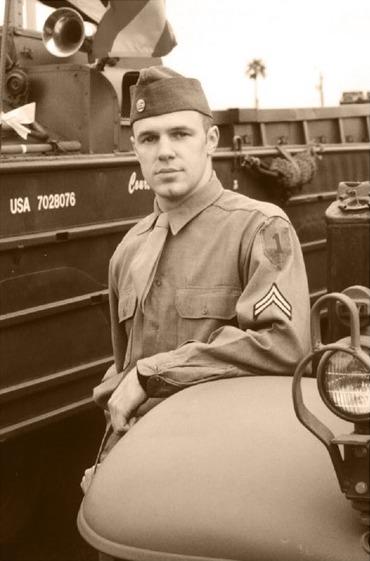
Edward Thomas in Uniform

November
By Edward Thomas

November’s days are thirty:
November’s earth is dirty,
Those thirty days, from first to last;
And the prettiest thing on ground are the paths
With morning and evening hobnails dinted,
With foot and wing-tip overprinted
Or separately charactered,
Of little beast and little bird.
The fields are mashed by sheep, the roads
Make the worst going, the best the woods
Where dead leaves upward and downward scatter.
Few care for the mixture of earth and water,
Twig, leaf, flint, thorn,
Straw, feather, all that men scorn,
Pounded up and sodden by flood,
Condemned as mud.

But of all the months when earth is greener
Not one has clean skies that are cleaner.
Clean and clear and sweet and cold,
They shine above the earth so old,
While the after-tempest cloud
Sails over in silence though winds are loud,
Till the full moon in the east
Looks at the planet in the west
And earth is silent as it is black,
Yet not unhappy for its lack.
Up from the dirty earth men stare:
One imagines a refuge there
Above the mud, in the pure bright
Of the cloudless heavenly light:
Another loves earth and November more dearly
Because without them, he sees clearly,
The sky would be nothing more to his eye
Than he, in any case, is to the sky;
He loves even the mud whose dyes
Renounce all brightness to the skies.

About the Poet:

If the war goes on I believe I shall find myself a sort of Englishman, though neither poet or soldier’

– Letter to Walter de la Mare, 30th August 1914

Philip Edward Thomas (3 March 1878 – 9 April 1917) was a British poet, essayist, and novelist. Scholars consider him a war poet, although few of his poems deal directly with his war experiences. His career in poetry only came after he had already been a successful writer and literary critic. In 1915, he enlisted in the British Army to fight in the First World War and was killed in action shortly after arriving in France.

Thomas thought that poetry was the highest form of literature and regularly reviewed it, but he only became a poet himself at the end of 1914 when living at Steep, East Hampshire. He initially published his poetry under the name Edward Eastaway to disguise his identity due to his fame as a critic. Robert Frost, who was living in England at the time, encouraged Thomas (then more famous as a critic) to write poetry, and their friendship was so close that the two planned to reside side by side in the United States. Frost’s most famous poem, “The Road Not Taken,” was inspired by walks with Thomas and Thomas’s indecisiveness about which route to take.

Thomas enlisted in the Artists Rifles in July 1915, despite being a 37-year-old married man who could have avoided enlisting. He was unintentionally influenced in this decision by his friend Frost, who had returned to the U.S. but sent Thomas an advance copy of “The Road Not Taken.” Frost intended the poem as a gentle mocking of Thomas’ indecision, particularly the indecision that Thomas had shown on their many walks together; however, most audiences took the poem more seriously than Frost intended. Thomas similarly took it seriously and personally. The poem allowed Thomas to be decisive and enlist.

Thomas was promoted to corporal, and in November 1916 was commissioned into the Royal Garrison Artillery as a second lieutenant. He was killed in action soon after arriving in France at Arras on Easter Monday, 9 April 1917. To spare the feelings of his widow, Helen, she was told the fiction of a “bloodless death,” i.e., that Thomas was killed by the concussive blast wave of one of the last shells fired as he stood to light his pipe and that there was no mark on his body. However, a letter from his commanding officer Franklin Lushington written in 1936 (and discovered many years later in an American archive), states that in reality, the cause of Thomas’s death was being “shot clean through the chest.” W. H. Davies, the Welsh poet and Thomas’s close friend, was devastated by his death and immortalized him in a poem, “Killed in Action (Edward Thomas).”

Killed in Action (Edward Thomas)
By W. H. Davies

Happy the man whose home is still
In Nature’s green and peaceful ways;
To wake and hear the birds so loud,
That scream for joy to see the sun
Is shouldering past a sullen cloud.

And we have known those days, when we
Would wait to hear the cuckoo first;
When you and I, with thoughtful mind,
Would help a bird to hide her nest,
For fear of other hands less kind.

But thou, my friend, art lying dead:
War, with its hell-born childishness,
Has claimed thy life, with many more:
The man that loved this England well,
And never left it once before.

Thomas is buried in Agny military cemetery on the outskirts of Arras. He did not live to see Poems (1917), a collection of his poetry published under his pseudonym, Edward Eastaway. In just under two years, he had written over 140 poems. On 11 November 1985, Thomas was among 16 Great War poets commemorated on a slate stone unveiled in Westminster Abbey’s Poet’s Corner. The inscription, written by fellow poet Wilfred Owen, reads: “My subject is War, and the pity of War. The Poetry is in the pity.”


Honoring LGBTQ+ Veterans

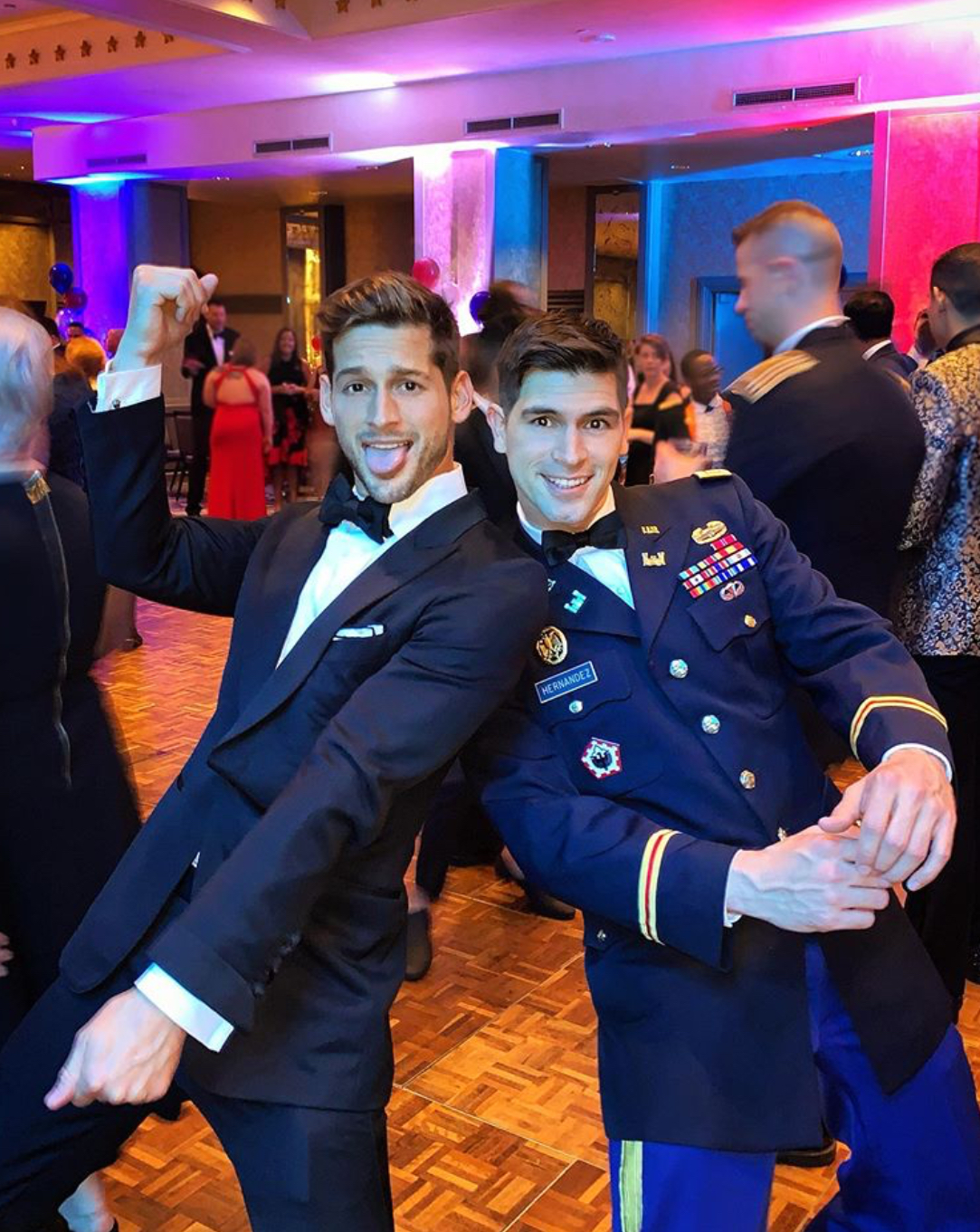
American model and actor Max Emerson and his boyfriend, Army veteran Capt. Andrés Camilo, at the American Military Partner Association National Gala, 2019*

While military service often demands sacrifices from those in uniform, historically, LGBTQ+ veterans have faced a unique set of challenges. Many of these veterans, following a call to serve, meant keeping their private lives entirely private, fearing that exclusionary policies would hold them back or end their careers altogether. There are an estimated 1 million lesbian, gay, bisexual, and transgender veterans in the United States. 

LGBTQ+ soldiers have always been part of the American military. In an era before gay marriage or open pride, military men fell in love, formed passionate friendships, and had same-sex encounters. Due to social and official discrimination, though, most of their stories have gone untold. But in the case of one of the military’s founding heroes, homosexuality was always part of the story. Baron Friedrich von Steuben, a Prussian military man hired by George Washington to whip the Continental Army into shape during the darkest days of the Revolutionary War, is known for his bravery and the discipline and grit he brought to the American troops. Historians also think he was homosexual—and served as an openly gay man in the military at a time when sex between men was punished as a crime. Benjamin Franklin recommended von Steuben to Washington and played up his qualifications. He also downplayed rumors that the baron had been dismissed from the Prussian military for homosexuality.

Von Steuben may have been one of early America’s most open LGBTQ+ figures, but he was hardly the only man whose love of other men was well known. And though he was to have helped save the American army, his contribution is mostly forgotten today. Even with an exception like von Steuben, few LGBTQ+ service members have served openly in the military until recently. However, exceptions were always made for LGBTQ+ individuals as long as they generally remained discreet and deemed useful to the US military. Since the Revolutionary War, homosexuality was grounds for discharge from all US military branches until 2010. During World War II, the military began enforcing specific policies based on sexual orientation. Homosexuality was a disqualifying trait as soon as the military added psychiatric screenings to its induction process. During the war, the blue discharge became the “discharge of choice” for homosexual service members — which, though neither honorable nor dishonorable, prevented former service members from utilizing the GI Bill and held extremely negative connotations, often preventing veterans from integrating back into civilian life.

Still, LGBTQ+ individuals continued to serve while in the closet. After World War II, members of the Mattachine Society, one of the earliest LGBT (gay rights) organizations in the United States, protested the US policy against gays serving in the military. They believed they should be able to serve their country in any capacity, whether it be in government or the military. They felt that service in the military would lead to more acceptance for gay men. However, that would change during the Vietnam War. Young gay men rebelled against early organizations like the Mattachine Society. Young gay men had to choose whether to reveal or conceal their homosexuality when they came before the draft board because with the draft board being composed of local citizens, this could mean being outed to friends, neighbors, or parents. The dilemma faced by gay youths polarized the gay liberation movement, and young gay men joined in on the antiwar protests. With the Vietnam War and the draft still very much a reality, gay rights groups turned their backs on the issue of military service because they did not want to be drafted. However, the government also turned their backs on the ban and forced many gay men who were drafted to serve, deciding that they needed the manpower more than they needed to uphold the ban on military service. When personnel shortages occurred, the US military was all too happy to allow LGBTQ+ individuals to serve, particularly gay men. 

The LGBTQ+ rights movement in the 1970s and 1980s once again changed positions and advocated for LGBTQ+ individuals to serve in the military. They raised the issue by publicizing several noteworthy dismissals of gay service members. Sgt. Leonard Matlovich appeared on the cover of Time in 1975. In 1982, the Department of Defense issued a policy stating, “Homosexuality is incompatible with military service.” It cited the military’s need “to maintain discipline, good order, and morale” and “to prevent breaches of security.” In 1988, in response to a campaign against lesbians at the Marines’ Parris Island Depot, activists launched the Gay and Lesbian Military Freedom Project (MFP) to advocate for an end to the exclusion of gays and lesbians from the armed forces. 

In 1989, reports commissioned by the Personnel Security Research and Education Center (PERSEREC), an arm of the Pentagon, were discovered in the process of Joseph Steffan’s lawsuit fighting his forced resignation from the US Naval Academy. One report said that “having a same-gender or an opposite-gender orientation is unrelated to job performance in the same way as is being left- or right-handed.” Other lawsuits fighting discharges highlighted the service record of service members like Tracy Thorne and Margarethe (Grethe) Cammermeyer. The MFP began lobbying Congress in 1990, and in 1991 Senator Brock Adams (D-Washington) and Rep. Barbara Boxer (D-California) introduced the Military Freedom Act, legislation to end the ban entirely. Adams and Rep. Pat Schroeder (D-Colorado) re-introduced it the next year. In July 1991, Secretary of Defense Dick Cheney, in the context of the outing of his press aide Pete Williams, dismissed the idea that gays posed a security risk as “a bit of an old chestnut” in testimony before the House Budget Committee. In response to his comment, several major newspapers endorsed ending the ban, including USA Today, the Los Angeles Times, and the Detroit Free Press. In June 1992, the General Accounting Office released a report that Congress members had requested two years earlier, estimating the costs associated with the ban on gays and lesbians in the military at $27 million annually.

During the 1992 US presidential election campaign, the civil rights of gays and lesbians, particularly their open service in the military, attracted some press attention, and all candidates for the Democratic presidential nomination supported ending the ban on military service by gays and lesbians. Republicans did not make a political issue of that position. In an August cover letter to all his senior officers, Gen. Carl Mundy, Jr., Commandant of the Marine Corps, praised a position paper authored by a Marine Corps chaplain that said that “In the unique, intensely close environment of the military, homosexual conduct can threaten the lives, including the physical (e.g., AIDS) and psychological well-being of others.” Mundy called it “extremely insightful” and said it offered “a sound basis for discussion of the issue.” The murder of gay US Navy petty officer Allen R. Schindler, Jr. on October 27, 1992, brought calls from advocates of allowing open service by gays and lesbians for prompt action from the incoming Clinton administration.

President Bill Clinton campaigned in 1992 on the promise to allow all citizens to serve in the military regardless of sexual orientation. Clinton called for legislation to overturn the ban but encountered intense opposition from the Joint Chiefs of Staff, Congress members, and portions of the public. Don’t Ask, Don’t Tell (DADT) emerged as a compromise policy. On December 21, 1993, the Clinton Administration issued Defense Directive 1304.26, which directed that military applicants were not to be asked about their sexual orientation. The full name of the policy at the time was “Don’t Ask, Don’t Tell, Don’t Pursue.” The “Don’t Ask” provision mandated that military or appointed officials will not ask about or require members to reveal their sexual orientation. The “Don’t Tell” stated that a member may be discharged for claiming to be a homosexual or bisexual or making a statement indicating a tendency towards or intent to engage in homosexual activities. The “Don’t Pursue” established what was minimally required for an investigation to be initiated. A “Don’t Harass” provision was added to the policy later. It ensured that the military would not allow harassment or violence against service members for any reason.

Fast-forward to the 2008 US presidential election campaign. Senator Barack Obama advocated a full repeal of the laws barring gays and lesbians from serving in the military. Nineteen days after his election, Obama’s advisers announced that plans to repeal the policy might be delayed until 2010 because Obama first wanted “to confer with the Joint Chiefs of Staff and his new political appointees at the Pentagon to reach a consensus, and then present legislation to Congress.” As president, he advocated a policy change to allow gay personnel to serve openly in the armed forces, stating that the US government has spent millions of dollars replacing troops expelled from the military, including language experts fluent in Arabic, because of DADT.

In December 2010, the House of Representatives and the Senate passed a bill repealing DADT, and President Obama signed the repeal into law on December 22, 2010. Restrictions on lesbian, gay, and bisexual service members ended in 2011. In 2016, the Obama Administration lifted the ban on transgender people serving in the military. However, under the Trump administration, transgender individuals have been banned from serving in the military. On July 26, 2017, Trump announced on his Twitter page that transgender individuals would no longer be allowed “to serve in any capacity in the US Military.” At the time, close to 15,000 transgender troops serve in the military, and Trump’s ban was denounced by former military leaders, Members of Congress from both parties, and the American Medical Association. 

For 234 years, the United States had anti-LGBTQ+ policies that prevented many thousands of brave, talented soldiers, sailors, and marines from stepping up to serve in national defense. Lesbians, gays, and bisexuals can now serve openly in the military, and once the Biden administration enters office, transgender individuals will once again be able to serve in the military. Just as we owe so much to heterosexual servicemembers, LGBTQ+ service members have not only sacrificed their lives for this country but, for most of its history, had to serve in silence. On this Veterans Day, let us not forget the millions of lesbian, gay, bisexual, and transgender veterans who have served in the United States military.

*The nation’s largest LGBTQ military event of the year, the American Military Partner Association National Gala celebrates and honors our modern military families for their service and sacrifice.