Category Archives: History

The History of the Movement in One Man’s Life

Credit: Rink Foto / HBO


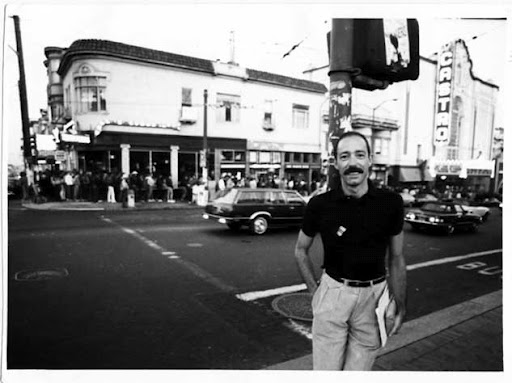
To LGBT people who came of age in the 1970s and ’80s, Vito Russo is an icon. But among younger generations, Russo is barely known — and that’s something Jeffrey Schwarz set out to change with his comprehensive, affecting documentary Vito, premiering tonight on HBO. 

“I felt like making a documentary could help introduce him to a new generation,” says Schwarz, producer and director of the film about the man who was author of The Celluloid Closet, a key player in ACT UP, and so much more.

Schwarz, 42, never met Russo, who died in 1990 at age 44, but the filmmaker has a long history with his subject nonetheless. “Vito has always been a beacon to me,” says Schwarz. “One of the first things I did when I was coming out was read The Celluloid Closet,” Russo’s landmark 1981 book about gay and lesbian images in film.

This was in the late 1980s, but Schwarz had been aware of Russo for several years before that. In 1982, when Schwarz was 12, he saw an episode of the movie-review show Sneak Previews, then hosted by Gene Siskel and Roger Ebert, about gay-themed films coming out that year, and the critics mentioned Russo and The Celluloid Closet.

Later, after Schwarz had been through film school and fallen in love with the documentary form, he heard that Rob Epstein and Jeffrey Friedman were making a movie of The Celluloid Closet, and he asked to work on it. That 1995 documentary, for which Schwarz was apprentice editor, was his first job in the movie business, and the gig gave him access to archives through which he got to know Russo well.

Vito, which Schwarz began planning about five years ago, will give audiences the opportunity to know Russo well. Through archival footage and interviews with family members, friends, and a veritable who’s who of the modern gay rights movement, the film traces his love of movies along with his anger over their negative portrayals of gays; his development as an activist; his outgoing, outsize personality; and his struggle with AIDS, which eventually took his life, but not before he fought tirelessly for awareness and treatment as a member of the direct-action group ACT UP. Russo’s life is essentially a history of the gay movement from Stonewall through ACT UP, says Schwarz.

In one piece of archival footage, Russo says, “Everything I’ve done I’ve chosen to do. This is the life I wanted. I’m one of the very few people I know who can say I never did anything I didn’t want to do, and I always did exactly what I pleased. Very few people can say that about their lives.”

Born in 1946, Russo spent his early life in New York City and developed a passion for film early on, often tagging along with his cousin Phyllis Antonellis on her movie dates, then recounting the plots to his family. He also developed a passion for men, and “never once for a second believed that it was wrong to be gay,” as he observes in the film, despite his Catholic upbringing. In 1961 his family moved to Lodi, N.J., a suburban town he hated for many reasons, including the bullying he received from high school jocks, but he discovered other gay kids and formed a support system.

He returned to New York as soon as he turned 18, and he was a witness to the Stonewall riots of 1969, but he didn’t become politicized until after a raid on another bar, the Snake Pit. He joined the Gay Activists Alliance, an early gay rights group, and participated in many protests, including one for marriage rights in 1971, with an “engagement party” for Russo and his then-lover, Steve Krotz, at the New York marriage bureau. He also started movie nights for the GAA, showing classic films with gay-beloved divas like Judy Garland and Bette Davis.

As the 1970s progressed, Russo made a living and a name as a journalist for The Advocate and other publications, interviewing celebrities such as Bette Midler and Lily Tomlin, and worked in the film department at New York’s Museum of Modern Art, where he discovered many vintage movies with both coded and explicit gay and lesbian images. Out of this came “Celluloid Closet” lectures and eventually the book, documenting how gay characters were consistently either villains or objects of ridicule, and often died in the end.

“He was the first person to write about how Hollywood treated homosexuals,” says writer Bruce Vilanch in the film. Other well-known interviewees include Larry Kramer, Armistead Maupin, Malcolm Boyd, Gabriel Rotello, Jenni Olson, David Ehrenstein, former Advocate editor Mark Thompson, Tomlin, Epstein, and Friedman, along with many others who knew Russo, including members of his supportive family, such as Antonellis (everyone’s favorite, says Schwarz) and his brother Charlie.

“The film couldn’t have been made without Charlie Russo and other people in the family, like cousin ‘Perky’ [Antonellis],” Schwarz says. His first call when he decided to make the film, he says, was to Charlie. In the film, Charlie recalls the strong bond between Vito and their mother as well as the party atmosphere that reigned among the extended Russo family whenever Vito came to visit.

Other “angels” who helped make the film a reality include Bryan Singer, who came on as executive producer, and HBO executives such as Sheila Nevins. HBO got on board after Schwarz showed network officials a 20-minute sample of the film. “I’m still pinching myself that HBO is our partner in this,” Schwarz says. “It’s kind of a stamp of quality when a documentary airs on HBO.”

Schwarz, who has created many short documentaries used as bonuses on DVD releases, has also made feature-length ones on subjects including porn star Jack Wrangler and horror-film producer-director William Castle. By the end of the year, he hopes to finish I Am Divine, a doc about John Waters’s biggest star. Next up is a documentary on gay actor Tab Hunter, then one on antigay activist Anita Bryant and her infamous Save Our Children campaign.

Right now, he’s thrilled to be bringing Vito Russo to a new audience. In addition to making the film, he’s edited a two-volume collection of Russo’s writingsOut Spoken: A Vito Russo Reader,published by White Crane Books.

He was gratified, he notes, by the reception Vitoreceived as the opening-night attraction this month at Outfest, Los Angeles’s LGBT film festival. “The greatest thing about making this film is everyone is talking about Vito Russo,” he says. “It’s going to get people talking about our history. I hope it will inspire young people to go out there and live a life Vito would be proud of.”

Vito premieres tonight at 9 Eastern/Pacific on HBO. 


Stonewall Uprising

Stonewall Uprising . American Experience . WGBH | PBS

When police raided the Stonewall Inn, a popular gay bar in the Greenwich Village section of New York City on June 28, 1969, the street erupted into violent protests that lasted for the next six days. The Stonewall riots, as they came to be known, marked a major turning point in the modern gay civil rights movement in the United States and around the world.

In this 90-minute film, AMERICAN EXPERIENCE draws upon eyewitness accounts and rare archival material to bring this pivotal event to life. Based on David Carter’s critically acclaimed book, Stonewall: The Riots that Sparked the Gay Revolution, Stonewall Uprising was produced by Kate Davis and David Heilbroner.

For more information about the beginnings of the Gay Rights Movement in the United States and the Stonewall Riots, please check out my series of post on Stonewall.


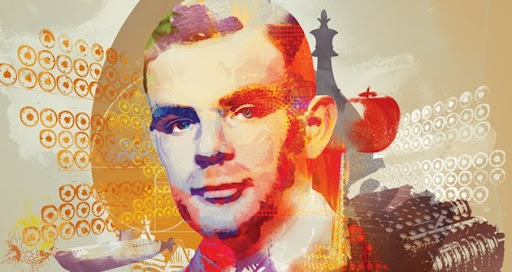
Alan Turing: 100 Years After His Birth

Instead of my usual “Moment of Zen” this Saturday, I am going to honor Alan Turing, who was born 100 years ago today. As a gay man and a blogger, it is only natural for me to post about Turing today. I’m sure I am joining many bloggers who will celebrate his centenary today. He was a hero of the Second World War, one of history’s great geniuses, and a tragic figure in the quest for GLBT equality. If you go to Google’s homepage today, you will see that the Google Doodle is in honor of Turing and his contribution to computer science.

From the day he was born one hundred years ago today—23 June 1912—Alan Mathison Turing seemed destined to solitude, misunderstanding and persecution.  Alan Turing is a name with which a great many people are familiar, but probably not enough. His name was nearly erased from history sixty years ago, though partially revived in the 1970s.  A highly accomplished mathematician, codebreaker and computer scientist, he has been hailed as a pioneer and hero in the fields of modern computing and sexual politics. And while you might not think that those two subjects necessarily complement each other in true strawberries-and-cream style, both are vital to understanding and appreciating the man who helped crack the Enigma code during World War II (and pretty much invented robots).

Turing’s world was markedly different from the one in which we live today. In fact, much of the technology which we now take for granted can be traced back to him in some way. Ever heard of an algorithm? You can thank Alan Turing for that little gem, who originated the concept in a paper while at Kings College, Cambridge.

Best remembered for his work at Bletchley Park in wartime, Turing devised the electromechanical Bombe, which was able to find settings for the Enigma machine, enabling encrypted German messages to be deciphered – which proved to be an invaluable resouce.

After the war, Turing went on to explore the possibilities of artificial intelligence, publishing papers on the subject and creating the “Turing Test”, which determined whether the responses of an artificial intelligence could be told apart from the responses of a human being.

But Alan’s highly celebrated career was marred and ultimately cut short by a tragic personal life. In January 1952, Turing met a man called Arnold Murray outside a cinema in Manchester. After a lunch date, Turing invited Murray to spend the weekend with him at his house, an invitation which Murray accepted although he did not show up. The pair met again in Manchester the following Monday, when Murray agreed to accompany Turing to the latter’s house. A few weeks later Murray visited Turing’s house again, and apparently spent the night there.

After Murray helped an accomplice to break into his house, Turing reported the crime to the police. During the investigation, Turing acknowledged a sexual relationship with Murray. Homosexual acts were illegal in the United Kingdom at that time, and so both were charged with gross indecency under Section 11 of the Criminal Law Amendment Act 1885.

Turing was given a choice between imprisonment or probation conditional on his agreement to undergo hormonal treatment designed to reduce libido. He accepted chemical castration via injections of stilboestrol, a synthetic estrogen hormone.

Turing’s conviction led to the removal of his security clearance, and barred him from continuing with his cryptographic consultancy for the Government Communications Headquarters (GCHQ), the British signals intelligence agency that had evolved from GCCS in 1946. At the time, there was acute public anxiety about spies and homosexual entrapment by Soviet agents, because of the recent exposure of the first two members of the Cambridge Five, Guy Burgess and Donald Maclean, as KGB double agents. Turing was never accused of espionage but, as with all who had worked at Bletchley Park, was prevented from discussing his war work.

Unfortunately, the fact that Turing had helped save countless lives and secure a win for the Allies during the war did not prevent him from becoming utterly ostracized by his government and peers. He was relieved of his security clearance and forbidden from continuing his work at the Government Communications Headquarters. Two years later, Alan Turing was found dead.

On 8 June 1954, Turing’s cleaner found him dead; he had died the previous day. A post-mortem examination established that the cause of death was cyanide poisoning. When his body was discovered an apple lay half-eaten beside his bed, and although the apple was not tested for cyanide, it is speculated that this was the means by which a fatal dose was consumed. An inquest determined that he had committed suicide, and he was cremated at Woking Crematorium on 12 June 1954. Turing’s mother argued strenuously that the ingestion was accidental, caused by her son’s careless storage of laboratory chemicals. Biographer Andrew Hodges suggests that Turing may have killed himself in an ambiguous way quite deliberately, to give his mother some plausible deniability.  Hodges and David Leavitt have suggested that Turing was re-enacting a scene from the 1937 film Snow White, his favourite fairy tale, both noting that (in Leavitt’s words) he took “an especially keen pleasure in the scene where the Wicked Queen immerses her apple in the poisonous brew.”

LGBT campaigners are still petitioning for an official pardon of Turing’s indecency charges, although as yet the answer is “no”, with Lord McNally defending the government’s decision by stating that he was rightly prosecuted under the law of the era. But while a pardon may not be immediately forthcoming, John Graham-Cumming did at least succeed in procuring a public apology from then-Prime Minister Gordon Brown in 2009.

Brown responded by writing about Turing at length in a piece in the Telegraph, stating: “Alan deserves recognition for his contribution to humankind. For those of us born after 1945, into a Europe which is united, democratic and at peace, it is hard to imagine that our continent was once the theatre of mankind’s darkest hour.” Harder still to believe, as we celebrate all that is great about Britain this year with the Diamond Jubilee and Olympic Games, that a man could suffer so much at the hands of his own country, when it owed him such a debt.

The word “legacy” can be bandied around and overused from time to time, but in this instance it could not be more apt: not just for the debt of thanks we all owe to Alan Turing for his wartime work but also for the opportunity that his life story offers; the opportunity to learn from the mistakes and prejudices of the generations that came before us, and ensure that they are never repeated.

In the words of Gordon Brown: “On behalf of the British government, and all those who live freely thanks to Alan’s work I am very proud to say: we’re sorry, you deserved so much better.”


Francis Davis Millet and Charles Warren Stoddard, 1874-1912

Empty Chair, Empty Bed, Empty House

Adapted from Jonathan Ned Katz’s book Love Stories: Sex Between Men Before Homosexuality (University of Chicago Press, 2001). The source citations are available in the printed edition.

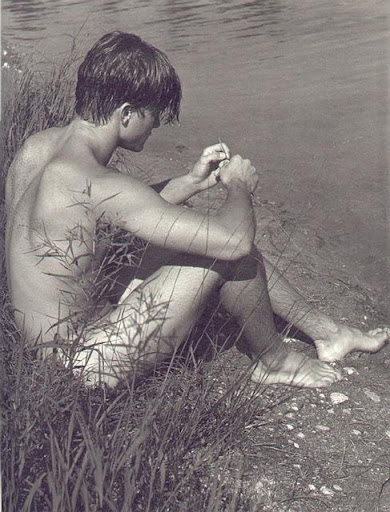
Charles Warren Stoddard

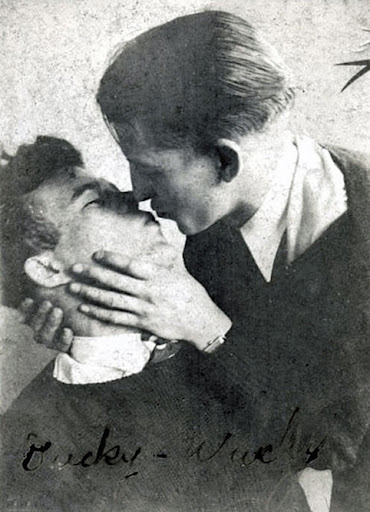
By November 1874, the American travel journalist Charles Warren Stoddard had given up on the South Seas, the site of earlier sensual adventures recorded in coyly coded form in published articles. He was now pursuing his erotic destiny in Italy.

There in romantic, legendary Venice at the end of the year, “a young man quietly joined me” in a box at the opera during intermission, Stoddard recalled. “We looked at each other and were acquainted in a minute. Some people understand one anotherer at sight, and don’t have to try, either.” Stoddard’s recollection of this meeting was published in Boston’s National Magazine in 1906.

Stoddard’s friend was the American artist Francis Davis Millet. Stoddard was thirty-one in 1874, and Millet was twenty-eight.

During the Civil War, Millet’s father, a Massachusetts doctor, had served as a Union army surgeon, and in 1864, the eighteen-year-old Frank Millet had enlisted as a private, serving first as a drummer boy and then as a surgeon’s assistant.

Young Millet graduated from Harvard in 1869, with a master’s degree in modern languages and literature. While working as a journalist on Boston newspapers, he learned lithography and earned money enough to enroll in 1871 in the Royal Academy, Antwerp. There, unlike anyone before him, he won all the art prizes the school offered and was officially hailed by the king of Belgium.

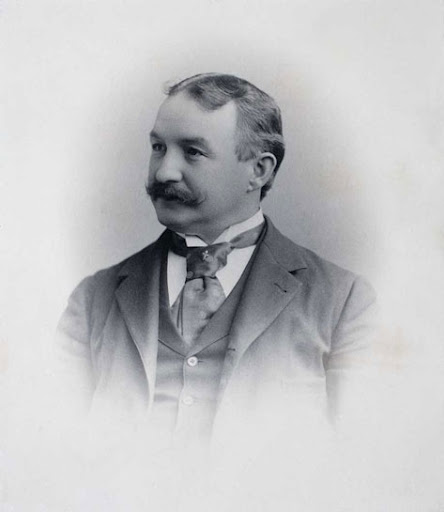
Francis Davis Millet

As secretary of the Massachusetts commission to the Vienna exposition in 1873, Millet formed a friendship with the American Charles Francis Adams, Junior, and then traveled through Turkey, Romania, Greece, Hungary, and Italy, finally settling in Venice to paint.

At the opera, as Stoddard recalled, Millet immediately asked, “Whereare you going to spend the Winter?” He then invited Stoddard to live in his eight-room rented house at 262 Calle de San Dominico, the last residence on the north side of San Marco, next to a shipyard and the Public Garden. “Why not come and take one of those rooms?” the painter offered, “I’ll look after the domestic affairs” — is this a Stoddard double entendre?

Stoddard accepted Millet’s invitation, recalling that they became “almost immediately very much better acquainted.” Did Stoddard go home with Millet that night?

The two lived together during the winter of 1874-75, though Stoddard did not take one of the extra rooms. Millet’s romantic letters to Stoddard make it clear that the men shared a bed in an attic room overlooking the Lagoon, Grand Canal, and Public Garden.

Lack of space did not explain this bed sharing, and Stoddard’s earlier and later sexual liaisons with men, his written essays and memoirs, and Millet’s letters to Stoddard, provide good evidence that their intimacy found active affectionate and erotic expressIon.

Though Stoddard’s erotic interests seem to have focused exclusively on men, Millet’s were more fluid. In the last quarter of the nineteenth century, Millet’s psychic configuration was probably the more common, Stoddard’s exclusive interest in men the less usual. In any case, the ranging of Millet’s erotic interest between men and women was not then understood as “bisexual”, a mix of “homo” and “hetero.” The hetero-homo division had not yet been invented.

Another occupant of the house was Giovanni, whom Stoddard called “our gondolier, cook, chambermaid and errand-boy.” His use of “maid” and “boy” hint at gender doubling, and, perhaps, at sexual nonconformity. (Giovanni’s last name, not mentioned, is lost to history, typical in masters’ accounts of servants.)

That winter, Millet taught Giovanni to prepare two classic New England dishes, baked beans and fish balls, and during the cold months, Stoddard recalled, he and Millet dined Massachusetts style in their warm Italian kitchen.

From the window of this kitchen in warmer weather, Stoddard recalled, they watched “the supple figures of half-nude artisans” working in an adjoining shipyard. It was “no wonder that we lingered over our meals there,” said Stoddard, without explaining that lingering. Visual, alimentary, and erotic pleasures are repeatedly linked in Stoddard’s and Millet’s writings, as we will see.

During the daytime, Millet painted in their home’s courtyard while Stoddard dozed, smoked, and wrote columns about Venice and other Italian cities for the San Francisco Chronicle. They dined early and took gondola rides at sunset.

In a newspaper column that Stoddard published early in his relationship with Millet, the journalist wrote of “spoons” with “my fair” (an unnamed woman) in a gondola’s covered “lovers’ cabin,” and of “her memory of a certain memorable sunset–but that is between us two!” Stoddard here changed the sex of his fair one when discussing “spooning” (kissing, making out) in his published writing. Walt Whitman also employed this literary subterfuge, changing the sex of the male who inspired a poem to a female in the final, published version.

Touring Italy: January 1875

In late January 1875, Stoddard, seeking new cities to write about for the Chronicle, made a three-week tour of northern Italy, revising these memoirs twelve years later for the Catholic magazine Ave Maria, published at Notre Dame University. Stoddard wrote that his unnamed painter friend accompanied him as guide and “companion-in-arms,” a punning name for his bed mate–the companion in his arms. This definitely intended pun allowed Stoddard to imply more about this companionship than he could say directly. A variety of other, barely coded references lace Stoddard’s writing with allusions to eros between men.

In Padua, for example, Stoddard wrote that he and his companion were struck by views of “lovely churches and the tombs of saints and hosts of college boys.” Casually including “hosts of college boys” among the “lovely” religious sights of Padua, and substituting “hosts of … boys” for the proverbial “angels,” Stoddard’s sacrilege-threatening run-on sentence suggested that, to these two tourists, at least, the boys looked heavenly.

The Wrestlers

In another case, on the train to Florence, Stoddard and his companion noticed a tall “fellow who had just parted with his friend” at a station. As “soon as they had kissed each other on both cheeks — a custom of the country;’ Stoddard explained to nonkissing American men, the traveler was “hoisted into our compartment.” But “no sooner did the train move off, than he was overcome, and, giving way to his emotion, he lifted up his voice like a trumpeter,” filling the car with “lamentations.” For half an hour “he bellowed lustily, but no one seemed in the least disconcerted at this monstrous show of feeling; doubtless each in his turn had been similarly affected.”

Suggesting, slyly, that bellowing “lustily” was common among parting men friends and represented the expression of a deep, intense, and by no means unusual feeling, Stoddard pointed to a ubiquitous male eros, not one limited to men of a special, unique, man-loving temperament.

Typically keeping a sharp eye out for the varieties of physically expressed attachment between males, he also invoked Walt Whitman’s poem on the tender parting of men friends on a pier: “The one to remain hung on the other’s neck and passionately kiss’d him, / While the one to depart tightly prest the one to remain in his arms.” That poem, and Stoddard’s essay, suggest that parting provided, in the nineteenth century, a public occasion for the physical expression of intense love between men, a custom that had special resonance for men, like Stoddard, attracted to men.

Among the statues that Stoddard admired in Florence were “The Wrestlers, tied up in a double-bow of monstrous muscles” — another culturally sanctioned icon of physical contact between, in this case, scantily clad men.

St. Sebastian

In Genoa, Stoddard recalled seeing a “captivating” painting of the “lovely martyr” St. Sebastian, a “nude torso” of “a youth as beautiful as Narcissus”–yet another classic, undressed male image suffused with eros. The “sensuous element predominates,” in this art work, said Stoddard, and “even the blood-stains cannot disfigure the exquisite lustre of the flesh.”

In Sienna, Stoddard recorded, he and his companion-in-arms slept in a “great double bed … so white and plump it looked quite like a gigantic frosted cake–and we were happy.” The last phrase directly echoes Stoddard’s favorite Walt Whitman Calamus poem in which a man’s friend lies “sleeping by me under the same cover in the cool night” — “and that night I was happy.” Sleeping happily with Millet in that cake/bed, Stoddard again linked food and bodily pleasure. In Sienna, Stoddard and Millet also looked at frescos by the artist nicknamed “Sodoma”, Giovanni Bazzi, the outspoken 16th century artist.

Back in Venice: Spring 1875

Back in their Venice home in spring 1875, Stoddard recalled one day seeing “a tall, slender and exceedingly elegant figure approaching languidly.”

A. A. Anderson

This second American artist, A. A. Anderson, appeared one Sunday at Millet’s wearing a “long black cloak of Byronic mold,” one corner of which was “carelessly thrown back over his arm, displaying a lining of cardinal satin.” The costume was enhanced by a gold-threaded, damask scarf and a broad-brimmed hat with tassels.

In Stoddard’s published memoirs, identifying Anderson only as “Monte Cristo,” the journalist recalled the artist’s “uncommonly comely face of the oriental–oval and almond- eyed type.” Entranced by the “glamor” surrounding Monte Cristo, Stoddard soon passed whole days “drifting with him” in his gondola, or walking ashore.

Invited to dinner by Monte Cristo, Stoddard and his friend (Millet) found Monte occupying the suite of a “royal princess, it was so ample and so richy furnished.” (Monte was a “princess,”‘ Stoddard hints.)

Funded by an inheritance from dad, Monte had earlier bought a steam yacht and cruised with an equally rich male friend to Egypt, then given the yacht away to an Arab potentate. Later, while Stoddard was visiting Paris, he found himself at once in the “embrace of Monte Cristo,” recalling: “That night was Arabian, and no mistake!” Stoddard’s reference to The Arabian Nights, a classic text including man-love episodes, also invoked a western mystique of “oriental” sex.

To England and Robert William Jones

After the beautiful Anderson left Venice, Stoddard, the perennial rover, found it impossible to settle down any longer in the comfortable, loving domesticity offered by Millet. The journalist may also have needed new sights to inspire the travel writing that supported him. On May 5, 1875, he therefore set off for Chester, England, to see Robert William Jones, a fellow with whom, a year earlier, he had shared a brief encounter and who had since been sending him passionate letters.

Stoddard’s flight, after living with Millet for about six months, marked a new phase in their relationship. Millet now became the devoted pursuer, Stoddard the ambivalent pursued.

SOURCES:


Gays on the Titanic

RMS Titanic, which sunk on its maiden voyage 100 years ago, has become something of a legend. Famously trumpeted at the time as ‘virtually unsinkable’, it was the height of luxury and class. It boasted features more in common with a hotel and was designed with the Ritz, rather than a ship, in mind.
It was over three quarters of the way into its journey from Southampton, England to New York when Titanic received warning from other ships of dangerous ice. However, it continued at full speed and hit an iceberg at 11:40pm ship’s time on 14 April 1912.
Having just 20 lifeboats, Titanic was entirely unprepared for the sinking. Even if they had been filled, only half of the passengers on board would have made it safety. In fact, many of the first lifeboats to leave Titanic were only half-full because so many passengers didn’t believe it could possibly be sinking.
There were 2,224 people on board. Only 710 were saved.

“It’s our most potent modern parable, the great ship, deemed unsinkable, going down on her maiden voyage,” says author Hugh Brewster on why we’re still talking about the Titanic a century after its tragic sinking. “The stories of how people behaved on that sloping deck are haunting and unforgettable.”

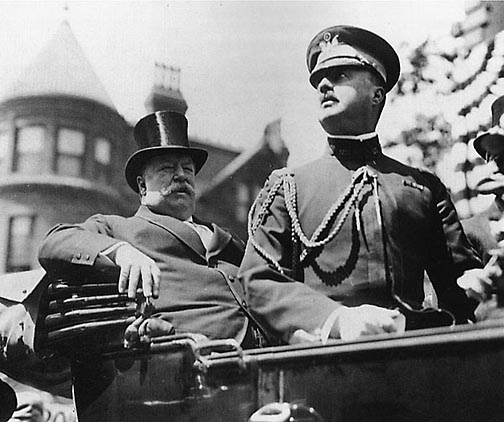
Brewster, the writer and historian behind several best-selling books about the doomed ship, provides a thoughtfully researched and vividly drawn look at those haunting and unforgettable stories in the brand-new Gilded Lives, Fatal Voyage: The Titanic’s First-Class Passengers and Their World. Told through portraits of some its most fascinating and well-off wayfarers, the book provides some startling revelations about the private lives of travelers like artist and writer Francis Millet and his friend (and former roommate) Major Archibald Butt, military aide to presidents William Howard Taft and Theodore Roosevelt.

Of particular interest to LGBT readers is Brewster’s implication that the two might have been more than friends. He writes that while Butt, a “dandified bachelor with an intense devotion to his mother, seems a more likely gay man than Frank Millet, the decorated war correspondent and married father of three,” the surviving correspondence from Millet to San Francisco poet Charles Warren Stoddard points to Millet’s homosexuality being more than just a youthful bohemian phase.

“Since homosexuality was once an imprisonable offense,” Brewster tells The Advocate, “incriminating diaries and letters were usually destroyed, which is why it is remarkable that Frank Millet’s unequivocally homoerotic youthful love letters to Stoddard have survived.”

In Millet’s final letter, mailed from the Titanic in Queenstown, Ireland, four days before it went down, the artist wrote to another friend that a perusal of the passenger list had led him to believe that there were a good number of “our people” on the voyage.

While most books about the oft-depicted disaster place the Titanic as the tragedy’s main character, Gilded Lives lets her notable passengers take center stage. The result is a fascinating story of people gay and straight whose demises are as heartbreaking today as they were a century ago.

Archie Butt (right) with President William Howard Taft. 

Brewster is not the only historian asserting that Francis Millet and his friend Archibald Butt may have been gay. Historian James Gifford’s writing also studies the lives of two passengers aboard Titanic. The essay can be read on OutHistory.org. It asserts that, while travelling companions Archibald Willingham Butt and Francis D Millet were not lovers, there is evidence that both were gay.

Archibald Butt, known as Archie, was an influential military aide to US presidents Theodore Roosevelt and William Howard Taft. He is described by Gifford as ‘camp’ and a ‘dandy’ who was always impeccably dressed.

In the essay Gifford says: ‘The Washington newspapers seemed to have enjoyed guessing what female Butt would settle down with, ears attentive to any possible romantic connection.’

This, however, doesn’t satisfy Gifford, who was fascinated by Butt’s lifelong single status. He suggests that Butt, whose name was often attached to a number of different women in newspapers, gained his reputation as a ladies man from his gallantry, rather than anything sexual. He states that Butt ‘never took women as romantic partners very seriously’.

Gifford continues: ‘Most accounts referred to him as a lifelong bachelor. A handsome man who stayed in shape, Butt’s not marrying was a sticking point for me.

‘Of course there is no conclusive evidence that Archibald Butt was gay, and I find it highly unlikely, given Archie’s careful self-image control, that he ever committed to paper any overt thoughts of such a nature. He was too canny an individual for that, too conscious of the risk in military and political ranks, where such an idea would have put a quick end to any hopes of advancement.

‘So I can only suggest that my research results in an “impression” that he was homosexual. What struck me when I presented this idea to members of the Titanic Historical Society was that they all seemed to feel that the very idea of his possible homosexuality cast aspersion on Archie, that it dishonored him.

‘Of course men can like antiques, be mother-obsessed, remain an inveterate bachelor, notice the colors of ladies’ dresses, live constantly in a home full of men, without being gay. We all know that, yes. But my gaydar was telling me something else.’

A portrait of Millet by Daniel H. Burnham.

While Gifford’s findings on Butt are inconclusive, when it comes to Francis Millet, knows as Frank, he turns up far more convincing evidence.

Millet is known to have an affair with writer Charles Warren Stoddard in Venice in 1875. Stoddard would later leave him, devastating Millet.

Gifford even says that before researching Butt: ‘So far as I knew, Millet was the only gay man to die on the Titanic.’

In fact, he notes: ‘It wasn’t until further research indicated that he was travelling with Archie Butt that I started wondering about their relationship. As well as Archie’s sexuality.’

Though they stayed separately on Titanic, they often shared a room on land.

While Gifford stops short of suggesting Butt and Millet were lovers, he points to sources that are more convinced of the pairing.

He says: ‘Writer Richard Davenport-Hines, in a March 2012 article for The Daily, refers to Butt and Millet (without citing sources) as lovers, but his simultaneously published book, Voyagers of the Titanic makes no similar claim.’

Gifford also quotes a newspaper piece written after their death that says: ‘The two men shared a sympathy of mind which was most unusual. None could help admiring either man.’

However, he concludes that: ‘Evidence about their friendship continues to remain elusive. To this day, I could find nothing concrete about this relationship.’

OutHistory founder Jonathan Ned Katz told the Huffington Post that while Gifford found no concrete evidence that Butt and Millet were lovers ‘he did end up thinking that when all of the aspects of Butt’s personality were put together, it suggested to him that he may have been a repressed homosexual’.

SOURCES:


Give All To Love

Last night, I was teaching about antebellum Amercan culture, one of my favorite topics.  In fact I have a passion for nineteenth century culture: art, literature, poetry, philosophy, etc. A major part of antebellum culture in America is the transcendentalist movement. I actually find most of the transcendentalists to be a bit crazy with their touchy-feely commune with nature philosophy. It’s a bit too much flower child/hippie, before hippies even existed. Take Thoreau’s Walden Pond experiment and his passion for talking to vegetables. Or better yet, the founder of the utopian community Fruitlands, Bronson Alcott, the father of Louisa May Alcott. I scoffed at some of his educational techniques while discussing him last night, particularly his rejection of corporal punishment for what he termed “vicarious atonement,” a method of child discipline in which Alcott had naughty children spank him. When his own daughters misbehaved, Alcott went without dinner.

There are two figures in the Transcendentalist movement which I greatly admire: Ralph Waldo Emerson and Margaret Fuller. Often mocked as an egotist, Margaret Fuller once said: “I know all the people worth knowing in America, and I find no intellect comparable to my own.” She did indeed possess one of 19th century America’s towering minds and she was a truly remarkable woman. As for the former, Emerson should be considered one of Americas greatest philosophers and admired if for nothing else but his essay Self-Reliance.  So for the poem this Tuesday, I thought I would present you one of Emerson’s poems which is a beautiful capsule of his philosophy.

Give All To Love

Give all to love;
Obey thy heart;
Friends, kindred, days,
Estate, good fame,
Plans, credit, and the muse;
Nothing refuse.

‘Tis a brave master,
Let it have scope,
Follow it utterly,
Hope beyond hope;
High and more high,
It dives into noon,
With wing unspent,
Untold intent;
But ’tis a god,
Knows its own path,
And the outlets of the sky.
‘Tis not for the mean,
It requireth courage stout,
Souls above doubt,
Valor unbending;
Such ’twill reward,
They shall return
More than they were,
And ever ascending.

Leave all for love;—
Yet, hear me, yet,
One word more thy heart behoved,
One pulse more of firm endeavor,
Keep thee to-day,
To-morrow, for ever,
Free as an Arab
Of thy beloved.
Cling with life to the maid;
But when the surprise,
Vague shadow of surmise,
Flits across her bosom young
Of a joy apart from thee,
Free be she, fancy-free,
Do not thou detain a hem,
Nor the palest rose she flung
From her summer diadem.

Though thou loved her as thyself,
As a self of purer clay,
Tho’ her parting dims the day,
Stealing grace from all alive,
Heartily know,
When half-gods go,
The gods arrive.

From: Emerson, Ralph Waldo.  Early Poems of Ralph Waldo Emerson. New York, Boston, Thomas Y. Crowell & Company: 1899. Introduction by Nathan Haskell Dole. 

Emerson, as a poet, carries common themes throughout his works. In comparing this poems to an essay such as Self Reliance, the ideas of conviction, confidence, respect, choice, and a handful of others resonate throughout. “Give All to Love” relates to Self Reliance in subject and message. Emerson’s own thoughts about various aspects of human nature become apparent, and each concept stems from the basic idea of relying on one’s self.

In “Give All to Love,” Emerson reiterates from Self Reliance that a person should respect the beliefs of others, including the changes they make. In Self Reliance, he says, “If you can love me for what I am, we shall be the happier. If you cannot, I will seek to deserve that you should.” And, in “Give All to Love,” he writes

Free be she, fancy-free,Do not thou detain a hem,Nor the palest rose she flungFrom her summer diadem.

The idea that the beliefs of any one person are sacred to that person is present in both quotations. The respect for change and acceptance of it, as well as differing thought, is central.

Common themes run through any author’s works, especially when the comment on humanity and existence. Here, Emerson portrays his own Self-Reliance in his ability to express and discuss such issues. Since his ideas often seemingly contradict one another, his speech comes across with the same indefinable quality as in the soul and nature itself. One thing is true, however: Emerson believes in what he says, and he says it often in many different contexts, hoping that the reader will only gain understanding from his writing.


Oscar Wilde and Lord Alfred Douglas

Oscar and Bosie, as his friends called Lord Alfred Douglas, met in Chelsea when Bosie was 22 and Wilde 15 years his elder. Oscar immediately became enamored with Bosie who was thrilled that such a literary genius was interested in him.  Bosie referred to Wilde as “the most chivalrous friend in the world” and was willing to forsake his birthright for the friendship. They exchanged letters, with some of Wilde’s containing what could be interpreted as expressions of passionate love.

“It is a marvel that those red-roseleaf lips of yours should be made no less for the madness of music and song than for the madness of kissing,” Wilde wrote to Lord Alfred in 1893. “Your slim gilt soul walks between passion and poetry.”

Bosie knew of Wilde’s affection for him early on and succeeded in using it to his advantage. He relied on Wilde’s money when his own ran out and would pout and threaten self-injury when Wilde complained of his behavior or criticized his literary skills. For the length of their relationship, Lord Alfred used Oscar’s love for him as a means to get what he wanted. In the end, Wilde sacrificed himself to protect Lord Alfred, who remained a loyal, yet manipulative, friend.

For Wilde, who was much more low-key about his sexuality, it was a love-hate relationship, almost akin to the moth and flame. He lusted for Lord Alfred, but knew that Bosie would only hurt him. His head told him the cost of Bosie’s love was too expensive, his heart considered it a bargain.

“Wilde wanted a consuming passion,” Ellman wrote. “He got it and was consumed by it.”

When Wilde was put on trial for his homosexuality, Edward Carson questioned Wilde about two poems written by Lord Douglas that appeared in the issue of The Chameleon that contained Wilde’s “Phrases and Philosophies for the Use of the Young.”  The two poems were “Two Loves” and “In Praise of Shame.”

Two Loves
Lord Alfred Douglas

I dreamed I stood upon a little hill,
And at my feet there lay a ground, that seemed
Like a waste garden, flowering at its will
With buds and blossoms. There were pools that dreamed
Black and unruffled; there were white lilies
A few, and crocuses, and violets
Purple or pale, snake-like fritillaries
Scarce seen for the rank grass, and through green nets
Blue eyes of shy peryenche winked in the sun.
And there were curious flowers, before unknown,
Flowers that were stained with moonlight, or with shades
Of Nature’s willful moods; and here a one
That had drunk in the transitory tone
Of one brief moment in a sunset; blades
Of grass that in an hundred springs had been
Slowly but exquisitely nurtured by the stars,
And watered with the scented dew long cupped
In lilies, that for rays of sun had seen
Only God’s glory, for never a sunrise mars
The luminous air of Heaven. Beyond, abrupt,
A grey stone wall. o’ergrown with velvet moss
Uprose; and gazing I stood long, all mazed
To see a place so strange, so sweet, so fair.
And as I stood and marvelled, lo! across
The garden came a youth; one hand he raised
To shield him from the sun, his wind-tossed hair
Was twined with flowers, and in his hand he bore
A purple bunch of bursting grapes, his eyes
Were clear as crystal, naked all was he,
White as the snow on pathless mountains frore,
Red were his lips as red wine-spilith that dyes
A marble floor, his brow chalcedony.
And he came near me, with his lips uncurled
And kind, and caught my hand and kissed my mouth,
And gave me grapes to eat, and said, ‘Sweet friend,
Come I will show thee shadows of the world
And images of life. See from the South
Comes the pale pageant that hath never an end.’
And lo! within the garden of my dream
I saw two walking on a shining plain
Of golden light. The one did joyous seem
And fair and blooming, and a sweet refrain
Came from his lips; he sang of pretty maids
And joyous love of comely girl and boy,
His eyes were bright, and ‘mid the dancing blades
Of golden grass his feet did trip for joy;
And in his hand he held an ivory lute
With strings of gold that were as maidens’ hair,
And sang with voice as tuneful as a flute,
And round his neck three chains of roses were.
But he that was his comrade walked aside;
He was full sad and sweet, and his large eyes
Were strange with wondrous brightness, staring wide
With gazing; and he sighed with many sighs
That moved me, and his cheeks were wan and white
Like pallid lilies, and his lips were red
Like poppies, and his hands he clenched tight,
And yet again unclenched, and his head
Was wreathed with moon-flowers pale as lips of death.
A purple robe he wore, o’erwrought in gold
With the device of a great snake, whose breath
Was fiery flame: which when I did behold
I fell a-weeping, and I cried, ‘Sweet youth,
Tell me why, sad and sighing, thou dost rove
These pleasent realms? I pray thee speak me sooth
What is thy name?’ He said, ‘My name is Love.’
Then straight the first did turn himself to me
And cried, ‘He lieth, for his name is Shame,
But I am Love, and I was wont to be
Alone in this fair garden, till he came
Unasked by night; I am true Love, I fill
The hearts of boy and girl with mutual flame.’
Then sighing, said the other, ‘Have thy will,
I am the love that dare not speak its name.’

In Praise of Shame

Lord Alfred Douglas

Last night unto my bed bethought there came
Our lady of strange dreams, and from an urn
She poured live fire, so that mine eyes did burn
At the sight of it.  Anon the floating fame
Took many shapes, and one cried: “I am shame
That walks with Love, I am most wise to turn
Cold lips and limbs to fire; therefore discern
And see my loveliness, and praise my name.”

And afterwords, in radiant garments dressed
With sound of flutes and laughing of glad lips,
A pomp of all the passions passed along
All the night through; till the white phantom ships
Of dawn sailed in. Whereat I said this song,
“Of all sweet passions Shame is the loveliest.”

At the trial, Wilde was asked if he saw any improper suggestions in the two poems.  Wilde’s response to Carson’s question as to what was “the love that dare not speak its name” provided one of the most memorable moments of a memorable trial.

What is “the love that dares not speak its name?”

Wilde: “The love that dares not speak its name” in this century is such a great affection of an elder for a younger man as there was between David and Jonathan, such as Plato made the very basis of his philosophy, and such as you find in the sonnets of Michelangelo and Shakespeare. It is that deep spiritual affection that is as pure as it is perfect. It dictates and pervades great works of art, like those of Shakespeare and Michelangelo, and those two letters of mine, such as they are. It is in this century misunderstood, so much misunderstood that it may be described as “The love that dares not speak its name,” and on that account of it I am placed where I am now. It is beautiful, it is fine, it is the noblest form of affection. There is nothing unnatural about it. It is intellectual, and it repeatedly exists between an older and a younger man, when the older man has intellect, and the younger man has all the joy, hope and glamour of life before him. That it should be so, the world does not understand. The world mocks at it, and sometimes puts one in the pillory for it.

Since Saturday is St. Patrick’s day, I wanted to post poetry by Ireland’s most famous literary homosexual.  The poems above are by Lord Alfred Douglas, Wilde’s lover, but I also wanted to add a poem by Wilde himself, and this is one of my favorites.

The True Knowledge
Oscar Wilde

Thou knowest all; I seek in vain
What lands to till or sow with seed –
The land is black with briar and weed,
Nor cares for falling tears or rain.

Thou knowest all; I sit and wait
With blinded eyes and hands that fail,
Till the last lifting of the veil
And the first opening of the gate.

Thou knowest all; I cannot see.
I trust I shall not live in vain,
I know that we shall meet again
In some divine eternity.


James Baldwin

February is Black History Month, and I can’t believe that I have not blogged at all about gay black men. I hope that this post will make up a little for it. As a gay man in the South, there were not a lot of resources out there to help me come to terms with my homosexuality. So, I did the only thing that I could (the Internet was a very new resource at the time and not something that I had access to very often) so I did the next best thing, I read everything I could find. To search for something to read, I went to Barnes & Noble to find any books on being gay. Giovanni’s Room by James Baldwin, about a white American expatriate who must come to terms with his homosexuality, was one of two books that I found. The other was Nightswimmer by Joseph Olshan. This was my first attempt at trying to understand. Both of these books still hold a special place in my heart. However, in honor of Black History Month, I want to talk about James Baldwin.

James Baldwin’s novels include Go Tell It on the Mountain (1953), probably his most famous book, Giovanni’s Room (1956), and Another Country (1962), about racial and gay sexual tensions among New York intellectuals. As an openly gay man, he became increasingly outspoken in condemning discrimination against lesbian and gay people.

Although he spent a great deal of his life abroad, James Baldwin always remained a quintessentially American writer. Whether he was working in Paris or Istanbul, he never ceased to reflect on his experience as a black man in white America. In numerous essays, novels, plays, and public speeches, the eloquent voice of James Baldwin spoke of the pain and struggle of black Americans and the saving power of brotherhood.

James Baldwin was born in Harlem in 1924. The oldest of nine children, he grew up in poverty, developing a troubled relationship with his strict, religious father. As a child, he cast about for a way to escape his circumstances. As he recalls, “I knew I was black, of course, but I also knew I was smart. I didn’t know how I would use my mind, or even if I could, but that was the only thing I had to use.” By the time he was fourteen, Baldwin was spending much of his time in libraries and had found his passion for writing.

During this early part of his life, he followed in his father’s footsteps and became a preacher. Of those teen years, Baldwin recalled, “Those three years in the pulpit — I didn’t realize it then — that is what turned me into a writer, really, dealing with all that anguish and that despair and that beauty.” Many have noted the strong influence of the language of the church on Baldwin’s style, its cadences and tone. Eager to move on, Baldwin knew that if he left the pulpit he must also leave home, so at eighteen he took a job working for the New Jersey railroad.

After working for a short while with the railroad, Baldwin moved to Greenwich Village, where he came into contact with the well-known writer Richard Wright. Baldwin worked for a number of years as a freelance writer, working primarily on book reviews. Though Baldwin had not yet finished a novel, Wright helped to secure him a grant with which he could support himself as a writer in Paris. So, in 1948 Baldwin left for Paris, where he would find enough distance from the American society he grew up in to write about it.

After writing a number of pieces that were published in various magazines, Baldwin went to Switzerland to finish his first novel. Go Tell It on the Mountain, published in 1953, was an autobiographical work about growing up in Harlem. The passion and depth with which he described the struggles of black Americans was unlike anything that had been written. Though not instantly recognized as such, Go Tell It on the Mountain has long been considered an American classic. Throughout the rest of the decade, Baldwin moved from Paris to New York to Istanbul, writing Notes of a Native Son (1955) and Giovanni’s Room (1956). Dealing with taboo themes in both books (interracial relationships and homosexuality, respectively), Baldwin was creating socially relevant and psychologically penetrating literature.

Being abroad gave Baldwin a perspective on his life and a solitary freedom to pursue his craft. “Once you find yourself in another civilization,” he notes, “you’re forced to examine your own.” In a sense, Baldwin’s travels brought him even closer to the social concerns of contemporary America. In the early 1960s, overwhelmed with a responsibility to the times, Baldwin returned to take part in the civil rights movement. Traveling throughout the South, he began work on an explosive work about black identity and the state of racial struggle, The Fire Next Time (1963). For many, Notes of a Native Son and The Fire Next Time were an early and primary voice in the civil rights movement. Though at times criticized for his pacifist stance, Baldwin remained throughout the 1960s an important figure in that struggle.

After the assassinations of his friends Medgar Evers, Reverend Martin Luther King, Jr., and Malcolm X, Baldwin returned to France where he worked on a book about the disillusionment of the times, If Beale Street Could Talk (1974). Many responded to the harsh tone of If Beale Street Could Talk with accusations of bitterness. But, even if Baldwin had encapsulated much of the anger of the times in his book, he always remained a constant advocate for universal love and brotherhood. During the last ten years of his life, Baldwin produced a number of important works of fiction, non-fiction, and poetry, and turned to teaching as a new way of connecting with the young. By his death in 1987, James Baldwin had become one of the most important and vocal advocates for equality. From Go Tell It on the Mountain to The Evidence of Things Not Seen (1985), James Baldwin created works of literary beauty and depth that will remain essential parts of the American canon.


In Honor of Presidents’ Day…

It’s Presidents’ Day, but whom the holiday is meant to honor depends on whom you ask. Even the placement of the apostrophe is open to question! To the U.S. government and Virginia, the home state of George Washington, the holiday is recognized as “Washington’s Birthday.” Some states jointly celebrate the birthdays of George Washington, born Feb. 22, and Abraham Lincoln, born Feb. 12, while others honor Washington and Thomas Jefferson but not Lincoln. In some Southern states, all of the presidents are commemorated on Presidents’ Day.

So in honor of Presidents’ Day (since I do live in one of those Southern states that commemorate the day as such), I have two specials for you guys. First I have reposted just prior to this post two earlier posts about Presidents that may or may not have been gay.

and I can’t forget the Senator from Alabama, who was also for a brief time, Vice President of the United States:

Also, in honor of the day, here is a little presidential trivia quiz from the Washington Post:

1. What is the birth state of the most presidents?

  • Virginia
  • Massachusetts
  • New York
  • Illinois

2. How many U.S. presidencies have there been?

  • 42
  • 44
  • 45
  • 49

3. Who was the first president to live in the White House?

  • George Washington
  • John Adams
  • Thomas Jefferson
  • James Madison

4. Which is NOT true about Lincoln’s Gettysburg Address?

  • Lincoln was not the main speaker on Nov. 18, 1863, at the dedication of Soldiers’ National Cemetery in Pennsylvania.
  • He wrote out the address on the back of an envelope on the train to Gettysburg.
  • Now regarded as one of the greatest speeches ever, at the time it got mixed reviews.
  • It took about three minutes to deliver.

5. Fill in the missing words in the president’s oath of office: “I do solemnly swear (or affirm) that I will faithfully execute the Office of President of the United States, and will to the best of my Ability, —, — and — the Constitution of the United States.”

  • Preserve, promote and defend
  • Support, protect and uphold
  • Preserve, promote and uphold
  • Preserve, protect and defend

6. True or false: George Washington owned many slaves but decided to free them in his will.

  • True
  • False

7. Who was the only president to serve two nonconsecutive terms?

  • John Quincy Adams
  • Theodore Roosevelt
  • Grover Cleveland
  • Abraham Lincoln

8. Lincoln was virtually unknown in the Republican Party in 1858 when he challenged the powerful U.S. Sen. Stephen Douglas of Illinois. The two debated seven times between July and October of that year. Which is NOT correct?

  • Lincoln and Douglas ignored key issues of the day, such as immigration and bank regulation, and spoke almost exclusively about slavery.
  • As a result of the debates, Lincoln beat Douglas but was only in the U.S. Senate for a short time because he beat him again to become president in 1860.
  • The debates are sometimes depicted as being civil, but both Douglas and Lincoln hurled personal insults at each other.
  • The format of the debates involved one candidate speaking for an hour and then the other speaking for one and a half hours, with no real interaction.

9. Four presidents were assassinated in office, and four others died from other causes. What killed William Henry Harrison?

  • Heart attack
  • Acute gastroenteritis
  • Cerebral hemorrhage
  • Pneumonia and pleurisy

10. What was Woodrow Wilson’s nickname?

  • The Boss
  • The Little Magician
  • The Rail Splitter
  • The Professor

The answers will be published this evening, so stay tuned. 

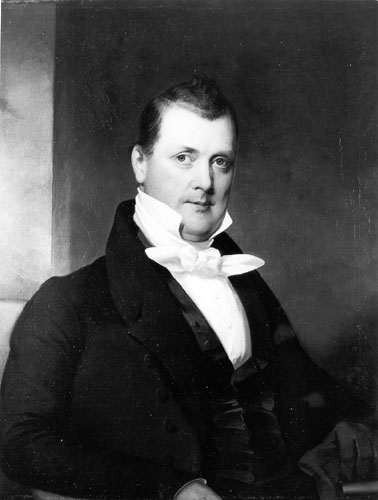
Buchanan and King: A 19th Century (Gay) Power Couple?

There are some who think that, yes, there were.  Historian James W. Loewen is one of those who thinks that both James Buchanan (15th President of the United States) and William Rufus King (13th Vice President of the United States)  were not only gay but also lovers.  Though I have heard the historic rumors about Buchanan, this was the first time I had heard about King, who I have done a fair amount of research, since he lived just down the road from me.

More than 150 years before America elected its first black president, Barack Obama, it most likely had its first gay president, James Buchanan (1791-1868). Buchanan, a Democrat from Lancaster County, Pa., was  a lifelong bachelor (throughout American history this was often code for homosexual). He served as president from 1857-61, tumultuous years leading up to the Civil War.  Loewen has done extensive research into Buchanan’s personal life, and he’s convinced Buchanan was gay. Loewen is the author of the acclaimed book Lies Across America which examines how historical sites inaccurately portray figures and events and Lies My Teacher Told Me which examines how history books have been marred by an embarrassing combination of blind patriotism, mindless optimism, sheer misinformation, and outright lies.  I have always enjoyed reading Loewen, but I am not for sure how accurate he is in this instance.

In 1819, Buchanan was engaged to Ann Caroline Coleman, the daughter of a wealthy iron manufacturing businessman and sister-in-law of Philadelphia judge Joseph Hemphill, one of Buchanan’s colleagues from the House of Representatives. Buchanan spent little time with her during the courtship: he was extremely busy with his law firm and political projects during the Panic of 1819, which took him away from Coleman for weeks at a time. Conflicting rumors abounded, suggesting that he was marrying her for her money, because his own family was less affluent, or that he was involved with other women. Buchanan never publicly spoke of his motives or feelings, but letters from Ann revealed she was paying heed to the rumors.

After Buchanan paid a visit to the wife of a friend, Ann broke off the engagement. She died soon afterward, on December 9, 1819. The records of a Dr. Chapman, who looked after her in her final hours, and who said just after her death that this was “the first instance he ever knew of hysteria producing death”, reveal that he theorized, despite the absence of any valid evidence, the woman’s demise was caused by an overdose of laudanum, a concentrated tincture of opium.

His fiancée’s death struck Buchanan a terrible blow. In a letter to her father, which was returned to him unopened, Buchanan wrote “It is now no time for explanation, but the time will come when you will discover that she, as well as I, have been much abused. God forgive the authors of it […] . I may sustain the shock of her death, but I feel that happiness has fled from me forever.” The Coleman family became bitter towards Buchanan and denied him a place at Ann’s funeral. Buchanan vowed he would never marry, though he continued to be flirtatious. Some pressed him to seek a wife; in response, Buchanan said, “Marry I could not, for my affections were buried in the grave.” He preserved Ann Coleman’s letters, keeping them with him throughout his life; at his request, they were burned upon his death.

“I’m sure that Buchanan was gay,” Loewen said. “There is clear evidence that he was gay. And since I haven’t seen any evidence that he was heterosexual, I don’t believe he was bisexual.”  According to Loewen, Buchanan shared a residence with William Rufus King, a Democratic senator from Alabama, for several years in Washington, D.C.  Loewen also said Buchanan was “fairly open” about his relationship with King, causing some colleagues to view the men as a couple. For example, Aaron Brown, a prominent Democrat, writing to Mrs. James K. Polk, referred to King as Buchanan’s “better half,” “his wife” and “Aunt Fancy … rigged out in her best clothes.”  Brown may have been trying to slander King in this letter.  He was a friend of the Polks and was James K. Polk’s law partner, but he was also an early proponent of secession after his years as Governor of Tennessee.  Most accounts by historians of King’s political career portray him as a moderate southerner who supported slavery while emerging as a strong unionist. King voiced opposition calls by some of his fellow southerners for the South to secede from the United States during the tense decade prior to the Civil War.  King was always considered a moderate Democrat who was a staunch Unionist, which probably led to some political disagreements between Brown and King.

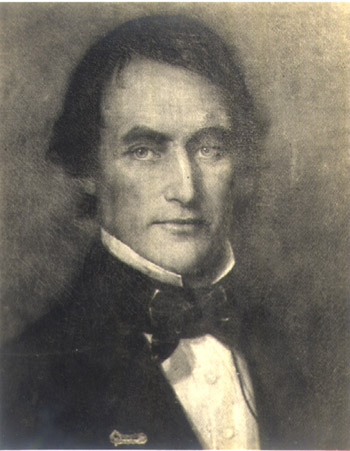
William Rufus DeVane King, the 13th United States vice president, has the distinction of having served in that office for less time than any other vice president and for being the only U.S. official to be sworn in on foreign soil.  He died of tuberculosis on April 18, 1853, just 25 days after being sworn into office while in Cuba on March 24, 1853.  Some historians have speculated that King holds yet another distinction — the likely status of being the first gay U.S. vice president and possibly one of the first gay members of the U.S. House of Representatives and the U.S. Senate.
King (1786-1853) served in the House of Representatives from North Carolina for six years beginning in 1811 and later served in the Senate from the newly created state of Alabama from 1819-44, when he became U.S. minister to France.  He returned to the Senate in 1848, where he served until he resigned after winning election in November 1852 as vice president on the ticket of Franklin Pierce.

When in 1844 King was appointed minister to France, he wrote Buchanan, “I am selfish enough to hope you will not be able to procure an associate who will cause you to feel no regret at our separation.”  Loewen also said a letter Buchanan wrote to a friend after King went to France shows the depth of his feeling for King.  “I am now solitary and alone, having no companion in the house with me,” Buchanan wrote. “I have gone a wooing to several gentlemen, but have not succeeded with any one of them. I feel that it is not good for man to be alone; and should not be astonished to find myself married to some old maid who can nurse me when I am sick provide good dinners for me when I am well, and not expect from me any very ardent or romantic affection.”  Loewen said their relationship — though interrupted due to foreign-service obligations — ended only with King’s death in 1853.

Some of the contemporary press also speculated about Buchanan’s and King’s relationship. The two men’s nieces destroyed their uncles’ correspondence, leaving some questions about their relationship; but the length and intimacy of surviving letters illustrate “the affection of a special friendship”, and Buchanan wrote of his “communion” with his housemate. In May 1844, during one of King’s absences that resulted from King’s appointment as minister to France, Buchanan wrote to a Mrs. Roosevelt, “I am now ‘solitary and alone’, having no companion in the house with me. I have gone a wooing to several gentlemen, but have not succeeded with any one of them. I feel that it is not good for man to be alone, and [I] should not be astonished to find myself married to some old maid who can nurse me when I am sick, provide good dinners for me when I am well, and not expect from me any very ardent or romantic affection.”

Circumstances surrounding Buchanan’s and King’s close emotional ties have led to speculation that Buchanan was homosexual. Buchanan’s correspondence during this period with Thomas Kittera, however, mentions his romance with Mary K. Snyder. In Buchanan’s letter to Mrs. Francis Preston Blair, he declines an invitation and expresses an expectation of marriage. The only President to remain a bachelor, Buchanan turned to Harriet Lane, an orphaned niece, whom he had earlier adopted, to act as his official hostess.

Loewen said many historians rate Buchanan as one of the worst U.S. presidents. Buchanan was part of the pro-slavery wing of the Democratic Party, and corruption plagued his administration.  But Loewen said those flaws shouldn’t discourage members of the LGBT community from acknowledging Buchanan’s status as a gay man.  “If we only admit that really great people are gay, what kind of history is that?”  Truthfully though, even the letters written by Buchanan do not really point to more than merely a great friendship and affection that was common between men of the nineteenth century, especially during a time when women were still seen as intellectual inferiors.

A lifelong bachelor, King lived for 15 years in the home of future U.S. president James Buchanan while the two served in the Senate. In a time when Congress was only in session part of the year, and senators often returned home when not in session, it would not have been that unusual for two senators to share a home. King’s relationship with Buchanan, who was from Pennsylvania, could have been a factor in Buchanan’s sympathy for the South.

From the research I have done about King, he seems to be a fairly boring and moderate politician, as most Vice Presidents in history have been.  Like many men of his status, he traveled widely in Europe during his life, often as a diplomat.  He also sent his nephews and nieces to Europe as well to round out their education. The only evidence I have seen is what Brown stated to Mrs. Polk in his letter and in the way that Buchanan pines for him in his letters.

Is this really enough evidence to be the proof that Loewen claims to have?  I personally think that either man would be a wonderful addition to the list of LGBT historical figures, especially King, who I have long admired.  What do you think?