Category Archives: History

Love in War

20130915-193823.jpg
 
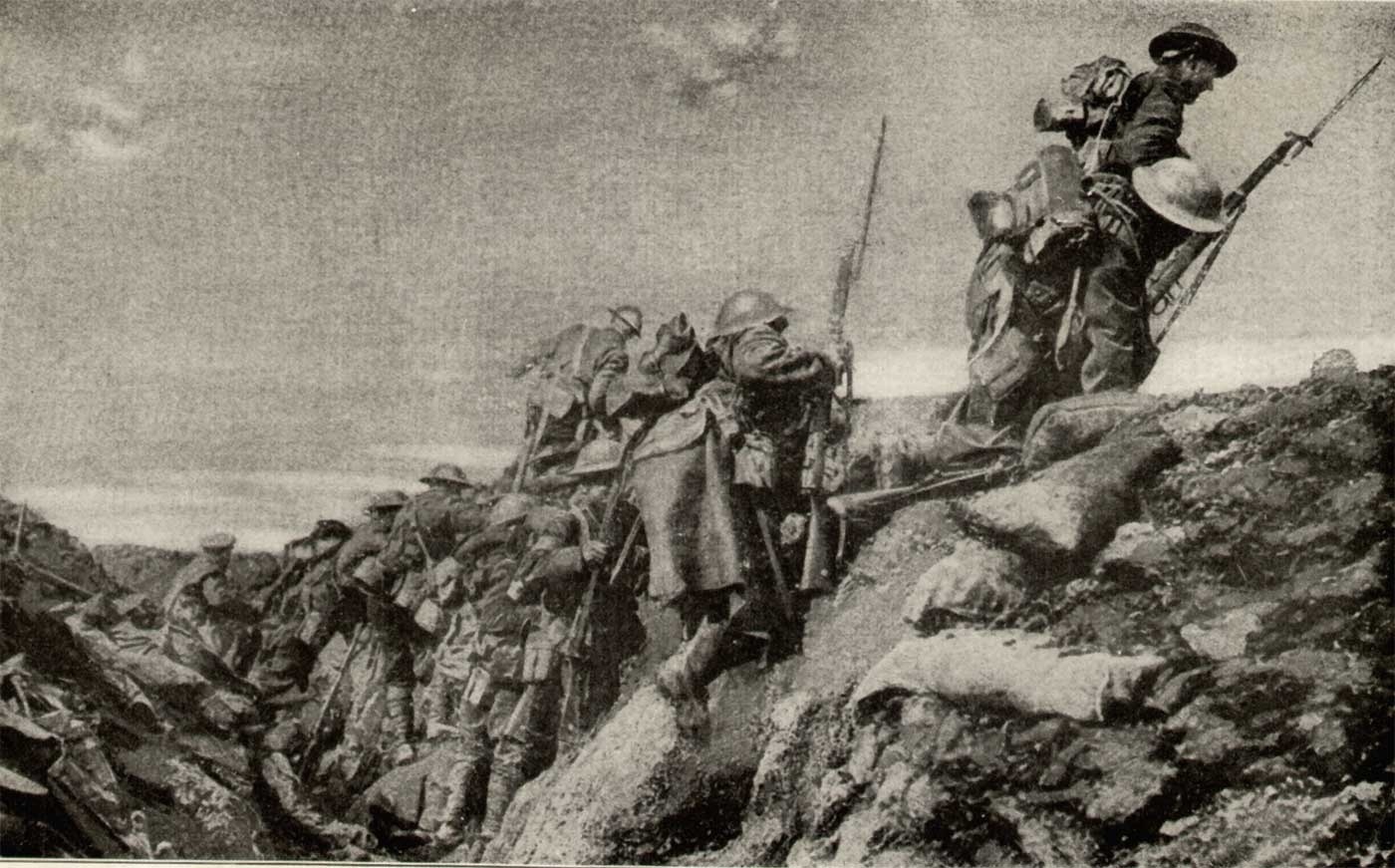
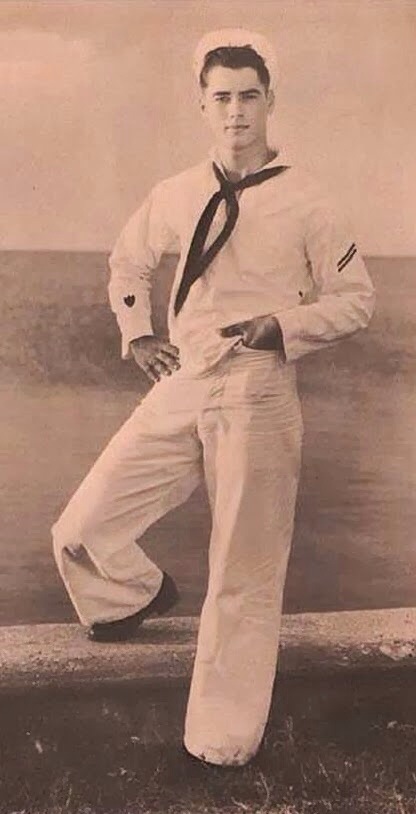
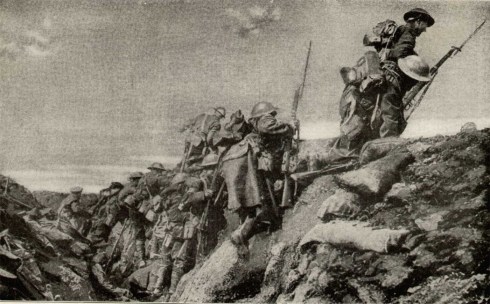
The Second World War was a huge disruption of American life. People from farms, small towns, and cities, from all regions and classes now found themselves suddenly uprooted and thrown together. People who had never traveled more than 5 miles from home now found themselves in the South Pacific or flying over Central Europe. This was true, not just for soldiers, but for civilians on the home front. The war created desperate labor shortages in factories contracted for war production. Those jobs were filled by women, African Americans, and other minorities. Like the soldiers, many of these workers left home and found themselves living together, sometimes in close quarters in alien environments. Time honored customs and beliefs about class, gender, region, and race came under unprecedented strain. While this created incredible stress for many, for others, this created unexpected opportunities and raised expectations.
 
Gays and lesbians were an invisible minority; not only invisible to society at large, but to each other. Most of the American population at the start of the war still lived in small towns and on farms. A lot of gay men and lesbians from those backgrounds who previously felt very isolated now found each other in the military or in wartime production. Within the ranks of the military, a huge underground gay culture began to flourish. Gay soldiers in the South Pacific would create “gay beaches” for gathering sometimes within days of capturing an island from the Japanese.
 
A gay soldier from rural America recalled visiting Paris within days of liberation in 1944. He sought out a once famous Parisian gay night spot thinking it may still be closed for the duration. When he arrived, the place was wide open and packed with soldiers from a dozen different countries. He described American and Free French soldiers dancing together with Polish and Italian partisans and British troops. Not only did this soldier no longer feel isolated, he also began to see a certain potential. Gay men may have been a minority, but they were not a small minority. Formerly isolated gay men and lesbians discovered that there were lots and lots and lots of people like them. This caused a lot of people to rethink some things and to get some ideas.
 
Regulations and anti-sodomy laws had limited gay service since the Revolutionary War, leading to dishonorable discharge, courts-martial, or imprisonment for men found having sex with other men. The massive manpower needs during World War II and the growing influence of psychiatry in America led the military to classify some homosexual troops as psychologically unfit for service. Still, among the sixteen million Americans who served in the Armed Forces during World War II were hundreds of thousands of gay and lesbian military personnel who proudly served. Only about 5000 of the eighteen million men called before draft boards and medical inspectors during World War II were screened out initially because of homosexuality.  As Charles Rowland, a gay draftee from Arizona explained, “We were not about to be deprived the privilege of serving our country in a time of great national emergency by virtue of some stupid regulation about being gay.”
 
The military’s policies toward gays and lesbians became increasingly aggressive and more punitive as the war drew to a close.  The American military only used the ban against LGBT service members when it was convenient; times of war, WWII, Korea, and Vietnam, were not convenient times for the American military.  They often overlooked homosexuality because they needed the manpower.   However, just as African- American servicemen saw freedom abroad, so did LGBT service members.  The Stonewall Riots of 1969 are often credited with being a watershed moment that fundamentally altered the course of gay history. This, of course, is true. But it was not the watershed moment. Long before gay bar patrons rioted against the NYPD and gave momentum to the largest political mobilization of gays and lesbians in history, World War II was setting the stage for Stonewall.  This emerging gay culture continued to flourish, and it survived the war’s end. Large American port cities like New York, Boston, Chicago, and San Francisco found themselves with huge populations of gays and lesbians at the end of the war; people who couldn’t or wouldn’t go home again. Friendships and communities formed during the war would quickly become useful for resisting and pushing back as an increasingly paranoid Post War America tried hard to put the genie of expectations for women, African Americans, and LGBTs back into the bottle.
 
A particular letter of love and loss between two World War II soldiers is making its rounds on the Internet, and the heartbreakingly beautiful story it paints for the reader will have you reaching for the tissues.
 
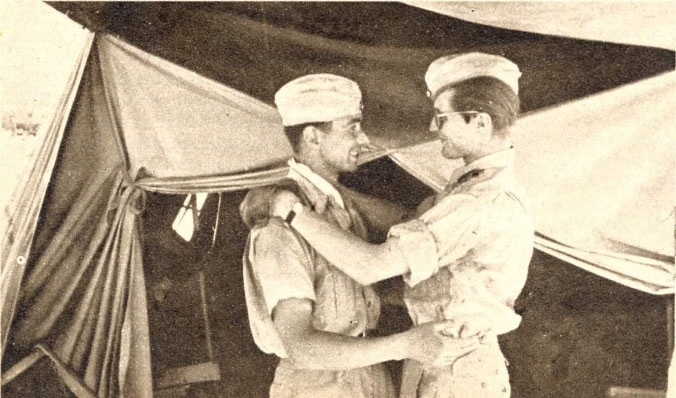
Long before the days of “Don’t Ask Don’t Tell” and its subsequent repeal, the two men appear to have met and fallen for one another while on duty in Africa. However, their idealistic romance seems to have been cut short.
 
An excerpt reads,
 

This is in memory of an anniversary — the anniversary of October 27th, 1943, when I first heard you singing in North Africa. That song brings memories of the happiest times I have ever known. Memories of a GI show troop — curtains made from barrage balloons — spotlights made from cocoa cans — rehearsals that ran late into the evenings — and a handsome boy with a wonderful tenor voice … The happiness when told we were going home — and the misery when we learned that we would not be going together. Fond goodbyes on a secluded beach beneath the star-studded velvet of an African night, and the tears that would not be stopped as I stood atop the sea-wall and watched your convoy disappear over the horizon…

 
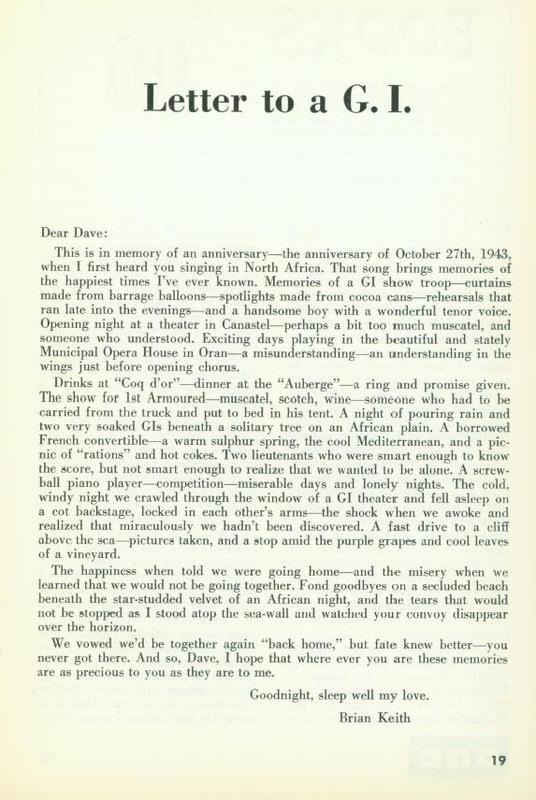
The heart-rending love letter was written by American World War II veteran Brian Keith to Dave, a fellow soldier he met and fell in love with in 1943 while stationed in North Africa. It was penned on the occasion of their anniversary and reprinted in September of 1961 by ONE Magazine, a groundbreaking pro-gay magazine first published in 1953.  The original is supposedly preserved in the Library of Congress. Read the rest of the letter below, and have a somber glimpse inside the mid-century romance of Dave and Brian.
 

20130915-193759.jpg

Here is the full transcript:
Dear Dave,
 
This is in memory of an anniversary — the anniversary of October 27th, 1943, when I first heard you singing in North Africa. That song brings memories of the happiest times I’ve ever known. Memories of a GI show troop — curtains made from barrage balloons — spotlights made from cocoa cans — rehearsals that ran late into the evenings — and a handsome boy with a wonderful tenor voice. Opening night at a theatre in Canastel — perhaps a bit too much muscatel, and someone who understood. Exciting days playing in the beautiful and stately Municipal Opera House in Oran — a misunderstanding — an understanding in the wings just before opening chorus.
 
Drinks at “Coq d’or” — dinner at the “Auberge” — a ring and promise given. The show 1st Armoured — muscatel, scotch, wine — someone who had to be carried from the truck and put to bed in his tent. A night of pouring rain and two very soaked GIs beneath a solitary tree on an African plain. A borrowed French convertible — a warm sulphur spring, the cool Mediterranean, and a picnic of “rations” and hot cokes. Two lieutenants who were smart enough to know the score, but not smart enough to realize that we wanted to be alone. A screwball piano player — competition — miserable days and lonely nights. The cold, windy night we crawled through the window of a GI theatre and fell asleep on a cot backstage, locked in each other’s arms — the shock when we awoke and realized that miraculously we hadn’t been discovered. A fast drive to a cliff above the sea — pictures taken, and a stop amid the purple grapes and cool leaves of a vineyard.
 
The happiness when told we were going home — and the misery when we learned that we would not be going together. Fond goodbyes on a secluded beach beneath the star-studded velvet of an African night, and the tears that would not be stopped as I stood atop the sea-wall and watched your convoy disappear over the horizon.
 
We vowed we’d be together again “back home,” but fate knew better — you never got there. And so, Dave, I hope that where ever you are these memories are as precious to you as they are to me.
 
Goodnight, sleep well my love.
 
Brian Keith
 
I recommend Alan Berube’s book Coming Out Under Fire: The History of Gay Men and Women in World War II. Bérubé argues in Coming Out Under Fire, “the massive mobilization for World War II relaxed the social constraints of peacetime that kept many gay men and women unaware of themselves and each other.”  
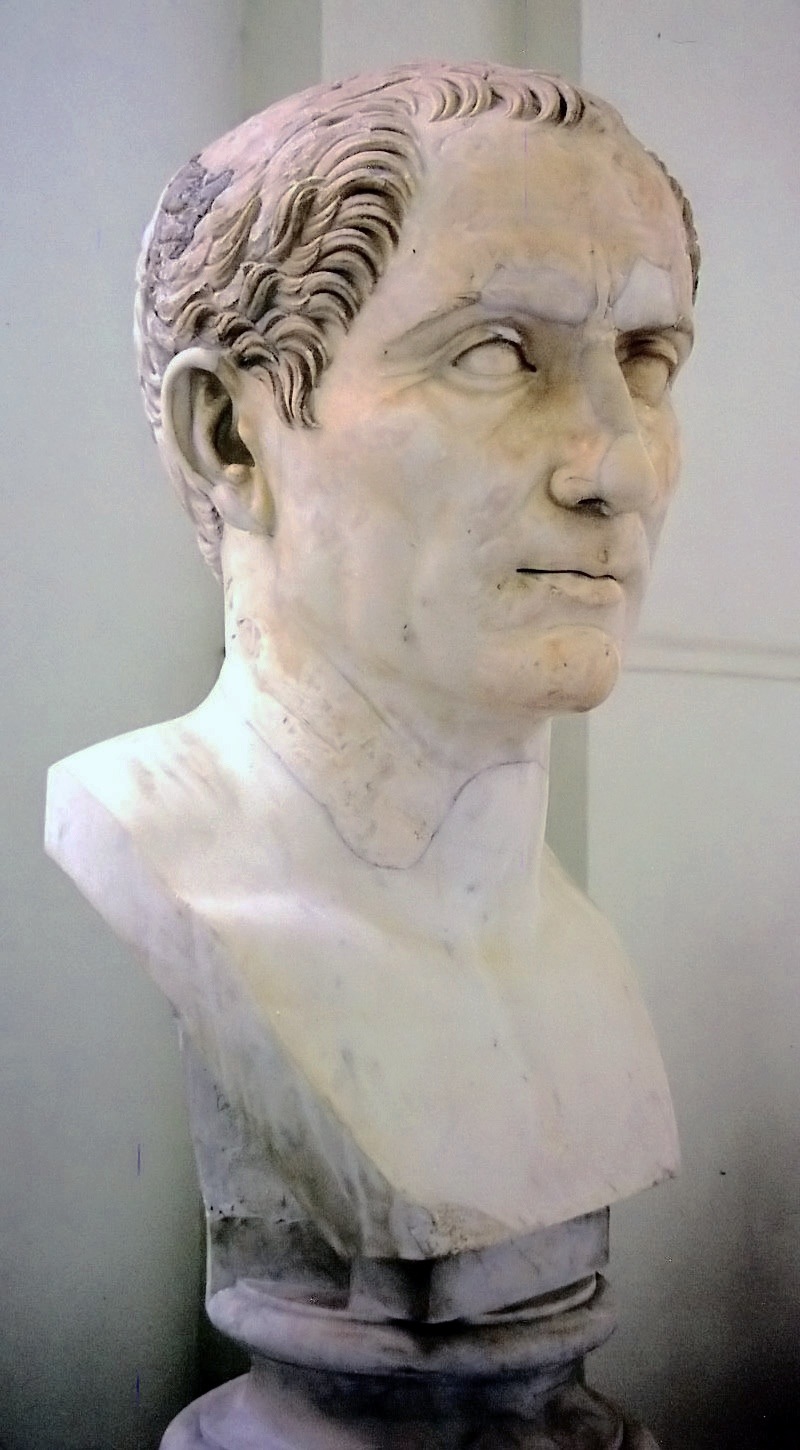
“He is every woman’s man and every man’s woman.”

20130908-222141.jpg

In 80 BCE, young Julius Caesar was an ambassador to Nicomedes’ court. He served his first campaign in Asia on the personal staff of Marcus Thermus, governor of the province. Being sent by Thermus to Bithynia, to fetch a fleet, because he had stayed there for so long, a rumor developed that he was suspected of improper relations with the king [The Latin is stronger – “non sine rumore prostratae regi pudicitiae”], leading to the disparaging title, “the Queen of Bithynia”, an allegation that was much brought up by Caesar’s political enemies later on in his life. A political opponent once said that “He is every woman’s man and every man’s woman.” He lent further suspicion to this scandal by going back to Bithynia a few days after his return for the alleged purpose of collecting a debt for a freedman, one of his dependents. During the rest of the campaign he enjoyed a better reputation, and at the storming of Mytilene Thermus awarded him the civic crown.

Julius Caesar is said to have been tall of stature, with a fair complexion, shapely limbs, a somewhat full face, and keen black eyes; sound of health, except that towards the end he was subject to sudden fainting fits and to nightmare as well. He was twice attacked by the falling sickness [what most historians believe to be epilepsy] during his campaigns. He was somewhat overnice in the care of his person, being not only carefully trimmed and shaved, but even having superfluous hair plucked out, as some have charged; while his baldness was a disfigurement which troubled him greatly, since he found that it was often the subject of the gibes of his detractors. Because of it he used to comb forward his scanty locks from the crown of his head, and of all the honors voted him by the senate and people there was none which he received or made use of more gladly than the privilege of wearing a laurel wreath at all times. They say, too, that he was fantastic in his dress; that he wore a senator’s tunic with fringed sleeves reaching to the wrist [i.e. Latus clavis – the braod purple strip, or a tunic with the broad stripe. All senators had the right to wear this; the peculiarity in Caesar’s case consisted in the long fringed sleeves.] , and always had a girdle over it, though rather a loose one. While a girdle was commonly worn with the ordinary tunic, it was not usual to wear one with the latus clavis. The looseness of the girdle was an additional peculiarity. This, they say, was the occasion of Sulla’s mot, when he often warned the nobles to keep an eye on the ill-girt boy.

There was no stain on his reputation for chastity except his intimacy with King Nicomedes, but that was a deep and lasting reproach, which laid him open to insults from every quarter. I say nothing of the notorious lines of Licinius Calvus:

Whate’er Bithynia had, and Caesar’s paramour.
Bithynia quicquid/ et pedicator Caesaris umquam habuit

I pass over, too, the invectives of Dolabella and the elder Curio, in which Dolabella calls him “the queen’s rival, the inner partner of the royal couch,” and Curio, “the brothel of Nicomedes and the stew of Bithynia” I take no account of the edicts of Bibulus, in which he posted his colleague as “the queen of Bithyllia,” saying that ” of yore he was enamoured of a king, but now of a king’s estate.” At this same time, so Marcus Brutus declares, one Octavius, a man whose disordered mind made him sornewhat free with his tongue, after saluting Pompey as ” king ” in a crowded assembly, greeted Caesar as ”Queen.” But Gaius Memmius makes the direct charge that he acted as cup-bearer to Nicomedes with the rest of his wantons at a large dinner-party, and that among the guests were some merchants from Rome, whose names Memmius gives. Cicero, indeed, is not content with having written in sundry letters that Caesar was led by the king’s attendants to the royal apartments, that he lay on a golden couch arrayed in purple, and that the virginity of this son of Venus was lost in Bithynia; but when Caesar was once addressing the senate in defence of Nysa, daughter of Nicomedes, and was enumerating his obligations to the king, Cicero cried: ” No more of that, pray, for it is well known what he gave you, and what you gave him in turn.” Finally, in his Gallic triumph his soldiers, among the bantering songs which are usually sung by those who follow the chariot, shouted these lines, which became a byword

All the Gauls did Caesar vanquish, Nicomedes vanquished him;
Lo ! now Caesar rides in triumph, victor over all the Gauls,
Nicomedes does not triumph, who subdued the conqueror.

As one of his last acts as king of Bithynia, in 74 BCE, Nicomedes bequeathed the entire kingdom of Bithynia to Rome. The Roman Senate quickly voted it as a new province.

That he was unbridled and extravagant in his intrigues is the general opinion, and that he seduced many illustrious women, among them Postumia, wife of Servius Sulpicius, Lollia, wife of Aulus Gabinius, Tertulla, wife of Marcus Crassus, and even Gnaeus Pompey’s wife Mucia. At all events there is no doubt that Pompey was taken to task by the elder and the younger Curio, as well as by many others, because through a desire for power he had afterwards married the daughter of a man on whose account he divorced a wife who had borne him three children, and whom he had often referred to with a groan as an Aegisthus. But beyond all others Caesar loved Servilia, the mother of Marcus Brutus, for whom in his first consulship he bought a pearl costing six million sesterces. During the civil war, too, besides other presents, he knocked down some fine estates to her in a public auction at a nominal price and when some expressed their surprise at the low figure, Cicero wittily remarked: “It’s a better bargain than you think, for there is a third off.” And in fact it was thought that Servilia was prostituting her own daughter Tertia to Caesar.

That he did not refrain from intrigues in the provinces is shown in particular by this couplet, which was also shouted by the soldiers in his Gallic triumph:

Men of Rome, keep close your consorts, here’s a bald adulterer.
Gold in Gaul you spent in dalliance, which you borrowed here in Rome.

He had love affairs with queens too, including Eunoe the Moor, wife of Bogudes, on whom, as well as on her husband, he bestowed many splendid presents, as Naso writes: but above all with Cleopatra, with whom he often feasted until daybreak, and he would have gone through Egypt with her in her state-barge almost to Aethiopia, had not his soldiers refused to follow him. Finally he called her to Rome and did not let her leave until he had ladened her with high honors and rich gifts, and he allowed her to give his name to the child which she bore. In fact, according to certain Greek writers, this child was very like Caesar in looks and carriage. Mark Antony declared to the senate that Caesar had really acknowledged the boy, and that Gaius Matius, Gaius Oppius, and other friends of Caesar knew this. Of these Gaius Oppius, as if admitting that the situation required apology and defense, published a book, to prove that the child whom Cleopatra fathered on Caesar was not his. Helvius Cinna, tribune of the commons, admitted to several that he had a bill drawn up in due form, which Caesar had ordered him to propose to the people in his absence, making it lawful for Caesar to marry what wives he wished, and as many as he wished, “for the purpose of begetting children.” But to remove all doubt that he had an evil reputation both for shameless vice and for adultery (impudicitae et adulteriorum), I have only to add that the elder Curio in one of his speeches calls him “every woman’s man and every man’s woman”

*****

The above history of Julius Caesar is adapted from translations of Suetonius’s The Life of Julius Caesar. Suetonius is my favorite ancient historian. He had a dirty mind and, most likely, a wild imagination, making him a lot of fun to read. He used rumors to write his histories, though there is evidence that he performed a great deal of research. I am currently reading George Gardiner’s The Hadrian Enigma about the death of the Roman Emperor Hadrian’s young Bithynian lover Antinous’s suspicious death on the Nile. Suetonius is he narrator and a prominent character of the book. Since this book is nearly 500 pages long, it might take me a while to read it, since I don’t get a lot of pleasure reading time during the school year.


Southern Decadence

20130901-223810.jpg

Since it was founded in 1781, New Orleans has marched to the beat of its own drum.  For two centuries, those in control of the Louisiana state government have tried in vain to impose their prejudices on a city that is French, Spanish, Creole, African, Catholic, pagan and very gay (in both senses of the word).  If nothing else, New Orleans knows how to throw a party, from the world-famous Mardi Gras to other, more specialized celebrations.

One of these celebrations began quite inauspiciously in August of 1972, by a group of friends living in a ramshackle cottage house at 2110 Barracks Street in the Treme section of New Orleans, just outside of the French Quarter. It was in desperate need of repair, and the rent was $100 per month.  At any given time the residents numbered anywhere from six to ten, and it was still sometimes difficult to come up with the rent.

The large bathroom became a natural gathering place in the house.  It had no shower, only a clawfoot tub, but it also had a sofa.  With from six to ten residents, and one bathtub, everyone became close friends.  While one soaked in the tub, another would recline on the couch and read A Streetcar Named Desire aloud. The Tennessee Williams play inspired the residents to fondly name the house “Belle Reve” in honor of Blanche DuBois’ Mississippi plantation.

And so it was, on a sultry August afternoon in 1972, that this band of friends decided to plan an amusement.  According to author James T. Spears, writing in Rebels, Rubyfruit and Rhinestones: Queering Space in the Stonewall South, this “motley crew of outcasts” began Southern Decadence as a going away party for a friend named Michael Evers, and to shut up a new “Belle Reve” tenant (from New York) who kept complaining about the New Orleans heat.  As a riff on the “Belle Reve” theme, the group named the event a “Southern Decadence Party: Come As Your Favorite Southern Decadent,” requiring all participants to dress in costume as their favorite “decadent Southern” character.    According to Spears, “The party began late that Sunday afternoon, with the expectation that the next day (Labor Day) would allow for recovery. Forty or fifty people drank, smoked, and carried on near the big fig tree … even though Maureen (the New Yorker) still complained about the heat.”


The following year the group decided to throw another Southern Decadence Party.  They met at Matassa’s bar in the French Quarter to show off their costumes, then they walked back to “Belle Reve.”  This first “parade” included only about 15 people impersonating such “decadent Southern” icons as Belle Watling, Mary Ann Mobley, Tallulah Bankhead, Helen Keller, and New Orleans’ own Ruthie the Duck Lady.  This impromptu parade through the French Quarter and along Esplanade Avenue laid the groundwork for future events, and  the group decided to repeat the party again the following year.

In 1974, the Southern Decadence visionaries named Frederick Wright as the first Grand Marshal, hoping to provide at least a modicum of order.  For the next six years, the format of the celebration changed little.  The founding group continued to appoint each year’s Grand Marshal by consensus.  Some were gay, some were not. But all were members of the founding group.

By 1981, most of the original organizers had moved on with their lives.  Many felt that the event had become so big that it was no longer the intimate party they had started nine years earlier.  Of the original group, only Grand Marshal V Robert King was actively participating.  He, along with some of his friends that hung out at the Golden Lantern bar, thought it was worth continuing and they took over the festivities.  It was at this point that Southern Decadence became primarily a gay event.  Other protocol changes made in 1981 included moving the starting point of the annual parade from Matassa’s to the Golden Lantern bar, and allowing Grand Marshals to personally name their own successors.  Both of these traditions continue today. And in 1987, the Grand Marshal began to make a proclamation of the official theme, color and song.

Because the 2005 celebration was cancelled due to Hurricane Katrina, Southern Decadence 2005 Grand Marshals Lisa Beaumann and Regina Adams reigned for both 2005 and 2006, making the very first time in Southern Decadence history that grand marshals ruled for two years.  And keeping with the unpredictability of Decadence, the Grand Marshals from 2008 reigned once again in 2009.

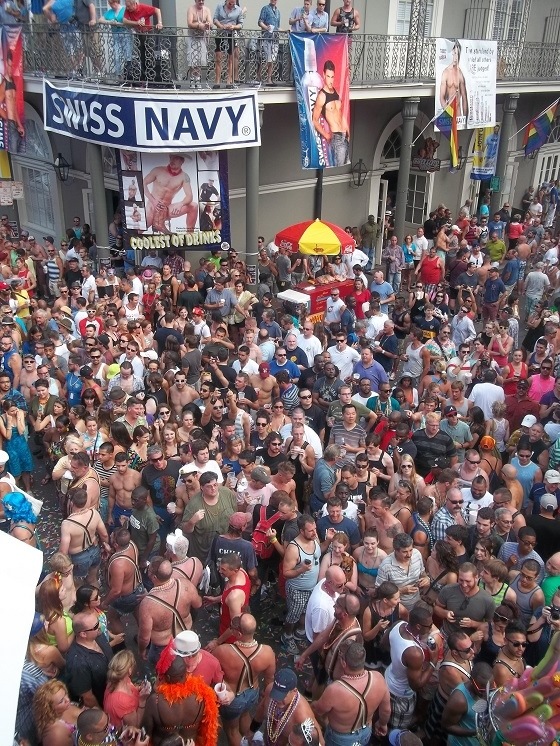
The rest, as they say, is history.  What began as a little costume party is now a world-famous gay celebration.  In the 39th year, it has mushroomed from a small gathering of friends to a Labor Day weekend tradition, attracting over 100,000 participants, predominantly gay and lesbian, and generating almost $100 million in tourist revenue.  This annual economic impact ranks it among the city’s top five most significant tourist events.  The mayor has even welcomed the event with an Official Proclamation.

Described by one reporter as “a happening of haberdashery fit for an LSD Alice in Wonderland,” Southern Decadence 2010 will be as outrageous as ever and live up to its reputation as New Orleans’ largest gay street fair.  It all begins in earnest six weeks before Labor Day.  However, the real party starts on the Wednesday before Labor Day, and the events are non-stop. It picks up steam daily as it nears Sunday’s big street parade, which rivals New Orleans’ gay Mardi Gras in scope, with the party lasting well into the day on Monday.

If you’ve never been to Southern Decadence, and sadly I haven’t, here are some tips to know before you go. What follows are some thoughts gathered from locals that will help you get the most out of your experience.

Pass by the NO/AIDS Task Force’s information tables located on the St. Ann Street sidewalk in front of Hit Parade Gift and Clothing, at the corner of Bourbon and St. Ann Streets.  You’ll find lots of community information and details of the weekend’s events.  The literature racks inside of Hit Parade are another great source for all of the Southern Decadence information that you will need.

During Southern Decadence, some streets of the French Quarter do not allow parking – look for, and heed, no parking signs. Plan on doing a lot of walking. Comfortable shoes are a must. Always walk where it is well lit and there are a lot of people. New Orleans is a city of neighborhoods. Like all large cities, the Big Easy does have some trouble spots. Always walk with others, never alone if possible. Don’t wander about the city. In New Orleans the neighborhoods can change, literally, when you cross a street. Always carry a map. If you’re drinking, don’t go stumbling about the French Quarter. Locals know that the people who encounter trouble are usually the ones who have been drinking.

And a bit of urban common sense is in order. When you walk the streets, don’t bring your wallet. Take the cash you need and possibly a credit card, along with some sort of identification, and put them in a pocket that no one can slip their hand into. Don’t wear expensive jewelry. Basically, don’t take anything with you that you would have a hard time replacing if it were lost.

If your car is impounded, it will cost you over $100 plus whatever else the city decides to tack on. Your car can be retrieved from the City Auto Pound, located in a dangerous area of the city, 400 N. Claiborne Ave., (504.565.7236). This will spoil a good time. Cabs are not difficult to get during Southern Decadence. If you are going to take a cab, try UNITED CABS: 504.522.9771 or 504.524.9606. Write these numbers down and put them in your wallet. This cab company can be trusted. United Cabs has a sound reputation with the New Orleans gay community.

People are allowed to drink on the streets in New Orleans —  that large 24-oz Southern Decadence cup that you’ll see people walking with and drinking from likely contains several shots of alcohol!  However, if your drink isn’t already in a plastic cup, please ask for one before leaving your favorite watering hole. Glass and cans are not allowed on the streets for safety reasons.

Most bars in New Orleans are open twenty-four hours a day. Pace yourself. Most important, it’s easy to get caught up in all the excitement and forget to eat. If you want to make it through the weekend, solid food is a necessity. Of course, New Orleans is world famous for its food and indulging is part of a complete New Orleans experience.

Clean bathrooms can be difficult to find during Southern Decadence. Most businesses close their facilities to everyone but paying customers. If your hotel is far from the action, take care of the more important business before you hit the streets. If you need to, plan on buying lunch or dinner and using the restaurant’s bathroom before you pay the check!

The French Quarter is an historic neighborhood. Please respect it. No matter how “bad” you have to go, do not urinate in the streets or on door steps or through iron gates. This is a good way to end up in central lock-up, and people who are arrested sit in jail until the courts re-open after Labor Day. It will cost you about $200. And it’s not polite. Listen to your body. Get in line before you really have to go. By the time you’re crossing your legs, you might be at the front of the line.

During Southern Decadence weekend, you’re guaranteed to get an eyeful of great costumes and fabulous bodies. Officially, public nudity is not allowed and there are obscenity laws on the books. Better judgment should be the rule of the day.

Southern Decadence is a BIG non-stop party. People drink and are having a good time. It’s easy to forget that there is a real world out there. Free condoms are available from the NO/AIDS Task Force station located near the Bourbon Pub / Parade. Don’t allow the party to overwhelm your better judgment. We want you to come again. Have fun and play safe!

20130901-223842.jpg


Photos from vjbrendan.com.


The Order of Chaeronea

20130825-203319.jpg

In the reckoning of George Cecil Ives, today would be the sixth day of the year 2341, since he counted years from the Battle of Chaeronea, which fell on 20th day August in 338 BC. A self-described “evolutionary anarchist,” Ives was also a poet and penologist who, around 1893, founded a secret homosexual society, the Order of Chaeronea, the name taken from the town in ancient Greece where, in the late 19th century, the remains were found of an elite corps of 150 pairs of male lovers who died in 338 BC in a battle against Philip II of Macedon. The army of Alexander the Great and Philip II of Macedon (for he was still alive then) vanquished the one-hundred-fifty members of the Sacred Band of Thebes in this last battle before Greece was under the hegemony of the Macedonians.

20130825-203423.jpg

Sacred Band of Thebes were much lamented by Alexander himself, and have never really been forgotten. And, all those years later, George Cecil Ives’ Order of Chaeronea (the specifically spiritual effort within “the Movement” for full equality for queer people that he and many others took part in during the late 19th century) was founded specifically in their honor and memory, hence his dating schema mentioned earlier.

George Cecil Ives was born on October 1, 1867. He was raised by his father’s mother, Emma Ives, and referred to her as his mother. Ives and his grandmother primarily resided in England at Bentworth Hall, or in the South of France. Ives was educated at home and at Magdalene College, Cambridge.

In 1892, Ives met Oscar Wilde at the Authors’ Club in London. By this time Ives had accepted his homosexuality and was working to promote the end of the oppression of homosexuals, what he called the “Cause.” Ives hoped that Wilde would join the “Cause” but Wilde did not have the same compassion towards this movement that Ives did. Lord Alfred Douglas met Ives in 1893 and introduced him to several Oxford poets, whom Ives encouraged to join the “Cause.”

By 1897, Ives understood that the “Cause” would not be accepted openly in society and must therefore have a means of underground communication. Thus he created and founded the Order of Chaeronea, a secret society for homosexuals. Ives and other members dated letters and other materials based on this date, so that 1899 would be written as C2237. An elaborate system of rituals, ceremonies, a service of initiation, seals, codes, and passwords were used by the members.

The ‘Rules of Purpose’ stated that the Order was to be ‘A Religion, A Theory of Life, and Ideal of Duty’, although its purpose was primarily political. Members of the Order were ‘Brothers of the Faith’, and were required to swear under the ‘Service of Initiation’, that “you will never vex or persecute lovers” and “That all real love shall be to you as sanctuary.” The group was male dominated, but did include a few lesbian members. At its peak ‘the Elect’ numbered perhaps two or three hundred, but no membership lists survive. Oscar Wilde was, however, likely an early recruit, along with Lord Alfred Douglas “Bosie”. Other members may have included Charles Kains Jackson, Samuel Elsworth Cottam, Montague Summers, and John Gambril Nicholson.

An elaborate system of rituals, ceremonies, a service of initiation, seals, codes, and passwords were established. The Order, according to Ives’ notebooks, had a specific purpose, distinct prescriptions and philosophy, and its particular symbolism: the “sign-word” AMRRHAO and “the seal of the double wreath.” The prerequisites of membership were indicated to be “Zeal, Learning and Discipline.” The principle of secrecy was conveyed by the metaphor of “The Chain” underlining that one should never reveal any information about the order or its members. The writings of Walt Whitman were particularly revered.

Ives was keen to stress that the Order was to be an ascetic movement, not to be used as a forum for men to meet men for sex, although he accepted a degree of ‘passionate sensuality’ could take place. He also believed that love and sex between men was a way to undermine the rigid class system, as a true form of democracy. The Secret Society became a worldwide organization, and Ives took advantage of every opportunity to spread the word about the “Cause.”

In Ives’ words:

We believe in the glory of passion. We believe in the inspiration of emotion. We believe in the holiness of love. Now some in the world without have been asking as to our faith, and mostly we find that we have no answer for them. Scoffers there be, to whom we need not reply, and foolish ones to whom our words would convey no meaning. For what are words? Symbols of kindred comprehended conceptions, and like makes appeal to like.


Letters of Note

One of my fellow teachers was telling me about this website/blog called Letters of Note. (Letters of Note is a blog-based archive of fascinating correspondence, complete with scans and transcripts of the original missives where available. Letters of Note is an attempt to gather and sort fascinating letters, postcards, telegrams, faxes, and memos.) Since my colleague told me about this blog, I have enjoyed reading some of the letters. On a whim, I searched for letters about homosexuality, and found this one. I hope you enjoy.

Homosexuality is nothing to be ashamed of

20130820-215928.jpg

In 1935, the father of psychoanalysis, Sigmund Freud, was contacted by a worried mother who was seeking treatment for her son’s apparent homosexuality. Freud, who believed that all humans are attracted to both sexes in some capacity, responded with the following letter of advice.

(The letter was later passed on to Alfred Kinsey and reproduced in The American Journal of Psychiatry in 1951, hence the note attached to its foot.)

Transcript follows.

Source: The Truth Tree; Image of Sigmund Freud via Multiart.

20130820-220219.jpg

20130820-220231.jpg

Transcript

April 9th 1935

PROF. DR. FREUD

Dear Mrs [Erased],

I gather from your letter that your son is a homosexual. I am most impressed by the fact that you do not mention this term yourself in your information about him. May I question you why you avoid it? Homosexuality is assuredly no advantage, but it is nothing to be ashamed of, no vice, no degradation; it cannot be classified as an illness; we consider it to be a variation of the sexual function, produced by a certain arrest of sexual development. Many highly respectable individuals of ancient and modern times have been homosexuals, several of the greatest men among them. (Plato, Michelangelo, Leonardo da Vinci, etc). It is a great injustice to persecute homosexuality as a crime – and a cruelty, too. If you do not believe me, read the books of Havelock Ellis.

By asking me if I can help, you mean, I suppose, if I can abolish homosexuality and make normal heterosexuality take its place. The answer is, in a general way we cannot promise to achieve it. In a certain number of cases we succeed in developing the blighted germs of heterosexual tendencies, which are present in every homosexual in the majority of cases it is no more possible. It is a question of the quality and the age of the individual. The result of treatment cannot be predicted.

What analysis can do for your son runs on a different line. If he is unhappy, neurotic, torn by conflicts, inhibited in his social life, analysis may bring him harmony, peace of mind, full efficiency, whether he remains a homosexual or gets changed. If you make up your mind he should have analysis with me — I don’t expect you will — he has to come over to Vienna. I have no intention of leaving here. However, don’t neglect to give me your answer.

Sincerely yours with best wishes,

Freud

P.S. I did not find it difficult to read your handwriting. Hope you will not find my writing and my English a harder task.


Bayard Rustin Will Posthumously Be Awarded the Presidential Medal of Freedom

image

The trailblazing strategist behind the 1963 March on Washington will this year be posthumously awarded the Presidential Medal of Freedom. That’s a long way from the days when civil rights activists counted on Bayard Rustin’s hard work. Rustin taught MLK about non-violence, a strategy he’d learned from Gandhi. He organized the 1963 March on Washington. But he was discouraged from being a public spokesperson for civil rights because he was gay. Many activists at the time felt the movement wasn’t big enough to include homosexuality.

For 60 years, Rustin fought for peace and equal rights — demonstrating, organizing and protesting in the United States and around the world. Rustin grew up in West Chester, Pa. In college in the 1930s, he joined the Communist Youth League for a few years, attracted by the group’s anti-racist efforts. He later embraced socialism.

He was a gay black man, tall, with high cheekbones, and a gifted singer. He played a bit part in a Broadway musical alongside Paul Robeson, and Rustin often sang for his audiences as he toured the country, conducting race-relations workshops.

Rustin was considered a master organizer, a political intellectual and a pacifist; he served time in prison for refusing to register for the draft. He created the first Freedom Rides, which challenged segregation on interstate buses. Along with King, Rustin was one of the founders of the Southern Christian Leadership Conference.

He had two strong mentors. A.J. Muste, the head of the pacifist organization the Fellowship of Reconciliation, hired Rustin as a youth secretary to conduct workshops and demonstrations against war and segregation. Rustin’s other mentor was A. Philip Randolph, the head of the first predominantly black union, the Brotherhood of Sleeping Car Porters.

“What Rustin took away from Randolph, especially, is the recognition that economic issues and racial justice issues are completely intertwined,” says his biographer, John D’Emilio.

Despite his extensive involvement in the civil rights movement, Rustin was content to remain behind the scenes, D’Emilio says.

“I think of it as part of the Quaker heritage that he internalized. You don’t push yourself forward,” D’Emilio says. “It doesn’t matter if you don’t get the credit for it. What is important is this notion of speaking truth to power.”

In 1953, Rustin’s homosexuality became a public problem after he was found having sex in a parked car with two men. He was arrested on a morals charge. Later, when he was chosen to organize the 1963 march, some civil rights activists objected. In an effort to discredit the march, segregationist Sen. Strom Thurmond took to the Senate floor, where he derided Rustin for being a communist, a draft dodger and a homosexual. Ironically, author D’Emilo says, it became a rallying point — for the civil rights leaders.

“Because no one could appear to be on the side of Strom Thurmond, he created, unwittingly, an opportunity for Rustin’s sexuality to stop being an issue,” he says.

The march was a success, and at its end, a triumphant Rustin stepped up to the microphone to read the demands that the leaders of the civil rights movement would take to President John F. Kennedy.

First on the list: “effective Civil Rights legislation — no compromise, no filibuster — and that it include public accommodations, decent housing, integrated education, [fair employment], and the right to vote.”

Rustin wanted to move the civil rights agenda from protesting to politics and to work within the system — blacks and whites together — to create jobs and other opportunities. His effort fell flat, stymied by a more militant generation and the dominant issue of the times, the Vietnam War. Rustin said, “It has split the civil rights movement down the middle. It has caused many white people who were in it to say, ‘That must wait now until we stop Vietnam.’ ”

In his later years, Rustin continued to speak out on a variety of fronts, and his personal life also changed: He met Walter Naegle.

Naegle, Rustin’s surviving partner, says that in the final years of his life, Rustin became more involved in gay rights.

“He saw this as another challenge, another barrier that had to be broken down — a larger struggle for human rights and for individual freedoms,” Neagle says.

Or, as Rustin put it:

“The barometer for judging the character of people in regards to human rights is now those who consider themselves gay, homosexual, lesbian. The judgment as to whether you can trust the future, the social advancement, depending on people, will be judged on where they come out on that question.”

Activist Mandy Carter says Rustin was a visionary, understanding the parallels in the civil rights struggle and the gay rights movement. Carter is on the leadership council the National Black Justice Coalition, an LGBT civil rights group.

“For me and for a lot of us who are black, and gay and lesbian, bi, trans, who see ourselves as social justice advocates as well, to have this person — such an amazing role model,” she says.

Carter says there was just no one like him, and she is delighted such a key individual in the civil rights movement is now being recognized with the nation’s highest honor.

Rustin died in 1987 in New York. He was 75.


Remembering Rock

20130725-223520.jpg

On July 25, 1985, HIV/AIDS was given a global spotlight when it was announced that screen icon Rock Hudson was suffering from the disease.
Looking gaunt and almost unrecognizable, rumors began to circulate about his health earlier in the summer when the actor had made a public appearance to promote a new cable series of his friend and former co-star Doris Day.
After collapsing in Paris in July 1985, he was diagnosed with AIDS and given treatment with the drug HPA-23, which at the time was unavailable in the United States. It was while he was in the hospital that it was announced to the public that Hudson had AIDS:

“According to publicist Yanou Collart, who acted as his spokeswoman in Paris, the decision was Hudson’s. ‘The hardest thing I ever had to do in my life was to walk into his room and read him the press release,’ says Collart. “I’ll never forget the look on his face. How can I explain it? Very few people knew he was gay. In his eyes was the realization that he was destroying his own image. After I read it, he said simply, ‘That’s it, it has to be done.’ “

Hudson passed away at the age of 59, on October 2, 1985, less than three months after the announcement, in his Beverly Hills home. In his last weeks he was visited by many famous friends such as Carol Burnett, Roddy McDowell and Elizabeth Taylor, who upon his death was reported as saying “Please God, he did not die in vain.”
Hudson’s AIDS diagnosis put the disease into the headlines and changed the way the public thought of AIDS patients, as well as gay stereotypes. Before his death he created the Rock Hudson AIDS Foundation, donating the $250,000 he received from an advance of a biography to the foundation.
Hudson’s death is also credited with jumpstarting Elizabeth Taylor’s fundraising crusade to fight AIDS and Chairman of California’s AIDS Advisory Board Committee Bruce Decker said upon Hudson’s death: “His illness and death have moved the fight against AIDS ahead more in three months than anything in the past three years.”
Tales of the City author Armistead Maupin was quoted as saying: “I’m sure Rock’s coming out will stand as a landmark in the gay community.”

Independence

John Trumbull’s Declaration of Independence
When in the Course of human events, it becomes necessary for one people to dissolve the political bands which have connected them with another, and to assume among the powers of the earth, the separate and equal station to which the Laws of Nature and of Nature’s God entitle them, a decent respect to the opinions of mankind requires that they should declare the causes which impel them to the separation.
We hold these truths to be self-evident, that all men are created equal, that they are endowed by their Creator with certain unalienable Rights, that among these are Life, Liberty and the pursuit of Happiness.–That to secure these rights, Governments are instituted among Men, deriving their just powers from the consent of the governed, –That whenever any Form of Government becomes destructive of these ends, it is the Right of the People to alter or to abolish it, and to institute new Government, laying its foundation on such principles and organizing its powers in such form, as to them shall seem most likely to effect their Safety and Happiness. Prudence, indeed, will dictate that Governments long established should not be changed for light and transient causes; and accordingly all experience hath shewn, that mankind are more disposed to suffer, while evils are sufferable, than to right themselves by abolishing the forms to which they are accustomed. But when a long train of abuses and usurpations, pursuing invariably the same Object evinces a design to reduce them under absolute Despotism, it is their right, it is their duty, to throw off such Government, and to provide new Guards for their future security.–Such has been the patient sufferance of these Colonies; and such is now the necessity which constrains them to alter their former Systems of Government. The history of the present King of Great Britain is a history of repeated injuries and usurpations, all having in direct object the establishment of an absolute Tyranny over these States. To prove this, let Facts be submitted to a candid world.
The Declaration of Independence is arguably one of the most influential documents in American History. Other countries and organizations have adopted its tone and manner in their own documents and declarations. For example, France wrote its ‘Declaration of the Rights of Man’ and the Women’s Rights movement wrote its ‘Declaration of Sentiments’. However, the Declaration of Independence was actually not technically necessary in proclaiming independence from Great Britain.
A resolution of independence passed the Philadelphia Convention on July 2. This was all that was needed to break away from Britain. The colonists had been fighting Great Britain for 14 months while proclaiming their allegiance to the crown. Now they were breaking away. Obviously, they wanted to make clear exactly why they decided to take this action. Hence, they presented the world with the ‘Declaration of Independence’ drafted by thirty-three year old Thomas Jefferson.

The text of the Declaration has been compared to a ‘Lawyer’s Brief’. It presents a long list of grievances against King George III including such items as taxation without representation, maintaining a standing army in peacetime, dissolving houses of representatives, and hiring “large armies of foreign mercenaries.” The analogy is that Jefferson is an attorney presenting his case before the world court. Not everything that Jefferson wrote was exactly correct. However, it is important to remember that he was writing a persuasive essay, not a historical text. The formal break from Great Britain was complete with the adoption of this document on July 4, 1776.

Jefferson wrote the Declaration in a way that was meant to be read aloud.  The first two paragraphs are some of the most powerful words ever written.  Each year when I teach about the Declaration in my Civics, Government, and history classes, I make sure that it is read aloud so that the students get the full effect.  The most popular way to do this is to play the following video:  http://youtu.be/jYyttEu_NLU.  My students tend to pay more attention to the famous actors who read the Declaration of Independence.
HAPPY INDEPENDENCE DAY, MY FELLOW AMERICANS!

Paul Revere’s Ride

image

 
Paul Revere’s Ride
Henry Wadsworth Longfellow
Listen, my children, and you shall hear
Of the midnight ride of Paul Revere,
On the eighteenth of April, in Seventy-Five:
Hardly a man is now alive
Who remembers that famous day and year.
He said to his friend, “If the British march
By land or sea from the town to-night,
Hang a lantern aloft in the belfry-arch
Of the North-Church-tower, as a signal-light,–
One if by land, and two if by sea;
And I on the opposite shore will be,
Ready to ride and spread the alarm
Through every Middlesex village and farm,
For the country-folk to be up and to arm.”
Then he said “Good night!” and with muffled oar
Silently rowed to the Charlestown shore,
Just as the moon rose over the bay,
Where swinging wide at her moorings lay
The Somerset, British man-of-war:
A phantom ship, with each mast and spar
Across the moon, like a prison-bar,
And a huge black hulk, that was magnified
By its own reflection in the tide.
Meanwhile, his friend, through alley and street
Wanders and watches with eager ears,
Till in the silence around him he hears
The muster of men at the barrack door,
The sound of arms, and the tramp of feet,
And the measured tread of the grenadiers
Marching down to their boats on the shore.
Then he climbed to the tower of the church,
Up the wooden stairs, with stealthy tread,
To the belfry-chamber overhead,
And startled the pigeons from their perch
On the sombre rafters, that round him made
Masses and moving shapes of shade,–
By the trembling ladder, steep and tall,
To the highest window in the wall,
Where he paused to listen and look down
A moment on the roofs of the town,
And the moonlight flowing over all.
Beneath, in the churchyard, lay the dead,
In their night-encampment on the hill,
Wrapped in silence so deep and still
That he could hear, like a sentinel’s tread,
The watchful night-wind, as it went
Creeping along from tent to tent,
And seeming to whisper, “All is well!”
A moment only he feels the spell
Of the place and the hour, and the secret dread
Of the lonely belfry and the dead;
For suddenly all his thoughts are bent
On a shadowy something far away,
Where the river widens to meet the bay, —
A line of black, that bends and floats
On the rising tide, like a bridge of boats.
Meanwhile, impatient to mount and ride,
Booted and spurred, with a heavy stride,
On the opposite shore walked Paul Revere.
Now he patted his horse’s side,
Now gazed on the landscape far and near,
Then impetuous stamped the earth,
And turned and tightened his saddle-girth;
But mostly he watched with eager search
The belfry-tower of the old North Church,
As it rose above the graves on the hill,
Lonely and spectral and sombre and still.
And lo! as he looks, on the belfry’s height,
A glimmer, and then a gleam of light!
He springs to the saddle, the bridle he turns,
But lingers and gazes, till full on his sight
A second lamp in the belfry burns!
A hurry of hoofs in a village-street,
A shape in the moonlight, a bulk in the dark,
And beneath from the pebbles, in passing, a spark
Struck out by a steed that flies fearless and fleet:
That was all! And yet, through the gloom and the light,
The fate of a nation was riding that night;
And the spark struck out by that steed, in his flight,
Kindled the land into flame with its heat.
He has left the village and mounted the steep,
And beneath him, tranquil and broad and deep,
Is the Mystic, meeting the ocean tides;
And under the alders, that skirt its edge,
Now soft on the sand, now loud on the ledge,
Is heard the tramp of his steed as he rides.
It was twelve by the village clock
When he crossed the bridge into Medford town.
He heard the crowing of the cock,
And the barking of the farmer’s dog,
And felt the damp of the river-fog,
That rises when the sun goes down.
It was one by the village clock,
When he galloped into Lexington.
He saw the gilded weathercock
Swim in the moonlight as he passed,
And the meeting-house windows, blank and bare,
Gaze at him with a spectral glare,
As if they already stood aghast
At the bloody work they would look upon.
It was two by the village clock,
When be came to the bridge in Concord town.
He heard the bleating of the flock,
And the twitter of birds among the trees,
And felt the breath of the morning breeze
Blowing over the meadows brown.
And one was safe and asleep in his bed
Who at the bridge would be first to fall,
Who that day would be lying dead,
Pierced by a British musket-ball.
You know the rest. In the books you have read,
How the British Regulars fired and fled,–
How the farmers gave them ball for ball,
From behind each fence and farmyard-wall,
Chasing the red-coats down the lane,
Then crossing the fields to emerge again
Under the trees at the turn of the road,
And only pausing to fire and load.
So through the night rode Paul Revere;
And so through the night went his cry of alarm
To every Middlesex village and farm,–
A cry of defiance, and not of fear,
A voice in the darkness, a knock at the door,
And a word that shall echo forevermore!
For, borne on the night-wind of the Past,
Through all our history, to the last,
In the hour of darkness and peril and need,
The people will waken and listen to hear
The hurrying hoof-beats of that steed,
And the midnight message of Paul Revere.
image
Thursday is Independence Day, so I thought I would post a patriotic poem.  Though the events of this poem occurred on April 18-19, 1775, over a year before the signing of the Declaration of Independence, it is one of the most famous events of the American Revolution.  In 1774 and the Spring of 1775 Paul Revere was employed by the Boston Committee of Correspondence and the Massachusetts Committee of Safety as an express rider to carry news, messages, and copies of resolutions as far away as New York and Philadelphia.
 
On the evening of April 18, 1775, Paul Revere was sent for by Dr. Joseph Warren and instructed to ride to Lexington, Massachusetts, to warn Samuel Adams and John Hancock that British troops were marching to arrest them. After being rowed across the Charles River to Charlestown by two associates, Paul Revere borrowed a horse from his friend Deacon John Larkin. While in Charlestown, he verified that the local “Sons of Liberty” committee had seen his pre-arranged signals. (Two lanterns had been hung briefly in the bell-tower of Christ Church in Boston, indicating that troops would row “by sea” across the Charles River to Cambridge, rather than marching “by land” out Boston Neck. Revere had arranged for these signals the previous weekend, as he was afraid that he might be prevented from leaving Boston).
 
On the way to Lexington, Revere “alarmed” the country-side, stopping at each house, and arrived in Lexington about midnight. As he approached the house where Adams and Hancock were staying, a sentry asked that he not make so much noise. “Noise!” cried Revere, “You’ll have noise enough before long. The regulars are coming out!” After delivering his message, Revere was joined by a second rider, William Dawes, who had been sent on the same errand by a different route. Deciding on their own to continue on to Concord, Massachusetts, where weapons and supplies were hidden, Revere and Dawes were joined by a third rider, Dr. Samuel Prescott. Soon after, all three were arrested by a British patrol. Prescott escaped almost immediately, and Dawes soon after. Revere was held for some time and then released. Left without a horse, Revere returned to Lexington in time to witness part of the battle on the Lexington Green.
 
The events of that night were immortalized by Henry Wadsworth Longfellow to commemorates Revere’s actions. Longfellow’s poem is not historically accurate but his “mistakes” were deliberate. He had researched the historical event, using works like George Bancroft’s History of the United States, but he manipulated the facts for poetic effect.  He was purposely trying to create American legends, much as he did with works like The Song of Hiawatha (1855) and The Courtship of Miles Standish (1858).  Longfellow was inspired to write the poem after visiting the Old North Church and climbing its tower on April 5, 1860. He began writing the poem the next day. It was first published in the January 1861 issue of The Atlantic Monthly. It was later re-published in Longfellow’s Tales of a Wayside Inn as “The Landlord’s Tale” in 1863. The poem served as the first in a series of 22 narratives bundled as a collection, similar to Geoffrey Chaucer’s The Canterbury Tales, and was published in three installments over 10 years.
 
The poem is spoken by the landlord of the Wayside Inn and tells a partly fictionalized story of Paul Revere. In the poem, Revere tells a friend to prepare signal lanterns in the Old North Church to inform him if the British will attack by land or sea. He would await the signal across the river in Charlestown and be ready to spread the alarm throughout Middlesex County, Massachusetts. The unnamed friend climbs up the steeple and soon sets up two signal lanterns, informing Revere that the British are coming by sea. Revere rides his horse through Medford, Lexington, and Concord to warn the patriots.
 

Joan of Arc

Emmanuel Frémiet’s statue of Joan of Arc, in military attire, stands outside the Place des PyramidesParis.
Joan of Arc (Fr: Jeanne d’Arc), a French revolutionary executed by the English for heresy in 1431, is a national heroine of France and a Roman Catholic saint. Joan shunned the traditional roles and garb of women in her era for the lifestyle and dress of a soldier, ultimately providing a pretense for her conviction and execution. Whether her crossdressing and lifestyle have implications for her sexuality or gender identity is debated.

Kelly DeVries notes that, “No person of the Middle Ages, male or female, has been the subject of more study than Joan of Arc. She has been portrayed as saint, heretic, religious zealot, seer, demented teenager, proto-feminist, aristocratic wanna-be, savior of France, person who turned the tide of the Hundred Years War and even Marxist liberator.”[1] Due to such widely differing interpretations of her life and its meaning, many interpretations of the implications of her adoption of a male dress and lifestyle have been debated.

As Susan Crane notes, “Joan of Arc wore men’s clothes almost continually from her first attempts to reach the Dauphin, later crowned Charles VII, until her execution twenty-eight months later. In court, on campaigns, in church, and in the street she cross-dressed, and she refused to stop doing so during the long months of her trial for heresy. Joan’s contemporary supporters and adversaries comment extensively on her clothing, and the records of her trial provide commentary of her own, making her by far the best-documented transvestite of the later Middle Ages”[2]

After her capture while protecting the French retreat at Margny, Joan was sold to the English, imprisoned, and subsequently tried for heresy. Despite the attempts of the judges to get her to repent for her donning of male attire, Joan repeatedly defends the wearing of them as a “small matter” that was “the commandment of God and his angels.” As Pernoud and Clin note, “Other questions about her mode of dress provoked only repetitions of these answers: She had done nothing that was not by the commandment of God. Probably not even Cauchon could then have guessed the importance that her mode of dress would come to assume.”[3] As Beverly Boyd observed, “The issue was, of course, [Joan’s] voices .. but the emblem of the heresy was her wearing of men’s clothing.”[4]

Joan signed a cedula, possibly without understanding, indicating that she would no longer wear men’s clothing, only to “relapse” later, giving the court justification to have her executed (“Only those who had relapsed — that is, those who having once adjured their errors returned to them — could be condemned to death by a tribunal of the Inquisition and delivered for death.”)[5] On May 30, 1431, Joan of Arc was burned at the stake.

Notes:

  1. DeVries, Kelly (1996). Fresh Verdicts on Joan of Arc / A Woman As A Leader Of Men. Garland Publishing. pp. 3.
  2. DuParc, Pierre (1977). Procès en Nullité de la Condamnation de Jeanne d’Arc, Volume 1. Société de l’Histoire de France. pp. 289-290.  Another translation is given in: Murray, T. Douglas (1902). Jeanne d’Arc, Maid of Orleans: Deliverer of France. pp. 223.
  3. DuParc, Pierre (1977). Procès en Nullité de la Condamnation de Jeanne d’Arc, Volume 1. Société de l’Histoire de France. pp. 306. Another translation is given in: Pernoud, Régine (1994). Joan of Arc By Herself and Her Witnesses. Scarborough House. pp. 39.
  4. DuParc, Pierre (1977). Procès en Nullité de la Condamnation de Jeanne d’Arc, Volume 1. Société de l’Histoire de France. pp. 426.
  5. BAN Lat. 1119 f.47r; Proces… Vol I page 220,221

More information can be found at: “Cross-dressing, gender identity, and sexuality of Joan of Arc”