Category Archives: History

Moment of Zen: The Year of the Horse

20140131-225203.jpg

I want to dedicate today’s Moment of Zen to my dear friend “fan of casey.” He has been a long time loyal follower and a true friend. There are many times when I don’t know what I would do without his advice and generosity. He is also a Chinese-American, and so this post for the Chinese New Year is for him especially, but also for any other readers of Chinese descent who celebrate the Chinese New Year..

The 15-day celebration of Chinese new year started on Friday, with the first new moon of the calendar year. The day marks the end of the year of the snake and welcomes the start of the year of the horse. To bring you luck this new year, I’ve listed eight (a lucky number in China) things you possibly didn’t know about the year ahead.

1) The Chinese zodiac – or Shēngxiào – is a calendar system originating in the Han dynasty (206-220BC), which names each of the years in its 12-year cycle after an animal: the rat, ox, tiger, rabbit, dragon, snake, horse, goat, monkey, rooster, dog and pig, in that order. According to the system, the universe is made up of five elements – earth, water, fire, wood and metal – which interact with the 12 animals, resulting in the specific character of the year ahead.

2) People born in the year of the horse are said to be a bit like horses: animated, active and energetic – they love being in a crowd. They are quick to learn independence – foals can walk minutes after birth – and they have a straightforward and positive attitude towards life. They are known for their communication skills and are exceedingly witty.

3) If you were born in the year of the horse, you should be looking for potential partners who were born in the years of the tiger, goat or dog. Avoid those born in the year of the rat, ox, rabbit or horse. You won’t like them.

4) If none of this rings true, don’t worry. The animal signs of each year merely indicate how others see you or how you choose to present yourself. There are also animal signs for each month, known as inner animals, signs for each day, called true animals, and animals for each hour, or secret animals.

5) According to superstition, in your zodiac year you will offend Tai Sui, the god of age, and will experience bad luck for the whole year. To avoid this you should wear something red, which has been given to you by someone else. In general, the lucky colors of team horse are green, red and purple; the lucky numbers are three, four and nine, and the lucky flowers are giant taro and jasmine.

6) Raymond Lo, a feng shui and destiny consultant, says the year of the horse is a year in which people are likely to stand firm on their principles, making negotiation difficult. For example, 2002 (the last year of the horse) was the year of Roy Keane and Mick McCarthy’s legendary World Cup bustup, and 1990 was the year of the poll tax riots. German reunification also happened in 1990, but we’ll ignore that.

7) If you were born in the year of the horse, you’re in good company. Fellow members of the horse club include Genghis Khan, Mongol ruler; Franklin D Roosevelt, the 32nd president of the US; Louis Pasteur, a 19th-century scientist; Neil Armstrong, the first man on the moon; the American singer Aretha Franklin; and the model Cindy Crawford.

8) Years of the wooden horse are associated with warfare. The battle of Dien Bien Phu, which ended with the defeat of France by the Vietnamese, happened in 1954 and 1894 saw the start of the first Sino-Japanese war. “With such serious conflicts on historical record in the previous two yang wood horse years, I cannot rule out the possibility of war and fierce battle in 2014,” predicts Lo.

Kung hei fat choy! Happy Chinese new year!

20140131-225227.jpg


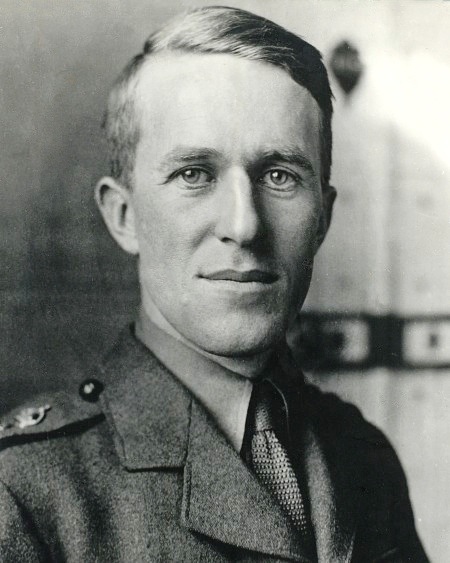
The Sexuality of T.E. Lawrence

20131229-231236.jpg

Last night I watched “Lawrence of Arabia” on Turner Classic Movies. As usual with a historical movie, I began to read more about Thomas Edward Lawrence. I have a special interest in the First World War, so this is not the first time that I have researched Lawrence. As I was refreshing my memory last night, I remembered that there have been questions about Lawrence’s sexuality. Often in recent years, the life and achievements of Lawrence have been somewhat overshadowed by controversial claims published in posthumous biographies concerning his sexual orientation, accusations that he had been a closet or self-repressed homosexual.

The claim was first made by author Richard Aldington 20 years after his death, controversial at the time because none of Lawrence’s friends or family supported it. In the wake of his being immortalized in the 1962 David Lean classic “Lawrence of Arabia” a host of other biographers rode Aldington’s coat tails, making the titillating claim that he had been both homosexual and sadomasochistic. Claims seemingly given credence by newspaper interviews with privates of the Tank Corps who confessed to having had flogged Lawrence at his solicitation between 1925 to 1934, combined they set the seal on the alleged secret life of Lawrence of Arabia.

However those making these claims only told half the story, deliberately neglecting or downplaying the effect his having been raped had on his thoughts and actions. In both Seven Pillars of Wisdom and a 1919 letter to a military colleague, Lawrence described an episode on November 20, 1917, in which, while reconnoitering Dera’a in disguise, he was captured by the Ottoman military, subjected to humiliating beatings and sexual assault at the instigation of Governor, or Bey. The precise nature of the sexual contact is not specified. There have been allegations that the episode was an invention of Lawrence’s and that the injuries Lawrence claims to have suffered were exaggerated. Although there is no independent testimony, the multiple consistent reports, and the absence of evidence for outright invention in Lawrence’s works, make the account believable to his biographers. At least three of Lawrence’s biographers (Malcolm Brown, John E. Mack, and Jeremy Wilson) have argued this episode had strong psychological effects on Lawrence which may explain some of his unconventional behavior in later life.

Rape in time of war is age old, most people are aware of the suffering of woman and girls during hostilities; however since ancient times it has been a weapon of war used against men. The word itself is derived from the Latin rapere meaning to steal, seize or carry away. In the military context it was a means of stealing a man’s honor, a victorious soldier emasculating a vanquished foe in the belief that by forcibly penetrating him he lost his manhood. This indignity was more often inflicted on members of the officer class in the belief it robbed them of their authority as a leader of men, sometimes resulting in the victims suicide. Gang rape was also considered a means of punishment in some cultures, the Romans, Persians, Ottomans and other societies practiced it.

The Ottoman Turks were infamous for inflicting it throughout the Great War on captured enemy troops, beating and gang raping enemy officers often as a matter of due course. Prisons and garrisons often had personnel who specialized in this abuse, although there was nothing homosexual about it. The Turkish soldiers perpetrating this war crime certainly never considered themselves gay, like male rapists in prison the act has nothing to do with the sexual orientation of the attacker or victim.

It was a remarkable manifestation of courage, perhaps cathartic release, that Lawrence detailed what happened to him in his book Seven Pillars of Wisdom in 1926. Then as now the fear of being labelled homosexual as a result of such disclosure was a legitimate fear, society having the tendency of blaming the victim of sexual assault rather than the perpetrator. Homosexuality was a taboo subject at that time, same sex rape was even more taboo. The suspicion Lawrence was homosexual is likely to have been a natural by-product of his shocking disclosure, some readers finding a homoerotic undertone to his retelling of events. Then as now few understood the incident in its historic context, the consensus being only homosexuals are victims of same sex rape, that a man can protect himself and if he’s raped it’s because he wanted to be.

If the 28 year old Lawrence was a virgin at the time of his assault, as many biographers believe, the experience would have had a profoundly negative affect on his concept of self and sexuality. Alas in his lifetime there were no counseling services available to men who had suffered sexual assault, they were expected to get on with their lives with a stiff upper lip. The post traumatic effects of same sex rape often last a lifetime, T.E. Lawrence manifested all the classic symptoms: workaholism, depression, anger, increased sense of vulnerability, destructive self-image, emotional distancing.

In the wake of the Great War he had difficulties with intimacy, withdrew from relationships or carried them out via mail, had problems trusting people and a defunct sex drive. Not that he ever had much interest in sex at earlier stages of his life, there is no concrete evidence of him having had an intimate relationship with anyone male or female, and he seems to have willingly chosen celibacy as many academics of his class and generation did. His family and friends attested to his sense of horror with regards to sexual subject matter in the years following the war.

Many heterosexual rape survivors question their sexual orientation, “it’s not uncommon for a victim to blame himself for the rape, believing that he in some way gave permission to the rapist. Recollection of involuntary physiological responses, erections or ejaculations, etc, during the event often make them question whether they deserved or wanted to be assaulted. There are certainly aspects of this post traumatic introspection in Seven Pillars of Wisdom, which many readers have mistaken as homo-erotic influences. In his description of the Dera’a beating, Lawrence wrote “a delicious warmth, probably sexual, was swelling through me.”

If he was homosexual, though most likely asexual, it wouldn’t add or subtract from his legacy, but in the interests of historical scholarship it’s important to view facts in their proper context. Although Lawrence lived in a period during which official opposition to homosexuality was strong, his writing on the subject was tolerant. In Seven Pillars, when discussing relationships between young male fighters in the war, he refers on one occasion to “the openness and honesty of perfect love” and on another to “friends quivering together in the yielding sand with intimate hot limbs in supreme embrace.” In a letter to Charlotte Shaw he wrote “I’ve seen lots of man-and-man loves: very lovely and fortunate some of them were.”

The fact is that no strong evidence one way or another has ever emerged about the sexuality of T.E. Lawrence. He left behind a tremendous legacy, one that was immortalized in the 1962 film, “Lawrence of Arabia.” It was also a legacy that he tried to escape. After the war Lawrence was so disillusioned that he refused medals about to be presented to him by the King, leaving the shocked George V (in his words) “holding the box in my hand.” He lived on the masochistic side of asceticism, denying himself the recognition he had earned. A many-sided genius whose accomplishments precluded the privacy he constantly sought, Lawrence became a mythic figure in his own lifetime even before he published his own version of his legend in Seven Pillars of Wisdom. By the manufacture of his myth, however solidly based, he created in his own person a characterization rivaling any in contemporary fiction.


The Codpiece

20131216-000443.jpg

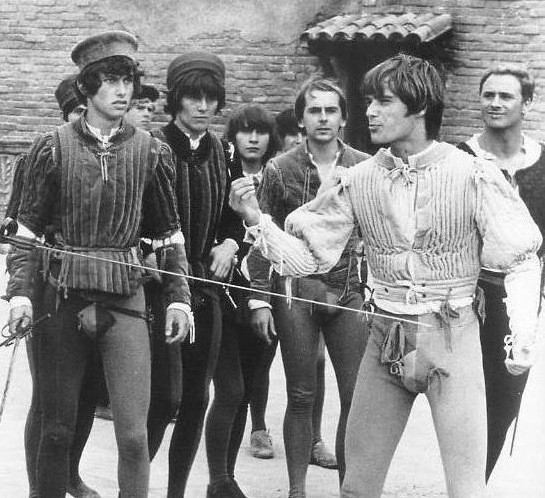
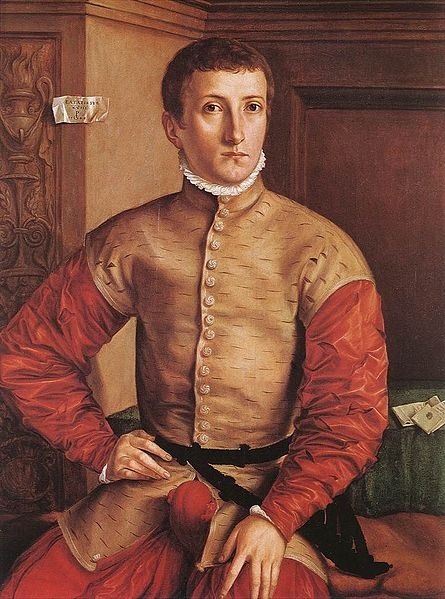
One look at Leonard Whiting’s Romeo in Frank Zifferelli’s 1968 version of Romeo and Juliet and I fell in love with the codpiece and Leonard Whiting. I will also admit that Whiting’s codpiece was not the only thing I liked about him, what gay boy sitting in English class watching Romeo and Juliet can forget seeing Romeo’s beautiful naked butt. However, this post is not about the beauty of Leonard Whiting, it’s about the history of the codpiece. If you are not familiar with this piece of Renaissance fashion, a codpiece (from Middle English: cod, meaning “scrotum”) is a covering flap or pouch that attaches to the front of the crotch of men’s trousers and usually accentuates the genital area. It was held closed by string ties, buttons, or other methods. It was an important item of European clothing in the 15th and 16th centuries

20131216-000525.jpg

One may well ask, if the button fly preceded the zipper, and the codpiece preceded the button fly, what preceded the codpiece? The answer is, quite literally, nothing. Leather leggings, the antecedents of Renaissance hosiery, were merely tubes of animal skins held on by strips of leather and connected together rather perfunctorily at the top. In fact, the crotch was most often left almost completely open, for ease of access during those “privy” functions. One was protected from exposure of one’s “person” by tunics which reached the knees or beyond.

However, with the rise of the merchant class at the beginning of the Renaissance, came “Fashion Trends”. Clothing for the poor remained functional, of course, but for the wealthy, changing one’s fashion to follow, or build on, a social trend became a way of displaying one’s wealth, and for men, one’s masculinity. With the use of the newly popular button, fashions became more fitted and tight to the body, (no need to cut a garment loose so that it could fit over one’s head). Thus, the popular look became long, elegant, and youthful.

To achieve this look to an even greater degree, the waistline of the tunic was dropped to the hips to make the body look longer, and the hemline was shortened to make the legs look longer. By 1360 men’s hems rose to mid-thigh. This was a shocking event indeed, considering that the basic design of men’s hosiery had not changed. When a man sat, or mounted a horse, one might have quite a “regimental” view of his state of affairs. The clergy, (those who were not themselves following the fashion), as well as other guardians of public morals, were up in arms. In Chaucer’s “Canterbury Tales” the Parson criticizes these short garments for their revealing nature:

Alas! some of them show the very boss of the penis and the horrible pushed-out testicles that look like the malady of hernia in the wrapping of their hose, and the buttocks of such persons look like the hinder parts of a she-ape in the full of the moon. And moreover, the hateful proud members that they show by the fantastic fashion of making one leg of their hose white and the other red, make it seem that half of their privy members are flayed. And if it be that they divide their hose in other colors, as white and black, or white and blue, or black and red, and so forth, then it seems, by the variation of color, that the half of their privy members are corrupted by the fire of Saint Anthony, or by cancer, or by other such misfortune.

During the years 1420-40 tunic hemlines reached the top of the thigh and “the occasional glimpse of the male sexual organs that had caused such an outcry in the fourteenth century was now replaced by the permanent exposure of that zone.”

The next fashion trend was to go about in one’s hose and shirt, (the shirt being what we think of as a doublet with a chemise worn underneath), sans the tunic. Measures had to be taken! (Please pardon the pun.) In 1482 Edward IV introduced a law which forbade persons below the rank of Lord to expose their private parts by short doublets. People ignored it. Finally the public outcry became too fierce, and, since men would certainly not be inconvenienced by simply sewing the crotch seam shut, the codpiece was invented.

To begin with, it was simply a triangular piece of fabric tied at the three corners, or stitched at the bottom angle and tied at the top two angles, over the gap in the front of the hose. However, men quickly discovered, as they are wont to do, that what might have been revealed before as somewhat lacking in size and stature, could be easily artificially enhanced under the masque of this new fashion. Over the next century, the codpiece developed from a flat piece of fabric, to a pouch in which the “family jewels” rested in as protruding a manner as possible, to a padded pouch, to a very padded pouch, (some of them very oddly shaped), until finally the pouch idea was discarded altogether, along with any pretense to function, and large padded shapes of bizarre dimensions were tied onto either hose or shirt, the “items of value” simply residing behind these bombastic shapes.

20131216-000615.jpg

It has been assumed that the fashion of genital promotion was de rigeur, however, no thought appears to have been given to the possibility that the codpiece fashion developed because of necessity and not by whim. From 1495 onwards a pandemic of a new disease swept across Europe and was a great plague. The disease caused foul and large volumes of mixed pus and blood to be discharged from the genital organs and the swellings in the adjacent groin tissue. The mess would require bulky woolen wads and woven cloth bandages to be applied, distorting the whole of the genital area and the lower abdomen.

The new disease was syphilis, and in all probability was not a new disease; there are descriptions of illnesses involving the fundamental findings for the diagnosis of syphilis from ancient times, though it is most often assumed to have traveled back from the Americas with Columbus’s men.

Though syphilis may have added to the popularity of the codpiece, one need to only look to gay men’s fashion today to see how we still like to accentuate the penis. Whether it’s Andrew Christian or CN-2, underwear marketed mostly to gay men do their best to accentuate the crotch area.

20131216-000646.jpg


Willem II of The Netherlands

20131212-233355.jpg

The other day I received an email from the editor of the Dutch magazine Gay News, the biggest gay publication in the Netherlands, which, since 1992, comes out every once a month, and is Amsterdam’s gay magazine. Gay News is entirely bilingual (in both english and dutch) and is distributed in The Netherlands & Belgium. Hans Hafkamp, the editor of Gay News, wrote that he has always enjoyed my blog and appreciated my dedication to history. He attached an article published in the December issue of Gay News about Willem II, King of the Netherlands (1840-1849).

In 2007 Queen Beatrice, on the occasion of her jubilee, gave three historians permission to open up the archives of the royal family for biographies of the first three kings. As Willem II was only king for nine years, his rule did not get as much attention as those who ruled for much longer periods of time before and after him. Jeroen van Zanten of the Department of History at the University of Amsterdam took on the task of writing the biography of Willem II. Though other historians preferred to research the longer ruling kings, Dr. van Zanten believed they were very wrong to overlook Willem II. Dr. van Zanten remarked in an interview with newspaper “de Volkskrant”: “He (Willem II) led a very adventurous life. In addition to which, he is extremely interesting for leaving autobiographical notes. A prince and king with self-reflection!” Van Zanten also discovered through a series of letters that Willem II was often pressured (i.e. blackmailed) because of his “bisexuality.”

William II had a string of relationships with both men and women. The homosexual relationships that William II had as crown prince and as king were reported by journalist Eillert Meeter who published a book about Willem I and Willem II in 1857. Meeter’s biography of the two kings was published first In Great Britain, but did not get published in The Netherlands until 1966. King Willem II surrounded himself with male servants whom he could not dismiss because of his ‘abominable motive’ for hiring them in the first place. Willem’s male liaisons were not just focused on his servants but also on a few political figures as well. He was apparently blackmailed at least four times, once by a former lover who was at the time of the blackmail in a German prison, two soldiers, and his aide-de-camp when he was still the Crown Prince. The last blackmail by the jailed Petrus Janssen led to the blackmailing of Willem II by liberals during the liberal Revolution of 1848, which in turn forced the already liberal minded Willem to sign the Dutch Constitution.

The extent of how much the blackmail over his homosexual affair influenced Willem is up to debate. The Revolutions of 1848 broke out all over Europe. In Paris, the Bourbon-Orléans monarchy fell. William became afraid of revolution in Amsterdam. One morning he woke up and said: “I changed from conservative to liberal in one night”. He gave orders to Johan Rudolf Thorbecke to create a new constitution which included that the Eerste Kamer (Senate) would be elected indirectly by the Provincial States and that the Tweede Kamer (House of Representatives) would be elected directly. The electoral system changed into census suffrage in electoral districts (in 1917 census suffrage was replaced by common suffrage for all men, and districts were replaced by party lists of different political parties), whereby royal power decreased sharply. That constitution is still in effect today.


The Eleven Nations of America

20131117-220820.jpg

For hundreds of years, this nation has been known as the United States of America. But according to author and journalist Colin Woodard, the country is neither united, nor made up of 50 states. Woodward has studied American voting patterns, demographics and public opinion polls going back to the days of the first settlers, and says that his research shows America is really made up of 11 different nations.

Woodard says that while individual residents will have their own opinions, each region has become more segregated by ideology in recent years. In fact, he says the mobility of American citizens has increased this partisan isolation as people tend to self-segregate into like-minded communities. Woodard lays out his map in the new book “American Nations: A History of the Eleven Rival Regional Cultures of North America.” Here’s how he breaks down the continent:

YANKEEDOM. Founded on the shores of Massachusetts Bay by radical Calvinists as a new Zion, Yankeedom has, since the outset, put great emphasis on perfecting earthly civilization through social engineering, denial of self for the common good, and assimilation of outsiders. It has prized education, intellectual achievement, communal empowerment, and broad citizen participation in politics and government, the latter seen as the public’s shield against the machinations of grasping aristocrats and other would-be tyrants. Since the early Puritans, it has been more comfortable with government regulation and public-sector social projects than many of the other nations, who regard the Yankee utopian streak with trepidation.

NEW NETHERLAND. Established by the Dutch at a time when the Netherlands was the most sophisticated society in the Western world, New Netherland has always been a global commercial culture—materialistic, with a profound tolerance for ethnic and religious diversity and an unflinching commitment to the freedom of inquiry and conscience. Like seventeenth-century Amsterdam, it emerged as a center of publishing, trade, and finance, a magnet for immigrants, and a refuge for those persecuted by other regional cultures, from Sephardim (Jews of Spanish and Portuguese descent; I had to look it up, so I thought I’d share the definition) in the seventeenth century to gays, feminists, and bohemians in the early twentieth. Unconcerned with great moral questions, it nonetheless has found itself in alliance with Yankeedom to defend public institutions and reject evangelical prescriptions for individual behavior.

THE MIDLANDS. America’s great swing region was founded by English Quakers, who believed in humans’ inherent goodness and welcomed people of many nations and creeds to their utopian colonies like Pennsylvania on the shores of Delaware Bay. Pluralistic and organized around the middle class, the Midlands spawned the culture of Middle America and the Heartland, where ethnic and ideological purity have never been a priority, government has been seen as an unwelcome intrusion, and political opinion has been moderate. An ethnic mosaic from the start—it had a German, rather than British, majority at the time of the Revolution—it shares the Yankee belief that society should be organized to benefit ordinary people, though it rejects top-down government intervention.

TIDEWATER. Built by the younger sons of southern English gentry in the Chesapeake country and neighboring sections of Delaware and North Carolina, Tidewater was meant to reproduce the semifeudal society of the countryside they’d left behind. Standing in for the peasantry were indentured servants and, later, slaves. Tidewater places a high value on respect for authority and tradition, and very little on equality or public participation in politics. It was the most powerful of the American nations in the eighteenth century, but today it is in decline, partly because it was cut off from westward expansion by its boisterous Appalachian neighbors and, more recently, because it has been eaten away by the expanding federal halos around D.C. and Norfolk.

GREATER APPALACHIA. Founded in the early eighteenth century by wave upon wave of settlers from the war-ravaged borderlands of Northern Ireland, northern England, and the Scottish lowlands, Appalachia has been lampooned by writers and screenwriters as the home of hillbillies and rednecks. It transplanted a culture formed in a state of near constant danger and upheaval, characterized by a warrior ethic and a commitment to personal sovereignty and individual liberty. Intensely suspicious of lowland aristocrats and Yankee social engineers alike, Greater Appalachia has shifted alliances depending on who appeared to be the greatest threat to their freedom. It was with the Union in the Civil War. Since Reconstruction, and especially since the upheavals of the 1960s, it has joined with Deep South to counter federal overrides of local preference.

DEEP SOUTH. Established by English slave lords from Barbados, Deep South was meant as a West Indies–style slave society. This nation offered a version of classical Republicanism modeled on the slave states of the ancient world, where democracy was the privilege of the few and enslavement the natural lot of the many. Its caste systems smashed by outside intervention, it continues to fight against expanded federal powers, taxes on capital and the wealthy, and environmental, labor, and consumer regulations.

EL NORTE. The oldest of the American nations, El Norte consists of the borderlands of the Spanish American empire, which were so far from the seats of power in Mexico City and Madrid that they evolved their own characteristics. Most Americans are aware of El Norte as a place apart, where Hispanic language, culture, and societal norms dominate. But few realize that among Mexicans, norteños have a reputation for being exceptionally independent, self-sufficient, adaptable, and focused on work. Long a hotbed of democratic reform and revolutionary settlement, the region encompasses parts of Mexico that have tried to secede in order to form independent buffer states between their mother country and the United States.

THE LEFT COAST. A Chile-shaped nation wedged between the Pacific Ocean and the Cascade and Coast mountains, the Left Coast was originally colonized by two groups: New Englanders (merchants, missionaries, and woodsmen who arrived by sea and dominated the towns) and Appalachian midwesterners (farmers, prospectors, and fur traders who generally arrived by wagon and controlled the countryside). Yankee missionaries tried to make it a “New England on the Pacific,” but were only partially successful. Left Coast culture is a hybrid of Yankee utopianism and Appalachian self-expression and exploration—traits recognizable in its cultural production, from the Summer of Love to the iPad. The staunchest ally of Yankeedom, it clashes with Far Western sections in the interior of its home states.

THE FAR WEST. The other “second-generation” nation, the Far West occupies the one part of the continent shaped more by environmental factors than ethnographic ones. High, dry, and remote, the Far West stopped migrating easterners in their tracks, and most of it could be made habitable only with the deployment of vast industrial resources: railroads, heavy mining equipment, ore smelters, dams, and irrigation systems. As a result, settlement was largely directed by corporations headquartered in distant New York, Boston, Chicago, or San Francisco, or by the federal government, which controlled much of the land. The Far West’s people are often resentful of their dependent status, feeling that they have been exploited as an internal colony for the benefit of the seaboard nations. Their senators led the fight against trusts in the mid-twentieth century. Of late, Far Westerners have focused their anger on the federal government, rather than their corporate masters.

NEW FRANCE. Occupying the New Orleans area and southeastern Canada, New France blends the folkways of ancien régime northern French peasantry with the traditions and values of the aboriginal people they encountered in northeastern North America. After a long history of imperial oppression, its people have emerged as down-to-earth, egalitarian, and consensus driven, among the most liberal on the continent, with unusually tolerant attitudes toward gays and people of all races and a ready acceptance of government involvement in the economy. The New French influence is manifest in Canada, where multiculturalism and negotiated consensus are treasured.

FIRST NATION. First Nation is populated by native American groups that generally never gave up their land by treaty and have largely retained cultural practices and knowledge that allow them to survive in this hostile region on their own terms. The nation is now reclaiming its sovereignty, having won considerable autonomy in Alaska and Nunavut and a self-governing nation state in Greenland that stands on the threshold of full independence. Its territory is huge—far larger than the continental United States—but its population is less than 300,000, most of whom live in Canada.

“The borders of my eleven American nations are reflected in many different types of maps — including maps showing the distribution of linguistic dialects, the spread of cultural artifacts, the prevalence of different religious denominations, and the county-by-county breakdown of voting in virtually every hotly contested presidential race in our history,” Woodard writes in the Fall 2013 issue of Tufts University’s alumni magazine. “Our continent’s famed mobility has been reinforcing, not dissolving, regional differences, as people increasingly sort themselves into like-minded communities.”

His main thesis seems to be that the culture of violence is one of the main dividing factors between the “11 Nations.” Though Woodward says that clashes between the 11 nations play out in every way, from politics to social values. He particularly notes that states with the highest rates of violent deaths are in the Deep South, Tidewater and Greater Appalachia, regions that value independence and self-sufficiency. States with lower rates of violent deaths are in Yankeedom, New Netherland and the Midlands, where government intervention is viewed with less skepticism. States in the Deep South are much more likely to have stand-your-ground laws than states in the northern “nations.” And more than 95 percent of executions in the United States since 1976 happened in the Deep South, Greater Appalachia, Tidewater and the Far West. States in Yankeedom and New Netherland have executed a collective total of just one person.

Woodward does point out that while these particular “11 Nations” are original to him, others have suggested similar divisions, which include maps showing the distribution of linguistic dialects, the spread of cultural artifacts, the prevalence of different religious denominations, and the county-by-county breakdown of voting in virtually every hotly contested presidential race in our history. Woodward writes that “Our continent’s famed mobility has been reinforcing, not dissolving, regional differences, as people increasingly sort themselves into like-minded communities, a phenomenon analyzed by Bill Bishop and Robert Cushing in The Big Sort (2008). Even waves of immigrants did not fundamentally alter these nations, because the children and grandchildren of immigrants assimilated into whichever culture surrounded them.”

He also makes the following distinctive point:

Before I describe the nations, I should underscore that my observations refer to the dominant culture, not the individual inhabitants, of each region. In every town, city, and state you’ll likely find a full range of political opinions and social preferences. Even in the reddest of red counties and bluest of blue ones, twenty to forty percent of voters cast ballots for the “wrong” team. It isn’t that residents of one or another nation all think the same, but rather that they are all embedded within a cultural framework of deep-seated preferences and attitudes—each of which a person may like or hate, but has to deal with nonetheless. Because of slavery, the African American experience has been different from that of other settlers and immigrants, but it too has varied by nation, as black people confronted the dominant cultural and institutional norms of each.

Though Woodward makes some interesting points, and I will admit that I have not read his new book American Nations: A History of the Eleven Rival Regional Cultures of North America, I think he has oversimplified the issue by erring on political correctness and gun control debates. The areas that he claims are more violent are often either more racially diverse or more economically divided. Yet, Woodward does not discuss this in any meaningful way in his article in Tuft Magazine. I hope he does in his book.my biggest problem, however, is that he completely ignores Hawaii and south Florida, both of which he dismisses as not being part of the United States. It seems to me that it would have been a better choice to have 13 Nations, not 11, which would have been more in line with the historical distinction of the Thirteen Colonies. Then he could have included south Florida as part of the Spanish Caribbean and Hawaii as a culture distinct of its own. Yet, I’m not sure that Hawaii shouldn’t be aligned with the Left Coast, bit Woodward simply does not consider it.

No matter what the problems with Woodward’s thesis is, it is an interesting debate, especially considering how he pits the two superpowers of the eleven nations against each other. He ends his article in Tufts Magazine by writing:

Among the eleven regional cultures, there are two superpowers, nations with the identity, mission, and numbers to shape continental debate: Yankeedom and Deep South. For more than two hundred years, they’ve fought for control of the federal government and, in a sense, the nation’s soul. Over the decades, Deep South has become strongly allied with Greater Appalachia and Tidewater, and more tenuously with the Far West. Their combined agenda—to slash taxes, regulations, social services, and federal powers—is opposed by a Yankee-led bloc that includes New Netherland and the Left Coast. Other nations, especially the Midlands and El Norte, often hold the swing vote, whether in a presidential election or a congressional battle over health care reform. Those swing nations stand to play a decisive role on violence-related issues as well.

For now, the country will remain split on how best to make its citizens safer, with Deep South and its allies bent on deterrence through armament and the threat of capital punishment, and Yankeedom and its allies determined to bring peace through constraints such as gun control. The deadlock will persist until one of these camps modifies its message and policy platform to draw in the swing nations. Only then can that camp seize full control over the levers of federal power—the White House, the House, and a filibuster-proof Senate majority—to force its will on the opposing nations. Until then, expect continuing frustration and division.

In many ways he’s correct, the great American divide is still between the North and the South. In every major American conflict from the American Revolution to the Civil War and from the Civil Rights Movement to the modern Gay Rights Movement, the North and South are still pitted against one another.

Links:

“Up in Arms” by Colin Woodward, Tufts Magazine

“Which of the 11 American nations do you live in?” by Reid Wilson, The Washington Post.

“Forget The 50 States; The U.S. Is Really 11 Nations, Author Says” NPR


Remembering the War Poets

20131110-225741.jpg

Yesterday was Veterans Day—originally Armistice Day—was renamed in 1954 to include veterans who had fought in all wars. As discussed in yesterday’s post, this day of remembrance has its roots in World War I—Nov. 11, 1918 was the day the guns fell silent at the end of the Great War. On this day after Veterans Day, we celebrate the poetry of World War I, one of the legacies of that conflict. My love of poetry and the history of World War I go hand in hand. As an undergraduate, I became fascinated with World War I, and from there, I became fascinated with the poetry from that war, which only intensified my love of poetry. So I am dedicating this post to the three poems that I believe are the most important for understanding the First World War.

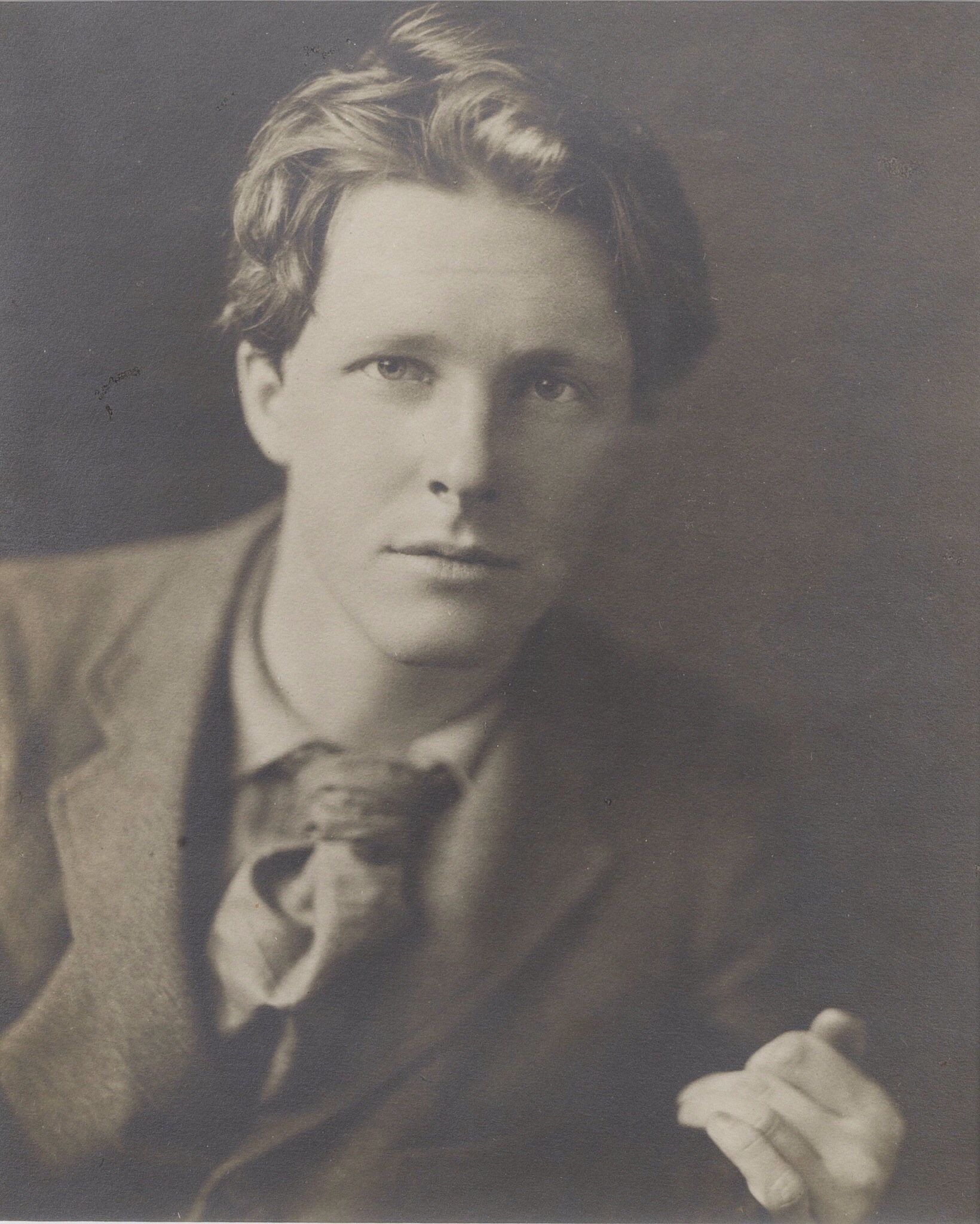
Soldiers like Siegfried Sassoon, Wilfred Owen, John McCrae and Rupert Brooke wrote evocative poems about their experiences. One of the most famous poems of the war is Brooke’s “The Soldier.” Brooke died of dysentery and blood poisoning aboard a troop ship headed for Gallipoli in April 1915. Brooke’s poem “The Soldier” reads:

The Soldier
by Rupert Brooke

If I should die, think only this of me:
That there’s some corner of a foreign field
That is for ever England. There shall be
In that rich earth a richer dust concealed;
A dust whom England bore, shaped, made aware,
Gave, once, her flowers to love, her ways to roam,
A body of England’s, breathing English air,
Washed by the rivers, blest by suns of home.

And think, this heart, all evil shed away,
A pulse in the eternal mind, no less
Gives somewhere back the thoughts by England given;
Her sights and sounds; dreams happy as her day;
And laughter, learnt of friends; and gentleness,
In hearts at peace, under an English heaven.

“The Soldier” shows the eagerness for war that was so apparent in the militarism that helped move the world toward war. “The Soldier” was written at the beginning of the First World War in 1914, as part of a series of sonnets written by Rupert Brooke. Brooke himself, predominantly a prewar poet, died the year after “The Soldier” was published. “The Soldier”, being the conclusion and the finale to Brooke’s ‘1914’ war sonnet series, deals with the death and accomplishments of a soldier. This sonnet encompasses the memoirs of a deceased soldier who declares his patriotism to his homeland by declaring that his sacrifice will be the eternal ownership of England of a small portion of land upon which he died.

As the Great War continued and bogged down on the Western Front, the attitude of patriotism began to wane slightly. Militarism had given the world the impression that wars would be short and glorious occasions, yet as 1914 turned into 1915 with no sign of end in sight, war was not seen through the naive young eyes of ready and willing soldiers, but of those of war weary soldiers of the front. One of these soldiers was a Canadian doctor named John McCrae. He was inspired to write it on May 3, 1915, after presiding over the funeral of friend and fellow soldier Alexis Helmer, who died in the Second Battle of Ypres. According to legend, fellow soldiers retrieved the poem after McCrae, initially unsatisfied with his work, discarded it. “In Flanders Fields” was first published on December 8 of that year in the London-based magazine Punch.

In Flanders Fields
by John McCrae

In Flanders fields the poppies blow
Between the crosses, row on row,
That mark our place, and in the sky,
The larks, still bravely singing, fly,
Scarce heard amid the guns below.

We are the dead; short days ago
We lived, felt dawn, saw sunset glow,
Loved and were loved, and now we lie
In Flanders fields.

Take up our quarrel with the foe!
To you from failing hands we throw
The torch; be yours to hold it high!
If ye break faith with us who die
We shall not sleep, though poppies grow
In Flanders fields.

“In Flanders Fields” demonstrates McCrae’s preoccupation with death and how it stands as the transition between the struggle of life and the peace that follows. It is written from the point of view of the dead. It speaks of their sacrifice and serves as their command to the living to press on. As with many of the most popular works of the First World War, it was written early in the conflict, before the romanticism of war turned to bitterness and disillusion for soldiers and civilians alike, yet it has a more sorrowful tone than Brooke’s “The Soldier.”

One of the lasting legacies of “In Flanders Field” is the symbolism of the poppies. The red poppies that McCrae referred to had been associated with war since the Napoleonic Wars when a writer of that time first noted how the poppies grew over the graves of soldiers. The damage done to the landscape in Flanders during the battle greatly increased the lime content in the soil, leaving the poppy as one of the few plants able to grow in the region. Even today, you will see many citizens of the British Commonwealth, and even some in the United States, wear a red poppy pinned to his or her lapel to commemorate the soldiers of the Great War.

The last poem I want to discuss is that of Wilfred Owen’s “Dulce et Decorum est.” This is a poem written by poet Wilfred Owen in 1917, during World War I, and published posthumously in 1920. Owen’s poem is known for its horrific imagery and condemnation of war. When Owen wrote this poem, the romanticism of war was long gone. The Battles of Verdun and the Somme had destroyed any residual romanticism left in soldiers of the trenches.

Dulce Et Decorum Est
by Wilfred Owen

Bent double, like old beggars under sacks,
Knock-kneed, coughing like hags, we cursed through sludge,
Till on the haunting flares we turned our backs
And towards our distant rest began to trudge.
Men marched asleep. Many had lost their boots
But limped on, blood-shod. All went lame; all blind;
Drunk with fatigue; deaf even to the hoots
Of disappointed shells that dropped behind.

GAS! Gas! Quick, boys!– An ecstasy of fumbling,
Fitting the clumsy helmets just in time;
But someone still was yelling out and stumbling
And floundering like a man in fire or lime.–
Dim, through the misty panes and thick green light
As under a green sea, I saw him drowning.

In all my dreams, before my helpless sight,
He plunges at me, guttering, choking, drowning.

If in some smothering dreams you too could pace
Behind the wagon that we flung him in,
And watch the white eyes writhing in his face,
His hanging face, like a devil’s sick of sin;
If you could hear, at every jolt, the blood
Come gargling from the froth-corrupted lungs,
Obscene as cancer, bitter as the cud
Of vile, incurable sores on innocent tongues,–
My friend, you would not tell with such high zest
To children ardent for some desperate glory,
The old Lie: Dulce et decorum est
Pro patria mori.

The historian and literary critic Paul Fussell has noted in The Great War and Modern Memory that, “Dawn has never recovered from what the Great War did to it.” He argues that World War I, with its unprecedented trench warfare and mass devastation across the European landscape, left a dark cloud hanging over the world. Despite the patriotism, optimism, and idealism held by the young men who eagerly fought for their respective country, World War I was fraught with widespread destruction and loss.

The very symbol of dawn, which traditionally would bring with it the hope and freshness of a new day, was reconfigured in a war like no other in history. Instead of the symbolic hope and freshness of a new day, the Great War dawn often brought with it the profound reality of a landscape flecked with causalities and devastation as young soldiers peered from the dark depths of their trenches. With dawn as a common symbol in poetry, it is no wonder that, like a new understanding of dawn itself, a comprehensive body of “World War I Poetry” emerged from the trenches as well.

Perhaps the most widely read and anthologized World War I poet, Wilfred Owen fought and ultimately died in World War I. His famous poem “Dulce et Decorum Est” presented a raw portrait of the life soldiers often experienced during the War. From the horrors of the trenches, we have the beauty of the War Poets to keep the memory of the war alive.


Veterans Day

20131110-094604.jpg

World War I – known at the time as “The Great War” – officially ended when the Treaty of Versailles was signed on June 28, 1919, in the Palace of Versailles outside the town of Versailles, France, exactly five years after the assassination of Archduke Franz Ferdinand, which had set the war in motion. However, fighting ceased seven months earlier when an armistice, or temporary cessation of hostilities, between the Allied nations and Germany went into effect on the eleventh hour of the eleventh day of the eleventh month. For that reason, November 11, 1918, is generally regarded as the end of “the war to end all wars.”

In November 1919, President Wilson proclaimed November 11 as the first commemoration of Armistice Day with the following words: “To us in America, the reflections of Armistice Day will be filled with solemn pride in the heroism of those who died in the country’s service and with gratitude for the victory, both because of the thing from which it has freed us and because of the opportunity it has given America to show her sympathy with peace and justice in the councils of the nations…”

The original concept for the celebration was for a day observed with parades and public meetings and a brief suspension of business beginning at 11:00 a.m.

The United States Senate refused the ratify the Treaty of Versailles that officially ended the war with Germany because it contained the League of Nations Charter. The United States Congress officially recognized the end of World War I with the Knox-Porter Resolution signed into law by President Harding on July 2, 1921. Congress officially recognized Armistice day when it passed a concurrent resolution on June 4, 1926, with these words:

Whereas the 11th of November 1918, marked the cessation of the most destructive, sanguinary, and far reaching war in human annals and the resumption by the people of the United States of peaceful relations with other nations, which we hope may never again be severed, and

Whereas it is fitting that the recurring anniversary of this date should be commemorated with thanksgiving and prayer and exercises designed to perpetuate peace through good will and mutual understanding between nations; and

Whereas the legislatures of twenty-seven of our States have already declared November 11 to be a legal holiday: Therefore be it Resolved by the Senate (the House of Representatives concurring), that the President of the United States is requested to issue a proclamation calling upon the officials to display the flag of the United States on all Government buildings on November 11 and inviting the people of the United States to observe the day in schools and churches, or other suitable places, with appropriate ceremonies of friendly relations with all other peoples.

An Act (52 Stat. 351; 5 U. S. Code, Sec. 87a) approved May 13, 1938, made the 11th of November in each year a legal holiday—a day to be dedicated to the cause of world peace and to be thereafter celebrated and known as “Armistice Day.” Armistice Day was primarily a day set aside to honor veterans of World War I, but in 1954, after World War II had required the greatest mobilization of soldiers, sailors, Marines and airmen in the Nation’s history; after American forces had fought aggression in Korea, the 83rd Congress, at the urging of the veterans service organizations, amended the Act of 1938 by striking out the word “Armistice” and inserting in its place the word “Veterans.” With the approval of this legislation (Public Law 380) on June 1, 1954, November 11th became a day to honor American veterans of all wars. In much of the rest of the world, November 11th is still honored as Armistice Day or in the Commonwealth as Remembrance Day, renamed after World War II to celebrate and remember all veterans.

The Uniform Holiday Bill (Public Law 90-363 (82 Stat. 250)) was signed on June 28, 1968, and was intended to ensure three-day weekends for Federal employees by celebrating four national holidays on Mondays: Washington’s Birthday, Memorial Day, Veterans Day, and Columbus Day. The first Veterans Day under the new law was observed with much confusion on October 25, 1971. It was quite apparent that the commemoration of this day was a matter of historic and patriotic significance to a great number of our citizens, and so on September 20th, 1975, President Gerald R. Ford signed Public Law 94-97 (89 Stat. 479), which returned the annual observance of Veterans Day to its original date of November 11, beginning in 1978. This action supported the desires of the overwhelming majority of state legislatures, all major veterans service organizations and the American people.

Veterans Day continues to be observed on November 11, regardless of what day of the week on which it falls. The restoration of the observance of Veterans Day to November 11 not only preserves the historical significance of the date, but helps focus attention on the important purpose of Veterans Day: A celebration to honor America’s veterans for their patriotism, love of country, and willingness to serve and sacrifice for the common good.

20131110-094637.jpg

Considering the main goal of this blog, I would particularly like to honor all the LGBT service members who have fought and died for our country. For most of America’s history you have served in silence, and often persecuted for who you were. Yet you strove to fight for your country. One of the earliest goals of the gay rights movement, under the leadership of the Mattachine Society in the 1950s and 1960s, was to allow the gay men to serve in the military without persecution. Today service members can finally serve their country as out and proud gays and lesbians. Yet we should never forget those who risked everything to serve their country in silence, even when their country refused to give them full equal rights.


Punishments For Masturbation Throughout History

20131022-230954.jpg

The practice of punishing the perpetrator of the act of masturbation is one that can be traced in documented form to the time of the Roman Empire.

The matriarchal society that was a feature of Roman life, tended to view male masturbation as an unwelcome, undesirable act, directly affecting procreation, so important to the future of the Empire.

During the first century AD, Christianity defined the act as a ‘Mortal Sin’ and the spread of Christianity brought with it the firm belief that self-abuse should be strongly discouraged in a Christian household. Even today the Catholic Church still categorises self-abuse as a ‘venal and mortal sin’.

Archbishop Borders of Baltimore, in his 1987 pastoral, ‘On Human Sexuality’, writes ‘Authentic human sexuality should open one to another in a deep and abiding relationship. It is neither unitive (sic.) nor procreative, and is merely sexual actuation with very little true sexual meaning’.

In 1992 Father Mateo wrote on the Internet: ‘In itself, masturbation is a mortal sin because it negates the whole purpose of our most sacred powers, the power to fashion family and procreate human life.’

That then is the view of God and the punishments distributed by Priests throughout history have been many and varied. In Ireland boys were regularly caned and whipped in addition to more normal religious impositions. Irish parents thrashed their male offspring when evidence of self-abuse was discovered, and the same scenario is echoed through many other countries of the Catholic world. What emerges from this investigation is the surprising fact that punishments for masturbation have changed very little over the years and, moreover, that it has been predominantly the female in the household who has been more tasked to seek out and deal with the male self-abuser.

Punishment for self-abuse was at its height during the Victorian era and much of it was delivered by the Nanny, Governess or indeed by other female members of the household staff. In most cases the females were spinsters of mature age and the possibility of their being somewhat disenchanted or even unaware of sexual pleasures, only serves to explain their particular preference in dealing with young male abusers in their charge, by means of potions, restraints and canes. In public schools of the time masturbation was not condoned and discovery of an offender would earn him a severe thrashing as described by an author of the time, Edward Whittaker in his ‘Memoirs of an Eton Housemaster’; “Use of the cane and birch was widespread and the cane was administered by both Staff and Prefects. Offences were the usual acts of high-spirited boys, which led to class or dormitory disruption, lack of hygiene, failure to meet academic standards and general disobedience. These would be promptly and properly punished with a number of strokes from the cane on the tight trousers of the bending boy. The birch was reserved for more serious offences such as stealing or self-abuse, and was administered on the bare backside of the unfortunate pupil, as he lay firmly secured across the birching block. Only the Headmaster flogged with this implement, which was harsh in the extreme!

The most common punishments for this ‘crime’ throughout history were physical denial by various means and flagellation. As remarked on before, more often than not, this was administered by a female to a male in the first flush of puberty. I’m not going to dwell on the psychological damage that was often inflicted as a result of this situation, suffice to say there are many females who are grateful for the fact that it did.

References to the punishment of masturbation prior to the 18th century are few and far between. It may be assumed that in the Middle Ages, Jacobean and Elizabethan eras, a more liberal attitude was adopted by a society which regarded such activities as normal, however it is also true that males were far more likely to be experiencing full heterosexual intercourse often from the tender ages of nine years old. There are many accounts of royal marriages being arranged for couples barely in their teens. In addition the Reformation of Tudor times destroyed the Catholic teachings and spread a somewhat barren moral wasteland before the confused and increasingly apathetic population.

The earliest reference to the use of punishment to deter the masturbator can be found in an account of the Roman household by Peter Moorview in his book, ‘The Roman Citizen’, a factual description of domestic life at the time of the Roman Empire. According to the author, many of the young male slaves had their penis ringed with iron or their urethra pierced to discourage erections and to avoid the possibility of them attempting rape. Other male slaves found they were obliged to carry out ‘bedroom duties’ (sic) as well as their normal domestic chores within the house:

The frequent absence of the Master of the house, (eg. in the case of military personnel), often led to illicit and furtive sexual activity between slave and Mistress and in order to ensure confidentiality, slaves were subjected to the most horrendous acts of cruelty to ensure their obedience and silence. Well-endowed and virile young slaves were much in demand and were available at public auctions to privileged sections of Roman society. Slaves purchased solely for the purpose of providing sexual gratification for their Mistress often had their genitalia permanently restrained within purpose made metal chastity belts to prevent unauthorised masturbation. Those free to masturbate would face a severe flogging with a rod if discovered and subsequently their genitals would be bound in bandages soaked in a mixture of herbs and peppers, which inflicted excruciating pain on the treated parts. Persistent offenders were generally discarded and punished by castration and removal of their tongues to ensure their secrets would never be disclosed.

Before 1700, medical references to the harmful effects of masturbation were scarce. In the eighteenth century two works, Contra: or the Heinous Sin of Self-Pollution, and all its frightful sequences, (by an anonymous author) and Samuel Tissot’s Treatise on the Diseases Produced by Onanism introduced concepts that a certain Sylvester Graham adopted and helped to popularize.

Tissot’s claim that loss of semen under any condition caused health hazards spread rapidly throughout the world’s medical profession and Graham’s Lecture to Young Men (1834) was the first of its kind and launched a whole genre of medical tracts on masturbation, known then as ‘self-abuse’ or ‘self-pollution’. In America, where he lectured, a peculiar flowering of myths involving masturbation took place during the 19th century. The predictable culprits… Victorian prudery, evangelical Christianity, entrepreneurialism are all part of the picture, and Graham, knowing his audience, and with a solid grasp of rhetorical devices made claims that no one could disprove. Or rather, would disprove. According to Graham a masturbator grows up ‘with a body full of disease, and with a mind in ruins, the loathsome habit still tyrannising over him, with the inexorable imperiousness of a fiend of darkness.’

Hardly surprising then that fond parents, Nannies, and Governess’, the world over, felt justified in meting out the most horrific punishments to save their charges from the devastating medical prognoses, and the hell-fire that lay ahead for the unfortunate self-abuser when he was finally laid to rest! Thus, the scene was set for the next 100 years or so…. ‘Punish or He’s Damned! …. was to be the cry.

Treatments for self-abuse, both physical and dietary abounded. Dr John Harvey Kellog, (brother of the founder of the Kellog’s Corn Flakes Company) suggested: ‘A remedy which is almost always effective in small boys is circumcision…. the operation should be performed by a surgeon without administering an anaesthetic, as the brief pain attending the operation will have a salutary effect upon the mind…. In females, the author has found the application of pure carbolic acid to the clitoris an excellent means of allaying the abnormal excitement…’ the chance of disease and death’.

General medical opinion weighed in with their recipe for healthy minds and bodies. Sexual moderation (no more than 12 times a year for married couples), exercise (to help prevent nocturnal emissions), no masturbation and a proper diet (to facilitate free peristaltic action of the bowels).

Masturbation led to madness and nocturnal emissions probably would as well. Spermatorrhoea was recognised as a disease, causing complete lack of energy and exhaustion. Rapid dissemination of these theories on the dangers of self-abuse among the upper and middle class citizens of Great Britain in particular during the 19th century led to an explosion in the sale of implements of correction, chastity devices, potions and lotions and increased demand for the services of Governess’ and Nannies to provide 24 hour observation of their charges and to provide the necessary moral guidance, physical treatment, and punishment that would be needed to educate their children and save them from a fate worse than death.

The Governess or Nanny used a wide variety of what we today would consider torture devices as punishment. Some people may still consider masturbation to be a sin, but at least boys are not punished in this way in this day and time. Submissive/masochistic men may allow someone to restrain them from masturbation (a wide variety of male chastity devices exist) or allow themselves to be punished for masturbation, but they have that choice and usually derive pleasure from the experience. However, young boys in the past must have been terrified of leaving evidence of masturbation or even nocturnal emissions, which they had no control over.


From Atum to Kinsey

20131020-232852.jpg

Since we are on the discussion of masturbation, I thought I would write a post on the history of masturbation. As an historian, I always find the history of almost any subject very interesting. So I did a little research on the history of masturbation.

It seems likely masturbation has always been the most common and universal of human sexual experiences – but only in recent decades have attitudes toward sexuality in general, and masturbation in particular, begun to improve. There never has been a “golden age” of sexual freedom and tolerance, though specific taboos have always varied widely. The frequent condemnation of masturbation apparently stems from a surprisingly simple mandate: there’s safety in numbers. For centuries, all forms of sexual pleasure unlikely to result in population increase have routinely been denounced as wrong. Which is the major reason that I believe that in most societies there is a prohibition on homosexuality.

In order to understand current attitudes, it helps to examine earlier human cultures. Before history, which is defined by the existence of written records, the evidence proves sketchy. Prehistoric petroglyphs and rock paintings from around the world evidently depict male masturbation, though these are entirely matters of interpretation. Most early people seem to have connected human sexuality with abundance in nature. A clay figurine of the 4th millennium B.C., from a temple site called Hagar Qim on the island of Malta, depicts a woman masturbating. However, in the ancient world depictions of male masturbation are far more common. A figure of a masturbating male from a Neolithic cemetery in Greece is roughly contemporary with the Malta image and likewise suggests fertility rites. From the Sumerians, who invented the first written Western language, we find references to the Mesopotamian god Enki masturbating, his ejaculation filling the Tigris River with flowing water.

Male masturbation became an even more important image in ancient Egyptian cosmology. When performed by a god it could be considered a creative or magical act, but a mortal human masturbator might not receive such approval. According to one major creation myth the god Atum appeared on the Primordial Mound out of the void of Nu. As the first “thing” in the midst of nothingness, Atum relieved his loneliness by masturbating. His ejaculation resulted in the appearance of the first god and goddess, Shu and Tefnut, who became the parents of all other elements of the world. An alternate version indicates that the god Ptah, architect of the universe, maintains cosmic order through continual masturbation. The yearly flooding of the Nile, on which Egypt depended entirely, was also said to flow from the secretions of the Nile god Hapy. Min, the god of male potency, was always shown standing with an immense erection, often held in his own hand. Min represented the sexual potency of the Pharaoh, the Great House, an aspect of the Good God considered necessary to the fertility of the Nile valley. During the annual festival of Min men engaged in public acts of masturbation, but otherwise such exhibitionism would not have been tolerated. So even in that pleasure-loving culture the attitude toward masturbation depended entirely upon context.

Far Eastern cultures are sometimes viewed as more sexually tolerant, but this may often be a case of social cosmetics. “Out of sight, out of mind” can mean that human nature (including sexual behavior) is tacitly accepted, so long as it is kept private or unseen. A Hindu myth from India described the phallic god Shiva being masturbated by Agni, the god of fire, who swallowed his semen. Agni then gave birth to Skanda, a god of male beauty. But the Hindus, like later Buddhists, often denounced attachment to sexual pleasure as a cause of human suffering. The oldest Chinese traditions of Taoism equated certain forms of sexual pleasure with generating chi, or life force. As “cultivation,” prolonged masturbation without ejaculating was believed to enhance health and well being. At the same time, frequent ejaculation was considered a waste of this same precious chi.

The ancient Greeks had a more natural attitude toward masturbation than the Egyptians did, regarding the act as a normal and healthy substitute for other forms of sexual pleasure. They considered masturbation a safety valve against destructive sexual frustration. Numerous vase paintings depict male masturbation as a regular part of daily life, neither a virtue nor a vice. Greek culture was extremely phallocentric, meaning the erect penis was a major object of veneration, both spiritually and in daily life. Women did not enjoy a high status in the male-dominated culture, being primarily confined to roles of breeding and motherhood. The society was largely segregated by gender, men spending most of their time with men and women with women – yet the Greeks considered procreation and the family unit of supreme importance. They tolerated male masturbation in daily life only to the extent that it did not interfere with the stability of the family or protection of the state.

In a wonderful Greek myth, Hermes invented masturbation. He taught the practice to Pan, so that the woodland god no longer suffered his habitual frustration. Thereafter Pan learned to give pleasure to others as well as to himself.

More unusual for the ancient world, the Greeks also dealt with female masturbation in both their art and writings. Having ample reason for frustration, Greek women were often depicted using dildos or artificial phalluses made of leather, wood, or ivory for their self-satisfaction. The city of Miletus in Asia Minor was well known as the source of the best such instruments, as was the Island of Lesbos, the home of the legendary poet Sappho.

When the Roman Empire began dominating the Western world, an obsession with distinguishing virtue and vice became increasingly important. Though we often consider the Romans decadent, in fact they practiced a kind of prudish hypocrisy. The Latin term masturbari was only one among half a dozen terms they used for the act. Originally it meant only to rub by hand or to agitate, without negative connotations. Over time, however, the term gained associations of disturbance and defilement. Some authors came to associate the term with manus sinistra, meaning the left hand, indicating uncleanliness, since the Romans linked the left hand with elimination functions. The cosmopolitan civilization of Rome had no consistent attitudes toward sexuality, only a growing intolerance for diversity and concern over distinguishing virtue and vice.

Sexuality began to suffer a stigma with the growing influence of the Christian Church. Such figures as the apostle Paul (of the first century), Augustine (A.D. 354-430), and Thomas Aquinas (1225-1274) contributed to increasingly negative attitudes toward the human body and all forms of pleasure in general. Paul fostered misogyny, or anti-female sentiments, starting a trend which has been interpreted by many as condemning all forms of sexuality other than heterosexual intercourse for the purpose of reproduction. This continued an existing philosophical trend of separating the physical and the spiritual, considering them as conflicting opposites. Augustine institutionalized the religious distaste for sexual union itself, while Aquinas particularly vilified homosexuality. An early medieval manual of punishments to be bestowed by priests prescribed severe penalties for men over 20 who engaged in mutual masturbation. Men under that age were punished less severely, and boys under 14 engaging in solo masturbation were punished the least. As I wrote in yesterday’s post, the Bible itself never mentions masturbation specifically: the “sin” of Onan was clearly coitus interruptus, or early withdrawal to prevent conception. Still, this misconception persists.

Islam and Judaism share common roots with Christianity, yet both of these religions deal with masturbation quite differently. They maintain their own rigidly prescribed attitudes toward sexual behavior, advocating only heterosexuality within the context of marriage. Yet neither religion consistently condemns masturbation as Christianity has, in practice taking a more Eastern approach of tacitly accepting some aspects of human nature. On a more encouraging note, some Native Americans call masturbation by their young people “warming the heart.”

Unfortunately in the Western world attacks on masturbation grew increasingly irrational. A 1710 work titled “Onania, or the Heinous Sin of Self-Pollution,” blamed venereal disease on masturbation. By the 19th century the cereal magnate John Harvey Kellogg declared “sex for anything but reproduction” to be “sexual excess.” Kellogg and others began advocating routine circumcision of males as a deterrent to masturbation. Sylvester Graham invented the Graham cracker, believing it would diminish male sexual desire. (Though with s’mores being a popular camping treat, I don’t believe that it ever prevented randy boys/men from experimenting sexually on camp outs.) A variety of awful devices were employed in attempts to forcibly prevent masturbation. Much worse, female circumcision, or the removal of the clitoris, was sometimes advocated by the Victorians, preventing many females from ever experiencing orgasm. In 1864 Ellen G. White published a book claiming that the “solitary vice” led to everything from retardation to insanity and cancer.

As late as 1940, a pediatric text titled “Diseases of Infancy and Childhood” proclaimed masturbation to be harmful. Research suggests an overall agenda behind such anti-pleasure sentiments, the deeper motive being to increase population at all costs by controlling and denying non-reproductive erotic outlets. The more of “us” there are, the less we need to feel threatened by “them.” Until the last century, this kind of reasoning made at least some partial, rudimentary sense. But in our times of runaway overpopulation, when sexuality no longer remains tied to reproductive imperatives, it makes no sense at all.

Beginning with the Kinsey Report of 1948, masturbation has finally been demystified and even discovered to be beneficial. In 1966 Masters & Johnson revealed the practice to be virtually universal in North America, cutting across all boundaries of sex, age, race, and social class. In 1971 Goldstein, Haeberle & McBride determined masturbation to be the most common form of sexual activity among humans. Dr. Joycelyn Elders was far ahead of the political establishment in her 1993 suggestion that masturbation be taught in our schools. She is now being vindicated: Accurate information is being widely disseminated to autonomous learners through the “school” of the Internet.

Though ignorance and superstition linger, healthy and accepting attitudes toward masturbation are increasing. The eminent neuropsychologist James W. Prescott has said: “Deprivation of physical affection in human relationships…constitutes the single greatest source of violence in human societies.”

Adapted from “MASTURBATION THROUGHOUT HISTORY” By Bruce McFarland (http://www.jackinworld.com/resources/general-articles/masturbation-throughout-history)


Self-Reliance

The high school English class that I teach has been learning about the transcendentalist movement.  Today, we will read excerpts from Ralph Waldo Emerson’s essay “Self-Reliance.”  This essay really speaks to me, and so I have included some excepts from the essay below.  When I first read this essay, I was not yet out of the closet, and it did not mean as much to me then as it does now.  Emerson may actually be speaking more directly to the GLBT community than we realize. There is some evidence that Ralph Waldo Emerson was bisexual. Emerson may have had erotic thoughts about at least one man. During his early years at Harvard, he said he was “strangely attracted” to a young man named Martin Gay, about whom he wrote sexual poetry. Nathaniel Hawthorne was also purportedly one of his infatuations.

Emerson is the seminal intellectual, philosophical voice of the nineteenth century in America. Although readers today may find his thought slightly facile, even unrealistic–times do change–his influence among his contemporaries and those who followed immediately after him was enormous. Emerson was the spokesman for the American Transcendentalists, a group of New England romantic writers, which included Thoreau, who believed that intuition was the means to truth, that god is revealed through intuition to each individual. They celebrated the independent individual and strongly supported democracy. The essay “Self-Reliance,” from which an excerpt is presented here, is the clearest, most memorable example of Emerson’s philosophy of individualism, an idea that is deeply embedded in American culture. His variety of individualism grows of the self’s intuitive connection with the Over-Soul and is not simply a matter of self-centered assertion or immature narcissism

Consider what Emerson says about the importance of non-conformity and independent beliefs and contrast this with the prevailing attitude in contemporary America.  With so much discussion of bullying in schools, this essay should be, and in most textbooks is, essential reading.  It teaches us that we should be ourselves, not the conforming sheep that bullies try to push us into.  Emerson is telling us to trust ourselves, because it is us alone that can overcome the bullies of the world.  With the rate of GLBT youth suicides and bullycide going on in American schools, we should realize that it will get better and that we should be proud to be ourselves.

There is a time in every man’s education when he arrives at the conviction that envy is ignorance; that imitation is suicide; that he must take himself for better, for worse, as his portion; that though the wide universe is full of good, no kernel of nourishing corn can come to him but through his toil bestowed on that plot of ground which is given to him to till. The power which resides in him is new in nature, and none but he knows what that is which he can do, nor does he know until he has tried. Not for nothing one face, one character, one fact, makes much impression on him, and another none. This sculpture in the memory is not without preëstablished harmony. The eye was placed where one ray should fall, that it might testify of that particular ray. We but half express ourselves, and are ashamed of that divine idea which each of us represents. It may be safely trusted as proportionate and of good issues, so it be faithfully imparted, but God will not have his work made manifest by cowards. A man is relieved and gay when he has put his heart into his work and done his best; but what he has said or done otherwise, shall give him no peace. It is a deliverance which does not deliver. In the attempt his genius deserts him; no muse befriends; no invention, no hope.
Trust thyself: every heart vibrates to that iron string. Accept the place the divine providence has found for you, the society of your contemporaries, the connection of events. Great men have always done so, and confided themselves childlike to the genius of their age, betraying their perception that the absolutely trustworthy was seated at their heart, working through their hands, predominating in all their being. And we are now men, and must accept in the highest mind the same transcendent destiny; and not minors and invalids in a protected corner, not cowards fleeing before a revolution, but guides, redeemers, and benefactors, obeying the Almighty effort, and advancing on Chaos and the Dark….
These are the voices which we hear in solitude, but they grow faint and inaudible as we enter into the world.Society everywhere is in conspiracy against the manhood of every one of its members. Society is a joint-stock company, in which the members agree, for the better securing of his bread to each shareholder, to surrender the liberty and culture of the eater. The virtue in most request is conformity. Self-reliance is its aversion. It loves not realities and creators, but names and customs.
For nonconformity the world whips you with its displeasure. And therefore a man must know how to estimate a sour face. The by-standers look askance on him in the public street or in the friend’s parlour. If this aversation had its origin in contempt and resistance like his own, he might well go home with a sad countenance; but the sour faces of the multitude, like their sweet faces, have no deep cause, but are put on and off as the wind blows and a newspaper directs. Yet is the discontent of the multitude more formidable than that of the senate and the college. It is easy enough for a firm man who knows the world to brook the rage of the cultivated classes. Their rage is decorous and prudent, for they are timid as being very vulnerable themselves. But when to their feminine rage the indignation of the people is added, when the ignorant and the poor are aroused, when the unintelligent brute force that lies at the bottom of society is made to growl and mow, it needs the habit of magnanimity and religion to treat it godlike as a trifle of no concernment….
A foolish consistency is the hobgoblin of little minds, adored by little statesmen and philosophers and divines. With consistency a great soul has simply nothing to do. He may as well concern himself with his shadow on the wall. Speak what you think now in hard words, and to-morrow speak what to-morrow thinks in hard words again, though it contradict every thing you said to-day.–‘Ah, so you shall be sure to be misunderstood.’–Is it so bad, then, to be misunderstood? Pythagoras was misunderstood, and Socrates, and Jesus, and Luther, and Copernicus, and Galileo, and Newton, and every pure and wise spirit that ever took flesh. To be great is to be misunderstood.
I suppose no man can violate his nature. All the sallies of his will are rounded in by the law of his being, as the inequalities of Andes and Himmaleh are insignificant in the curve of the sphere. Nor does it matter how you gauge and try him. A character is like an acrostic or Alexandrian stanza;–read it forward, backward, or across, it still spells the same thing. In this pleasing, contrite wood-life which God allows me, let me record day by day my honest thought without prospect or retrospect, and, I cannot doubt, it will be found symmetrical, though I mean it not, and see it not. My book should smell of pines and resound with the hum of insects. The swallow over my window should interweave that thread or straw he carries in his bill into my web also. We pass for what we are. Character teaches above our wills. Men imagine that they communicate their virtue or vice only by overt actions, and do not see that virtue or vice emit a breath every moment.
Let a man then know his worth, and keep things under his feet. Let him not peep or steal, or skulk up and down with the air of a charity-boy, a bastard, or an interloper, in the world which exists for him. But the man in the street, finding no worth in himself which corresponds to the force which built a tower or sculptured a marble god, feels poor when he looks on these. To him a palace, a statue, or a costly book have an alien and forbidding air, much like a gay equipage, and seem to say like that, ‘Who are you, Sir?’ Yet they all are his, suitors for his notice, petitioners to his faculties that they will come out and take possession. The picture waits for my verdict: it is not to command me, but I am to settle its claims to praise. That popular fable of the sot who was picked up dead drunk in the street, carried to the duke’s house, washed and dressed and laid in the duke’s bed, and, on his waking, treated with all obsequious ceremony like the duke, and assured that he had been insane, owes its popularity to the fact, that it symbolizes so well the state of man, who is in the world a sort of sot, but now and then wakes up, exercises his reason, and finds himself a true prince….
It is easy to see that a greater self-reliance must work a revolution in all the offices and relations of men; in their religion; in their education; in their pursuits; their modes of living; their association; in their property; in their speculative views.

Emerson’s “Self-Reliance” teaches us to trust ourselves. By ourselves, we have unique voices and opinions, which society shuts down as soon as we confront other people and the group. Society’s primary concern is creating wealth and status, while the individual’s concern is self-expression and fulfillment. We want to take life slow, savor every moment, express ourselves, and explore many talents and skills. Society wants us to be big shots, put all our education towards one career, weed out our competitors to become successful, and make more money than we could ever need. But since society’s goal’s are so ingrained inside us, we must learn to trust our own instincts as to what society tells us.

Emerson states that in solitude, individuals have voices, “which grow faint and inaudible as we enter the world.” Some of these thoughts and opinions that people come up with in solitude might cause fear when presented to society. Since society is such a delicate structure based on fear of chaos, any novel voice will make the person who spoke it become “the other.” Fear of alienation prevents voices from leaving solitude into the realm of society.

Emerson states that individuals who work hard and pursue fulfillment should not be proud of the possessions they acquired. He says, “a cultivated man becomes ashamed of his property, ashamed of what he has, out of respect for his own being,” meaning that acquiring property is just an accident. If you trust yourself and work towards the proper development of yourself by discovery of your innermost talents, then you should not accept society’s false reward of property. An ordinary person doing his best work is just as valuable as the “great” lives of kings and royalty. The greatest reward is knowing that you have found your own unique self, and fully trust it.

Fulfillment verses success, self expression verses conformity, and solitude verses the group are important factors to distinguish. Emerson in “Self-Reliance” is not advocating staying in solitude, because humans are social beings. Rather he wants us to discover ourselves away from society, and then confront society as our fulfilled and cultivated selfs. In reality, the wealth power structure of society is just a response to fear of our chaotic world, and if we just embrace this chaos, we might be more fulfilled, happy people. Trust yourself. Learn to let go.

Sources: