By: Lieutenant Colonel John McCrae, MD (1872-1918)
Canadian Army
In Flanders Fields the poppies blow
Between the crosses row on row,
That mark our place; and in the sky
The larks, still bravely singing, fly
Scarce heard amid the guns below.
We are the Dead. Short days ago
We lived, felt dawn, saw sunset glow,
Loved and were loved, and now we lie
In Flanders fields.
Take up our quarrel with the foe:
To you from failing hands we throw
The torch; be yours to hold it high.
If ye break faith with us who die
We shall not sleep, though poppies grow
In Flanders fields.
November 11, or what has come to be known as Veterans Day, was originally set as a U.S. legal holiday to honor Armistice Day – the end of World War I, which officially took place on November 11, 1918. In legislature that was passed in 1938, November 11 was “dedicated to the cause of world peace and to be hereafter celebrated and known as ‘Armistice Day.’ As such, this new legal holiday honored World War I veterans.
In 1954, after having been through both World War II and the Korean War, the 83rd U.S. Congress, at the urging of the veterans service organizations, amended the Act of1938 by striking out the word “Armistice” and inserting the word “Veterans.” With the approval of this legislation on June 1, 1954, November 11 became a day to honor American veterans of all wars.
McCrae’s “In Flanders Fields” remains to this day one of the most memorable war poems ever written. It is a lasting legacy of the terrible battle in the Ypres salient in the spring of 1915. Here is the story of the making of that poem:
Although he had been a doctor for years and had served in the South African War, it was impossible to get used to the suffering, the screams, and the blood here, and Major John McCrae had seen and heard enough in his dressing station to last him a lifetime.
John McCrae
As a surgeon attached to the 1st Field Artillery Brigade, Major McCrae, who had joined the McGill faculty in 1900 after graduating from the University of Toronto, had spent seventeen days treating injured men — Canadians, British, Indians, French, and Germans — in the Ypres salient.
It had been an ordeal that he had hardly thought possible. McCrae later wrote of it:
“I wish I could embody on paper some of the varied sensations of that seventeen days… Seventeen days of Hades! At the end of the first day if anyone had told us we had to spend seventeen days there, we would have folded our hands and said it could not have been done.”
One death particularly affected McCrae. A young friend and former student, Lieut. Alexis Helmer of Ottawa, had been killed by a shell burst on 2 May 1915. Lieutenant Helmer was buried later that day in the little cemetery outside McCrae’s dressing station, and McCrae had performed the funeral ceremony in the absence of the chaplain.
The next day, sitting on the back of an ambulance parked near the dressing station beside the Canal de l’Yser, just a few hundred yards north of Ypres, McCrae vented his anguish by composing a poem. The major was no stranger to writing, having authored several medical texts besides dabbling in poetry.
In the nearby cemetery, McCrae could see the wild poppies that sprang up in the ditches in that part of Europe, and he spent twenty minutes of precious rest time scribbling fifteen lines of verse in a notebook.
A young soldier watched him write it. Cyril Allinson, a twenty-two year old sergeant-major, was delivering mail that day when he spotted McCrae. The major looked up as Allinson approached, then went on writing while the sergeant-major stood there quietly. “His face was very tired but calm as we wrote,” Allinson recalled. “He looked around from time to time, his eyes straying to Helmer’s grave.”
When McCrae finished five minutes later, he took his mail from Allinson and, without saying a word, handed his pad to the young NCO. Allinson was moved by what he read:
“The poem was exactly an exact description of the scene in front of us both. He used the word blow in that line because the poppies actually were being blown that morning by a gentle east wind. It never occurred to me at that time that it would ever be published. It seemed to me just an exact description of the scene.”
In fact, it was very nearly not published. Dissatisfied with it, McCrae tossed the poem away, but a fellow officer retrieved it and sent it to newspapers in England. The Spectator, in London, rejected it, but Punch published it on 8 December 1915.
At the beginning of the 1950s, homosexual acts were still considered by British law to be criminal offences. The number of convictions rose rapidly in the immediate post-war period as the Home Office pursued prosecution more rigorously. At that time, homosexuality was also the subject of sensationalist reporting in the popular press, and there were a number of high profile cases involving public figures, such as the one mentioned in the film A Very British Sex Scandal. Also, in 1951, the Russian spies Donald MacLean and Guy Burgess, both known to be homosexual, defected to the USSR.
In 1954 the Home Secretary of the U.K. responded to prior requests to investigate the law relating to homosexuality (after a number of high profile arrests, including Sir John Gielgud, sensational trials, and a significant increase in the number of prosecutions for sodomy, indecent assault and gross indecency) by appointing a committee of 14 persons to investigate the law relating to homosexual offences and prostitution. The committee was headed by Sir John Wolfenden, then Vice Chancellor of the University of Reading.
A history of repression
Britain in general had a long tradition of very oppressive legislation against homosexuals, particularly sharpened towards the end of the 19th century. Very famous of course was the trial against Oscar Wilde, which was specifically a trial against offences under an act from 1885.
The Wolfenden Report was set up in an atmosphere of great hostility towards homosexuality in the 1950s. There was a great hoo-hah in the press against gay men, in particular – gay women did not figure into this, and it was not actually even illegal to be a lesbian.
Sir David Maxwell Fyfe (center) at the Nuremberg trials
David Maxwell-Fife, who was the Home Secretary in the second Churchill government, set up a committee to examine homosexuality presumably because he actually wanted to tighten legislation against homosexuality. He probably wanted to make things more repressive, which is quite interesting, because Maxwell-Fife actually has another background. He was very instrumental in drawing up the European Convention on Human Rights. That was part of his background. He came out of that Churchillian background of trying to impose greater human rights on a Europe which had so clearly infringed human rights. In the 1950s, there was not a great deal of awareness that some of the main victims of Nazi persecutions were actually gay men.
A surprising result
Sir John Wolfenden
Maxwell-Fife was probably surprised when the Wolfenden Report came out, because looking at the composition of the committee, you would not have expected that outcome. The committee included, among others, two judges, a Foreign Office official, a Scottish Presbyterian minister, a Conservative MP, a consulting psychiatrist, the vice-president of the City of Glasgow Girl Guides, and a professor of moral theology.
So when the report came out recommending that homosexual acts between adults in private should be legalized, and the same rules should be applied to define what was private in the same way it was for heterosexual relationships.
The report was, in effect, set aside, because it was far too radical. But it came out in an atmosphere of great interest. It was in fact a best-seller; it had to be reprinted, which is very unusual for a government report. It had to be reprinted several times, and sold out.
Cases in the public eye
But it also came out in an environment where there was a growing awareness that perhaps, in certain parts of society, this was actually quite awkward. Some very well known people had been affected by the legislation against homosexuality, for instance Alan Turing, the chief code breaker at Bletchley, who basically designed and built the computer which enabled the country to break the German Enigma code. He was gay, and he was found out, and he was blackmailed into resigning and taking hormone treatment. He killed himself in 1954.
Sir John Gielgud
This did not receive a great level of publicity, but there were other great famous names involved. A very famous example was Sir John Gielgud, who again in 1954 was involved in a trial where he and fellow peers and relatives of his were convicted for having had sex with working-class men. Also, the sensational 1954 trial of the Montagu/Pitt-Rivers/Wildeblood case in which a peer (Lord Montagu of Beaulieu), his cousin (Michael Pitt-Rivers), and a journalist (Peter Wildeblood) were convicted of having sexual relations with young working class men and received sentences ranging from twelve to eighteen months imprisonment. In 1952, there had been 670 prosecutions in England for sodomy; 3,087 prosecutions for attempted sodomy or indecent assault; and 1,686 prosecutions for gross indecency.
The punishment meted out to individuals convicted of these offenses ranged from small fines to life imprisonment. Medical regimens, including aversion therapy and hormone treatments, were frequently forced on offenders as conditions for parole or probation.
Because of the great disparity in sentencing, along with the psychiatric belief that homosexuality might better be treated as an illness than a crime, as well as concern about the susceptibility of homosexuals to blackmail, worries about the use of entrapment by police officials, and a general hysteria about homosexuality in the popular press, two MPs in December 1953 called upon the government to set up a Royal Commission to investigate the law relating to homosexual offenses.
The fact that they were working class was probably something that was as worrying as the fact that they were men; this trangression both of gender and of class was of course also one of the aspects of the trial of Oscar Wilde. And there probably was a realization in certain parts of society that homosexuality was, in practice, not something you could legislate against. Indeed, the Wolfenden Report found that it could not be considered a disease, despite some of the most established medical advice.
Interestingly, despite the testimony of numerous psychiatrists and psychoanalysts, the committee refused to classify homosexuality as a mental illness requiring psychiatric intervention. It found that “homosexuality cannot legitimately be regarded as a disease, because in many cases it is the only symptom and is compatible with full mental health in other respects.” It did, however, urge continued research into the causes and potential cures of homosexuality, such as hormone treatments and psychiatric therapy.
Aftermath of the Report
So there was this complex background, both a strong hostility to homosexuality, particularly in the popular press, and a growing awareness that actually it is not something you can just stop by legislation, which led up to the Sexual Offences Act 1967 under the government of Harold Wilson , and promoted by Roy Jenkins, which finally legalized sexual acts between adult males in private.
It is also interesting when you read the report that the members of the committee decided to do this because they thought it was in conformity with standard application of decent human behaviour as expressed in other human rights legislation. They could see that the state had no role in deciding what people did in private – because that was infringing general principles of human rights, as expressed for instance in the European Convention of Human Rights. They did not actually approve of homosexuality; the Report is quite explicit about that. Most of them quite clearly thought it was repugnant and repusive.
The Wolfenden Report recommended that “homosexual behaviour between consenting adults in private should no longer be a criminal offence”, and it recommended that prostitution not be made a criminal offence. As it said:
“there must remain a realm of private morality and immorality which is, in brief and crude terms, not the law’s business. To say this is not to condone or encourage private immorality.”
Note that the Report claims that consensual homosexual activity conducted in private is immoral. Further, the recommended age of consent was 21 years of age (as opposed to the age of 18 for marriage, and 16 for consensual heterosexual activity).
The Report argued that even though homosexual activity is immoral, nevertheless, the function of the criminal law is not to punish immorality, but instead to preserve order and decency:
“the function of the criminal law… is to preserve public order and decency, to protect the citizen from what is offensive or injurious, and to provide sufficient safeguards against exploitation and corruption of others, particularly those who are specially vulnerable because they are young, weak in body or mind, inexperienced, or in a state of special physical, official or economic dependence. It is not, in our view, the function of the law to intervene in the private lives of citizens, or to seek to enforce any particular pattern of behaviour, further than is necessary to carry out the purposes of we have outlined.”
One way of understanding this argument, then, is to say that so long as immoral activity does not interfere with public order and decency, so long as immoral activity is not “offensive or injurious”, it should be ignored by the law.
The recommendations of the Report were not, in fact, acted upon by the Government. Only years later, in 1967, did the Government pass the Sexual Offences Act, by a very narrow margin, which replaced the 1861 Offences Against the Person Act. Even then the law applied only to England and Wales. That was changed in 1980. The age of consent remained at 21 years until 1994, when it was reduced to 18, and then in 2000 it was reduced to 16 years of age.
The important lesson
I think that perhaps the most important aspect of the Report is that of privacy and the call for government not to impose one person or group’s morality on another. Here we have a group of people who say: We do not like this; but we recognize that rights apply even to people who we do not like.
And that is perhaps the main test for how good we are at applying human rights: are we able to give human rights to those people whom we like the least? So this last point is one of the reasons that I really think the Wolfenden Report is very important. Obviously as a gay man I have a private interest in it as well; but I think it is the general ability to say that people whom we do not like have the same rights as us which is really important. It takes courage to do this, but it is what we should do: treat others as we would like to be treated.
A Very British Sex Scandal mixes drama with documentary testimony to tell the extraordinary story of the high society court case that scandalised society, electrified the nation and changed the course of British history.
In 1954, Lord Montagu of Beaulieu and his friend Peter Wildeblood were arrested after a concerted effort by the police to ensnare them for homosexual offences. Their subsequent trial and conviction were to mark a sea change in public opinion, which eventually led to the Wolfenden Committee’s landmark recommendations for the decriminalisation of homosexuality in Britain.
IF THE Montagu case of 1954 was the highest-profile gay trial since Oscar Wilde’s, then Peter Wildeblood’s Against the Law, the published account of one of its protagonists, is its De Profundis. And, like Wilde’s text, Wildeblood’s book appeared both apologetic – perhaps for the very existence of homosexuals; and at the same combative – for their human rights.
Wildeblood was born in Alassio, on the Italian Riviera, in 1923, son of a retired engineer with the Indian Public Works Department, then secretary of a local tennis club; and the daughter of an Argentinian sheep-rancher. His mother was considerably younger than his father, and Wildeblood later wondered if the fact had affected his development.
Brought up in London, “I was . . . a remarkably unattractive child, exceedingly thin and clumsy, with spots and a mop of carroty hair.” When, at boarding school, he was nearly hit by the departing Rolls-Royce of another parent, he heard the mother exclaim, “Who was that hideous small boy we nearly ran over?” At 14 he went to Radley, where he increasingly retreated into a romantic, isolated world.
Wildeblood won a scholarship to Oxford in 1941, but instead volunteered for the RAF, where he worked as a meteorologist. He enjoyed its camaraderie and the blurring of class barriers. Stationed in Rhodesia for three years, he had a number of heterosexual affairs, but returning to take up his place at Trinity College, Oxford, he gravitated towards a homosexual milieu in the theatre and arts. He met an old schoolfriend who told him most of the officers he had served with at a naval station in Ceylon had been “gay . . . I had not heard the expression before,” wrote Wildeblood, “but apparently it was an American euphemism for homosexual. He was, of course, gay himself, and took it for granted that I was, too.”
Wildeblood now began an affair with a foreign prince – “I would not dream of embarrassing him by giving any clues to his identity” – mixing with cabinet ministers and brothel mistresses alike.
After Oxford Wildeblood drifted into journalism, working for the Daily Mail’s regional office in Leeds, then in Fleet Street itself. In Against the Law, published in 1955, Wildeblood portrays himself as a post-war product with a distaste for class distinctions: his first meeting with Lord Montagu of Beaulieu, then working in PR, stresses the peer’s lack of social pretences – “He was one of the most completely unsnobbish people I had ever met.” But it was class distinction that would, ironically, prove their downfall.
Wildeblood had also met Edward McNally “on a rainy night in Piccadilly Circus”. A 23-year-old corporal in the RAF, he was “weak . . . effeminate and – worst of all – he was one of those people whom I have described as an upside-down snob”, wrote Wildeblood – after the event. McNally complained of the privileges his “betters” had enjoyed, at his expense. “He annoyed me intensely, but at the same time I felt sorry for him.” It was not a good basis for the passionate relationship which developed between them In the summer of 1953, Wildeblood arranged to holiday in a beach hut near Beaulieu owned by Montagu. McNally asked if an RAF friend, John Reynolds, could come, too. In London, the four of them, including Montagu, went to see Dial M For Murder at the theatre, destined for supper afterwards at Wildeblood’s, calling at Montagu’s Mount Street flat for a bottle of cider – not champagne, as was alleged in court, “typical of the false veil of sinful glamour subsequently thrown over the affair”, as Wildeblood wrote (although, as Patrick Higgins notes in his recent book Heterosexual Dictatorship, Wildeblood and Montagu were very much part of “fashionable London”).
The four reconvened at the soon-to-be infamous beach hut, along with others staying at Beaulieu that weekend, including Michael Pitt-Rivers, a Dorset landowner. “The party which followed has achieved more notoriety than any other since the days of Nero, but I feel bound to confess that it was, in fact, extremely dull,” wrote Wildeblood, although the airman attested to dancing men and abandoned behaviour. Some weeks later, in August 1953 Montagu and Kenneth Hume, an assistant film director, were arrested and charged with offences against two Boy Scouts whilst bathing near Beaulieu.
The new Commissioner of Police at Scotland Yard, Commander E. A. Cole, encouraged by the Home Secretary Sir David Maxwell Fyfe’s call for “a new drive against male vice”, was effecting a clampdown on homosexual offences. Although Montagu was acquitted of the serious charge, a hung jury prompted a retrial. The Director of Public Prosecutions and the police involved appeared determined to secure a conviction; Wildeblood’s relationships – revealed by an RAF investigation into the airmen’s private lives – would provide them with the catalyst.
At 8am on 9 January 1954, Montagu, Wildeblood and Pitt-Rivers were simultaneously arrested in Hampshire, Dorset and London. Two police officers arrived at Wildeblood’s Canonbury house, searched it without a warrant, and charged him – five hours later – with homosexual offences. The three men were also charged with conspiracy to incite acts of gross indecency – the first time this charge had been used since the Wilde trials (as Patrick Higgins notes, “The lawyer who drew up the charges possibly had been studying the Victorian case from the many accounts which appeared in the early 1950s”). Kenneth Tynan, a friend from Oxford, stood bail for Wildeblood.
In the eight-day trial at Winchester McNally and Reynolds turned Queen’s Evidence against the three accused. Wildeblood’s letters to McNally were read out, with their embarrassing endearments. As he later commented, “If my interest in McNally had been merely physical, I should never have gone to prison. It was the letters which I had written to him, expressing a deep emotional attachment, which turned the scales against me.” Higgins, however, finds Wildeblood’s account “extremely misleading”; the case did not rest solely on the much-vilified airmen and their evidence: “The existence of the letters and the nature of the association between men of such diverse backgrounds were what ultimately secured the conviction.” Class, as much as sexual prejudice, was their downfall.
On 24 March 1954, Wildeblood was found guilty of conspiring to incite acts of gross indecency. He was sentenced to 18 months’ imprisonment. His name was splashed across headlines by reporters he knew, his face in photographs by photographers he knew; “I had ousted the Mau Mau, McCarthy and even a pair of Siamese twins from the front page.” Wildeblood complained that they used only one photograph, which made him look deathly white – ironically, 45 years later, exactly the same photograph would be used in his obituaries.
The notion of a 1950s gay witch-hunt inspired by the MacCarthy purges in America has since been doubted. Higgins demonstrates in Heterosexual Dictatorship that Wildeblood and his “conspirators” were in fact victims of a generally increased awareness of homosexuality, and an appetite for its sensational exploitation in the press; the McCarthyite witch-hunt was a myth in which Wildeblood was complicit; there was no evidence of a “set-up”, merely an effort to vindicate the Director of Public Prosecution’s decision to prosecute Montagu. Even as they were gaoled, movements were afoot to reform the law (as well as disquiet about the manner in which the police had prosecuted the case). In prison, Wildeblood received smuggled accounts copied from newspapers on to lavatory paper (his sometimes hilarious account of prison life occasionally resembles an out-take from the television sitcom Porridge). On his release – he was met by the Earl of Longford (who had been visiting him in prison) and his daughter Antonia in one car, and Patrick Thursfield, Wildeblood’s loyal college friend in another – Wildeblood gave evidence to the Wolfenden Committee on Homosexual Offences. Wolfenden and other committee members were hostile to Wildeblood, whose testimony they found bitter and unreliable; other prominent gay men thought likewise, and were keen to make representations to the committee to balance Wildeblood’s “self-hating” stance.
But it was Wildeblood who received the publicity and, it must be remembered, made a personal stand. When Against the Law appeared in 1955, its account of his experiences, not only at the hands of the law and the British establishment, but the appalling conditions in Wormwood Scrubs, encouraged a campaign for prison, as well as homosexual, reform. C.H. Rolph wrote in the New Statesman that it was “the noblest, and wittiest, and most appalling prison book of them all”. To Wildeblood, “it was merely part of the story which had been implicit in me from the day when I was born”.
Having been sacked by the Daily Mail, Wildeblood opened a drinking club in Berwick Street, Soho, and wrote a fictionalised biography, A Way of Life, published in 1956, followed by two novels, The Main Chance (1957) and West End People (1958), which was made into a musical. In 1959 he co-operated with Peter Greenwell – later to become Noel Coward’s accompanist – in a gangland musical, The Crooked Mile, produced in Cambridge and London. Greenwell recalls that it had “universally good notices . . . Peter and I got on terribly well . . . I remember it as one of the happiest times of my life.”
Their second collaboration, House of Cards, was less favourably received, although Greenwell notes that it became “one of Andrew Lloyd Webber’s favourite musicals”, and one of its numbers, “If I Ever Fall in Love”, was recorded by Webber’s then wife, Sarah Brightman.
The critical reception disillusioned Wildeblood, and in 1969 he joined Granada as a television producer. A third Wildeblood-Greenwell musical, The People’s Jack, based on the life of John Wilkes, was televised in 1969; a series, Rogue’s Gallery, appeared in 1968, followed by Six Shades of Black, six black comedies written by Wildeblood for which Greenwell also composed music, as he did for Victoria Regina, an adaptation of Laurence Housman starring Patricia Routledge as the Queen.
As late as 1993 Wildeblood wrote to Greenwell suggesting they collaborate again. Greenwell held his work in high esteem. “I really think his facility for lyric writing was second only to Noel Coward. After Against the Law people expected his writing to be terribly deep, but it wasn’t, it was very light and amusing.” Wildeblood was appointed executive producer of plays at LWT in 1969, but in the early 1970s, increasingly disenchanted with England, he moved to Canada to work for the CBC in Toronto. He spent the rest of his life there, moving to Vancouver and occasionally travelling: encountering Wildeblood in the 1980s, Hugo Vickers was impressed by a “nice, civilised, straight” man amongst the sometimes shrill cafe society of Tangiers. In June 1994 he was paralysed by a stroke, but bravely learnt to access a computer using his chin. Wildeblood’s legacy, still debated, is clear to such friends as Edward Montagu and Patrick Thursfield, who thinks the current generation owes much to “Peter’s coming clean . . . Against the Law was about facing it, accepting it, and having it permanently with you, but getting rid of the nightmare.” Thursfield felt that the case “remained very much a part of his life, but, after Against the Law was published, he expected not to have to explain it all. He remains the person to whom a lot of that change was due.”
“I had chosen to be myself,” wrote Wildeblood in Against the Law, which, by coincidence, was republished only days before its author’s death as a mark of its historical importance, “and I must go on to the end; there must be no abdication, no regret . . . In a world of hypocrites, I would at least be honest.”
by Philip Hoare
Peter Wildeblood, journalist, writer and film producer: born Alassio, Italy 19 May 1923; died Victoria, British Columbia 13 November 1999.
Leonardo DiCaprio, right, as Hoover, with Armie Hammer as Tolson
When Bill Baker heard that Dustin Lance Black was writing the screenplay “J. Edgar,” he was concerned. Mr. Black was the same guy who had written “Milk,” starring Sean Penn as a gay activist and politician.
“I knew he was a good writer, but I also know the theme of his projects,” says Mr. Baker, who is a former assistant director of the FBI, director of the J. Edgar Hoover Foundation and former chief of the Motion Picture Association. “So it was with some trepidation that we watched how the movie progressed.”
The private life of Hoover, who built the FBI into a law enforcement powerhouse and used political acumen and sometimes ruthless tactics to survive eight presidents, has always been mysterious.
He never married and lived with his mother until she died. Tales of a romantic relationship between Hoover and his longtime colleague and confidante, Clyde Tolson, have swirled for decades, but there’s no direct evidence. The film—not to reveal plot details here—suggests that Hoover was gay.
Mr. Black says he believes that Hoover felt his mother’s disapproval that he might be a “daffodil” (slang at the time) and the repression of his sexuality helped fuel his runaway ambition: “If you take away that ability to love, to have a family and to do so openly, it’s certainly going to influence things like empathy,” says Mr. Black. He theorizes that Mr. Hoover substituted romantic love with a craving for power.
Director Clint Eastwood, generally of conservative bent but a fierce defender of gay marriage, had no problems with the script, says Robert Lorenz, a producer on the film and longtime Eastwood collaborator.
J. Edgar Hoover
Hearing about the direction the movie was headed from his Hollywood connections, Mr. Baker helped draft a letter to the filmmakers, citing “a monumental distortion.” The Society of Former Special Agents of the FBI also weighed in. “We objected to the inference that he was homosexual but didn’t want the letter to be inferring we were opposed to gay relationships,” says spokesman Craig L. Dotlo.
Mr. Dotlo says former members of Hoover’s security detail say they never saw any indication of a romance between Tolson and Hoover. “Is it possible that they could have had a closet relationship? Sure. Our point is that there’s no empirical evidence.”
Mr. Eastwood and Mr. Lorenz wrote back: “Our main interest is the fascinating role Mr. Hoover played in American history.” They added that they didn’t intend to portray “an open homosexual relationship” between Hoover and Tolson.
Could the talk of his sexuality hurt the film, as many thought it did with Oliver Stone’s “Alexander,” about the ancient Macedonian conqueror?
Warner Bros. is soft-pedaling the theme in ads. “It is a polarizing concept,” says Sue Kroll, the studio’s marketing chief. “We’re not hiding it, but we’re not using it as an overt tool.”
Says Mr. Lorenz: “It would be a shame if people thought it was only about that. Nobody knows really what went on in his personal life. I think Lance has provided as plausible an idea as anybody could. That’s what makes Hoover human in this film.”
There are some who think that, yes, there were. Historian James W. Loewen is one of those who thinks that both James Buchanan (15th President of the United States) and William Rufus King (13th Vice President of the United States) were not only gay but also lovers. Though I have heard the historic rumors about Buchanan, this was the first time I had heard about King, who I have done a fair amount of research, since he lived just down the road from me.
More than 150 years before America elected its first black president, Barack Obama, it most likely had its first gay president, James Buchanan (1791-1868). Buchanan, a Democrat from Lancaster County, Pa., was a lifelong bachelor (throughout American history this was often code for homosexual). He served as president from 1857-61, tumultuous years leading up to the Civil War. Loewen has done extensive research into Buchanan’s personal life, and he’s convinced Buchanan was gay. Loewen is the author of the acclaimed book Lies Across America which examines how historical sites inaccurately portray figures and events and Lies My Teacher Told Me which examines how history books have been marred by an embarrassing combination of blind patriotism, mindless optimism, sheer misinformation, and outright lies. I have always enjoyed reading Loewen, but I am not for sure how accurate he is in this instance.
In 1819, Buchanan was engaged to Ann Caroline Coleman, the daughter of a wealthy iron manufacturing businessman and sister-in-law of Philadelphia judge Joseph Hemphill, one of Buchanan’s colleagues from the House of Representatives. Buchanan spent little time with her during the courtship: he was extremely busy with his law firm and political projects during the Panic of 1819, which took him away from Coleman for weeks at a time. Conflicting rumors abounded, suggesting that he was marrying her for her money, because his own family was less affluent, or that he was involved with other women. Buchanan never publicly spoke of his motives or feelings, but letters from Ann revealed she was paying heed to the rumors.
After Buchanan paid a visit to the wife of a friend, Ann broke off the engagement. She died soon afterward, on December 9, 1819. The records of a Dr. Chapman, who looked after her in her final hours, and who said just after her death that this was “the first instance he ever knew of hysteria producing death”, reveal that he theorized, despite the absence of any valid evidence, the woman’s demise was caused by an overdose of laudanum, a concentrated tincture of opium.
His fiancée’s death struck Buchanan a terrible blow. In a letter to her father, which was returned to him unopened, Buchanan wrote “It is now no time for explanation, but the time will come when you will discover that she, as well as I, have been much abused. God forgive the authors of it […] . I may sustain the shock of her death, but I feel that happiness has fled from me forever.” The Coleman family became bitter towards Buchanan and denied him a place at Ann’s funeral. Buchanan vowed he would never marry, though he continued to be flirtatious. Some pressed him to seek a wife; in response, Buchanan said, “Marry I could not, for my affections were buried in the grave.” He preserved Ann Coleman’s letters, keeping them with him throughout his life; at his request, they were burned upon his death.
“I’m sure that Buchanan was gay,” Loewen said. “There is clear evidence that he was gay. And since I haven’t seen any evidence that he was heterosexual, I don’t believe he was bisexual.” According to Loewen, Buchanan shared a residence with William Rufus King, a Democratic senator from Alabama, for several years in Washington, D.C. Loewen also said Buchanan was “fairly open” about his relationship with King, causing some colleagues to view the men as a couple. For example, Aaron Brown, a prominent Democrat, writing to Mrs. James K. Polk, referred to King as Buchanan’s “better half,” “his wife” and “Aunt Fancy … rigged out in her best clothes.” Brown may have been trying to slander King in this letter. He was a friend of the Polks and was James K. Polk’s law partner, but he was also an early proponent of secession after his years as Governor of Tennessee. Most accounts by historians of King’s political career portray him as a moderate southerner who supported slavery while emerging as a strong unionist. King voiced opposition calls by some of his fellow southerners for the South to secede from the United States during the tense decade prior to the Civil War. King was always considered a moderate Democrat who was a staunch Unionist, which probably led to some political disagreements between Brown and King.
William Rufus DeVane King, the 13th United States vice president, has the distinction of having served in that office for less time than any other vice president and for being the only U.S. official to be sworn in on foreign soil. He died of tuberculosis on April 18, 1853, just 25 days after being sworn into office while in Cuba on March 24, 1853. Some historians have speculated that King holds yet another distinction — the likely status of being the first gay U.S. vice president and possibly one of the first gay members of the U.S. House of Representatives and the U.S. Senate.
King (1786-1853) served in the House of Representatives from North Carolina for six years beginning in 1811 and later served in the Senate from the newly created state of Alabama from 1819-44, when he became U.S. minister to France. He returned to the Senate in 1848, where he served until he resigned after winning election in November 1852 as vice president on the ticket of Franklin Pierce.
When in 1844 King was appointed minister to France, he wrote Buchanan, “I am selfish enough to hope you will not be able to procure an associate who will cause you to feel no regret at our separation.” Loewen also said a letter Buchanan wrote to a friend after King went to France shows the depth of his feeling for King. “I am now solitary and alone, having no companion in the house with me,” Buchanan wrote. “I have gone a wooing to several gentlemen, but have not succeeded with any one of them. I feel that it is not good for man to be alone; and should not be astonished to find myself married to some old maid who can nurse me when I am sick provide good dinners for me when I am well, and not expect from me any very ardent or romantic affection.” Loewen said their relationship — though interrupted due to foreign-service obligations — ended only with King’s death in 1853.
Some of the contemporary press also speculated about Buchanan’s and King’s relationship. The two men’s nieces destroyed their uncles’ correspondence, leaving some questions about their relationship; but the length and intimacy of surviving letters illustrate “the affection of a special friendship”, and Buchanan wrote of his “communion” with his housemate. In May 1844, during one of King’s absences that resulted from King’s appointment as minister to France, Buchanan wrote to a Mrs. Roosevelt, “I am now ‘solitary and alone’, having no companion in the house with me. I have gone a wooing to several gentlemen, but have not succeeded with any one of them. I feel that it is not good for man to be alone, and [I] should not be astonished to find myself married to some old maid who can nurse me when I am sick, provide good dinners for me when I am well, and not expect from me any very ardent or romantic affection.”
Circumstances surrounding Buchanan’s and King’s close emotional ties have led to speculation that Buchanan was homosexual. Buchanan’s correspondence during this period with Thomas Kittera, however, mentions his romance with Mary K. Snyder. In Buchanan’s letter to Mrs. Francis Preston Blair, he declines an invitation and expresses an expectation of marriage. The only President to remain a bachelor, Buchanan turned to Harriet Lane, an orphaned niece, whom he had earlier adopted, to act as his official hostess.
Loewen said many historians rate Buchanan as one of the worst U.S. presidents. Buchanan was part of the pro-slavery wing of the Democratic Party, and corruption plagued his administration. But Loewen said those flaws shouldn’t discourage members of the LGBT community from acknowledging Buchanan’s status as a gay man. “If we only admit that really great people are gay, what kind of history is that?” Truthfully though, even the letters written by Buchanan do not really point to more than merely a great friendship and affection that was common between men of the nineteenth century, especially during a time when women were still seen as intellectual inferiors.
A lifelong bachelor, King lived for 15 years in the home of future U.S. president James Buchanan while the two served in the Senate. In a time when Congress was only in session part of the year, and senators often returned home when not in session, it would not have been that unusual for two senators to share a home. King’s relationship with Buchanan, who was from Pennsylvania, could have been a factor in Buchanan’s sympathy for the South.
From the research I have done about King, he seems to be a fairly boring and moderate politician, as most Vice Presidents in history have been. Like many men of his status, he traveled widely in Europe during his life, often as a diplomat. He also sent his nephews and nieces to Europe as well to round out their education. The only evidence I have seen is what Brown stated to Mrs. Polk in his letter and in the way that Buchanan pines for him in his letters.
Is this really enough evidence to be the proof that Loewen claims to have? I personally think that either man would be a wonderful addition to the list of LGBT historical figures, especially King, who I have long admired. What do you think?
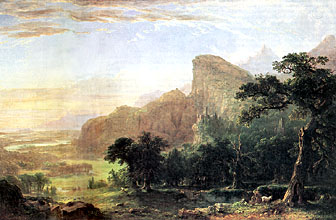
To commemorate All Saints Day and Día de los Muertos, I give you Thanatopsis by William Cullen Bryant.
THANATOPSIS by: William Cullen Bryant (1794-1878)
Asher Durand: “Scene from Thanatopsis” (1850)
O him who in the love of Nature holds Communion with her visible forms, she speaks A various language; for his gayer hours She has a voice of gladness, and a smile And eloquence of beauty, and she glides Into his darker musings, with a mild And healing sympathy, that steals away Their sharpness, ere he is aware. When thoughts Of the last bitter hour come like a blight Over thy spirit, and sad images Of the stern agony, and shroud, and pall, And breathless darkness, and the narrow house, Make thee to shudder and grow sick at heart;– Go forth, under the open sky, and list To Nature’s teachings, while from all around– Earth and her waters, and the depths of air– Comes a still voice–Yet a few days, and thee The all-beholding sun shall see no more In all his course; nor yet in the cold ground, Where thy pale form was laid with many tears, Nor in the embrace of ocean, shall exist Thy image. Earth, that nourish’d thee, shall claim Thy growth, to be resolved to earth again, And, lost each human trace, surrendering up Thine individual being, shalt thou go To mix for ever with the elements, To be a brother to the insensible rock, And to the sluggish clod, which the rude swain Turns with his share, and treads upon. The oak Shall send his roots abroad, and pierce thy mould.
Yet not to thine eternal resting-place Shalt thou retire alone, nor couldst thou wish Couch more magnificent. Thou shalt lie down With patriarchs of the infant world–with kings, The powerful of the earth–the wise, the good, Fair forms, and hoary seers of ages past, All in one mighty sepulchre. The hills Rock-ribb’d and ancient as the sun,–the vales Stretching in pensive quietness between; The venerable woods; rivers that move In majesty, and the complaining brooks That make the meadows green; and, pour’d round all, Old Ocean’s grey and melancholy waste,– Are but the solemn decorations all Of the great tomb of man. The golden sun, The planets, all the infinite host of heaven, Are shining on the sad abodes of death, Through the still lapse of ages. All that tread The globe are but a handful to the tribes That slumber in its bosom.–Take the wings Of morning, pierce the Barcan wilderness, Or lose thyself in the continuous woods Where rolls the Oregon and hears no sound Save his own dashings–yet the dead are there: And millions in those solitudes, since first The flight of years began, have laid them down In their last sleep–the dead reign there alone. So shalt thou rest: and what if thou withdraw In silence from the living, and no friend Take note of thy departure? All that breathe Will share thy destiny. The gay will laugh When thou art gone, the solemn brood of care Plod on, and each one as before will chase His favourite phantom; yet all these shall leave Their mirth and their employments, and shall come And make their bed with thee. As the long train Of ages glides away, the sons of men, The youth in life’s green spring, and he who goes In the full strength of years, matron and maid, The speechless babe, and the gray-headed man– Shall one by one be gathered to thy side By those who in their turn shall follow them.
So live, that when thy summons comes to join The innumerable caravan which moves To that mysterious realm where each shall take His chamber in the silent halls of death, Thou go not, like the quarry-slave at night, Scourged by his dungeon; but, sustain’d and soothed By an unfaltering trust, approach thy grave, Like one who wraps the drapery of his couch About him, and lies down to pleasant dreams.
William Cullen Bryant
(born Nov. 3, 1794, Cummington, Mass., U.S. — died June 12, 1878, New York, N.Y.) U.S. poet. At age 17 Bryant wrote “Thanatopsis,” a meditation on nature and death that remains his best-known poem; influenced by deism, it in turn influenced Ralph Waldo Emerson and Henry David Thoreau. Admitted to the bar at age 21, he spent nearly 10 years as an attorney, a profession he hated. His Poems (1821), including “To a Waterfowl,” secured his reputation. In 1825 he moved to New York City, where for almost 50 years (1829 – 78) he was editor in chief of the Evening Post, which he transformed into an organ of progressive thought.
Daniel Hernandez Jr. – Saturday, October 15th “I don’t think I’m a hero—the heroes are people who spend their entire lives trying to help others.”
University of Arizona student Daniel Hernandez Jr. became a national hero when he saved the life of Congresswoman Gabrielle Giffords. More
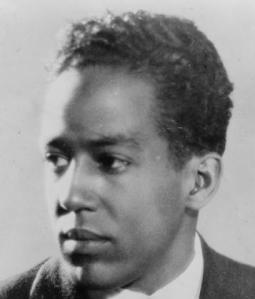
Langston Hughes – Sunday, October 16th “What happens to a dream deferred? Does it dry up like a raisin in the sun? Or does it fester like a sore—and then run?”
A celebrated poet and novelist, Langston Hughes was a major contributor to American literature. More
Frida Kahlo – Monday, October 17th “Painting completed my life.”
Frida Kahlo is a renowned Mexican artist. Her paintings have commanded higher prices than any other female artist. More
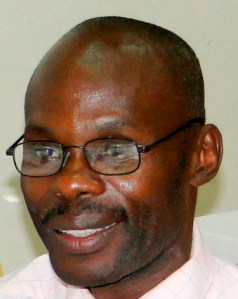
David Kato – Tuesday, October 18th “What they’re doing now is to make it more harsh on people, anyone promoting homosexuality is being criminalized.”
David Kato was the founder of Uganda’s LGBT civil rights movement. His murder brought global attention to the plight of LGBT people in Africa. More
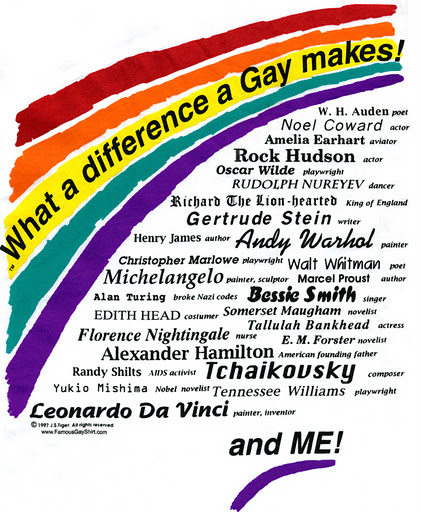
I have been thinking this month especially about all of the contributions of gay, lesbian, bisexual and transgender people. A thought occurred to me, can I even imagine what the world would be like if there had never been any homosexuals?
Without Alexander the Great, Hellenistic culture would not have been spread from India to Egypt. The Italian Renaissance would have been non-existent without those who created the art and architecture of the Renaissance, the vast majority of whom were gay or bisexual. Leonardo Da Vinci, Michelangelo, Caravaggio, Socrates, Aristotle, and Alexander the Great are also reputed to be gay by some historians. Think what would have been lost in the world of philosophy and art if they hadn’t existed.
The United States, Britain, and the other Allies might have lost World War II because Alan Turing, a gay British mathematician, would never have been born. Turing broke one of the Nazis’ most important codes to help shorten the war. African-Americans might have struggled longer before receiving civil rights because there would have been no Bayard Rustin, the gay man who organized the 1963 March on Washington. This the march where Dr. Martin Luther King, Jr., made his famous “I Have a Dream” speech.
Our musical world would have been impoverished because gay American composer Aaron Copeland would have never been born. Russian composer Peter Ilyich Tchaikovsky would not have existed, neither would have Leonard Bernstein, English composer Benjamin Britten, or singers Bessie Smith, Melissa Etheridge, or Elton John. Katherine Bates would have never written “America the Beautiful.” We would have also missed the folk songs of Stephen Foster or the clever compositions of Cole Porter.
Do you like the plays Our Town, The Glass Menagerie, A Streetcar Named Desire, Cat on a Hot Tin Roof, Who’s Afraid of Virginia Woolf, The Importance of Being Earnest, and Breakfast at Tiffany’s? None of these would have been written. Their authors were all gay.
At times it seems as if some people would prefer a world where no lesbians or gays existed. But what would that world really look like? Above is just a small look at what the world might have been like if it had never included people who were homosexual or had a significant homosexual relationship in life. It would be difficult to envision or recognize a civilized world without the contributions of gays and lesbians. It would no doubt be a bleak and boring place devoid of much of the art, architecture, philosophy, and much of the wonderful heritage of humanity. None of the above even begins to include fashion and beauty, what an ugly world we would live in.
The high school English class that I teach has been learning about the transcendentalist movement. Yesterday, we read excerpts from Ralph Waldo Emerson’s essay “Self-Reliance.” This essay really spoke to me, and so I have included some excepts from the essay below. When I first read this essay, I was not yet out of the closet, and it did not mean as much to me then as it does now. Emerson may actually be speaking more directly to the GLBT community than we realize. There is some evidence that Ralph Waldo Emerson was bisexual. Emerson may have had erotic thoughts about at least one man. During his early years at Harvard, he said he was “strangely attracted” to a young man named Martin Gay, about whom he wrote sexual poetry. Nathaniel Hawthorne was also purportedly one of his infatuations.
Emerson is the seminal intellectual, philosophical voice of the nineteenth century in America. Although readers today may find his thought slightly facile, even unrealistic–times do change–his influence among his contemporaries and those who followed immediately after him was enormous. Emerson was the spokesman for the American Transcendentalists, a group of New England romantic writers, which included Thoreau, who believed that intuition was the means to truth, that god is revealed through intuition to each individual. They celebrated the independent individual and strongly supported democracy. The essay “Self-Reliance,” from which an excerpt is presented here, is the clearest, most memorable example of Emerson’s philosophy of individualism, an idea that is deeply embedded in American culture. His variety of individualism grows of the self’s intuitive connection with the Over-Soul and is not simply a matter of self-centered assertion or immature narcissism
Consider what Emerson says about the importance of non-conformity and independent beliefs and contrast this with the prevailing attitude in contemporary America. With so much discussion of bullying in schools, this essay should be, and in most textbooks is, essential reading. It teaches us that we should be ourselves, not the conforming sheep that bullies try to push us into. Emerson is telling us to trust ourselves, because it is us alone that can overcome the bullies of the world. With the rate of GLBT youth suicides and bullycide going on in American schools, we should realize that it will get better and that we should be proud to be ourselves.
There is a time in every man’s education when he arrives at the conviction that envy is ignorance; that imitation is suicide; that he must take himself for better, for worse, as his portion; that though the wide universe is full of good, no kernel of nourishing corn can come to him but through his toil bestowed on that plot of ground which is given to him to till. The power which resides in him is new in nature, and none but he knows what that is which he can do, nor does he know until he has tried. Not for nothing one face, one character, one fact, makes much impression on him, and another none. This sculpture in the memory is not without preëstablished harmony. The eye was placed where one ray should fall, that it might testify of that particular ray. We but half express ourselves, and are ashamed of that divine idea which each of us represents. It may be safely trusted as proportionate and of good issues, so it be faithfully imparted, but God will not have his work made manifest by cowards. A man is relieved and gay when he has put his heart into his work and done his best; but what he has said or done otherwise, shall give him no peace. It is a deliverance which does not deliver. In the attempt his genius deserts him; no muse befriends; no invention, no hope. Trust thyself: every heart vibrates to that iron string. Accept the place the divine providence has found for you, the society of your contemporaries, the connection of events. Great men have always done so, and confided themselves childlike to the genius of their age, betraying their perception that the absolutely trustworthy was seated at their heart, working through their hands, predominating in all their being. And we are now men, and must accept in the highest mind the same transcendent destiny; and not minors and invalids in a protected corner, not cowards fleeing before a revolution, but guides, redeemers, and benefactors, obeying the Almighty effort, and advancing on Chaos and the Dark…. These are the voices which we hear in solitude, but they grow faint and inaudible as we enter into the world.Society everywhere is in conspiracy against the manhood of every one of its members. Society is a joint-stock company, in which the members agree, for the better securing of his bread to each shareholder, to surrender the liberty and culture of the eater. The virtue in most request is conformity. Self-reliance is its aversion. It loves not realities and creators, but names and customs. For nonconformity the world whips you with its displeasure. And therefore a man must know how to estimate a sour face. The by-standers look askance on him in the public street or in the friend’s parlour. If this aversation had its origin in contempt and resistance like his own, he might well go home with a sad countenance; but the sour faces of the multitude, like their sweet faces, have no deep cause, but are put on and off as the wind blows and a newspaper directs. Yet is the discontent of the multitude more formidable than that of the senate and the college. It is easy enough for a firm man who knows the world to brook the rage of the cultivated classes. Their rage is decorous and prudent, for they are timid as being very vulnerable themselves. But when to their feminine rage the indignation of the people is added, when the ignorant and the poor are aroused, when the unintelligent brute force that lies at the bottom of society is made to growl and mow, it needs the habit of magnanimity and religion to treat it godlike as a trifle of no concernment…. A foolish consistency is the hobgoblin of little minds, adored by little statesmen and philosophers and divines. With consistency a great soul has simply nothing to do. He may as well concern himself with his shadow on the wall. Speak what you think now in hard words, and to-morrow speak what to-morrow thinks in hard words again, though it contradict every thing you said to-day.–‘Ah, so you shall be sure to be misunderstood.’–Is it so bad, then, to be misunderstood? Pythagoras was misunderstood, and Socrates, and Jesus, and Luther, and Copernicus, and Galileo, and Newton, and every pure and wise spirit that ever took flesh. To be great is to be misunderstood. I suppose no man can violate his nature. All the sallies of his will are rounded in by the law of his being, as the inequalities of Andes and Himmaleh are insignificant in the curve of the sphere. Nor does it matter how you gauge and try him. A character is like an acrostic or Alexandrian stanza;–read it forward, backward, or across, it still spells the same thing. In this pleasing, contrite wood-life which God allows me, let me record day by day my honest thought without prospect or retrospect, and, I cannot doubt, it will be found symmetrical, though I mean it not, and see it not. My book should smell of pines and resound with the hum of insects. The swallow over my window should interweave that thread or straw he carries in his bill into my web also. We pass for what we are. Character teaches above our wills. Men imagine that they communicate their virtue or vice only by overt actions, and do not see that virtue or vice emit a breath every moment. Let a man then know his worth, and keep things under his feet. Let him not peep or steal, or skulk up and down with the air of a charity-boy, a bastard, or an interloper, in the world which exists for him. But the man in the street, finding no worth in himself which corresponds to the force which built a tower or sculptured a marble god, feels poor when he looks on these. To him a palace, a statue, or a costly book have an alien and forbidding air, much like a gay equipage, and seem to say like that, ‘Who are you, Sir?’ Yet they all are his, suitors for his notice, petitioners to his faculties that they will come out and take possession. The picture waits for my verdict: it is not to command me, but I am to settle its claims to praise. That popular fable of the sot who was picked up dead drunk in the street, carried to the duke’s house, washed and dressed and laid in the duke’s bed, and, on his waking, treated with all obsequious ceremony like the duke, and assured that he had been insane, owes its popularity to the fact, that it symbolizes so well the state of man, who is in the world a sort of sot, but now and then wakes up, exercises his reason, and finds himself a true prince…. It is easy to see that a greater self-reliance must work a revolution in all the offices and relations of men; in their religion; in their education; in their pursuits; their modes of living; their association; in their property; in their speculative views.
Emerson’s “Self-Reliance” teaches us to trust ourselves. By ourselves, we have unique voices and opinions, which society shuts down as soon as we confront other people and the group. Society’s primary concern is creating wealth and status, while the individual’s concern is self-expression and fulfillment. We want to take life slow, savor every moment, express ourselves, and explore many talents and skills. Society wants us to be big shots, put all our education towards one career, weed out our competitors to become successful, and make more money than we could ever need. But since society’s goal’s are so ingrained inside us, we must learn to trust our own instincts as to what society tells us.
Emerson states that in solitude, individuals have voices, “which grow faint and inaudible as we enter the world.” Some of these thoughts and opinions that people come up with in solitude might cause fear when presented to society. Since society is such a delicate structure based on fear of chaos, any novel voice will make the person who spoke it become “the other.” Fear of alienation prevents voices from leaving solitude into the realm of society.
Emerson states that individuals who work hard and pursue fulfillment should not be proud of the possessions they acquired. He says, “a cultivated man becomes ashamed of his property, ashamed of what he has, out of respect for his own being,” meaning that acquiring property is just an accident. If you trust yourself and work towards the proper development of yourself by discovery of your innermost talents, then you should not accept society’s false reward of property. An ordinary person doing his best work is just as valuable as the “great” lives of kings and royalty. The greatest reward is knowing that you have found your own unique self, and fully trust it.
Fulfillment verses success, self expression verses conformity, and solitude verses the group are important factors to distinguish. Emerson in “Self-Reliance” is not advocating staying in solitude, because humans are social beings. Rather he wants us to discover ourselves away from society, and then confront society as our fulfilled and cultivated selfs. In reality, the wealth power structure of society is just a response to fear of our chaotic world, and if we just embrace this chaos, we might be more fulfilled, happy people. Trust yourself. Learn to let go.
Whether you’re lesbian, gay, bisexual, transgender or a straight ally, be proud of who you are and your support for LGBT equality this Coming Out Day!
In the Beginning, There Was a March
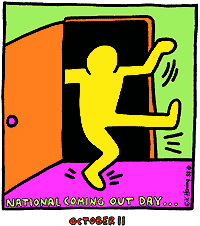
On Oct. 11, 1987, half a million people participated in the March on Washington for Lesbian and Gay Rights. It was the second such demonstration in our nation’s capital and resulted in the founding of a number of LGBT organizations, including the National Latino/a Gay & Lesbian Organization (LLEGÓ) and AT&T’s LGBT employee group, LEAGUE. The momentum continued four months after this extraordinary march as more than 100 lesbian, gay, bisexual and transgender activists from around the country gathered in Manassas, Va., about 25 miles outside Washington, D.C. Recognizing that the LGBT community often reacted defensively to anti-gay actions, they came up with the idea of a national day to celebrate coming out and chose the anniversary of that second march on Washington to mark it. The originators of the idea were Rob Eichberg, a founder of the personal growth workshop, The Experience, and Jean O’Leary, then head of National Gay Rights Advocates. From this idea the National Coming Out Day was born.
To this day National Coming Out Day (NCOD) continues to promote a safe world for LGBT individuals to live truthfully and openly.
The People of NCOD
The success of NCOD, which from inception quickly expanded to include participation from all 50 states and foreign countries, is because of the hard work of celebrities, volunteers and activists.
Rob Eichberg and Jean O’Leary were the originators of the idea of NCOD
Sean Strub and Keith Haring- In 1987, Activist Sean Strub got Haring to donate his now-famous image of a person fairly dancing out of a closet
Lynn Shepodd – In 1990, Shepodd, who later became a member of HRC’s Board of Governors, was hired as executive director and obtained tax-exempt status for the organization
Geraldo Rivera- In 1991, Geraldo Rivera hosted a coming out day TV program that featured Dick Sargent, a gay actor famous for playing Darren on Bewitched, openly gay California Assemblywoman Sheila Kuehl and Eichberg.
Wes Combs in 1994 was named HRCF’s project director for National Coming Out Day
Candace Gingrich, half-sister of then-House Speaker Newt Gingrich, became a National Coming Out Project spokesperson and full-time activist in 1995
Dan Butler, who played the character Bulldog on NBC-TV’s Frasier, was NCOD spokeperson in 1995
Rock musician Melissa Etheridge did a radio public service announcement, reminding people that “Labels belong on records, not on people.”
Del. Eleanor Holmes Norton, D-D.C., spoke at the “Come Out Voting” rally in Washington, D.C., Oct. 11, 1996.
Fashion photographer Don Flood in 1996 shot past spokespeople Bearse, Butler and Gingrich, along with Olympic diver Greg Louganis, actor Mitchell Anderson, newly minted gay activist Chastity Bono and Sean Sasser, who had appeared in MTV’s The Real World.
In 1996, actress Judith Light, pro golfer Muffin Spencer-Devlin and, in her first appearance at a gay rights event, Cher spoke at a Come Out Voting rally in Washington, DC
In September 1997 the project brought in its first straight spokesperson, Betty DeGeneres, mother of actress/comedian Ellen DeGeneres.
Patrick Bristow (formerly of the Ellen TV show), Dan Butler, San Francisco Supervisor Mark Leno, longtime activist Donna Red Wing, Betty DeGeneres, Gingrich and SF Mayor Willie Brown were featured in a 1998 NCOD event in San Francisco’s Delores Park
Chicago-native and founding member of the rock group Styx Chuck Panozzo celebrated a special homecoming in 2001 when he came out at the Human Rights Campaign annual Chicago dinner.
On National Coming Out Day, Oct. 11, 2002, a benefit CD featuring the songs of openly LGBT musicians and straight allies was released. Cyndi Lauper, Queen, k.d. lang, Jade Esteban Estrada and Sarah McLachlan are among the artists who donated songs to the album.
Etheridge’s name appears on a poster celebrating the 2002 theme along with 18 other openly LGBT artists, including Ani DiFranco, Michael Stipe, the Indigo Girls, RuPaul, Rufus Wainwright and The Butchies
Living Openly
However you identify, HRC and its Coming Out Project hope these guides help you meet the challenges and opportunities that living openly offers to each of us:
Check out A Straight Guide to LGBT Americans to learn about the emotional spectrum that people typically feel after someone comes out to them and find easy ways to learn more and demonstrate your support for LGBT Americans and equality.


















 Joe
Joe


