Category Archives: History

Pride in Every Stroke: Gay Art Since 1970

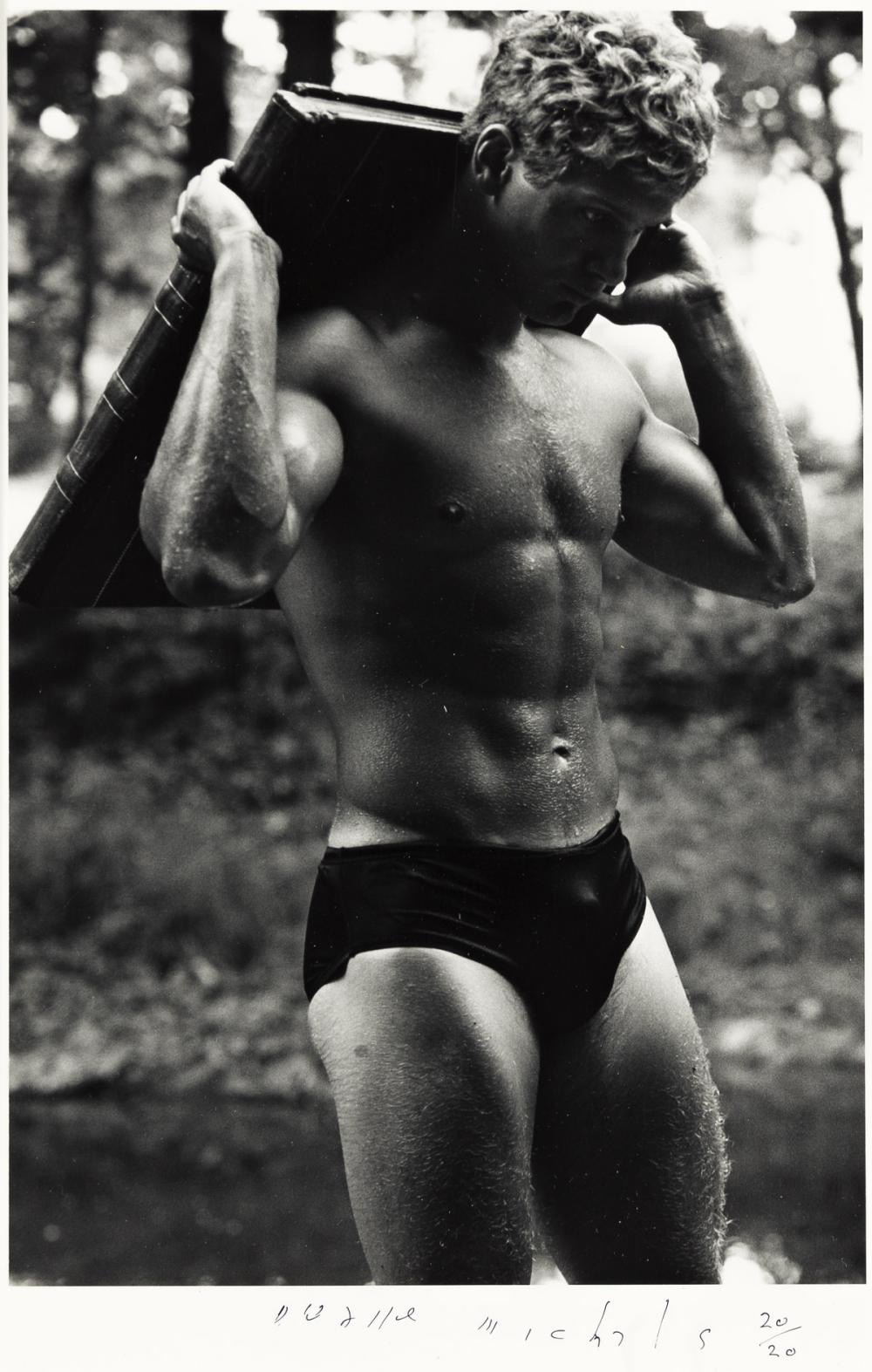
Duane Michals, Male figure holding book, date unknown.

When the first Pride parade marched through New York City in June 1970—commemorating the one-year anniversary of the Stonewall uprising—it marked not only a political turning point but also an artistic awakening. No longer confined to coded symbolism or covert expression, gay pride began to blaze through the art world in bold, unflinching forms. Over the next six decades, LGBTQ+ artists harnessed the power of visibility to challenge oppression, celebrate desire, mourn loss, and imagine futures beyond shame.

The 1970s: Visibility and Liberation

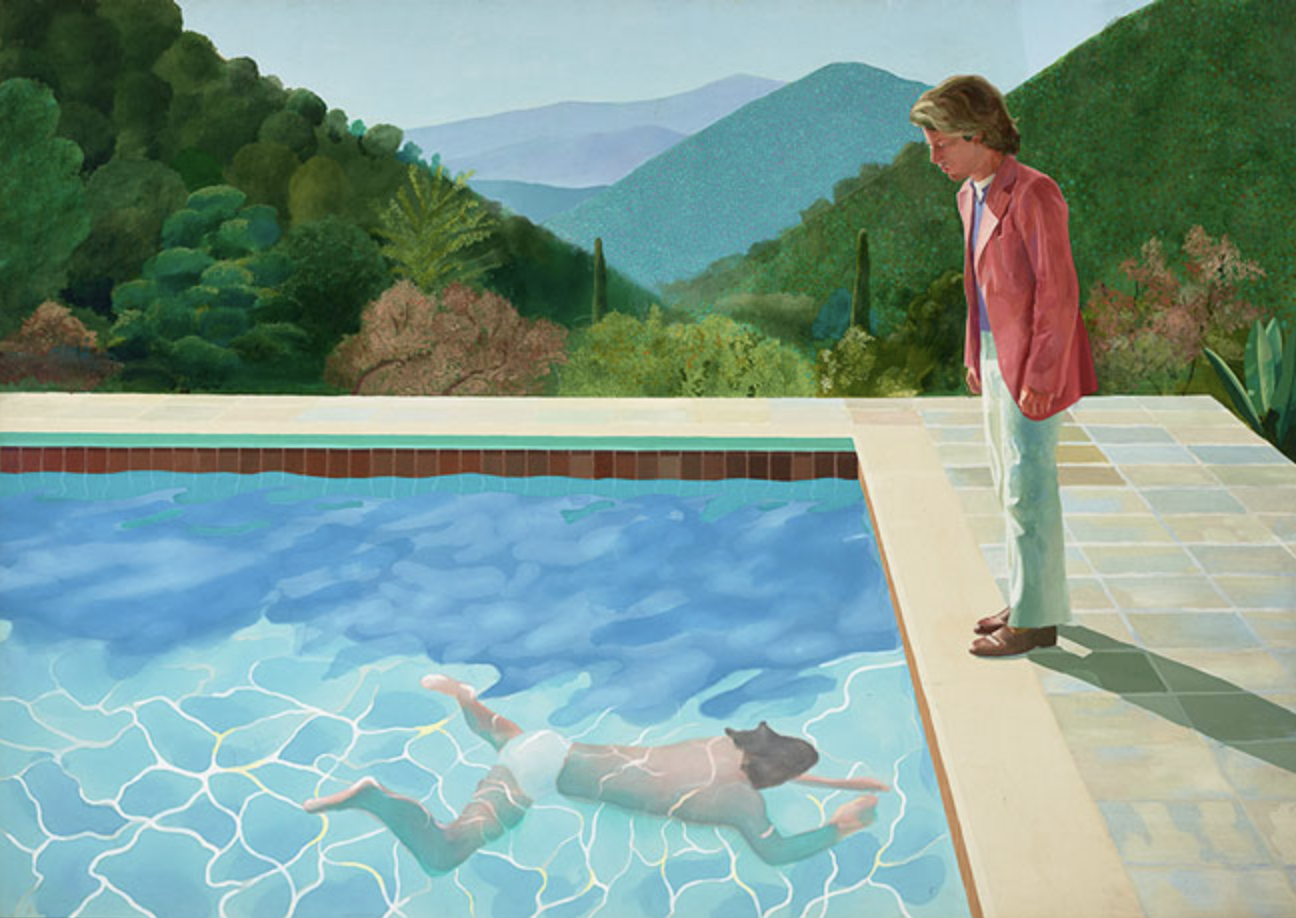
David Hockney, Portrait of an Artist (Pool with Two Figures), 1972.
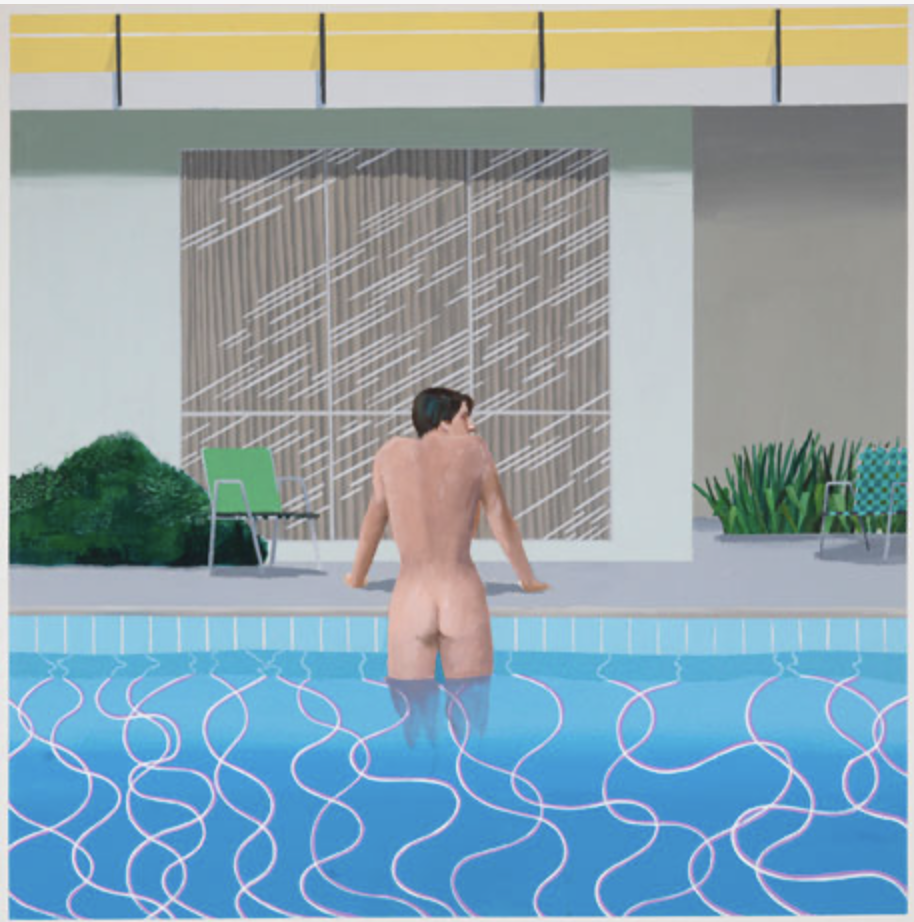
David Hockney, Peter Getting Out of Nick’s Pool, 1966.
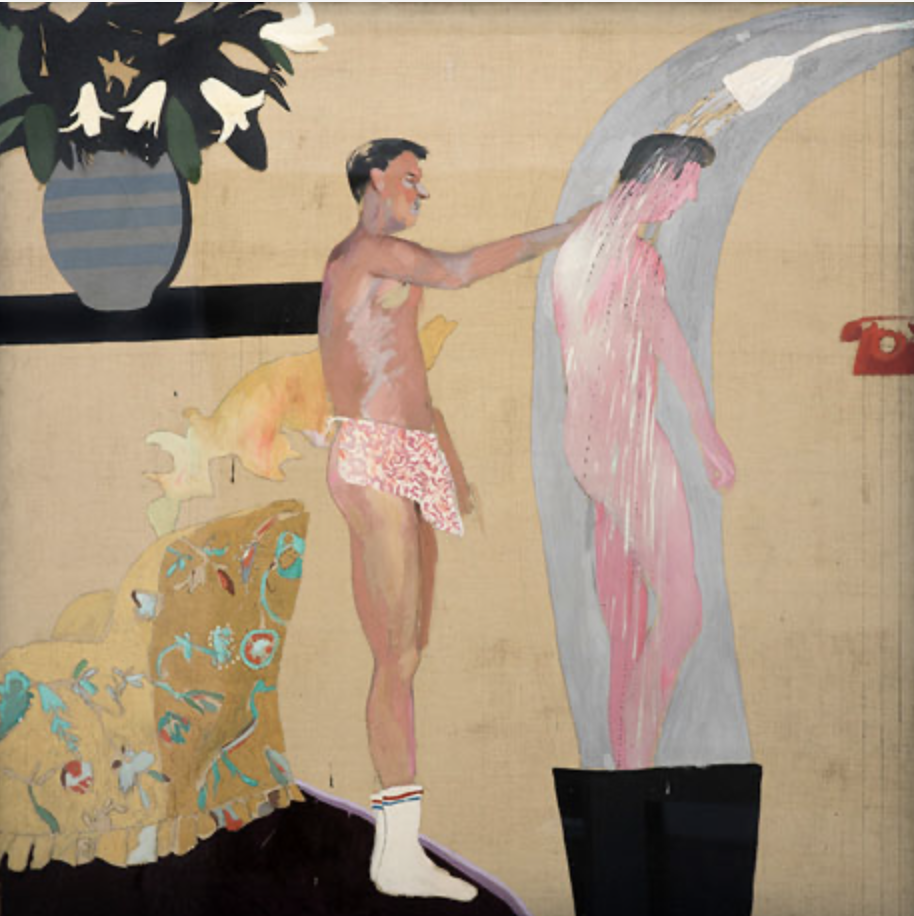
David Hockney, Domestic Scene, Los Angeles, 1963.
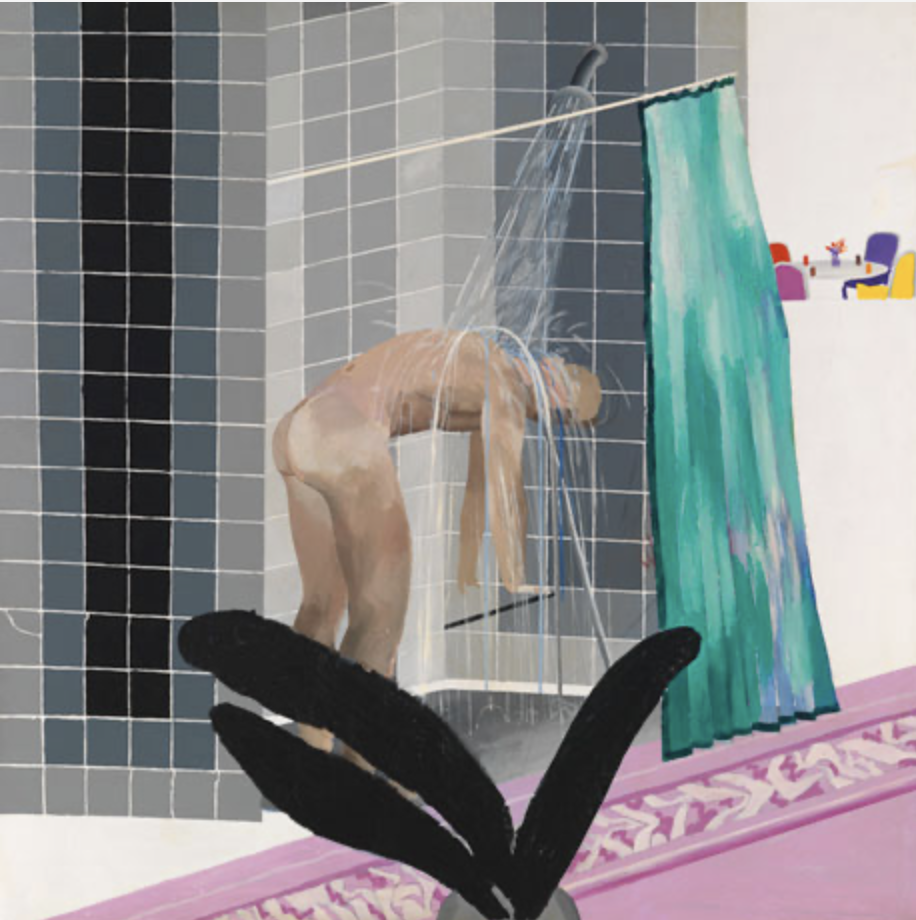
David Hockney, Man in Shower in Beverly Hills, 1964.
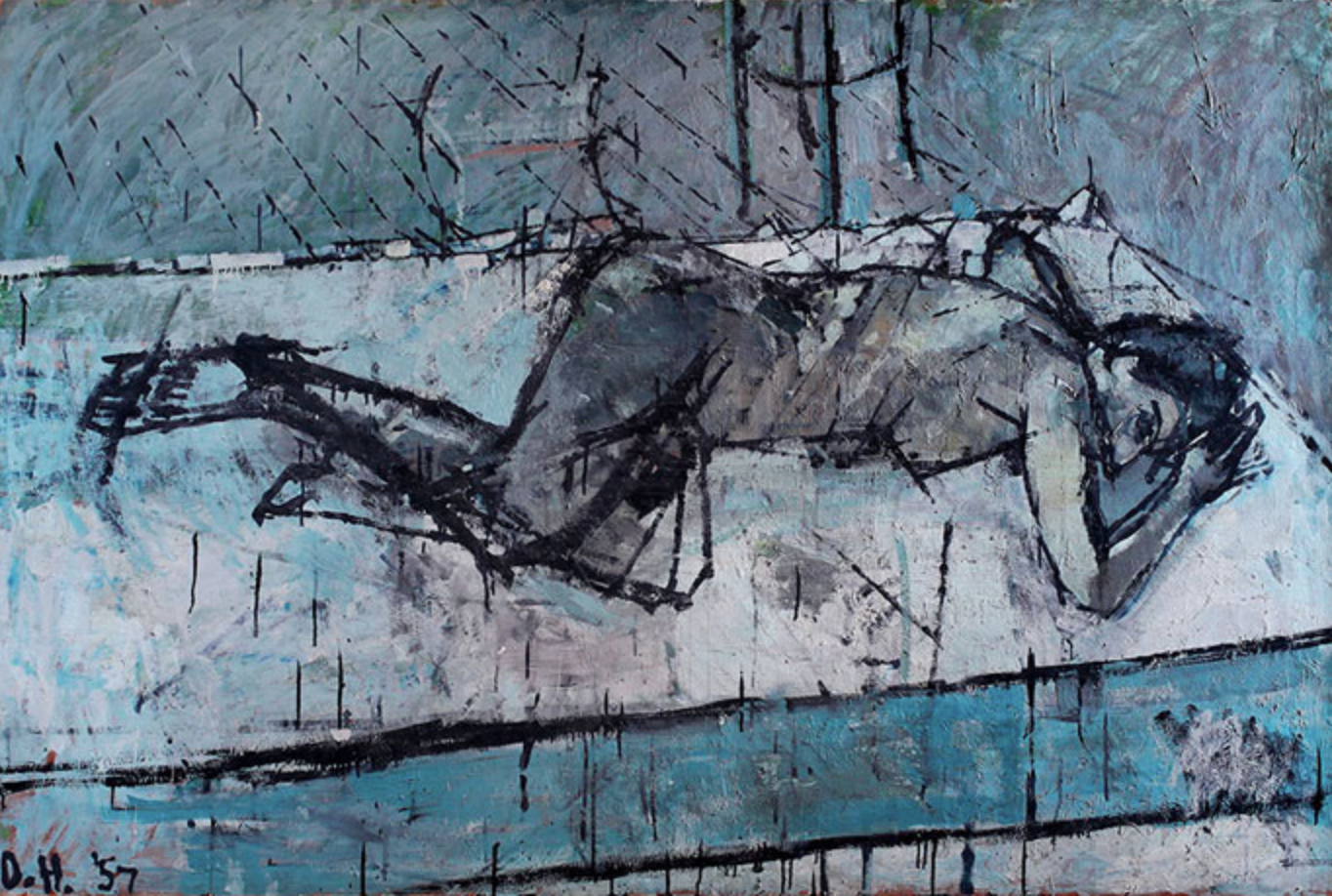
David Hockney, Nude, 1957.

Hockney is known for his vibrant use of color, innovative techniques, and significant contributions to the Pop Art movement. He infused his work with subtle but powerful depictions of gay male intimacy. His 1971 painting Portrait of an Artist (Pool with Two Figures) captured not just a sunlit pool but a relationship dynamic—gaze, distance, vulnerability. It remains one of the most iconic queer paintings of the 20th century. Educated at the Royal College of Art in London, Hockney became celebrated for his depictions of California life, especially his swimming pool series such as Peter Getting Out of Nick’s Pool (1966). His artistic practice spans painting, drawing, printmaking, photography, stage design, and digital art, including pioneering work with iPad drawing apps. Openly gay, Hockney’s works often explore themes of intimacy, domestic life, and sexuality, and his expansive career has solidified him as one of the most influential artists of the 20th and 21st centuries.

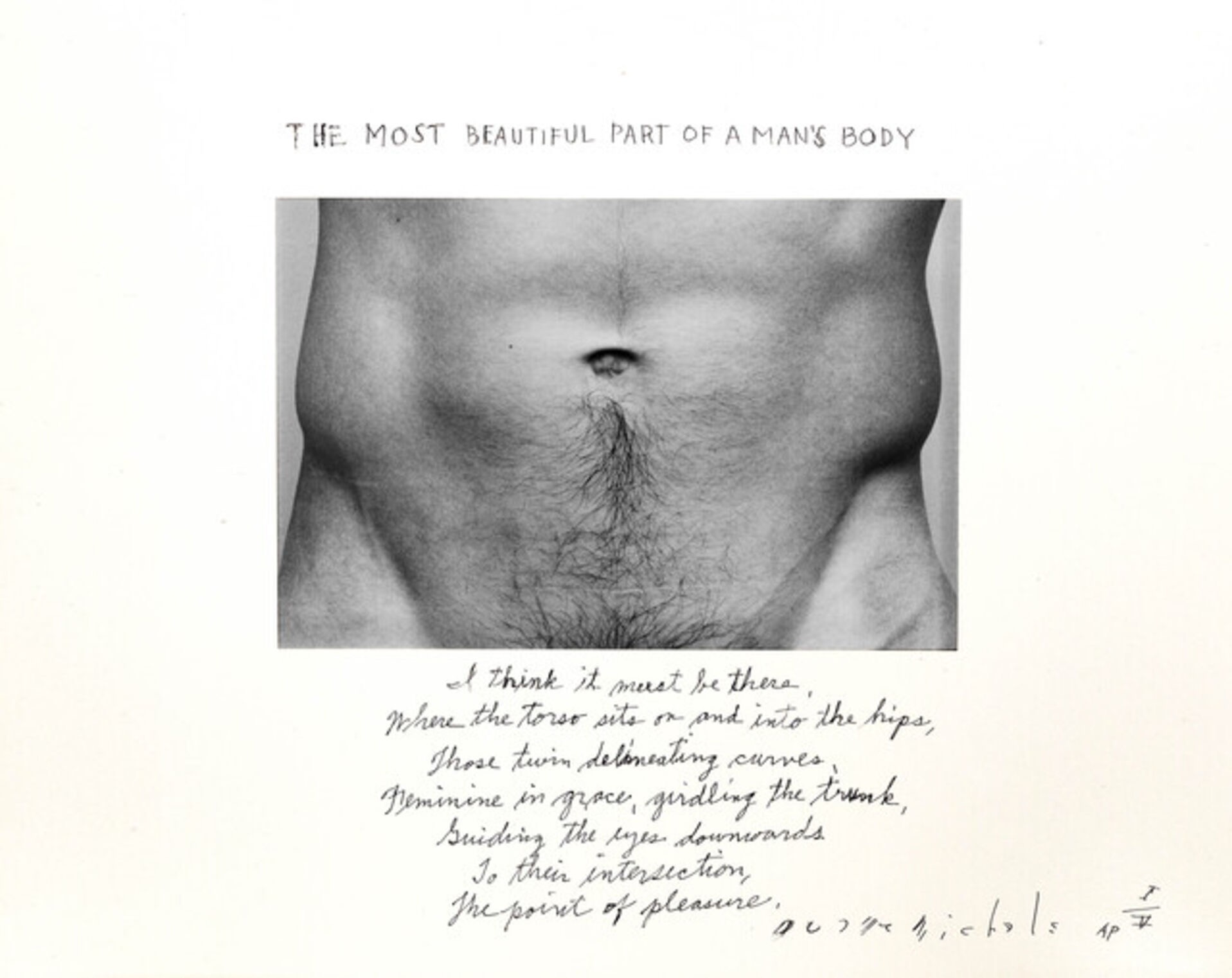
Duane Michals, The Most Beautiful Part of a Man’s Body, 1974.
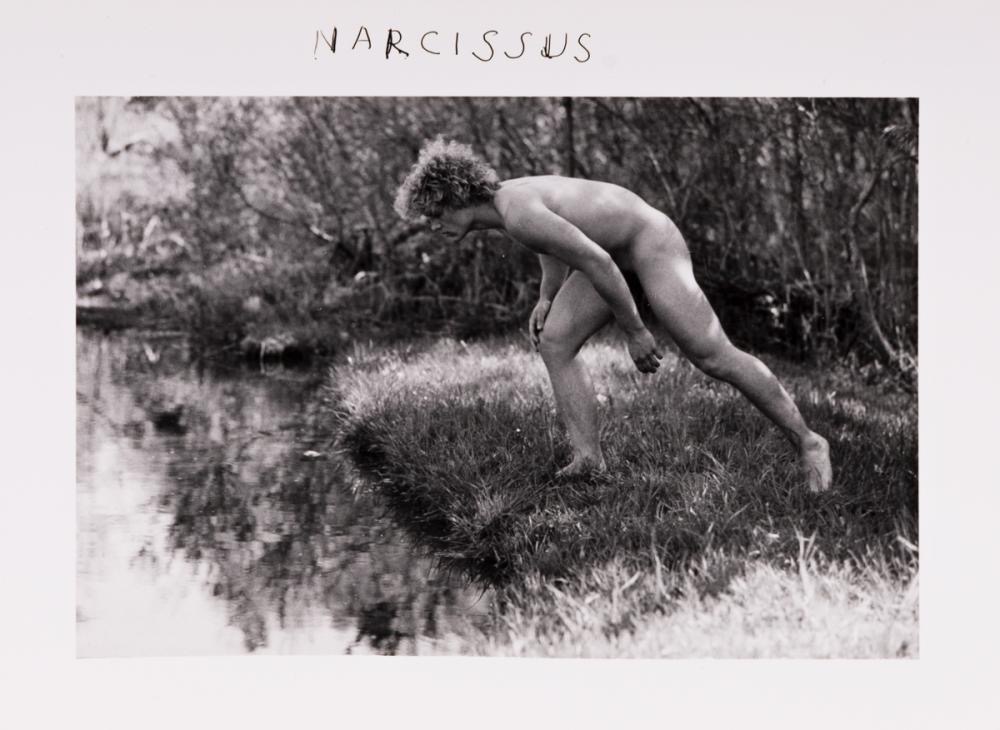
Duane Michals, Narcissus, 1985.
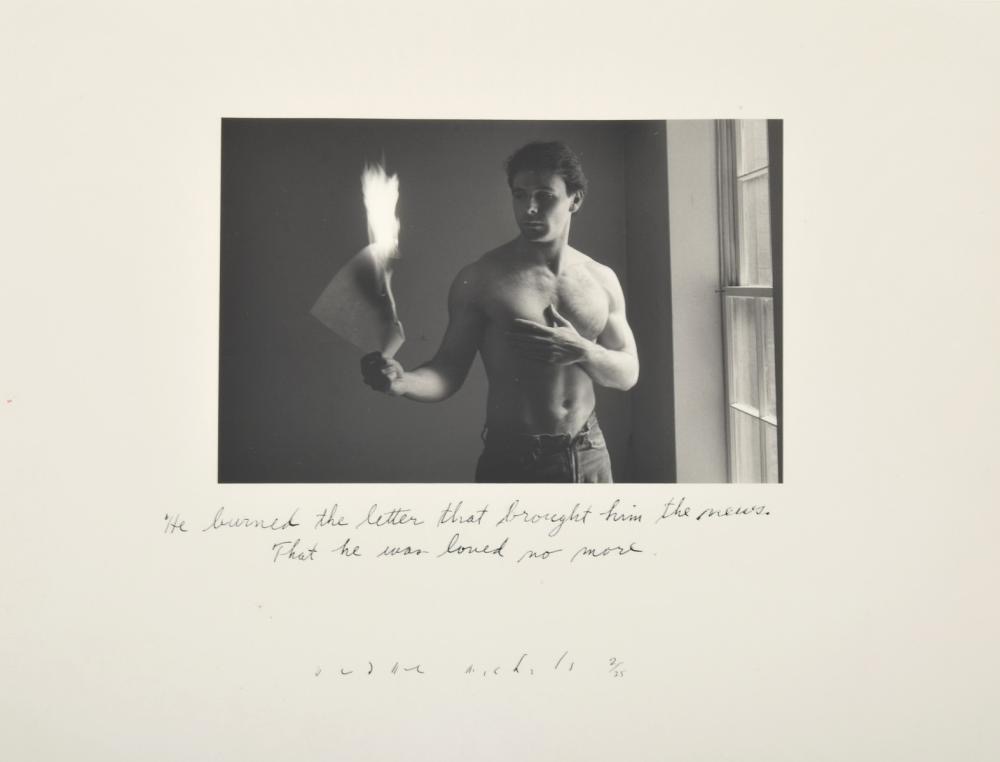
Duane Michals, He burned the letter that brought him the news that he was loved no more, date unknown.
Duane Michals, Moment of Perfection, c. 1980.
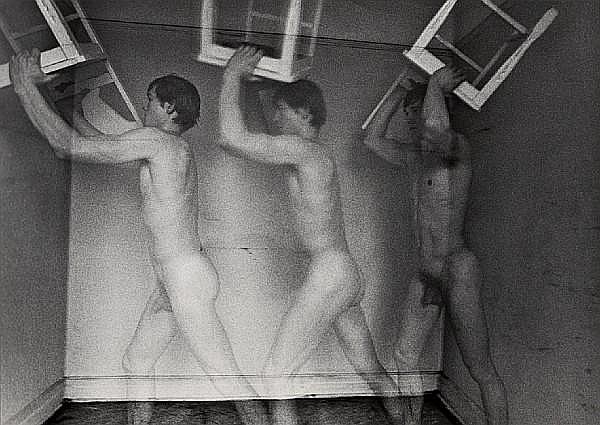
Duane Michals, Man Carrying a Chair, 1982.
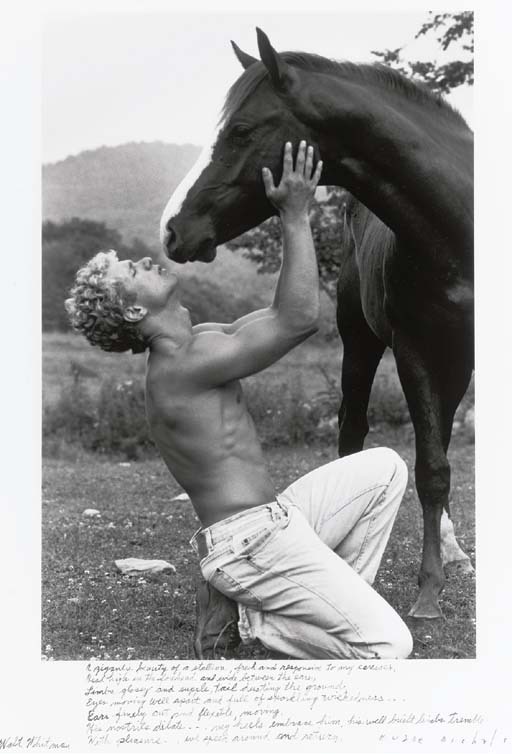
Duane Michals, A Gigantic Beauty of a Stallion, from The Series Salute To Walt Whitman, 1970.
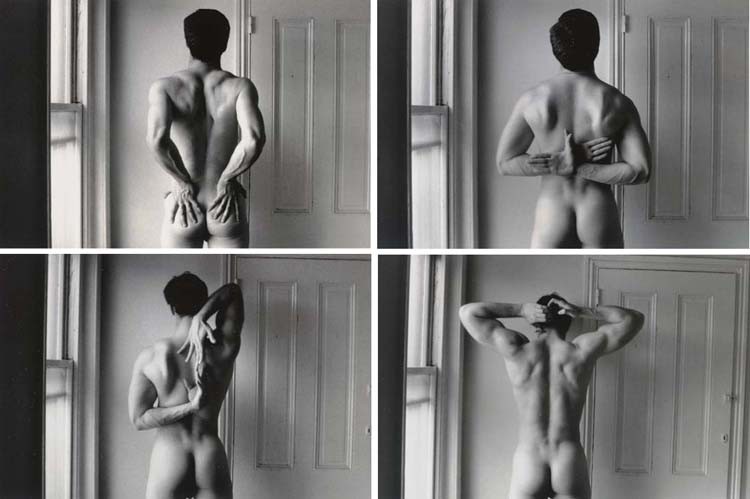
Duane Michals, Back Talk, 1970s.
Duane Michals, Take One and See Mt. Fujiyama, 1976.

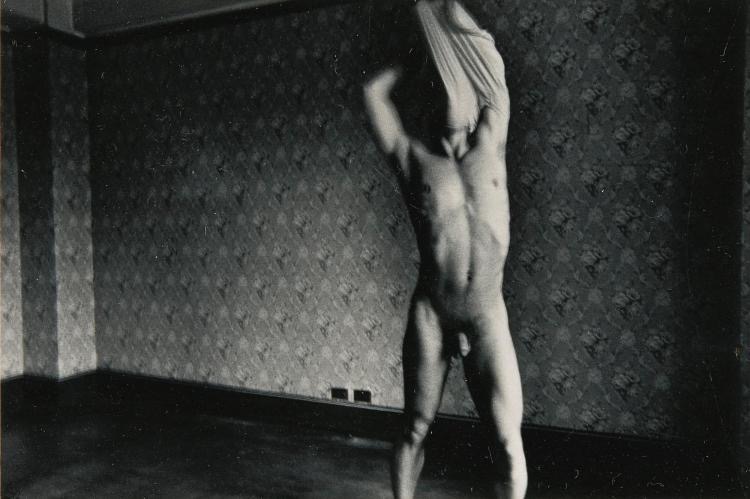
Duane Michals (1932- ) is an influential American photographer renowned for his innovative use of photographic sequences and handwritten narratives that create intimate and poetic visual storytelling. Often blending dream-like imagery with deeply personal themes, Michals pushed beyond traditional documentary photography, favoring staged scenes to explore metaphysical questions, mortality, and human emotion. He used photographic sequences to tell poetic, often erotic, visual stories—like his haunting piece The Most Beautiful Part of a Man’s Body (1974), which explored vulnerability and sensuality through layered narrative. Michals’ pioneering approach profoundly impacted contemporary photography, emphasizing that imagery could embody not only what is seen, but also what is felt, imagined, or deeply desired.

The 1980s–90s: Art in the Shadow of AIDS

As the AIDS crisis devastated the LGBTQ+ community, artists responded with fury, grief, and resilience.

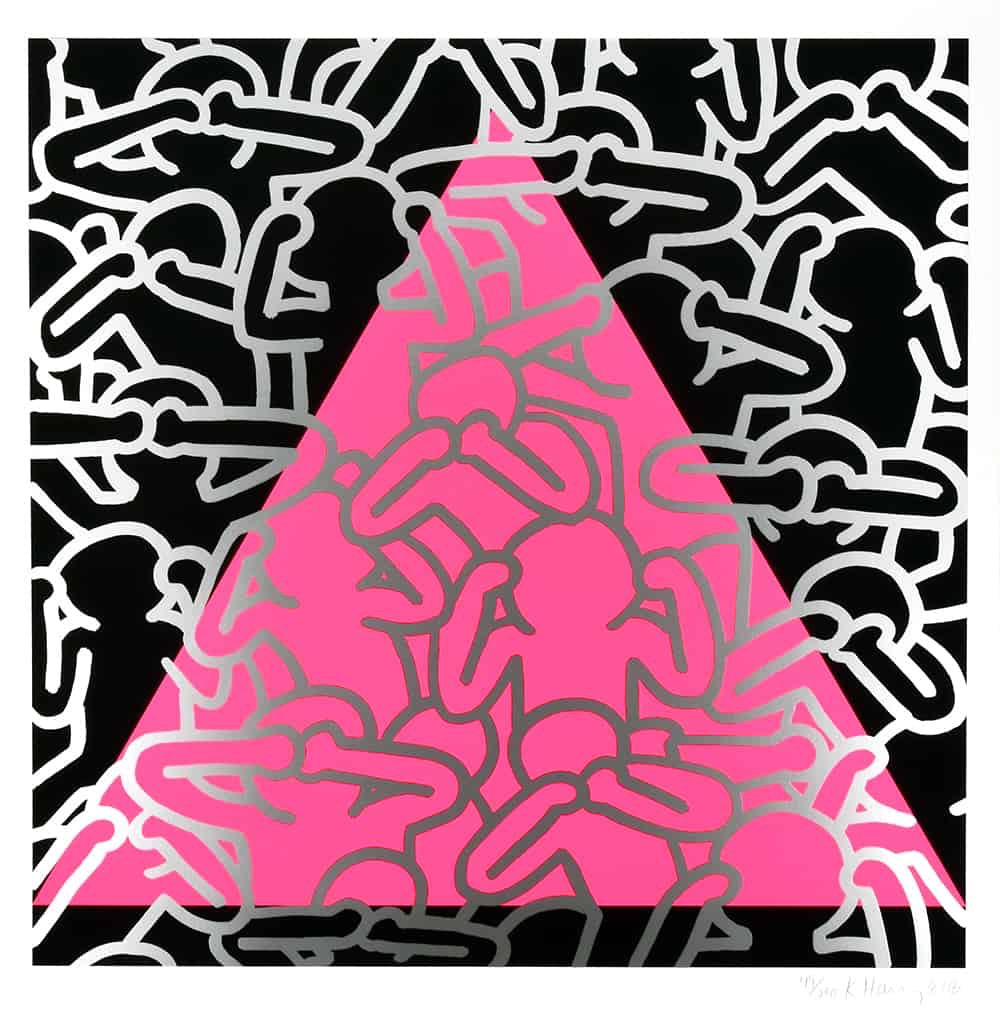
Keith Haring, Silence Equals Death, 1989.
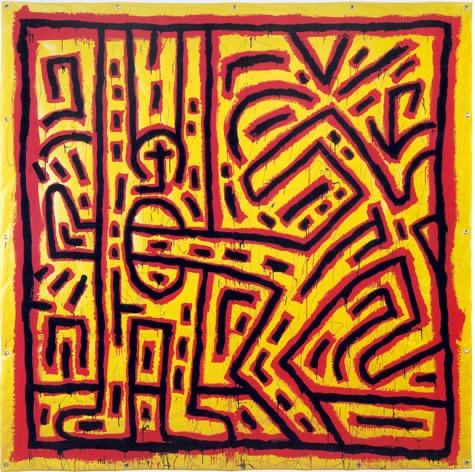
Keith Haring, Untitled, 1981.

Keith Haring (1958-1990) was a groundbreaking American artist whose bold, neon-outlined figures transformed urban spaces and gallery walls into vibrant canvases filled with queer joy and political urgency. Rising to prominence in the 1980s New York art scene, Haring used accessible imagery and public spaces—including subways and street murals—to communicate powerful messages on sexuality, AIDS awareness, and social justice. His iconic Silence = Death imagery became a rallying cry against apathy and inaction, galvanizing activism during the AIDS epidemic and amplifying voices within the LGBTQ+ community. Haring’s energetic style and activist spirit continue to resonate, ensuring his legacy as an artist who merged exuberant creativity with fearless advocacy.

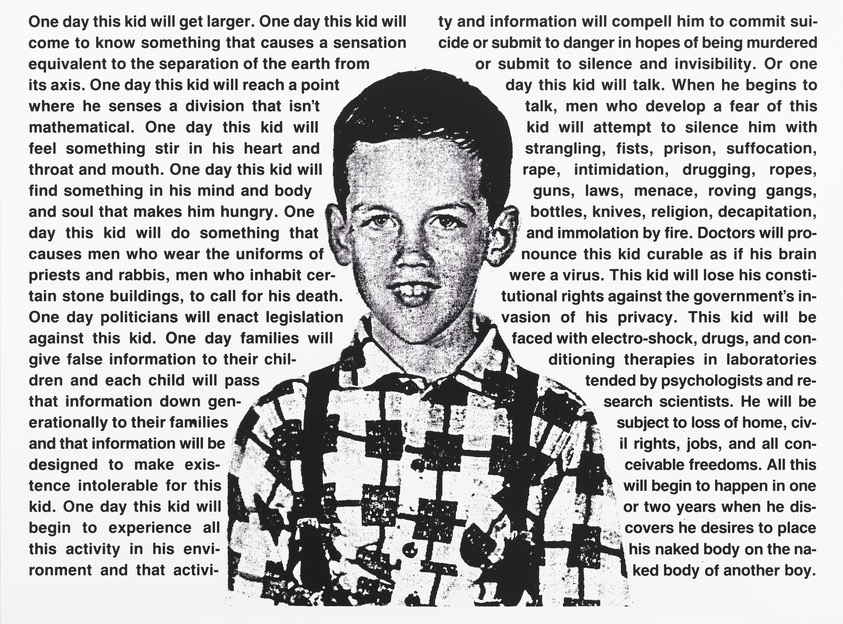
David Wojnarowicz, Untitled (One Day This Kid…), 1990.

David Wojnarowicz (1954-1992) was a fiercely confrontational American artist, writer, and activist whose work channeled the raw power of queer rage into searing critiques of homophobia, censorship, and government inaction during the AIDS crisis. Emerging from New York’s East Village art scene in the 1980s, Wojnarowicz worked across media—painting, photography, film, and text—to expose the violence and vulnerability of queer existence. His iconic piece Untitled (One day this kid…) (1990) juxtaposes a childhood photo of himself with a prophetic, damning text that lays bare the grim realities faced by queer youth in a hostile world. Unapologetically political and deeply personal, Wojnarowicz’s art remains a visceral reminder of both the pain and defiance at the heart of queer survival.

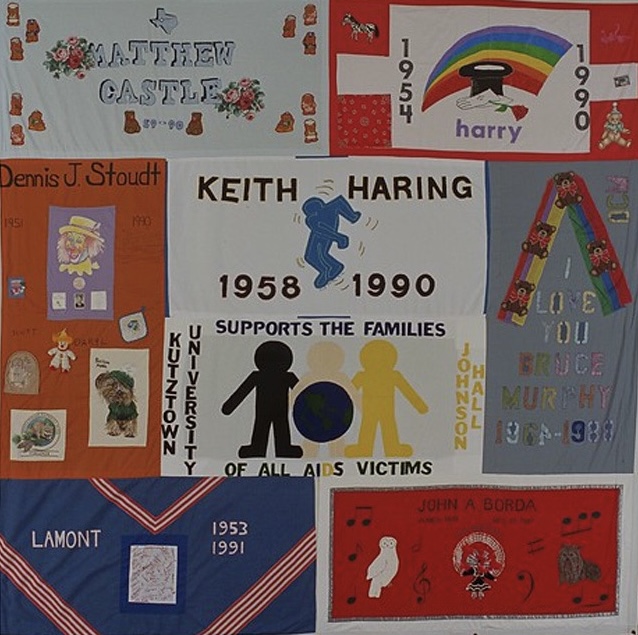
NAMES Project AIDS Memorial Quilt

The NAMES Project AIDS Memorial Quilt, begun in 1987, now contains over 50,000 panels. It is both a work of art and a massive, tangible act of remembrance and protest.

2000s–Present: Intersectionality and Expanding the Frame

In recent decades, Pride in art has become more expansive, intersectional, and experimental.

Zanele Muholi, a South African visual activist, documents Black LGBTQ+ life through dramatic portraiture. Their series Faces and Phases offers a powerful visual archive of queer resilience. Mickalene Thomas reclaims the Black female body in rhinestone-studded paintings and photographic tableaux. Her work unapologetically fuses queerness, glamour, and political assertion. See Le déjeuner sur l’herbe: Les Trois Femmes Noires (2010), a reimagining of Manet’s painting through a queer, Black feminist lens. Cassils, a transgender performance artist, uses their body in durational, often physically intense works. In Becoming an Image, they strike a clay block in darkness while a camera flash records the violence—a metaphor for queer visibility and embodiment. Juliana Huxtable, a Black trans artist, poet, and performer, combines Afrofuturism, photography, and digital media to challenge fixed identities. Her self-portraits—gender-fluid, mythic, fierce—embody queer futurity.

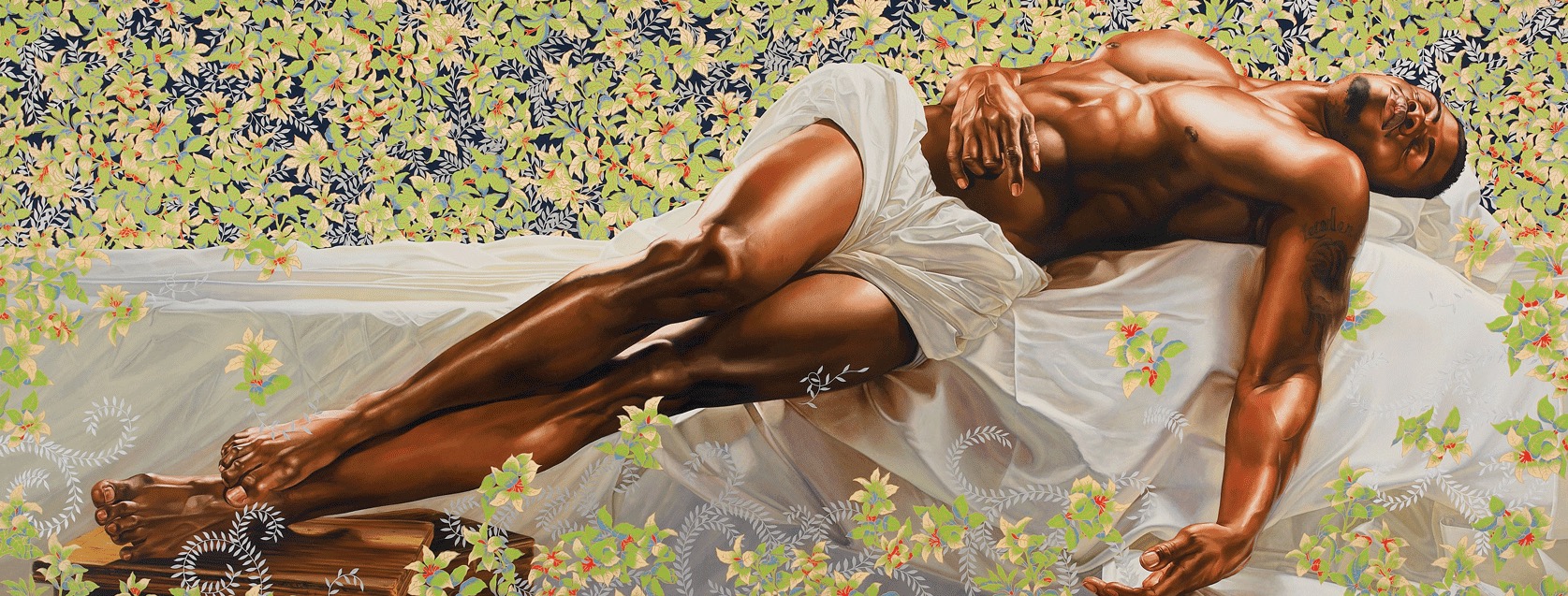
Kehinde Wiley, Sleep, 2008.

More Artists to Explore

  • Robert Mapplethorpe – his black-and-white male nudes remain some of the most iconic (and controversial) queer images in American photography.
  • Kehinde Wiley – while not exclusively queer-themed, his work often presents Black men in romantic or intimate poses, reclaiming both history and homoerotic aesthetic.
  • Hunter Reynolds – an AIDS activist and visual artist whose performance pieces and memorial works carry immense emotional and historical weight.
  • Gilbert Baker – not only an artist, but the designer of the rainbow flag itself, one of the most enduring symbols of queer pride.

Pride as Resistance and Renewal

From murals to fashion, fine art to graffiti, queer art since 1970 has told the story of a people who refused to be erased. Pride in art has been about more than beauty—it has been about survival, protest, celebration, and memory.

As Pride Month continues, remember that the movement is not only political—it is also creative. And in every painting, photograph, poem, and performance, LGBTQ+ artists have asked the world to see them not just as survivors—but as visionaries.


Before the Parades: Gay Pride in Art and Artistic Expression

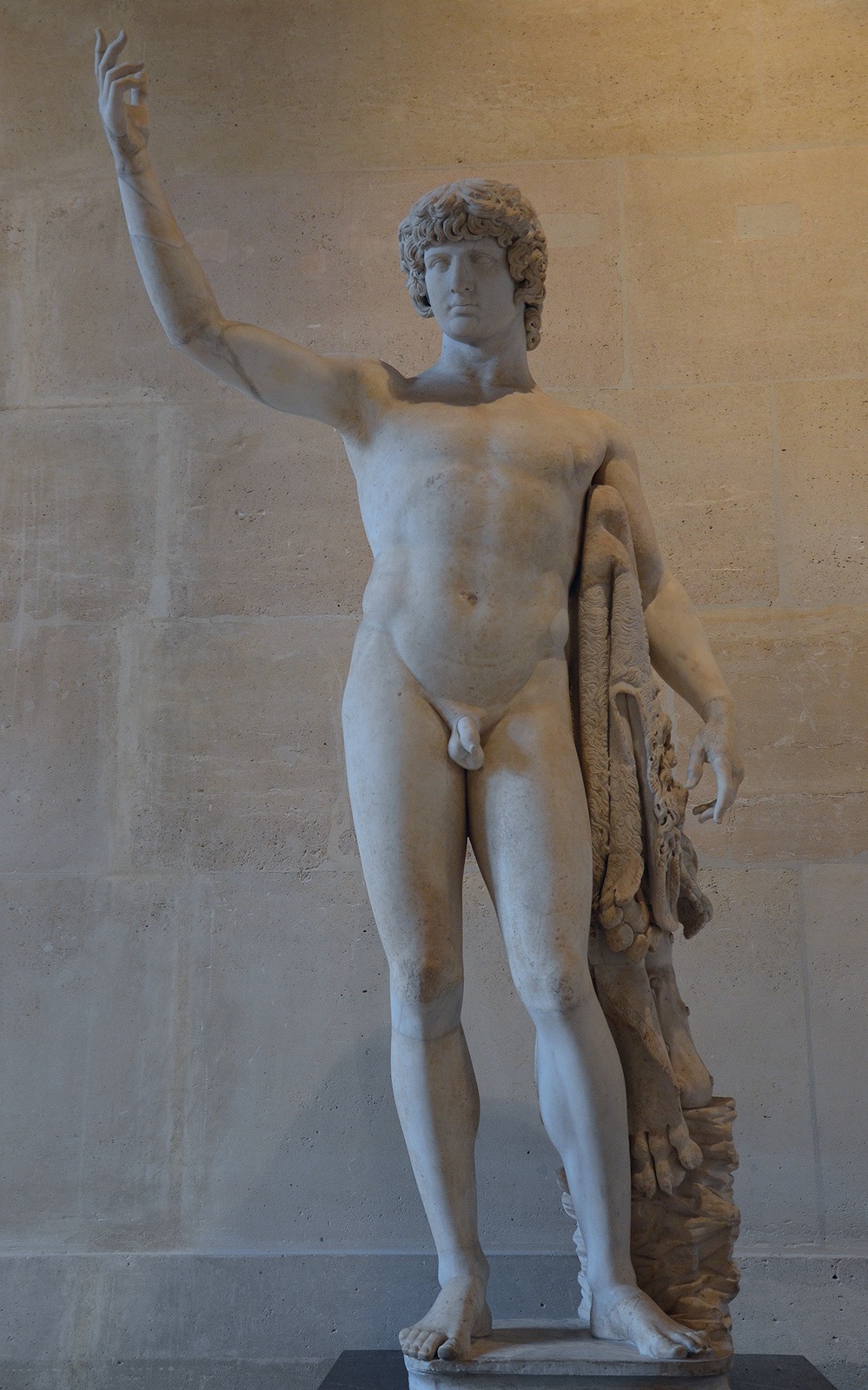
“Braschi Antinous”, also known (wrongly) as Albani Antinous, the statue is composed of an antique head of Antinous and an antique body of Hercules, 2nd century AD, (Louvre Museum)

While the concept of Gay Pride as we know it—public marches, rainbow flags, and open celebration of LGBTQ+ identity—is a relatively recent phenomenon, the spirit of gay pride has long found expression through art. For centuries, queer individuals used artistic media to celebrate same-sex desire, intimacy, and identity in ways that defied societal norms and preserved a sense of dignity and joy. Long before the world was ready for open affirmation, LGBTQ+ artists—and their allies—used beauty, symbolism, and coded language to proclaim their existence and their worth.

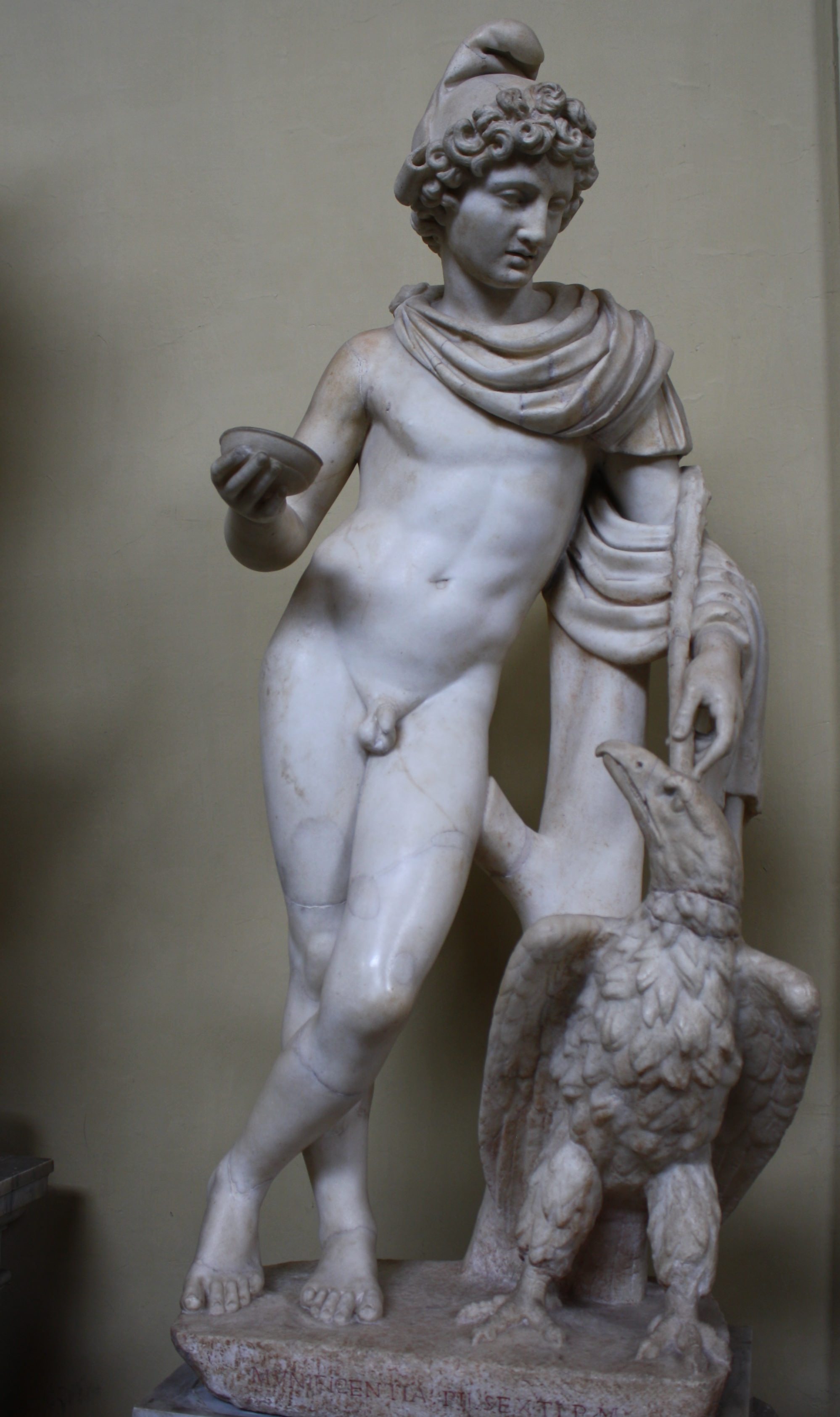
Ganymede, Rome, 2nd century CE. (Vatican Museums, Rome)

Art has always provided a refuge for queer expression, especially in eras and regions where same-sex love was criminalized or pathologized. From the sensual male nudes of classical antiquity to the romantic portraits of Renaissance companions, art offered what public discourse denied: a space to affirm beauty and love between men. The sculptures of ancient Greece and Rome—Apollo, Ganymede, Antinous—didn’t just celebrate form; they canonized homoerotic ideals in marble and bronze. Even when later societies sought to suppress these themes, artists returned to them time and again, as if retrieving a sacred truth buried beneath centuries of shame.

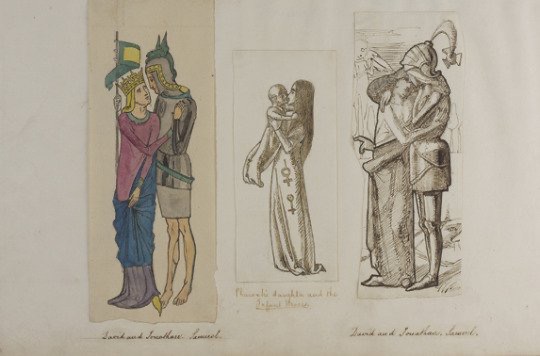
David and Jonathan. Samuel & Pharaohs Daughter and the Infant Moses from Simeon Solomon’s 1854 Sketchbook (Jewish Museum London)

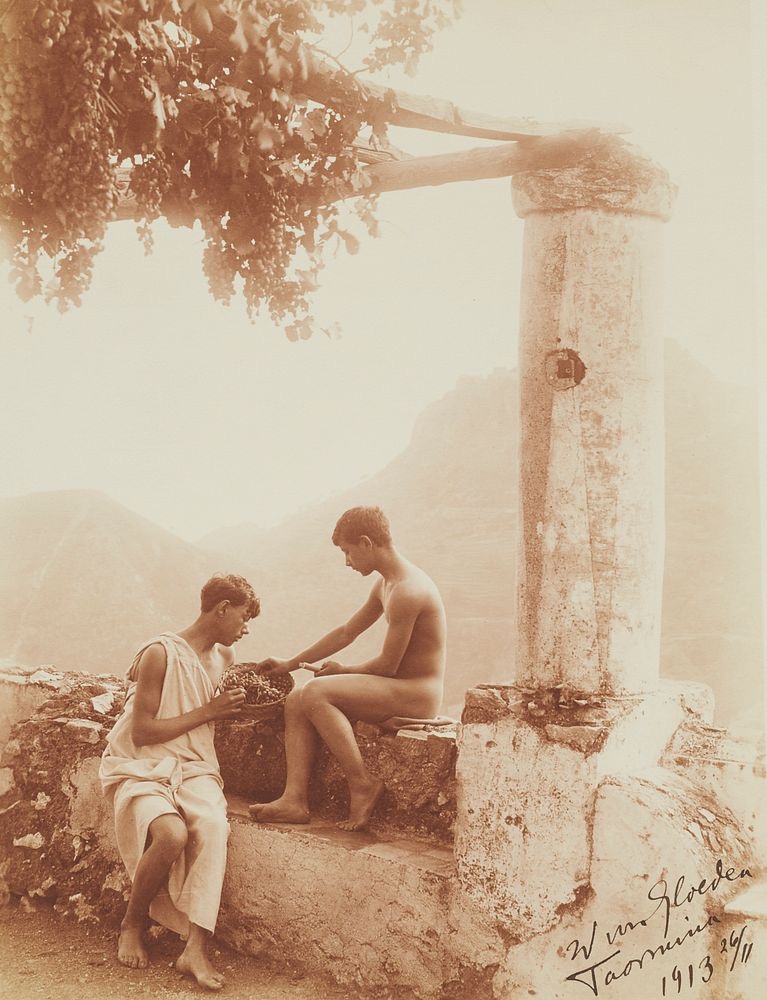
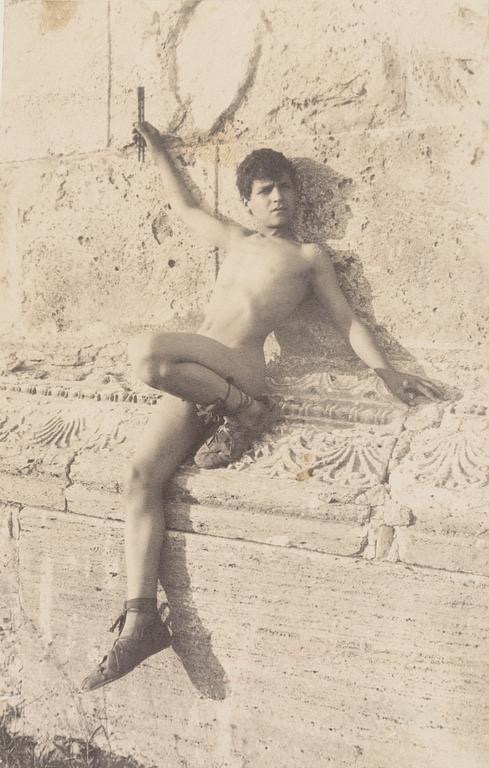
During the 19th century, artists such as Simeon Solomon in Britain and Wilhelm von Gloeden in Italy dared to depict love between men with unmistakable tenderness and eroticism. Solomon’s watercolors of biblical figures—David and Jonathan, Ruth and Naomi—recast religious stories as queer allegories, while von Gloeden’s photographs of young men in Sicily, staged in classical poses, cloaked desire in the guise of nostalgia and antiquity. Their works were often persecuted, sometimes destroyed, but they endure today as testimonies of queer pride in the face of rejection.

Photograph titled “Pastoral Idyll,” Wilhelm von Gloeden, 1913 (Private Collection)

In the 20th century, as queer identity began to coalesce into more defined social and political movements, art took on a sharper edge. Artists like Keith Haring and David Wojnarowicz turned pride into protest. Their works channeled anger, loss, celebration, and eroticism in ways that were unapologetically queer—bold lines, graphic imagery, public installations, and furious calls to action during the AIDS crisis. At the same time, the poetry of Audre Lorde, the paintings of Paul Cadmus, and the photography of Robert Mapplethorpe revealed the many facets of queer life—from intimacy and sensuality to community and struggle.

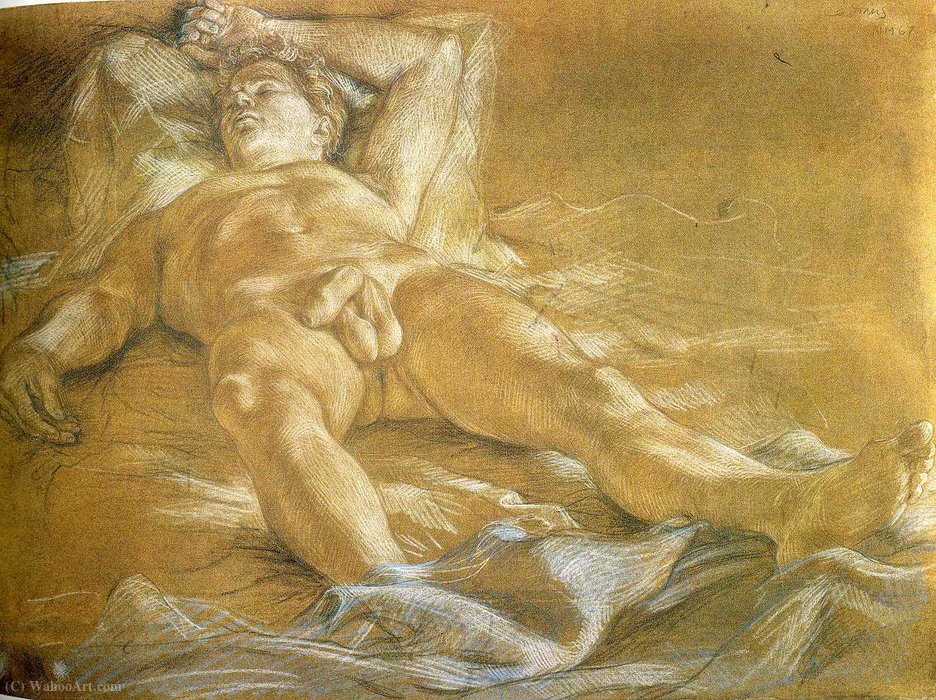
“Untitled (565), Paul Cadmus, 1968, (Originally, the property of actor, cabaret singer, and Paul Cadmus’ muse and lover, Jon F. Anderson)

What unites these expressions across time is a fundamental belief: that same-sex love is beautiful, worthy of representation, and part of the human story. Whether through coded glances in Renaissance paintings or blazing neon activism in contemporary murals, gay pride has always found a way to speak. Even when silenced, it painted itself into the margins, waiting for a world that could see it clearly.

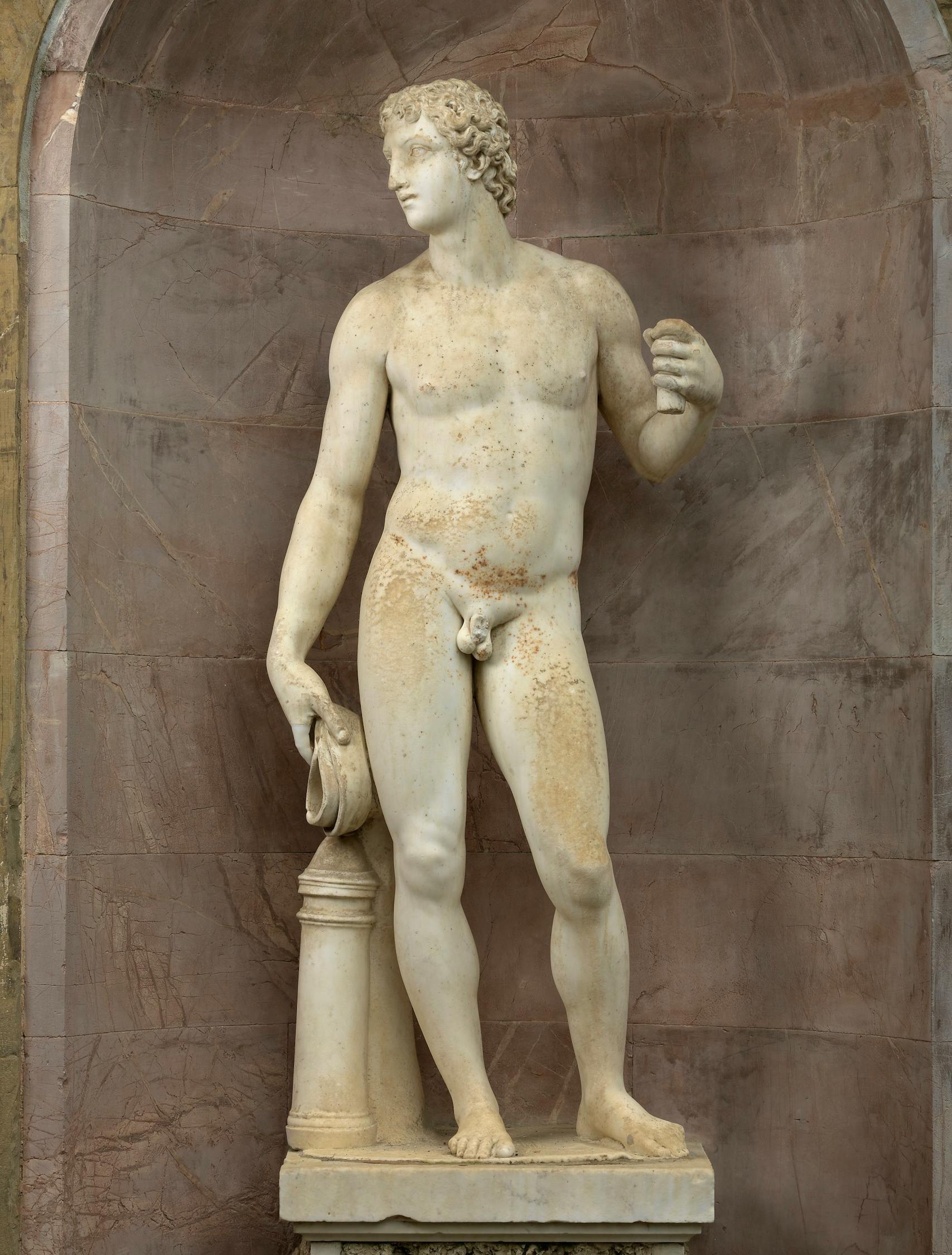
Apollo, Baccio Bandinelli, 1548 – 58, (Boboli Gardens)

Today, we celebrate openly. But let us also remember and honor those who celebrated in secret—those who, through brushstroke and verse, camera and chisel, gave voice to a pride they couldn’t proclaim aloud. They remind us that Pride is not only about visibility, but also about creation. And art, in all its forms, remains one of the truest expressions of queer existence and resilience.


A Shameful Gesture in Pride Month

I’ll be honest—I’m angry.

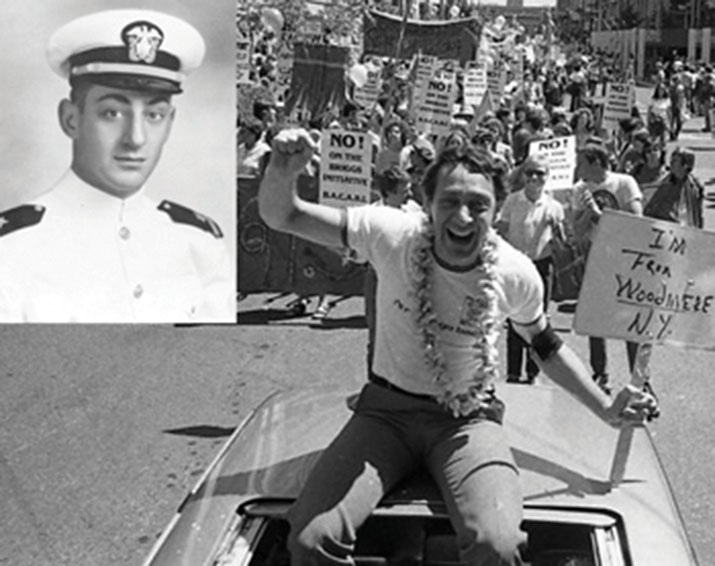
This week, Defense Secretary Pete Hegseth announced that the Navy will be renaming the USNS Harvey Milk. Let that sink in. During Pride Month—a time when we reflect on the courage and contributions of LGBTQ+ individuals—he chose to strip Harvey Milk’s name from a Navy ship. It’s hard to see this as anything but a deliberate and deeply cynical move.

For those who don’t know, Harvey Milk wasn’t just a gay icon—he was a Navy veteran. He served this country. He wore the uniform. And after being discharged during an era when being openly gay meant exile or worse, he went on to become the first openly gay elected official in California. He fought for equality with both passion and integrity, and ultimately gave his life for the cause of justice and representation.

When the USNS Harvey Milk was christened, it felt like a small but meaningful step toward acknowledging that queer Americans have always served—often in silence, often in danger, always with dignity. That ship’s name stood for something more than just metal and machinery. It honored visibility, service, and sacrifice.

To remove that name—during Pride Month, no less—isn’t just tone-deaf. It’s cruel. It’s shameful. It’s part of a larger effort we’re seeing to roll back the clock on diversity, inclusion, and basic decency. This isn’t about strengthening the military. It’s about erasing queer people from the story of America. It’s about rewriting history in a way that suits a narrow, regressive agenda.

We’re told this has something to do with restoring “warrior ethos” and “core values.” But here’s what I know: real strength includes empathy. Real warriors fight for all people, not just the ones who look or love like them. Real leadership doesn’t cower behind performative patriotism—it uplifts the truth, even when that truth makes some people uncomfortable.

Secretary Hegseth’s record already includes a DUI arrest and a long list of questionable decisions. But this one? This feels personal. This feels targeted. This feels like a slap in the face to every queer person who has ever served this country and to everyone who continues to fight for equality and recognition today.

Harvey Milk once said, “Hope will never be silent.” And neither should we.

So no, we’re not going to sit quietly while our heroes are erased. We’re not going to accept Pride Month as a time for symbolic gestures and empty rainbows while the actual legacy of LGBTQ+ people is being dismantled. We’re going to keep remembering. We’re going to keep speaking. And we’re going to make damn sure that the name Harvey Milk is never forgotten.


Edmund White: Illuminating the Path of Gay Awakening Through Literature

Yesterday, the literary world bid farewell to Edmund White, a pioneering voice in queer literature, who passed away at the age of 85 in his Manhattan home. His death marks the end of a prolific career that not only chronicled the gay experience but also profoundly influenced countless individuals’ journeys toward self-discovery and acceptance.

Born in Cincinnati in 1940 and raised in Evanston, Illinois, White’s early life was marked by the societal pressures of conformity. Despite being accepted to Harvard, he chose to study Chinese at the University of Michigan to remain close to a therapist who promised to “cure” his homosexuality—a reflection of the era’s prevailing attitudes. This personal struggle became a cornerstone of his literary work, providing an authentic lens through which he depicted the complexities of gay life.

White’s debut novel, Forgetting Elena (1973), received acclaim from literary figures like Vladimir Nabokov. However, it was A Boy’s Own Story (1982) that solidified his place in literary history. This semi-autobiographical novel, the first in a trilogy, offered an unflinching portrayal of a young man’s coming-of-age and grappling with his sexual identity in mid-20th-century America. The trilogy continued with The Beautiful Room Is Empty (1988) and concluded with The Farewell Symphony (1997), each delving deeper into the evolving landscape of gay life.

In 1977, White co-authored The Joy of Gay Sex with Dr. Charles Silverstein. This groundbreaking manual combined candid discussions of sexual practices with insights into gay culture, politics, and relationships. At a time when such topics were taboo, the book served as both a practical guide and a bold statement of affirmation for the gay community.

White’s commitment to visibility extended beyond his writing. He was a founding member of the Violet Quill, a group of gay writers who sought to create literature that authentically represented their experiences. Additionally, he co-founded the Gay Men’s Health Crisis in 1982, the first organization dedicated to addressing the AIDS epidemic, demonstrating his dedication to activism and community support.

White’s influence permeated both literature and academia. He taught creative writing at institutions like Brown and Princeton, mentoring a new generation of writers. His literary contributions earned him numerous accolades, including the PEN/Saul Bellow Award for Achievement in American Fiction and France’s Ordre des Arts et des Lettres.

Beyond awards, White’s true legacy lies in the personal awakenings his work inspired. By articulating the nuances of gay identity with honesty and artistry, he provided readers with a mirror to see themselves and a window into the broader human experience. His narratives offered solace to those grappling with their identities and challenged societal norms, fostering greater understanding and acceptance.

As we reflect on the impact of pop culture on personal identity, as discussed in yesterday’s blog post, Edmund White’s contributions stand as a testament to the power of storytelling in shaping self-awareness and cultural perception. His voice may be silenced, but his words continue to resonate, guiding many on their paths to self-discovery.

Rest in peace, Edmund White. Your stories have illuminated the path for countless others.


Awakenings in the Dark: How Pop Culture Lit the Way for Generations of Gay Men

This post probably does not fit my usual art history post, but as I was thinking about the art of the male nude throughout the ages, I thought about the moment many gay men can point to—not always with words, but with a scene, a song, a sensation. A flicker of something electric, confusing, and undeniable. A man on a screen, a model in an ad, a lyric that hit too close. We call these gay awakenings. They rarely arrived with clarity, but they lingered, imprinted deep in the memory. They were the first time something inside whispered, That. I want that. Were their moments like that for men throughout history? Surely it was not a 20th century phenomenon, but we don’t have historical evidence since men rarely left behind evidence of their same sex attractions, especially not what sparked them. 

However, we do have evidence of what sparked gay awakenings in the 20th and 21st centuries. These moments shifted over the decades, shaped by the media of the time. Yet across generations—from Baby Boomers to Gen Z—the need was the same: a glimpse of oneself, not necessarily as the man on screen, but in the wanting of him.

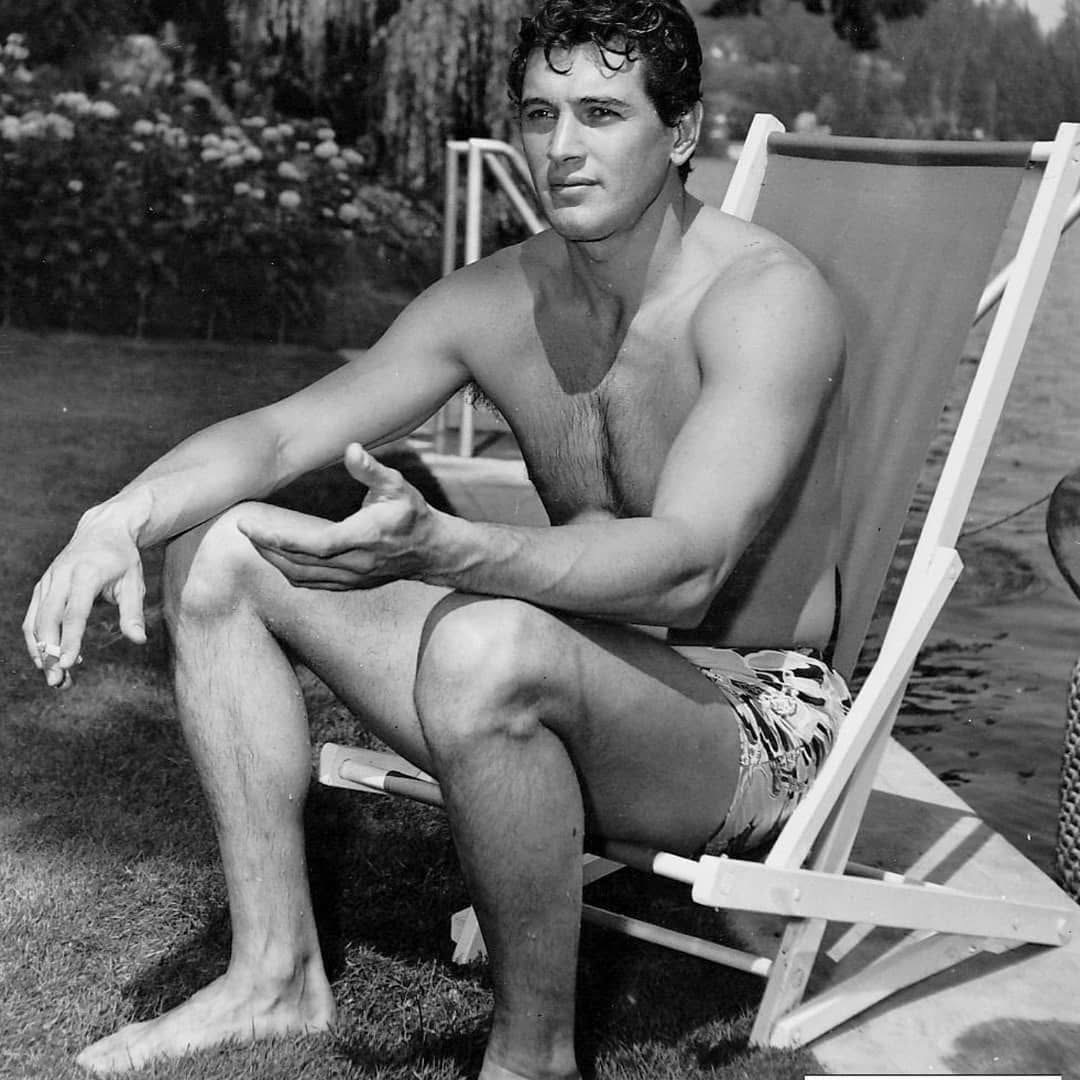
For gay men growing up in the 1950s and ’60s, the world was rigid, policed, and wrapped in postwar propriety. But desire, as it always does, found cracks to seep through. That first pulse of awareness might’ve come while watching Elvis Presley swing his hips across a black-and-white TV screen on The Ed Sullivan Show. It might’ve flickered during a particular heartthrob in a movie: a Rock Hudson melodrama, Cary Grant in almost anything, Marlon Brando’s famous shirtless scenes as Stanley in A Streetcar Named Desire or Marc Antony in Julius Ceasar, maybe it was James Dean or Tab Hunter. Even if the smiles of these movie stars were aimed at women, it didn’t matter. It was that moment when you realized, I’m attracted to him and not her. It’s a moment you can’t get out of your head and know that you need to see more of it.

These early awakenings were subtle, even silent. There were no gay characters on sitcoms, no Pride ads in June. But for a boy watching from his living room in the heartland, something stirred. Not quite nameable yet—but real.

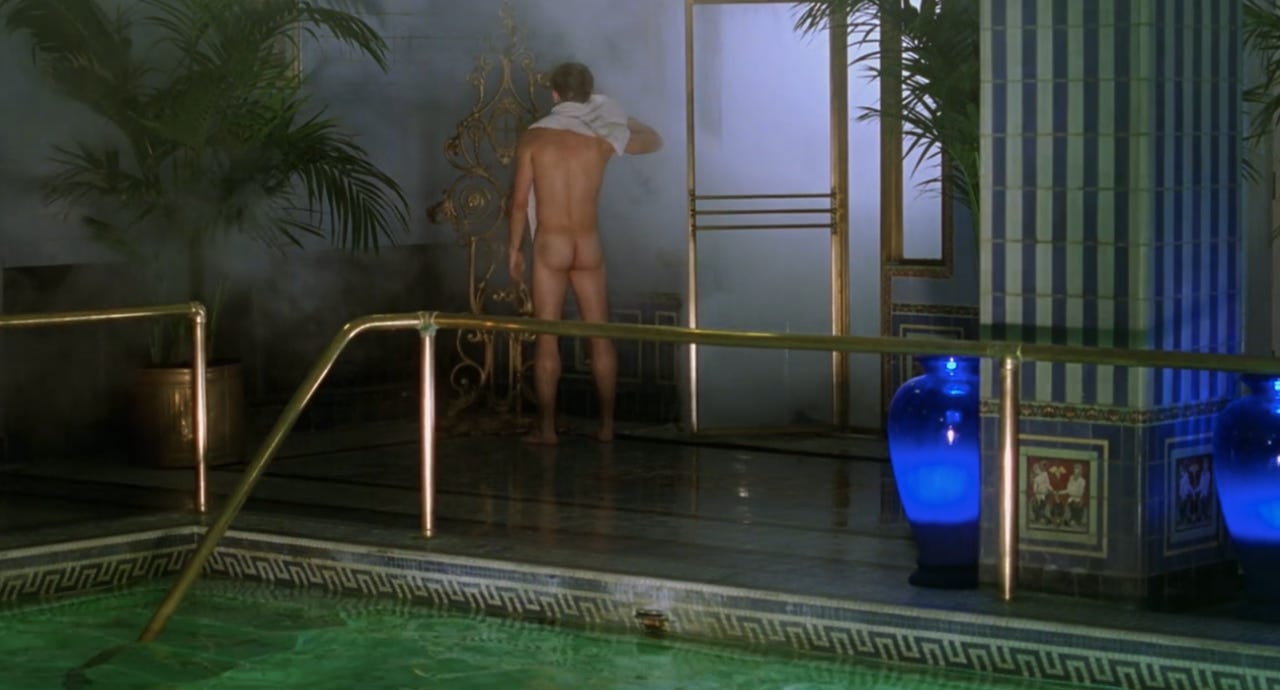
By the time Gen X came of age in the ’80s and ’90s, the closet still loomed, but the culture had begun to shift. It was easier to access desire—though often through coded or carefully curated channels. A single moment, burned into the memories of many: Ryan Phillippe, naked, stepping out of the pool and showing his perfectly round little butt in Cruel Intentions. Dripping, glistening, camera lingering. For an entire generation, that was it. The scene that turned curiosity into hunger.

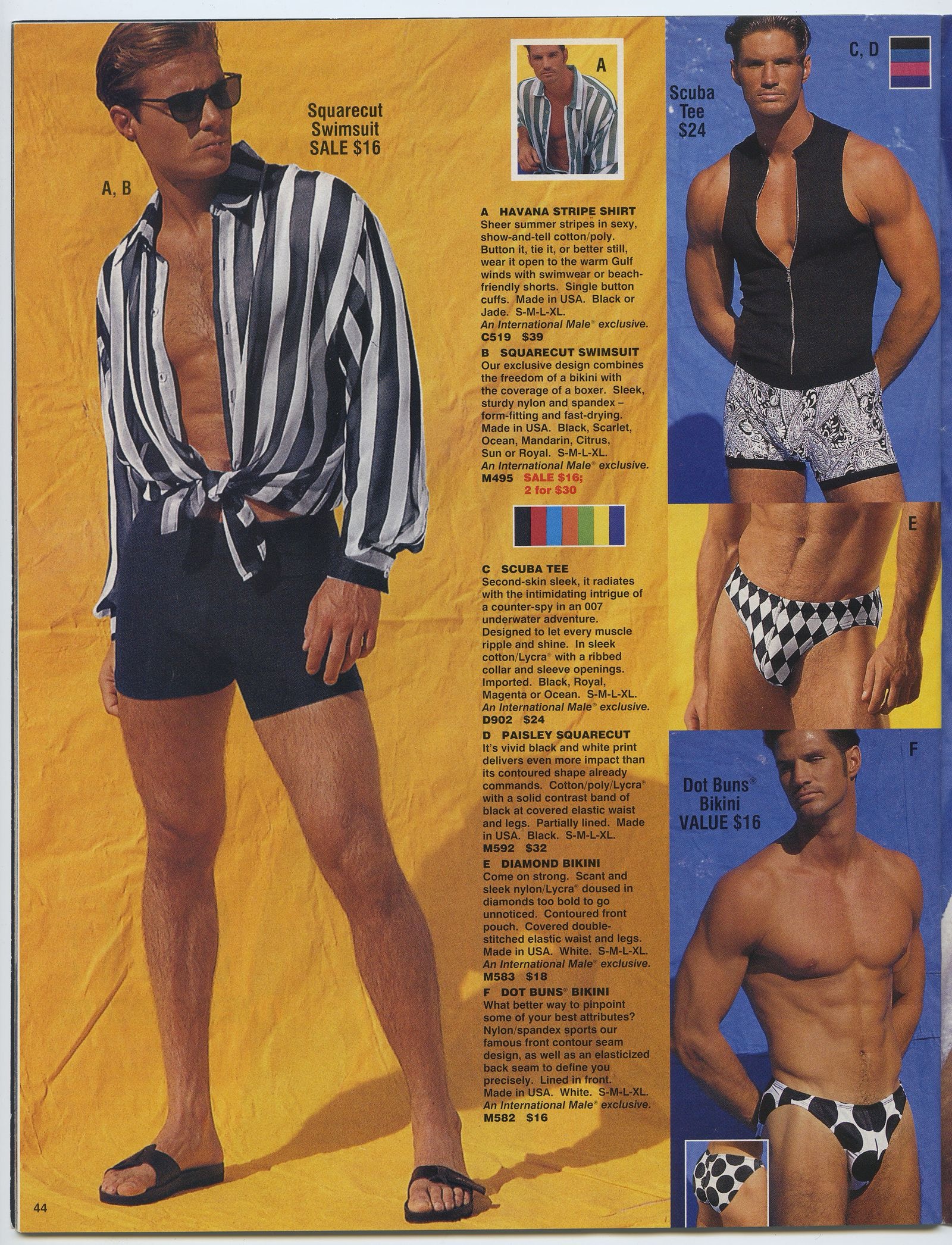
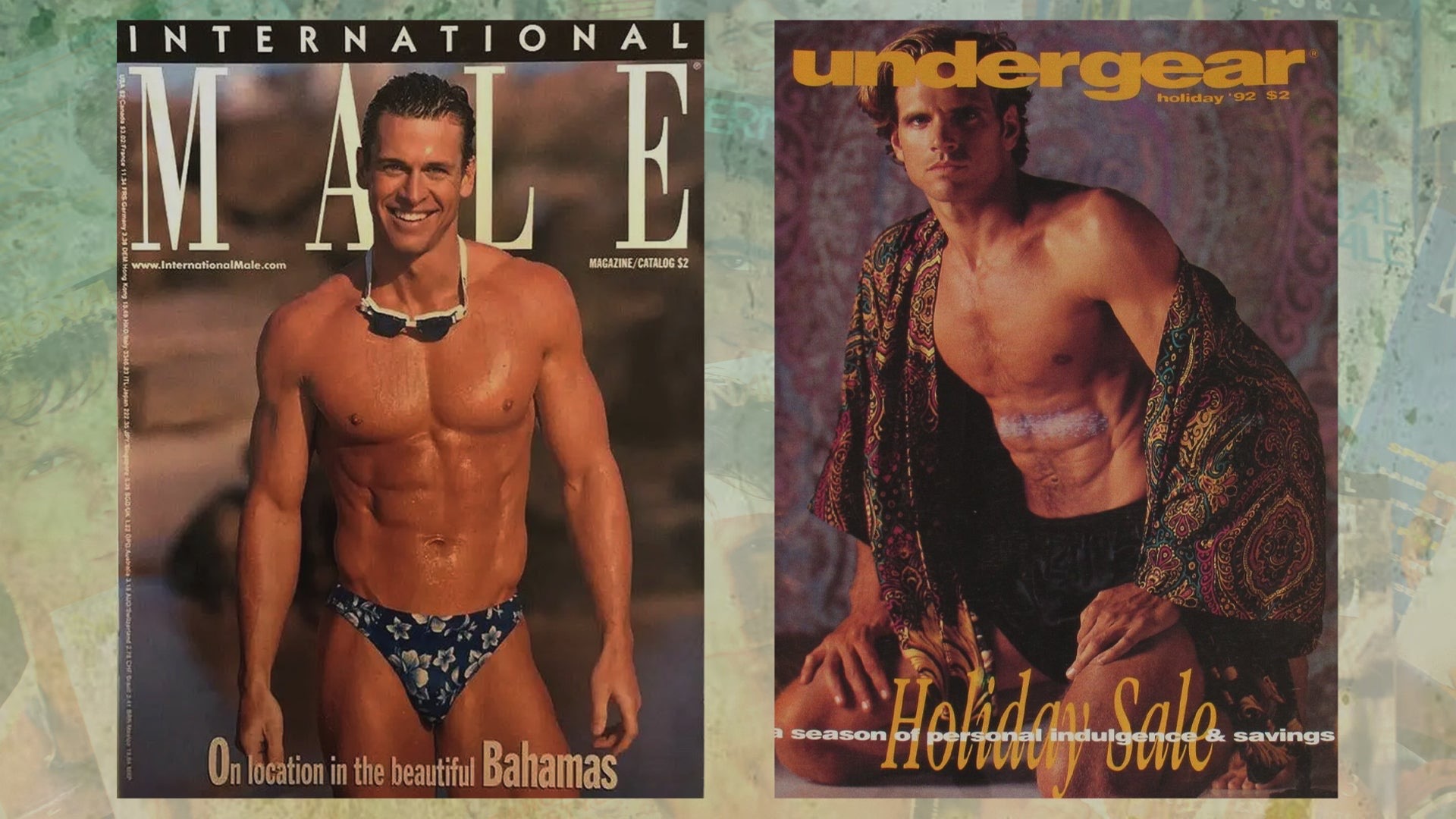
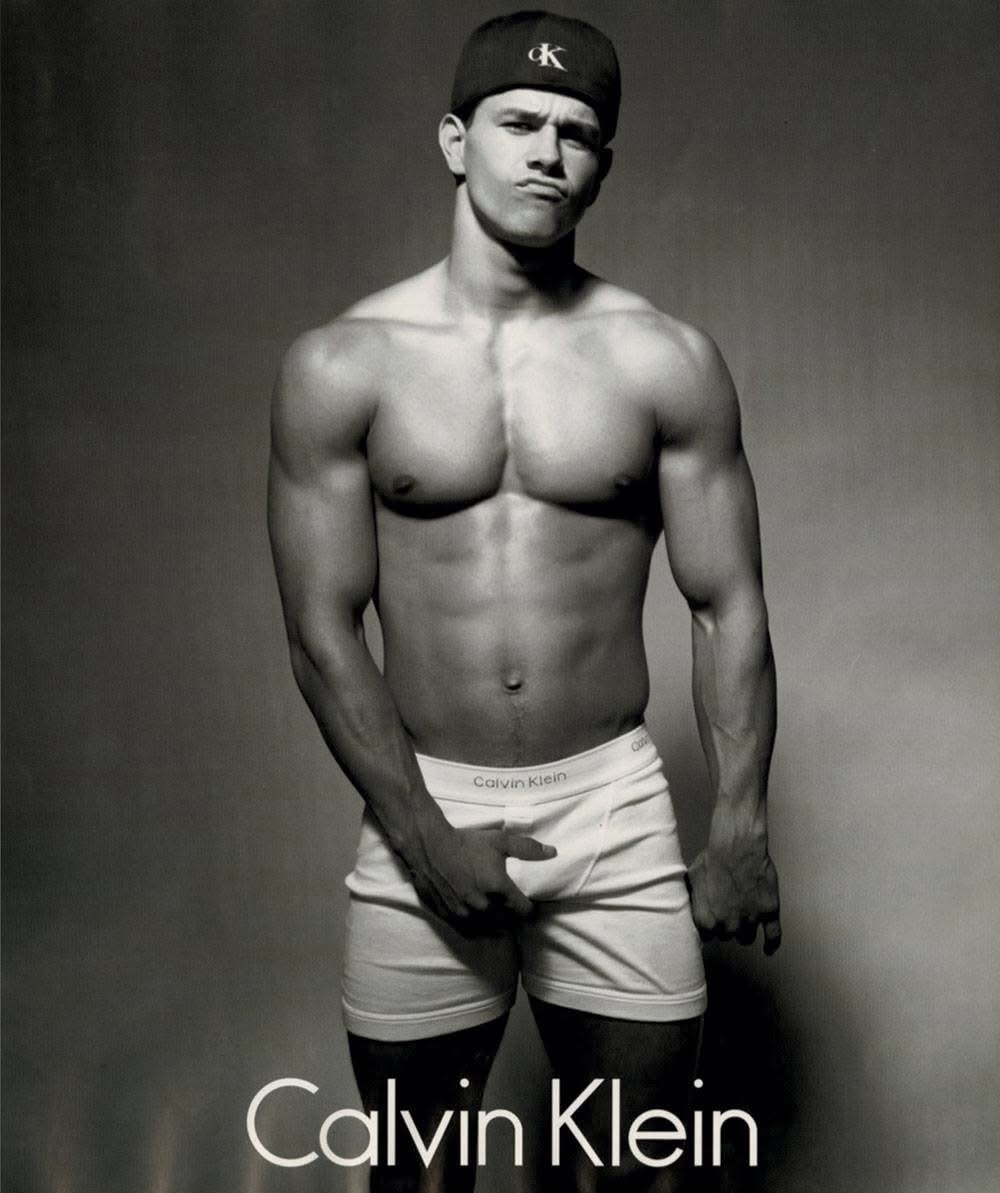
But it wasn’t just Phillippe. Mark Wahlberg’s Calvin Klein ads—shirtless, groping himself, caught in a mix of menace and seduction—lit up billboards and bedroom walls. In films like My Own Private Idaho, River Phoenix’s quiet, aching portrayal of love between men became a poetic kind of longing. These weren’t just pretty faces. They were emotional mirrors. My earliest such moments were probably either Harry Hamlin in Clash of the Titans or seeing Jose Canseco playing for the Oakland Athletics in the World Series. It started me collecting baseball cards. I can remember getting baseball cards from a cereal box one time and one of the cards was of Ryne Sandberg, who played for the Chicago Cubs. But still nothing cemented that knowledge that I had innate desires that could not be quelled like Cruel Intentions. Seeing Ryan Phillippe, naked, stepping out of that pool! Who cared if he was doing it to entice Reese Witherspoon? I sometimes forget there were women in the movie, especially with the scene of Greg McConnell (played by Eric Mabius) and Blaine Tuttle (played by Joshua Jackson) being caught in bed together. 

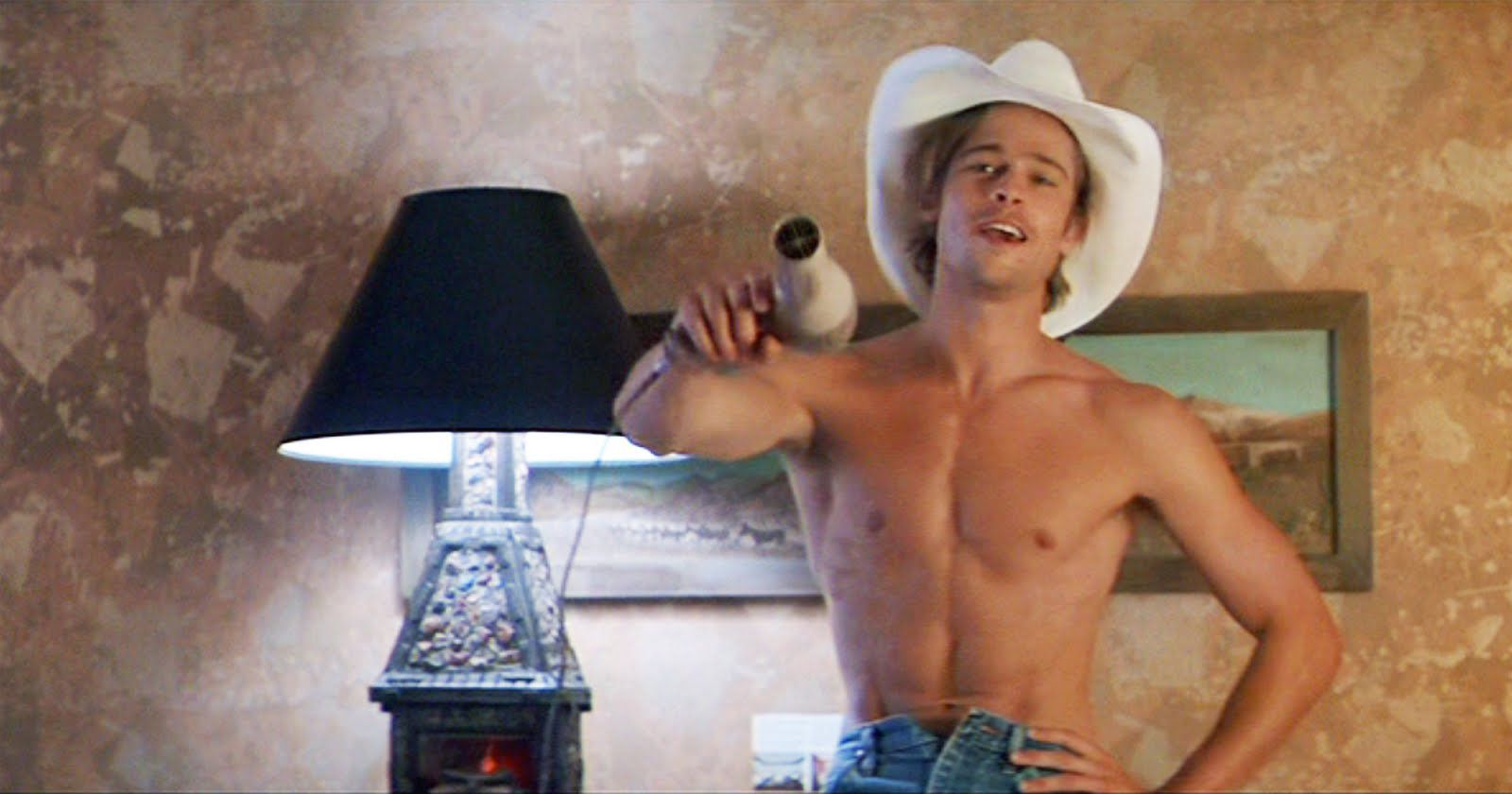
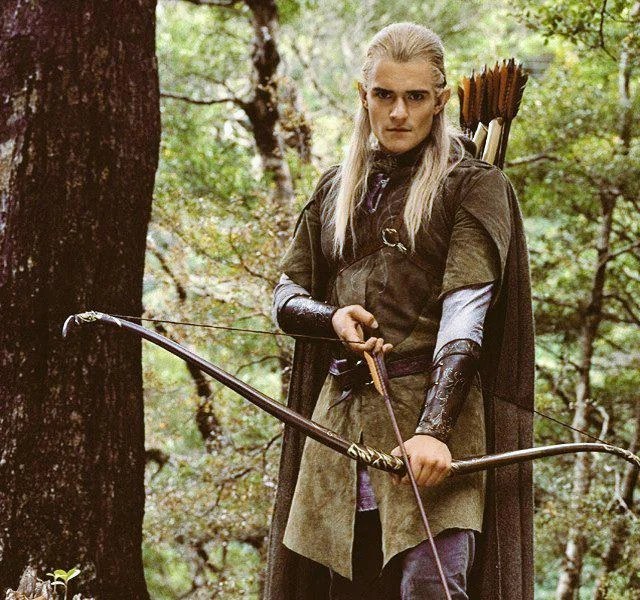
Millennials, too, found themselves through media, often somewhere between Tiger Beat and Tolkien. Orlando Bloom’s Legolas—the long hair, the soft voice, the bow taut with tension—captured the hearts of queer teens who didn’t yet know how to articulate why. Brad Pitt, shirtless and boyish in Thelma & Louise, became another kind of icon: all-American, sunlit, and openly objectified. TV shows like Buffy the Vampire Slayer blurred the lines even more. Angel and Spike weren’t just crushes—they were obsessions. Dangerous, beautiful men in leather with tortured pasts? For many, it was the perfect metaphor for closeted longing.

These awakenings were both erotic and emotional. They offered not just something to look at, but someone to feel through—long before there were gay storylines, there were boys and men who lived in our imaginations, held close in the safest, quietest corners of ourselves. And then came Gen Z—digital natives raised in a world where queerness was no longer only subtext, but storyline.

For many, Call Me by Your Name marked a watershed. Timothée Chalamet’s Elio was delicate, curious, and wholly queer in his desires. His aching love for Oliver wasn’t a tragedy—it was treated with reverence. Suddenly, queerness wasn’t just tolerated; it was cinematic, sun-dappled, and wrapped in classical music. Shows like Heartstopper carried the torch further, giving Gen Z something previous generations never had: visibility that was joyful. Awkward handholding, nervous smiles, first kisses that felt earned. This wasn’t subversion—it was celebration. 

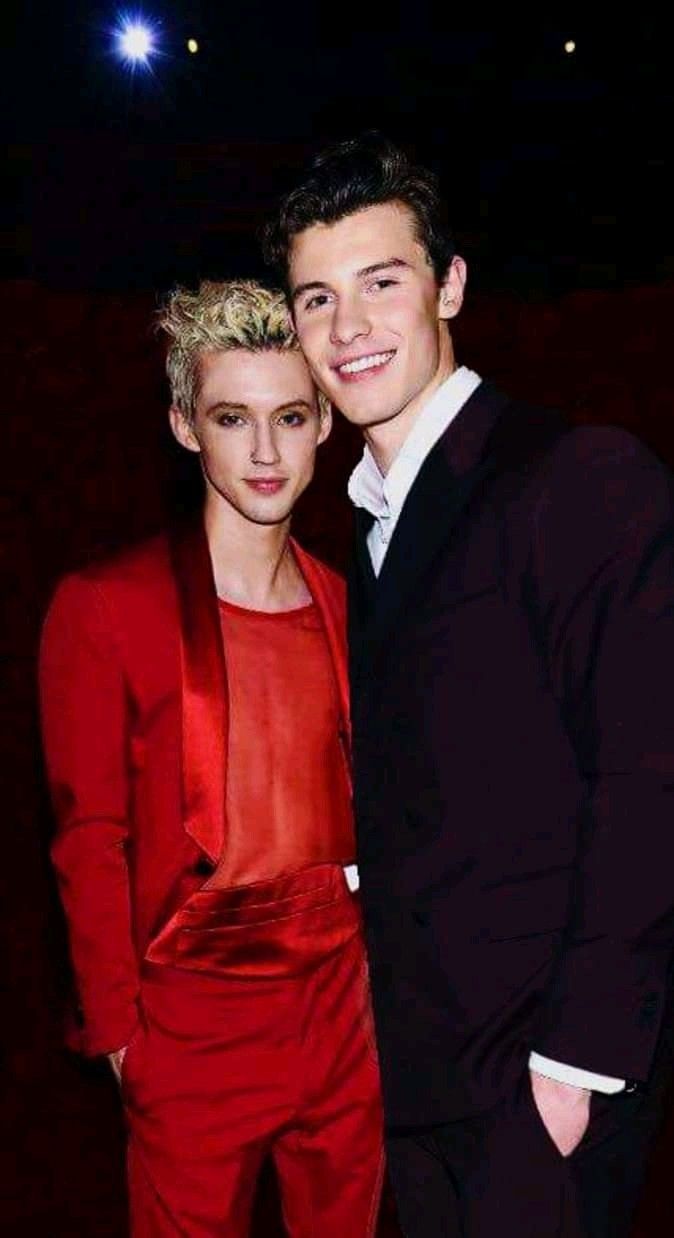
In music, Troye Sivan crooned openly about blooming into desire, backed by visuals that were lush, erotic, and defiantly gay. Even Shawn Mendes, unintentionally or otherwise, became a fixation—his sensitivity and softness standing in contrast to the hard-edged masculinity of previous eras. For Gen Z, the awakening didn’t have to be hidden. It could be shared, tweeted, TikToked. And while every personal journey is unique, there’s comfort in knowing you’re not the only one who paused the movie, rewound the scene, or stared a little longer than you were “supposed” to.

These weren’t just crushes. They were compass points. They told us what we desired, yes—but also what we feared, what we yearned for, and what we might one day become. In eras when queerness was unspeakable, these awakenings whispered, You’re not alone. Sometimes that whisper came from a jock in a magazine ad. Sometimes from a vampire in a leather coat. Sometimes from a boy in the back row who looked at you just a second too long. But they all left a mark. And for many of us, that first flash of longing—in the flicker of a television screen or the fold of a catalog page—wasn’t just the start of desire. It was the beginning of truth.
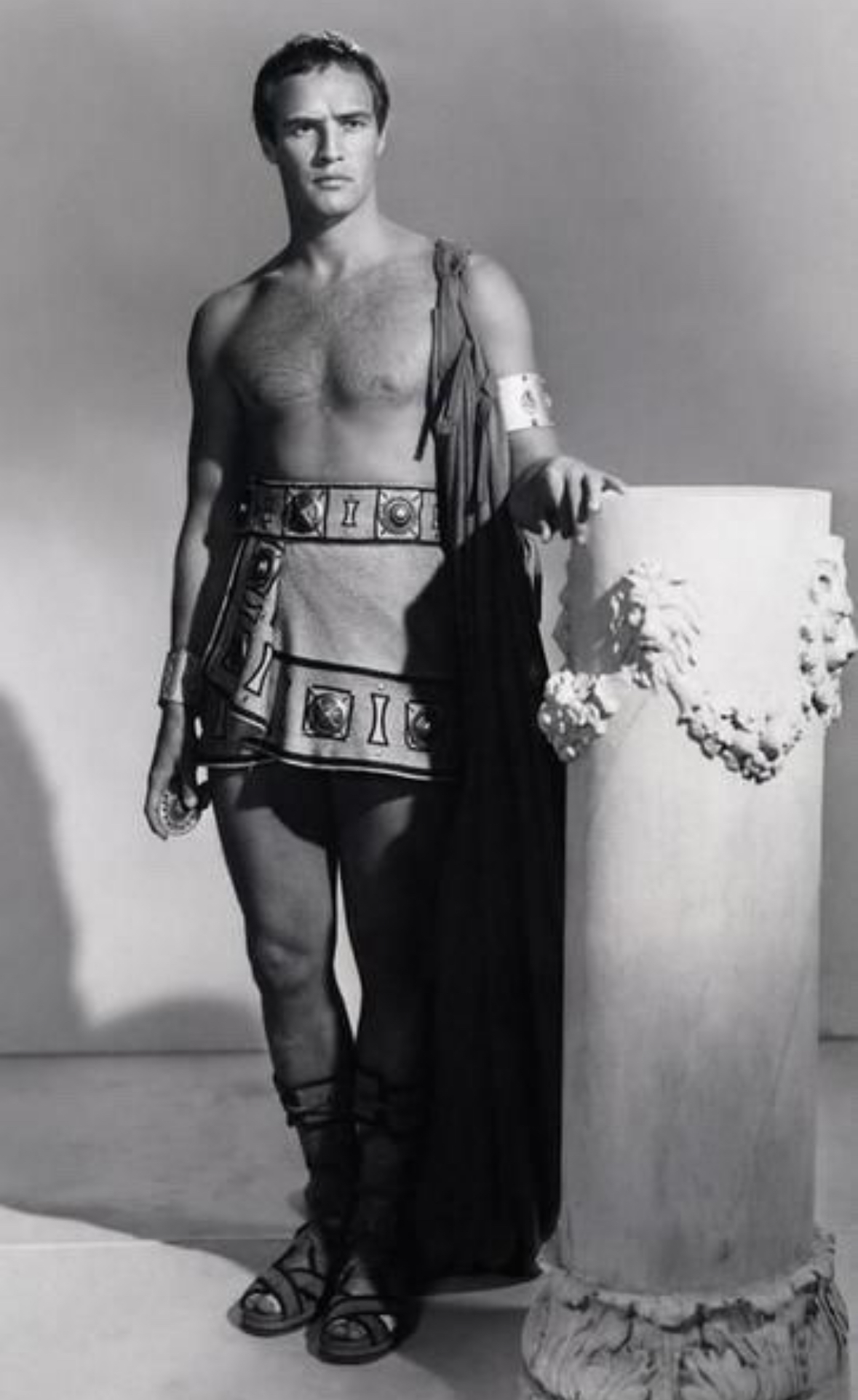
While I know I could never name every example, here’s a curated selection of some of the most iconic gay awakening clips and ads:


Brawn, Leather, and Liberation

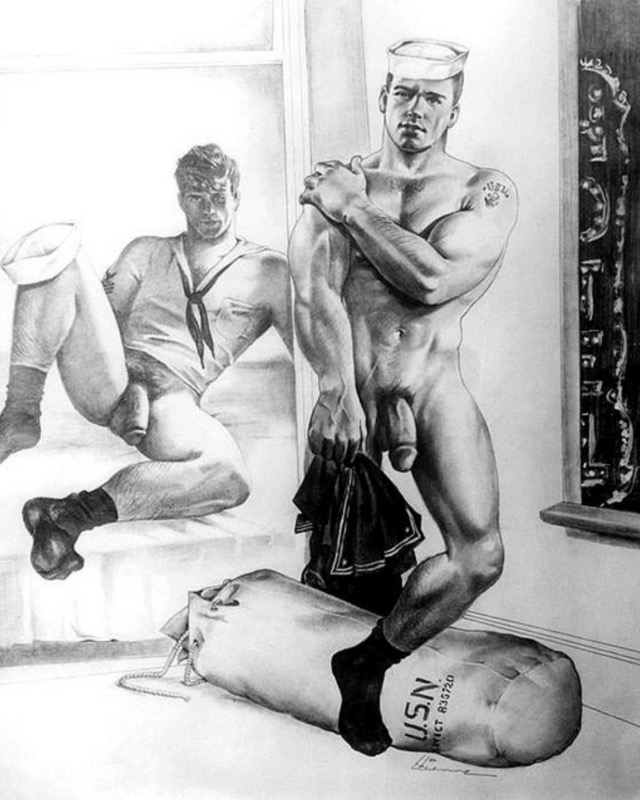
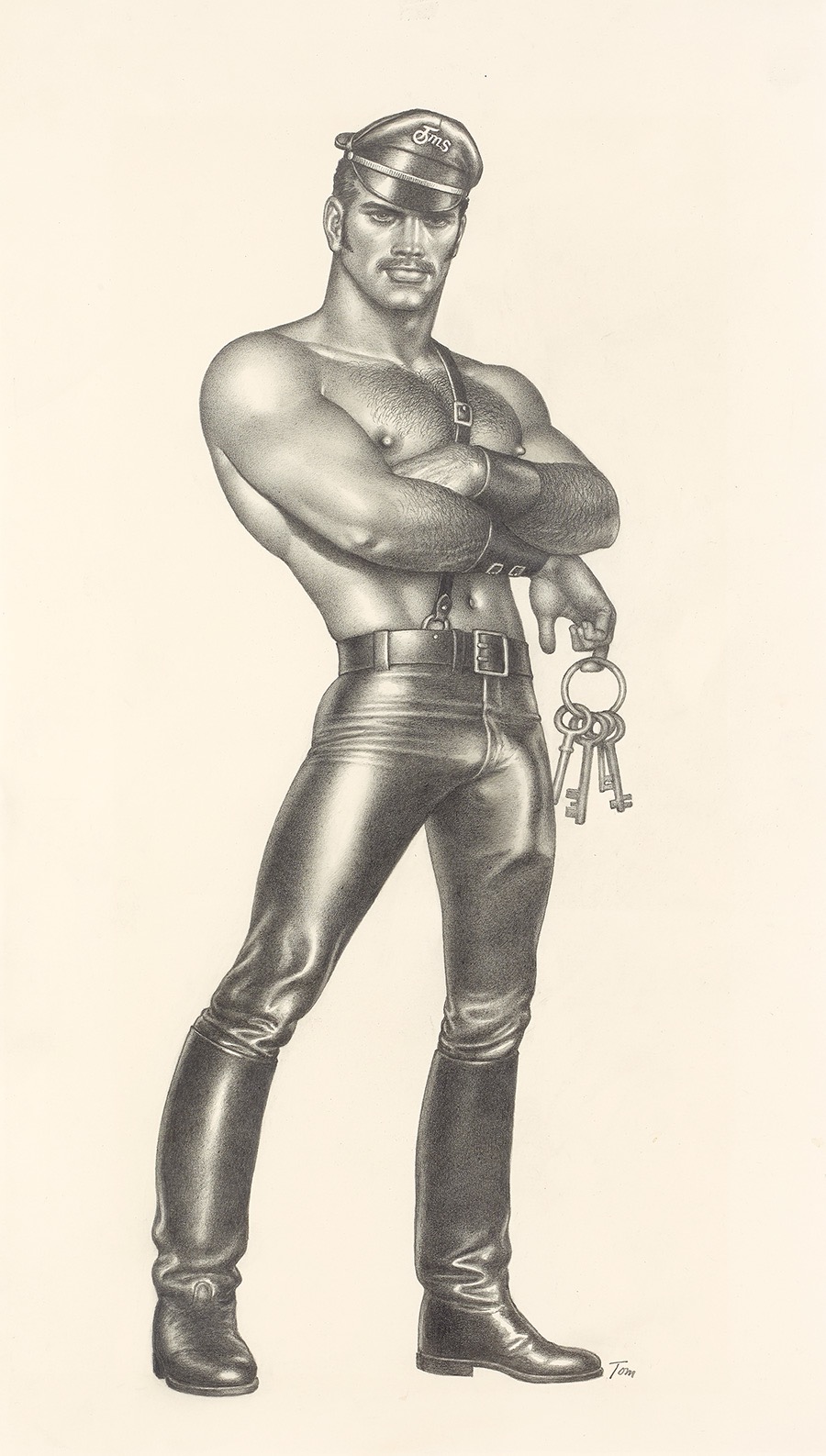
Untitled, by Tom of Finland

In the pantheon of queer visual culture, few images are as iconic—or as unapologetically homoerotic—as the bulging, leather-clad figures drawn by Tom of Finland. With their impossibly broad shoulders, exaggerated musculature, and conspicuous bulges, these hypermasculine men were more than just fantasy: they were acts of artistic rebellion, crafted at a time when queer desire had to be hidden in the shadows. But Tom of Finland (born Touko Laaksonen) was not alone in reshaping how gay masculinity was imagined and celebrated in visual art. He belonged to a wider aesthetic tradition that blurred the lines between eroticism, protest, and artistic expression.
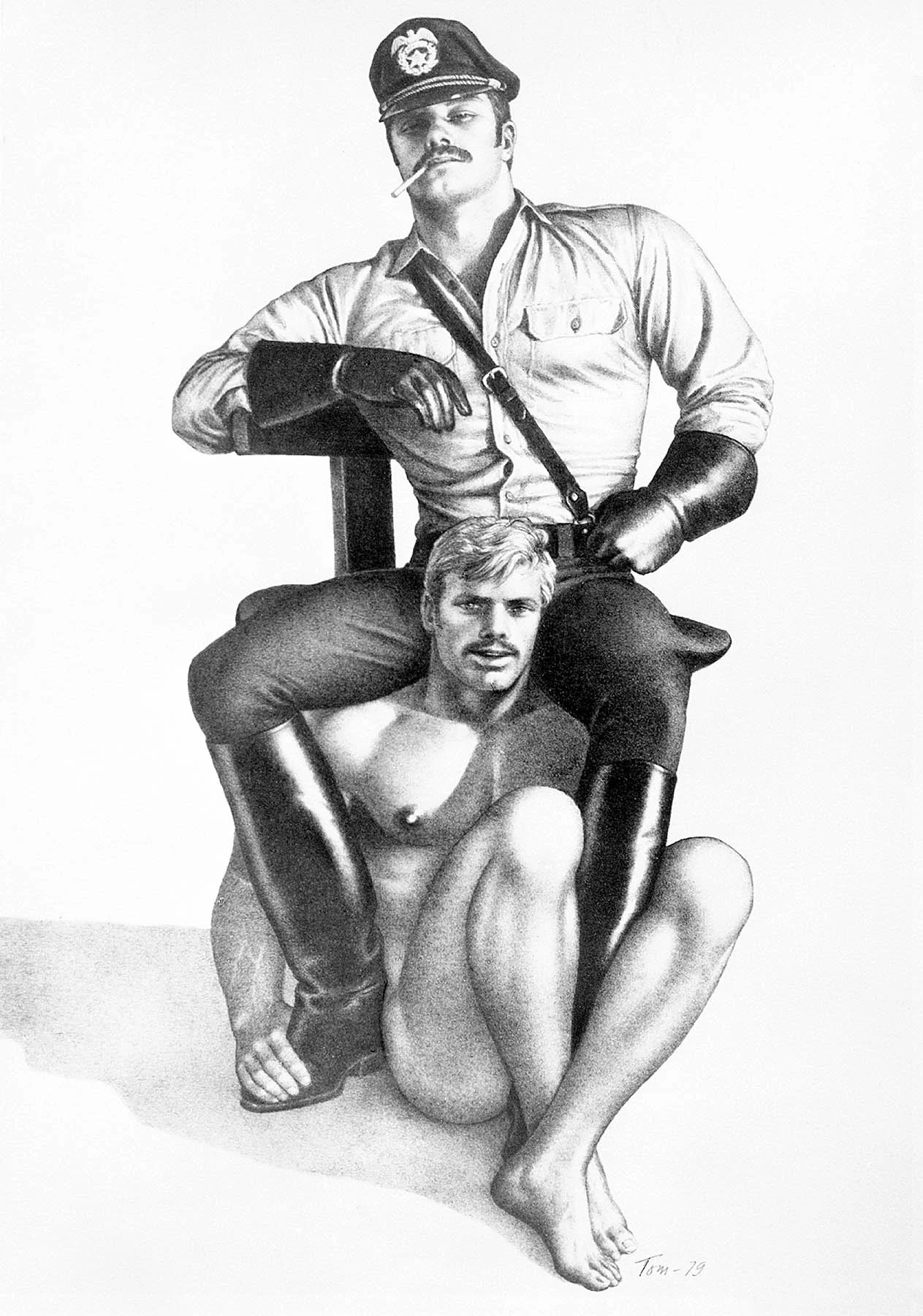
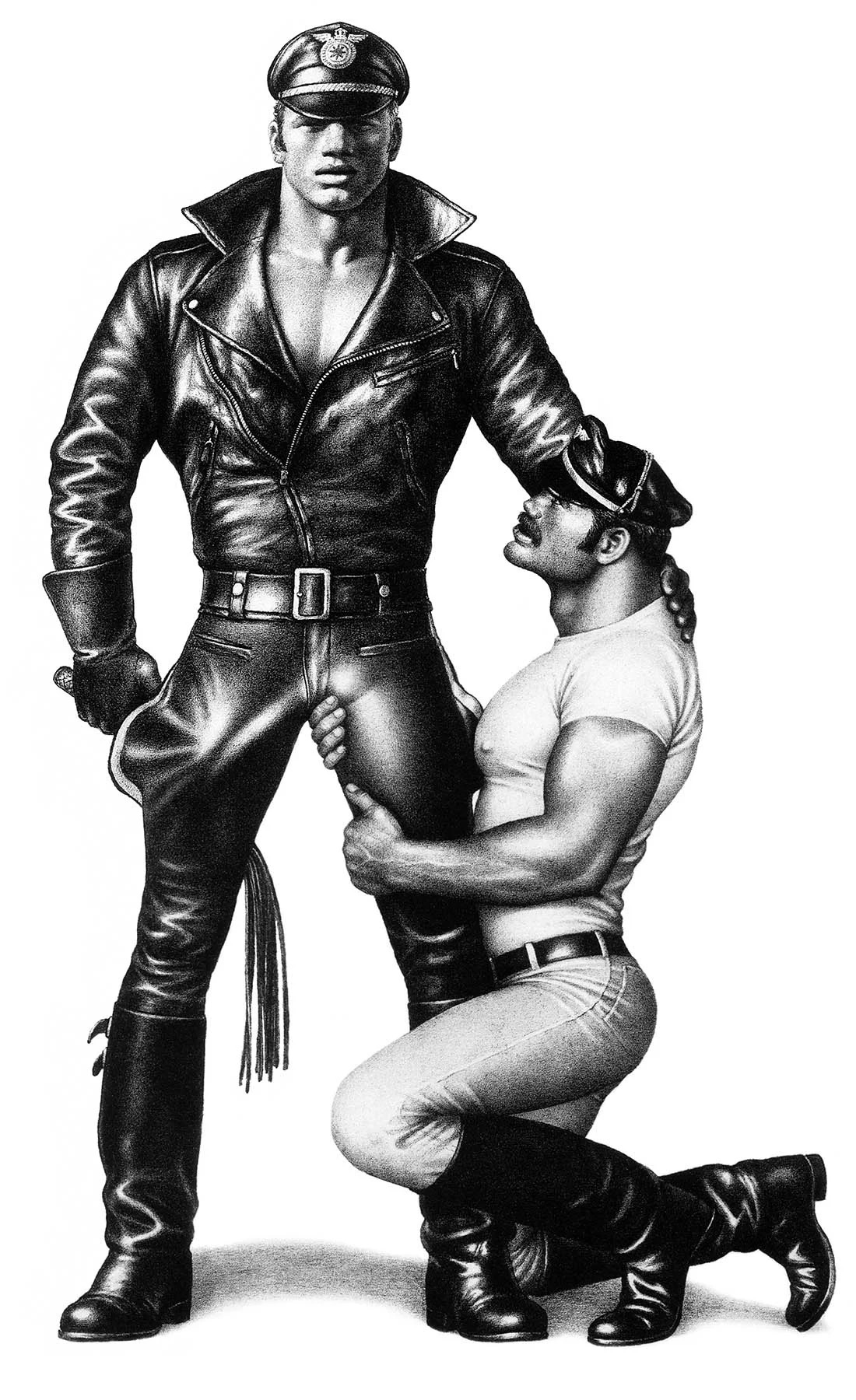
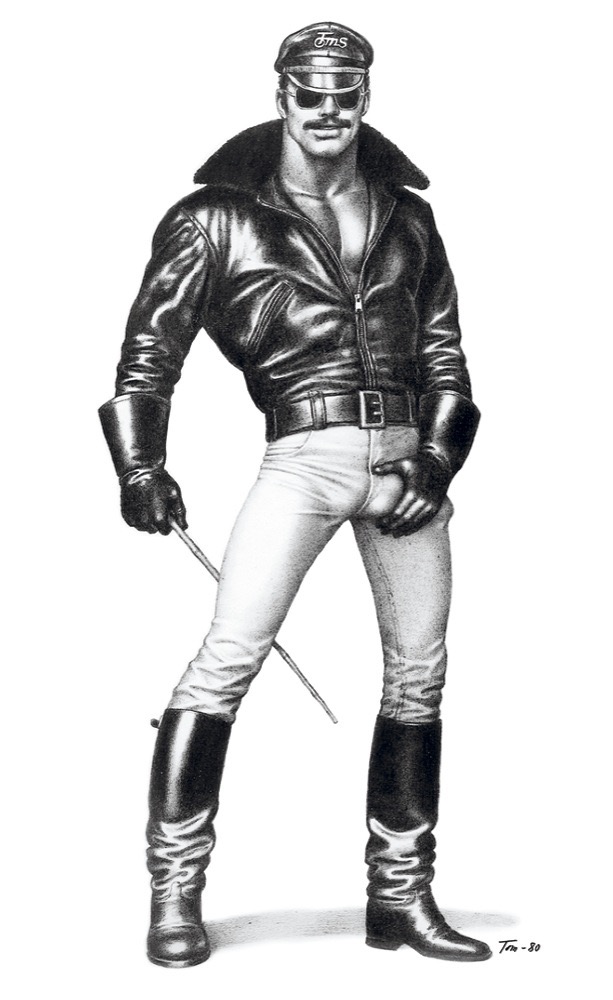
Untitled, by Tom of Finland

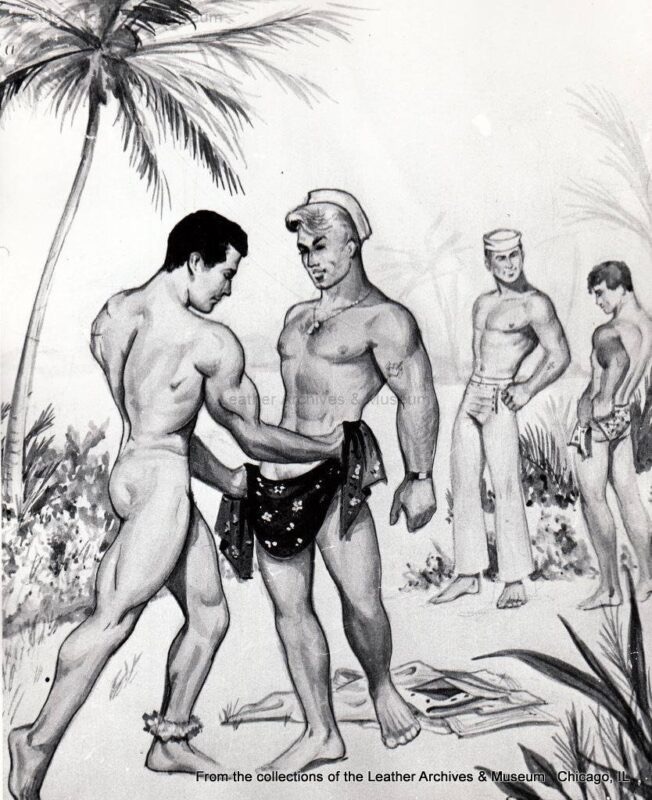
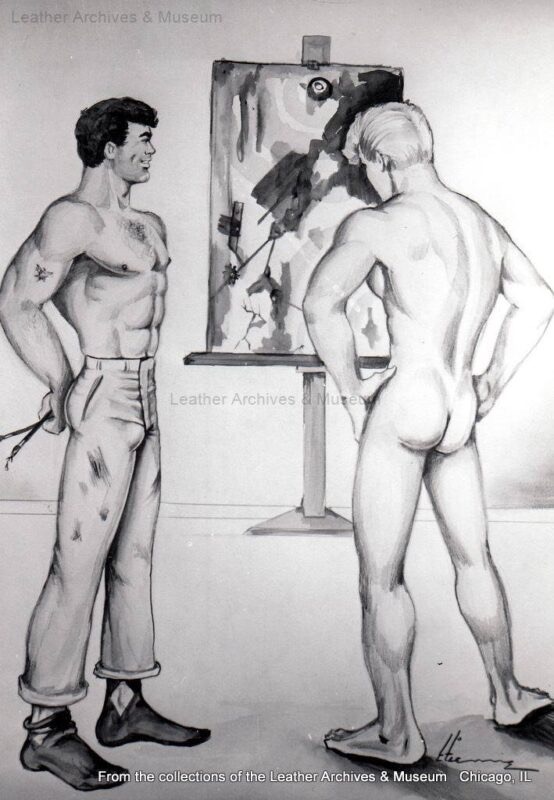
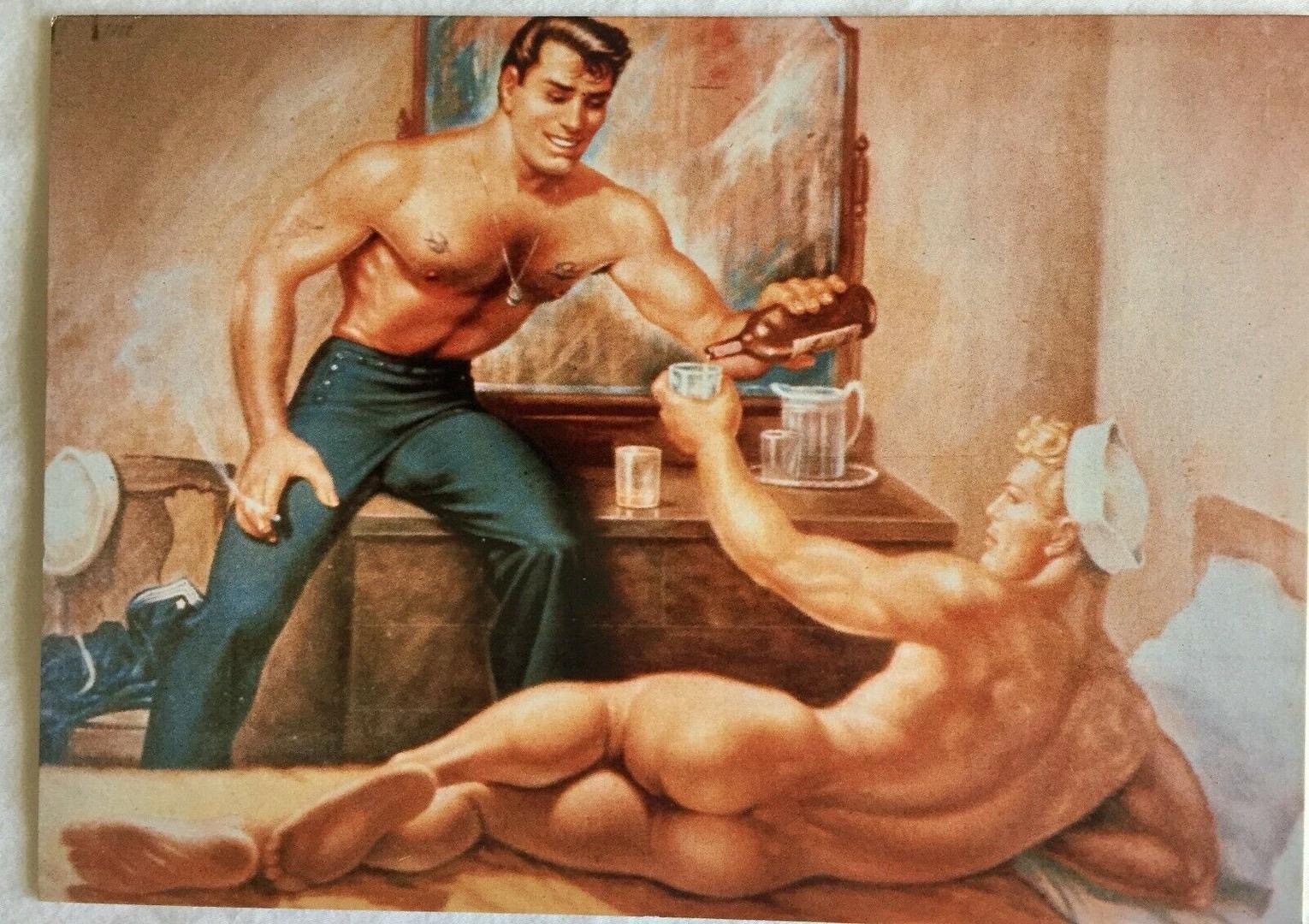
Tom of Finland began publishing his drawings in the 1950s, first in American beefcake magazines under pseudonyms before gaining cult status within underground gay circles. His men were not just naked—they were powerfully naked. Whether sailors, bikers, cowboys, or police officers, these figures projected confidence, dominance, and sexual agency. This was a deliberate rejection of earlier depictions of gay men in visual media, which often painted them as effeminate, sickly, or criminal.

Untitled, by Tom of Finland

Rather than conform to heteronormative expectations, Tom exaggerated the masculine archetype to subvert it. Muscles were drawn just shy of absurdity. Genitalia, while rarely fully exposed in early works due to censorship, were always implied to be monumental. Clothing—tight jeans, uniforms, leather—clung to bodies with sculptural precision. In this world, queerness was not weak or shameful, but fiercely virile.

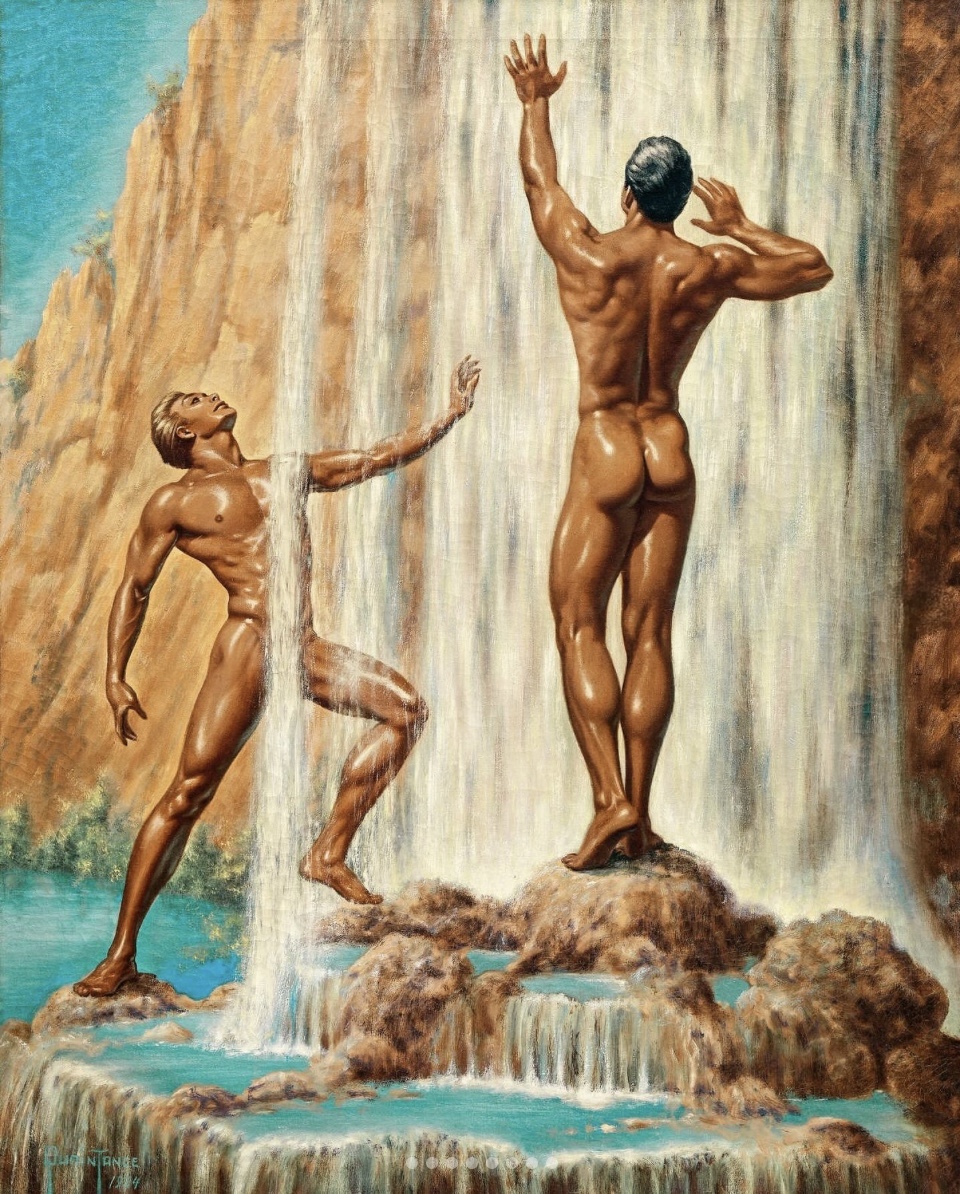
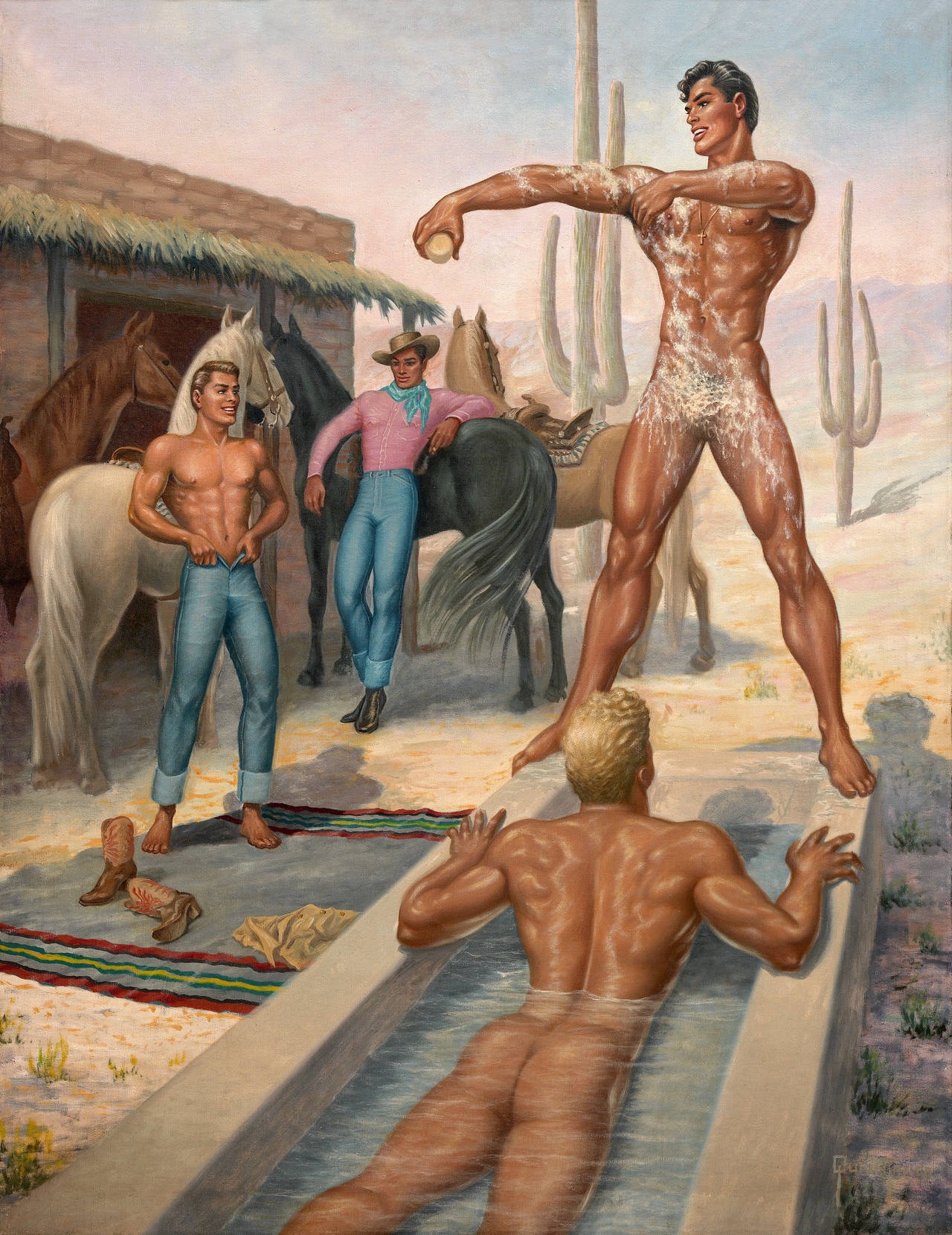
Rainbow Falls, by George Quaintance

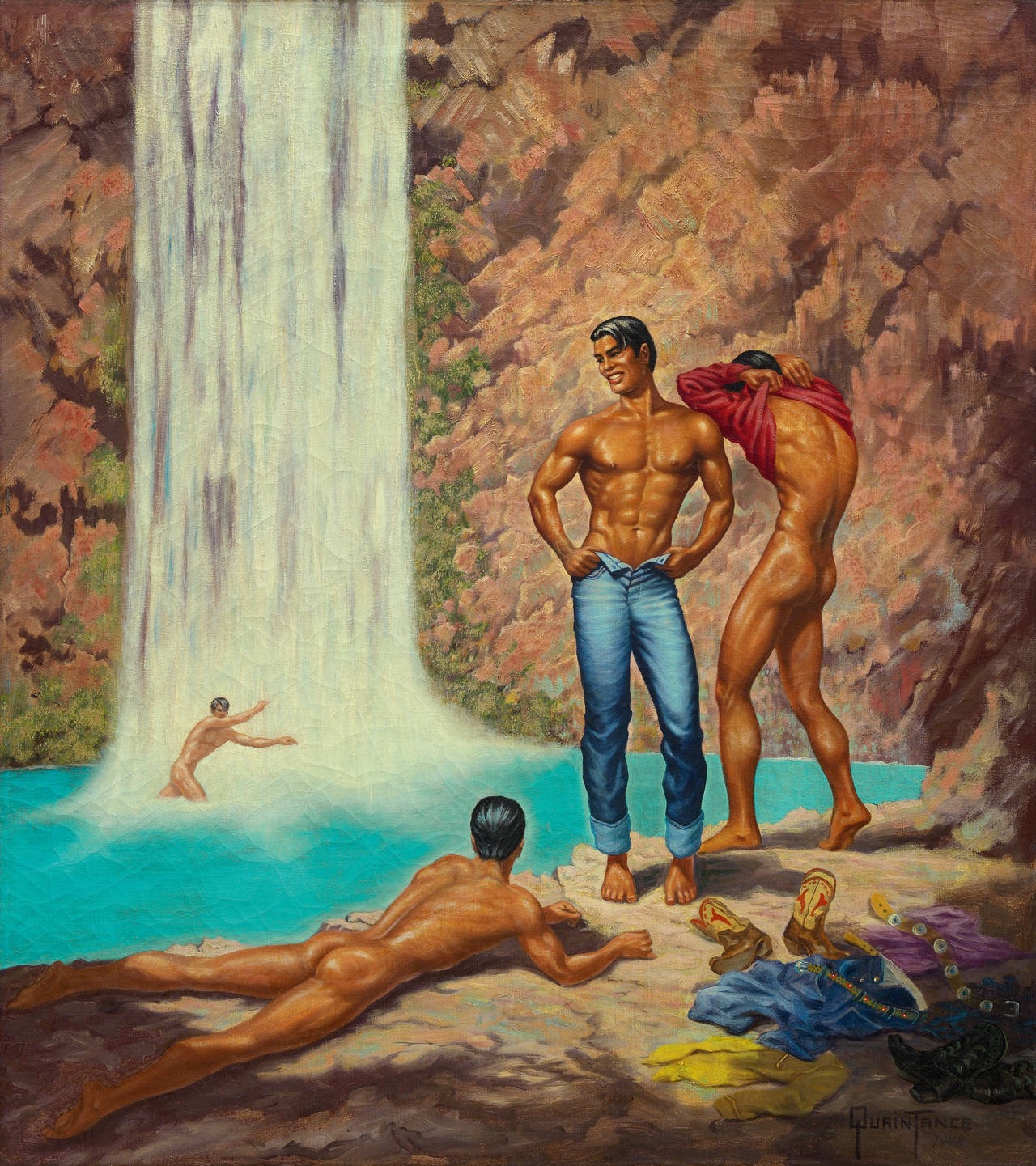
Tom of Finland was not the first to explore the muscular male form as an object of desire, though he certainly popularized it within queer culture. Earlier artists such as George Quaintance—whose idyllic, soft-lit scenes of sun-kissed ranch hands and swimmers in the 1940s and ’50s also blended classical idealism with homoerotic themes—helped lay the groundwork. Quaintance’s men were more polished and posed, evoking Greco-Roman statuary, but they shared with Tom a fascination with male beauty and strength.

Havasu Creek, George Quaintance
Morning in the Desert, George Quaintance

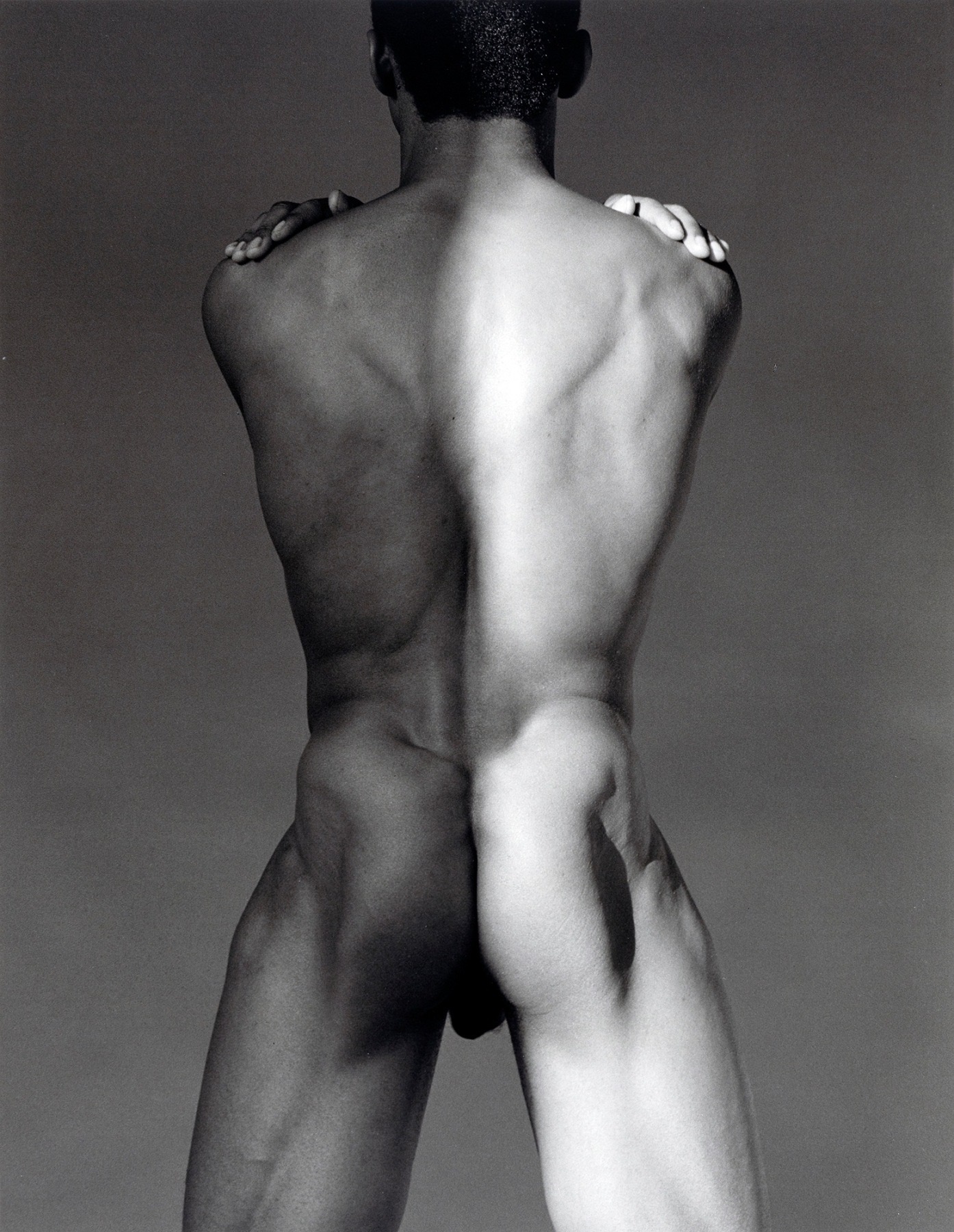
Others in this lineage include Etienne (Dom Orejudos), known for his bondage-tinged illustrations, and more contemporary artists like Robert Mapplethorpe, whose photographic studies of the male body in the 1970s and ’80s, gave fine art legitimacy to explicitly sexual gay imagery. These artists collectively expanded the visual vocabulary of masculinity—and queer masculinity in particular—by daring to eroticize it on its own terms.

Untitled, by Etienne (Dom Orejudos)

The hypermasculine male nude was, and still is, more than just visual titillation. For many gay men—especially those emerging from the post-WWII era through the gay liberation movement of the 1970s—these images were lifelines. In a world that demonized or erased queer identities, these artworks created an imaginative space of strength, desire, and belonging.

Dan S., 1980, by Robert Mapplethorpe

Tom of Finland’s drawings inspired a sense of pride at a time when few public role models existed. His men weren’t victims or martyrs—they were in control. They gazed back at the viewer with a smirk, not shame. Leather culture, which Tom helped popularize, became a defiant and communal expression of this ethos, evolving into an entire subculture with its own codes, rituals, and aesthetics.

Untitled, by Tom of Finland

Today, the hypermasculine aesthetic pioneered by Tom of Finland and his artistic descendants is both celebrated and interrogated. On one hand, his work has been embraced by museums and collectors, with the Tom of Finland Foundation preserving his legacy as both art and activism. On the other hand, critics have raised important questions about body ideals, race, and inclusivity within this visual tradition.

Shore Leave, George Quaintance

Nonetheless, Tom’s work endures because it dared to imagine a world where gay men could be powerful, erotic, and unashamed—all at once. For those who still find strength in the curvature of a flexed bicep, the gleam of a leather cap, or the tilt of a winking smile, these images remain potent reminders that desire can be both beautiful and bold.

____________________________________________________________

About the Artist: Tom of Finland (Touko Laaksonen, 1920–1991)
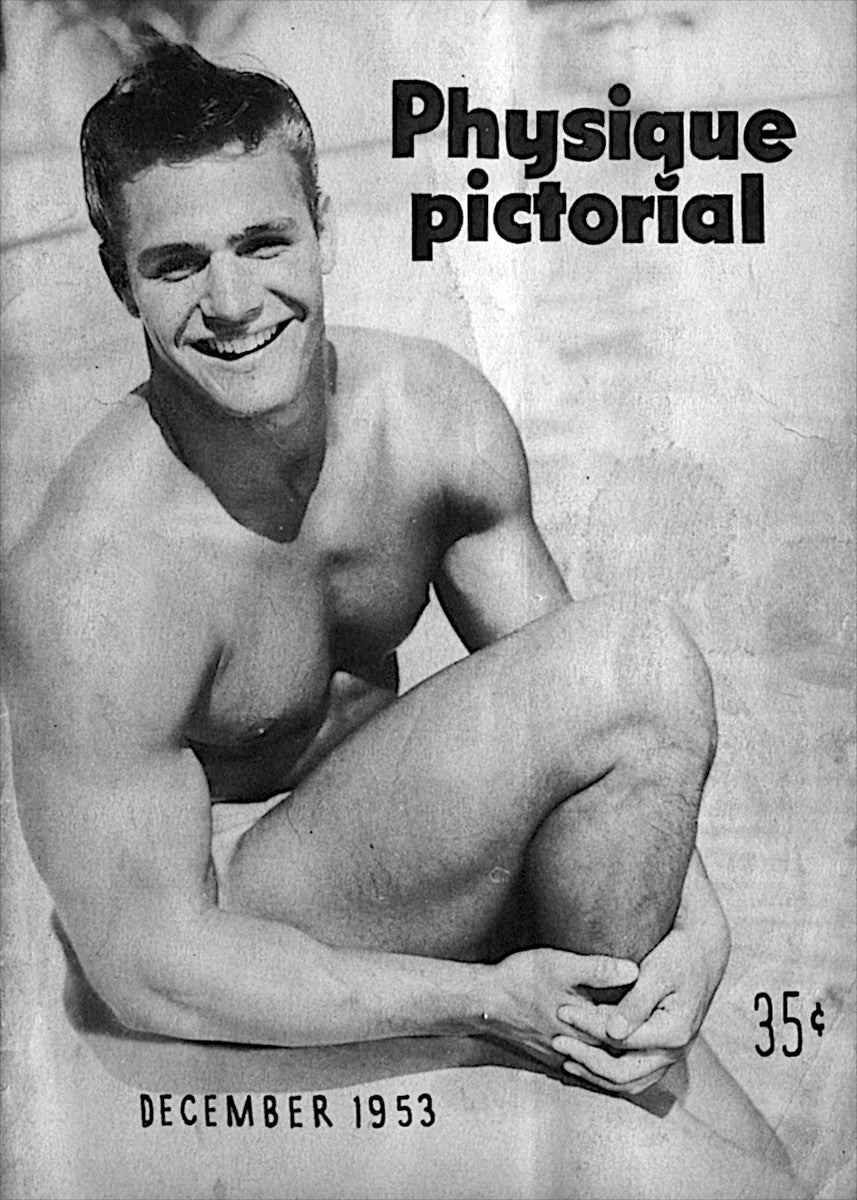
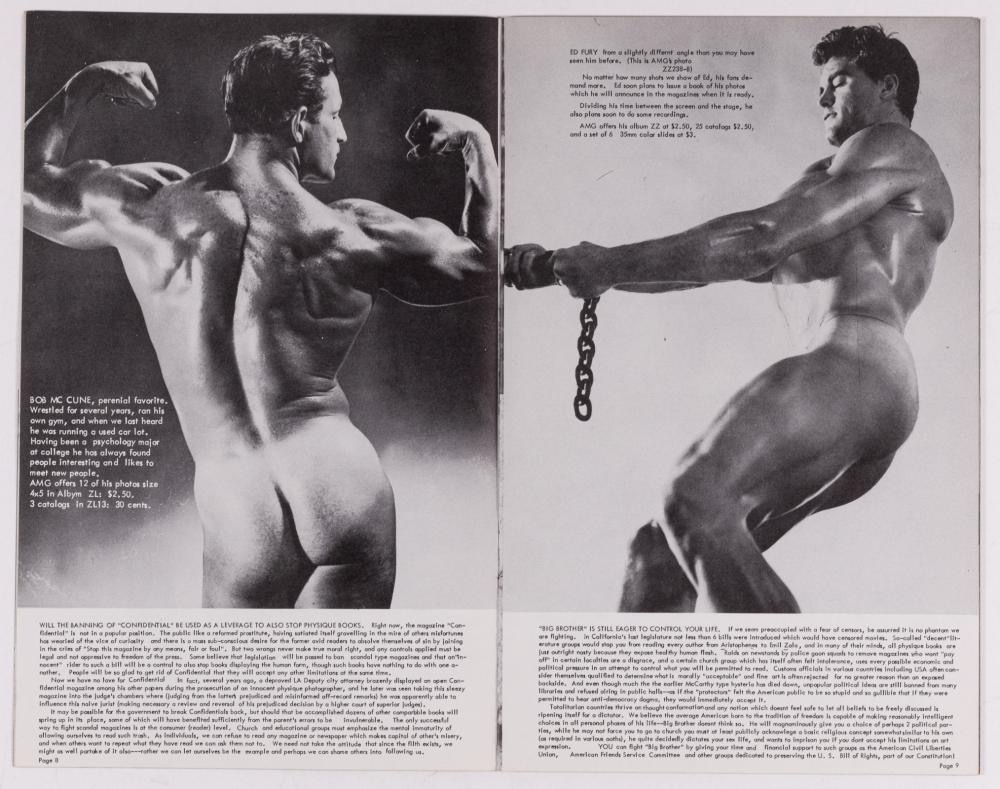
Born in Finland, Touko Laaksonen served in the Finnish Army during World War II before working as a graphic designer. His first drawing was published in Physique Pictorial in 1957. Over his lifetime, he created thousands of images that celebrated queer desire with explicit muscular masculinity. In 1984, he co-founded the Tom of Finland Foundation in Los Angeles to preserve and promote erotic art. His legacy continues to influence fashion, photography, and LGBTQ+ visual culture globally.

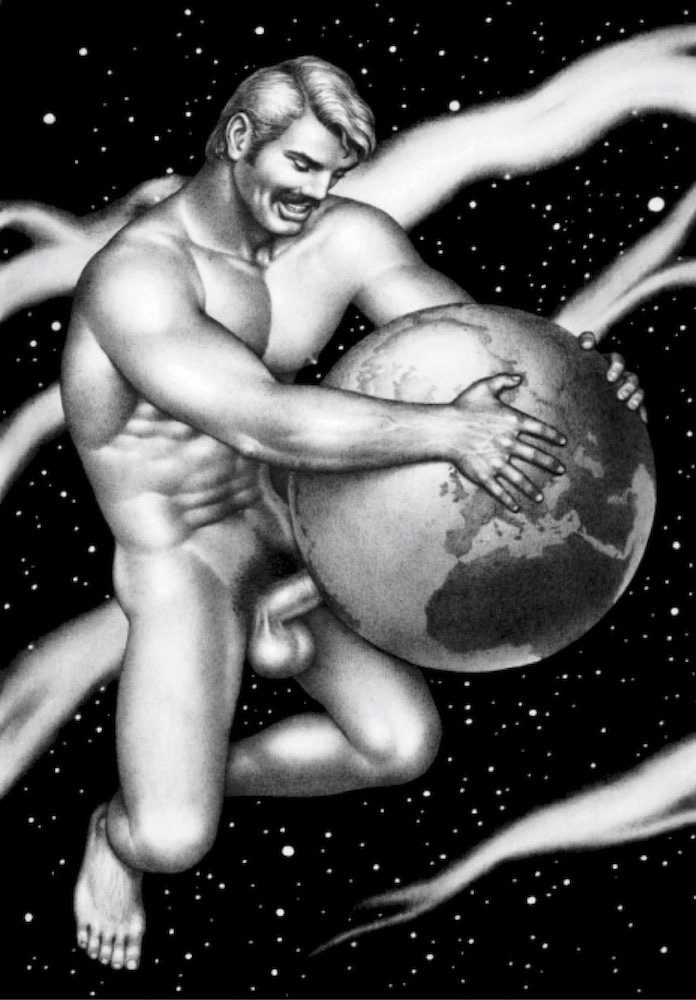
Untitled, by Tom of Finland

While this last one might be Untitled, I think the message is clear, “Fuck the World.” This image is not merely erotic; it is symbolic. The man doesn’t hide; he dominates the universe with sensual confidence. In a time when queer lives were marginalized and criminalized, Tom of Finland dared to draw a world where desire could orbit freely—where the weight of the world was no burden, but a thing to be held with love and strength. 


The Story of Sgt. Frank Praytor

“In war, there are no unwounded soldiers.” — José Narosky

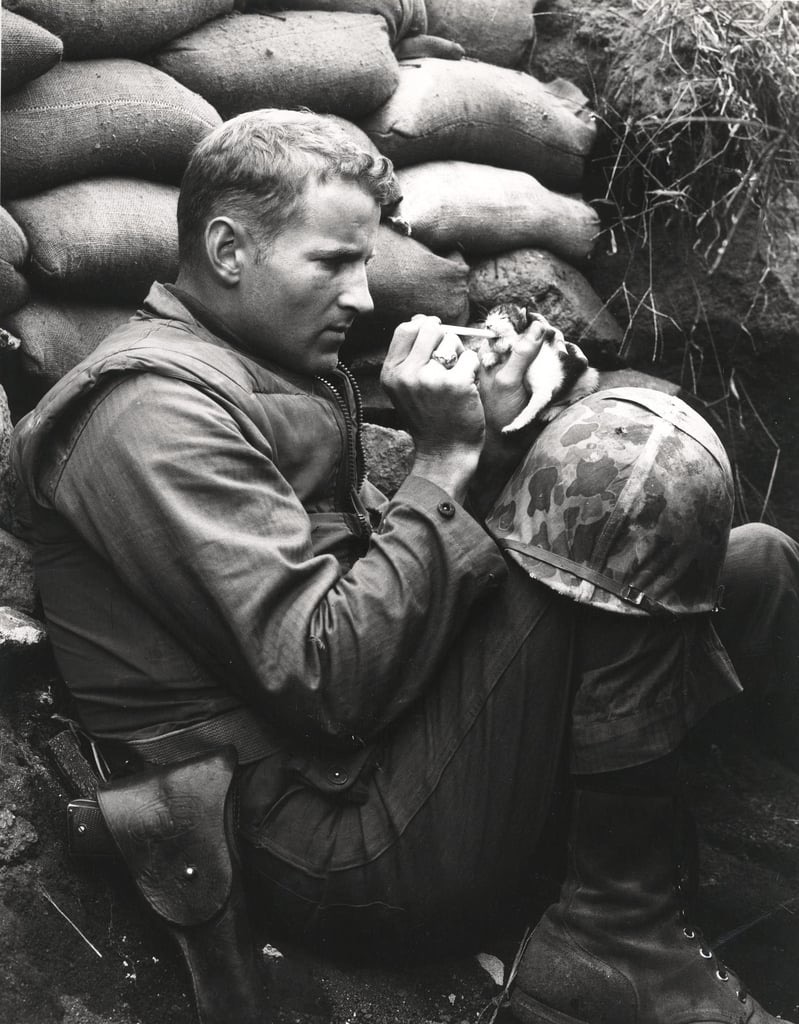
On this Memorial Day, when we pause to honor those who gave their lives in service to our country, I find myself drawn not just to the names etched in stone or the solemn rows of white crosses, but to a single image: a black-and-white photograph taken in Korea in 1953. A Marine sits in the mud of a makeshift trench, his pistol at his side, his helmet on his knee. In his hands is a tiny, orphaned kitten, and he is using a medicine dropper to feed her. The Marine is Sgt. Frank Praytor. The kitten’s name is “Mis Hap.”

The photo became famous—circulated around the world and published in Life magazine—as a symbol of unexpected tenderness in a brutal war. It offered a glimpse of compassion in the midst of chaos, a reminder that humanity survives even on the bloodied edges of conflict. The image would later help define the Korean War in popular memory, a “forgotten war” made suddenly more intimate through a moment of care.

What few people know is the full story behind that photograph—and the man behind the camera.

Frank Praytor was a journalist before he was a Marine. Born in 1927, he had been a copy boy for The Birmingham News,and while attending Birmingham Southern College he was a sports writer for The Birmingham Age-Herald. When war broke out, he volunteered for the Marine Corps, and thanks to his background, he was assigned to a press unit where he worked as a combat correspondent and photographer.

His job was to document the war—but his heart was never far from the human stories unfolding around him. When a fellow Marine’s cat was killed by a mortar shell, two orphaned kittens were left behind. Praytor took one in, fed her, cared for her, and named her “Miss Hap”—a play on “mishap,” the unfortunate accident that orphaned her. He later joked that she had “earned her name by almost being stepped on a dozen times.”

The photo of Praytor and Mis Hap would become an emblem of compassion, but it nearly cost him his career. According to later accounts, he was almost court-martialed by a commanding officer who believed the photo projected weakness and distracted from the image of Marine toughness. Fortunately, cooler heads prevailed. The Marine Corps ultimately embraced the image, recognizing that in an age of rising television and photojournalism, humanity had become part of wartime narrative. Praytor was spared, and the photograph went on to become one of the most reproduced images of the Korean War.

After the war, Frank returned home and continued his life in journalism, working for The Albuquerque Tribune and The Associated Press. He married, raised a family, and remained a storyteller at heart. He died in 2018 at the age of 90.

Sgt. Frank Praytor didn’t die in war, but he gave a part of himself to it. His service—like so many others—was not only in bullets and orders, but in moments of grace. On Memorial Day, we rightly remember the fallen, but we also honor those who carried the burden home. Some came back with wounds you could see. Others carried scars deeper and quieter. Men like Praytor showed us that even in war, gentleness is not weakness. It is courage of another kind.And sometimes, the most lasting legacy of a soldier is not a battle won, but a kitten fed.


The Eternal Flesh of Divine Desire

From the polished marble of ancient statues to the shimmer of modern photography, Greco-Roman gods have been reimagined for centuries as icons of idealized, eroticized male beauty. In myth, their bodies held cosmic power; in art, their nudity has long served as a conduit for expressing desire, divinity, and the human longing for transcendence.

This post explores nude depictions of four major figures—Apollo, Adonis, Dionysus, and Ganymede—through a selection of artworks that span antiquity, the Renaissance, Neoclassicism, and into modern queer photography. These gods persist not merely as symbols of myth but as enduring archetypes of same-sex attraction and aesthetic longing.

Few deities embody beauty like Apollo, the Greek god of light, music, and reason. His idealized, youthful body became the template for masculine perfection across Western art history.

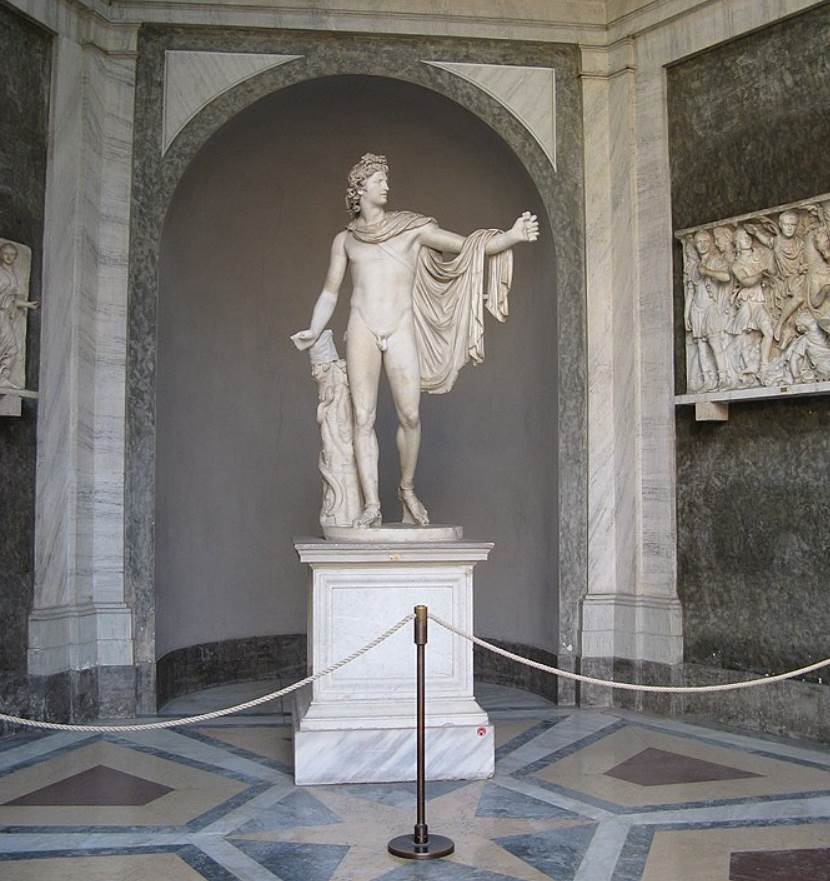
The Apollo Belvedere [above], a Roman copy of a 4th-century BCE Greek bronze, exemplifies this ideal. Standing nude but for a cloak draped over one arm, Apollo’s form is serene, balanced, and timeless.

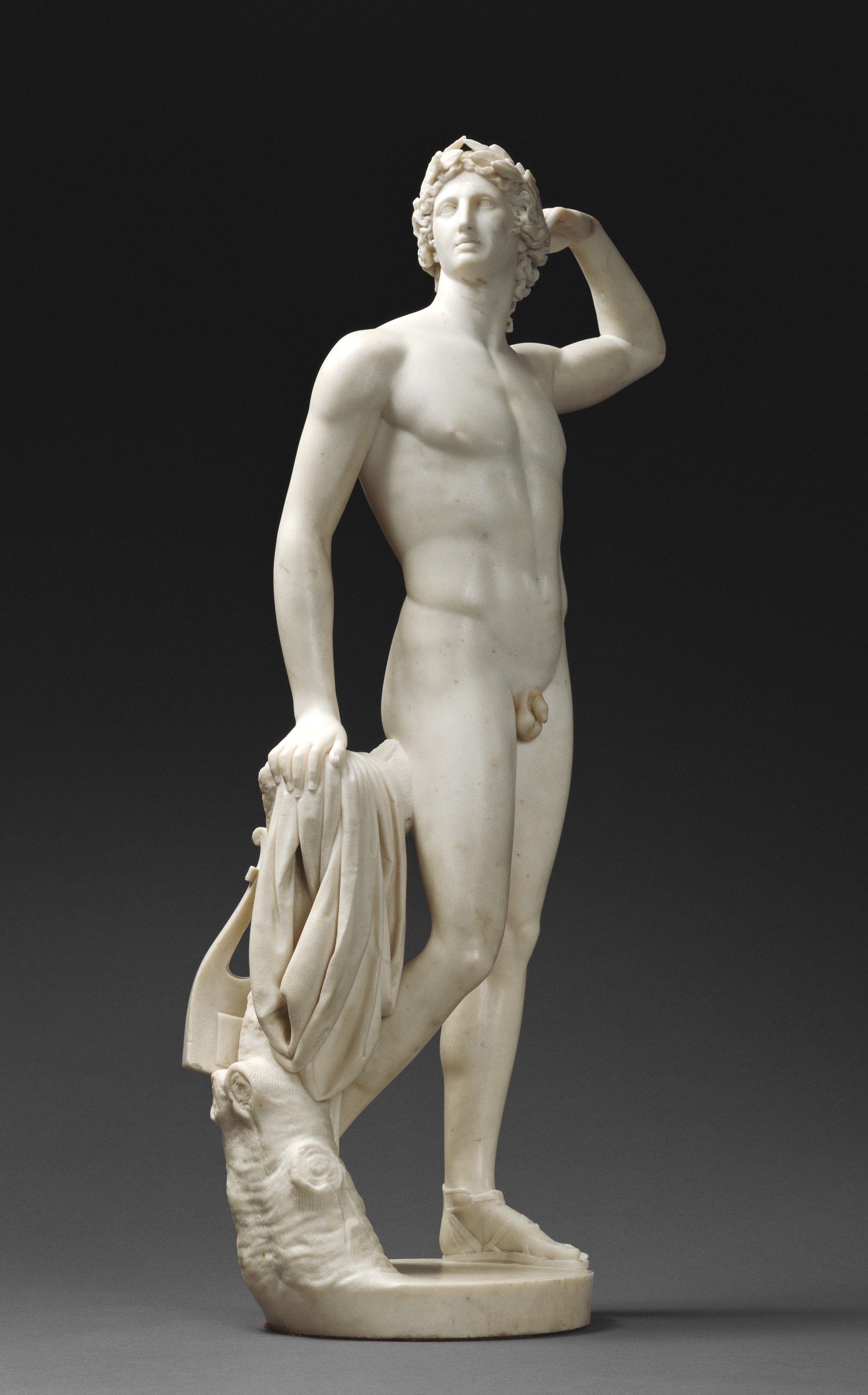
In the late 18th century, Neoclassical sculptor Antonio Canova reinterpreted this ideal in Apollo Crowning Himself [above](1781–1782), depicting the god nude, lifting a laurel wreath with quiet triumph. It is a vision of reason and beauty as divine harmony.

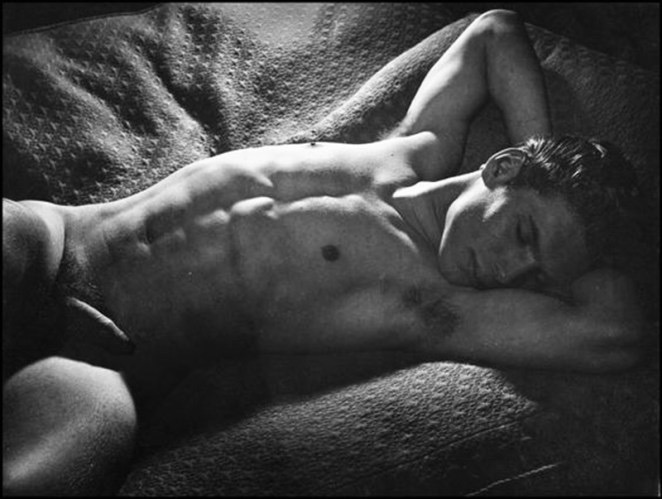
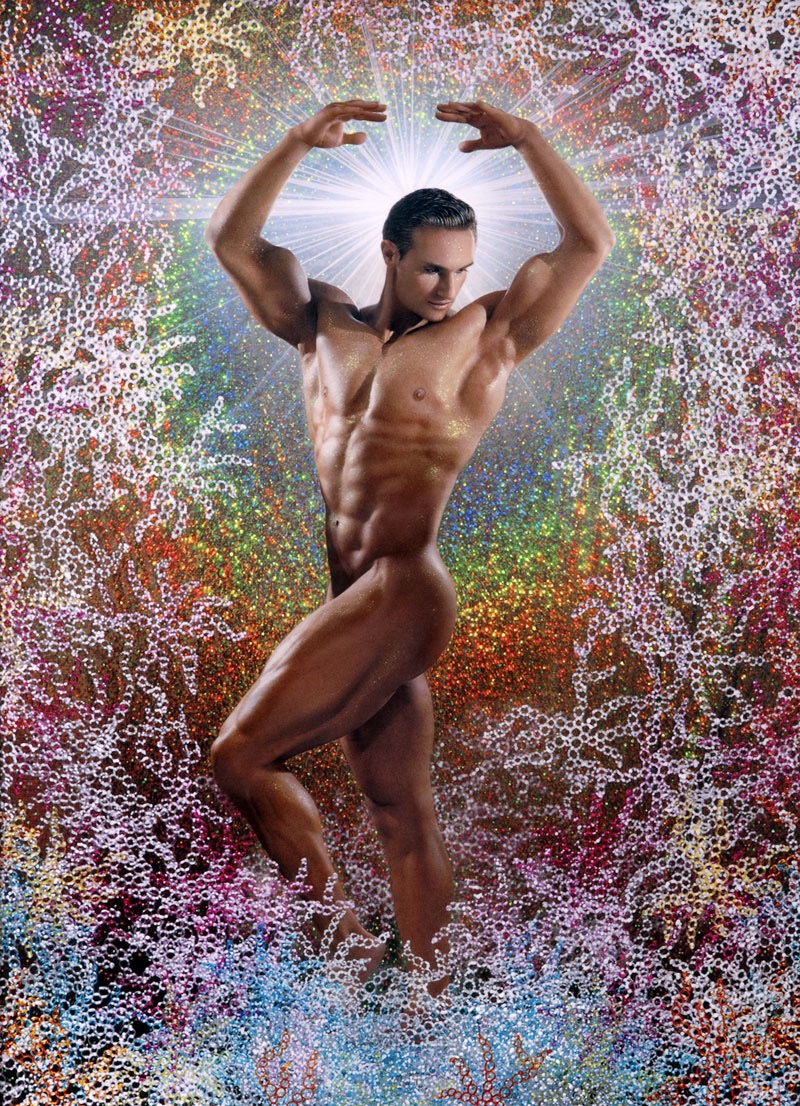
Modern artists have reclaimed Apollo with more intimate and erotic intentions. Photographer Herbert List’s Nap in the Afternoon [above] (1933) portrays a nude young man reclined in soft light, radiating not mythic grandeur but human vulnerability and quiet sensuality. Likewise, Pierre et Gilles’ Apolló [below](2005) transforms the god into a glowing nude queer icon, bathed in gold, sun rays, and self-aware kitsch—modeled by Jean-Christophe Blin with overt erotic charge.

Adonis, loved by both Aphrodite and Persephone, represents ephemeral beauty—the lover who dies young, whose body becomes memory and myth.

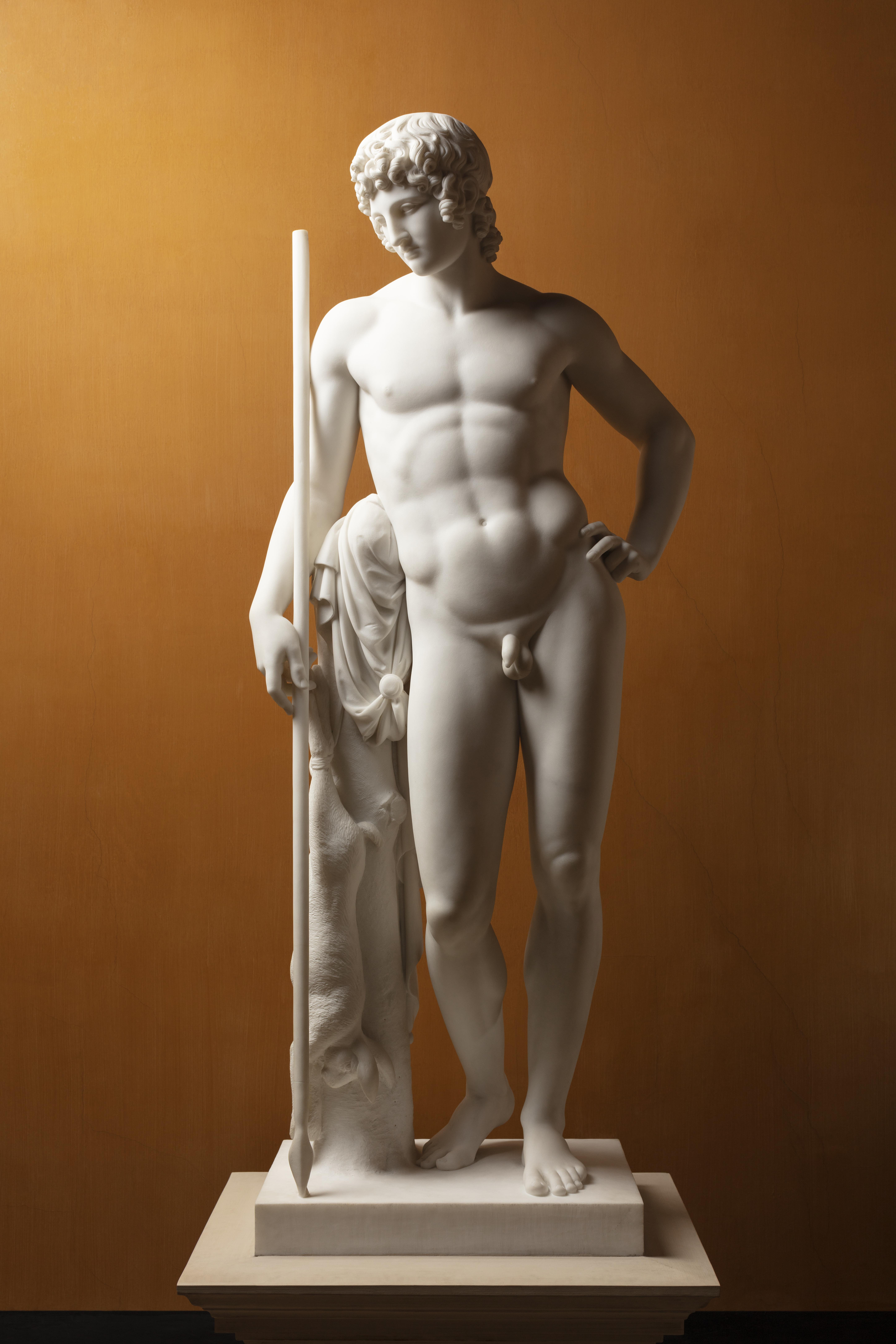
Bertel Thorvaldsen’s Adonis [above] (1808–1832) renders him fully nude and poised with graceful sorrow, a figure both heroic and tender. This tension becomes tragic in Peter Paul Rubens’s Venus Mourning Adonis [below] (1614), where Adonis lies partially nude in Venus’s embrace, his body mourned as much as it was desired.

In modernity, Adonis has been reborn as a name for fitness models, physique photography, and pornographic performers. Whether in glossy “Adonis Physique” [below] portfolios or by adult actors adopting the name, these contemporary “gods” continue the legacy of youthful male beauty displayed and consumed—reflecting society’s ongoing obsession with eroticized perfection.

While Apollo embodies clarity and Adonis, fragility, Dionysus represents something wilder—fluid gender, sensual abandon, and ecstatic freedom.

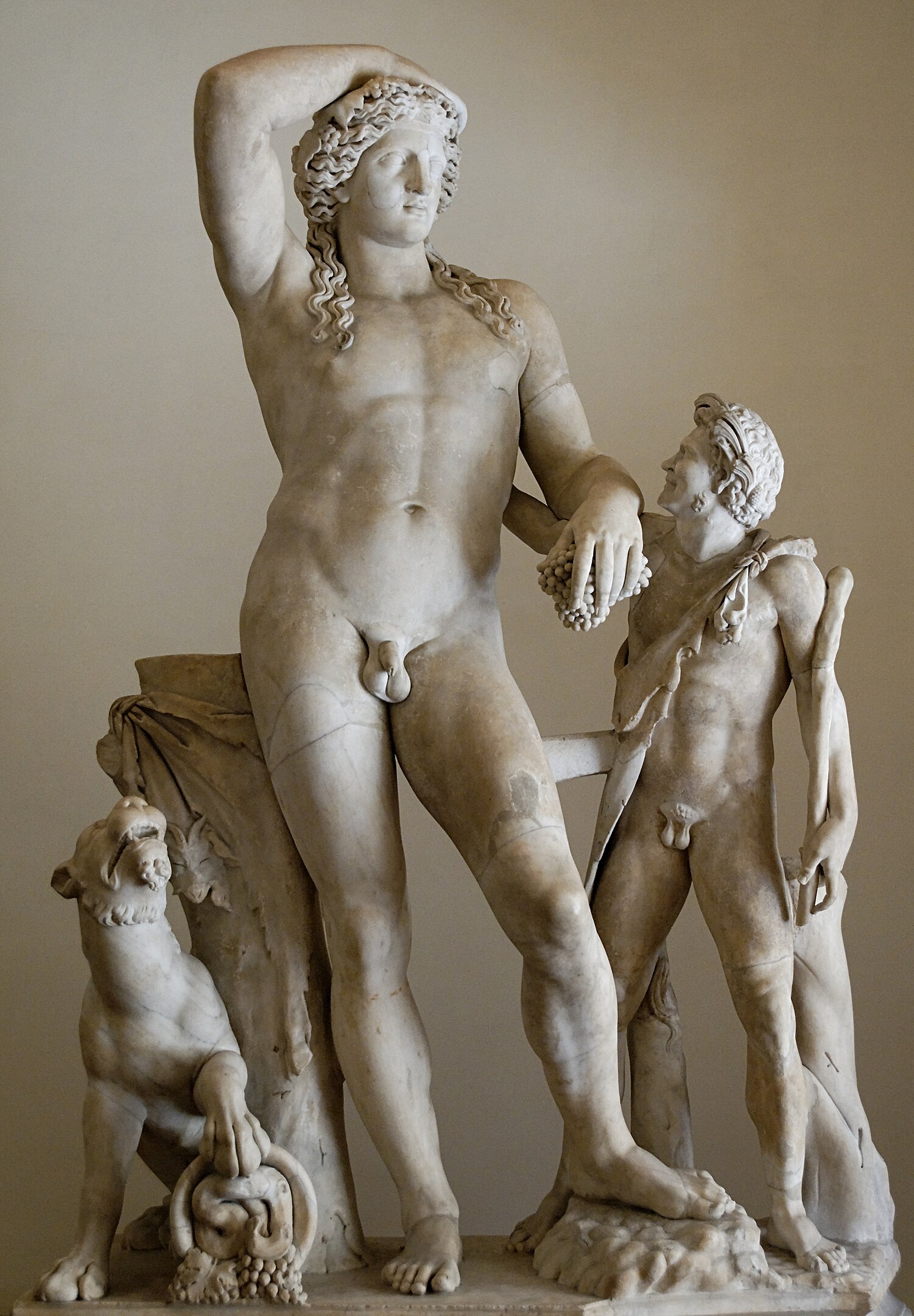
The Ludovisi Dionysus [above] (2nd century CE) captures this duality, showing the god nude and youthful, reclining beside a satyr. His form is less structured than Apollo’s, more languid—inviting the viewer into the pleasures of intoxication and eroticism.

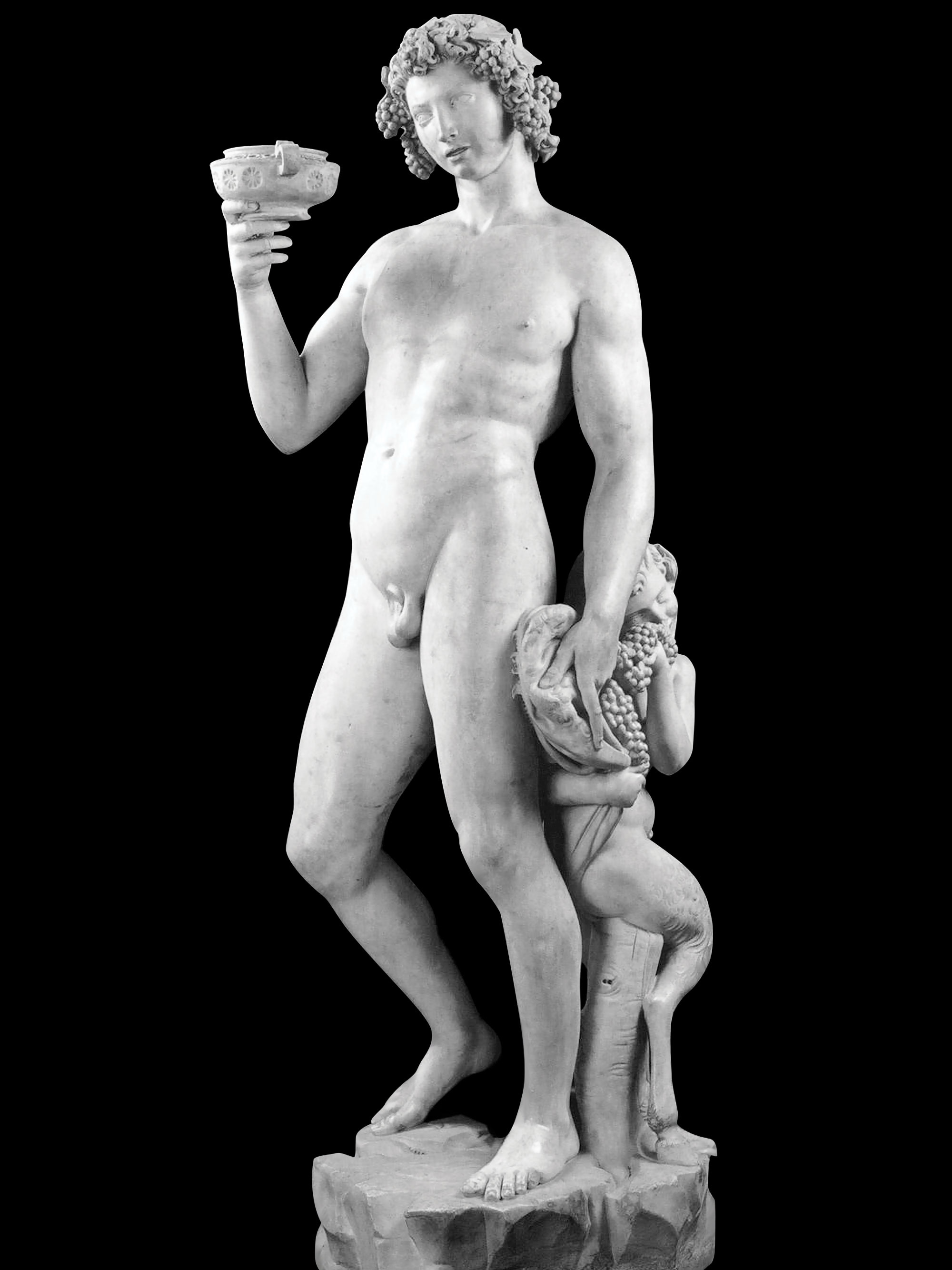
Michelangelo’s Bacchus [above] (1496–1497) expands this image with a staggering, fully nude god offering wine. His body is softly muscled, unsteady, and provocatively unguarded—a subtle challenge to Renaissance masculinity.

In modern queer art and performance, Dionysus is frequently reimagined as a nude figure of androgynous seduction—adorned with ivy, lounging among vessels and male companions. Whether in contemporary photography, drag, or performance art, he embodies liberation from gender, structure, and shame.

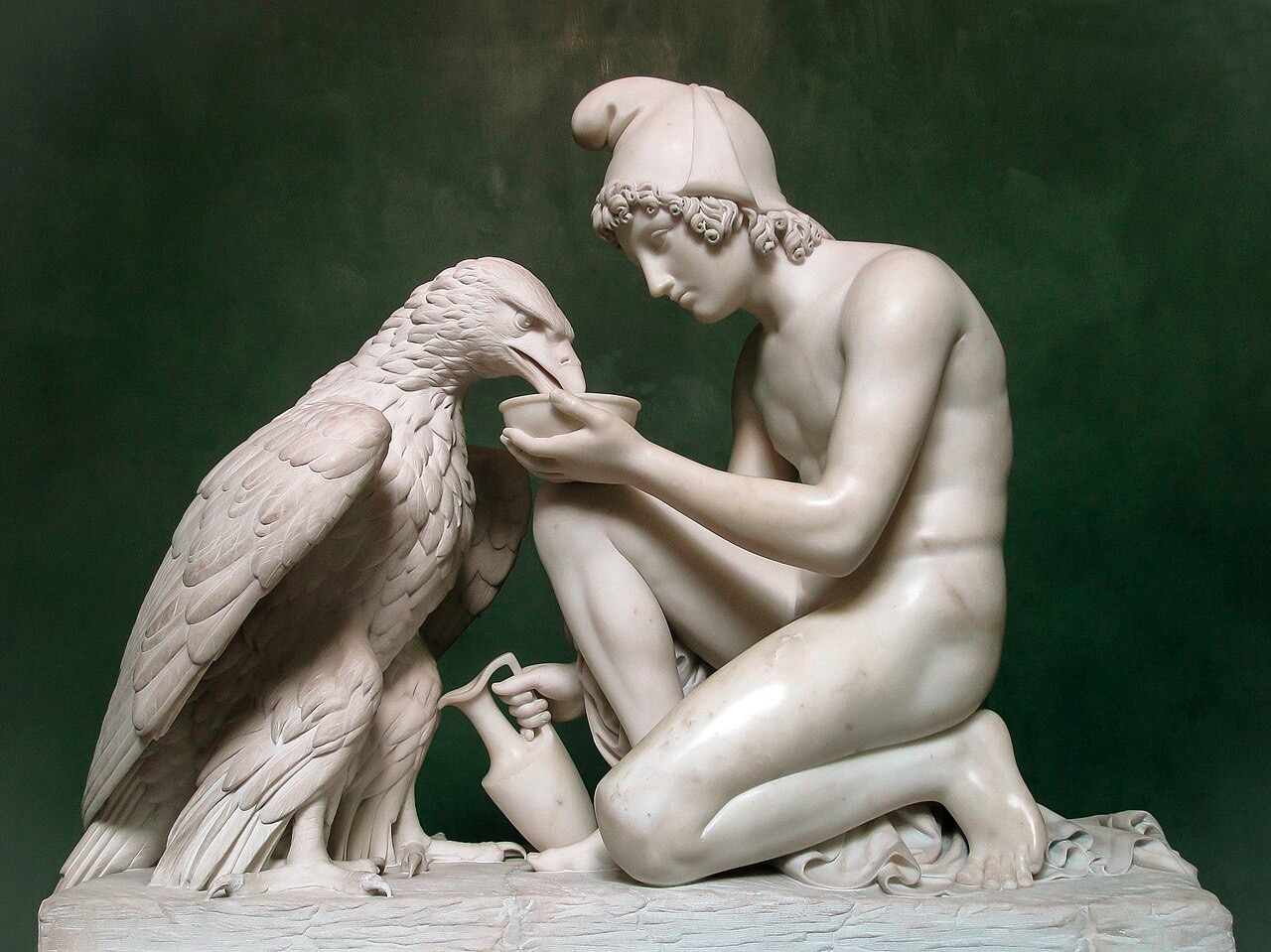
Ganymede, the beautiful Trojan prince abducted by Zeus, is mythology’s most overt celebration of male same-sex desire. Ancient Greek art embraced this narrative, often depicting Ganymede nude and pursued by Zeus in eagle form, as on red-figure vases from the 5th century BCE.

Neoclassicism softened the abduction in Bertel Thorvaldsen’s Ganymede and the Eagle [above] (1817). Here, Ganymede stands fully nude, offering a cup to Zeus with serenity and grace. His nudity is not scandalous but dignified, even sacred.

This narrative takes a more intimate turn in Wilhelm von Gloeden’s Ganymede-inspired photographs [above] , taken in Sicily between 1890 and 1910. His nude young models, posed with amphorae or gazing skyward, evoke myth while offering coded homoerotic imagery at a time when queer expression was criminalized. These photographs blend longing, artifice, and resistance—a queer reclamation of myth.

From ancient temples to modern studios, the nude forms of Apollo, Adonis, Dionysus, and Ganymede have served as vessels for beauty, longing, and erotic speculation. Their depictions reveal more than aesthetic ideals; they reflect how cultures across time have understood desire—particularly same-sex desire—not as taboo, but as divine.

These bodies, carved in marble, painted in oils, or captured in silver print, continue to remind us that queer love, and the beauty that awakens it, is older than shame and as enduring as myth.


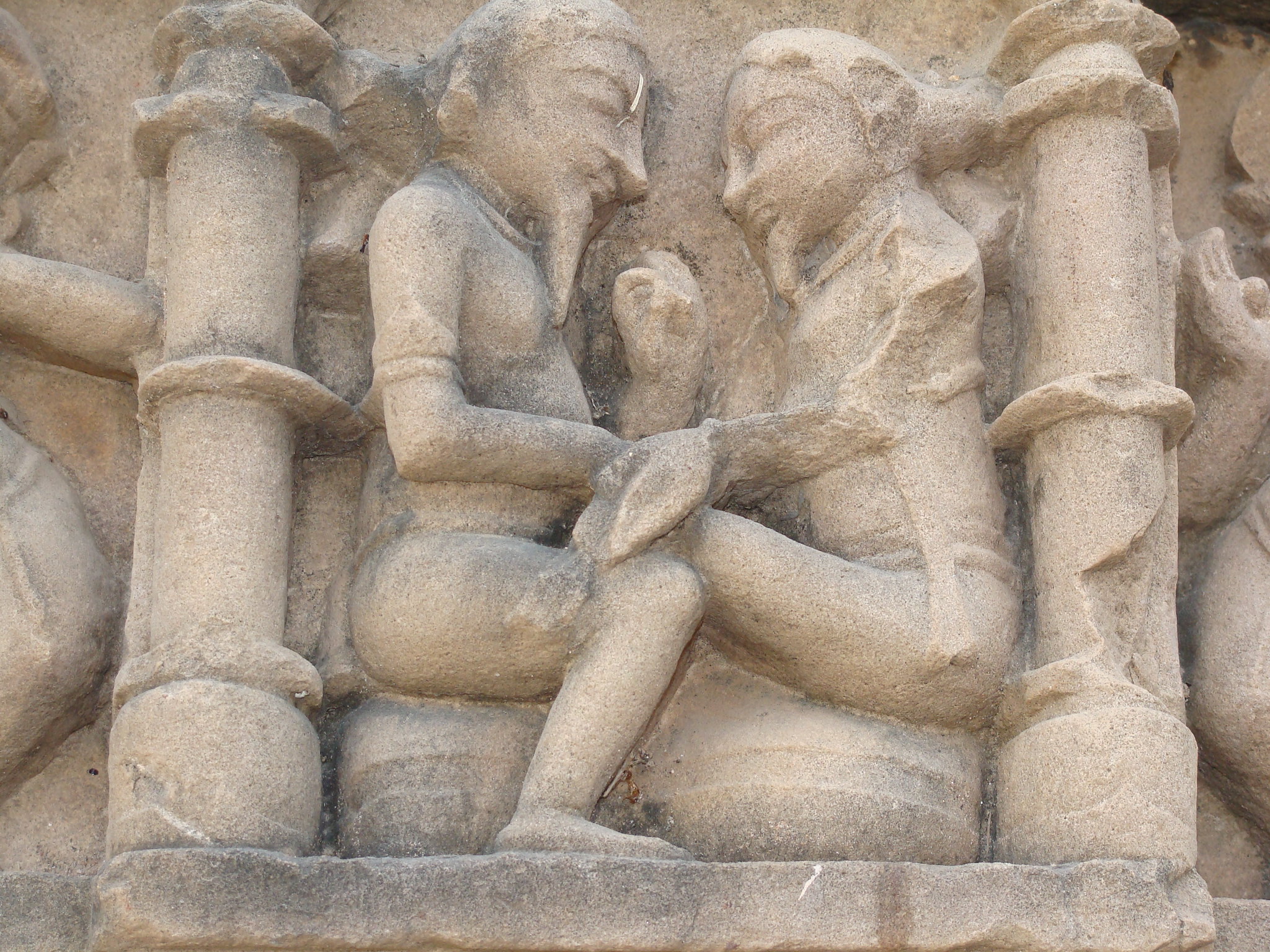
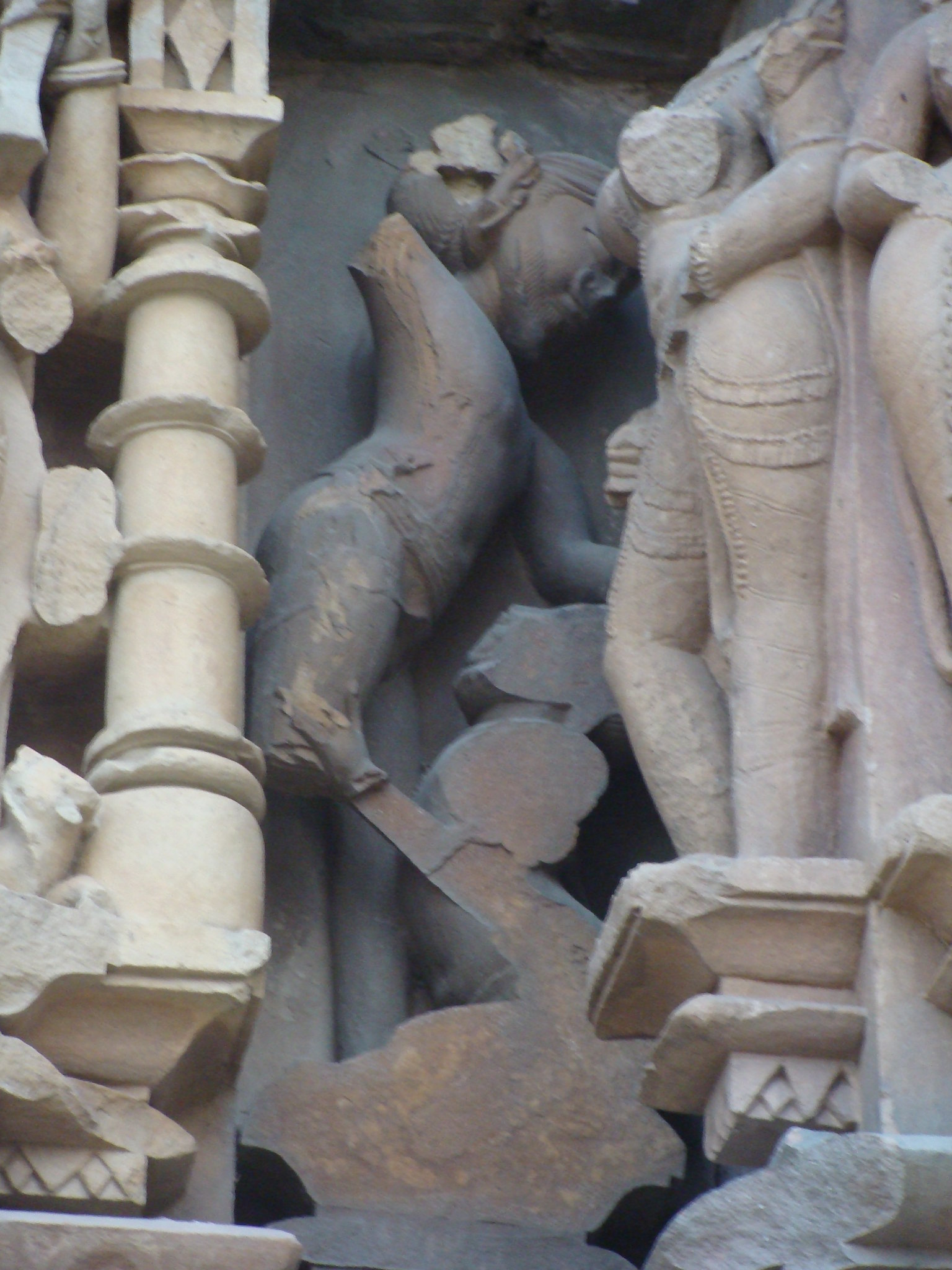
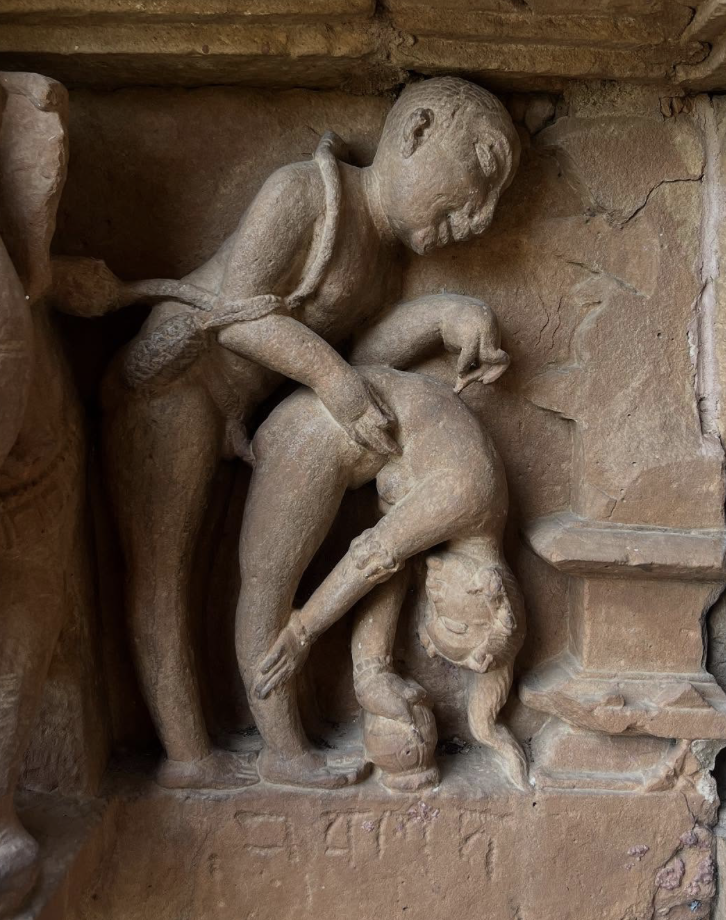
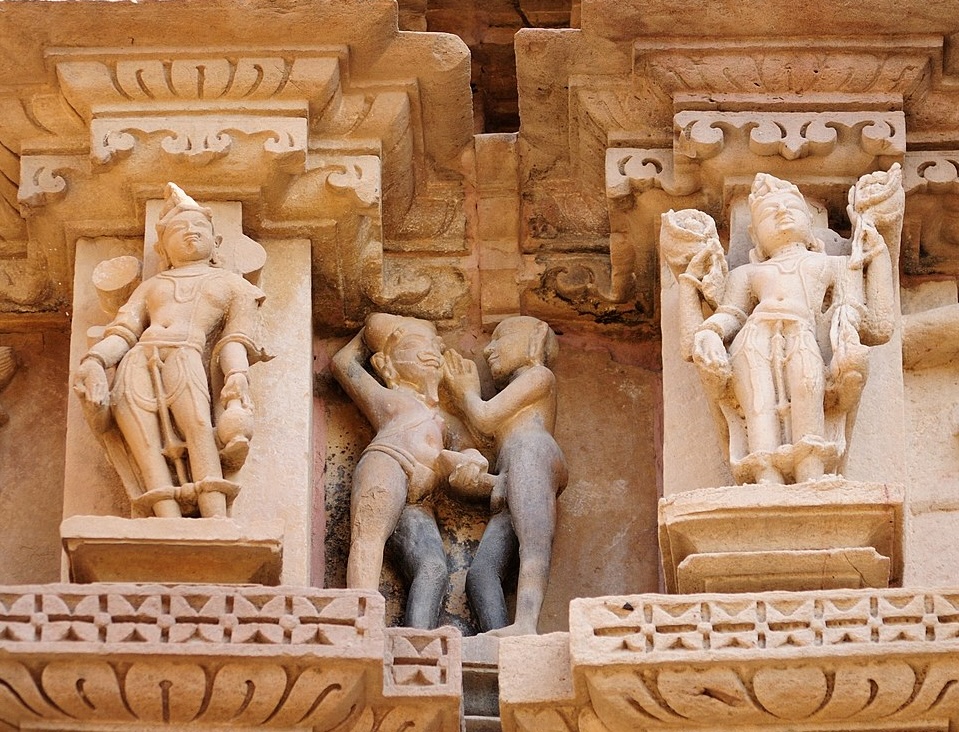
Khajuraho Temples

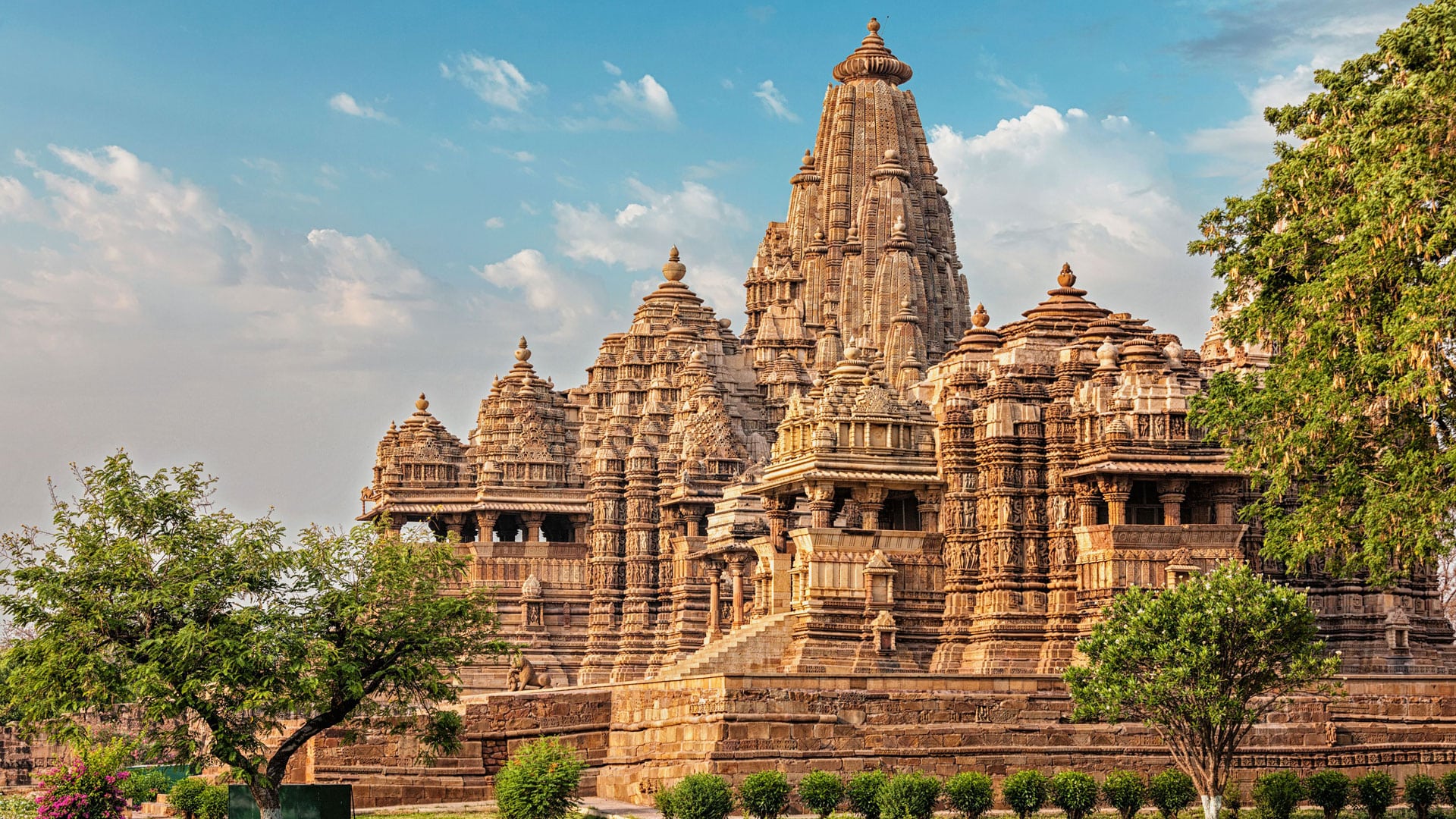
The temples of Khajuraho, a UNESCO World Heritage site located in Madhya Pradesh, India, are renowned for their intricate sculptures that celebrate the full spectrum of human life—spiritual, sensual, and mundane. Constructed between the 10th and 12th centuries CE under the rule of the Chandela dynasty, these temples have drawn global attention for their uninhibited erotic carvings. While most focus has traditionally been directed toward heterosexual imagery, the presence of male same-sex activity in the sculptural program offers a rare and illuminating glimpse into a pre-modern Indian worldview that acknowledged, depicted, and integrated diverse expressions of desire, including male-male eroticism, without censure.

Among the 85 temples originally built at Khajuraho, 22 remain today. Temples like the Kandariya Mahadeva, Lakshmana, and Vishvanatha house the majority of the erotic sculptures. These carvings are typically located on the outer walls and are interspersed among depictions of deities, mythical creatures, daily life, and celestial beings. In this context, the erotic is not marginal or profane—it is part of a holistic worldview that includes kama (desire) as one of the four essential goals of life, alongside dharma (duty), artha (prosperity), and moksha (liberation).

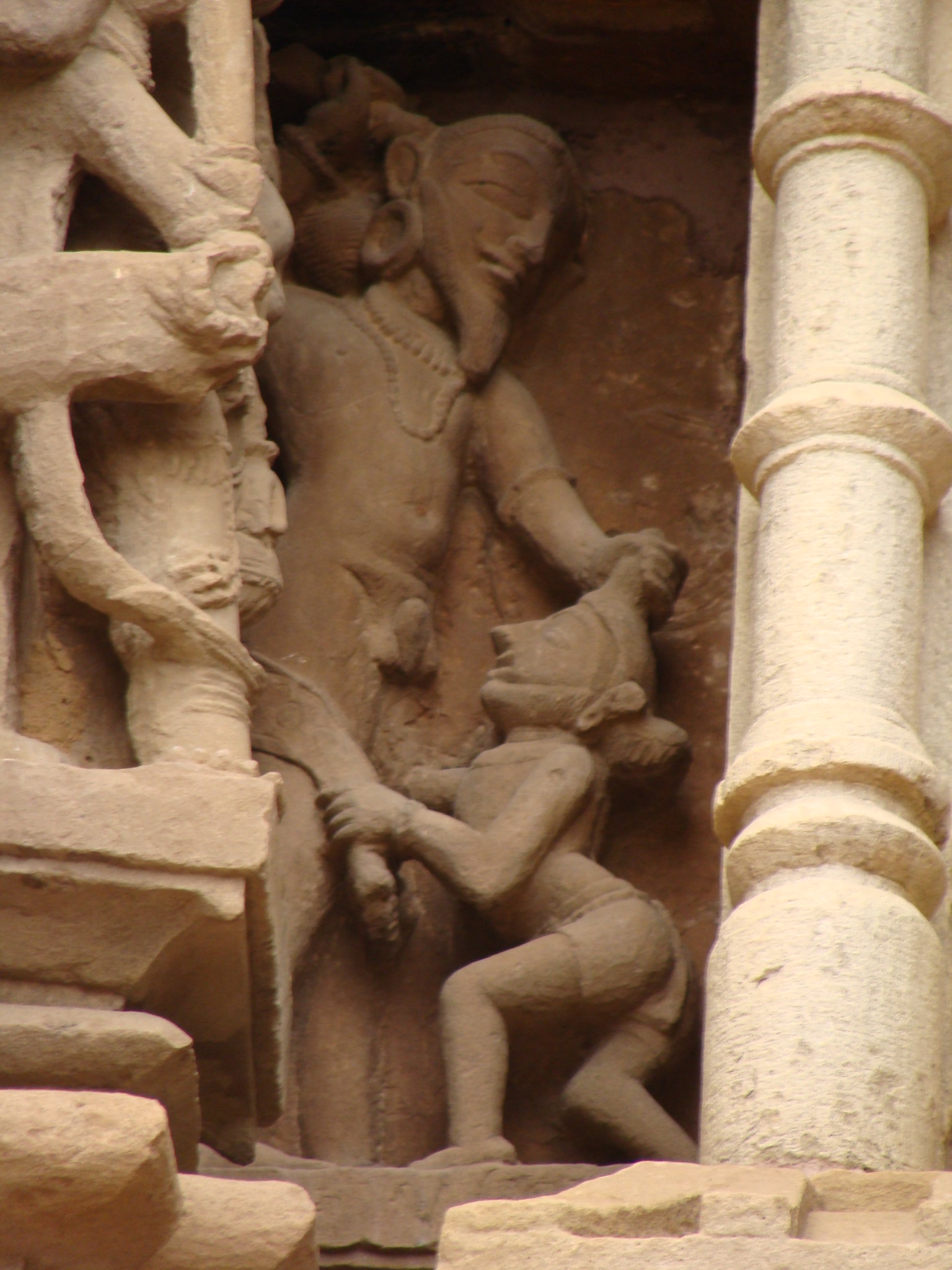
Within this framework, scenes of male same-sex activity appear—never as the dominant theme, but as a recognized and unashamed element of human and divine experience. One well-documented relief on the Kandariya Mahadeva Temple portrays three male figures: two engaged in what appears to be anal intercourse while the third supports or observes. The composition, carved with anatomical clarity and sensual expressiveness, is neither hidden nor diminutive. Instead, it is seamlessly integrated with other sexual depictions, suggesting that such interactions were not viewed as abnormal or unworthy of representation.

The Khajuraho sculptures are informed by Tantric philosophy, which celebrates the union of opposites—male and female, mortal and divine, physical and spiritual. Tantra does not moralize sexual behavior but instead sees it as a path to transcendence when practiced with awareness and ritual purpose. In such a framework, the body is not a source of shame but a vehicle for experiencing and accessing the sacred. This philosophical backdrop helps explain the inclusion of non-normative sexualities in the temple art.

Moreover, the historical Indian worldview, as evidenced in ancient texts like the Kama Sutra and the Natyashastra, acknowledged and codified categories for male-male desire. The Kama Sutra describes the behavior of the kliba—a term that included a variety of gender-nonconforming or homosexual individuals—and elaborates on oral sex between men without moral condemnation. The presence of male same-sex depictions at Khajuraho may be seen as a visual extension of these texts, reflecting their acceptance within elite court and religious circles.

The British colonial period marked a turning point in the interpretation of Indian art and sexuality. Victorian sensibilities, combined with Christian morality, led to a widespread suppression of India’s diverse sexual past. Erotic art was dismissed as “obscene” or “degenerate,” and the Khajuraho sculptures were either censored or misinterpreted. The presence of male same-sex acts, in particular, was downplayed or ignored in early archaeological reports, a silence that endured into much of the 20th century.

Only in recent decades have Indian and international scholars begun to reassess Khajuraho through lenses unclouded by colonial morality. Researchers such as Devdutt Pattanaik and Ruth Vanita have foregrounded these representations as evidence of a more fluid and inclusive premodern Indian culture. In doing so, they challenge modern narratives that frame homosexuality as a “Western import” or a postcolonial phenomenon.

The male same-sex depictions at the Khajuraho Temples serve as powerful reminders of a historical moment when erotic plurality was not stigmatized but sculpted in stone for the divine and the earthly to witness. These carvings do not merely reflect acts of physical pleasure—they symbolize a cultural acceptance of the full range of human desire. As India and the world continue to grapple with questions of sexual identity and historical memory, the Khajuraho temples stand as enduring monuments to a time when the sacred and the sensual, including love between men, coexisted without shame.In recognizing and reclaiming these images, we honor a forgotten legacy—one that whispers across time from temple walls that have seen centuries, reminding us that queerness is not an aberration in Indian history, but a thread woven into its very cultural fabric.


Lynes Drawn Between Couture and the Closet

Untitled, George Platt Lynes, 1936

George Platt Lynes (1907–1955) occupies a unique and courageous place in 20th-century photography. Best known during his lifetime for his sophisticated fashion images and celebrity portraits, Lynes also created a substantial, deeply personal body of male nudes and homoerotic photographs. These images, radical for their time, remained largely hidden from public view for decades. Today, they stand not only as remarkable works of art but also as rare, defiant records of queer desire in a period of profound social repression.

 Tennessee Williams, George Platt Lynes,1944

Lynes began his career in the 1920s and 1930s, becoming a sought-after fashion photographer for Harper’s BazaarVogue, and Town & Country. His images were noted for their theatricality, stylization, and mythic undertones. Yet, while he achieved success in commercial photography, he was simultaneously pursuing a private and more dangerous artistic project: photographing nude men, often friends, performers, and lovers.

Bill Harris, George Platt Lynes, 1942

By the early 1930s, Lynes had begun producing a series of male nudes that blended classical influences—Greek sculpture, Renaissance painting—with the sleek modernism of Art Deco. Unlike typical academic nudes, Lynes’s subjects were not anonymous muses but men with whom he shared personal and often romantic bonds. These photographs, which captured beauty, vulnerability, and homoerotic longing, could not be exhibited openly. Instead, Lynes circulated them privately among his queer kinship networks.

Jack Fontan, George Platt Lynes, 1950

Lynes was part of a closely connected circle of elite gay men who shaped American arts and letters between the world wars and into the early Cold War. For sixteen years, Lynes lived with writer Glenway Wescott and museum curator Monroe Wheeler, who were a couple for over fifty years. The three shared a household, with Lynes and Wheeler sharing a bedroom. This network extended to other prominent cultural figures, including Lincoln Kirstein and artist Paul Cadmus. During the 1940s and early 1950s, they hosted private gatherings and sex parties, creating a vibrant yet discreet sexual subculture. However, as Cold War paranoia intensified, especially targeting homosexuals, these communities were forced further underground.

Untitled, George Platt Lynes, 1950

In April 1950, Wescott voiced his concerns to Lynes about the risks of circulating explicit photographs. While he personally supported Lynes’s art, he feared professional repercussions for Wheeler, who by then held a prominent public role at the Museum of Modern Art. Wescott warned of the dangers of “guilt by association,” especially given the rising visibility of anti-communist and anti-homosexual purges in government and cultural institutions. His fears were justified. On March 1, 1950, The New York Times reported that of ninety-one State Department employees forced to resign under loyalty investigations, “most of these were homosexuals.” Though the article framed this in the context of communist infiltration, it was clear that sexual orientation had become a major front in the Cold War cultural wars.

Male Nude Study, George Platt Lynes, 1951

Despite the risks, Lynes continued to make and circulate his portraits. Determined that his work would find an audience, he published some images in the German homosexual journal Der Kreis during the 1950s, one of the few outlets at the time willing to feature such material. He also became an important collaborator with Alfred Kinsey, the pioneering sex researcher. Between 1949 and 1955, Lynes sold and donated a significant portion of his male nudes to Kinsey’s research institute. This ensured that even if the public could not yet see these works, they would be preserved. Today, much of Lynes’s homoerotic photography resides at the Kinsey Institute in Bloomington, Indiana.

Untitled, George Platt Lynes, 1951

Lynes’s photographs are not only striking in their formal beauty and symbolism but also powerful cultural documents. They archive queer, illicit desire at a time when being openly homosexual could mean career destruction, social ostracism, or worse. His images captured the bodies and souls of men who, like himself, lived in defiance of rigid moral codes and the oppressive climate of McCarthy-era America. The fact that he continued this work privately, even as the Red Scare and Lavender Scare drove many into deeper secrecy, speaks to his artistic courage and personal integrity.


Self-Portrait, Hollywood, George Platt Lynes, c. 1947

George Platt Lynes died of lung cancer in 1955 at the age of 48. While much of his work was nearly lost—he destroyed many negatives fearing posthumous exposure—his decision to entrust photographs to Kinsey safeguarded his legacy. Today, George Platt Lynes is recognized not only for his contributions to fashion and portrait photography but as a courageous, visionary artist who captured the complexities of queer male identity long before the modern gay rights movement. His private images, once kept in the shadows, now illuminate a vital chapter of both photographic and LGBTQ+ history.