Category Archives: History

Stonewall Riots

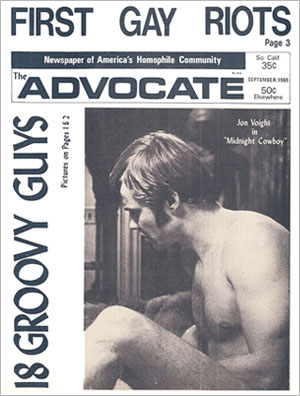
Something unremarkable happened on June 27, 1969 in New York’s Greenwich Village, an event which had occurred a thousand times before across the U.S. over the decades. The police raided a gay bar. The events that followed marked the beginnings of the Gay Rights Movement.  


The Stonewall riots were a series of spontaneous, violent demonstrations against a police raid that took place in the early morning hours of June 28, 1969, at the Stonewall Inn, in the Greenwich Village neighborhood of New York City. They are frequently cited as the first instance in American history when people in the homosexual community fought back against a government-sponsored system that persecuted sexual minorities, and they have become the defining event that marked the start of the gay rights movement in the United States and around the world.


For more information about the beginnings of the Gay Rights Movement in the United States and the Stonewall Riots, please check out my series of post on Stonewall.

HAPPY GAY PRIDE!!!

Vintage Homoerotic Ads

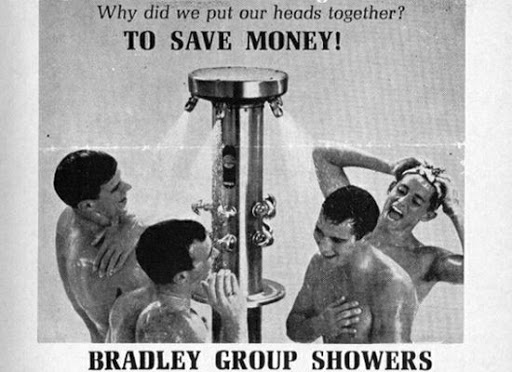
I recently came across this article by the Huffington Post titled “The Most Homoerotic Vintage Ads of All Time.”  I used some of the ads featured in the Huffington Post article, but with a little searching, I found a few of my own to share with you.  Oh the olden days, when men were men… who showered together. Soap seems to be the number one add, but there are a few others.  There’s nothing funnier than unintentionally sexual ads, except maybe unintentionally sexual vintage ads. I’ve scoured the very back-ends of the Internet to bring you the best in early “hidden” homoerotica.

1942_TSN_Lifebuoy
The US military had to have some way to advocate safe sex.  One of the ads below is such an ad for safe sex, though it is more homoerotic than public service announcement.  I remember doing research one time on American soldiers in the First World War.  The head of the French army asked the American General Pershing if he would like the French to set up brothels for the American soldiers (this was customary with the French military so that they could monitor the prostitutes health).  Pershing declined but begged the French general to never mention this to President Wilson, or he would withdraw American from the war.  Wilson (if you know much about him) was a bit of a prude.
armyfisher
During World War II, it seems that Cannon Towels nearly cornered the market with their homoerotic ads of soldiers bathing together.  There is even at least one soldier dancing.
armycannontowels2_oRB43_19672crocodileskeepout1-thumb-575x790_1Naqi_19672
Ivory Soap had its fair share as well.  I guess they needed soap that floats because they didn’t want hands wandering to places that might seem inappropriate.  Ivory Soap just took all the fun out of it.
IvoryGay1ivory-homoerotic-advertising
Underwear and sleepwear seem to have worked their unintentional magic as well.  Underwear advertisements have always been homoerotic in my opinion.
Scandals1940s1940sTextron
And with bananas, there is always a hidden joke.  Make sure that you read full advertisement.
slide_9062_126978_large

Of course, no one did homoerotic ads like Abercrombie & Fitch would do later in the early 2000s. Click on “Read more »” below to take a trip down memory lane with the photography of Bruce Weber and A&F Quarterly.

a-f-quarterly-summer-2-

It always amazed me that they were advertising for clothes that the models were often not wearing.  For that matter, most of the models were barely dressed at all.  They sure did have some great campaigns though, and they were quite effective at recasting A&F from an expensive outdoorsy clothing company to a hip and modern clothing company for young people.

6a00e54ecca8b988330133f215359a970b-450wi32741anf2BruceWeber7tumblr_ljtb9t5PLN1qb0xwgo1_500Justin Falkowitzuntitledddbruce-weber-abercrombie-fitch-screen-test-L-1

Sughaim Sine

gaysexAncient Celtic culture is typically lauded for such things as storytelling, mysticism and warrior fierceness. Mistakenly, however it’s not been broadly known for its eroticism. Something we know to be a historical oversight at the least.

It wasn’t always like this. In ancient times, the Celts were widely renowned as much for their erotic energy and prowess, multiple love affairs/sexual liaisons and androphilic activities, as for their warlike habits. It is known that male warriors were often part of ‘sodalities’ or groups of “special friends”. They engaged freely and openly in same-sex relationships and participated in a variety of acts for pleasure and bonding. Ancient Greeks such as Aristotle and Strabo mention Celtic homosexuality as one of the few good things about what they considered a barbarian culture. Diodorus Siculus chronicled his impressions writing —

They are accustomed to sleep on the ground on animal skins and roll around with male bed-mates on both sides. Heedless of their own dignity, they abandon without qualm the bloom of their bodies to others. And the most incredible thing is that they do not think this is shameful. But when they proposition someone, they consider it dishonourable if he does not accept the offer!…

A particularly succulent example of this fluidity is perhaps exemplified in the adjunctive early Irish practice of homosocial nipple-sucking or what today can be called “sughaim sine”. tumblr_lhi0bkngz81qgjfjao1_500[3]This typically male act stood for many things in the pagan culture of the times. In one aspect, it was used as a way to pledge loyalty, devotion and submission for a king. Among common men, it was an expression of friendship, greeting, reconciliation, affection, fealty, protection and not surprisingly, as some sources suggest, sexual stimulation and pleasure.

While Ireland was still a pagan culture, Christianity was taking hold in Europe and North Africa. Christian philosophy increasingly taught that all sexual ways were physically harmful and that sexual abstention was the wisest course. But the tradition of “special friends” and the importance of love, physicality, affection and sexual expression did not die out. tumblr_le08mhOUFr1qfv0meo1_1280[7]It was an essential part of the culture. An old Celtic saying holds, “A person without a soul friend is like a body without a head.”
Though Irish monasteries in the Dark Ages between the years of 600 and 1200 CE tried to control the sexuality of both the clerics and the converted, the privileges and benefits of soul friendship could not be destroyed. The delectable habit of men sucking on each other’s nipples to affirm friendship (particularly after a quarrel) seemed indelible and was slow to change.

There are a number of references or implications regarding the practice but detailed information is spare. The most notable account is in an oft omitted passage of St. Patrick’s ‘Confessions’ wherein he says —-

On the day I arrived the ship weighed anchor, I explained that I had the wherewithal to sail with them. And that day, furthermore, I refused for fear of God, to suck their nipples. (A Pagan custom of friendship) Nevertheless I hoped that some of them would come to faith in Jesus Christ (for they were heathen). This displeased the captain who answered sharply, with anger “Your wish to travel with us is quite futile”. And when I heard this, I left them in order to return to the shelter in which I had lodged, beginning to pray as I went. Before the prayer was finished, I heard one of them, who shouted out to me “Come quickly these men are calling you”. I returned to them immediately and they began to explain to me: “Come, we will accept you in good faith. Bind yourself to us in whatever way you wish” Because of this I was received among them and we set sail straight away…

fs634300[6]Patrick was citing the prevalence of pagan practices and in doing so he was making the obvious point that the Ireland in which he had been a slave was largely un-Christianized. Since he does not explain the significance of the incident, its meaning is taken to have been evident to the readers of his day. This suggests therefore that the custom was widely accepted and well-known among Celts. By declining to participate, Patrick denies pagan practice and in turn gives us an idea of how deliciously unrestrained the Celtic/Pagan world may have been.

Archaeological bog discoveries in Ireland have corroborated the “sughaim sine” practice in another of its aspects. The subjects of ancient Irish king’s ritually and routinely demonstrated their submission by sucking on their ruler’s nipples – some believe perhaps in a nursing, group or perhaps erotically intended way. NIPPLEPLAY-092310-007[2]It is theorized that there may have been royal reception days when the king exposed his nipples for his “court” in order to facilitate sucking for a large group. In a potentially more macabre element, there appears to have been power games in the nipple hierarchy. Cutting off a royal descendant’s nipples made him ineligible for kingship. Not as subtle as poison, but undeniable evidence of his unsuitability for a kingly role. No nips, game over.

Perhaps the King’s nipples were most important when celebrating fertility compacts, in the festivals where the King was wedded to the Earth (Goddess). His kingly role required him to keep nature and society in equilibrium. A little nipple sucking would surely increase his self-esteem, stimulate him thereby enhancing his virility and help him on his way to essential potency. But if he failed to keep everything fertile he could be dispatched. PotD_20101008_LeviPoulter[2]Such is believed to possibly have been the case of the bog men.

The practice is also referenced mythologically within the tale of King Fergus mac Leite. Lore says that the King, after returning to his own land, falls asleep on the coast near the sea. Small people appear who carry the king without his sword into the water. It might be inferred that they want to abduct him to their own ‘land’ under water. This ‘foreign’ invasion threatens the king and thereby the land. When his bare feet become wet and cold, however, he awakens in time and grabs three of them. In order to save themselves they offer a pact, which is introduced by a ritualistic exchange of words and is sealed by the mutual, prolonged sucking of nipples. Thanks to this agreement, the king receives a charm with which he can survive under water – a kind of ‘passport’ to travel in the ‘foreign’ lands under the waves and is forever nipple-bonded to the small men.

Suck-my-nip-boy-2[3]Finally, the nipple motif even reappears later after the Christian era is in full swing showing again the importance of “sugere mammillas” within the culture. There is reference of holy men suckling neophytes relatively late in Irish hagiography. This seems significant in a metaphorical sense as a spiritual act of imparting the perceived grace and teaching of Christ through the symbolic acts of nursing and bonding. This information relates to the role of saints of both genders. However, it is notable in that the nipplage of male saints is cited equally in their place as nurturers of the early Irish church meaning that the “nursing” of male breasts was acceptable. This suggests the continuance of the tradition, albeit in a post-pagan, Christianized and sanitized configuration.


163207_130005253732189_100001681458906_188331_3773745_nce
The text is courtesy of Celt Eros: The mystique – imagined or real – of the Celtic male and Celtic culture appeals to many worldwide. The constructs of this culture, both ancient and modern manifestations, are alluring.  CeltEros is about sharing and spreading appreciation for the Celtic ethos, mythos and importantly – eros.


Honoré de Balzac

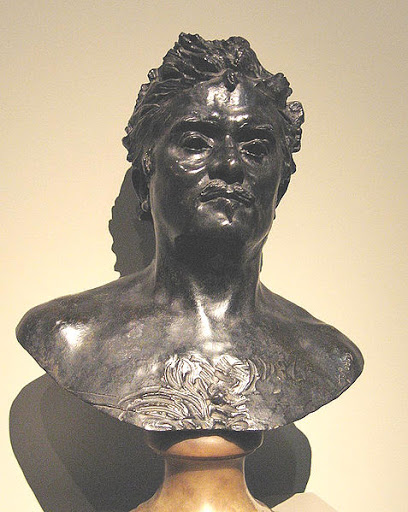
Honoré de Balzac (French pronunciation: [ɔnɔʁe də balzak]; 20 May 1799 – 18 August 1850) was a French novelist and playwright. His magnum opus was a sequence of short stories and novels collectively entitled La Comédie humaine, which presents a panorama of French life in the years after the 1815 fall of Napoleon.

Due to his keen observation of detail and unfiltered representation of society, Balzac is regarded as one of the founders of realism in European literature. He is renowned for his multi-faceted characters, who are complex, morally ambiguous and fully human. His writing influenced many subsequent novelists such as Marcel Proust, Émile Zola, Charles Dickens, Edgar Allan Poe,Fyodor Dostoyevsky, Gustave Flaubert, Marie Corelli, Henry James, William Faulkner, Jack Kerouac, and Italo Calvino, and philosophers such as Friedrich Engels. Many of Balzac’s works have been made into or have inspired films, and they are a continuing source of inspiration for writers, filmmakers and critics.

An enthusiastic reader and independent thinker as a child, Balzac had trouble adapting to the teaching style of his grammar school. His willful nature caused trouble throughout his life and frustrated his ambitions to succeed in the world of business. When he finished school, Balzac was an apprentice in a Law office, but he turned his back on the study of Law after wearying of its inhumanity and banal routine. Before and during his career as a writer, he attempted to be a publisher, printer, businessman, critic, and politician; he failed in all of these efforts. La Comédie Humaine reflects his real-life difficulties, and includes scenes from his own experience.

Balzac suffered from health problems throughout his life, possibly due to his intense writing schedule. His relationship with his family was often strained by financial and personal drama, and he ended several friendships over critical reviews. In 1850 he married Ewelina Hańska, his longtime love; he died five months later.

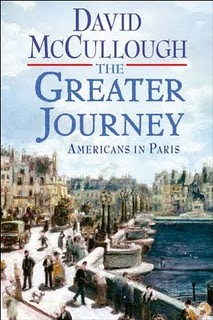
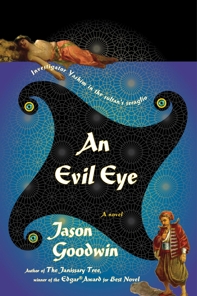
Now you might be wondering, SO WHAT?  Well, I bring up Honoré de Balzac because I am currently reading two books: The Greater Journey: Americans in Paris by David McCullough and An Evil Eye: A Novel (Yashim the Eunuch) by Jason Goodwin.  Balzac is mentioned numerous times in each book. At first I just thought of some sophomoric comment about what a great name Honoré de Balzac is, i.e. “honor the ball sack” which I still think is funny in a juvenile sort of way, but you get the picture and that’s about all I am going to say about Balzac.  But I did want to talk about the two books that I am reading.  I have not finished either one, but both are equally interesting for different reasons.

The Greater Journey: Americans in Paris by David McCullough looks at Americans abroad in Paris from 1830 to 1900.  McCullough features several prominent Americans, such as James Fennimore Cooper, Samuel F.B. Morse, and Charles Sumner, among others.  His central thesis is that Americans who traveled to Paris were greatly influential to the development of America, owing much of that to their time in Paris.  I tend to disagree largely with McCullough because whereas most of these men and women stayed in Paris for a few months, they also traveled to Italy and usually spend much longer time periods there.  Paris was not the center of European culture and history in the 19th century: the Italian peninsula was.  One might be able to copy some of the masterpieces of art and study medicine and history among other disciplines in Paris, but nowhere compared to the medical school or University of Padua and to the rich history of the Ancient Roman Empire, which at its heart was the city of Rome.  The great artists were not form Paris, though Impressionism was beginning in France.  The greatest artists and sculptors were form Italy and that is where most of their art remained.  The Uffizi Gallery in Florence, the Academia in Venice, and the museum of all museums, the Vatican Museums in Rome.  Though Napoleon had plundered Italy and much of Europe for great pieces of art for the Louvre in Paris,t he Vatican had been collected works of art for centuries, not to mention that the Medicis of Florence had been some of the world’s greatest patrons of the arts.  It is not to Paris that the Americans flocked, though of course it was essential to any European tour, but to Italy and the rich legacy of art, architecture, and history that they went.

The other book I am reading,  An Evil Eye: A Novel (Yashim the Eunuch) by Jason Goodwin, I had mentioned before in a post about a year ago, Author Spotlight: Jason Goodwin.  At that time, the book was still in the works, but it has since been published and as all of Goodwin’s books, it is an absolute joy to read.  Goodwin brings alive the Ottoman Empire of the 19th century, the food, the smells, the harems, etc.  If you have never had an interest in the Ottoman Empire, I would suggest you pick up the Yashim the Eunuch books and your interest will come alive.  I love to read mysteries; mystery novels are some of my favorite books.  For me history is always a mystery, because we want to find out how and why something happened.  Therefore, an author adds together a historical novel with a mystery, I’m in love.  Goodwin does that very well with Yashim the Eunuch; we are presented with the rich history of the once great Ottoman Empire along with a subtle mystery of political intrigue and endearing characters.


Cast Down Your Bucket Where You Are: An Idealist’s Dream

Friends-Logo
I am an idealist and a realist all at once, or at least I strive to be both, even though they seem contradictory.  A few people commented on my post yesterday, Pale Blue Dot, in which I suggested that in celebration of Pride Month that “I think we should show random acts of kindness.”  The comments showed very clearly an old debate in all struggles for equality.  Whether we should be “accommodationists” or “activists” is a debate that dates back throughout all equality struggles.  The most famous is probably that of Booker T. Washington and W.E.B. Dubois in their struggles dealing with the black community in the late 19th and 20th century.  And this is precisely what I want to discuss in this post, and why I have such a strong belief in the ethics of reciprocity.  First let show you my example of Washington and Dubois, then I will quickly discuss women’s liberation, and GLBT liberation movements.

Accommodationists vs. Activists

btwoverviewBooker T. Washington was born a slave in 1856. His philosophy was one of “accommodation” in which “Negroes” accepted the idea of white supremacy and legalized discrimination.  In 1895, Washington gave what later came to be known as the Atlanta Compromise speech before the Cotton States and International Exposition in Atlanta. His address was one of the most important and influential speeches in American history, guiding African-American resistance to white discrimination and establishing Washington as one of the leading black spokesmen in America. Washington’s speech stressed accommodation rather than resistance to the racist order under which Southern African Americans lived.He used the following story in his speech that day:

A ship lost at sea for many days suddenly sighted a friendly vessel. From the mast of the unfortunate vessel was seen a signal: “Water, water. We die of thirst.” The answer from the friendly vessel at once came back: “Cast down your bucket where you are.” A second time, the signal, “Water, send us water!” went up from the distressed vessel. And was answered: “Cast down your bucket where you are.” A third and fourth signal for water was answered: “Cast down your bucket where you are.” The captain of the distressed vessel, at last heeding the injunction, cast down his bucket and it came up full of fresh, sparkling water from the mouth of the Amazon River.

In his “Atlanta Compromise Address,” he urges white America to help “Negroes” acquire employment and gain knowledge in agricultural and technological fields. In return, “Negroes” would give up their struggle for social equality and voting rights. His belief was that hard work, useful education, and the acquisition of land might earn civil rights. Many supported his plan; it was the more peaceful approach to helping African Americans and required no concession to equality. White philanthropists donated money and made it possible for Washington to found the Tuskegee Institute where African Americans were taught a useful trade.
Du_Bois_WEB_seated1903W.E.B. DuBois was born a free man and was educated at Harvard University. Like Washington, he agreed that “Negroes” needed to become economically independent and better their place in the world. On the other hand, DuBois was outraged at racial injustice and inequality. He demanded that African Americans be given the right to vote, equal rights, and more educational opportunities. He wanted to reform education to meet the needs and interests of all African American students. In the “Declaration of the Principles of the Niagara Movement” he and other Black intellectuals outline a list of demands-mainly social equality. This movement led to the organization of the N.A.A.C.P. (National Association for the Advancement of Colored People).
Eventually, the Civil Rights Movement of the 1960s in the United States led to a mixture of both of these approaches along with Thoreau’s ideas of civil disobedience and Gandhi’s ideas of non-violence to achieve their goals.  The women’s rights movement had a similar conflict.  The Seneca Falls Convention of 1848 formulated the demand for women’s suffrage in the United States of America and after the American Civil War (1861–1865) agitation for the cause became more prominent. In 1869 the proposed nawsaFifteenth Amendment to the United States Constitution, which gave the vote to black men, caused controversy as women’s suffrage campaigners such as Susan B. Anthony and Elizabeth Cady Stanton refused to endorse the amendment, as it did not give the vote to women. Others, such as Lucy Stone and Julia Ward Howe however argued that if black men were enfranchised, women would achieve their goal. The conflict caused two organizations to emerge, the National Woman Suffrage Association, which campaigned for women’s suffrage at a federal level as well as for married women to be given property rights, and the American Woman Suffrage Association, which aimed to secure women’s suffrage through state legislation.
dubsw_medIn the past, especially with my posts about Stonewall, I have talked about the early split between the conservative groups such as The Mattachine Society which tried to work with the system in the US during the 1950s and 1960s and later the Gay Liberation Front, which was more visible during the 1970s than many people actually preferred to be, but for the GLF to succeed they had no choice but to use the “We’re here, we’re queer, get used to it” tactics. Though The Mattachine Society was replaced by the Gay Liberation Front there still continues to be a debate about how we should go about equality.  Should we work with the system at hand (the current government), or should we be more active and use the “We’re here, we’re queer, get used to it” tactics?  President Obama made many promises to the GLBT community, however, he has been slow to actually push through those promises.
usmap-southI live in a highly Republican/Christian Right state which is highly homophobic.  How do I deal with this?  Sometimes you have to turn the other cheek.  You have to show them through actions, not protests that we are just like everyone else.  I tend to believe in the Booker T. Washington approach of casting our buckets where we are.  We have to work with what we have.  Does that mean that we shouldn’t occasionally fight back?  HELL NO, but still the same to gain enough allies to fight back.  Just as I wouldn’t go into a redneck honky-tonk and announce alone, “I’m here, I’m queer, fucking get used to it” instead I would make sure that I had a large support group with me and just be myself.  We are who we are, and we shouldn’t change that for other people.  I can camp it up when I have been drinking but that is not really the real me, it’s just the me without many inhibitions.  But I attempt to always be true to myself.

My Ideal Solution

I know that far too many people in this world do not follow my ethical ideals of reciprocity.  I am by no means always successful, but I strive for it everyday.  I strive to follow what we have been taught of as the Golden Rule.  Some may mock me for my belief in “love thine enemies,” “turn the other cheek,” or my oft quoted belief in “One should treat others as one would like others to treat oneself.”
religionEvery major religion and philosophy has the ethics of reciprocity as their cornerstone.  An early example of the Golden Rule that reflects the Ancient Egyptian concept of Maat appears in the story of The Eloquent Peasant which is dated to the Middle Kingdom (c. 2040–1650 BCE): “Now this is the command: Do to the doer to cause that he do.” An example from a Late Period (c. 664 BC – 323 BCE) papyrus: “That which you hate to be done to you, do not do to another.”  Plato quoted Socrates as stating “One should never do wrong in return, nor mistreat any man, no matter how one has been mistreated by him.”  Confucius stated “Never impose on others what you would not choose for yourself.”  The ethics of reciprocity are evident in several different forms in Judaism, Christianity, Islam, Hinduism, Jainism, and Buddhism. Luke 6:31 says: “And as ye would that men should do to you, do ye also to them likewise.”  In Muhammad’s The Farewell Sermon, he stated “Hurt no one so that no one may hurt you.” Zoroaster, the founder of the Persian religion Zoroastrianism, probably summed it up most succinctly in his belief in “good word, good deeds, and good thoughts.”
Just think about this, if everyone followed the tenements of the Golden Rule, there would be no war, there would be not inequality, no discrimination, no sexism, no homophobia, no religious strife, etc.  We would live in a world of unlimited freedom, peace, and prosperity.  Why do we not all follow the Golden Rule?  Greed and human nature are the answer to that.  Until we decide to become better people and live by example, we will not achieve this ideal goal.  I don’t expect everyone to follow this advice, but if we realized what could be achieved though this, then we show others how humanity and grow and evolve into a utopian society of unlimited freedom, peace, and prosperity.  I realize that there is no such thing as a Utopia, and I doubt there ever will be, but I can still have hope and faith in humanity to become a better species and to treat all of mankind as you would like to be treated.
Rainbow flags gay lesbian glbt Peace Signs (2949)


Pale Blue Dot

 Sagan points out that “all of human history has happened on that tiny pixel, which is our only home” (speech at Cornell University, October 13th 1994, shown here inside a blue circle).

PaleBlueDot
In his book, Pale Blue Dot: A Vision of the Human Future in Space, Carl Sagan related his thoughts on a deeper meaning of this photograph:

From this distant vantage point, the Earth might not seem of particular interest. But for us, it’s different. Look again at that dot. That’s here, that’s home, that’s us. On it everyone you love, everyone you know, everyone you ever heard of, every human being who ever was, lived out their lives. The aggregate of our joy and suffering, thousands of confident religions, ideologies, and economic doctrines, every hunter and forager, every hero and coward, every creator and destroyer of civilization, every king and peasant, every young couple in love, every mother and father, hopeful child, inventor and explorer, every teacher of morals, every corrupt politician, every “superstar,” every “supreme leader,” every saint and sinner in the history of our species lived there – on a mote of dust suspended in a sunbeam.

The Earth is a very small stage in a vast cosmic arena. Think of the rivers of blood spilled by all those generals and emperors so that, in glory and triumph, they could become the momentary masters of a fraction of a dot. Think of the endless cruelties visited by the inhabitants of one corner of this pixel on the scarcely distinguishable inhabitants of some other corner, how frequent their misunderstandings, how eager they are to kill one another, how fervent their hatreds.

Our posturings, our imagined self-importance, the delusion that we have some privileged position in the Universe, are challenged by this point of pale light. Our planet is a lonely speck in the great enveloping cosmic dark. In our obscurity, in all this vastness, there is no hint that help will come from elsewhere to save us from ourselves.

The Earth is the only world known so far to harbor life. There is nowhere else, at least in the near future, to which our species could migrate. Visit, yes. Settle, not yet. Like it or not, for the moment the Earth is where we make our stand.

It has been said that astronomy is a humbling and character-building experience. There is perhaps no better demonstration of the folly of human conceits than this distant image of our tiny world. To me, it underscores our responsibility to deal more kindly with one another, and to preserve and cherish the pale blue dot, the only home we’ve ever known.

Just think about that little pixel on this photograph of the planet Earth taken in 1990 by Voyager 1 from a record distance, showing it against the vastness of space. By request of Carl Sagan, NASA commanded the Voyager 1 spacecraft, having completed its primary mission and now leaving the Solar System, to turn its camera around and to take a photograph of Earth across a great expanse of space. It is an amazing thought that we inhabit that small pixel.  When we worry about all those things in life, when we worry about what someone has said to us, when we worry about the hate associated with small minded people, etc.  All of those things are made insignificant by that little pale blue dot as seen from a man-made satellite as it leaves the Solar System.  For me this just says so much about our existence.  God placed us on this this pale blue dot to do something, to achieve something, and that something is to treat others as we would like to be treated.  It doesn’t matter how they treat us, but how we treat them.

June is Gay Pride Month.  PrideNotPrejudiceGo out and do something that no other group does during the month associated with them.  What do I think we should do?  I think we should show random acts of kindness.  That is how we can truly show our pride.  I hope you will join me in this month of celebration by not getting upset at the homophobes that exist, but instead treat them as you wish to be treated.  I realize that this is a plea of a pacifist, but it is also a plea for humanity and equality.  We are all a part of that pale blue dot, and we must find a way to live in harmony.


Storm Heaven and Protest

About six weeks ago, a new reader of this blog wrote to me and asked if I had ever written a post about John Rechy. I replied that I had not, mainly because I had never read any of this work.  If I am going to write about an author, I want to be familiar with his work. So I looked up some of Rechy’s essays, found them interesting and then ordered his most acclaimed book, City of Night.  The book came, but I was in the midst of wrapping the year up at the high school where I teach and with final projects and finals with my college class that I teach at night.  To say that I was busy would have been an understatement.  I had spent the five months since Christmas reading Steve Berry’s The Emperor’s Tomb. I’m a slow reader, but generally not that slow.  I enjoyed the book, but I would get home from work, finish some of the work I had at home to do: cook, clean, grade papers, watch a little TV, etc.  By the time I lay down to go to sleep, when I generally do some reading before bed, I was too damn tired to pick up a book, so The Emperor’s Tomb largely sat unread until school was over, then it didn’t take much to finish it.

Finally, I could delve into John Rechy’s City of Night.  I sat down with it and began to read, but at first I found it terribly difficult.  Maybe it’s the way he writes “didnt” for “didn’t,” “hes” for “he’s,””youll” for “you’ll.” Things like that drive me crazy as a teacher. At first I thought it was a typographical error, but then I realized that many errors wasn’t possible for a publisher, especially with words capitalized here and there seemingly without rhyme or reason.  Then I realized that this was Rechy’s style.  He used this type of grammar to emphasize various points and follow the cadence of the speaker.  I thought it would drive me crazy, and I almost put the book down to read later (which would probably mean never).  Luckily, I continued to read. 

“The City is of Night: perchance of Death, But certainly of Night…”

cityofnight_240City of Night is a novel about loneliness, about love and the ceaseless, furtive search for love. Set in the seamy, neon-lighted world of honky-tonk USA—Times Square in New York, Pershing Square in Los Angeles, Hollywood Boulevard, Chicago, and the French Quarter of New Orleans–and dealing with a little-known world of hidden sex and the hustlers, drag queens, and butch homosexuals who inhabited these worlds.  One of the main reasons I originally continued reading the book was to get to the section about New Orleans, a city which I love dearly.  I couldn’t bring myself to just skip to that part of the book, so I ventured on.

This book is a journey by a nameless narrator, through this clandestine world of furtive love. roberts3His journey takes him through the major cities of the United States, and through the lives of an extraordinary collection of characters who dwell either in this world or on its fringes: Pete, the “youngman”—or male hustler–at 42nd Street, who like the other youngmen goes with men for money but with women to prove his masculinity intact; the bedridden Professor, author of many books, for whom the only book that matters is the scrapbook of the Angels he has collected through the years in many countries; Miss Destiny, the queen of them all, with his-her endless succession of faithless husbands; Sergeant Morgan, the terror of Pershing Square, the cop who cracks down hard on the gay scene but has tried more than once to make it with those he arrests; “Mom” the New Yorker whose fetish is cooking for the male hustlers he takes home and undresses; Skipper, A Very Beautiful Boy, once beloved of one of Hollywood’s top directors, who now carries his yellowed pictures and clippings in an often-renewed envelope; Lance O’Hara, not long ago the most sought-after star in the Hollywood heaven, now openly pursuing a youngman a decade or two his junior, and groveling to get him; Neil and his world of masquerade.

The most fascinating and interesting characters throughout the book were not the ones mentioned above but the characters of Chuck the Cowboy and Jeremy, though Sylvia is also a beautiful and tragic character worthy of a note.  To be honest, I found most of the other character to be sad and/or creepy—for lack of a better word.  tumblr_llec7cLA1M1qh7mnvo1_1280Chuck’s lackadaisical attitude about life was just so carefree, listless, lacking enthusiasm and determination and carelessly lazy.  He is described as:

…sitting there complacently in the lazy afternoons, in the same spot, shoulders hunched, hands holding on the railing, balancing himself—long, lanky legs locked loosely under the bar by booted toes as if on a fence, on a ranch, sandy hair jutting out from a widehat over long sideburns—as he looks at the passing scene of Pershing Square with what I would usually think was amusement—but wonder, occasionally, Is it more like bewilderment?…

Chuck is one of those characters that is also lonely, like all of the characters in the book, but he has perfected the none caring attitude of the hustler and his masculine veneer.  The story he tells of when he left home and the night out with his mother is one of the most enjoyable sections of the book.  Probably, because I have known women like his mother.  The mother who took on the role of mother and father in the family.

The New Orleans depicted in the last chapter of City of Night is not the Tennessee Williams version of New Orleans.  In some ways it does have the seediness of A Streetcar Named Desire, but none of the false gentility of Blanche.  It is purely a “city of the night” taking place in a Mardi Gras celebration of the past. Sylvia is one of the earliest New Orleans characters that we meet in this section of the book, and though she is a favorite character of mine, I will not say much about her.  Her story needs to be read in its entirety, not summarized by me, and I hope that after reading this post, you will go out and read City of Night.  The other New Orleans character is Jeremy, who appears at the end of the book and in a way opens up the book for better understanding.  Once you have read the section on Jeremy, the book is a much more worthwhile read, but it still leaves you with a certain sadness.

Into the Night with John Rechy
John Rechy stated that “City of Night began as a letter to a friend of mine after I had been to New Orleans. city-of-night-rechy-johnI wrote City of Night because they were my experiences hustling, and it began as a letter. I didn’t think of it as a book.”  I did not read the introduction before reading the book, which is not normal for me. I usually delve into the introduction first, but in this case, and for what ever reason, I did not read the introduction first.  I read the introduction after completing the book, and it made all the difference.  I would suggest that for anyone.  Read the book, then read the introduction.  It made for a much more fascinating read this way.  In his novels about hustling, preeminently City of Night and Numbers, John Rechy moves from the world of homosexual behavior into the world of gay identity. Rechy was born in El Paso, Texas, in 1934. His parents, Mexican aristocrats, fled to avoid persecution during the purges of Pancho Villa. Rechy studied journalism at Texas Western College and the New School for Social Research in New York before serving in Germany in the U.S. Army.

Afterward, Rechy relocated to New York and began a period of hustling and drifting that inspired much of his early writing. Rechy’s first novel, City of Night (1963), began as a letter to a friend about his experiences at Mardi Gras and was then reworked into a short story for Evergreen Review.
obscene_03Rechy’s reputation as a gay writer rests primarily on City of Night, which documents the wanderings of a nameless male hustler from El Paso, to New York, Los Angeles, and New Orleans. This narrative is punctuated by recollections of the narrator’s childhood in El Paso.  Originally, Rechy had chosen the title “Storm Heaven and Protest” (hence the title of this post) for his first novel, but his editor wisely suggested that the book take its name from the title of the intermittent chapters throughout the book that links the various characters together.

When John Rechy published his first novel, City of Night, he was still earning his living as a prostitute on the streets of Los Angeles. It made sense: he didn’t expect a book that dealt with underground gay life in America to make him much money, and it’s a foolish writer who gives up the day job (or in Rechy’s case, the night job) with the first flush of publication.

To Rechy’s astonishment, and despite the best efforts of homophobic critics, the book was a smash and money started rolling in. But Rechy still couldn’t leave the streets. “It caught me out completely,” says Rechy, now 77, and still living in Los Angeles. “I was bewildered. I did nothing at all to promote the book, even to the extent of denying that I wrote it. I felt that if I left the streets as soon as I had some success, I’d be betraying the world that I wrote about. And the truth is that I couldn’t give it up. I’d been hustling for so long that it was a habit.”

“It got ridiculous,” says Rechy. “People hit on me all the time, far more than I say in the book. Looking back, I can see it was my own fault – I projected a very sexual image, Numbers Rechyand I shouldn’t have been surprised when people responded.” Ridiculous it may have been, but the masquerade continued well into Rechy’s thirties. “In the 1970s, when I was teaching at UCLA, I’d finish my evening classes, then change my clothes somewhat and go down to hustle on Santa Monica Boulevard. One night, a student saw me down there and said ‘Good evening, Professor Rechy. Are you out for an evening stroll?’.” I’m sure he was thinking what I think some of the time: “I can’t do anything or go anywhere without running into my students.” Only in the 1970s could a man be both a hustler and a professor. Really, can you imagine if a professor was a hustler in this age of internet technology?  I can just imagine what his ratings on RateMyProfessor.com would be like: “Professor Rechy is a great professor, very interesting.  And if you want to see him out of the classroom, just go to Pershing Square or Santa Monica Boulevard where for $20 you can having him for an evening.” Of course, he would also have plenty of chili peppers, and I am sure that the ratings would be high.  I’ve gotten a little off subject.

Rechy kept writing throughout the 1970s and 1980s, detailing the ups and (mostly) downs of his compulsive sex life in Numbers, Rushes and the non-fiction polemic The Sexual Outlaw. But it was City of Night that made his name, and on which his reputation rests. It’s an American classic, with its loner hero, its juke joints and neon signs, its restless shifting from city to city, bed to bed; a hybrid of On the Road and Catcher in the Rye.

RechyGala(2)10.03He has lectured at Harvard, Yale, Duke, UCLA, USC, Occidental College, University of Northern Illinois, among other academic institutions. He was the keynote speaker at the 1999 Writers’ Conference at UCLA and at the 1990 Out/Write National Writers Conference at San Francisco. He has been a key participant at numerous other literary conferences, including the 1999 Los Angeles Times Book Festival, the Guadalajara International Book Fair, Miami Book Fair, and New Orleans Literary Festival.

He has written essays for The Nation, Los Angeles Times Books, Washington Post Book World, The Saturday Review, New York Times Book Review, San Francisco Chronicle, The Philadelphia Inquirer, Dallas Morning News, London Magazine, Evergreen Review, New York Magazine, The Advocate, Mother Jones, Premiere, and many other national publications.

Of Mexican-Scottish descent, he makes his home in Los Angeles, California, where he teaches literature and film courses, for writers, in the graduate division of the University of Southern California.

Important? Inspirational? YES! NO! MAYBE!…

City of Night is the first book of its kind.  The homosexual subculture of the late 1950s and early 1960s was a dangerous time.  415290930_e28e194424Homosexuality and homosexual sex were illegal in the United States and the life of a hustler was certainly not picnic in the park.  While doing some research on John Rechy and City of Night, I came across a review written by Antonio W. Wilson of the book of Outlaw: The Lives And Careers Of John Rechy by Charles Casillo form the literary journal RALPH.  Wilson was not a big fan of John Rechy and had never been able to get through City of Night for much the same reason as I almost put the book down myself, but as he states at the end of the review: “But there is another side to the John Rechy story. I showed this review to a friend of mine who had read him many years ago. This is what he had to say about that time of his life”:

John Rechy was very important to me back when I was coming out, at age 40. He opened up a world of possibilities — anonymous sex, T-rooms, hustlers, dirty book-store sex, cruising, rough trade and other goodies. I am proud to say that I went out and lived for a while on Rechy’s wild side.

    Night people are different from day ones. They break all the rules. They do endless self destructive things. To the world we were brought up in they are scum, losers, dangerous. They make up a kind of fraternity of night men like themselves — druggies, drug dealers, hustlers, bartenders, cops and robbers. Sexy boys from West Virginia who will soon be dead (and this was before AIDS) dead of something — OD, knife fight, car crash. Once you are accepted in the fraternity it is a very, very seductive life. Harsh; no social pretense.

Bibliography:

  1. “A Substantial Artist” and “City of Night” from JohnRechy.com.
  2. Bredbeck, Gregory W. “Rechy, John” Ed. Claude J. Summers. glbtq: An Encyclopedia of Gay, Lesbian, Bisexual, Transgender, and Queer Culture. 2002 www.glbtq.com/literature/rechy_j.html.
  3. “John Rechy” Wikipedia.
  4. Savage, Jon. “John Rechy’s City Of Night and Stonewall @ 40”
  5. Smith, Rupert.  “Midnight cowboy: John Rechy recalls 40 yeas of hustle” Independent.co.uk. 27 April 2008.
  6. Wilson, Antonio W. Review of Outlaw: The Lives And Careers Of John Rechy by Charles Casillo. R A L P H: The Review of Arts, Literature, Philosophy and the Humanities, Volume XXXIV, Number 4: Mid-Spring 2003. (http://www.ralphmag.org/BY/john-rechy.html).

Thanks Andrew, for suggesting this book to me.

Memorial Day

tumblr_llvcgiip061qfjriho1_1280Memorial Day is a United States federal holiday observed on the last Monday of May (May 30 [Today] in 2011). Formerly known as Decoration Day, it commemorates men and women who died while in military service to the United States. First enacted to honor Union and Confederate soldiers following the American Civil War, it was extended after World War I to honor Americans who have died in all wars.

Memorial Day often marks the start of the summer vacation season, and Labor Day its end.

Begun as a ritual of remembrance and reconciliation after the civil war, by the early 20th century, Memorial Day was an occasion for more general expressions of memory, as ordinary people visited the graves of their deceased relatives, whether they had served in the military or not.

History

Graves_at_Arlington_on_Memorial_DayBy 1865 the practice of decorating soldiers’ graves had become widespread in the North. The first known observance was in Boalsburg, Pa on October, 1864, and each year thereafter. The friendship between General John Murray, a distinguished citizen of Waterloo, and General John A. Logan, who helped bring attention to the event nationwide, was likely a factor in the holiday’s growth. On May 5, 1868, in his capacity as commander-in-chief of the Grand Army of the Republic – the organization for Northern Civil War veterans – Logan issued a proclamation that “Decoration Day” should be observed nationwide. It was observed for the first time on May 30 of the same year; the date was chosen because it was not the anniversary of a battle.

There were events in 183 cemeteries in 27 states in 1868, and 336 in 1869. The northern states quickly adopted the holiday; Michigan made “Decoration Day” an official state holiday in 1871 and by 1890 every northern state followed suit. The ceremonies were sponsored by the Women’s Relief Corps, which had 100,000 members. By 1870, the remains of nearly 300,000 Union dead had been buried in 73 national cemeteries, located mostly in the South, near the battlefields. The most famous are Gettysburg National Cemetery in Pennsylvania and Arlington National Cemetery, near Washington.

The Memorial Day speech became an occasion for veterans, politicians and ministers to commemorate the war – and at first to recall the atrocities of the enemy. They mixed religion and celebratory nationalism and provided a means for the people to make sense of their history in terms of sacrifice for a better nation, one closer to their God. People of all religious beliefs joined together, and the point was often made that the German and Irish soldiers had become true Americans in the “baptism of blood” on the battlefield. By the end of the 1870s the rancor was gone and the speeches praised the soldiers of both the Union and Confederacy. By the 1950s, the theme was American exceptionalism and duty to uphold freedom in the world. In 1882, the name of Decoration Day was formally changed to Memorial Day in “memory” and ‘honor” of those who gave their lives fighting for a common cause, America.

In the South

In Charleston, South Carolina in 1865, freedmen (freed enslaved Africans) celebrated at the Washington Race Course, today the location of Hampton Park. The site had been used as a temporary Confederate prison camp for captured Union soldiers in 1865, as well as a mass grave for Union soldiers who died there. Immediately after the cessation of hostilities, freedmen exhumed the bodies from the mass grave and reinterred them in individual graves. They built a fence around the graveyard with an entry arch and declared it a Union graveyard. On May 1, 1865, a crowd of up to ten thousand, mainly black residents, including 2800 children, proceeded to the location for events that included sermons, singing, and a picnic on the ground, thereby creating the first Decoration Day-type celebration.

142-NWS-Confederate_Memorial_Day__1-05122009.standalone.prod_affiliate.9Beginning in 1866 the Southern states had their own Memorial Days, ranging from April 26 to mid June. The birthday of Confederate President Jefferson Davis, June 3, became a state holiday in 10 states by 1916. Across the South associations were founded after the war to establish and care for permanent cemeteries for Confederate soldiers, organize commemorative ceremonies, and sponsor impressive monuments as a permanent way of remembering the Confederate tradition. Women provided the leadership in these associations, paving the way to establish themselves as capable of public leadership.

The earliest Confederate Memorial Day celebrations were simple, somber occasions for veterans and their families to honor the day and attend to local cemeteries. Around 1890, there was a shift from this consolatory emphasis on honoring specific soldiers to public commemoration of the Confederate “Lost Cause”. Changes in the ceremony’s hymns and speeches reflect an evolution of the ritual into a symbol of cultural renewal and conservatism in the South. By 1913, however, the theme of American nationalism shared equal time with the Lost Cause.

Columbus, Mississippi at its Decoration Day on April 25, 1866, commemorated both the Union and Confederate casualties buried in its cemetery.


Moment of Zen: The Rapture

tumblr_llgbk55YD11qzmowao1_500
It’s a complicated business calculating the precise date of the end of the world. There’s the Great Flood to consider, which may have happened around 4990BC, depending on who’s estimating. And the timing of the exodus of the Jews from Egypt. Then there’s a bit of math that involves equating one day to 1,000 years.
Do all that and it turns out that Armageddon will begin at 6pm on Saturday. That is, if Harold Camping has got his calculations and his reading of the Book of Ezekiel right.

The 89-year-old doomsday prophet, a former engineer, has prompted a tide of expectation, elation and derision after persuading listeners to his Family Radio Worldwide across the US and as far away as the Philippines to sell up everything and prepare for the beginning of the end of the world with the second coming of Jesus.

If all goes according to plan, those who have been “saved” by Jesus will rise into the air in the Rapture and look down as God smites billions of nonbelievers with a great earthquake rolling from city to city across the planet, and a bit of fire to boot.

Judgment day will begin at 6pm wherever you are. The mayhem will move west over the planet, wiping out cities, towns and villages.

In the US, some believers have given up their jobs and donated money they think they will no longer need to pay for more than 2,000 billboards across the country proclaiming “Judgment Day: May 21, 2011 – Cry mightily unto God. THE BIBLE GUARANTEES IT!”

Camping previously predicted that the end of the world would be in 1994. He blames that on an error in the math but says he has it right this time. “There is no possibility that it will not happen because our information comes from the Bible,” he told the Philadelphia Daily News.

Besides his mathematical formula, Camping has conjured up more “evidence” that doomsday looms. He has pointed to the re-establishment of Israel – which some Christians believe is a prerequisite for the second coming of Jesus and the Rapture – as a sign from God “that the world is getting near its end”. He has said that the earthquake and tsunami in Japan were a divinely organized foretaste of what awaits most of humanity.

Camping has also said that “gay pride” and same-sex marriage are “a sign from God that judgment day is very near”. “No sign is as dramatic and clear as the phenomenal worldwide success of the Gay Pride movement. In the Bible God describes His involvement with this dramatic movement … We will learn that the Gay Pride movement would successfully develop as a sign to the world that Judgment Day was about to occur,” he writes.


I, for one, will be standing outside when 6pm comes today.  I don’t want to hit my head on my way to heaven, LOL. This will also be my last post if the Rapture occurs;  so I will say goodbye to you all and will say hello again once we are in Heaven together.

Though this post is done with humor, Harold Camping does believe he has predicted the end of the world, which will actually come five months after the “Rapture” on October 21, 2011.  I am a Christian, and I tend to believe the Bible:


Matthew 24:36

But of that day and hour knoweth no man, no, not the angels of heaven, but my Father only.

Mark 13:31-32

Heaven and earth will pass away, but my words will never pass away.  But of that day and that hour knoweth no man, no, not the angels which are in heaven, neither the Son, but the Father.

Therefore. I just can’t take these predictions seriously.  I also don’t believe in a literal “rapture” as described by those who say we will be flown up into heaven.


Some notable rapture predictions include the following:

  • 1844 – William Miller predicted Christ would return between March 21, 1843 and March 21, 1844, then revised his prediction, claiming to have miscalculated Scripture, to October 22, 1844. The realization that the predictions were incorrect resulted in a Great Disappointment. Miller’s theology gave rise to the Advent movement. The Baha’is believe that Christ did return as Miller predicted in 1844, with the advent of The Báb, and numerous Miller-like prophetic predictions from many religions are given in William Sears book, Thief in The Night.
  • 1914, 1918, 1925, 1942 – Dates set for the end by the Jehovah’s Witnesses
  • 1981 – Chuck Smith predicted that Jesus would probably return by 1981.
  • 1988 – Publication of 88 Reasons why the Rapture is in 1988, by Edgar C. Whisenant.
  • 1989 – Publication of The final shout: Rapture report 1989, by Edgar Whisenant. More predictions by this author appeared for 1992, 1995, and other years.
  • 1992 – Korean group “Mission for the Coming Days” predicted October 28, 1992 as the date for the rapture.
  • 1993 – Seven years before the year 2000. The rapture would have to start to allow for seven years of the Tribulation before the Return in 2000. Multiple predictions.
  • 1994 – Pastor John Hinkle of Christ Church in Los Angeles predicted June 9, 1994. Radio evangelist Harold Camping predicted September 6, 1994.
  • 2011 – Harold Camping’s revised prediction has May 21, 2011 as the date of the rapture.
  • 2060 – Sir Isaac Newton proposed, based upon his calculations using figures from the book of Daniel, that the Apocalypse could happen no earlier than 2060.

Sources:


On this day…

8943jinf

On this day in 1873, San Francisco businessman Levi Strauss and Reno, Nevada, tailor Jacob Davis are given a patent to create work pants reinforced with metal rivets, marking the birth of one of the world’s most famous garments: blue jeans.

And they have been helping to make men look hot for the last 138 years.