Category Archives: History

Happy Valentine’s Day

tumblr_ley3ymUlcs1qg66b4o1_400The history of Valentine’s Day — and its patron saint — is shrouded in mystery. But we do know that February has long been a month of romance. St. Valentine’s Day, as we know it today, contains vestiges of both Christian and ancient Roman tradition. So, who was Saint Valentine and how did he become associated with this ancient rite? Today, the Catholic Church recognizes at least three different saints named Valentine or Valentinus, all of whom were martyred.
One legend contends that Valentine was a priest who served during the third century in Rome. When Emperor Claudius II decided that single men made better soldiers than those with wives and families, he outlawed marriage for young men — his crop of potential soldiers. Valentine, realizing the injustice of the decree, defied Claudius and continued to perform marriages for young lovers in secret. When Valentine’s actions were discovered, Claudius ordered that he be put to death.


Other stories suggest that Valentine may have been killed for attempting to help Christians escape harsh Roman prisons where they were often beaten and tortured.
tumblr_lfzzqqIsTs1qbtfb6o1_500
According to one legend, Valentine actually sent the first “valentine” greeting himself. While in prison, it is believed that Valentine fell in love with a young girl — who may have been his jailor’s daughter — who visited him during his confinement. Before his death, it is alleged that he wrote her a letter, which he signed “From your Valentine,” an expression that is still in use today. Although the truth behind the Valentine legends is murky, the stories certainly emphasize his appeal as a sympathetic, heroic, and, most importantly, romantic figure. It’s no surprise that by the Middle Ages, Valentine was one of the most popular saints in England and France.


tumblr_lg5fplqKAd1qc75dro1_500While some believe that Valentine’s Day is celebrated in the middle of February to commemorate the anniversary of Valentine’s death or burial — which probably occurred around 270 A.D — others claim that the Christian church may have decided to celebrate Valentine’s feast day in the middle of February in an effort to “christianize” celebrations of the pagan Lupercalia festival. In ancient Rome, February was the official beginning of spring and was considered a time for purification. Houses were ritually cleansed by sweeping them out and then sprinkling salt and a type of wheat called spelt throughout their interiors. Lupercalia, which began at the ides of February, February 15, was a fertility festival dedicated to Faunus, the Roman god of agriculture, as well as to the Roman founders Romulus and Remus.


To begin the festival, members of the Luperci, an order of Roman priests, would gather at the sacred cave where the infants Romulus and Remus, the founders of Rome, were believed to have been cared for by a she-wolf or lupa. The priests would then sacrifice a goat, for fertility, and a dog, for purification.


1452The boys then sliced the goat’s hide into strips, dipped them in the sacrificial blood and took to the streets, gently slapping both women and fields of crops with the goathide strips. Far from being fearful, Roman women welcomed being touched with the hides because it was believed the strips would make them more fertile in the coming year. Later in the day, according to legend, all the young women in the city would place their names in a big urn. The city’s bachelors would then each choose a name out of the urn and become paired for the year with his chosen woman. These matches often ended in marriage. Pope Gelasius declared February 14 St. Valentine’s Day around 498 A.D. The Roman “lottery” system for romantic pairing was deemed un-Christian and outlawed. Later, during the Middle Ages, it was commonly believed in France and England that February 14 was the beginning of birds’ mating season, which added to the idea that the middle of February — Valentine’s Day — should be a day for romance. The oldest known valentine still in existence today was a poem written by Charles, Duke of Orleans to his wife while he was imprisoned in the Tower of London following his capture at the Battle of Agincourt. The greeting, which was written in 1415, is part of the manuscript collection of the British Library in London, England. Several years later, it is believed that King Henry V hired a writer named John Lydgate to compose a valentine note to Catherine of Valois.


ErosIn Great Britain, Valentine’s Day began to be popularly celebrated around the seventeenth century. By the middle of the eighteenth century, it was common for friends and lovers in all social classes to exchange small tokens of affection or handwritten notes. By the end of the century, printed cards began to replace written letters due to improvements in printing technology. Ready-made cards were an easy way for people to express their emotions in a time when direct expression of one’s feelings was discouraged. Cheaper postage rates also contributed to an increase in the popularity of sending Valentine’s Day greetings. Americans probably began exchanging hand-made valentines in the early 1700s. In the 1840s, Esther A. Howland began to sell the first mass-produced valentines in America.


According to the Greeting Card Association, an estimated one billion valentine cards are sent each year, making Valentine’s Day the second largest card-sending holiday of the year. (An estimated 2.6 billion cards are sent for Christmas.)


5bd2b7e1962d1c50eb7d67e66f9e_grandeApproximately 85 percent of all valentines are purchased by women. In addition to the United States, Valentine’s Day is celebrated in Canada, Mexico, the United Kingdom, France, and Australia.
Valentine greetings were popular as far back as the Middle Ages (written Valentine’s didn’t begin to appear until after 1400), and the oldest known Valentine card is on display at the British Museum. The first commercial Valentine’s Day greeting cards produced in the U.S. were created in the 1840s by Esther A. Howland. Howland, known as the Mother of the Valentine, made elaborate creations with real lace, ribbons and colorful pictures known as “scrap.”
From: http://www.history.com/topics/valentines-day.

ErosMeteyard

XOXO,
JoeBlow

A Little Help for Valentine’s Day

Spell for a Man to Obtain a Male Lover
Egypt, perhaps 6th century
OverOurHead.netOne of the great problems in studying the history of sexuality in the past, as with other areas of human personal life, is that the vast majority of sources come from sources left by social elites. In many areas and periods only the elites could write, and even where a wider section of the population could write (as, probably, in classical Greece), the texts that have been preserved, usually by monastic copying and in monastic libraries for Greek texts, were works produced by the elites.

In Christian Egypt (or “Coptic Egypt”) there seems to have been fairly widespread literacy – in both Greek and Coptic languages – and much popular material has survived on papyrus. The particular climate of Egypt has alone made this possible. We are in a position then to explore aspects of Christian society in Egypt which remain obscure elsewhere. One set of sources which has been made available to English readers are the various collection of ritual “spells”. These texts, dating from the first to the eleventh century, show a religious life quite different from that of the elite theologians who were writing at the same time.

One of the spells translated in this volume is for a man to obtain a male lover: evidence of a homosexual sub-culture, neither philosophic nor literary which we may believe existed at other times and places in the ancient world, but which has left little evidence.

xjul1Spell 84: For a Man to Obtain a Male Lover

This text contains a same-sex love spell commissioned by one Papalo to “bind” another man, Phello (this name literally means “the old man” or “the monk”), by means of a variety of powerful utterances (especially ROUS). Besides extending the scope of erotic binding spells in late antiquity, this spell also employs formulae common to several Coptic texts of ritual power. The folds in the text and the description of the text’s depositing (lines 6-7) imply that this spell was intended to be placed near the beloved man.

TEXT
+CELTATALBABAL [.]KARASHNEIFE[.]NNAS’KNEKIE, by the power of Yao Sabaoth, ROUS ROUS ROUS ROUS ROUS ROUS ROUS ROUS
(ring signs)

+++I adjure you by your powers and your amulets and
places where you dwell and your names, that just as I take you
a put you at the door and the pathway of Phello, son of Maure,
(so alos) you must take his heart and his mind; you must dominate
his entire body.

gayegypt_1942_34252557When he (tries to) stand, you must not allow him to stand
When he (tries to) sit, you must not allow him to sit
When he lies down to sleep, you must not allow him to sleep.

He must seek me from town to town, from city to city,
from field to filed, from region to region,
until he comes to me and subjects himself under my feet-
me, Papapolo son of Noe-
while his hand is full of all goodness,
until I satisfy with him the desire of my heart
and the demand of my soul,
with pleasant desire and love unending,
right now, right now, at once! Do my work

Notes:
The reference to “his hand full of all goodness” may be connected with the Hebrew use of “hand” for “penis”. (Give a new meaning to the Spanish phrase mano-a-mano [hand to hand], doesn’t it?).

Ancient spells are not one of my specialties, but I found this very intriguing for two reasons. First, this is a Christian spell, and second, because I wonder if it works. If anyone tries this spell, and it works, then let me know, LOL.


And now for a little humor:

IIntruder² #9 – Ancient Egyptian Cock

http://www.IIntruder.TK
One of them has been cursed by the Ancient Egyptian God Set, and the other finds it quite amusing…


Gian Gastone de’ Medici, Grand Duke of Tuscany

Last of the Medici – Brian Sewell

The House of Medici or de’ Medici was a political dynasty, banking family and later royal house that first began to gather prominence under Cosimo de’ Medici in the Republic of Florence during the late 14th century. 6a00d8341cc27e53ef01053617c20d970b-350wiThe family originated in the Mugello region of the Tuscan countryside, gradually rising until they were able to found the Medici Bank. The bank was the largest in Europe during the 15th century, seeing the Medici gain political power in Florence— though officially they remained simply citizens, rather than monarchs. The Medici produced four Popes of the Catholic Church and in 1531 the family became hereditary Dukes of Florence. In 1569, the duchy was elevated to a grand duchy after territorial expansion. They ruled the Grand Duchy of Tuscany from its inception until 1737, with the death of Gian Gastone de’ Medici. The grand duchy witnessed degrees of economic growth under the earlier grand dukes, but by the time of Cosimo III de’ Medici, Tuscany was fiscally bankrupt.

Their wealth and influence initially derived from the textile trade guided by the guild of the Arte della Lana. Like other signore families they dominated their city’s government. They were able to bring Florence under their family’s power, allowing for an environment where art and humanism could flourish. They fostered and inspired the birth of the Italian Renaissance along with other families of Italy, such as the Visconti and Sforza of Milan, the Este of Ferrara, and the Gonzaga of Mantua.

439px-Retrato_oficial_de_Gian_Gastone_Medici,_por_Ferdinand_RichterGian Gastone de’ Medici (Giovanni Battista Gastone; 24 May 1671 – 9 July 1737) was the seventh and last Medicean Grand Duke of Tuscany. He was the second son of Cosimo III de’ Medici, Grand Duke of Tuscany, and Marguerite Louise d’Orléans, Princess of France. His sister, Anna Maria Luisa de’ Medici, the Electress Palatine, married him to Anna Maria Franziska of Saxe-Lauenburg, a wealthy widow, in 1697. Unfortunately, Gian Gastone despised his new wife, and she, him. The union produced no offspring. As Grand Prince Ferdinando, Gian Gastone’s elder brother, predeceased Cosimo III, Gian Gastone succeeded his father as Grand Duke in 1723.

His reign was marked by the reversal of his predecessor’s ultra-reactionary policy; he abolished taxes for poorer people, repealed the anti-Semitic penal laws and discontinued public executions. The Medici were wanting in male heirs; his father, Cosimo III, wanted the Electress Palatine to succeed Gian Gastone. However, Spain, Great Britain, Austria and the Dutch Republic disregarded Cosimo’s plan and appointed Don Carlos of Spain—whose mother,Elisabeth Farnese, was a great-granddaughter of Margherita de’ Medici—Gian Gastone’s heir.  Don Carlos later transferred his claim to Francis III of Lorraine pursuant to a preliminary peace that was finalized in 1738. Francis duly succeeded at Gian Gastone’s demise, on 9 July 1737, ending almost 300 years of Medici rule over Florence. For the latter part of his reign, Gian Gastone chose to remain confined in his bed, tended by his entourage, the Ruspanti. (Italian for free-range, as in chicken or poultry, even back then they had the concept for twinks, young good looking men, or fresh chicken).


The Year of the Rabbit

yearrabbit

The Chinese New Year, or Spring Festival as it’s been called since the 20th century, remains the most important social and economic holiday in China. It was celebrated yesterday, February 3, 2011.  Originally tied to the lunar-solar Chinese calendar, the holiday was a time to honor household and heavenly deities as well as ancestors. It was also a time to bring family together for feasting. With the popular adoption in China of the Western calendar in 1912, the Chinese joined in celebrating January 1 as New Year’s Day. China, however, continues to celebrate the traditional Chinese New Year, although in a shorter version with a new name–the Spring Festival. Significantly, younger generations of Chinese now observe the holiday in a very different manner from their ancestors. For some young people, the holiday has evolved from an opportunity to renew family ties to a chance for relaxation from work.

From Huffington Post:

Queering the Lunar New Year: We Are (All) Family

by Ben de Guzman (Co-Director for Programs, National Queer Asian Pacific Islander Alliance)

“When we come out, it’s not just to parents and siblings…. sometimes it’s to an entire clan. “

Lunar New Year: a time for renewal, a time to promote prosperity and good luck, a time to be with family. Families from places like China, Korea and Vietnam bring a variety of traditions to bear in marking the New Year on February 3rd. Cities with large Asian American populations will welcome the Year of the Rabbit with festive parades and celebrations. We expect that President Obama will make an official statement celebrating Lunar New Year on behalf of the entire American family.

Asian Americans/ South Asians/ Southeast Asians/ Pacific Islanders (AAPI) who are lesbian/ gay/ bisexual/ transgender (LGBT) often think about Lunar New Year in a unique way. On one hand, the family and cultural obligations that come with this time of year remind us that we often create and define family in very different ways than other members of LGBT communities — our non-AAPI counterparts. The mutual interdependence we create among our families transcends small nuclear units, and requires us to think about our lives as openly LGBT people against a large backdrop. When we come out, it’s not just to parents and siblings, but sometimes it’s to an entire clan.

The ways in which we are out and assert our visibility in our families and communities must be unique as well. The mantra of “We’re here! We’re Queer! Get Used to it!” may suit us at the Gay Pride Parade and can even be part of our demand for the full inclusion of our AAPI communities within the LGBTQ rubric. But as we engage our own racial and ethnic communities, often including our own biological families — our parents, siblings, aunts, uncles, cousins, grandparents, even great grandparents — we have had to find different mantras and strategies that better fit into these distinct cultural contexts.

Lunar New Year parades and cultural festivals have become a flash point for activists and organizations to claim our space within our AAPI communities. Last year, a Vietnamese LGBT contingent marched with its allies in Westminster, California’s Tet Parade to observe Lunar New Year despite the vocal opposition of religious conservatives and elected officials. In Manhattan’s famous Chinatown, the “Lunar New Year for All” coalition convened what’s considered to be the first ever-queer contingent for the historic Lunar New Year Parade there.

Our Asian American/ Pacific Islander LGBT communities work hard to figure out the best ways to come out and create visibility in all our communities. The message of “Lunar New Year for All” is not only a stirring call for unity and an end to tolerance; it unapologetically claims our rightful space in our families and our communities:

Homophobia and discrimination continue to divide Asian American families and communities. Lunar New Year is a time when families come together to strengthen ties to our communities. This year, we are joining the Lunar New Year Parade to challenge homophobia and to honor all the different kinds of families in our community.

This week then, Asian American /Pacific Islander LGBT people will observe Lunar New Year in our families and our communities in ways large and small. In cities like New York, San Francisco, and Westminster, CA, queer contingents will march with pride to recognize Lunar New Year. In Los Angeles, the LGBTQ contingent is expected to be the largest contingent of any in the entire parade. At the same time, we will make progress with our families on a face-to-face level. We may do so by giving a traditional red envelope to a loved one as part of a committed same-sex relationship, or by creating good karma for the New Year by being more open in our families. Visibility may take different forms, but it “looks” the same regardless.

As we think about our life and times at this moment of challenge and adversity, the Lunar New Year hopefully signals a fork in the road for us to take and change our circumstances for the better. We take this moment to call for our families, our communities and our lawmakers to embrace each other and us despite our differences, and sometimes, because of them.


A special Happy Chinese New Year to Fan of Casey.  May your New Year and the New Year of all my Asian readers be one of health, prosperity, fortune, vigor, ardency, and potency (in other words, do it like rabbits, LOL).


Winter Stores by Charlotte Brontë

  • Charlotte_Bronte_coloured_drawingBorn: 21 April 1816
  • Birthplace: Thornton, Yorkshire, England
  • Died: 31 March 1855 (complications from pregnancy)

Charlotte is the author of Jane Eyre and a member of the remarkable Brontë family. The sisters Charlotte, Emily and Anne first published their poetry under pseudonyms: Poems by Currer, Ellis and Acton Bell was released in 1846, selling only a few copies. Charlotte’s novel Jane Eyre was published in 1847, shortly after Emily’s Wuthering Heights; the sisters had almost simultaneously written what later became known as two of the great novels of English literature. Jane Eyre was an immediate success and Charlotte went on to publish Shirley (1848) and Villette (1853). She outlived her sisters but still was only 38 when she died in pregnancy.


Winter Stores by Charlotte Brontë

(published under her nom de plume, Currer Bell, 1846)

Caio-Cesar01We take from life one little share,
And say that this shall be
A space, redeemed from toil and care,
From tears and sadness free.

And, haply, Death unstrings his bow,
And Sorrow stands apart,
And, for a little while, we know
The sunshine of the heart.

Existence seems a summer eve,
Warm, soft, and full of peace,
Our free, unfettered feelings give
The soul its full release.

A moment, then, it takes the power
To call up thoughts that throw
Around that charmed and hallowed hour,
This life’s divinest glow.

But Time, though viewlessly it flies,
And slowly, will not stay;
Alike, through clear and clouded skies,
It cleaves its silent way.

Alike the bitter cup of grief,
Alike the draught of bliss,
Its progress leaves but moment brief
For baffled lips to kiss

tumblr_leqh30UsrN1qb3i8oo1_500The sparkling draught is dried away,
The hour of rest is gone,
And urgent voices, round us, say,
“’Ho, lingerer, hasten on!”

And has the soul, then, only gained,
From this brief time of ease,
A moment’s rest, when overstrained,
One hurried glimpse of peace?

No; while the sun shone kindly o’er us,
And flowers bloomed round our feet,—
While many a bud of joy before us
Unclosed its petals sweet,—

An unseen work within was plying;
Like honey-seeking bee,
From flower to flower, unwearied, flying,
Laboured one faculty,—

Dec20 (20)Thoughtful for Winter’s future sorrow,
Its gloom and scarcity;
Prescient to-day, of want to-morrow,
Toiled quiet Memory.

’Tis she that from each transient pleasure
Extracts a lasting good;
’Tis she that finds, in summer, treasure
To serve for winter’s food.

And when Youth’s summer day is vanished,
And Age brings Winter’s stress,
Her stores, with hoarded sweets replenished,
Life’s evening hours will bless.


My Philosophy of History

image

There is an ancient Chinese proverb that says, “History is a maiden, and you can dress her however you wish.”  If you’ve read my blog much, you know that I love writing history posts.  I also like to dress up the maiden of history in a beautiful gown that will turn every eye in the room.  Too often historians and history teachers dress up the maiden of history in dowdy and frumpy clothing and it bores us all to tears.  The trick is to let the gossip flow and grab their attention when you walk in the room.

BOTD-073010-003For me, history is the gossip that survived.  The winners right history and only the most interesting get remembered.  There are many things in history that cannot be proved or disproved.  That is where gossip comes in.  The juiciest of the gossip is often what survives, whether true or not. A few examples, the history of the lives of the Roman emperors written by Suetonius is full of  historical gossip, especially of the sex lives of the emperors.  The wildest of the stories that Suetonius wrote are probably not true or at least greatly exaggerated, though the salaciousness is what keeps getting repeated. 

Another example is the death of Empress Catherine the Great of Russia.  The imagestory goes that Catherine had an insatiable appetite for huge cocks, including those of horses.   When she wanted a horse hung man, she went straight for a real stallion.  She had a contraption built that allowed the horse to be lowered over her so that she could, well…you get the picture.  The story of her death is that the harness broke and the horse crushed her.  imageMost Russian historians will tell you that there is no truth to this myth (In reality, Catherine died of a stroke.), but it has obviously survived for some reason.  At the heart of all myths lies some reality, no matter how small.  Most likely the story was first told as a way to discredit Catherine, much like Suetonius told the the stories of the emperors of Rome.  So, Catherine the Great and her horse most likely did not engage in sexual congress.  True, Catherine the Great liked to ride, and she loved cavalrymen (the younger the better). So there was no equine sex, although it must be said that the Empress did enjoy dressing like a man and riding a horse astride her thighs.

History can truly be enjoyable, so I hope that you will continue to enjoy my posts on history.  I hope that the maiden catches your eye and becomes memorable, because no one likes a frumpy maiden.

Study the past if you would define the future.—Confucius


Yankee Doodle

imageYankee Doodle went to town
A-riding on a pony
Stuck a feather in his hat
And called it macaroni.


Yankee Doodle, keep it up
Yankee Doodle dandy
Mind the music and the step
And with the girls be handy.


Have you ever really listened to or considered the words to “Yankee Doodle?”  imageFor many years, I never understood the why he called himself “macaroni.”  What is a macaroni?  He obviously wasn’t talking about the pasta.  I had always known that “Yankee Doodle” first started out as a song that was making fun of the the colonists as country bumpkins (an awkward and unsophisticated person), because that was how the English regarded most colonials at that time.  The term macaroni actually has more connotations than the song lets on.  Macaroni is a fancy and overdressed (“dandy”) style of Italian clothing widely imitated in England at the time.  Young Englishmen who went on the Grand Tour of Europe to finish their studies (I will do a further post on the Grand Tour soon), spent much of their time in Italy.  They began to adopt Continental, and especially Italian, manners, fashions, and attitudes.


Those young men who returned form Italy with Italian fashion and ways were often made fun of for being effeminate.  imageBeing called a macaroni was not the same as the later terms of fops or dandy, which did not always, though mostly, had negative connotations.  Fop became a pejorative term for a foolish man over-concerned with his appearance and clothes in 17th century England.   A dandy (also known as a beau or gallant) is a man who places particular importance upon physical appearance, refined language, and leisurely hobbies, pursued with the appearance of nonchalance in a cult of Self. Historically, especially in late 18th- and early 19th-century Britain, a dandy, who was self-made, often strove to imitate an aristocratic lifestyle despite coming from a middle-class background.  In present day, we often called these types of men metrosexuals.  A heterosexual man who takes on gay fashion and care in their appearance.


A macaroni in mid-18th century England, was a fashionable fellow who dressed and even spoke in an outlandishly affected and epicene manner. The term pejoratively referred to a man who “exceeded the ordinary bounds of fashion” in terms of clothes, fastidious eating and gambling. Like a practitioner of macaronic verse, which mixed together English and Latin to comic effect, he mixed Continental affectations with his English nature, laying himself open to satire:


There is indeed a kind of animal, neither male nor female, a thing of the neuter gender, lately [1770] started up among us. It is called a macaroni. It talks without meaning, it smiles without pleasantry, it eats without appetite, it rides without exercise, it wenches without passion.


Young men who had been to Italy on the Grand Tour imageadopted the Italian word maccherone – a boorish fool in Italian – and said that anything that was fashionable or à la mode was ‘very maccaroni’. Horace Walpole wrote to a friend in 1764 of “the Macaroni Club, which is composed of all the traveled young men who wear long curls and spying-glasses.” The “club” was not a formal one: the expression was particularly used to characterize fops who dressed in high fashion with tall, powdered wigs with a chapeau bras on top that could only be removed on the point of a sword. The macaronis were precursor to the dandies, who far from their present connotation of effeminacy came as a more masculine reaction to the excesses of the macaroni.


In 1773, James Boswell was on tour in Scotland with the stout and serious-minded essayist and lexicographer Dr. Samuel Johnson, the least dandified of Londoners. Johnson was awkward in the saddle, and Boswell ribbed him: “You are a delicate Londoner; you are a maccaroni; you can’t ride.”


antiquity10More often the not, the term macaroni, fop, or dandy was considered synonymous with homosexual (though homosexual is not a term that comes into existence until the late 1800s and early 1900s).  Needless to say, it was certainly not compliment to say that he “Stuck a feather in his hat; And called it macaroni.”  So the next time you hear the song “Yankee Doodle”  I hope that you will have a different understanding of the song.


The Last Judgment

An Italian art historian claims some of the images depicted in Michelangelo’s “Last Judgment“—the fresco on the wall behind the altar of the Sistine Chapel—were inspired by acts the artist witnessed in homosexual bathhouses. Let’s take a closer look, shall we?

Elena Lazzarini, the author of a new book about the work, explains, “The virile male bodies are inspired by the physiology of laborers engaged in physical exertion, with taut muscles, strenuous exertion and pain etched into the expression on their faces.” (That is the most polite description of man-on-man intercourse we’ve ever heard.) Lazzarini goes on to say that Michelangelo drew inspiration from his fellow gays and the muscular prostitutes who regularly worked in the saunas.

The colossal work, which took the Renaissance master four years to paint and graces the Sistine Chapel in Vatican City, is a depiction of judgment day, with the virtuous being called to heaven and sinners being dragged into hell. The full work was scoured for the queerest images, and boy were some doozies found.

The Gayest Images from Michelangelo's Most Famous Painting
This pile of men headed to heaven is a virtual orgy. Check out the two hunks on the left in a deep embrace, the two blond twinks making out in the center, and the bearded daddies next to them who are about to make out. Yup, this sure looks like heaven.

The Gayest Images from Michelangelo's Most Famous Painting
Here are a bunch of naked guys walking somewhere together and checking out the hot stud just out of view. (It’s hunky Jesus in this case.) Where do you think they’re going? Probably to get more lube.

The Gayest Images from Michelangelo's Most Famous Painting
One guy on his back with his legs in the air is getting reamed with a giant pole by a line of gorgeous muscle studs. Nope, nothing gay happening here.

The Gayest Images from Michelangelo's Most Famous Painting
Speaking of pass-around party bottoms, here is a gentleman bending over in a receptive position with another man’s hand—well, we’ll leave that to your imagination. But the line of boys behind him sure have a good view.

The Gayest Images from Michelangelo's Most Famous Painting
Someone is being dragged to hell by his testicles. This doesn’t look so much like torture, but more like your average Saturday night at a leather bar.

The Gayest Images from Michelangelo's Most Famous Painting
A group of men blowing. Yup, that’s what this is. They’re also showing off some sort of book. We imagine they are the world’s last remaining copies of Honcho magazine. For bonus points, check out the dude who just scored himself a bottom in the lower right quadrant.

The Gayest Images from Michelangelo's Most Famous Painting
Those angels and demons are so mean. They’re obviously breaking up a three-way between these two naked guys and their robed friend. This must be hell, because group sex is definitely allowed in heaven.

image
And one more bonus image to use your imagination on.

The Last Judgment is a fresco by Michelangelo on the altar wall of the Sistine Chapel in Vatican City. It took four years to complete and was executed from 1537 to 1541. Michelangelo began working on it three decades after having finished the ceiling of the chapel.
 

image
The work is massive and spans the entire wall behind the altar of the Sistine Chapel. It is a depiction of the second coming of Christ and the apocalypse. The souls of humans rise and descend to their fates, as judged by Christ surrounded by his saints.

The Last Judgment was an object of a heavy dispute between Cardinal Carafa and Michelangelo: the artist was accused of immorality and intolerable obscenity, having depicted naked figures, with genitals in evidence, inside the most important church of Christianity, so a censorship campaign (known as the “Fig-Leaf Campaign”) was organized by Carafa and Monsignor Sernini (Mantua’s ambassador) to remove the frescoes. When the Pope’s own Master of Ceremonies, Biagio da Cesena, said “it was mostly disgraceful that in so sacred a place there should have been depicted all those nude figures, exposing themselves so shamefully,” and that it was no work for a papal chapel but rather “for the public baths and taverns,” Michelangelo worked Cesena’s face into the scene as Minos, judge of the underworld (far bottom-right corner of the painting) with Donkey ears {i.e.foolishness} while his nudity is covered by a coiled snake. It is said that when Cesena complained to the Pope, the pontiff joked that his jurisdiction did not extend to hell, so the portrait would have to remain.
The genitalia in the fresco were covered 24 years later (when the Council of Trent condemned nudity in religious art) by the artist Daniele da Volterra, whom history remembers by the derogatory nickname “Il Braghettone” (“the breeches-painter”). In the painting, Michelangelo does a self portrait depicting himself as St. Bartholomew after he had been flayed (skinned alive). This is reflective of the feelings of contempt Michelangelo had for being commissioned to paint “The Last Judgement”. The figure of St. Bartholomew depicts the satirist and erotic writer Pietro Aretino who had tried to extort a valuable drawing from Michelangelo. He holds the painter’s flayed skin as a symbol of attempted victimization.

Much of this post was borrowed from Gawker.com and was originally written by Brian Moylan.

After the jump you can see QueerClick.com’s very irreverent take on this masterpiece by Michelangelo.

cistinechapelcistinechapelacistinechapelabcistinechapelabccistinechapelabcdcistinechapelabcdecistinechapelabcdefcistinechapelabcdefg

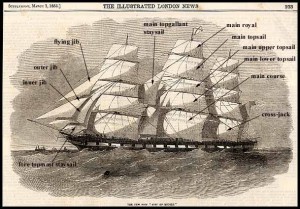
Sodomy and the Pirate Tradition: English Sea Rovers in the Seventeenth Century Caribbean

Pirates are among the most heavily romanticized and fabled characters in history. From Bluebeard to Captain Hook, they have been the subject of countless movies, books, children’s tales, even a world-famous amusement park ride.

In Sodomy and the Pirate Tradition, historian B. R. Burg investigates the social and sexual world of these sea rovers, a tightly bound brotherhood of men engaged in almost constant warfare. What, he asks, did these men, often on the high seas for years at a time, do for sexual fulfillment? Buccaneer sexuality differed widely from that of other all- male institutions such as prisons, for it existed not within a regimented structure of rule, regulations, and oppressive supervision, but instead operated in a society in which widespread toleration of homosexuality was the norm and conditions encouraged its practice.

In his new introduction, Burg discusses the initial response to the book when it was published in 1983 and how our perspectives on all-male societies have since changed.

You have to love a book that begins, “The England that produced three generations of sodomitical pirates was a land far different from modern Britain or America.” Burg, a professor of history at Arizona State University, wrote Sodomy and the Pirate Tradition in 1983 and updated it in 1995 (it’s now in paperback). It describes how most if not all of the pirates and buccaneers who sailed the Caribbean from 1650 to 1700 had sex with each other. Homosexual behavior was rarely condemned in the West Indies or Great Britain during that century, when most of the pirates were growing up. By the early 1800s, the party was over and sailors were being executed for the crime of loving another man — or at least having sex with him. The first chapters trace the history of the perception of homosexuality in modern English society. For the most part it was tolerated if kept discreet. Sex was sex. Even in the American colonies, sexual crimes were condemned severely in the law but not in practice. Fornication and adultery were usually punished with whippings or fines, even in settlements that had been founded by families. The only person executed for sodomy in the colonies during the middle 17th century was a guy in conservative New Haven who admitted to having sex with two men, encouraging boys to masturbate and, most horrifically, being an agnostic.

Usually when people cried “sodomy” there were other motivations, such as revenge. Live-and-let-live set the stage in England. During the time there were many beggars and vagabonds roaming the countryside in groups of two to six men. Women weren’t accessible (you had to have a job and money to land a wife), so over time homosexual behavior became more frequent among disenfranchised males. Some of them may have been gay; others heterosexual but without a choice of female partners. Eventually the men would end up in a coastal city. There they might be conscripted into the Royal Navy or hired to work on merchant ships. In either case, the journeys would last years at a time, and the Navy wasn’t about to give shore leave to vagrants who might desert in some foreign land. So you’re at sea for four years — hey, things happen. If you’re on a merchant ship sailing anywhere from South America north to Bermuda, you risked being jumped by pirates. Disillusioned, maybe you join them. Like everyone on your ship and back home, the pirates were buggering each other.

Burg contrasts the pirate lifestyle with homosexual acts you find among prison inmates and notes many differences. In prison, men see their homosexuality as temporary — it’s more about power, a way of saying “I’m in charge.” Among the pirates, it more closely expressed their sexualities. Burg documents how many pirates, if they came upon a ship with women aboard, wouldn’t touch them. Not that women weren’t raped by pirates, but usually they were native or black women who were seen as “inferior.” European women had never been approachable when the pirates were coming of age, and they weren’t now either (in one case, a woman was simply tossed overboard with the rest of the loot the pirates didn’t want). The lesson Burg draws from his research is that “aside from the production of children, homosexuals alone can fulfill satisfactorily all human needs, wants and desires, all the while supporting and sustaining a human community remarkable by the very fact that it is unremarkable…. The male engaging in homosexual activity aboard a pirate ship in the West Indies three centuries past was simply an ordinary member of his community, completely socialized and acculturated.” Except for that killing and looting part, sure.


Remember Pearl Harbor

December 7, 1941

image

Pearl Harbor Day marks the anniversary of the Japanese raid on Pearl Harbor in 1941, bringing the United States into World War II and widening the European war to the Pacific.
The bombing, which began at 7:55 a.m. Hawaiian time on a Sunday morning, lasted little more than an hour but devastated the American military base on the island of Oahu in the Hawaiian Islands. Nearly all the ships of the U.S. Pacific Fleet were anchored there side by side, and most were damaged or destroyed; half the bombers at the army’s Hickam Field were destroyed. The battleship USS Arizona sank, and 1,177 sailors and Marines went down with the ship, which became their tomb. In all, the attack claimed more than 3,000 casualties—2,403 killed and 1,178 wounded.

image

On the following day, President Franklin D. Roosevelt addressed a solemn Congress to ask for a declaration of war. His opening unforgettable words: “Yesterday, December 7, 1941—a date which will live in infamy—the United States of America was suddenly and deliberately attacked by naval and air forces of the Empire of Japan.” War was declared immediately with only one opposing vote, that by Rep. Jeannette Rankin of Montana.

In the months that followed, the slogan “Remember Pearl Harbor” swept America, and radio stations repeatedly played the song of the same name with these lyrics:

Let’s remember Pearl Harbor, as we go to meet the foe,
Let’s remember Pearl Harbor, as we did the Alamo.
We will always remember, how they died for liberty,
Let’s remember Pearl Harbor, and go on to victory.

Many states proclaim a Pearl Harbor Remembrance Day, and each year, services are held on December 7 at the Arizona Memorial in Pearl Harbor. The marble memorial, built over the sunken USS Arizona and dedicated in 1962, was designed by architect Albert Preis, a resident of Honolulu who was an Austrian citizen in 1941 and was interned as an enemy alien.
In 1991, on the 50th anniversary of the attack, commemorations were held over several days in Hawaii.

image

The observances began on Dec. 4, designated as Hawaii Remembrance Day. Ceremonies recalled the death of civilians in downtown Pearl Harbor. One of them was Nancy Masako Arakaki, a nine-year-old Japanese-American girl killed when anti-aircraft shells fell on her Japanese-language school.

image

Pearl Harbor

On Dec. 5, Survivors Day, families of those present in Pearl Harbor in 1941 attended ceremonies at the Arizona Memorial. Franklin Van Valkenburgh, the commanding officer of the USS Arizona, was among those remembered; he posthumously won the Medal of Honor for his heroism aboard ship.

image

From Here to Eternity

Dec. 6 was a Day of Reflection, intended to focus on the gains since the war rather than on the losses of the day.

012010 (5)sdfa

On Pearl Harbor Day itself, former President George Bush, who received the Distinguished Flying Cross for heroism as a Navy pilot in the Pacific during World War II, spoke at ceremonies beginning at 7:55 a.m. at the Arizona Memorial. Other dignitaries were all Americans; no foreign representatives were invited, out of political prudence. Other events included a parade, a flyover by jet fighters, an outdoor concert by the Honolulu Symphony presenting the premiere of Pearl Harbor Overture: Time of Remembrance by John Duffy, and a wreath-laying service at the National Memorial Cemetery of the Pacific in the Punchbowl overlooking Honolulu. And finally, at sunset on Pearl Harbor Day, survivors and their families gathered at the Arizona Visitors Center for a final service to honor those who died aboard the battleship in 1941.