Generally, when I pray, it is a solitary moment when I have a conversation with God. Thanking him for all that he does for me and praying for guidance. I have a somewhat set way in which I pray, so I never use pre-written prayers. However, I know that some do, and some wonder how to prayer. The “Model Prayer”: or “Lord’s Prayer” is given to us by Jesus in the Matthew 6:9-15. It is probably the prayer we most hear and is how Jesus teaches us how to pray.
Below is a prayer for hope. I found this prayer while searching the internet and fell in love with the beauty of it, though I have altered it a little. There are times when we need to share with God our outlook, and a prayer of hope and strength is an important part of our conversations with God. We need to tell God what we want or what we need. Sometimes God will agree, sometimes he will use those times to point us in His direction. Yet a prayer of hope also means giving us a lift when we know God is there, but maybe are struggling to feel or hear Him. Here is a simple prayer you can say when you feel hopeful:
Dear Lord, thank you so much for all the blessings you have provided in my life. I have so much, and I know it is all because of you. I ask you today to continue to provide me with these blessings and to provide me with the opportunities I need to continue to do your work here. You always stand beside me. You provide me with a future full of your love, blessings, and guidance. I know that, no matter how bad things get, you will always be by my side. I know I may not see you. I know I may not feel you, but I thank You for giving us Your Word that tells us you are here. Give me the strength I need. Protect me each step of the way. Be with me each time I come out to a friend, a loved one, or a relative. Prepare the way for me, so Your love will transform their hearts. Give me the strength to face those show hatred to me and those like me, who you created to love unconditionally and to be true to our hearts. Thank you for giving me the strength to be who I am and face the daily prejudices of the world. You know my dreams, Lord, and I know it is a lot to ask to realize those dreams, but I ask that you hear my prayer of hope. I would like to think that my hopes and dreams are all part of your plans for me, but I trust that you always know best. I put my dreams in your hands to mold and fit to your will. I surrender my hopes to you. In Christ’s name, we pray, Amen.
I can do all things through Christ who strengthens me.
Each of us has been born with a genius. There is something that each of us do very well. It has been assigned to us, and yet many of us ever really pause in life to discover it deeply and then apply the other necessary ingredient. And that is drill. That is practice. That is taking that which is good and making it great. That is pursuing your niche. That is unveiling your uniqueness. That is finding your voice and learning how to vocalize – not like everybody else – but your way. That requires you to at times to swim upstream, to go against the flow, to stand out in the crowd declaring – ‘here I am, and here is what I offer to create a much better world – that is now better because I have not hidden my gift – and have risked rejection by bringing it forth in public.
~Peter G. James Sinclair
Peter G. James Sinclair is the international best selling author of a number of highly acclaimed motivational books including Good Things Don’t Come To Those Who Wait. The title of this book summarizes his philosophy, which he carries over and into all his business ventures.
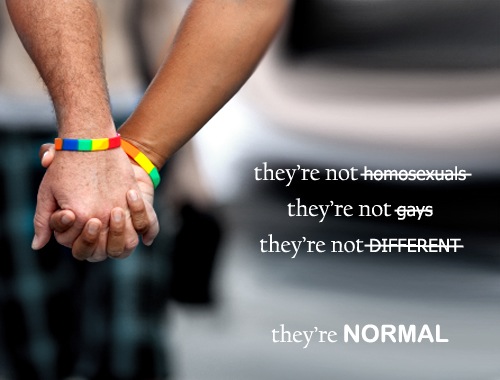
What is normal? Everyone seems to have their own definition of what makes up normal. Merriam-Webster defines it as “according with, constituting, or not deviating from a norm, rule, or principle.” We mean that he or she is like everyone else, behaves as most people behave, and stays within current conventions. The idea of what is normal changes from one decade to another.
Behavior can be normal for an individual when it is consistent with the most common behavior for that person. “Normal” is also used to describe when someone’s behavior conforms to the most common behavior in society. Definitions of normality vary by person, time, place, and situation – it changes along with changing societal standards and norms. Normal behavior is often only recognized in contrast to abnormality. In its simplest form, normality is seen as good while abnormality is seen as bad. Someone being seen as “normal” or “not normal” can have social ramifications, including being included, excluded or stigmatized by larger society.
Although it is difficult to define normality, since it is a flexible concept, the existence of these ramifications also makes it an important definition. The study of what is normal is called normatology – this field attempts to develop an operational definition distinguishing between normality and abnormality (or pathology). The general question of ‘what is normal’ is discussed in many fields, including philosophy, psychology and sociology.
As part of the LGBT community, we are often seen by some as being abnormal, but really that is just an aberration. Because we are all unique, I don’t think there truly is anything as normal or abnormal. Teaching high school and college, I’ve known many students who buck the norm. They want to be different, and they have no desire to be like all of the others. Our former principal believed that for those who were outside the norm, bullying them back into the fold was natural and worth encouraging. I, and most of the other teachers, believed that he could not be more wrong. The uniqueness of students, and people in general, are what makes us such a wonderful society. We don’t live in a totalitarian society or even a utopia where everyone is the same and there is no reason for normal v. abnormal. For me, such a society would be a very boring place. Instead, it takes all of our uniqueness to make the world a better place. We all have our talents and individuality.
How can we claim that just because someone is different (especially when we are all different in some way) that anything is abnormal? The definitions of normal and abnormal have long been reasons used for discrimination and hatred. We all have a little bit of discrimination in us. We all look at someone and think: they are a bit odd. Truthfully though, we should embrace those differences and allow the world to be a better place for it.
We should embrace the rainbow of diversity. The use of rainbow flags as a sign of diversity, inclusiveness, hope and of yearning has a long history. This denotation goes back to the rainbow as a symbol of biblical promise. Aside from the obvious symbolism of a mixed LGBT community, the colors were designed to symbolize: red (life), orange (healing), yellow (sunlight), green (nature), blue (harmony), and purple/violet (spirit). Just as one of the most well-recognized symbols within our community denotes diversity, why would we even want a world that was “normal”?
1To, and a time to every purpose under the heaven:
2A time to be born, and a time to die; a time to plant, and a time to pluck up that which is planted;
3A time to kill, and a time to heal; a time to break down, and a time to build up;
4A time to weep, and a time to laugh; a time to mourn, and a time to dance;
5A time to cast away stones, and a time to gather stones together; a time to embrace, and a time to refrain from embracing;
6A time to get, and a time to lose; a time to keep, and a time to cast away;
7A time to rend, and a time to sew; a time to keep silence, and a time to speak;
8A time to love, and a time to hate; a time of war, and a time of peace.
9What profit hath he that worketh in that wherein he laboureth?
10I have seen the travail, which God hath given to the sons of men to be exercised in it.
11He hath made every thing beautiful in his time: also he hath set the world in their heart, so that no man can find out the work that God maketh from the beginning to the end.
12I know that there is no good in them, but for a man to rejoice, and to do good in his life.
13And also that every man should eat and drink, and enjoy the good of all his labour, it is the gift of God.
14I know that, whatsoever God doeth, it shall be for ever: nothing can be put to it, nor any thing taken from it: and God doeth it, that men should fear before him.
15That which hath been is now; and that which is to be hath already been; and God requireth that which is past.
16And moreover I saw under the sun the place of judgment, that wickedness was there; and the place of righteousness, that iniquity was there.
17I said in mine heart, God shall judge the righteous and the wicked: for there is a time there for every purpose and for every work.
18I said in mine heart concerning the estate of the sons of men, that God might manifest them, and that they might see that they themselves are beasts.
19For that which befalleth the sons of men befalleth beasts; even one thing befalleth them: as the one dieth, so dieth the other; yea, they have all one breath; so that a man hath no preeminence above a beast: for all is vanity.
20All go unto one place; all are of the dust, and all turn to dust again.
21Who knoweth the spirit of man that goeth upward, and the spirit of the beast that goeth downward to the earth?
22Wherefore I perceive that there is nothing better, than that a man should rejoice in his own works; for that is his portion: for who shall bring him to see what shall be after him?
This semester, I am teaching the first part of the US History Survey for the first time. It has been a wonderful experience so far, and I have enjoyed going back and reading some of the early American documents to refresh myself on them for my lectures. One of my favorites is John Winthrop’s “A Model of Christian Charity.” This is Winthrop’s most famous thesis, written on board the Arbella in 1630. We love to imagine the occasion when he personally spoke this oration to some large portion of the Winthrop fleet passengers during or just before their passage.
In an age not long past, when the Puritan founders were still respected by the educational establishment, this was required reading in many courses of American history and literature. However, it was often abridged to just the first and last few paragraphs. This left the overture of the piece sounding unkind and fatalistic, and the finale rather sternly zealous. A common misrepresentation of the Puritan character.
Winthrop’s genius was logical reasoning combined with a sympathetic nature. To remove this work’s central arguments about love and relationships is to completely lose the sense of the whole. You may read the full text by clicking on the link above. However, below, I have done what so many in American history and literature have done and just given you the last few paragraphs.
Now the only way to avoid this shipwreck, and to provide for our posterity, is to follow the counsel of Micah, to do justly, to love mercy, to walk humbly with our God. For this end, we must be knit together, in this work, as one man. We must entertain each other in brotherly affection. We must be willing to abridge ourselves of our superfluities, for the supply of others’ necessities. We must uphold a familiar commerce together in all meekness, gentleness, patience and liberality. We must delight in each other; make others’ conditions our own; rejoice together, mourn together, labor and suffer together, always having before our eyes our commission and community in the work, as members of the same body. So shall we keep the unity of the spirit in the bond of peace. The Lord will be our God, and delight to dwell among us, as His own people, and will command a blessing upon us in all our ways, so that we shall see much more of His wisdom, power, goodness and truth, than formerly we have been acquainted with. We shall find that the God of Israel is among us, when ten of us shall be able to resist a thousand of our enemies; when He shall make us a praise and glory that men shall say of succeeding plantations, “may the Lord make it like that of New England.” For we must consider that we shall be as a city upon a hill. The eyes of all people are upon us. So that if we shall deal falsely with our God in this work we have undertaken, and so cause Him to withdraw His present help from us, we shall be made a story and a by-word through the world. We shall open the mouths of enemies to speak evil of the ways of God, and all professors for God’s sake. We shall shame the faces of many of God’s worthy servants, and cause their prayers to be turned into curses upon us till we be consumed out of the good land whither we are going.
And to shut this discourse with that exhortation of Moses, that faithful servant of the Lord, in his last farewell to Israel, Deut. 30. “Beloved, there is now set before us life and death, good and evil,” in that we are commanded this day to love the Lord our God, and to love one another, to walk in his ways and to keep his Commandments and his ordinance and his laws, and the articles of our Covenant with Him, that we may live and be multiplied, and that the Lord our God may bless us in the land whither we go to possess it. But if our hearts shall turn away, so that we will not obey, but shall be seduced, and worship other Gods, our pleasure and profits, and serve them; it is propounded unto us this day, we shall surely perish out of the good land whither we pass over this vast sea to possess it.
Therefore let us choose life,
that we and our seed may live,
by obeying His voice and cleaving to Him,
for He is our life and our prosperity.
A City upon a Hill is a phrase from the parable of Salt and Light in Jesus’ Sermon on the Mount. In Matthew 5:14, he tells his listeners, “You are the light of the world. A city that is set on a hill cannot be hidden.” The phrase entered the American lexicon early in its history, in the Puritan John Winthrop’s 1630 sermon “A Model of Christian Charity”. Still aboard the ship Arbella, Winthrop admonished the future Massachusetts Bay colonists that their new community would be a “city upon a hill”, watched by the world—which became the ideal the New England colonists placed upon their hilly capital city, Boston. Winthrop’s sermon gave rise to the widespread belief in American folklore that the United States of America is God’s country because metaphorically it is a Shining City upon a Hill, an early example of American exceptionalism.
American exceptionalism refers to the theory that the United States is qualitatively different from other countries. In this view, America’s exceptionalism stems from its emergence from a revolution, becoming “the first new nation,” and developing a uniquely American ideology, based on liberty, egalitarianism, individualism, populism and laissez-faire. This observation can be traced to Alexis de Tocqueville, the first writer to describe the United States as “exceptional” in 1831 and 1840. Historian Gordon Wood has argued, “Our beliefs in liberty, equality, constitutionalism, and the well-being of ordinary people came out of the Revolutionary era. So too did our idea that we Americans are a special people with a special destiny to lead the world toward liberty and democracy.”
I think that we still have that call of duty to be the “city upon a hill,” though I see it a little differently. American exceptionalism is alive and well, but in truth what are we exceptional at? Do we continue to uphold a uniquely American ideology, based on liberty, egalitarianism, individualism, populism and laissez-faire. I don’t think that most of us do. Too many are out for what is best for us, not best for our country or the world. I think that we should believe in what Jefferson wrote in the Declaration of Independence “We hold these truths to be self-evident, that all men [and women] are created equal, that they are endowed by their Creator with certain unalienable Rights, that among these are Life, Liberty and the pursuit of Happiness.” Why then do politicians and Americans fight against equal rights for the GLBT community? Why are we so often excluded from these ideals? God, and, yes, our Founding Fathers advocated love and equality. Why then are we held back from having equality? Why do some of us have to hide who we are behind a closet door? Why can’t we be accepted for who we are without fear of rejection?
I know there are no easy answer to these questions, but when I look at these early documents and the ideology that the United States was founded on, then it makes me question what kind of government Americans expect us to have and what kind of God they are claiming to follow. In my humble opinion, it is not the government of our Founding Fathers (though most, if not all of the Founding Fathers, would not have wanted equality for what they would have termed sodomites) nor is it the religion of the one true God.
When Randy Phillips uploaded his first video to YouTube, he knew it would change his life forever—he just didn’t know if it would be for the better or for the worse.
For all of his adult life a secret was barreling down on the 21-year-old soldier that not even his military-provided bulletproof vest could protect him from. It was so detrimental that it could end his career and damage his relationships.
Phillips was gay. And the military had express rules against coming out.
But, the Alabama native decided that he needed to come out—and do it in a way “there would be no turning back,” said Phillips in a Skype interview. “It was the easiest way for me to do it.”
A self-described “big fan” of YouTube, Phillips created his AreYouSuprised channel last spring just before the military was repealing its strict anti-gay policy Don’t Ask, Don’t Tell.
“I thought it was easiest just to convey my message through YouTube instead of actually blogging,” he said in his Southern-tinged accent.
Instead of launching a public self-outing campaign like Lt. Dan Choi, another soldier who made headlines for fighting against DADT, Phillips’ came out quietly and gradually.
His folksy demeanor, boyish good looks and social media smarts transformed him into a different kind of Lt. Dan Choi—one for a generation of people reared on YouTube.
He shot his first dozen videos, recorded last spring, neck down to conceal his identity, his voice and hands standing in for facial expressions. The videos were shot in a southwest Asian country that Phillips couldn’t reveal (one of those “hot and sandy ones”), captured a clearly nervous Phillips talking about being gay in the military.
Voice shaking and hand trembling, Phillips’ introduced his then-closeted self to the world last April.
“The whole point of this video is to come out. That’s even hard to say,” he said faintly, warning that his coming out process could take a year.
“I was just nervous, [I had] personal fear, and fear of rejection from my friends and family,” Phillips said without stumbling, a stark contrast from his first videos when his voice sounded like a man about to fly down the tracks of the world’s tallest roller coaster. “I was even nervous of saying the words ‘I’m gay’ period.”
There also were legal issues to consider. Under the military’s policy, “Don’t ask, don’t tell,” which in effect banned gays from openly serving, he was violating the rules. However, he began the videos four months after Obama announced he was repealing the ban.
Investigations were tapering off, Phillips said. But publicly posting coming out videos—while serving overseas—still was a risky thing to do. And the emotional toll of being found out forced him to dart between well-hidden spots to record the videos.
Initially, the videos could only be discovered if someone was looking for a specific subject, such as DADT or one happened to be on Outserve, a private Facebook group for gay military members, where he posted the videos. He credits the members’ support for helping him come out.
“Everybody at that point who had seen my videos … [gave] me so much emotional support. It was a like a counselor for me.”
In August, however, things started to change. That’s when he posted an unrelated video of one of his fellow soldiers covering Adele’s “Rolling in the Deep.” Suddenly, his quiet channel got a visitor spark. People came to hear the song and then apparently noticed the other videos in his channel.
Phillips wasn’t naive. He knew that any bump in traffic could lead people to see his coming out videos so it didn’t come as a shock to him.
“I put my videos on there and from there they got shared around the Web and passed around, like everything on the Internet,” Phillips said.
After people discovered his channel, an earlier recording of Phillips coming out to his friend, Chris, started pulling in viewers.
With the wind battering his camera during an otherwise ordinary jovial moment, Phillips tells one of his closest friends he’s gay. Instead of freaking out, his friend laughs and says “I could give a rat’s ass…love is love.”
When the camera stopped recording Chris “was like ‘That’s cool, I don’t mind. You are still one of my good friends.’” Phillips recalled. “He said nothing will ever change and we would still be great friends and that he wouldn’t think of me any differently.”
In September, when DADT was officially lifted, Phillips kept true to his promise: not only did he reveal his identity to his fans on YouTube, he also posted a video of him coming out to his father and showed his face for the first time.
Finally, people could see the worry on his brow and his closely cropped light brown hair with a stylish flip in front .
Sitting at a desk against a map-clad wall, a weary eyed Phillips apprehensively dials his phone to tell him one of the hardest things a gay guy will ever say to his father.
The call takes more than an agonizing minute to connect. Phillips preps his dad for the news. He tells his him he has something important to say and then implores: “Will you still love me? Serious?”
Phillips’ voice stammers and he continually looks away from the phone like his father’s disapproving face was peering back at him.
“Yes,” his father asserts.
Phillips takes in a deep breath and then finally utters the words: “Dad. I’m gay.”
“OK,” his father says in an detached voice. The video lasts four more minutes. During that time there’s a lot of back and forth. His father maintains his stoic tone, but does say “I will always love you.” The mild-mannered Phillips responds “yes sir.”
The coming out video earned Phillips international press coverage. But he was puzzled why the voyeuristic video grabbed the attention of millions.
“I’m such a boring person. I couldn’t believe that that many people wanted to see something that hundreds and thousands of kids do every single year,” he said. “It was just a conversation on the phone.”
But it obviously meant more to others. The seven minute video has more 57,000 likes and 84,000 comments. Many are supportive of him, but there also are some homophobic haters in the crowd, which doesn’t bother him.
“Everybody can feel bulletproof behind the safety of their own computer,” he said bluntly.
“A lot of haters are going to click on it and they’re going to feel insecure,” he said. “It’s super easy to make really negative comments, and they did.”
Phillips said the video received between 5,000 to 10,000 hateful comments.
“But its nothing that [haters] haven’t said to my face… I know a lot of people like to vent over the Internet,” he said. He also shoots down critics who said Phillips released the video just for attention.
“I don’t think that many people realize how YouTube helped me, and how it pushed me. How grateful I was that I get to share my story and show people what the average reaction would be…and that life gets so much better after that.”
He admitted that the videos of him coming out to his father, and later, his mom who didn’t take the news as well, had an “ambush” aspect to them since he didn’t ask for their permission to broadcast them. (That charge came from an article in Salon who lambasted Phillips’ choice of doing this.)
“Maybe,” Phillips said. “I am not going to argue with that 100 percent. I don’t think either of my parents, if I were to ask them, ‘Hey, is it OK if I put this on the Internet?’, I don’t think they anybody would’ve said ‘yeah, go ahead.’”
“I explained to my parents about how much I owe that to the YouTube community and how many emails [he received]” that he forwarded to his parents including one who came out to his parents at 34-years-old thanks to Phillips’ video.
Although his relationship with his very conservative Southern parents remains at arm’s length (“They wouldn’t go out of their way to ask me how everything is going…but they don’t mind”), the support from the YouTube community helped him.
“I think my parents now understand that they helped more people than they thought they ever would,” Phillips said. Reaction to the video from the Air Force was also supportive. “Not one single person came up to me and said something negative,” he said.
Following the coming out videos, Phillips altered the direction of his channel from less of a gritty account of his personal life, to a mix of light-hearted videos. His channel pivoted from closely resembling the front section of a news weekly to the glossy style of Men’s Health with its mix of workout videos and travel diaries.
He has more than 36,000 subscribers and 11 million total video views. The support he received from his emotional videos helped him keep his channel up and running.
“I am going to film whatever I want to from now on, I have absolutely no push to go in any direction whatsoever,” Phillips said confidently. Also, he wants to evolve past being known as the ‘gay soldier,’ and to show the world there is more to him than that.
“I want to show everyone out there in the YouTube world that I am a plain, boring, normal guy and that being gay is just a part of me,” Phillips asserted. “I am not trying to make a career out of it. I’ve said everything that I need to say as far as coming out.”
Showing off indeed. The boyish, but built, Phillips is often times shirtless. “I’m from Alabama, I’ve been shirtless more of my life than I’ve been clothed, so whatever,” he joked. But clearly the lack of attire doesn’t hurt when it comes to gaining an audience.
Phillips’ videos are fun, candid and usually last under five minutes. The video’s lighting and sound doesn’t mirror that of a wannabe professional production like other YouTube channels. They show off Phillip’s down-to-earth, approachable, friendly side.
Viewers are treated to a glimpse of military life that not even CNN could provide. We follow him to the grocery store, watch him as he teaches us how to build stronger triceps and he occasionally does an unscripted question and answer sessions that he pulls from 10,000 follower strong Twitter account.
It takes him only about 25 minutes to shoot and edit a video, which he says a only a few of his coworkers follow along. “One of my coworker’s wives is my biggest fan,” he laughed.
The Air Force does not supervise what Phillips uploads but their code of conduct prohibits him from dabbling into anything political and he has to clearly assert that whatever views he provides are of his own.
Although his videos are pretty genial, he’s aware when he crosses a line. Earlier this month, he posted, and then quickly pulled, a video of him flexing just in his underwear tweeting “I think that video was just a little [too] much.”
His fans, however, continue to be supportive and probably won’t think he would ever go “too far.” A search for @AreYouSuprised on Twitter reveals some rabid fans that Phillips takes in stride.
“It’s funny, I take it pretty light-heatedly,” he laughed.
“I think its amazing that I had such so more of a choice then I would, and there is no reason for it. There is nothing that I have ever done that’s crazy. I’ve never been much of an activist, I just shared my personal story.”
Back in I think November, a reader sent me a link to this video. I have been so busy that I only saw it for the first time a few days ago. It is quite moving. They seem to really love each other. Below the video is Joe’s explanation of the video.
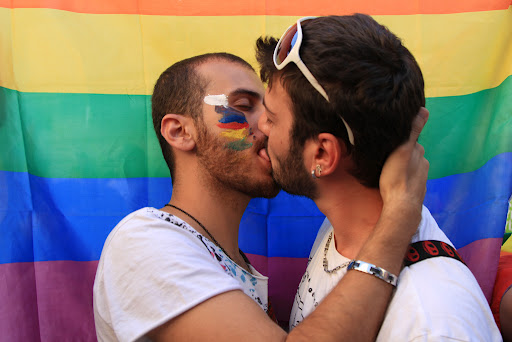
this is the story behind, this is our year. This post relates to the video, ‘this is our year.’ I uploaded on to Vimeo earlier this month here. Joe has his own Tumblr page at http://tickingabox.tumblr.com. You can follow Joe & Will on Twitter also (@itsjoemcd & @willrackham) x My name is Joe, I’m 24 years old, I live in London and work in the not-as-glamorous-as-you’d-expect TV industry. I met my boyfriend of 18 months, Will, through working on the same TV show. We’re a close couple, and we try to spend as much time with each other as we can. We both have similar tastes in pretty much everything, with only the rare differing opinion when it comes to condiment choice! (Ketchup vs Mayo) Last year for Christmas, among other gifts, I bought Will a diary. Inside it I wrote dozens of memorable dates from our time together, so he could look through them as they year went on and remember some of the “firsts” we shared. First date, first meeting of the parents, first trip away etc. This year I was keen to be creative again for Christmas and make him a video of moments we’d shared earlier this year, when we went on a weekend break to Manchester Pride in August. When I told him I was bringing a video camera with us on the trip, I think he was a but dubious at first but I told him I had plans to make a video and he got involved, and to be honest, he’s a little bit of a natural with a camera anyway, so it didn’t take him long to get in to it. Move forward a few months, to when I edited the video. I always knew it was something I wanted to make for him for part of his Christmas gifts. So I looked through the footage we’d shot and found the bits I thought were a good selection of our trip to Manchester. Will and I have always had a number of songs, as I think most relationships do, that mean something to us. One of our first and most poignant is “The Only Exception” by Paramore, so when making the video I decided to fit the footage in around that track. I only spent an hour or so making the video in iMovie. It was never meant to be a masterpiece and was definitely never meant to be shown to an audience of thousands around the world. As many people have commented, the sound mixing on the video isn’t particularly great, people have been disappointed that in parts of the video they’ve not been able to hear the dialogue between Will and I – for me, I never thought to make speech any clearer or reduce the impact of the track because for the intended audience – in other words, Will & I – we had shared memories of what we were either talking about in those scenes, and so hearing the words of the song for me were more important. When I showed the video to Will. He loved it, I wanted to wait until we exchanged our gifts properly but I was too excited to show him and he was excited to watch it. So I sat him down on my bed, switched the lights off cinema-style and played it to him, glancing over for a positive reaction every now and then. He really liked it and after thanking me, I decided to upload it to Vimeo and give him a private link to it, so he could watch it on his iPad or iPhone over Christmas while we were both away from each other. As many of you will know now though, that link wasn’t so private after all. I’ve never uploaded a video to Vimeo before, however I selected the correct privacy settings but actually didn’t submit/save them successfully. Will stayed over that night, and I went to work the next day for the last time before Christmas. Will and I don’t currently live together but Will spends most nights at my flat. This week, as we had both finished for Christmas and because we’d been working so hard recently and not seen each other as much, we agreed to spend the week together celebrating Christmas before we both went our separate ways to spend Christmas with our families. That night, Will met me after work and we decided to go to Winter Wonderland – a huge Christmas pop-up theme park with rides and festive markets. We had a great night and ironically, took along the video camera as Will wanted us to film more stuff so we could make a video of our Christmas. All this was before we had discovered that the “This is Our Year” video I had made Will had gone not only public, but viral. That night, when we got back to my flat, I was checking my emails on my phone and saw a couple of notifications from Vimeo informing me that there were comments on my video. I thought, “That’s strange, it’s private.” I walked over to Will who was watching TV and said: “Baby… Don’t be mad at me, but…” and explained that comments had been made on the video. “What have you done!” he said, with a bit of a chuckle. We went to my room to have a look on my Mac at the comments on the Vimeo website when we then saw that there had been over 20,000 views. I wanted to be sick, my stomach sank. All I could think was: “Oh god, Will’s not been out that long and everyone’s going to see it and he’s going to kill me.” I was panicking. I took it offline immediately, so Will and I could discuss it and so we could look through the coverage online on blogs and social networks. The comments and reaction were overwhelmingly sweet. We were initially confused why the video had resonated with people. Sure, we both liked it, but it was special to us – we couldn’t work out how it was making sense or appealing to anyone else? We left it private for pretty much all of the following day, until we realised it had been duplicated and republished on to YouTube. Again, still panicking slightly that the world could see video of us passionately kissing, we submitted a Privacy takedown request with YouTube, who took the copy down after 48 hours. After reading messages sent to me from members of Vimeo and reading through some of the lovely messages and comments with Will, we agreed on a compromise. I remember saying to Will something along the lines of: “If we keep it down, duplicates are just going to keep popping up and we won’t have any control of this. Shall we just take a deep breath and embrace it? Everything everyone has said has been really positive. This video, although not intentional, has actually helped some people.” It hit home to me how the video was appealing to others when someone described it as “the best unintentional-It Gets Better video ever.” The penny dropped and I realised that although Will and I live in this bubble between us where we do these romantic things and don’t really think about how others would perceive us, there is a common misconception that gay men aren’t successful in relationships. This stigma that they all go out every night, get pissed, do drugs and sleep with strangers. This concept that gay men are inherently inadequate to maintain a loving relationship in the same way heterosexual couples do. I think, speaking personally, a lot of gay men think that sexual orientation comes paired with a different lifestyle to suit. That if you are gay, you have to live a different type of lifestyle. I think Will and I have always been so compatible because we both want similar things from life, the same things most straight couples want – that idyllic happy life together, in a house we love, with friends and family we care for. The kind of life where we get more enjoyment from cuddling up on the sofa together watching the Modern Family box set, than we do dancing half naked in a sweaty nightclub drunk off our faces. I should add, this isn’t a judgement, it’s more just our choice. I have plenty of friends who enjoy the latter and I love them for that – you have to choose what you find most enjoyable for you and your partner. So to conclude, we’ve decided to keep the video online. We did edit it slightly to tone down a lengthy kissing scene, but nevertheless, it’s out there and we’re happy that our video, which started as a romantic gesture from one boyfriend to another, has now developed this added dimension to inspire some people, move others or just to make some people smile. If its taught me anything it’s that the world is clearly looking for more positive representations of a normal gay relationship, and that there’s still progress to be made to prove to the masses that gay or straight – love is love.
It is such a moving and wonderful message, I had to share it. Thanks Joe and Will. Below is the this is a follow-up to their ‘this is our year.’ video, after some people had commented that they couldn’t hear their dialogue very well, but just to satisfy curiosity, here it is with a less audible backing track. I did watch both out of curiosity, and though it is interesting to hear the dialogue, I find the original with the music incredibly beautiful and moving.
I have a series of posts coming up and I knew that this post could not wait until I had finished those posts. Some of you may have already seen this, but in case you haven’t, it is worth watching. I have been in the process today of catching up on emails and blogs. This was posted Friday on Break the Illusion Blog by Davey Wavey. Here is how he described it:
The clip is a trailer for a film to be created by Ryan James Yezak – with the bulk of the funding coming a fundraising appeal on kickstarter. Ryan set a goal of $50,000 to produce the film – and, to date, he’s raised more than $137,000 from more than 3,300 individuals. Watching the clip, you can’t help but be in awe of how far we – as a movement – have come. And at the same time, it’s abundantly clear that we still have a long ways yet to go. We’ll get there, one heart at a time.
When I had finished watching this video, I had tears in my eyes. I don’t know how someone could not be moved by this.
Start the New Year with a promise or resolution that will guarantee a better 2012. Here are the top New Year’s resolutions for gay men.
1. Journal/Blog Don’t go down the bitter highway. Release all of your baggage from the previous year by blogging or journaling. If you’re dear to the old school like I am, grab a decorative notebook and write your thoughts freestyle every day. Don’t worry about grammar or spelling. This journal is for you. For the tech kings, create a personal blog.
2. No More Drama Must gay and drama go hand-in-hand? This New Year, gays around the world are making a pact to eliminate the nasty rumors, lost friendships and petty arguments that spice up our everyday lives. Try a new approach for the New Year: forgiveness. A more peaceful life can lead to better health by releasing any internalized anger and resentment. Give others room to make mistakes and trust in the positive aspects of your relationships.
3. Mentor LGBT Youth Why let your life lessons go to waste when you can help guide a young LGBT adult? There are more out pop culture figures than ever, but nothing beats an in-person role model. Career guidance to life coaching, there are many ways you can help LGBT youth. Start by volunteering for a youth group at your local gay community center.
4. Fight for Gay Rights Even if you’re not the flag waving type, there is still an opportunity to help further gay equality. Here are 10 ways you can support gay rights.
5. Get Tested The anxiety of getting an HIV test and the fear of a life-changing result is overwhelming, but the freedom that comes along with knowing your status is worth the tension. Why leave your health up to chance? Understand HIV/AIDS and read the top reasons to get an HIV test.
6. Come Out to Yourself Coming out is a process that unfolds at your own pace. This may be the year for you to be free! The first step to understanding your sexuality is self-reflection. Don’t skip this important step on your way out of the closet. Get to know yourself this New Year and create the life you desire. Follow these steps to coming out.
7. Shed Bad Influences Bad influences come in many forms: drug and alcohol addiction, sex addiction or even that cute guy who tells you he can’t have sex while wearing a condom. You don’t have to be a victim. Besides, doing drugs and barebacking is so last year! Create a brand new you in a brand new year by kicking an old habit and knowing your boundaries. Recognize your own addictions and test your safe sex practices.
8. Actually Workout at the Gym While some vow they will finally get a gym membership this upcoming year, other veteran gym bunnies resolve that they will actually work out at the gym instead of cruising boys and talking to their friends. Lift a bar bell or two and work on that V. Just make sure you do it for you and not because you want to join the parade of shirtless guys at the club. Also, read about gay men and Body Dysmorphic Disorder.
9. Volunteer Volunteering is not only fun; it’s an opportunity for you to give back to something greater than yourself. You can also meet other gay people with similar interests. There are many gay organizations that need your help.
You don’t need a special talent to volunteer, just your dedication. Call your local gay community center and offer your assistance with some of their programs. Or choose a gay organization that best fits your interests.
10. Stop Smoking Do you know, back in my smoking days I couldn’t even dance without a cigarette in hand? Somehow I thought the weight of the stick was essential to certain moves. This silly excuse is one of many smokers give to justify their drag addiction (cigarette drag, that is). But, did you know gay men are at higher risk for lung cancer? This year, break the habit, reduce your smoky laundry bill and try that dance spin without a fag (cigarette, that is).
Some of these I am already doing, some I need to do, and some I want to do more of. The fact is, the number one thing on my list of New Year’s Resolutions is to finish my dissertation, defend it, and graduate with my PhD. I swear this will be the year.










 Joe
Joe





