Category Archives: Miscellaneous

Requiescat in Pace: Mrs. Windham Dies at 93

If you are not from the South, or you are not a long time listener of NPR, then you probably have no idea who this woman is.  However, you should.  With her large floppy garden hats and her unassuming dresses, Kathryn Tucker Windham was one of the greatest American treasures, a true storyteller.  I write this with tears in my eyes, because this woman was truly larger than life.  On a few rare and special occasions in my life, I have met her and listened to her tell her stories. Most of the stories were everyday life, but as soon as she spoke, you were in awe.  She wrote a series of books about ghost stories that were some of my favorite reads.  When she signed the books, her own personal ghost, Jeffrey, signed them as well.  Jeffrey had been her inspiration for collecting the ghost stories she wrote about.  I am sure that Mrs. Windham is with her late husband and Jeffrey in a better place today, she died on Sunday and the South, the United States, and the World have lost one of its great treasures. I urge you to please go to the link above and listen to the NPR’s All Things Considered story from today about Mrs. Windham and her contributions to NPR during the 1980s.

Here is her biography from the Encyclopedia of Alabama:

Kathryn Tucker Windham

Kathryn Tucker Windham (1918-2011) is best known for her series of ghost story collections, beginning with 13 Alabama Ghosts and Jeffrey in 1969, as well as numerous other publications, photography, and storytelling. Windham’s work focuses on the South’s multilayered lifeways and evokes positive qualities of the human experience: family, community, tolerance, good humor, laughter, and joy.
Windham was born in Selma, Dallas County, on June 2, 1918, to James Wilson Tucker and Helen Gaines Tabb Tucker. She grew up in Thomasville, Clarke County, the youngest of a large family. Her interest in Alabama lifeways began early. Her father, a banker, was a gifted storyteller. Windham also absorbed family history and lore from her mother, a former teacher, and her aunt, Tab Forster, the Thomasville postmistress. Young Kathryn attended public schools in Thomasville and in 1930, at age 12, began writing movie reviews for the Thomasville Times, owned by her cousin Earl Tucker. That year, early one morning, she sat on the sidewalk in front of People’s Drug Company in Thomasville to be first in line for a Brownie camera given away as part of Eastman Kodak’s 50th-anniversary promotion. Writing and photography would become lifelong pursuits.
In 1935, Windham graduated from Thomasville High School as class valedictorian, then attended Huntingdon College in Montgomery, graduating in 1939. She first worked in Thomasville as a freelance journalist and in March 1940 was hired by The Alabama Journal in Montgomery as a feature writer and police reporter, replacing a male reporter who was entering military service. She was one of the first women to cover the police beat for a major daily newspaper in the South. In 1942, she moved to Birmingham, where she served as publicity director for the Alabama War Bond Committee. The following year, Windham began working for the Birmingham News editing articles on state news and aviation and serving as a courthouse reporter. There, she also took photographs with the newspaper’s Graflex camera.
Windham married Amasa Benjamin Windham, a journalist, editor, and World War II veteran in 1946, and the couple would have three children. The family later moved to Selma, where Kathryn wrote freelance articles for Progressive Farmer magazine and many Alabama newspapers, and from 1950 to 1966 penned a locally syndicated newspaper column “Around Our House.” She also raised the Windhams’ children, Kathryn Tabb “Kitti” Windham, Amasa Benjamin “Ben” Windham Jr., and Helen Ann “Dilcy” Windham Hilley. (She had two grandsons, David Wilson Windham and Benjamin Douglas Hilley.) After Amasa Windham died in 1956, Windham joined the staff of The (Selma)Times-Journal, where she worked until 1973.
While in Selma, Windham began writing and publishing the first of some 20 books, the initial one being Treasured Alabama Recipes. Her eight-book series of ghost stories began in 1964. Alabama: One Big Front Porch (1975), one of Windham’s most popular books, is a compilation of stories, lore, and recipes from across the state.
In 1982, Windham worked on a Birmingham Public Library project on Gee’s Bend, a rural African American community in a bend of the Alabama River in Wilcox County, now nationally known for its quilters. During her visits to Gee’s Bend, Windham produced a long report, including interviews and observations. She and Birmingham photographer John Reese took extensive photographs, including a series depicting Pleasant Grove Baptist Church’s baptism ceremony in a local creek.
Windham was also known for her storytelling and radio broadcasts. In 1974, she was a featured teller in the second National Storytelling Festival in Jonesborough, Tennessee, eventually appearing there more than a dozen times. Beginning in 1984, Windham’s commentaries were heard every Friday morning on Alabama Public Radio. Between 1985 and 1987, they also were broadcast on “All Things Considered” for National Public Radio. Windham also developed her personal interest in Julia Tutwiler into a “living portrayal” of Tutwiler, which she first performed in period costume at the Birmingham Public Library in 1981.
Even before she acquired her first Brownie camera in 1930, Windham had been interested in photography. From the 1940s, she took photographs as a journalist, and when she traveled around Alabama for pleasure or to cover stories, she was rarely without her camera. By the 1980s, she began including some of her photographs in her books.
In 1989, Windham’s photographs were included in the major traveling exhibition In View of Home: Alabama Landscape Photographs, organized by the Huntsville Museum of Art. Her work also appeared in the 1992Amazing Alabama exhibition in Montgomery, organized for the Retirement Systems of Alabama. In August 1993, the Huntsville Museum of Art invited Windham to make the presentation “Words into Pictures” for its endowed Marriott Lecture series. The museum mounted a one-person exhibition of 28 of her finest photographs: Encounters 24. Kathryn Tucker Windham. This exhibition led to publication of a book of her photographs and stories, Encounters. Kathryn Tucker Windham, in 1998.
It is highly unusual for a talented wordsmith also to be a gifted photographer, but Kathryn Tucker Windham used both forms of media to communicate memorably about southern culture. Whether telling stories, commenting on southern customs, passing along cherished recipes, or capturing Alabama life in photographs, her work has a unity that centers on her powers of observation and memory and her love for the South, its people, and its lifeways. Windham’s achievements have led to numerous awards and honors, not the least of which is the Kathryn Tucker Windham Museum at Alabama Southern Community College in her home town of Thomasville.
Windham passed away on June 12, 2011. She was buried in the New Live Oak Cemetery in Selma, in a custom-made pine casket that she had kept in a shed in her backyard.

Works by Kathryn Tucker Windham
Treasured Alabama Recipes (1964)
13 Alabama Ghosts and Jeffrey (with Margaret Gillis Figh) (1969)
Jeffrey Introduces 13 More Southern Ghosts (1971)
Treasured Tennessee Recipes (1972)
Thirteen Georgia Ghosts and Jeffrey (1973)
Treasured Georgia Recipes (1973)
Exp loring Alabama (1974)
Thirteen Mississippi Ghosts and Jeffrey (1974)
Alabama: One Big Front Porch (1975)
Thirteen Tennessee Ghosts and Jeffrey (1977)
The Ghost in the Sloss Furnaces (1978)
Southern Cooking to Remember (1978)
Cou nt Those Buzzards! Stamp Those Grey Mules (1979)
Jeffrey’s Latest Thirteen: More Alabama Ghosts (1982)
A Serigamy of Stories (1988)
Odd-Egg Editor (1990)
A Sampling of Selma Stories (1991)
The Autobiography of a Bell (1991)
Twice-Blessed (1996)
Bridal Wreath Bush (1999)
Common Threads (with photographer Chip Cooper) (2000)
It’s Christmas (2002)
Ernest’s Gift (2004)
Jeffrey’s Favorite 13 Ghost Stories: From Alabama, Georgia, Tennessee, and Mississippi (2004)
Spit, Scarey Ann, & Sweat Bees: One Thing Leads to Another (2009)

Frances Osborn Robb
Huntsville, Alabama

Baristas

I know as gay men, many of us may fetishize a particular attire.  Some love a man in uniform: a soldier, a police officer, or a fireman.  Others may like an athlete: football, lacrosse, wrestler, baseball, etc.  Some men like a man in a suit or tuxedo, while others may prefer less dressy cowboy or farmhand look.  What is your preference?  Do you have one?  And don’t be shy, we probably all have one, so speak up.

soldierI will go first.  Though I love uniforms, and I think that soldiers and firemen are very sexy (French and Italian police officers are drop dead gorgeous—I think it is a requirement), I also love a man in a baseball uniform.  All of these have one thing in common, they tend to show off the man’s butt.  However, I always tend to have a thing for waiters and baristas.  Part of that is probably that they tend to flirt to get a good tip.  A waitress has to provide great service to get a larger than normal tip from me, but a hot waiter who flirts just a little, well he will get a great tip every time. And I think it goes without saying that in America, a lot of the waiters are gay, and many will use that to their advantage with other gay men.  I remember this one waiter, whose name was Michael, and a group of my friends and I used to call him the Archangel Michael, because only an angel could be that beautiful.  And he was: great body, fine ass, a head full of blond hair, and piercing blue eyes.  He could have been the worst waiter imaginable (he actually was pretty good), but you wanted him to wait on you just so you could have his attention, not to mention that you could stare at his butt when he walked away from your table.

coffeeHowever, my last two service industry crushes have been Starbucks baristas.  The first one is tall and slender with dark hair and eyes, and he is always eager to chat.  He always treats you like an old friend when you come in, and as many times as I have been in there, he knows exactly what I am going to order and starts it as soon as he sees me and asks me if I will be having my usual.  He knows that I am a teacher and always asks about how my classes are going, , etc.  I’ve never been in there that he didn’t have a smile on his face.  Lately, because of time constraints with teaching high school during the day and college at night, I have been going to the Starbucks that is closer to campus. Lo and behold there is another cutie there.  This one is shorter, with dark brown hair, and the most gorgeous and captivating blue eyes that you have ever seen which are accentuated by long beautiful eye lashes.  He always is a little bit scruffy, never a full beard, but not clean shaven either. He not tall like the other guy, but is just below average height and cute as a button. 

starbuckscupsI go to Starbucks every time before my evening class, to the extent that my night class students in the Fall pooled together and gave me a Starbucks gift card for my birthday. (They also brought cupcakes and were an exceptional group of students—btw, they never curry favor with me by giving me those things, and they know it.)  I feel like I have been cheating on my old Starbucks guy recently with my new one.  Grant it, there is nothing going on except flirtations with either one, and they don’t know it but they usually make my day when I go in.  So with the old Starbucks guy (and I’m not talking in age here), I never was sure if he was gay or just very friendly.  He did wear designer belts and shoes with his Starbucks uniform of black pants/shorts and white shirt.  Where I live, you don’t see many straight men wear D&G belts.  But other than his accessories, he has never given me an indication one way or another.  However, with the new Starbucks guy, there is no doubt. He is gay.  Mike Mongeau 028bHe is not effeminate, but he makes the gaydar go off with just the inflections of his voice and mannerisms.  It also helps that the other day when I was in there he was talking about a movie and said of one of the actors: “He’s so pretty.”

There are several things that I was thinking about as I was planning this post.  The first thing was fetishes about uniform and profession.  Again, what is your preference? Do you have a particular type of uniform or profession that gives you tingling feeling in your nether regions?  Does a certain part of you want to stand at attention when you see a soldier standing at attention?  Is a passing desire for a hot guy really because of his uniform or is it just that he is hot?

gaydar2The second thing is whether or not gaydar is real?  Can we really identify one another because of mutual attraction? inflections of his voice and mannerisms? animal instinct? noticing the way a man looks at another man v. how he looks at a woman?  I think these are all things that make up our “gaydar.”  What do you think makes up our gaydar?  Or, do you even believe in gaydar?


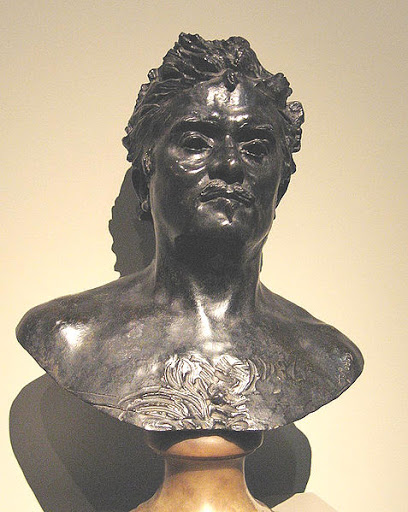
Honoré de Balzac

Honoré de Balzac (French pronunciation: [ɔnɔʁe də balzak]; 20 May 1799 – 18 August 1850) was a French novelist and playwright. His magnum opus was a sequence of short stories and novels collectively entitled La Comédie humaine, which presents a panorama of French life in the years after the 1815 fall of Napoleon.

Due to his keen observation of detail and unfiltered representation of society, Balzac is regarded as one of the founders of realism in European literature. He is renowned for his multi-faceted characters, who are complex, morally ambiguous and fully human. His writing influenced many subsequent novelists such as Marcel Proust, Émile Zola, Charles Dickens, Edgar Allan Poe,Fyodor Dostoyevsky, Gustave Flaubert, Marie Corelli, Henry James, William Faulkner, Jack Kerouac, and Italo Calvino, and philosophers such as Friedrich Engels. Many of Balzac’s works have been made into or have inspired films, and they are a continuing source of inspiration for writers, filmmakers and critics.

An enthusiastic reader and independent thinker as a child, Balzac had trouble adapting to the teaching style of his grammar school. His willful nature caused trouble throughout his life and frustrated his ambitions to succeed in the world of business. When he finished school, Balzac was an apprentice in a Law office, but he turned his back on the study of Law after wearying of its inhumanity and banal routine. Before and during his career as a writer, he attempted to be a publisher, printer, businessman, critic, and politician; he failed in all of these efforts. La Comédie Humaine reflects his real-life difficulties, and includes scenes from his own experience.

Balzac suffered from health problems throughout his life, possibly due to his intense writing schedule. His relationship with his family was often strained by financial and personal drama, and he ended several friendships over critical reviews. In 1850 he married Ewelina Hańska, his longtime love; he died five months later.

Now you might be wondering, SO WHAT?  Well, I bring up Honoré de Balzac because I am currently reading two books: The Greater Journey: Americans in Paris by David McCullough and An Evil Eye: A Novel (Yashim the Eunuch) by Jason Goodwin.  Balzac is mentioned numerous times in each book. At first I just thought of some sophomoric comment about what a great name Honoré de Balzac is, i.e. “honor the ball sack” which I still think is funny in a juvenile sort of way, but you get the picture and that’s about all I am going to say about Balzac.  But I did want to talk about the two books that I am reading.  I have not finished either one, but both are equally interesting for different reasons.
The Greater Journey: Americans in Paris by David McCullough looks at Americans abroad in Paris from 1830 to 1900.  McCullough features several prominent Americans, such as James Fennimore Cooper, Samuel F.B. Morse, and Charles Sumner, among others.  His central thesis is that Americans who traveled to Paris were greatly influential to the development of America, owing much of that to their time in Paris.  I tend to disagree largely with McCullough because whereas most of these men and women stayed in Paris for a few months, they also traveled to Italy and usually spend much longer time periods there.  Paris was not the center of European culture and history in the 19th century: the Italian peninsula was.  One might be able to copy some of the masterpieces of art and study medicine and history among other disciplines in Paris, but nowhere compared to the medical school or University of Padua and to the rich history of the Ancient Roman Empire, which at its heart was the city of Rome.  The great artists were not form Paris, though Impressionism was beginning in France.  The greatest artists and sculptors were form Italy and that is where most of their art remained.  The Uffizi Gallery in Florence, the Academia in Venice, and the museum of all museums, the Vatican Museums in Rome.  Though Napoleon had plundered Italy and much of Europe for great pieces of art for the Louvre in Paris,t he Vatican had been collected works of art for centuries, not to mention that the Medicis of Florence had been some of the world’s greatest patrons of the arts.  It is not to Paris that the Americans flocked, though of course it was essential to any European tour, but to Italy and the rich legacy of art, architecture, and history that they went.

The other book I am reading,  An Evil Eye: A Novel (Yashim the Eunuch) by Jason Goodwin, I had mentioned before in a post about a year ago, Author Spotlight: Jason Goodwin.  At that time, the book was still in the works, but it has since been published and as all of Goodwin’s books, it is an absolute joy to read.  Goodwin brings alive the Ottoman Empire of the 19th century, the food, the smells, the harems, etc.  If you have never had an interest in the Ottoman Empire, I would suggest you pick up the Yashim the Eunuch books and your interest will come alive.  I love to read mysteries; mystery novels are some of my favorite books.  For me history is always a mystery, because we want to find out how and why something happened.  Therefore, an author adds together a historical novel with a mystery, I’m in love.  Goodwin does that very well with Yashim the Eunuch; we are presented with the rich history of the once great Ottoman Empire along with a subtle mystery of political intrigue and endearing characters.


Lies and Controversy

tumblr_lfm4mzkerD1qajhgvo1_500

On August 21, the gay blogger and youtuber, Davey Wavey (www.breaktheillusion.com), posted a video blog about the “7 Huge Gay Lies” that gay men tell.  In the video, Davey explained that the majority of gays lie about:

  • how many partners they’ve ever had
  • using gay hookup sites
  • cheating on their boyfriends
  • their penis size
  • their fetishes
  • having safe sex
  • their age

This caused a shitstorm of controversy which, sadly, led Davey to take down the video and post this one instead.  The controversy around the video was led by another gay blogger and youtuber named Tyler Oakley, who claims that these are just negative stereotypes and teach young gays bad habits, while also denying ever lying about any of the above. (I’ll take him at his word on this.)  I personally have never lied about any of the things above either, though Tyler goes further to state that not only has he never lied about any of these things, but that he has never done any of them.  In a comment on Davey Wavey’s original video he stated:

  1. I’m honest on how many partners I’ve had.
  2. I’ve never used a hookup site.  I met my boyfriend on a blind date.
  3. I’ve never cheated.  I have respect for them and myself.
  4. I’ve never been in a situation where someone has asked me for my penis size, so I’ve never had a chance to lie about it.  Maybe I have a higher standard for the conversations I have.
  5. I only have safe sex with committed tested partners.
  6. I’ve never lied about my age.

You should stop perpetrating stereotypes.

Now, if these is true, great for Tyler.  Like I said before I won’t say he is lying because maybe he is not.  But, I have a few things to say, and I will go through them point by point (all seven of them).

First of all, I am as honest about how many partners I’ve had as I can be, though the exact number is a little fuzzy. (I’ll be the first to say that I had my slutty phase, but I don’t think it was too slutty of a phase.) There are some hookups, that I would like to forget, but I have a pretty good memory of them.  To give an example of one of the ones I would like to forget was a guy that I met online.  He was a fellow teacher (special ed, which in my opinion makes him a pretty special person).  We seemed to have a lot in common, and I enjoyed our chats.  We decided to get together for some “fun.”  We were chatting after we met up, and he was talking about his kids.  Now, I always refer to my students as my kids, so I didn’t think anything more of it.  Then he made a comment about his wife.  We were kind of in the heat of the moment, and I put it at the back of my mind while we were both naked.  In retrospect, I should have stopped him and sent him on his way.  I believe in being faithful to a partner, and I felt disgusted with myself for fooling around with a married man.  It is not one of the highlights of my life.  Not all men are honest about the number of partners they’ve had.  I’ve run into this many times.  We should be honest with each other, and Davey is right that not all of us are.

As stated in the previous paragraph, I have used gay hookup sites.  When you are a gay man in the South, there are several good reasons for this.  1)  There aren’t a lot of places to go meet other gay men, especially while living in small towns or rural areas.  2)  Not everybody has friends who know other gay friends to set them up on blind dates, and it can be hard to find us in a small community. 3) Sometimes we need to be discreet.  There are other reasons, but these are the three biggies.  Good for Tyler for not using gay hookup sites, but what is wrong with it?  Those sites are not just about sex and immediate hookups, though many guys think of them as such.  I have met some great people that I have had a lot of fun with, sex or not, on these sites, and I will not lie about it (though maybe I will be vague about it to some of my straight friends).  The point is, why lie?  It is nothing to be ashamed of. (And on a side note, we know Davey Wavey has used hookup sites because he has blogged about it, and his naked profile pics are all over the internet.)

I personally have never cheated in the traditional sense of the word, except for the special ed teacher, and that was accidental.  I didn’t’ think I had to ask if he was married or not.  I was naïve, and I have since learned.  Furthermore, you all should know that I am a Christian.  In my belief, lusting in one’s heart (as Jimmy Carter put it), masturbating to the image of another man, checking out that hot guy across the room, etc., are all forms of cheating. That brief though is a betrayal of your partner, and you are not being completely faithful to your partner.  The old saying “Just because you are on a diet, doesn’t mean you can’t look at the menu,” is actually just plain wrong.  If you are in a committed relationship, then why would your eye wonder.  Truth be told, it is human nature for our eyes to wonder.  How do we remedy this?  I honestly don’t know, but I have no doubt that we should be honest with our partners.  Lies only lead to problems.

Now, penis size… OMFG!  I mean really.  If I had a dollar for every time a man lied to me about his penis size, I might not be a millionaire, but I’m pretty sure I would be comfortably well off. If I had a dollar for every time any man has lied about his penis size to me or not, I would be at least a billionaire.  Tyler wrote, “I’ve never been in a situation where someone has asked me for my penis size, so I’ve never had a chance to lie about it.  Maybe I have a higher standard for the conversations I have.”  Really, he has never had that conversation with someone else. I’ve had that conversation with straight men and gay men alike and numerous female friends.  When it comes down to it, most men lie just a little.  I don’t, because honestly, I’m happy with my size.  I wish it were a bit longer, but I’ve never had a complaint. And as for Tyler’s statement, “Maybe I have a higher standard for the conversations I have” what kind of fucking boring life does Tyler live.  I mean really. (Maybe that is not fair, but I dislike it when people try to act like total goody two shoes.)  What the hell does this guy talk about.  It is certainly not all that I talk about, but there is nothing to be shameful or deceptive about.  I have friends who are very open about these kinds of things, and a couple of beers, sex talk, and you have a fun night ahead.  (A tidbit of historical gossip here, the only man in history that it was widely rumored during his lifetime to have a huge penis is Marcus Antonius.  Believe it or not, in Ancient Rome, this was a slur.  He was seen as being led around by his cock, and subsequently, Cleopatra.  If it was so big, how did he keep it hidden under that short leather skirt?) Enough said. Just be honest about your size.

Okay, so I will admit that I don’t always tell everyone I am with about my fetishes. If a guy were to ask, I would tell.  We all have things that we find sexually exciting.  By the way, Tyler did not address this lie.  Does he tell all of his partners about his fetishes? Why did he leave this out? Maybe he really is just completely boring (again, maybe not fair).  I’ve never read his blog, and after seeing how he reacted to Davey’s video, I don’t think I want to.

As for safe sex, I haven’t always been safe.  I was the top in unprotected anal sex once (long story that involves and orgy and a guy that put my dick into his ass before I knew it, and in the heat of the moment I went with it).  Tyler wrote, “I only have safe sex with committed tested partners.”  Again good for him, but he never says that he is always honest with them.  Also, no sex is totally safe.  Tests are not always accurate. Partners are not always faithful, no matter what we want to believe.  Oral sex is not completely safe (though deemed low risk if you don’t swallow) even if you use dental dams and condoms.  Condoms can break.  All kinds of problems can happen.  Abstinence and solo masturbation are the only truly safe sex.   All the rest is “safer” sex.  Again, this is something that I am honest about. There is no reason to lie.  Better to be safe than sorry.

I will not, have not, and never will lie about my age.  A year older is a thing to celebrate, and it  beats the hell out of the alternative (i.e. death).  I am happy that I am a 33 year old man.  There are more things that I wish I had done before this age (finished my PhD for one), but we all have some regrets.  It doesn’t make me ashamed of my age.  Have men and women ever lied to me about their age?  Yes, they have, and they will continue to do so as long as we have an emphasis on youth. Be honest and be proud.

I don’t think (in fact, I know) Davey Wavey was not trying to perpetuate stereotypes, but in is touch feely gay guru way was talking about honesty.  Davey Wavey, from all of his stuff that I have read and watched, tries to get us as gay men to love ourselves and to guard ourselves against the ever prevalent self-hatred that so many of us face at on time or another.  I am sorry that he took down the video.  I didn’t get to see it before it was taken down, but I can’t believe it was offensive as Tyler lambasted him for.  What Davey is like in real life is, I hope, very close to the personality he portrays on his blog and videos. I may not divulge my completely true identity here, but I endeavor to be honest about who I am.  Some of my readers who have gotten to know me outside of my blog would, and again I hope, describe me as a loving and caring person.  And as a human being, I may have a temper on occasion and my students get to see it every so often.  None of us are perfect.  I still work very hard to follow my two main rules in life:

Do unto others and you would have them do unto you.

and

Judge not, lest ye be judged.

I don’t always succeed, but I do my very best.  I am sorry that the gay community lashed out at Davey Wavey for being honest about what he sees as problems in the gay community.  Never has there been a civil rights movement (at least not in my knowledge), that have taken criticism about and especially from within their community well.  A few weeks ago, I was honored to hear a conference paper about homophobia in the African-American Civil Rights Movement.  The main person that the presenter was discussing was a gay man (and as I write this I can’t remember his name) who got moved to a behind the scenes position, and eventually out of the movement, because of his perceived sexual immorality, i.e. his homosexuality.  However, it was this particular person, who while Martin Luther King, Jr. was receiving the Nobel Peace Prize was called upon to ask King and the other ministers gathered to “stop having orgies in the hotel.”  The point is that until we start working together instead of letting the green monster of jealousy and our own ignorance about our community, we cannot move forward.  We will only move backwards.  Yes, the GLBT community is very diverse, but we have one thing in common, and that is that we are GLBT, we love someone of the same sex, and we have a long road ahead of us for equality.

Further Reading:

There are many other reactions: negative to either Davey or Tyler. I think if you read Tyler’s original post and his reaction to Larson’s “open letter” you will see that Tyler probably took Davey’s comments the wrong way, at least in my opinion.  This post is most of all to address the “7 Huge Gay Lies” that Davey outlined in his post.  I think the original message is worth reading and that the vitriolic reaction to it tells us (sadly) a lot about the gay community.

For something of more of a lighter mood click “more” below.  Warning it contains graphic nudity.


It will not get bigger just because you lie about it.

I wonder if Pinocchio ever grows a mustache, LOL.  I’ve never been a huge fan of shaved pubes.

tumblr_lfzk6r4kSK1qge0mdo1_400

Be happy with what you’ve got.


Blanche DuBois

image

Sometimes I feel like Blanche DuBois in Tennessee William’s A Streetcar Named Desire when Blanche is led off to a mental hospital by a matron and a kind-hearted doctor. After a brief struggle followed by the administration of a sedative, Blanche smilingly acquiesces as she devolves into her fantasy life, addressing the doctor with the most famous and poignant line in the play:

‘I have always depended on the kindness of strangers.’

Thank goodness that strangers can be occasionally kind.  It is one of the great things about living in the South.  We are so often taught to be hospitable that it eventually wears off on most of us and being kind comes as second nature.  So commit a random act of kindness today and make someone’s life a little better for just a moment at least.

(Yes, I realize that this message is not in the context of the play in the least, but it is one of my favorite lines in any movie or play.)


Monday Night Football

Lowres-132 tumblr_lagh34zzeB1qcbnafo1_500
I will readily admit it, my biggest fault is that I love gossip.  I especially love gossip about someone that I don’t like.  I know that it is wrong, but I think that is why I love history so much.  History in reality is just the gossip that survived the test of time.  Two of the best pieces of gossip I have heard in the last week have been about athletes.  One is the Duke Fuck List, which I might do a post on for Wednesday (it sort of depends on my mood).  However, the gossip I want to discuss to day is about the NFL and particularly, Brett Farve—the slimy, drug, alcohol, and sex addicted, son-of-a-bitch who won’t seem to fucking retire.  Yeah, I don’t particularly like him, in fact I much prefer the football pics above.  Those of you who know much about me personally may be a little surprised at this, but all the people I know who have had encounters with this man have nothing good to say about him.
Now it seems that he was harassing a female sidelines reporter for the Jets named Jenn Sterger.  For those who don’t know (or forget, I for one didn’t really know or care before this) who Jenn Sterger is: she is formerly buxom Florida State Cowgirl who gained internet notoriety for being a buxom Florida State fan who parlayed that popularity into a full-time career. She did Maxim shoots. Playboy shoots. She wrote a “Confessions of a Cowgirl” column for Sports Illustrated. Then, in 2008, Ms. Sterger joined the Jets as an in-house sideline reporter. It was during that fateful time that her and Mr. Favre’s paths began to cross. Sort of.

Last winter, close to the Super Bowl, Ms. Sterger and Deadspin were discussing a possible collaboration on the proposed “Deadspin Swimsuit Project,” which turned into a conversation about the whole “athlete dong photo” phenomenon. She claimed that she’s been on the receiving end of several of those types of cell phone interactions by drunk men, some of whom were professional athletes. They later had a phone conversation about who some of the more well-known dong-shot senders were. favre01 One person, she claimed, who was very into cell phone-donging her was none other than Brett Favre. Now, at one point in his career, this news wouldn’t be too surprising. Favre’s time in Green Bay is littered with stories about his boozing and carousing. But gray-haired Favre? Oh yeah, she said. Sterger said that Favre first began to call her early in the season and leave strange, friendly messages on her voicemail. She played me one of these voicemails over the phone. It was Brett turning on the Mississippi simpleton charm on his way to practice giving Jenn a friendly good ol’ boy hello to a pretty lady. It was odd, but nothing incriminating. Then the phone calls from Brett started to turn weird.
Sterger claimed she spurned Favre’s advances because he was married, but also because she was working for the Jets at the time she didn’t think it was the best idea to start a torrid affair with the team’s highest profile player. Plus, if she went forward with how aggressive he was and how skeeved out she was to some of her superiors, she suspected she might lose her job. The interactions were flirty and strange but she didn’t think there wasn’t anything that made her too uncomfortable. But then, one night, Sterger received a picture on her phone which was so shocking that she just tossed it across the room. It was his dick. favre02 Brett Favre’s dick. And it happened multiple times. In fact, Sterger claims that, in one of the photos Favre allegedly sent her, he’s masturbating — while wearing a pair of Crocs. In another photo, Favre is holding his penis while wearing the wristwatch he wore during his first teary-eyed retirement press conference.
There is more to the story as covered by Deadspin, but I think you get the just of the details.  If you would like to see the Deadspin video which has the voicemails and texts, click here (penis photos at 2:08 mark but I also put them above).  If you don’t want to watch the evidence, here is a breakdown of the reasons I believe it is Farve, besides the fact that he is a slimy sonofabitch. Yes, there’s a possibility that the person communicating with Sterger was not actually Brett Favre, but rather someone trying very hard to appear to be him. But let’s look at the evidence: For an individual to put forth the effort to 1.) acquire a cellphone with a Mississippi area code where Farve lives; 2.) take some voice lessons because not only does it sound like Farve, but the person has an authentic South Mississippi accent (a true southern knows his variations in southern accents); and 3.) implicate Jets handlers and perhaps other people, all within a very short period of time and for no discernible reason other than to mess with Sterger, well, that’s some very aggressive role-playing. Sterger believed it to be him. Others believed it to be him. We’ve seen far too many supposedly family-oriented and upstanding professional athletes whose off-field behavior contradicts their well-manicured public persona. If Sterger is right, Brett Favre really is like a kid out there.  He also has a rather smallish dick (technically averaged size, but considering all the stories I had heard about him flashing it around Mississippi while he was in college, you’d think it would be big enough to brag about).
If you don’t know who the hell I have been talking about in this post, here is Brett Farve:
imageimageimage


Circumcision in Monotheistic Religions

Coptic Christianity
image During the 3rd century A.D., the Egyptians began writing their language in letters borrowed from the Greek alphabet augmented by a few characters from Demotic (a popular Egyptian script dating from the 2nd century). Beginning in the 7th century, this language, known as Coptic, began to disappear from everyday use, to be supplanted by Arabic. It survives to this day however in the Egyptian church. In Coptic societies, circumcision is performed on boys at ages ranging from one week to several years. It is not obligatory in character but is generally carried out for reasons of social conformity and hygiene.
lslam
image The Arabs were circumcised before the advent of the Prophet; Islam merely allowed this practice to continue. In fact, Islam does not prescribe circumcision and the word is not even mentioned in the Quran. Circumcision is nevertheless traditional in Muslim societies where it constitutes a rite of initiation: a transition from childhood to adulthood. It also allows integration into the community of believers. Performed most often in the first few years of life (sometimes the odd-numbered years in certain communities) to minimize psychological trauma, it can be carried out by a Muslim or a Jew.
Judaism
In no culture does circumcision occupy the position it occupies in Judaism.
The first circumcision was that of Abraham, who circumcised himself as a sign of the Covenant at the age of 99, then circumcised his eldest son Ishmael, aged 13, as well as all the males of the household. Isaac, son of Abraham, was born exactly one year after the Covenant and was circumcised by his father on the eighth day.
image Since circumcision served as a mark of identity, it was frequently prohibited by enemies of the Jews such as the Ptolemys and Antiochus IV Epiphanes (2nd century B.C.) It was also forbidden during the two centuries of slavery in Egypt. Moses, who was not circumcised, reinstated the practice after the Exodus. It was again banned by Hadrian. With the rise of Christianity, circumcision became the distinguishing feature of Judaism
A number of rationales have been put forward for performing circumcision (“Milah”) on the eighth day. According to some, the period of eight days lets the infant experience at least one Sabbath. Others believe that since Creation took six days and God rested on the seventh, the eighth day symbolizes the beginning of a period that is more human, compared with the preceding seven days of divine prerogative. The eighth day, therefore, marks the true birth of man and circumcision assumes the meaning of new beginning and inauguration.
image Any Jew who has been circumcised himself can perform circumcision on another, but usually the task is reserved for an individual specially trained in the act (Mohel). The contraindications to circumcision are many and specifically include a suspicion of hemophilia. The Talmud provides, for instance, that if two sisters have each lost a child to circumcision, then the third sister cannot have her son circumcised. In the same way, if a mother has lost two sons to Brit Milah and circumcision appears to be the cause of death, then circumcision is waived for the third son.
The ceremony is carried out according to well-defined rules and comprises three phases: separation of preputial adhesions, done with a fingernail and called “periah”; cutting off the prepuce; and “metzitzah”, the sucking of blood by the Mohel, indispensible for full compliance with the Covenant.
Circumcision and Christianity
image Circumcision is mentioned in the New Testament. The practice was not straightway put in question during the early years of Christianity, but Paul, anxious to facilitate conversions, decided to relax certain rules (observance of the Sabbath, dietary laws and circumcision). Circumcision became worthless for Christians as a means of integrating members into the community. It was replaced by baptism, while the blood covenant with God was succeeded by Communion with Christ. It should be noted that the circumcision of Christ, which has inspired numerous paintings, notably from the Renaissance, is celebrated by Christians every year on January 1st.


African circumcision


Circumcision is practiced by almost all groups in West Africa. In the countries of sub-Saharan Africa, it usually coexists with excision except in the matriarchal societies forming a band across southern Africa between Angola and Mozambique. These societies practice neither circumcision nor excision. Further south, in the southernmost region of the African continent, circumcision practices are explained partly by the migration of patriarchal Bantu societies from equatorial regions.

African circumcision is performed on older children and involves a relatively stereotyped ritual consisting of the following elements in succession:

•    seclusion of the initiate, isolation from women and “unclean” children;

image •    ablation of the prepuce, closely linked to the notion of blood sacrifice;

image •    tests of collective or individual endurance after the circumcision;

image•    wearing of special costumes;

image

•    and sometimes the adoption of a new name marking the child’s true birth.

YouTube has an interesting documentary about African circumcision called “To Become A Man – South Africa”:

Male circumcision is one of the world’s oldest surgical practices; carvings depicting circumcisions have been found in ancient Egyptian temples dating as far back as 2300 BC.

In recent months, the issue of male circumcision and its links to the transmission of HIV has hit the headlines and sparked debates across the world. Trials in Kenya, Uganda and South Africa have now all shown that male circumcision significantly reduces a man’s risk of acquiring HIV.

According to a new study, circumcised men are more resistant to STDs, with the process lowering one’s chances of herpes infection by 28%, HPV infection by 35% and HIV infection by 60%. The study took place in Uganda, where the population is battling an AIDS epidemic, but circumcision advocates say the same benefits apply to Western men, and claim that the controversial procedure should be recommended for infants here.

Also, see:

Male circumcision and HIV: a web special series

The Golden Rule

1030[4]
The Golden Rule or ethic of reciprocity is a maxim, an ethical code, or a morality, that essentially states any of the following (see examples below):

  1. One should treat others according to how one would like others to treat one’s self (positive, passive form)
  2. Treat others as you would like to be treated (positive, active form)
  3. One should not treat others in ways one would not like to be treated (prohibitive, passive form)
  4. Do not treat others in ways you would not like to be treated (prohibitive, active form. Also called the Silver Rule)

The Golden Rule has a long history, and a great number of prominent religious figures and philosophers have restated its reciprocal, bilateral nature in various ways (not limited to the above forms).
The Golden Rule is arguably the most essential basis for the modern concept of human rights, in which each individual has a right to just treatment, and a responsibility to ensure justice for others. A key element of the Golden Rule is that a person attempting to live by this rule treats all people with consideration, not just members of his or her in-group. The Golden Rule has its roots in a wide range of world cultures, and is a standard which different cultures use to resolve conflicts.
The Golden Rule, as a concept, has a history that long predates the term “Golden Rule” (or “Golden law,” as it was called from the 1670s). The ethic of reciprocity was present in certain forms in the philosophies of ancient Babylon, Egypt, India, Greece, Judea, and China. The “Golden Rule” however usually refers to the saying of Jesus of Nazareth: “Therefore all things whatsoever ye would that men should do to you, do ye even so to them.” (Matthew 7:12, see also Luke 6:31) The common English phrasing is “Do unto others as you would have them do unto you”. A similar form appeared in a Catholic catechism around 1567 (certainly in the reprint of 1583).
The ethic of reciprocity has been a part of culture and religious laws from what seems to be the beginning of time. It is present in the first law code: The Code of Hammurabi. Here are some examples of the ethic of reciprocity in various religions, societies, and philosophies:

Ancient Egypt

An early example of the Golden Rule that reflects the Ancient Egyptian concept of Maat appears in the story of The Eloquent Peasant which is dated to the Middle Kingdom (c. 2040–1650 BCE): “Now this is the command: Do to the doer to cause that he do.” An example from a Late Period (c. 1080 – 332 BCE) papyrus: “That which you hate to be done to you, do not do to another.”

Ancient Greek philosophy

The Golden Rule in its prohibitive form was a common principle in ancient Greek philosophy. Examples of the general concept include:

  • “What you do not want to happen to you, do not do it yourself either. ” – Sextus the Pythagorean The oldest extant reference to Sextus is by Origin in the third century of the common era.[15]
  • “Do not do to others what would anger you if done to you by others.” – Isocrates
  • “It is impossible to live a pleasant life without living wisely and well and justly (agreeing ‘neither to harm nor be harmed’), and it is impossible to live wisely and well and justly without living a pleasant life.” – Epicurus
  • “One should never do wrong in return, nor mistreat any man, no matter how one has been mistreated by him.” – Plato’s Socrates (Crito, 49c) (c. 469 BC–399 BCE)

Buddhism

Putting oneself in the place of another, one should not kill nor cause another to kill.

One who, while himself seeking happiness, oppresses with violence other beings who also desire happiness, will not attain happiness hereafter.
—Dhammapada 10. Violence

Confucianism

Zi Gong asked, saying, “Is there one word which may serve as a rule of practice for all one’s life?” The Master said, “Is not RECIPROCITY such a word?
—Confucius, Analects XV.24 (tr. Chinese Text Project)

Never impose on others what you would not choose for yourself.
—Confucius, Analects XV.24 (tr. David Hinton)

Hinduism

One should never do that to another which one regards as injurious to one’s own self. This, in brief, is the rule of dharma. Other behavior is due to selfish desires.
—Brihaspati, Mahabharata (Anusasana Parva, Section CXIII, Verse 8)

For those who set their hearts on me
And worship me with unfailing devotion and faith,
The way of love leads sure and swift to me.
Those who seek the transcendental Reality,
Unmanifested, without name or form,
Beyond the reach of feeling and of thought,
With their senses subdued and mind serene
And striving for the good of all beings,
They too will verily come unto me.
—[Bhagavad-Gita, Chapter XII.]

Islam

Hurt no one so that no one may hurt you.
—Muhammad, The Farewell Sermon

Jeffrey Wattles holds that the golden rule appears in the following statements attributed to Muhammad:

“Woe to those . . . who, when they have to receive by measure from men, exact full measure, but when they have to give by measure or weight to men, give less than due”
—Qur’an (Surah 83, “The Unjust,” vv. 1–4)

The Qur’an commends:

“those who show their affection to such as came to them for refuge and entertain no desire in their hearts for things given to the (latter), but give them preference over themselves”
—Qur’an (Surah 59, “Exile,” vv. 9)

Jainism
In Jainism, the golden rule is firmly embedded in its entire philosophy and can be seen in its clearest form in the doctrines of Ahimsa and Karma
Following quotation from the Acaranga Sutra sums up the philosophy of Jainism:

Nothing which breathes, which exists, which lives, or which has essence or potential of life, should be destroyed or ruled over, or subjugated, or harmed, or denied of its essence or potential.
In support of this Truth, I ask you a question – “Is sorrow or pain desirable to you ?” If you say “yes it is”, it would be a lie. If you say, “No, It is not” you will be expressing the truth. Just as sorrow or pain is not desirable to you, so it is to all which breathe, exist, live or have any essence of life. To you and all, it is undesirable, and painful, and repugnant.

Judaism
The concept of the Golden Rule originates most famously in a Torah verse (Hebrew: “ואהבת לרעיך כמוך”):

You shall not take vengeance or bear a grudge against your kinsfolk. Love your neighbor as yourself: I am the LORD.
—Leviticus 19:18[45], the “Great Commandment”

Taoism

The sage has no interest of his own, but takes the interests of the people as his own. He is kind to the kind; he is also kind to the unkind: for Virtue is kind. He is faithful to the faithful; he is also faithful to the unfaithful: for Virtue is faithful.
—Tao Teh Ching, Chapter 49

Regard your neighbor’s gain as your own gain, and your neighbor’s loss as your own loss.
—T’ai Shang Kan Ying P’ien

The Golden Rule is how I live my life. It is an ancient law and religious belief. If all people would understand that this is the central tenement of major morals of the world, we would live in a world of peace, wisdom, and true virtue. I try to live my life as an example of this principle, sometimes I fail, but I work daily in order not to. So treat your fellow human as you would like to be treated. If we all did this, there would be no Manhunt ads stating “No fats, No Fems.” Accept your fellow man, whoever they may be. The central tenement of the Chinese philosophy of Legalism is that all mankind is evil and through strict laws, the government can rid people of that inherent evil. I actually believe the opposite: All of mankind is good, they just need to be given the chance to show that goodness. If one day, the world realizes this concept, there will be no homophobia, there will be no racism, there will be no sexism, there will be no war, there will be no discrimination or hate of any kind.
Over on my blog Cocks, Asses, and More there is a companion post to this one. It is also about the Golden Rule but describes it in a more personal way.
Thanks for reading.


Homosexuality and the Writers of the Harlem Renaissance

Eric Garber’s study creates a picturesque montage of Harlem gay life during this period when many African Americans tolerated, indulged in, and even celebrated homosexuality. Garber’s is a cinematic look at gay life, art, and culture that pauses here and there to capture the details of the night club scene, art work, personalities, and so on.

Painting Harlem as a gay liberated capital, Garber shows how homosexuality, among intellectuals especially, was accepted as a personal matter that did not interfere with the larger, more important work in racial and cultural advancement. Gays were oppressed during the period, but a thriving black gay subculture ensured that open secrets were kept.

Bessie Smith, Ma Rainey, “Moms” Mabley, Mabel Hampton, Alberta Hunter, Gladys Bentley, and other lesbian or bisexual women found employment in show business, and many sang the blues about gay lives and loves.

Drag balls, commonplace during the period, were called “spectacles of color” by Langston Hughes in The Big Sea (1945); such balls were frequented often by the Harlem bohemians who wrote candidly about them in their correspondence.

Speakeasies and buffet flats (rental units notorious for cafeteria-style opportunities for a variety of sex) were spaces in which gays were granted generous liberation. Wallace Thurman, in Infants of the Spring (1932), gives a realistic rendering of the buffet flat that he, Langston Hughes, and Richard Bruce Nugent shared from time to time.

This artistic community was a complex one with an intricate network of members that cut across all sectors of the art world. At a time when New York still had laws banning homosexuality and when baths and gay bars were raided frequently, it is noteworthy that the Harlem Renaissance was moved along, in great measure, by gay men and women who led amazing double lives.

The Function of the Closet

The function of the closet during this period is complex. Although the closet has typically been seen as oppressive, many of these gay artists subverted the stultifying power of the closet by forming an artistic coalition grounded in secrecy and loyalty. Thus, the closet was reconstructed to form a protective shield against discrimination from publishers, patrons, and the media. The closet enabled many writers to blend into the mainstream and to publish without the fear of exposure.

The Influence of Alain Locke

image Alain Locke (1886-1954), who has been credited with ushering in the New Negro movement, has been justly criticized for advancing the careers of young black males to the obvious neglect of such writers as Grimké, Dunbar-Nelson, and Georgia Douglas Johnson. Locke, a Harvard Ph.D. and professor at Howard University, promoted the careers of Wallace Thurman, Richard Bruce Nugent, Countee Cullen, and Langston Hughes.

To crown only Locke with the accolade of inspiring the Harlem Renaissance is to deny the seminal positions held by W. E. B. DuBois, Jessie Fauset, James Weldon Johnson, and the Opportunity and Crisis organizations in fostering the careers of many of the period’s artists.

Without question a misogynist, Locke’s contribution to the development of a gay male literary heritage was formidable and certainly deliberate. He was at the center of the Harlem gay coterie and very early on gave impetus to the careers of Cullen and, especially, Hughes.

Countee Cullen

image Through frequent letters, Locke urged Countee Cullen (1903-1946) to write poetry aimed at bettering the race. Urging Cullen to read Edward Carpenter’s anthology of male-male friendship Ioläus, Locke helped the young writer find comfort in realizing his gay self. Thus, Locke was also, in part, responsible for Cullen’s maturing gay sensibilities.

Cullen learned the importance of the closet and wrote poetry that promoted the image and idea of the New Negro while also subtly expressing his gay self. Scholars are beginning to investigate the coded language in Cullen’s poetry in order to establish him as a leading figure in the black gay male literary heritage. Many of the lyrics in The Black Christ and Other Poems (1929) and The Medea and Some Poems (1935) lend themselves to gay readings.

Yet, in as early a work as Color (1925), Cullen wrote gay verses, such as “Tableau,” “Fruit of the Flower,” and “For a Poet”–a poem written at a time when Cullen was embroiled in unrequited love for Langston Hughes.

Langston Hughes

image Before he had finished college at Lincoln University in Pennsylvania and during his many travels, Langston Hughes (1902-1967) was pursued by Locke, with Cullen mediating. Although sexual relationships never materialized, the intimate friendships of these three gay men were concretized in their commitment to their literary careers and shared racial ideologies.

Although there were regular philosophical disagreements regarding the bewildering vocation of poets who were also deemed “race men,” still a tight bond developed that knit these writers together for their entire lives.

Hughes, arguably the most closeted of the renaissance gay males, had many close associations with homosexuals and lesbians throughout his life. And, as with Cullen, scholars are beginning to decipher the codification of his gayness in his poetry, drama, and fiction.

Commentators have cited many poems as candidates for gay readings, among them “Young Sailor,” “Waterfront Streets,” “Desire,” “Trumpet Player,” “Café 3 A. M.,” and the sequence of poems in Montage of a Dream Deferred (1951).

Angelina Weld Grimké

image Angelina Weld Grimké (1880-1958) made her contribution to the lesbian literary heritage as a poet during the Harlem Renaissance. She was published in Locke’s The New Negro (1925) and in Cullen’s Caroling Dusk (1927). Grimké’s love lyrics, many as yet unpublished, are mostly addressed to women and describe love that is hidden, unrequited, or otherwise unrealized.

The honesty of the lesbian passion in these beautiful lyrics secures for Grimké a place in African-American gay literature. Poems such as “Rosalie,” “If,” “To Her of the Cruel Lips,” “El Beso,” “Autumn,” “Give Me Your Eyes,” “Caprichosa,” and “My Shrine” are all testimony to the unrealized lesbian love for which Grimké longed.

Alice Dunbar-Nelson

image Alice Dunbar-Nelson (1875-1935) was married several times, most notably to the poet Paul Laurence Dunbar. All of her marriages were troublesome for one reason or another, but despite her personal problems, she managed to write and publish fiction and poetry. The lesbian relationships that checkered her life had a significant influence on her creativity. For example, Gloria T. Hull suggests that, in the unpublished novel This Lofty Oak, Dunbar-Nelson chronicles the life of Edwina B. Kruse, one of her lovers.

Dunbar-Nelson’s literary reputation during the Harlem Renaissance is assessed largely (and Hull contends erroneously) on her achievement as a poet. She published “Violets” in Crisis in 1917, a work that exemplifies the polish and lucidity that typify her poetry, especially her sonnets.

Hull documents other lesbian affairs with Fay Jackson Robinson, a Los Angeles journalist, and Helene Ricks London, a Bermuda artist. Dunbar-Nelson wrote poetry for these women, most of which does not survive except in diary fragments. Dunbar-Nelson’s diary reveals her prominent place in an active network of African-American lesbians.

Claude McKay

image In Home to Harlem (1927), Jamaican-born Claude McKay (1899-1948) openly discusses Harlem’s black experience with lesbianism and even has a significant black gay male character. Following Wayne F. Cooper’s fine biography of McKay (which discusses honestly the writer’s homosexuality), scholars are beginning to make connections between the writer’s sexuality and his writing.

Yet, as is the case with many of the renaissance writers, McKay’s homosexuality as an influence on his creativity must be traced by reading between the lines. Some poems seem to be perfect candidates for such readings, among them “Bennie’s Departure,” “To Inspector W. E. Clark,” “Alfonso, Dressing to Wait at Table,” “The Barrier,” “Courage,” “Adolescence,” “Home Thoughts,” and “On Broadway.”

Other poems, such as “Desolate” and “Absence,” can easily be given gay readings, inasmuch as gays often write on the themes of isolation, dreams deferred, unrequited or secret love, and alienation. image

Wallace Thurman

The short life of Wallace Thurman (1902-1934) gave to the African-American gay and lesbian tradition two novels–The Blacker the Berry (1929) and Infants of the Spring (1932)–which are unmatched as clear and honest depictions of black gay and lesbian life.

Richard Bruce Nugent

The long life of Richard Bruce Nugent (1906-1989) produced very few literary monuments, but like Thurman, Nugent had a penchant for shocking readers and producing works with a decidedly foreign and provocative voice. Locke included Nugent’s gay story “Sahdji” in The New Negro and encouraged the young writer to work at narrative.

imageIn 1926, the one and only issue of Fire!! (a quarterly “Devoted to the Younger Negro Artists”), carried Nugent’s more developed homosexual story “Smoke, Lilies, and Jade”–now praised as the first published African-American gay short story. The story is the fictionalization of an evening Nugent spent walking and talking with Langston Hughes.

The story is a major achievement in gay literary history because it can be read as a defense of homosexuality while it also poignantly thematizes male-male love as beautifully natural and wholesome.

Even in his later years, Nugent continued to write openly about the gay experience: In 1970, Crisis published a Christmas story, “Beyond Where the Star Stood Still,” in which Herod’s catamite offers a remarkable gift to the infant Jesus. Again, Nugent–embracing the mushrooming Gay Rights movement–aimed at forcing the safe African-American world, shaped largely by the fundamentalist church, to face the reality of a black gay presence.

Subverting the Mainstream Power Establishments

Although Harlem was awash with gay literary production during the renaissance, it would be overstating reality to say that there was a deliberate gay movement afoot. Homosexuality might have found toleration in the privacy of speakeasies and salon parties, but the boardrooms at major publishing companies were far less inviting.

Couple that fact with the conservatism that underlined the very notion of a “Talented Tenth,” and it is easy to conclude that any gay literary production (with the clear exception of Thurman and Nugent, who were severely criticized) would have to subvert, in rather creative ways, the mainstream white and black power establishments.

Recurring Themes, Issues, and Ideas

The recurring themes, issues, and ideas in the gay and lesbian writing of the period underscore the endurance of those writers who strove to express their gay selves.

A recurrent motif in the writings of the period is the presence of a forbidden, unnamed, and genderless love. Also common is the use of nature to express the budding forth of an unquestionable though unutterable beauty that is often unappreciated and wasted. Most writers stutter through expressions of a kind of passion so noble yet so unattainable that it must be enacted secretively or abandoned.

Because sexuality is inextricably wound up in the very experience of being human, it often shares turf with deep religious experience or political conviction. Cullen’s “The Black Christ,” for example, is on the surface a narrative poem of salvation. Yet the poet weaves the salvation experience neatly into the somewhat veiled story of Jim’s questionable sexuality.

The homoeroticism of the poem pictures the lynched black boy as a beauty of nature who is raped and sacrificed because he goes unappreciated. Ironically, he is falsely accused and killed for attempting to rape a beautiful white girl whom he understands as the embodiment of Spring. The poem, like many of the period, can be read on a deeper, less apparent level as a diatribe against sexual repression.

Perhaps the most prevalent theme among gay writers of the period is that of the unrealized or displaced dream. One cannot read Grimké, Hughes, McKay, or Cullen without confronting the unachievable, unnamed, and haunting dream.

From the most closeted to the most liberated, the writers of the gay Harlem Renaissance form an unquestionable tradition through which contemporary gay and lesbian readers can see the depth and range of experiences that, in many cases, mirror theirs. If these mirrored images have the power to transform and liberate, perhaps the new renaissance currently underway by African-American gay and lesbian writers will produce a literature that represents more realized and fulfilling dreams.