Category Archives: Movie Review

The Art of the Gay Film: Where Does Porn End and Cinema Begin?

Red, White & Royal Blue

One of the oldest and most provocative questions in art history is what counts as art? That question becomes even more layered when we look at gay-themed films. Are they art? Are they pornography? Or something else entirely? 

Last week, in my post “Can Gay Porn Be Considered Art?”, I explored how even pornography can rise to the level of art when it’s created with intention, craft, and meaning. This week, I want to turn to films—particularly gay-themed ones—and ask: where do they fit on the spectrum between art and pornography? 

Let’s start at the beginning: Are films art? 

The answer from an art historical perspective is a resounding yes. Cinema, from its very birth, was hailed by some as the most modern and democratic art form—capable of bringing storytelling, image, sound, and emotion into a single, immersive experience. 

But when sex enters the frame, things get complicated—particularly for films with queer themes. 

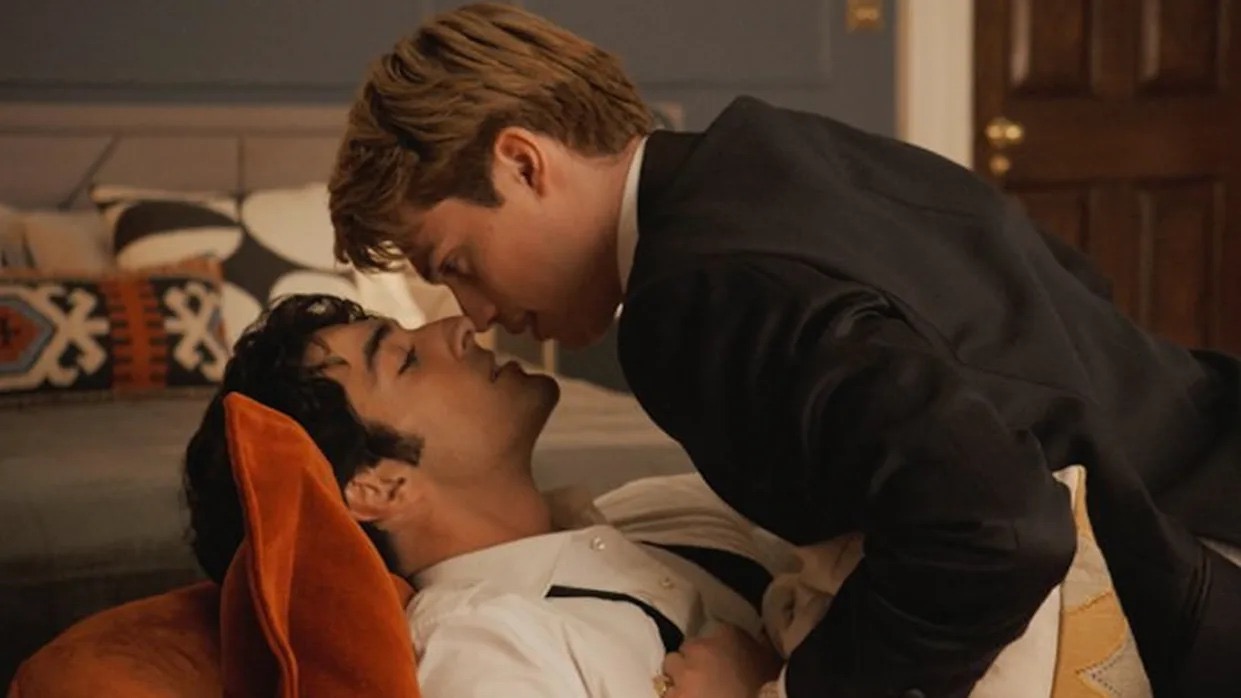
Red, White & Royal Blue

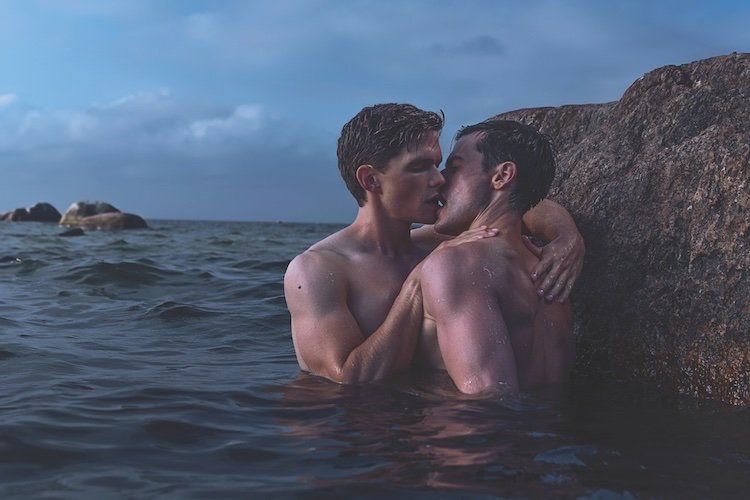
Consider Red, White & Royal Blue, which generated considerable buzz in the gay community for its romantic and tender love scenes. The two leads engage in intercourse—though we see no frontal nudity or penetration, and most of the actual sexual act is in the facial expressions of the two main characters. The narrative focuses on their emotional and political stakes as much as their physical passion. 
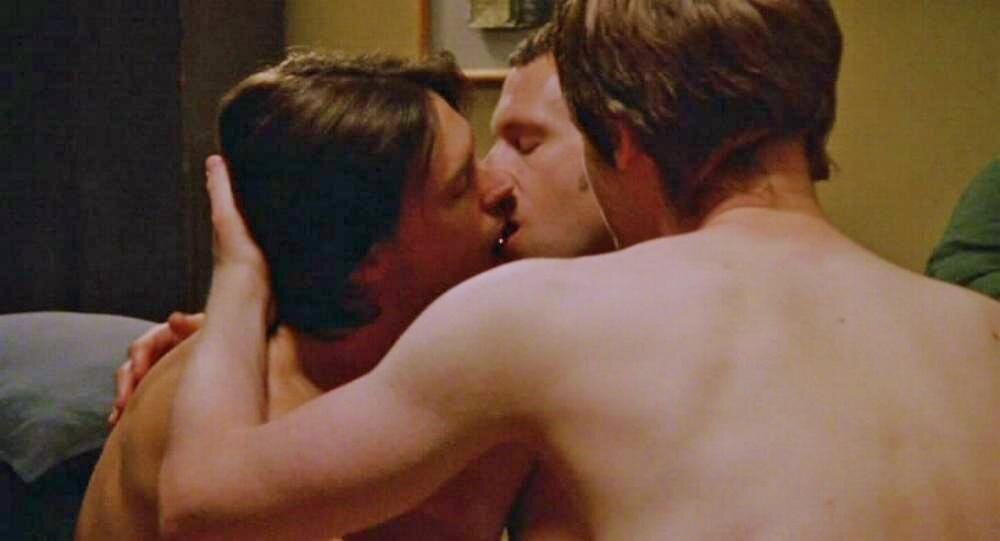
Shortbus

But compare that to Shortbus, the groundbreaking 2006 independent film featuring gay and straight characters exploring sexuality, intimacy, and loneliness. It famously includes unsimulated sex scenes—autofellatio, rimming, ejaculation, and more—woven into a story about connection in New York City. Despite its graphic imagery, many critics and audiences hailed Shortbus as an art film because the sexual content was in service to its humanistic and narrative vision. 

Minx

Then on the other end of the spectrum are campy, sex-forward comedies like the Eating Out series or Another Gay Movie, which parody and revel in gay hookup culture with winks, nudity, and humor. These films are explicitly about sex, but in a light, comic, self-aware way—not quite pornography, but certainly not subtle. In the same vein, we might put certain HBO shows (The White LotusEuphoria) or Minx (on HBO/Starz), which features an extraordinary amount of male frontal nudity but uses it to explore the 1970s porn industry with a feminist and comedic slant. 

So, where do we draw the line between art and pornography? 

It’s not always clear—and, as you pointed out, it may well be “in the eye of the beholder.” In general: 

  • Pornography tends to have a singular, utilitarian purpose: sexual arousal and entertainment. It doesn’t usually ask its audience to reflect, empathize, or wrestle with deeper meaning. However, even pornography can be considered art, as I wrote about in last week’s post, “Can Gay Porn Be Considered Art?”—and I think it can be. When crafted thoughtfully, with aesthetic intention and emotional resonance, even porn can rise to the level of art. 
  • Art, even when explicit, usually serves a broader purpose—telling a story, exploring vulnerability, interrogating social norms, or celebrating intimacy. 

That doesn’t mean art can’t also be arousing—just as Mapplethorpe’s photographs or Greek kouroi might still thrill us centuries later. The difference lies in intent and context. 

Many of these films (and TV series) deliberately blur the line. Shortbus was attacked by some as pornography precisely because it showed real sex acts, but defended as art because it was about loneliness, connection, and what it means to be human. Meanwhile, Red, White & Royal Blue was criticized by some for being too tame, choosing romantic convention over sexual candor—but it, too, is art, in the sense that it tells a story about love and identity.
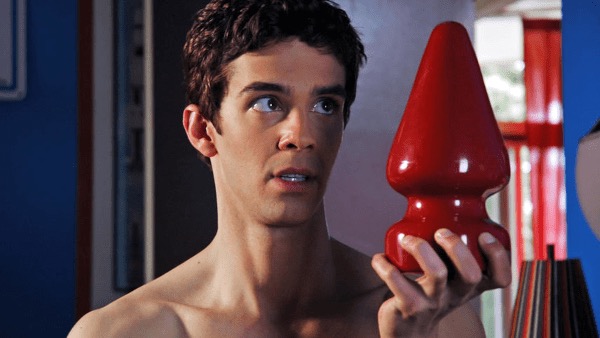
Another Gay Movie

Even campy comedies like Another Gay Movie or series like The White Lotus are part of this conversation—using nudity and sexual humor partly to titillate, yes, but also to satirize and expose cultural hypocrisy. 

Personally, I tend to agree that much of what we call pornography is shallow and transactional, whereas even the most sexually explicit arthouse films still aspire to say something about the human experience. Then again, as I’ve also noted, some modern “art” (abstract or otherwise) can feel just as empty or pretentious to some of us as porn can. 

We as gay viewers—long denied honest representations of ourselves—have often sought out films that blurred the line between art and eroticism, because sometimes that’s where we feel most seen. Cinema remains, perhaps, the most widely consumed art form in the gay community—precisely because it can contain beauty, sex, tenderness, and critique all at once. 

What do you think? Have you seen a film (ShortbusMinxAnother Gay Movie?) that you felt crossed a line—or one that made you feel understood? Does the presence of graphic sex diminish a movie’s artistic value for you—or enhance its honesty? 

Let’s keep the conversation going in the comments. 
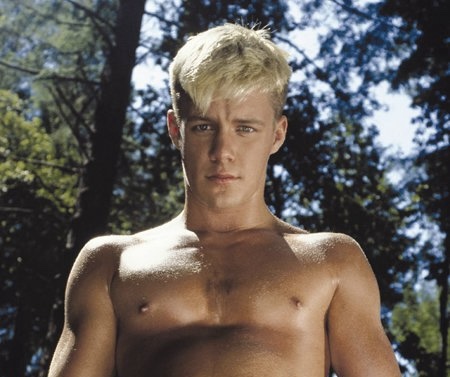

Two Hours

Jokes about porn dialogue and acting ability are not in short supply, but every once in a while, there are some golden lines, even if the lines delivery is terrible. Gay porn dialogue has gotten better in recently and some even have a “plot.” Yeah, I know, it’s hard to believe l, right? Through the years, there have been a few porn movies with a definite plot. Top Secret (2000) starring Corey Summers in two roles had a pretty decent plot, but if there is a plot in most porn movies, it’s barely there. Ok, I’m getting off track.

Vintage gay porn dialogue can be intentionally quite humorous at times. Of course, most of the time it is not intentional. I recently watched My Best Buddy (1988), which was most definitely short on plot. Basically, it is about two “best buddies” traveling separately across the country to spend the summer with one of the guy’s brother. The final scene is with Chris Williams (pictured above) and the aforementioned brother (I don’t know this actor’s name) they are going to stay with. So here’s the setup for the movie’s final scene:

Chris arrives first and the brother is not home. He’s let in by the apartment manager, who, of course, propositions him, but Chris says he just wants to take a shower to get the travel grime off him and take a nap. Cut to Chris getting undressed down to his white briefs and flopping down on the bed.

As he’s dozing off, the brother comes home, and Chris pretends to be asleep. The brother remarks that his brother’s friend “sure has grown up.” Then, creepily, begins to run his hand over the butt of the sleeping friend before pulling down the guy’s briefs and beginning to rim him. During all of this, Chris is awake but feigning sleep. 

Chris finally decides to wake up, and utters one of my favorite lines I’ve ever heard in porn, “I don’t know who you are, but you have about two hours to stop doing that.” I’m pretty sure you can figure out yourself what happens next. The movie ends with Chris and the brother naked post coitus in bed discussing plans for dinner when the other brother arrives. The two guys jump under the covers as the brother walks into the room and looks shocked that his brother and best buddy are naked in bed together. Then, fade to black.

The only thing about vintage gay porn that you have to suspend belief about is that so many of these guy’s died during the AIDS epidemic. Sadly, Chris Williams was one of those young men and died in 1992.


Pic of the Day


Section 31

Friday, Paramount+ released the first of their Star Trek movies, Section 31. In the Star Trek universe, Section 31 is a nefarious group introduced in Star Trek: Deep Space Nine when they tried to recruit Dr. Julian Bashir. Since its first introduction as an autonomous shadow organization tasked with protecting the Federation at all costs, the organization has appeared in Star Trek Into DarknessEnterprise, and Star Trek: Discovery. The organization has always been portrayed as an evil organization that would stop at nothing to fulfill what it believes its mission to be. Some Star Trek fans hate the idea of Section 31 because they say it goes against Gene Roddenberry’s utopian ideals for Star Trek, but let’s face it, while the Star Trek universe gives us hope for a better future, the Federation has never been a perfect society. Even Gene Roddenberry understood that utopia would have its cracks in its foundation.

Since Michelle Yeoh departed Discovery there had been rumors of a Section 31 series. Then, Yeoh won an Oscar for Everything Everywhere All at Once, I assumed the series development had been cancelled. I did not believe an Academy award winning actress would headline a Star Trek series. So, I was surprised when they announced that Paramount+ would be making what they called an “event movie” about Section 31 starring Michelle Yeoh.

Every new version of Star Trek since the original series has had a love/hate relationship with Trekkies. Many Trekkies hate anything that is not the original series. Even Next Generation which has become a much beloved show was hated when it began. Deep Space Nine was basically hated through its entire seven seasons, Voyager always got a mixed reception, and Enterprise seemed to put a death knell in Star Trek spinoffs when it only lasted five season. Then, Discovery was released on CBS All Access, and the hatred truly began because it introduced an African American female as the lead character, had a gay couple, transgender and non-binary characters, and a host of other perceived faults. There are many Star Trek fans who never understood the social commentary that Roddenberry established in Star Trek back in the 1960s. It was always groundbreaking, but even Star Trek fans are not immune to the racist, the homophobic, and the ignorant, no matter how much those beliefs go against all Roddenberry’s utopian ideals for Star Trek.

So, it’s no surprise to see Section 31 get terrible reviews from some of the fans. Plus, internet trolls are everywhere including among Trekkies. They are going to be critical and hate everything and never give anything new a chance. I won’t claim that I thought Section 31 was a masterpiece. I believed that it would be a good movie because I really didn’t think at this point in her career Yeoh would be part of a project that she didn’t believe would be good. There were certain surprise elements to Section 31 that I enjoyed, but I knew from the beginning that this would be a darker version of the Star Trek universe. All in all, I was entertained by the movie. I always like seeing anything Star Trek. I even gave Prodigy a try, and it’s the only entry in the series that I could not watch. When it was on Paramount+, I watched it, but I never enjoyed it. That might have had to do more with it being a show for kids than with anything else. I certainly was not going to resubscribe to Netflix to watch it.

So while Section 31 was not my favorite of the Star Trek franchise, it wasn’t too bad. I was entertained, and that’s what really matters to me. So, if you are skeptical, I suggest you give it a try. If you have already seen it, what did you think?


If Only…

If I didn’t have to be at work today, I’d be back in bed. I went to bed last night with an intense migraine, and I woke up with a migraine, though thankfully not as severe as the one I had when I went to bed. I stayed up a little later than usual last night. I’m usually in bed by 10 pm every night. 

Last night though, I’d stayed up to see Victor/Victoria (1982) on TCM. It’s a film I haven’t seen in a long time, and I’ve always been a fan of Julie Andrews. If you’ve never seen it, the musical comedy is about a female singer down on her luck who dresses as a man who dresses as a woman to perform in Paris nightclubs in the 1930s. It’s an interesting movie because of its positive portrayal of gay men. It’s a film worth watching.

After watching the movie, it took a little while to get settled and go to sleep. I wish I’d been able to sleep a little longer this morning, but whenever I wake up with a headache, it’s hard to fall back to sleep. So as I write this, I still have a migraine. I took my medicine, so hopefully I’ll feel better before I head into work. Sometimes, a nice hot shower helps.

I hope everyone has a great week!


1946

In the beginning was the Word, and the Word was with God, and the Word was God.

—John 1:1

Today’s post is going to be a little bit different because I want to recommend a movie to you, the documentary, 1946: The Mistranslation that Shifted Culture. In this documentaryresearchers and scholars delve into the 1946 mistranslation of 1 Corinthians 6:9 and explore how it fueled the Christian anti-gay movement that still thrives today. Homophobia did not originate in 1946; the vast majority of religions have been attacking LGBTQ+ people since the beginning of time. In my opinion, religions need numbers to survive and to get those numbers they need more than proselytizing; they need procreation. For the most part, the LGBTQ+ community stands in the way of this. However, homophobia received a huge boost with a mistranslation of the biblical text.

1946: The Mistranslation that Shifted Culture hinges its premise on the fact that the word “homosexual” appeared for the first time in the Bible in 1946, in an apparent mistranslation of the ancient Greek words malakoi – defined as someone effeminate who gives themselves up to a soft, decadent, lazy and indolent way of living – and arsenokoitai – a compound word that roughly translates to “male bed.” While people could take it to mean man bedding man, within the context of the time, scholars believed that arsenokoitai alluded more to abusive, predatory behavior and pederasty than it does homosexuality.

The director and producer Sharon “Rocky” Roggio documents the journey of the Christian author Kathy Baldock and Ed Oxford, an advocate and gay man who grew up Southern Baptist, as they dug through archives at the Yale Sterling Memorial Library. There, they discovered correspondence between the head of the translation committee and a gay seminary student in which the committee head conceded with the student’s point about the mistranslation. In the next translation in 1971, the committee changed the translation from homosexual to “sexual perverts” – but by then the damage was done. Hundreds of millions of Bibles with the wrong translation had been published, and conservative religion and conservative politics soon banded together to push an anti-gay agenda.

The documentary first premiered in 2022 and has won numerous festival awards. It is available to rent online but sadly, only through today (1/14/2024). A dear friend who I’ve talked to many times about being Christian and gay told me about its availability, and I watched it Friday for the first time. As I heard Roggio’s story and Oxford’s story of how he began to research to understand what the Bible was actually saying about Christianity both parallel my own. Roggio melded this research with her own personal story. When she was a teenager, her pastor father discovered that she was a lesbian and responded with a letter full of Bible verses imploring her to repent and forsake her identity. Her story mirrors mine in a way. We are roughly the same age, and her father discovered she was gay and confirmed his suspicions by reading her diary. My mother discovered I was gay and confirmed her suspicions by reading my email. Like my mother, her father won’t listen and continues to cling to a small section of the Bible because it fuels their prejudices. Like me, Oxford delved into research to understand the Bible better, and I still look to the Bible to guide my values of Christ’s love.

With the documentary, Roggio filmed her father attending talks by Baldock and overall standing by his belief that the Bible condemns homosexuality as a sin. “I can’t compromise conviction,” he says in the film. “Prior to even knowing about the 1946 mistranslation, I was led to it because I knew I needed to use scripture to be able to have a conversation with my parents to affirm my reality and my identity,” Roggio said. That didn’t make it easy for her. “I knew what my dad was going to give us,” Roggio said. “I have been around for a while and I’ve been dealing with this for a while and I’ve put up enough armor to be able to go back and have those conversations. And it was extremely painful, just as I’m sure it was painful for my dad.”

The documentary goes beyond this very personal story of Roggio and her father by focusing on academia and research, featuring interviews with language experts and biblical scholars to provide context not just for the mistranslated verse, but also the other “clobber” verses that have been cited by the Christian right as a condemnation of homosexuality. They explore Sodom and Gomorrah, and the historical context behind the Leviticus verse denouncing when “a man lies with a male as with a woman;” scholars believe the verse is not alluding to homosexuality but to ritual pagan prostitution. “What we need to do is see that this is a text that is time-bound, that is determined by the culture in which it was written, and that our sense of God, our sense of the Holy Spirit, isn’t time-bound,” the Rev. Dr. Cheryl Anderson says in the documentary. “We have to ask ourselves again: what’s the word of God for this time and this place? We’re not used to doing that, but that’s the task because that is what the Bible does. It’s reinterpreting itself.”

Between the research, however, Roggio wove in the emotional repercussions for all members of the LGBTQ+ community – showing what it meant to feel as if they had been declared an abomination by sacred text and to grow up hearing that even God doesn’t love you. Oxford has a poignant moment in the film where he admits that even as outspoken as he has been on the topic of religion and sexuality, he has not been able to allow himself to experience intimacy with anyone. “I don’t get depressed about damaging theology anymore,” he says. “I have been damaged and I get depressed over how that affects me today, the here and the now.”

Because for gay Christians like Roggio, this mistranslation means everything. It means that “no one can dictate your relationship with God,” she said. “We’ve been told how we have to live as Christians, by putting away our identity, a part of ourselves. But you can totally be gay and Christian.” But the film’s findings also hold significance beyond Christianity. “Whether you’re Christian or not, or whether you’re religious or not, the Bible impacts you,” said Roggio. “It’s the most published book in the world, translated into multiple languages for millennia.”


Red, White, and Royal Blue 🇺🇸❤️🇬🇧

It’s been quite a while since I have been excited about a movie’s release. I’ve been excited for television shows, mainly Star Trek shows on Paramount+, but not many movie releases get me excited these days. However, I have been anticipating the movie Red, White, and Royal Blue since I read the book and heard they were making it into a movie. I’ll be honest, I was a little skeptical about the movie being made by Amazon’s Prime Video, but I was willing to give them the benefit of the doubt, especially once I saw the trailer for the film. As with any book adaptation, I was also worried they’d would completely screw the whole thing up, but again, the trailer made it seem that it was keeping mostly to the story in the book. However, I have learned over the years that a book can be great and the movie can also be great without being completely compatible with the book. 

I’ve read Red, White, and Royal Blue several times. When I don’t have a new audiobook to listen to, I have a few standbys that will go back and listen to again. Red, White, and Royal Blue is one of those books, therefore I am very familiar with the storyline. Also, I read it again this week in anticipation of todays release of the movie, which by the way was actually released at 8:00 pm ET last night. I finished the book on my way home yesterday, and at 8 o’clock, I was in front of my TV with a bowl of popcorn. I enjoyed the movie. As with most adaptations, they combined some characters, removed or changed others, and tightened up the story some. The audiobook is over 12 hours long. There had to be some judicious editing to make it a two hour long movie.

I’m not completely happy with all the sacrifices the movie made. A few of my favorite scenes from the book are not in the movie. However, I do think they did a great job of keeping the meat of the story there. There will be people who really love this book that are not going to be happy with the changes made, but I’ll forgive the movie for that. It was a good, entertaining, and enjoyable movie, and I’ll probably watch it again (maybe even today). I’ve gotten into the habit of watching something new all the way through once, and if I really enjoyed it, I’ll watch it again because there is always something that I missed the first time.

So, what did I like about the movie? Taylor Zakhar Perez as Alex Claremont-Diaz, the first son, and Nicholas Galitzine as Prince Henry were very well cast. I think they captured the energy and the personalities of the two main characters. The sex scenes were pretty damn hot, and quite honestly, these were not gratuitous sex scenes because the passion and horniness of two guys in their early twenties is a major part of the book.  Think they captured that as well. Alex and Henry are the main protagonists, and everyone else in the movie were basically window dressing. The other standout is Sarah Shahi as Zahra, who has great lines in the book and the movie. I also liked Aneesh Sheth as Alex’s Secret Service an agent Amy. Sheth doesn’t have as big of a part as Shahi, but I felt like she stole the scenes she was in, which almost makes up for her not being portrayed as a transgender woman.

I have three criticism I’ll make of the movie, though there are other things I could say good and bad. However, Uma Thurman as the first female president and from Texas is one of the weakest parts of the movie, and Thurman is almost unrecognizable in my opinion. She looked terrible, not the more sophisticated and well put together woman I felt she was in the book. She does have some good moments though. I can forgive the movie makers for combining the characters of Alex’s sister June and his best friend Nora into just Nora, but when they removed Rafael Luna and Henry’s mother Princess Catherine, I think they did the film a major injustice.

As I said, overall, I enjoyed the movie and will watch it again. I’d give it 4.5/5 stars. If you watch it, I’d love to hear your thoughts, and if you’ve also read the book and watched the movie, let me know what you thought of the adaptation.


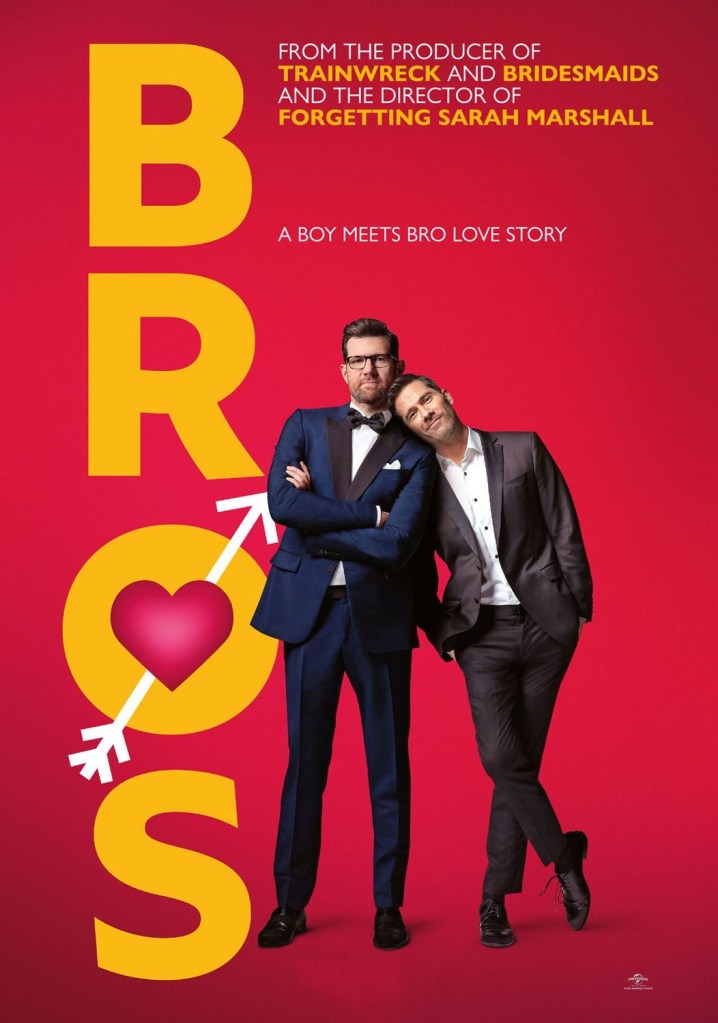
Bros Review

As I mentioned on Friday, I went to see Bros, “A Boy Meets Bro Love Story,” as the tagline says. The consensus on Rotten Tomatoes was that “Bros marks a step forward in rom-com representation — and just as importantly, it’s a whole bunch of fun to watch.” I wouldn’t go that far. It was worth it to see Luke Macfarlane, who I love as an actor. If you look at his Instagram, you’ll see he’s a bit of a “gay bro” in real life. There were certainly parts that were fun, but there was a whole lot of angry speechmaking by Billy Eichner’s character. A little bit of an angry rant on occasion can be funny, but not when it’s 75 percent of the movie. I realize it’s the part he was playing, but give it a rest. I was really hoping for a lighthearted romantic comedy. Yes, it should have a little angst, but that should be between the main love interests, not Billy Eichner vs. the World. There were enjoyable parts to the movie, such as when they are in Provincetown. The actual love story is also nice, but it gets a little bogged down by Billy Eichner’s constant rants.

I would still recommend you go see it. After looking at the reviews, I can only assume I am in the minority. Sadly, it also flopped at the box office this weekend. My friend and I were literally half the audience at the theater. The movie sold $4.8 million in tickets, about 40 percent less than expected. As the New York Times said, “There is no easy way to say it: When the reviews are this sensational, the marketing support is this substantive and the theatrical footprint is this wide — and ticket sales are nonetheless this low — it suggests outright marketplace rejection.” I think if the movie had been a less angsty rant and more romantic comedy, it might have done better at the box office.

With that being said, I got mostly annoyed with the subplot about the LGBTQ+ Museum. Eichner’s character is supposed to be the museum’s founding director, though his background is not as a museum professional. The real executive director of the American LGBTQ+ Museum is a lovely man named Ben Garcia, who I saw speak at a conference back in May. He is a much more likable person than Eichner’s character, Bobby Lieber. The movie’s portrayal of a National LGBTQ+ Museum is a disgrace. It was meant to be funny but horrifying from a museum professional’s opinion. Then there is one of my greatest pet peeves with LGBTQ+ pop history. They always want to portray Abraham Lincoln as the first gay president (if he was LGBTQ+, then he was bi), but Lincoln would not have been our first gay president. That honor goes to James Buchanan, who no one wants to acknowledge because he, up until TFG from 2016-2020, was considered the most failed and disgraceful president. Buchanan is responsible for letting the Civil War get started and doing nothing to stop it. Yet, he had a well-documented, more so than Lincoln, love affair with America’s 13th Vice President William R. King. A few letters between the two survive, and Buchanan never married. During their lifetime, Andrew Jackson called King “Miss Nancy,” and Buchanan’s Postmaster General Aaron V. Brown referred to King as Buchanan’s “better half,” “wife,” and “Aunt Fancy.”

My pet peeve is that Lincoln was very doubtfully gay. Though it is wishful thinking and a historical stretch, it pops up in Bros. It’s a comedic plot, but the whole idea of Lincoln being gay is history taken out of context. The rest of the museum is absolutely cringe-worthy. You’ll know what I am talking about if you see or have seen it. The museum is not the only thing I found cringeworthy in the movie, but it did drive me a little crazy. It might have been more enjoyable had it not been for the museum subplot. At least it did get a little publicity for the coming American LGBTQ+ Museum, but I wonder if it was good publicity. I hope the real museum is nothing like the one in the movie.  As the New York Times wrote in its review, “As a partial answer to these questions, the board creates a Hall of Bisexuals where Amy Schumer and Kenan Thompson play goofy, grinning holograms of Eleanor Roosevelt and James Baldwin. Let scholars argue about the display’s accuracy. It accomplishes what ‘Bros,’ like every other rom-com, aims to do: charm audiences with a spirited, corny facsimile of life.”

I hope if any of you saw the movie that you enjoyed it. I’ll admit that I did not go into the movie in a good mood. Going to Olive Garden beforehand was a major mistake. They were out of more than half of the menu. Also, the food and staff were subpar. So, the night was not off to a good start. Therefore, my mood may have influenced how I reacted to the movie. There were a few places where I did laugh out loud, part of that was due to Dot-Marie Jones’s character. For a movie with a nearly all LGBTQ+ cast and crew, it’s a beginning for what I hope will be better things in the future, but with the box office receipts that it got this first weekend, I’m not seeing a bright future for another gay romantic comedy anytime soon.

Now that you have read my Billy Eichner-size rant, did any of you see the movie? If you did, what did you think of it? And a question for BosGuy, did you spot Sergio as an extra? 


Lafayette Escadrille

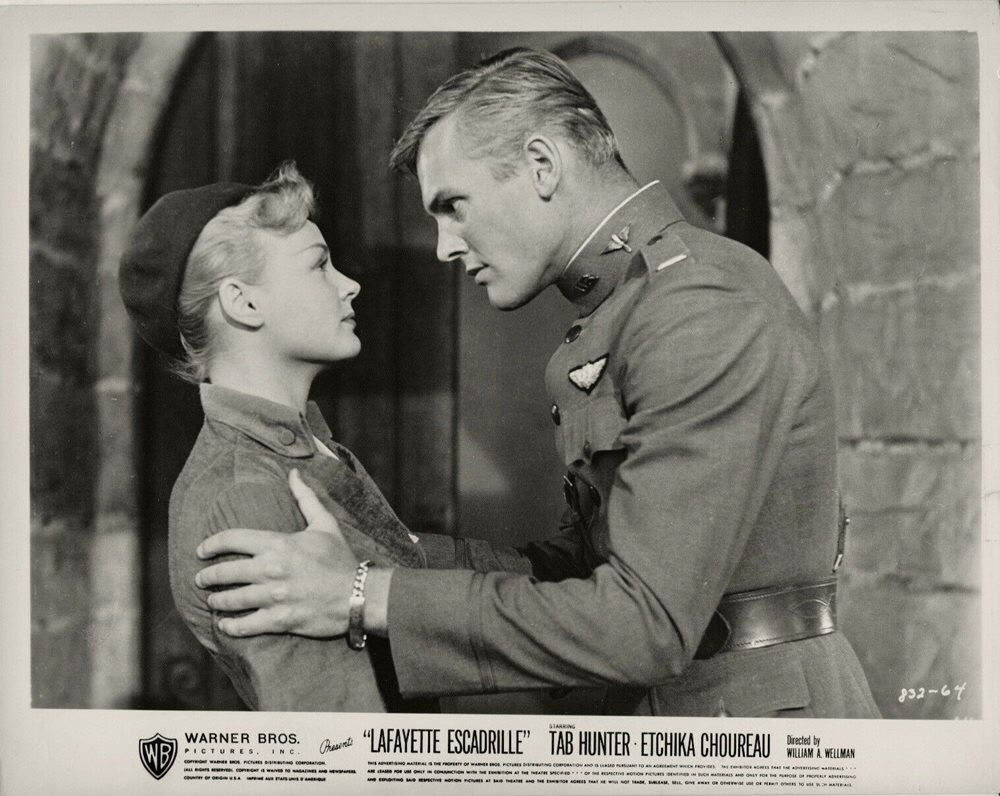
I was off work yesterday, so I decided to watch a movie I’d DVR’d. A few weeks ago, I was getting ready to DVR some Cary Grant movies on TCM when I saw that Lafayette Escadrille was going to be on. Some of you may know that the First World War is one of my historical specialties, especially Americans in World War I, so when I saw that a move about the Lafayette Escadrille, a French Air Force unit composed of American volunteers, was coming on, I knew I wanted to see it. Besides, it stars Tab Hunter, who, in my opinion, is one of the sexiest men to have ever lived, and he looks really good in a French Air Force uniform and an American Army uniform later in the movie. Of all the military uniforms I’ve ever seen throughout history, the WWI era American uniform is my favorite, but I’m getting off track.

Tab Hunter came out as gay in his 2005 autobiography, Tab Hunter Confidential, which was also made into a documentary by his husband Allan Glaser. Hunter had long been rumored to be gay and was basically outed in 1955 when his agent fed a story about him being arrested for disorderly conduct at what the magazine called a “limp-wristed pajama party.” His agent had been Henry Wilson, who also represented Rock Hudson. It has always been believed that Wilson leaked the story to Confidential in order to keep a story about Hudson being gay out of the magazine. However, Hunter was such a heartthrob and was also protected by Jack Warner, not to mention “dating” Natalie Wood, that the story had little impact on his career at the time. Lafayette Escadrille was made three years later.

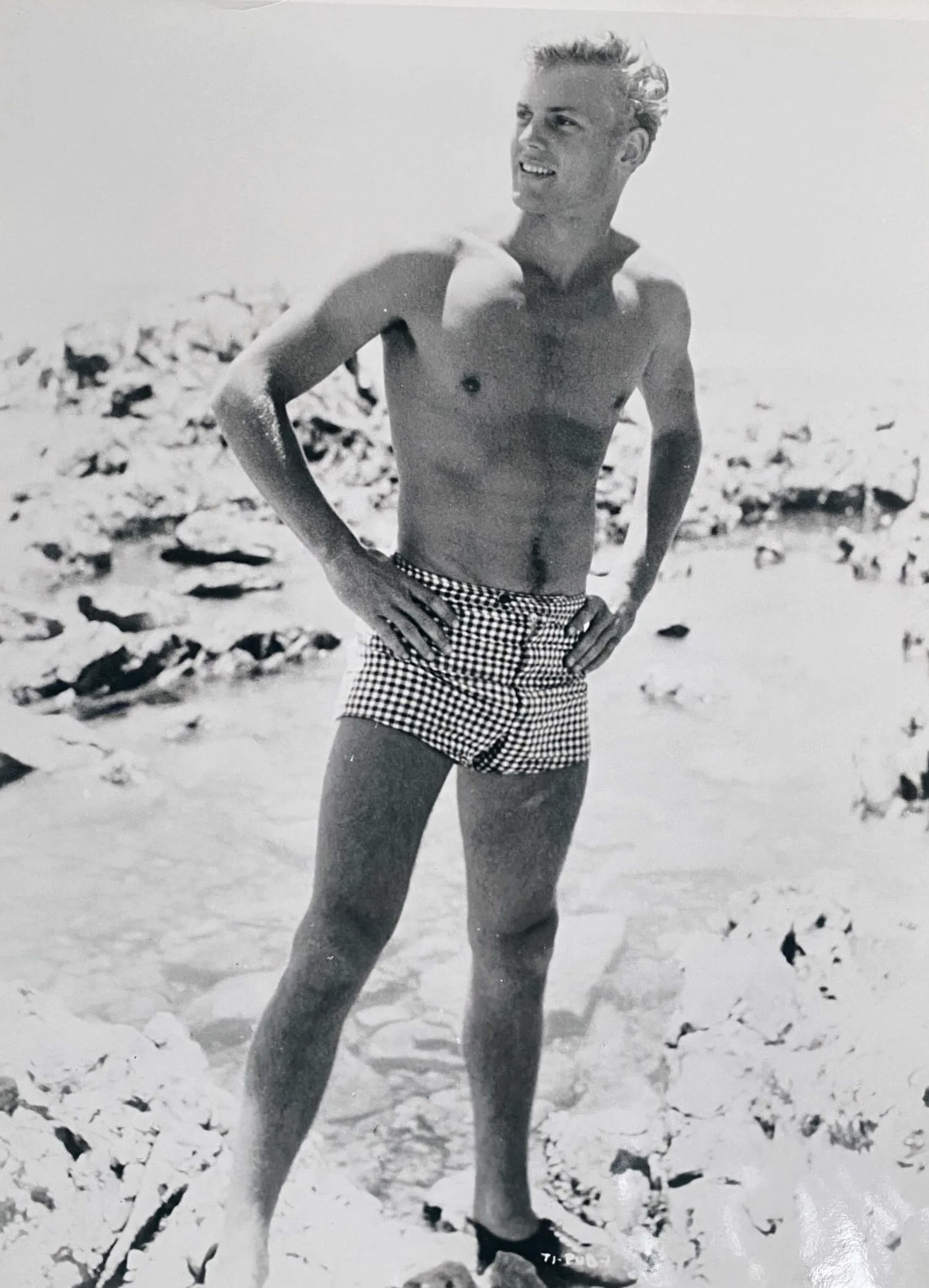
Lafayette Escadrille is no cinematic masterpiece, but it was mildly entertaining since the movie stars some very handsome men, including Jody McCrea, known for playing Deadhead in all the seventies Frankie Avalon/Annette Funicello beach movies,  and a young Clint Eastwood. It was worth it just to see Tab Hunter in his prime. In nearly every movie he was in during the 1950s, Tab Hunter is seen shirtless at some point, and his beauty will take your breath away. After I watched Lafayette Escadrille, I watched the documentary Tab Hunter Confidential. Hunter passed away in 2018. Even as an older man, Tab Hunter still had a beautiful smile and was still good-looking. He spent his later years focusing on his beloved horses.


Firebird

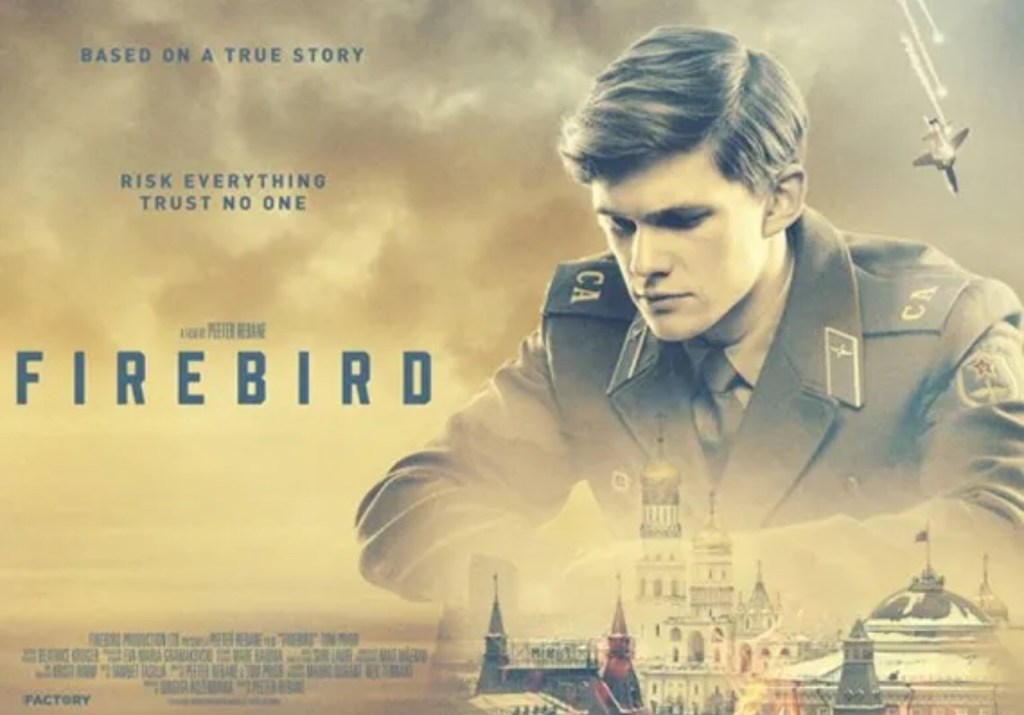
I’m not sure when I first heard about the movie Firebird, but it was sometime last year around the time it was first released. I’ll be honest, what I noticed first was the two main actors, Tom Prior (left) as Sergey and Oleg Zagorodnii (right) as Roman. Both men are incredibly handsome. Prior co-wrote and produced the film. So, yes, the first thing I noticed about the film was how attractive the two main stars are, then I read what the movie was about.

Synopsis: Sergey is a troubled young private, counting the days till his military service in the Soviet Air Force ends. His life is turned upside down when Roman, a daring fighter pilot, arrives at the base. Driven by curiosity, Sergey and Roman navigate the precarious line between love and friendship as a dangerous love triangle forms between them and Luisa, the secretary to the base commander. Sergey is forced to face his past as Roman’s career is endangered and Luisa struggles to keep her family together. As the walls close in, they risk their freedom and their lives in the face of an escalating KGB investigation and the fear of the all-seeing Soviet regime.

I have been desperately wanting to see it since then.

Firebird had its world premiere at the 35th BFI Flare: London LGBTIQ+ Film Festival on  March 17, 2021. The film also screened at the 45th Frameline: San Francisco International LGBTQ+ Film Festival on June 27, 2021, where it won an honorable mention for Best First Feature. I have been waiting for it to get a wider release and expected that I’d have to wait until it was released on one of the streaming services. Then, I saw last week that the film was to be released in cinemas internationally on April 29, 2022. I went to the website to see if it was playing anywhere near me. I’m in Vermont, so I believed the likelihood was slim to none. But, lo and behold, it opened last Friday at the Roxy Theater in Burlington. I already had plans last weekend for Saturday night (seeing Matteo Lane) and was not keen on driving back to Burlington on Sunday.

The schedule for the theater only ran through today, so a friend of mine who was also interested in seeing it once I told he about it, called yesterday to see if it would still be playing this weekend. Tonight’s 7:00 pm showing will be its last showing in Burlington. So even though I have to work tomorrow and would not normally go to Burlington during the week, we are going tonight to see it. I am not about to miss my opportunity to see this film. I’ll let you know tomorrow what I thought of it. I hope it lives up to its hype.