Category Archives: Poetry

Stars in Alabama

Stars in Alabama
By Jessie Redmon Fauset

In Alabama
Stars hang down so low,
So low, they purge the soul
With their infinity.
Beneath their holy glance
Essential good
Rises to mingle with them
In that skiey sea.

At noon
Within the sandy cotton-field
Beyond the clay, red road
Bordered with green,
A Negro lad and lass
Cling hand in hand,
And passion, hot-eyed, hot-lipped,
Lurks unseen.

But in the evening
When the skies lean down,
He’s but a wistful boy,
A saintly maiden she,
For Alabama stars
Hang down so low,
So low, they purge the soul
With their infinity.

About the Poem

“Stars in Alabama” appears in The Crisis, vol. 35, no. 1 (January 1928). In Jessie Redmon Fauset, Black American Writer(The Whitston Publishing Company, 1981), literary biographer Carolyn Wedin Sylvander writes, “‘Stars in Alabama,’ in The Crisis in January 1928, contrasts in three stanzas the passionate heat of noon cotton-fields with the pure holiness of the Alabama night. [. . .] The first lines are again repeated as evening returns. Fauset has moved through this poem from personal feeling to a quietly effective comment on passion and its context.” In “The Women Poets of the Harlem Renaissance,” published in The Harlem Renaissance (Chelsea House Publishers, 2004), Maureen Honey, former professor of English and director of women’s studies at the University of Nebraska–Lincoln, remarks, “While poets looked to natural settings in general for space in which to savor the abandonment of confining roles, night was sought most frequently as it was a time when the objectifying gaze was covered by sleep and the freedom to be at one with the darkness could be safely enjoyed.” 

About the Poet

Jessie Redmon Fauset was born on April 27, 1882, in Camden County, New Jersey. She grew up in Philadelphia and attended the Philadelphia High School for Girls. She received a scholarship to study at Cornell University, where she was likely the first Black female student, and she graduated with a BA in classical languages in 1905. After college, she worked as a teacher in Baltimore and Washington, D.C.

In 1912, Fauset began to write for the NAACP’s official magazine, The Crisis, which was cofounded and edited by W. E. B. Du Bois. After several years contributing poems, essays, and reviews to The Crisis, Fauset became the journal’s literary editor in 1919, moving to New York City for the position.

In her role as literary editor, Fauset introduced then-unknown writers, including Countee Cullen, Langston Hughes, Claude McKay, and Anne Spencer, to a national audience. In his memoir The Big Sea, Hughes writes, “Jessie Fauset at The Crisis, Charles Johnson at Opportunity, and Alain Locke in Washington were the three people who midwifed the so-called New Negro literature into being. Kind and critical—but not too critical for the young—they nursed us along until our books were born.”

Along with her poetry and short fiction in The Crisis, Fauset published several novels known for their portrayal of middle-class African American life, including There Is Confusion (Boni and Liveright, 1924) and Plum Bun (Matthews & Marrot, 1928). She also edited The Brownies’ Book, a periodical for African American children, from 1920 to 1921.

Fauset left The Crisis in 1926 to teach French at a high school in the Bronx. She married Herbert Harris, a businessman, in 1929, and they lived together in New Jersey until his death in 1958. Fauset then returned to Philadelphia, where she lived until her death on April 30, 1961.



Love’s Growth

Love’s Growth
By John Donne

I scarce believe my love to be so pure
  As I had thought it was,
  Because it doth endure
Vicissitude, and season, as the grass;
Methinks I lied all winter, when I swore
My love was infinite, if spring make’ it more.

But if medicine, love, which cures all sorrow
With more, not only be no quintessence,
But mixed of all stuffs paining soul or sense,
And of the sun his working vigor borrow,
Love’s not so pure, and abstract, as they use
To say, which have no mistress but their muse,
But as all else, being elemented too,
Love sometimes would contemplate, sometimes do.

And yet no greater, but more eminent,
  Love by the spring is grown;
  As, in the firmament,
Stars by the sun are not enlarged, but shown,
Gentle love deeds, as blossoms on a bough,
From love’s awakened root do bud out now.

If, as water stirred more circles be
Produced by one, love such additions take,
Those, like so many spheres, but one heaven make,
For they are all concentric unto thee;
And though each spring do add to love new heat,
As princes do in time of action get
New taxes, and remit them not in peace,
No winter shall abate the spring’s increase.

About this Poem

“Love’s Growth” was originally published in Poems (John Marriott, 1633), the first comprehensive publication of John Donne’s poetry. In the poem, Donne examines the true nature of love and finds that it is mixed stuff, a mixture of both physical and spiritual elements. True love is both of the body and the mind, and to prove his point Donne gives a number of arguments and brings together a number of most disparate and varied elements. In “The Muse in Donne and Jonson: A Post-Lacanian Study,” published in Modern Language Studies, vol. 21, no. 4 (Fall 1991), Mark Fortier, a professor in the School of English and Theatre Studies at the University of Guelph, Canada, writes (commenting on the last four lines of the second stanza), “The relation of poet and Muse is contrasted, derisively, to the relation between real lovers, which is Donne’s true subject. Where real love is complex and organic, love of the Muse is unreal, devoid of complexity, devoid of life. Love of the Muse is inactive: those who love, do; those who can’t, call on the Muse. Paradoxically the poetic ego identifies itself, at least here, with those who can. There is an estrangement from the Muse, an inability to sympathize with those who value her. To a large extent this will be the primary relationship between the poet and the Muse throughout Donne’s work: the poet never feels close to, never values his own Muse, although sometimes he can respect the Muse of others.”

Donne says that love is not a personification nor is love made of pure and simple elements that have sustaining and life-giving properties. Rather, it is a mixture of different elements, both spiritual and physical. The abstract nature of love is why it affects both the body and the soul. It causes both spiritual and physical suffering. It does cure not because it is the quintessence, but on the homeopathic principle, of “like curing the like.” It cures all sorrow only by giving more of it. Love is neither infinite nor “pure stuff,” but has a mixed nature like grass which grows with spring. Though like the grass in this respect, love is different from it in another way. While the grass loses its life and vitality with the winter, there is no such loss in the power of love. In this respect, it may be likened to taxes levied in an emergency, but never withdrawn even when the emergency is over.

About the Poet

John Donne was born in 1572 in London, England. He is known as the founder of the Metaphysical Poets, a term created by Samuel Johnson, an eighteenth-century English essayist, poet, and philosopher. The loosely associated group also includes George Herbert, Richard Crashaw, Andrew Marvell, and John Cleveland. The Metaphysical Poets are known for their ability to startle the reader and coax new perspective through paradoxical images, subtle argument, inventive syntax, and imagery from art, philosophy, and religion using an extended metaphor known as a conceit. Donne reached beyond the rational and hierarchical structures of the seventeenth century with his exacting and ingenious conceits, advancing the exploratory spirit of his time.

Donne entered the world during a period of theological and political unrest for both England and France; a Protestant massacre occurred on Saint Bartholomew’s day in France; while in England, the Catholics were the persecuted minority. Born into a Roman Catholic family, Donne’s personal relationship with religion was tumultuous and passionate, and at the center of much of his poetry. He studied at both Oxford and Cambridge Universities in his early teen years. He did not take a degree at either school, because to do so would have meant subscribing to the Thirty-nine Articles, the doctrine that defined Anglicanism. At age twenty he studied law at Lincoln’s Inn. Two years later he succumbed to religious pressure and joined the Anglican Church after his younger brother, convicted for his Catholic loyalties, died in prison. Donne wrote most of his love lyrics, erotic verse, and some sacred poems in the 1590s, creating two major volumes of work: Satires and Songs and Sonnets.

In 1598, after returning from a two-year naval expedition against Spain, Donne was appointed private secretary to Sir Thomas Egerton. While sitting in Queen Elizabeth’s last Parliament in 1601, Donne secretly married Anne More, the sixteen-year-old niece of Lady Egerton. Donne’s father-in-law disapproved of the marriage. As punishment, he did not provide a dowry for the couple and had Donne briefly imprisoned.

This left the couple isolated and dependent on friends, relatives, and patrons. Donne suffered social and financial instability in the years following his marriage, exacerbated by the birth of many children. He continued to write and published the Divine Poems in 1607. In Pseudo-Martyr, published in 1610, Donne displayed his extensive knowledge of the laws of the Church and state, arguing that Roman Catholics could support James I without compromising their faith. In 1615, James I pressured him to enter the Anglican Ministry by declaring that Donne could not be employed outside of the Church. He was appointed Royal Chaplain later that year. His wife died in 1617 at thirty-three years old shortly after giving birth to their twelfth child, who was stillborn. The Holy Sonnets are also attributed to this phase of his life.

In 1621, he became dean of Saint Paul’s Cathedral. In his later years, Donne’s writing reflected his fear of his inevitable death. He wrote his private prayers, Devotions upon Emergent Occasions, during a period of severe illness and published them in 1624. His learned, charismatic, and inventive preaching made him a highly influential presence in London. Best known for his vivacious, compelling style and thorough examination of mortal paradox, John Donne died in London on March 31, 1631.


Furry Bear

Furry Bear
By A. A. Milne

If I were a bear,
  And a big bear too,
I shouldn’t much care
  If it froze or snew;
I shouldn’t much mind
  If it snowed or friz—
I’d be all fur-lined
  With a coat like his!

For I’d have fur boots and a brown fur wrap,
And brown fur knickers and a big fur cap.
I’d have a fur muffle-ruff to cover my jaws,
And brown fur mittens on my big brown paws.
With a big brown furry-down up to my head,
I’d sleep all the winter in a big fur bed.

About this Poem

“Furry Bear” appears in A. A. Milne’s collection of children’s verse Now We Are Six (E. P. Dutton & Co., 1927), illustrated by E. H. Shephard. In Three Cheers for Pooh: A Celebration of the Best Bear in All the World (Egmont, 2001), writer and radio broadcaster Brian Sibley remarks, “A. A. Milne told a friend that his son’s encounter at London Zoo with the American black bear, Winnie, had inspired him to write a couple of poems and, possibly, even a story. True or not, Now We Are Six, published in 1927, contained ‘Furry Bear,’ a verse in which the poet imagines what it would be like to be a bear.” Describing the poem’s accompanying illustration, Sibley later writes, “Thanks to E. H. Shepherd, [Winnie the Pooh] is discovered coming face to face with his famous namesake at the London Zoo in the illustrations to a remarkably Poohish ‘Hum,’ entitled ‘Furry Bear.’”

About the Poet

Alan Alexander Milne, born on January 18, 1882, in Kilburn, London, was a children’s writer, poet, playwright, and novelist. He is best known for his character Winnie-the-Pooh, whose first appearance by that name was in the children’s book Winnie-the-Pooh (Methuen, 1926). He died on January 31, 1956.


Phragmites

Phragmites
By Kyle Carrero Lopez

I’ve crashed a party with an infinity pool and several nude men:
a Fire Island home at the back of a walkway long enough to
outlast a pop song’s bridge and some chorus, flanked by
phragmites on either side, tall and same-faced, so all
but reed bulk hides out from the exterior. Myself
included, close to everyone here has a body of
one approximate build. What would it say if I
stay? Comfort’s not so comfy here, but I stay
and try to have a good time: periodic beach
guest, mainly through favors from men
whose wealth eclipses mine and most
of humankind. I know firsthand why
queers come to this place, obliterate
coherence, take, go, take, till
we’ve consumed enough
to leave.
Someone riding the stiffest
substance cocktail he can muster
GROANS he’s got to pee and can’t,
his functions stalled in the twist and now.
What he can still swing is a smile. Excess
soaks the sundecks and each redwood inch
of the mini villa with a sweet-hot stickiness.
There’s much more to take in, with nowhere to go.

About this Poem

“Cherry Grove and the Fire Island Pines—historic, adjoining gay communities on Fire Island—are beautiful, easy to reach from New York City, a blast if you’re with trusted friends, and a hotbed of race and class conflict. The ferries stop operating overnight, so you’re stuck once the last one leaves. One time, while discussing rental price-gouging in the Pines and suggesting that the safety Fire Island offers queer people should be accessible to all income levels, a gay man told me, ‘It’s Long Island, not insulin.’ I’m interested in what we willingly permit for the sake of our own enjoyment.” —Kyle Carrero Lopez

About the Poet

Kyle Carrero Lopez is the author of MUSCLE MEMORY ([PANK] Books, 2022), winner of the 2020 [PANK] Books Contest. He co-founded LEGACY, a Brooklyn-based production collective by and for Black queer artists. Lopez is a 2022 Tin House Scholar.


Silentium Amoris

Silentium Amoris
By Oscar Wilde

AS oftentimes the too resplendent sun
    Hurries the pallid and reluctant moon
Back to her sombre cave, ere she hath won
    A single ballad from the nightingale,
    So doth thy Beauty make my lips to fail,
And all my sweetest singing out of tune.

And as at dawn across the level mead
    On wings impetuous some wind will come,
And with its too harsh kisses break the reed
    Which was its only instrument of song,
    So my too stormy passions work me wrong,
And for excess of Love my Love is dumb.

But surely unto Thee mine eyes did show
    Why I am silent, and my lute unstrung;
Else it were better we should part, and go,
    Thou to some lips of sweeter melody,
    And I to nurse the barren memory
Of unkissed kisses, and songs never sung.

About the Poem

“Silentium Amoris” is Latin for “The Silence of Love,” a suiting title for the love of nature and the nature of love, but also the unsaid love. It also pairs well with the other Latin titles from The Fourth Movement, all which center around the theme of love and its beauty and costs.

“Silentium Amoris” is heartfelt and simply beautiful. Wilde is the voice of a lover who is confessing to the one he loves. (A quick note: some who have analyzed the poem refer to the love as that of a woman, but as most of you probably know, it is most likely another man that he writes this poem about. After, the title says it is the silence of love, and Wilde was famous for his quote from his trial for being homosexual describing his sexuality as “the love that dare not speak its name.”) He wishes to sing to his love whose beauty is enough to make him dumb. He finds he cannot sing the songs that he could sing so sweetly, and he notices he cannot even speak, “his lips fail him.”

However, he tells his love that he must have understood by looking into his eyes, the reason for his silence and his “unstrung lute.” If he didn’t, he would rather part ways with him for that would mean he could not read his eyes and judge how speechless his presence made him.

His love could then go to some man who would not stammer or lose his words or his tune while singing to him while he would nurse the memory he had of his love, dreaming of “unkissed kisses.”

This poem portrays two very strong emotions- love and self-respect. Although he loves this man, he would rather he left to be with another man than stay with Wilde if he did not reciprocate.

About the Poet

Oscar Wilde was an Anglo-Irish playwright, novelist, poet, and critic. He is regarded as one of the greatest playwrights of the Victorian Era. In his lifetime he wrote nine plays, one novel, and numerous poems, short stories, and essays.

Wilde was a proponent of the Aesthetic movement, which emphasized aesthetic values more than moral or social themes. This doctrine is most clearly summarized in the phrase “art for art’s sake.”

Besides literary accomplishments, he is also famous, or perhaps infamous, for his wit, flamboyance, and affairs with men. He was tried and imprisoned for his homosexual relationship (then considered a crime) with the son of an aristocrat.

In 1891, Wilde began an affair with Lord Alfred Douglas, nicknamed “Bosie,” who became both the love of his life and his downfall. Wilde had been married, but the marriage ended in 1893.

In April 1895, Oscar sued Bosie’s father for libel as the Marquis of Queensberry had accused him of homosexuality. Oscar’s case was unsuccessful, and he was himself arrested and tried for gross indecency. He was sentenced to two years of hard labor for the crime of sodomy. During his time in prison he wrote De Profundis, a dramatic monologue and autobiography, which was addressed to Bosie.

Upon his release in 1897, he wrote The Ballad of Reading Gaol, revealing his concern for inhumane prison conditions. He spent the rest of his life wandering Europe, staying with friends and living in cheap hotels. He died of cerebral meningitis on November 30, 1900, penniless, in a cheap Paris hotel.


Winter Song

Winter Song
By Wilfred Owen

The browns, the olives, and the yellows died,
And were swept up to heaven; where they glowed
Each dawn and set of sun till Christmastide,
And when the land lay pale for them, pale-snowed,
Fell back, and down the snow-drifts flamed and flowed.

From off your face, into the winds of winter,
The sun-brown and the summer-gold are blowing;
But they shall gleam with spiritual glinter,
When paler beauty on your brows falls snowing,
And through those snows my looks shall be soft-going.

About this Poem

“Winter Song,” unpublished at the time of Wilfred Owen’s death, was first collected in The Poems of Wilfred Owen (Chatto & Windus, 1931). In “Wilfred Owen’s Influence on Three Generations of Poets,” published in The Modern Review, vol. 242, no. 3 (September 1978), Sasi Bhusan Das, former director of the Institute of English in Calcutta, writes, “[T]he idea of spiritual rebirth in Owen’s ‘Winter Song’ is confirmed by the next few lines of its first stanza: ‘And when the land lay pale for them, pale-snowed, / Fell back, and down the snow-drifts flamed and flowed.’ [. . .] It will be further noted that in his ‘Winter Song’ Owen also sings of a symbolic spring [. . .] in the same manner as [T. S.] Eliot in the opening passage of ‘Little Gidding’ does of the ‘Midwinter spring.’ Thus, in a sense, Owen’s ‘Winter Song,’ like Eliot’s passage, is a song of ‘Midwinter spring’ which is ‘sempiternal’ for it is not in ‘time’s covenant’ but ‘suspended in time.’” Jon Stallworthy, professor emeritus at the University of Oxford, notes in his titular biography of Owen that the poem is one of two “addressed to Arthur Newboult, the seven-year-old son of Edinburgh friends.”

About the Poet

On March 18, 1893, Wilfred Edward Salter Owen was born in Shropshire, England. After the death of his grandfather in 1897, the Owen family moved to Birkenhead, where Owen was educated at the Birkenhead Institute. After another move in 1906, he continued his studies at the technical school in Shrewsbury. Interested in the arts at a young age, Owen began writing poetry as a teenager.

In 1911, Owen matriculated at London University, but after failing to receive a scholarship, he spent a year as a lay assistant to a vicar in Oxfordshire. In 1913, he went on to teach in France at the Berlitz School of English, where he met the poet Laurent Tailhade. He returned from France in 1915 and enlisted in the Artists Rifles. After training in England, Owen was commissioned as a second lieutenant in the Manchester Regiment in 1916.

Owen was wounded in combat in 1917 and, diagnosed with shell shock, was evacuated to Craiglockhart War Hospital near Edinburgh. There, he met another patient, poet Siegfried Sassoon, who served as a mentor and introduced him to well-known literary figures such as Robert Graves and H. G. Wells.

It was at this time Owen wrote many of his most important poems, including “Anthem for Doomed Youth” and “Dulce et Decorum Est.” His poetry often graphically illustrated the horrors of warfare, the physical landscapes that surrounded him, and the human body in relation to those landscapes. His verse stands in stark contrast to the patriotic poems of war written by earlier poets of Great Britain, such as Rupert Brooke. A gay man, Owen also often celebrated male beauty and comradery in his poems.

Owen rejoined his regiment in Scarborough in June 1918, and, in August, he returned to France. In October he was awarded the Military Cross for bravery at Amiens. He was killed on November 4, 1918, while attempting to lead his men across the Sambre-Oise canal at Ors. He was twenty-five years old. The news reached his parents on November 11, Armistice Day.

While few of Owen’s poems appeared in print during his lifetime, TheCollected Poems of Wilfred Owen (New Directions, 1963), with an introduction by Sassoon, was first published in December 1920 and reissued several times. Owen has since become one of the most admired poets of World War I. A review of Owen’s poems published on December 29, 1920, just two years after his death, read, “Others have shown the disenchantment of war, have unlegended [sic] the roselight and romance of it, but none with such compassion for the disenchanted nor such sternly just and justly stern judgment on the idyllisers.”

About Owen’s post-war audience, the writer Geoff Dyer said,

To a nation stunned by grief, the prophetic lag of posthumous publication made it seem that Owen was speaking from the other side of the grave. Memorials were one sign of the shadow cast by the dead over England in the twenties; another was a surge of interest in spiritualism. Owen was the medium through whom the missing spoke.


Song for the New Year

Song for the New Year
By Eliza Cook

Old Time has turned another page
    Of eternity and truth;
He reads with a warning voice to age,
    And whispers a lesson to youth.
A year has fled o’er heart and head
    Since last the yule log burnt;
And we have a task to closely ask,
    What the bosom and brain have learnt?
Oh! let us hope that our sands have run
    With wisdom’s precious grains;
Oh! may we find that our hands have done
    Some work of glorious pains.
Then a welcome and cheer to the merry new year,
    While the holly gleams above us;
With a pardon for the foes who hate,
    And a prayer for those who love us.

We may have seen some loved ones pass
    To the land of hallow’d rest;
We may miss the glow of an honest brow
    And the warmth of a friendly breast:
But if we nursed them while on earth,
    With hearts all true and kind,
Will their spirits blame the sinless mirth
    Of those true hearts left behind?
No, no! it were not well or wise
    To mourn with endless pain;
There’s a better world beyond the skies,
    Where the good shall meet again.
Then a welcome and cheer to the merry new year,
    While the holly gleams above us;
With a pardon for the foes who hate,
    And a prayer for those who love us.

Have our days rolled on serenely free
    From sorrow’s dim alloy?
Do we still possess the gifts that bless
    And fill our souls with joy?
Are the creatures dear still clinging near?
    Do we hear loved voices come?
Do we gaze on eyes whose glances shed
    A halo round our home?
Oh, if we do, let thanks be pour’d
    To Him who hath spared and given,
And forget not o’er the festive board
    The mercies held from heaven.
Then a welcome and cheer to the merry new year,
    While the holly gleams above us;
With a pardon for the foes who hate,
    And a prayer for those who love us.

About the Poet

Eliza Cook was born on December 24, 1818, in London, England. Self-educated as a child, she began writing poems at the age of fifteen and published her first poetry collection, Lays of a Wild Harp: A Collection of Metrical Pieces (John Bennett, 1835), two years later.

Cook also published poems in magazines such as Metropolitan MagazineNew Monthly Magazine, and Weekly Dispatch, which published her most popular poem, “The Old Arm-Chair.” In 1838, Cook published her second collection, Melaia and Other Poems, which was well received in both England and America. It was reissued in 1844.

Known as a poet of the working class, Cook wrote poems that advocated for political freedom for women and addressed questions of class and social justice. Despite her popularity, she was criticized for the ways in which she bucked gender conventions in both her writing and her life; Cook wore male clothing and had a relationship with American actress Charlotte Cushman, to whom she addressed a number of her poems.

In 1849, Cook started a penny-biweekly called Eliza Cook’s Journal, which contained poems, reviews, and social essays written mostly by her for a female audience. She continued the publication until 1854. Plagued by bad health in the last years of her life, Cook published little; she died on September 23, 1889, in Wimbledon, England.


Family Secret

Family Secret
By Nancy Kuhl

Too many cracks precede
the spectacular breaking. Each

story begins in a different dark-
ness. And light: think how it catches

on any surface (pane or
hinge or keyhole) and

out of night (out of nothing),
all at once: a window,

a door. It’s a metaphor
(and then it isn’t), darkness.

When I dream again
it’s the old kitchen—I

open the oven and sound,
like ropes of heat, drifts

out; a shimmering. Familiar
and confusing. Uncanny,

and then unmistakable: our
voices, recorded. Playback

and loop, now—every aching
word we whispered here.

About this Poem

“I’m fascinated by the ways in which secrets are kept and revealed in families, how sometimes what can’t be acknowledged doesn’t drop out of sight so much as it becomes ambient, atmospheric. Coming to recognize the truth, then, is like a trick the eye plays: suddenly it is possible to see what was always there, unrecognized, and the world becomes newly tangible and remarkably uncertain at once, charged with the ordinary strangeness of a dream.”

—Nancy Kuhl

I think all families have their secrets. I know mine has numerous ones: I’m gay, my niece is transgendered, several members have had affairs on their spouses, and the list goes on, probably more than I know. So, when I read this poem, it seemed appropriate for this time of year. It’s the holiday season when everyone keeps their secrets as bottled up as possible. Sometimes, the secrets come out in whispers, sometimes in dribbles, sometimes with shouts, and sometimes not at all. Secrets can tear a family apart even though most believe keeping the secrets can keep the family together. Some secrets are worth keeping for self-preservation, but mostly, they are just a lie of omission.

There were a lot of pictures I could have used for this post: a family gathered around a holiday table, someone looking out a window with his image reflecting off the windowpane, “any surface (pane or / hinge or keyhole,” a guy sleeping, “ When I dream again,” or a guy opening an oven, “open the oven and sound.” However, I thought that someone looking at their reflection in a mirror was “ a metaphor / (and then it isn’t).” Because when we look in the mirror, we see our ourselves, and hopefully, we see who we know we are, not the secrets that we keep.

About the Poet

Nancy Kuhl is the author of several collections, most recently On Hysteria (Shearsman Books, 2022) and Granite (A Published Event, 2021). She lives in Black Rock, Connecticut.


The Dark Cavalier

The Dark Cavalier
By Margaret Widdemer

I am the Dark Cavalier; I am the Last Lover:
My arms shall welcome you when other arms are tired;
I stand to wait for you, patient in the darkness,
Offering forgetfulness of all that you desired.

I ask no merriment, no pretense of gladness,
I can love heavy lids and lips without their rose;
Though you are sorrowful you will not weary me;
I will not go from you when all the tired world goes.

I am the Dark Cavalier; I am the Last Lover;
I promise faithfulness no other lips may keep;
Safe in my bridal place, comforted by darkness,
You shall lie happily, smiling in your sleep.

About this Poem

“The Dark Cavalier” appears in Margaret Widdemer’s collection The Old Road to Paradise (Henry Holt and Company, 1918). Oft republished and heavily anthologized, the poem is recognized as one of Widdemer’s best. Poet Margery Swett Mansfield, in a review of Widdemer’s work published in Poetry magazine, vol. 33, no. 5 (Feb 1929), calls it “Margaret Widdemer at her emotional best [. . .].” In The Literary Digest, vol. 57, no. 6 (May 11, 1918), the editors claim that Widdemer “has seldom done a finer piece of work than when she wrote this haunting lyric [. . .].” Finally, in a biographical note at the end of The Second Book of Modern Verse (Houghton Mifflin, 1920), critic, editor, and poet Jessie Belle Rittenhouse writes, “She is a poet of much delicacy, and several of her poems, notably ‘The Dark Cavalier’ in this volume, are among the best lyric work of the period.”

About the Poet

Margaret Widdemer, born on September 30, 1884, in Doylestown, Pennsylvania, was a poet, novelist, and children’s writer. She was the author of several titles, including the collection The Old Road to Paradise (Henry Holt and Company, 1918), which won the 1919 Pulitzer Prize in Poetry in a split decision with Carl Sandburg’s Cornhuskers (Henry Holt and Company, 1918). She died on July 14, 1978.

This poem is in the public domain. Published in Poem-a-Day on December 9, 2023, by the Academy of American Poets.

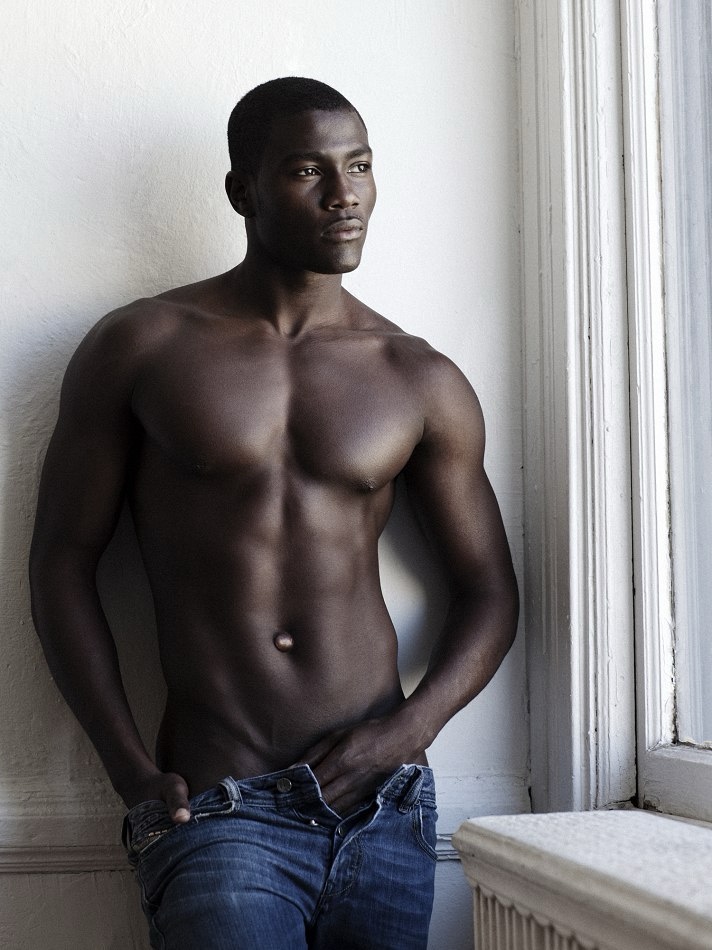
I debated using the picture above because it’s more explicit than I usually use, but I decided it fit the poem too perfectly and was artistic enough to not be too explicit.


Thank You

Thank You
By Ira Sadoff

Why not a meadow?
Why not a little clearing and a stream
to wade in? Why not take our pants off,
a little respite from our partners
who couldn’t see us, who’d never see us
no matter what we did? What we did was wrong,
the way we did it. It was miraculous,
it took hold long after
we trudged back to our spouses.
So many years harboring a secret.
Thank you for telling me
about growing up in Queens, daddy’s
milk truck skittering about Northern Boulevard
looking for your favorite ice cream.
And the darkness: how shades were drawn,
how your mother would never recover
from your father. How many of us
have been stymied by those early dramas
until we married them? So many years,
so many hungry years after.
Thank you for the apricots in the mail,
thank you more for appearing at my door
with so little time left: no going back
to field our regrets. Old
as we are, you are here and now,
why not a meadow and a clearing?

About this Poem

“This poem was inspired by the pleasure of a long, deep friendship. Unmediated intimacy, with its concomitant trust and pleasure in another person, is a rare and treasured gift—even more so if it survives our histories and passionate mistakes. The poem aspires to give texture to that journey, to those feelings.”—Ira Sadoff

About the Poet

Ira Sadoff was born in Brooklyn, New York, on March 7, 1945, of Russian-Jewish ancestry. He earned a BA in industrial and labor relations from Cornell University in 1966 and an MFA from the University of Oregon in 1968.

In 1975, Sadoff published his first collection of poetry, Settling Down (Houghton Mifflin). Since then, he has published several poetry collections, most recently Country, Living (2020), True Faith (2012), and Barter (2003), which delves into his personal past, specifically concerning love and bereavement, as well as the historical and global past, referencing Beethoven, Vietnam, and the fall of Communism. Other recent collections include Grazing (1998), which included poems that were awarded the American Poetry Review’s Leonard Shestack Prize, the Pushcart Poetry Prize, and the George Bogin Memorial Prize from the Poetry Society of America; Emotional Traffic(1989); A Northern Calendar (1981), which charts the arrival and passage of the seasons; and Palm Reading in Winter (1978).

About Sadoff’s work, the poet Gerald Stern has said, “Nowhere else in American poetry do I come across a passion, a cunning, and a joy greater than his. And a deadly accuracy. I see him as one of the supreme poets of his generation.” On awarding Sadoff the Bogin Memorial Prize, the poet Alan Shapiro said,

Beyond the energetic syntax and the astonishing range of idiom and tone, what I so admire in these poems is the just yet always unpredictable weaving together of individual and collective life, the insightful, almost seamless integration of personal experience in all its unredemptive [sic] anguish with the heterogeneous realities of American culture.

Sadoff is also the author of three works of prose, most recently History Matters: Contemporary Poetry on the Margins of American Culture (2009), which, through the work of poets like Czesław Miłosz and Frank O’Hara, argues that poets live and write within history; An Ira Sadoff Reader: Selected Poetry and Prose (1992), a collection of stories, poems, and essays about contemporary poetry; and Uncoupling (1982), a novel.

Sadoff is the recipient of fellowships from the National Endowment for the Arts and the John Simon Guggenheim Memorial Foundation. In 1973, he was a fellow at the Squaw Valley Community of Writers, and in 1974, he was the Alan Collins Fellow in Poetry and Prose at the Bread Loaf Writers’ Conference. His poetry has been widely anthologized, most recently in The Best American Poetry Series, in 2008.

Sadoff has served as poetry editor of the Antioch Review, and was cofounder of the Seneca Review. He has taught at the Iowa Writers’ Workshop, and in the MFA programs at the University of Virginia and Warren Wilson College. He previously served as the Arthur Jeremiah Roberts Professor of English at Colby College in Waterville, Maine.