Category Archives: Poetry

Honeycrisp

Honeycrisp
by January Gill O’Neil

My boyfriend will eat
an entire apple in one sitting.
Peel, pulp, core. Hands me
the stem when he’s done.
Seeds in his gut. The calyx
a dank star. An orchard grows
inside him. The tongue
that slicks the skin. Hands
perfumed with bruised sugar.
His kisses a tender lament.
The heart that glows. How he takes
everything the fruit offers
and leaves nothing
but the stem. I let my body
follow. Set my jaw soft.
Rapt, greedy, this devotion.
Tough armor. Red glow. Yellow
flesh. Every bite a fall
from grace.

🍎 🍎 🍎

About the Poem

January Gill O’Neil describes this poem as an exploration of appetite—of “devouring everything in sight”—and that idea pulses through every line. The apple is more than fruit; it becomes a symbol of desire, of intimacy, of giving oneself over completely. The act of eating is transformed into something almost sacred, almost dangerous.

There is something deeply sensual about the language: “tongue / that slicks the skin,” “hands / perfumed with bruised sugar,” “kisses a tender lament.” None of it is explicit, and yet it is undeniably intimate. The physical act of consumption mirrors emotional and romantic vulnerability. To love, the poem suggests, is to consume and be consumed—to take in everything another person offers, even knowing that such devotion leaves one exposed.

The final line—“Every bite a fall / from grace”—invokes the biblical image of the apple as forbidden fruit. Love, desire, and surrender become acts of both joy and risk. There is sweetness here, but also the awareness that to give yourself entirely to someone is to step beyond safety, beyond restraint.

I was struck most by O’Neil’s idea of “giving yourself over entirely to something—or someone—you just can’t get enough of.” There’s something beautiful and a little frightening in that kind of devotion.

While I don’t have a boyfriend, I recognize that instinct in myself. It’s the way I am with friends, with the people I care about. When I love—whether romantically or platonically—I tend to give fully, sometimes more than I probably should. I was raised to be kind, to be generous, to be present for others, and that often means offering my time, my attention, and my heart without holding much back.

There’s a vulnerability in that. Sometimes people appreciate it. Sometimes they take advantage. But I’m not sure I would want to love any other way. There is something honest—almost sacred—about giving freely, about not rationing care or affection.

Like the poem, that kind of love can feel like a kind of falling—unguarded, wholehearted, a little reckless. But it is also where the sweetness is.

🍎 🍎 🍎

About the Poet

January Gill O’Neil is an American poet known for her vivid imagery, emotional clarity, and exploration of identity, love, and everyday experience. Her work often blends the sensual with the reflective, grounding abstract emotions in tangible, physical details.

In “Honeycrisp,” O’Neil captures something both universal and deeply personal: the hunger for connection and the willingness to surrender to it. Her language invites the reader not just to observe, but to feel—to taste the sweetness, to sense the risk, and to recognize the quiet power of devotion.


To Be, or Not to Be

Act III, Scene I of Hamlet

By William Shakespeare

To be, or not to be: that is the question:
Whether ’tis nobler in the mind to suffer
The slings and arrows of outrageous fortune,
Or to take arms against a sea of troubles
And by opposing end them. To die—to sleep,
No more; and by a sleep to say we end
The heart-ache and the thousand natural shocks
That flesh is heir to: ’tis a consummation
Devoutly to be wish’d. To die, to sleep;
To sleep, perchance to dream—ay, there’s the rub:
For in that sleep of death what dreams may come,
When we have shuffled off this mortal coil,
Must give us pause—there’s the respect
That makes calamity of so long life.
For who would bear the whips and scorns of time,
Th’oppressor’s wrong, the proud man’s contumely,
The pangs of disprized love, the law’s delay,
The insolence of office, and the spurns
That patient merit of th’unworthy takes,
When he himself might his quietus make
With a bare bodkin? Who would fardels bear,
To grunt and sweat under a weary life,
But that the dread of something after death,
The undiscover’d country, from whose bourn
No traveller returns, puzzles the will,
And makes us rather bear those ills we have
Than fly to others that we know not of?
Thus conscience does make cowards of us all,
And thus the native hue of resolution
Is sicklied o’er with the pale cast of thought,
And enterprises of great pitch and moment
With this regard their currents turn awry
And lose the name of action.—Soft you now,
The fair Ophelia!—Nymph, in thy orisons
Be all my sins remember’d.

About the Soliloquy

From Hamlet by William Shakespeare, this is perhaps the most famous meditation on existence ever written. Its opening line—“To be, or not to be”—has echoed across centuries because it asks a question that is both universal and deeply personal.

Hamlet is not simply pondering life and death in the abstract. He is weighing suffering, endurance, injustice, heartbreak, and uncertainty. He imagines death as sleep—peaceful, even desirable—but immediately complicates that idea: “To sleep, perchance to dream—ay, there’s the rub.” It is not death itself that troubles him, but what might come after.

That uncertainty—the “undiscover’d country”—is what keeps him, and us, from choosing escape over endurance.

There is something remarkable about how Hamlet’s question anticipates a later philosophical inquiry. More than half a century after Shakespeare, René Descartes approached existence from a very different angle, asking not whether life is worth living, but how we can know that we exist at all.

Descartes famously wrote:

Cogito, ergo sum — I think, therefore I am.

But this was not simply a clever phrase. In his Meditations, he begins by doubting everything—the senses, the world, even his own body—until he arrives at one undeniable truth:

“I am, I exist—is necessarily true whenever it is put forward by me or conceived in my mind.”

Where Hamlet is overwhelmed by existence, Descartes is trying to prove it.

And yet, the two meet in a fascinating way.

Hamlet asks: To be, or not to be?
Descartes answers: You are—because you are thinking.

Hamlet’s struggle is emotional, rooted in suffering and fear of the unknown. Descartes’ is intellectual, rooted in doubt and the search for certainty. But both reveal something essential about being human: that awareness—our ability to think, to question, to reflect—is both what proves our existence and what makes that existence so complicated.

Hamlet cannot escape the burden of consciousness. His thoughts do not free him; they weigh him down, turning action into hesitation. As he says, “Thus conscience does make cowards of us all.”

Descartes, on the other hand, finds stability in thought. Even if everything else is uncertain, the thinking self remains.

Between them lies a truth that feels deeply human:

We exist because we think—but thinking is also what makes existence so difficult.

And yet, we continue.

About the Author

William Shakespeare (1564–1616) is widely regarded as one of the greatest writers in the English language. His works include tragedies such as Hamlet, Macbeth, and King Lear, as well as comedies, histories, and poetry that continue to shape literature, theater, and culture around the world.

Though details of his personal life remain somewhat elusive, Shakespeare’s writing reveals a profound understanding of human nature—our desires, fears, contradictions, and complexities. His characters feel timeless because they grapple with questions we still ask today: Who are we? What does it mean to live well? And how do we face the unknown?

Hamlet stands as one of his most introspective works, offering not just a story of revenge and tragedy, but a deeply philosophical exploration of existence itself.

Sometimes, I miss teaching Shakespeare. Then I remember what it was like to deal with students “learning” Shakespeare—or more accurately, ignoring what I was trying to teach them about Shakespeare—and I remember why I left the high school classroom for the museum world.


Requiescat

Requiescat

by Oscar Wilde

Tread lightly, she is near
Under the snow,
Speak gently, she can hear
The daisies grow.

All her bright golden hair
Tarnished with rust,
She that was young and fair
Fallen to dust.

Lily-like, white as snow,
She hardly knew
She was a woman, so
Sweetly she grew.

Coffin-board, heavy stone,
Lie on her breast,
I vex my heart alone,
She is at rest.

About the Poem

On the surface, Requiescat is a quiet elegy. The title itself is Latin, meaning “may she rest,” from the familiar phrase requiescat in pace—“rest in peace.” The poem speaks softly, almost reverently, as the speaker mourns someone young who has died. The repeated instruction to “tread lightly” and “speak gently” creates a sense of hushed grief, as if the poet fears disturbing the peace of the dead.

What makes the poem so striking is its restraint. Rather than dramatic declarations of sorrow, Wilde offers images: snow, daisies, golden hair turned to rust, the weight of the coffin-board and stone. The poem moves quietly from life to death, from youth and beauty to the stillness of the grave. The final line—“I vex my heart alone, / She is at rest”—captures the loneliness of grief. The dead have found peace; the living must carry the sorrow.

Although the poem appears to mourn a woman, many readers today feel something deeper and more complicated beneath its surface. Wilde often wrote about beauty, youth, and loss with a sensitivity that resonates strongly with queer experience—especially the sense of loving deeply in a world that did not always allow such love to be openly expressed. The line “I vex my heart alone” feels almost like a confession of private grief, the kind of emotion that must remain hidden.

Whether Wilde intended the poem to carry such layers or not, it reflects something universal: the quiet sorrow of loving someone whose presence is now gone. It is a reminder that grief is often most powerful when it is whispered rather than shouted.

About the Poet

Oscar Wilde was born in 1854 in Dublin, making him one of Ireland’s most celebrated literary figures. His mother, Jane Wilde, was herself a poet and Irish nationalist, and the young Wilde grew up surrounded by literature, politics, and intellectual debate. He later studied at Trinity College Dublin and Oxford before rising to fame in London as a playwright, novelist, and poet.

Today Wilde is remembered not only for his brilliant wit and works such as The Importance of Being Earnest and The Picture of Dorian Gray, but also as one of the most famous queer figures in literary history. In 1895 he was prosecuted and imprisoned for what Victorian England called “gross indecency,” a charge stemming from his relationships with men. The trial and imprisonment destroyed his career and ultimately shortened his life, but they also transformed him into a lasting symbol of both artistic brilliance and the injustice faced by queer people in the past.

As we celebrate Saint Patrick’s Day, Wilde stands as one of Ireland’s most distinctive voices—an Irishman whose sharp intellect, aesthetic sensibility, and emotional depth helped shape modern literature. His life reminds us that Ireland’s cultural legacy includes not only great writers but also queer voices whose stories were once silenced.

Reading Wilde today, especially poems like “Requiescat,” allows us to hear that voice again—soft, lyrical, and deeply human. In its quiet meditation on love and loss, the poem offers something timeless: a reminder that beauty, grief, and memory are part of what connects us all.


Notes For Further Study

Notes For Further Study
By Christopher Salerno

You are a nobody
until another man leaves
a note under your wiper:
I like your hair, clothes, car—call me!
Late May, I brush pink
Crepe Myrtle blossoms
from the hood of my car.
Again spring factors
into our fever. Would this
affair leave any room for error?
What if I only want
him to hum me a lullaby.
To rest in the nets
of our own preferences.
I think of women
I’ve loved who, near the end,
made love to me solely
for the endorphins. Praise
be to those bodies lit
with magic. I pulse
my wipers, sweep away pollen
from the windshield glass
to allow the radar
detector to detect. In the prim
light of spring I drive
home alone along the river’s
tight curves where it bends
like handwritten words.
On the radio, a foreign love
song some men sing to rise.

Sometimes the smallest gesture can feel like a revelation.

In Salerno’s poem, that revelation is almost absurdly simple: a note left under a windshield wiper. Yet the moment carries the weight of recognition. The speaker says, “You are a nobody / until another man leaves / a note under your wiper.” That line captures something deeply human—our desire to be seen, desired, noticed.

For queer people especially, that kind of recognition has often come in coded or fleeting ways: a glance, a quiet comment, a scribbled note. The poem captures the nervous excitement that comes with possibility. Is it an invitation? A mistake? A beginning?

The only notes I’ve ever received under my windshield wipers have been someone complaining that I parked too close to their car or a parking ticket. I can’t say anyone has ever left me a flirtatious note like the one in the poem. Still, the idea of such a moment—something unexpected and slightly daring—has a certain charm to it.

Spring surrounds the poem—blossoms, pollen, warmth, fever. The season becomes a metaphor for awakening desire. But the poem is not simply about lust. The speaker wonders whether he wants something softer, even tender: someone to “hum me a lullaby.” That line shifts the emotional tone from flirtation to longing.

By the end, the speaker is driving alone along a winding river, the curves “like handwritten words.” The note might promise connection, but the poem ends in contemplation rather than fulfillment. Sometimes desire is less about what happens and more about the moment when possibility first appears.

About the Poem

“Notes For Further Study” is a poem about recognition, longing, and the fragile beginnings of attraction. The opening lines immediately establish the emotional stakes: identity and worth seem suddenly validated by another man’s attention.

Salerno uses ordinary details—pollen on a windshield, a radar detector, crepe myrtle blossoms—to ground the poem in the mundane world of everyday life. Yet these details carry symbolic weight. The speaker repeatedly wipes away pollen from the glass, suggesting a desire to see clearly or remove the haze of uncertainty surrounding this new encounter.

Spring imagery runs throughout the poem. The season represents both fertility and restlessness. The phrase “our fever” evokes both romantic excitement and the irrational rush that accompanies attraction.

The poem also reflects on the speaker’s past relationships with women. Rather than condemning those experiences, the poem acknowledges them with a curious gratitude: “Praise / be to those bodies lit / with magic.” This moment suggests a complex emotional history rather than a simple narrative of discovery.

Formally, the poem moves in short, flowing lines that mirror the motion of driving along a winding road. The final image—the river bending “like handwritten words”—suggests that desire itself is a kind of message, something written in curves rather than straight lines.

About the Poet

Christopher Salerno (born 1975) is an American poet, editor, and professor of creative writing. He was born in Somerville, New Jersey, and earned an MA from East Carolina University and an MFA from Bennington College. 

Salerno is the author of several poetry collections, including Whirligig (2006), Minimum Heroic (2010), ATM (2014), Sun & Urn (2017), Deathbed Sext (2020), and The Man Grave (2021). His work has received numerous honors, including the Georgetown Review Poetry Prize and the Georgia Poetry Prize. 

His poetry frequently explores masculinity, memory, grief, and the complexities of desire. Through vivid imagery and reflective narrative, Salerno often examines how everyday experiences—driving, listening to music, or brushing pollen from a windshield—can suddenly reveal deeper emotional truths.

In addition to his writing, Salerno teaches at William Paterson University in New Jersey and has served as an editor with Saturnalia Books, supporting the work of contemporary poets and helping bring new voices into the literary world.  


Window Art

Window Art
By Kwame Dawes

for Kojo

There is the fickle shadow, the dialect
of my body; me standing before myself—
as if the framing of this ordinary mirror,
is the small light of a window,
and see this naked man, no longer shy,
move me with the muscle
of thighs and the flattery of shoulders—
this is a kind of art; perhaps
the only art there is, my body
still able to seduce me to tenderness.

My calculus of pleasure or contentment
is the way my older self,
that brother of mine who faced
the wars, four years ahead,
the blasted sight, the kidneys’
decay, the atrophy of bone in his
spine. To think I found comfort
in the slow calculation. He was
broken long before, and I have survived
another curse. This is as ugly
as all love can be. And, so, I give
thanks for this body walking
towards the trees, away from me
the machine of me, my backside
a revelation.

About the Poem

Some poems don’t ask us to escape into beauty—they ask us to pause and recognize it in ourselves, exactly as we are. Kwame Dawes’s “Window Art” is one of those poems. It begins with something simple: a man standing before a mirror, seeing his own body not with criticism, but with a kind of quiet tenderness. Yet, as the poem unfolds, that moment of self-recognition becomes something deeper. It becomes a meditation on loss, on the memory of a brother who has gone before him, and on the fragile gift of still being here. There is grief in this poem, certainly—but there is also gratitude. It reminds us that to be alive, in a body that still moves and feels, is itself a kind of art.

What struck me most about this poem is how it begins in something so ordinary—a glance in the mirror—and transforms that moment into something almost sacred. Too often, we are our own harshest critics. We look at our bodies and see flaws, age, or what we wish were different. But Dawes invites us to see something else: tenderness.

That tenderness becomes even more meaningful when placed beside loss. The speaker measures his own life against the suffering of his brother, who has already endured illness and death. Survival, then, is not simply a blessing—it is complicated. It carries grief, memory, and even a kind of quiet guilt.

And yet, the poem does not end in sorrow. It ends in gratitude.

There is something profoundly moving in the idea that our bodies—imperfect, aging, and temporary—are still worthy of appreciation. They carry us forward, even as we know they will not last forever. In that awareness, there is both a sobering truth and a strange comfort: we are all walking the same path, just at different moments along the way.

“Window Art” is a meditation on the body, mortality, and mourning. The poem begins with the speaker observing himself in a mirror, which he transforms into a “window”—a powerful image suggesting both reflection and passage. The body becomes a work of art, not because it is perfect, but because it is alive and capable of feeling.

The poem then shifts to the speaker’s brother, who functions as both a real person and a symbolic “older self.” Having suffered illness and death, the brother represents the future that awaits the speaker. This creates a poignant tension: the speaker’s present vitality is measured against his brother’s decline.

Dawes does not romanticize this suffering. The physical details—“kidneys’ decay,” “atrophy of bone”—are stark and unflinching. Love, in this context, is described as “ugly,” not because it is cruel, but because it is inseparable from pain and loss.

In the final lines, the speaker imagines his body moving away from him, “towards the trees,” suggesting both nature and death. Yet even here, there is gratitude. The body, though temporary, remains a source of wonder. The poem ultimately suggests that to live with awareness of mortality is not to despair, but to deepen one’s appreciation for the present.

About the Poet

Kwame Dawes (b. 1962) is a Ghanaian-born poet, novelist, and editor, widely regarded as one of the most important contemporary voices in Caribbean and African diasporic literature. Raised in Jamaica, Dawes’s work often explores themes of identity, migration, spirituality, illness, and memory.

He is the author of numerous collections of poetry and has received many honors for his work, including a Guggenheim Fellowship and an Emmy Award for his multimedia project Hope: Living and Loving with HIV in Jamaica. Dawes is also a passionate advocate for the arts and has played a significant role in promoting Caribbean literature globally.

Much of his poetry is deeply personal, often drawing on lived experience to explore universal themes such as love, grief, and the human body. In “Window Art,” Dawes reflects on the loss of his brother, offering a meditation that is both intimate and expansive—grounded in mourning, yet reaching toward gratitude.


Night Was Done

Night Was Done
By Mikhail Kuzmin

Night was done. We rose and after 
Washing, dressing,—kissed with laughter,—
After all, the sweet night knows. 
Lilac breakfast cups were clinking 
While we sat like brothers drinking 
Tea,—and kept our dominoes.
And our dominoes smiled greeting, 
And our eyes avoided meeting 
With our dumb lips’ secrecy.
“Faust” we sang, we played, denying
Night’s strange memories, strangely dying,
As though night’s twain were not we.

There is something exquisitely tender—and quietly defiant—about this small poem. It feels almost domestic, almost harmless. And yet, in its historical context, it is anything but.

In “Night Was Done,” Mikhail Kuzmin captures a morning after—a moment of intimacy between two men—rendered not with tragedy or shame, but with softness, playfulness, and quiet conspiracy.

The night has passed.
“They rose.”
They wash, dress—and kiss with laughter.

There is no guilt in the kiss. Only warmth.

But the world still exists outside the room.

The poem turns on that delicate tension between what is shared privately and what must be disguised publicly. The men sit “like brothers drinking / Tea.” The phrasing is deliberate. They perform normalcy. They cloak eros in fraternity. In a society where same-sex love could not be openly acknowledged, “like brothers” becomes a mask.

And yet the mask does not fully convince.

“Our dominoes smiled greeting.” Dominoes are a game, yes—but they are also a metaphor. Masks. Faces placed in order. Pieces aligned to create patterns. The game becomes a ritual of denial, something to fill the space where touch had been.

“And our eyes avoided meeting / With our dumb lips’ secrecy.”

That line is devastating. The lips are “dumb”—not because they lack speech, but because they must remain silent. The eyes avoid one another not from lack of feeling, but because looking would reignite memory. Looking would make the night real again.

They sing “Faust,” they play, they deny.

“As though night’s twain were not we.”

Twain—two. The night made them two-in-one. Morning separates them back into individual men, back into roles, back into something socially legible. But the poem refuses to let us forget: they were the night. They are the twain.

This is what makes the poem profoundly LGBTQ+. It is not flamboyant or declarative. It is intimate, coded, domestic. It understands the choreography of queer survival: laughter, breakfast cups, games, avoidance, denial. It shows how love must sometimes be folded into ordinary gestures to remain safe.

And yet the poem does not feel ashamed. It feels wistful. Tender. Almost smiling.

The sweet night knows.

About the Poem

“Night Was Done” was written during Russia’s Silver Age, a period of artistic experimentation and aesthetic refinement in the early 20th century. While much queer literature of the time leaned toward tragedy, pathology, or moral warning, Kuzmin’s poem offers something radically different: normalization.

There is no punishment in the poem. No fall. No moral reckoning. Instead, we see lovers sharing tea.

The poem’s power lies in its subtlety. The queerness is unmistakable—two men rising together after a night, kissing, performing brotherhood in daylight—but it is never sensationalized. This quietness is itself political. It asserts that same-sex intimacy can be ordinary, playful, and woven into daily life.

In this way, the poem anticipates later LGBTQ+ literature that focuses not just on suffering, but on tenderness and domestic intimacy.

It is a morning-after poem—but also a poem about survival. About how queer love lives in glances, in laughter, in games, in what is not said.

About the Poet

Mikhail Kuzmin (1872–1936) was one of the first major Russian writers to write openly and positively about homosexuality. A central figure of the Russian Silver Age, he was a poet, novelist, composer, and cultural tastemaker in St. Petersburg’s artistic circles.

In 1906, he published the groundbreaking novel Wings, which portrays a young man’s awakening to same-sex love without condemning it. This was extraordinary for its time. Kuzmin himself lived relatively openly within artistic communities and had long-term relationships with men.

After the Bolshevik Revolution, attitudes toward homosexuality hardened, and under Stalin it was recriminalized. Kuzmin’s later years were marked by marginalization, but his legacy endures as a pioneering queer voice in Russian literature.

What makes Kuzmin so important for LGBTQ+ readers today is not simply that he was gay—but that he wrote love without apology. He gave us mornings after. He gave us tea cups and laughter. He gave us the twain.

And in doing so, he reminds us that queer love has always existed—not only in rebellion, but in tenderness.


Love Song for Love Songs

Love Song for Love Songs
By Rafael Campo

A golden age of love songs and we still
can’t get it right. Does your kiss really taste
like butter cream? To me, the moon’s bright face
was neither like a pizza pie nor full;
the Beguine began, but my eyelid twitched.
“No more I love you’s,” someone else assured
us, pouring out her heart, in love (of course)—
what bothers me the most is that high-pitched,
undone whine of “Why am I so alone?”
Such rueful misery is closer to
the truth, but once you turn the lamp down low,
you must admit that he is still the one,
and baby, baby he makes you so dumb
you sing in the shower at the top of your lungs.

Here we are, edging toward Valentine’s Day—cards already in the stores, playlists full of old love songs, and that familiar pressure to feel something cinematic. For queer folks especially, love has often arrived through borrowed lyrics and secondhand metaphors. We learned the language of romance from straight pop songs and classic standards that never quite named us, yet somehow still found their way into our hearts. This week feels like a good moment to sit with a poem that knows that tension well: the joy of love songs, and the gentle skepticism that comes with actually living love.

About the Poem

“Love Song for Love Songs” is a poem that both adores and distrusts the clichés of romance. Campo opens by acknowledging the abundance of love songs—a golden age—and immediately undercuts them. The metaphors we’ve been fed (“pizza pie,” “butter cream,” the perfect moon) feel exaggerated, even a little silly, when held up against real experience. Love, the poem suggests, is rarely that tidy or sweet.

What replaces those polished metaphors is something messier and more honest: loneliness, self-doubt, the ache behind the question “Why am I so alone?” Campo admits that this rueful misery may be closer to the truth than any glossy refrain. And yet—and this is the poem’s quiet triumph—love still sneaks in. Lower the lights. Admit that he is still the one. Admit how foolish and undone love can make you.

The final image is perfect in its ordinariness: singing in the shower, loudly and without shame. Not because love has become poetic or profound, but because it has made you human, ridiculous, and alive. For LGBTQ+ readers, that feels especially resonant. Our love stories have often been private, improvised, or half-hidden, but the joy—unguarded and a little dumb—rings just as true.

About the Poet

Rafael Campo is an American poet and physician whose work frequently explores the intersections of the body, illness, desire, and identity. Openly gay, Campo has written with remarkable clarity about queer love, vulnerability, and the ways language both reveals and conceals truth. His poetry often blends pop culture, medicine, and intimate emotional insight, making space for tenderness without sentimentality.

Campo’s voice is especially important in LGBTQ+ literature because it refuses grandiosity. Instead, it honors the small, lived moments—awkwardness, doubt, pleasure—that make love real. In poems like this one, he reminds us that even if love songs get it wrong, love itself still finds a way to be sung.

As Valentine’s Day approaches, this poem feels like permission: permission to roll your eyes at the clichés, to acknowledge the loneliness, and still—maybe especially still—to sing.


Song of Myself, XI

Song of Myself, XI

by Walt Whitman

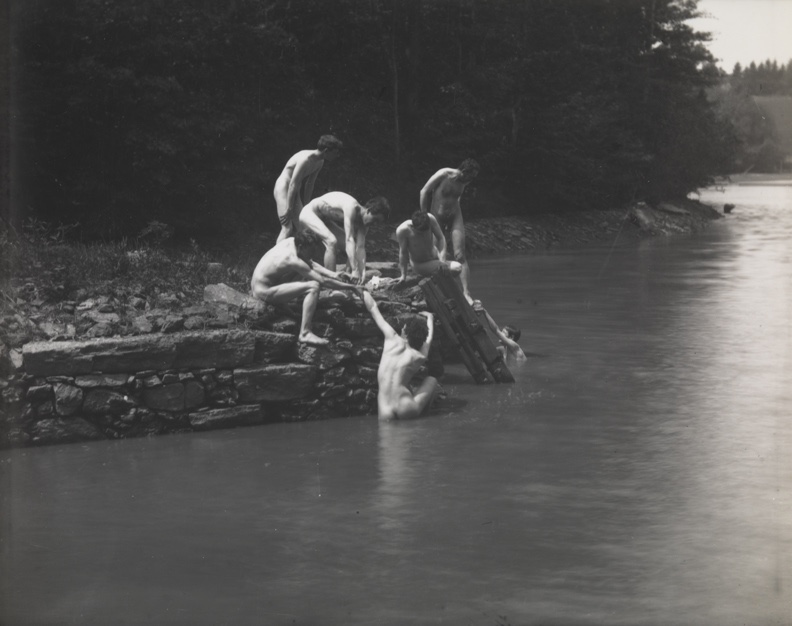
Twenty-eight young men bathe by the shore,
Twenty-eight young men and all so friendly;
Twenty-eight years of womanly life and all so lonesome.

She owns the fine house by the rise of the bank,
She hides handsome and richly drest aft the blinds of the window.

Which of the young men does she like the best?
Ah the homeliest of them is beautiful to her.

Where are you off to, lady? for I see you,
You splash in the water there, yet stay stock still in your room.

Dancing and laughing along the beach came the twenty-ninth bather,
The rest did not see her, but she saw them and loved them.

The beards of the young men glistened with wet, it ran from their long hair,
Little streams passed all over their bodies.

An unseen hand also passed over their bodies,
It descended tremblingly from their temples and ribs.

The young men float on their backs, their white bellies bulge to the sun, they do not ask who seizes fast to them,
They do not know who puffs and declines with pendant and bending arch,
They do not think whom they souse with spray.

About the Poem

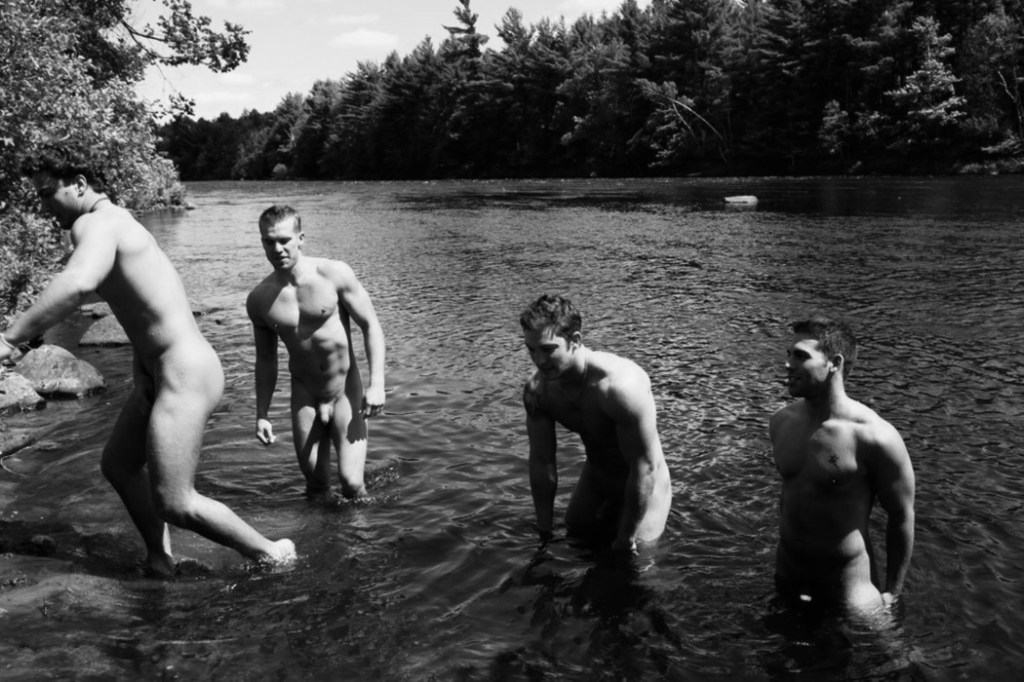
This section of Leaves of Grass is one of Walt Whitman’s most quietly radical explorations of desire, longing, and the power of imagination. Twenty-eight young men bathe naked together in the water, carefree and unselfconscious, while a woman of the same age watches from the privacy of her home. She is physically separated from them—clothed, indoors, alone—yet in her imagination she becomes the “twenty-ninth bather,” joining their laughter and movement, touching and being touched. The men never see her; the encounter exists entirely within her longing.

Whitman presents this imagined intimacy as emotionally and sensually real, refusing to diminish it simply because it is unacted. There is no punishment for desire here, no moral correction. Wanting, especially wanting that cannot be fulfilled, is treated as a fundamental human experience rather than a failing. The poem honors the interior life as a space where longing has its own truth and legitimacy.

For 19th-century readers, this treatment of desire was deeply unsettling. The poem lingers on naked male bodies without euphemism, grants a woman an active erotic imagination, and treats sexual fantasy as natural rather than sinful. Victorian literary culture demanded modesty, restraint, and silence—particularly from women—but Whitman offers none of those reassurances. Instead, he insists on the holiness of the body and the legitimacy of erotic thought.

At the same time, the poem’s gaze dwells unmistakably on male physicality and communal intimacy: bodies floating together, bellies turned toward the sun, touch passing freely among them. This focus aligns with Whitman’s broader treatment of male-male closeness throughout Song of Myself, where affection between men is often physical, tender, and spiritually charged. Although framed through a woman’s perspective, the poem participates in Whitman’s larger project of celebrating bodily connection beyond conventional boundaries.

Read this way, the woman’s presence can feel almost like a veil—one that allows Whitman to explore erotic attention to male bodies and shared sensuality while navigating the social constraints of his time. Ultimately, the poem becomes less about voyeurism and more about exclusion and yearning: the ache to cross boundaries, to belong to a world of unguarded bodies and mutual touch, and to claim desire itself as something worthy of recognition and song.

About the Poet

Walt Whitman (1819–1892) reshaped American poetry by rejecting formal verse and embracing a bold, expansive free style that celebrated the self, the body, and the collective human experience.

With Leaves of Grass, Whitman insisted that:

  • The body is sacred
  • Desire is not separate from spirituality
  • Love—especially between men—deserves poetic dignity

Though he never publicly named his sexuality, Whitman’s poetry has long been recognized as foundational to queer literary history. His work insists on the holiness of physicality and the legitimacy of desires that society prefers to hide.

Whitman’s enduring challenge to readers is simple and radical: to see the human body, in all its longing and beauty, as worthy of love and song.


Queer Trivia Night

Queer Trivia Night

By Jenny Johnson

for Nica, Mary, Ryan, et al.


A friend on a rival team confesses
they’ve always been into it.
As a kid, they locked themselves in a closet
to read Trivial Pursuit cards.
They wanted to know everything.

Their team is named Shooting Nudes.
We are Butch Believers.
The next category is Famous Dykes.
The whole bar is packed and smells like
bike sweat and Cosmo slushies.

Our best guess is that it was Audre Lorde
in ’89 advocating for Palestine.
On the fly, we struggle to spell
Stormé DeLarverie, but we’re hoping
bad handwriting hides it, huddling closer

so no one hears our answers.
Meanwhile, the National Park Service
erases the letter T in twenty places
from the Stonewall Monument website.
Slime mold? Whiptail lizards? The category is

Queer Ecology. Now, a federal directive
threatens to cut gender-affirming
care for youth in our city.
The category is Gay for Pay.
Will Smith, Tom Hanks, Hilary Swank.

Cleverness I know can feel exclusive
but here I lean into my friends’ literacies,
their wisdoms my shelter.
The forty somethings know the local lore,
the bygone parties: Donny’s, Pegasus,

Operation Sappho, while The Gen Z kids ace
the tech round, scribbling the name of
a translesbian hacktivist on a canceled sci-fi show.
It turns out being an autodidact is
the unspoken prerequisite for being queer in America.

Will we nerd ourselves into futures
of intergenerational knowing?
In our time, the Press 3 option
of the youth suicide hotline
was created and deleted.

In booths with curly fries,
we turn to each other and say:
Kiki. Bussy. Bulldagger.
Kitty Tsui. Vaginal (Crème) Davis.
Truths our bodies internalized arise

in quick crescendos like this one:
Bernard Mayes founded
the first suicide prevention hotline
in the country. I know this because
he was a dean at my college and the first

audaciously out educator I ever met.
Monthly he held a donut hour,
I was closeted then, so I showed up early
to squeeze onto a cramped couch
and listen: In 1961, he leafletted streets

with a phone number safe to dial
and then waited by a red rotary phone
certain that many would call.
The category is Gay Rage.
Name the band and the song:

Bikini Kill, “Suck My Left One”
Bronski Beat, “Why?”
Princess Nokia, “Tomboy”
Planningtorock, “Get Your
Fckin Laws Off My Body”

I’ve always joked that my head is filled with trivial trivia. I have a bad habit of responding to almost any conversation with, “Did you know…?” People inevitably tell me I should go on Jeopardy!—and I always laugh, because I know I’d be terrible at it. The moment a question is asked under pressure, my mind goes blank, even though I can often answer the questions effortlessly when I’m watching from my couch.

I’ve only participated in a Queer Trivia Night once. I can’t even remember the name of our team, but I do remember who was on it: museum professionals and librarians. Unsurprisingly, we won with ease. What stuck with me, though, wasn’t the victory. It was the realization that queer trivia isn’t really about knowing random facts—it’s about shared memory, survival, and the way knowledge circulates within our community. That’s what makes Jenny Johnson’s poem “Queer Trivia Night” resonate so deeply, and why it feels less like a novelty poem and more like a quiet manifesto.

About the Poem

Jenny Johnson’s “Queer Trivia Night” uses the format of a bar trivia competition to explore something much bigger than questions and answers: how queer knowledge is created, shared, and fought for. The poem moves quickly from playful details—team names, sticky tables, categories like “Famous Dykes” and “Queer Ecology”—to the sobering reality that queer history and queer bodies are constantly under threat. The fun of trivia is always shadowed by erasure: the National Park Service quietly removing the “T” from Stonewall’s history, and federal directives endangering gender-affirming care.

What makes the poem especially powerful is how it reframes trivia as survival. Queer people become autodidacts not because they love facts for their own sake (though many of us do), but because knowing is how we find each other and how we stay alive. The poem’s categories—Gay for Pay, Gay Rage, Famous Dykes—aren’t just cheeky; they map a curriculum of lived experience, culture, protest, and grief.

Johnson also highlights intergenerational knowledge. Older queers remember bars and parties that no longer exist; younger queers know digital spaces and activist figures from canceled shows. Together, they form a collective mind that shelters them when laws and institutions fail. Even the list of names and slang—“Kiki. Bussy. Bulldagger. Kitty Tsui. Vaginal (Crème) Davis.”—becomes a kind of chant, proof that language itself carries history in the body.

One of the most moving moments comes with the story of Bernard Mayes and the first suicide prevention hotline. It connects trivia to testimony: a fact becomes a memory, and a memory becomes a lifeline. In this poem, knowing things is not about winning a round—it’s about refusing to disappear.

“Queer Trivia Night” suggests that queer community is built out of shared literacy: knowing the songs, the scandals, the heroes, the dangers. The poem asks whether we can “nerd ourselves into futures of intergenerational knowing,” and the answer feels cautiously hopeful. As long as we keep telling each other what we know, something survives.

About the Poet

Jenny Johnson is an American poet whose work often blends humor, pop culture, and sharp political awareness with deep emotional intelligence. Her poems frequently explore queer identity, community, and the ways personal memory intersects with public history. She is known for writing that feels conversational and accessible while still being formally and intellectually rigorous.

Johnson’s poetry is especially attentive to how knowledge circulates—through classrooms, friendships, activism, and everyday talk. In “Queer Trivia Night,” she captures both the joy of shared culture and the urgency of preserving it in a time of erasure. Her work reminds us that poetry can hold facts and feelings at once, and that even something as silly as trivia can become a record of who we are and how we endure.


Young Republican

Young Republican
by Randall Mann

September, 1984.
The heat was like a ray-gun.
The Communists had much to fear:
His name was Ronald Reagan—

and so was mine in middle school,
throughout the mock debate.
The recreation hall was full
of democratic hate.

I ended all my thoughts with well,
declared my love for Nancy.
My stifling suit was poly-wool.
I sounded like a pansy.

But teachers didn’t seem to care
that Ronald Reagan looked
a little fey, and had some flair.
I wanted to be liked,

the boy who mowed the neighbors’ yards,
the new kid in Ocala—
while Mondale read his index cards,
I sipped a Coca Cola

that I had spiked with Mother’s gin,
and frowned, and shook my head.
Oh Walter, there you go again,
I smiled and vainly said.

I reenacted getting shot.
I threw benign grenades.
I covered up what I forgot.
I never mentioned AIDS.

About the Poem

“Young Republican” is sharp, funny, and devastating all at once—a poem that understands how performance can become survival. Set in September 1984, the poem unfolds during a middle-school mock debate at the height of the Reagan era. The speaker shares a name with Ronald Reagan, a coincidence that becomes both costume and shield.

What Mann captures so precisely is the choreography of belonging: the poly-wool suit, the rote praise of Nancy Reagan, the rehearsed disdain for Walter Mondale, the Coke spiked with gin (childhood bravado masquerading as adulthood). This is a boy learning how to read the room—and how to disappear inside it.

The poem’s humor (“I sounded like a pansy”) is double-edged. On the surface, it’s self-deprecating; beneath it, the line exposes how queerness is policed through voice, gesture, and tone. Teachers “didn’t seem to care” that Reagan “looked / a little fey,” while the boy himself desperately wants to be liked. The implication is clear: effeminacy can be tolerated when it’s power-adjacent, abstracted, or safely ironic—but not when it belongs to a vulnerable kid trying to pass.

And then there’s the ending. The final line—“I never mentioned AIDS.”—lands like a trapdoor. Everything before it has been satire and social observation; suddenly the stakes snap into focus. The poem becomes unmistakably LGBTQ+. In 1984, AIDS was not merely absent from middle-school debate—it was actively erased, even as it ravaged queer communities. Silence here is not ignorance; it’s learned omission. The speaker understands, even then, what must not be said if he wants to remain acceptable.

This is why the poem resonates so deeply as a queer text. It isn’t about desire in any overt sense. It’s about concealment, mimicry, and the emotional cost of aligning oneself with systems that promise safety while denying truth. The boy’s performance of conservatism isn’t ideological conviction—it’s camouflage.

“Young Republican” asks uncomfortable questions:

  • What did we have to hide to be allowed in the room?
  • What did we rehearse instead of telling the truth?
  • And what names—personal or political—did we borrow in order to survive?

About the Poet

Randall Mann is an American poet known for his formally inventive, emotionally incisive work that often explores queerness, masculinity, memory, and cultural performance. His poems frequently engage pop culture and politics, using wit and structure to probe deeply personal experiences. Mann’s work is especially attuned to the ways language, roles, and social expectations shape queer lives—often revealing how humor and restraint coexist with grief and loss.

“Young Republican” is a quintessential example of Mann’s voice: controlled, ironic, and quietly devastating, leaving the reader to sit with what’s been said—and what was never allowed to be spoken.