My heart is like a singing bird Whose nest is in a water’d shoot; My heart is like an apple-tree Whose boughs are bent with thick-set fruit; My heart is like a rainbow shell That paddles in a halcyon sea; My heart is gladder than all these, Because my love is come to me.
Raise me a daïs of silk and down; Hang it with vair and purple dyes; Carve it in doves and pomegranates, And peacocks with a hundred eyes; Work it in gold and silver grapes, In leaves and silver fleurs-de-lys; Because the birthday of my life Is come, my love is come to me.
Today is my 44th birthday. I took today off work, so I doubt I’ll be spending it with anyone. I am going to Burlington to have lunch with a friend of mine, and I might even take myself to dinner tonight and enjoy a lovely meal. Other than that, it’s really just another day. My mother will probably call, and my sister and her two kids will call to wish me happy birthday. That’s about it. Today’s poem is dedicated to it being my birthday.
About the Poem
Love poetry is a common theme in English literature, but there are a few truly great poems about being in love (and being happy). “A Birthday” is an example of a poem which celebrates being in love using colorful and majestic imagery. It is written by one of the Victorian era’s greatest poets. The poet is not celebrating her own birthday but celebrating the birthday of her lover.
Let us be thankful—not only because Since last our universal thanks were told We have grown greater in the world’s applause, And fortune’s newer smiles surpass the old—
But thankful for all things that come as alms From out the open hand of Providence:— The winter clouds and storms—the summer calms— The sleepless dread—the drowse of indolence.
Let us be thankful—thankful for the prayers Whose gracious answers were long, long delayed, That they might fall upon us unawares, And bless us, as in greater need we prayed.
Let us be thankful for the loyal hand That love held out in welcome to our own, When love and only love could understand The need of touches we had never known.
Let us be thankful for the longing eyes That gave their secret to us as they wept, Yet in return found, with a sweet surprise, Love’s touch upon their lids, and, smiling, slept.
And let us, too, be thankful that the tears Of sorrow have not all been drained away, That through them still, for all the coming years, We may look on the dead face of To-day.
About the Poet
James Whitcomb Riley was born in Greenfield, Indiana, on October 7, 1849. He left school at age sixteen and served in a variety of different jobs, including as a sign painter and with a traveling wagon show. He was the author of several books of poetry, including Home-Folks (Bowen-Merrill, 1900), The Flying Islands of the Night (Bowen-Merrill, 1892), and Pipes o’ Pan at Zekesbury (Bobbs-Merrill, 1888). He also served on the staff of two local newspapers, the Anderson Democrat and, later, the Indianapolis Journal. Riley was known as “the poet of the common people” for his frequent use of his local Indiana dialect in his work. He died in Indianapolis, Indiana, on July 22, 1916.
Before we get to the poem, I wanted to update you on the job search outcome. My boss did take my suggestion and hire the candidate I had advocated for during the process. Now onto the poem.
Homosexuality By Frank O’Hara
So we are taking off our masks, are we, and keeping our mouths shut? as if we’d been pierced by a glance!
The song of an old cow is not more full of judgment than the vapors which escape one’s soul when one is sick;
so I pull the shadows around me like a puff and crinkle my eyes as if at the most exquisite moment
of a very long opera, and then we are off! without reproach and without hope that our delicate feet
will touch the earth again, let alone “very soon.” It is the law of my own voice I shall investigate.
I start like ice, my finger to my ear, my ear to my heart, that proud cur at the garbage can
in the rain. It’s wonderful to admire oneself with complete candor, tallying up the merits of each
of the latrines. 14th Street is drunken and credulous, 53 rd tries to tremble but is too at rest. The good
love a park and the inept a railway station, and there are the divine ones who drag themselves up
and down the lengthening shadow of an Abyssinian head in the dust, trailing their long elegant heels of hot air
crying to confuse the brave “It’s a summer day, and I want to be wanted more than anything else in the world.”
About the Poet
On March 27, 1926, Frank (Francis Russell) O’Hara was born in Maryland. He grew up in Massachusetts, and later studied piano at the New England Conservatory in Boston from 1941 to 1944. O’Hara then served in the South Pacific and Japan as a sonarman on the destroyer USS Nicholas during World War II.
Following the war, O’Hara studied at Harvard College, where he majored in music and worked on compositions and was deeply influenced by contemporary music, his first love, as well as visual art. He also wrote poetry at that time. While at Harvard, O’Hara met John Ashbery and soon began publishing poems in the Harvard Advocate. Despite his love for music, O’Hara changed his major and left Harvard in 1950 with a degree in English. He then attended graduate school at the University of Michigan, Ann Arbor, and received his MA in 1951. That autumn, O’Hara moved into an apartment in New York. He was soon employed at the front desk of the Museum of Modern Art and continued to write seriously.
O’Hara’s early work was considered both provocative and provoking. In 1952, his first volume of poetry, A City Winter, and Other Poems, attracted favorable attention; his essays on painting and sculpture and his reviews for ArtNews were considered brilliant. O’Hara became one of the most distinguished members of the New York School of poets, which also included Ashbery. O’Hara’s association with painters Larry Rivers, Jackson Pollock, and Jasper Johns, also leaders of the New York School, became a source of inspiration for his highly original poetry. He attempted to produce with words the effects these artists had created on canvas. In certain instances, he collaborated with the painters to make “poem-paintings,” paintings with word texts.
O’Hara’s most original volumes of verse, Meditations in an Emergency (1956) and Lunch Poems (1964), are impromptu lyrics, a jumble of witty talk, journalistic parodies, and surrealist imagery.
O’Hara continued working at the Museum of Modern Art throughout his life, curating exhibitions and writing introductions and catalogs for exhibits and tours. On July 25, 1966, while vacationing on Fire Island, Frank O’Hara was killed in a sand buggy accident. He was forty years old.
It was a spring day, a day for a lay, when the air
Smelled like a locker-room, a day to blow or get blown;
Returning from lunch I turned my corner and there
On a near-by stoop I saw him standing alone.
I glanced as I advanced. The clean white T-shirt outlined
A forceful torso, the light-blue denims divulged
Much. I observed the snug curves where they hugged the behind,
I watched the crotch where the cloth intriguingly bulged.
Our eyes met. I felt sick. My knees turned weak.
I couldn’t move. I didn’t know what to say.
In a blur I heard words, myself like a stranger speak
“Will you come to my room?” Then a husky voice, “O.K.”
I produced some beer and we talked. Like a little boy
He told me his story. Present address: next door.
Half Polish, half Irish. The youngest. From Illinois.
Profession: mechanic. Name: Bud. Age: twenty-four.
He put down his glass and stretched his bare arms along
The back of my sofa. The afternoon sunlight struck
The blond hairs on the wrist near my head. His chin was strong.
His mouth sucky. I could hardly believe my luck.
And here he was sitting beside me, legs apart.
I could bear it no longer. I touched the inside of his thigh.
His reply was to move closer. I trembled, my heart
Thumped and jumped as my fingers went to his fly.
I opened a gap in the flap. I went in there.
I sought for a slit in the gripper shorts that had charge
Of the basket I asked for. I came to warm flesh then to hair.
I went on. I found what I hoped. I groped. It was large.
He responded to my fondling in a charming, disarming way:
Without a word he unbuckled his belt while I felt.
And lolled back, stretching his legs. His pants fell away.
Carefully drawing it out, I beheld what I held.
The circumcised head was a work of mastercraft
With perfectly beveled rim of unusual weight
And the friendliest red. Even relaxed, the shaft
Was of noble dimensions with the wrinkles that indicate
Singular powers of extension. For a second or two,
It lay there inert, then suddenly stirred in my hand,
Then paused as if frightened or doubtful of what to do.
And then with a violent jerk began to expand.
By soundless bounds it extended and distended, by quick
Great leaps it rose, it flushed, it rushed to its full size.
Nearly nine inches long and three inches thick,
A royal column, ineffably solemn and wise.
I tested its length and strength with a manual squeeze.
I bunched my fingers and twirled them about the knob.
I stroked it from top to bottom. I got on my knees.
I lowered my head. I opened my mouth for the job.
But he pushed me gently away. He bent down. He unlaced
His shoes. He removed his socks. Stood up. Shed
His pants altogether. Muscles in arms and waist
Rippled as he whipped his T-shirt over his head.
I scanned his tan, enjoyed the contrast of brown
Trunk against white shorts taut around small
Hips. With a dig and a wriggle he peeled them down.
I tore off my clothes. He faced me, smiling. I saw all.
The gorgeous organ stood stiffly and straightly out
With a slight flare upwards. At each beat of his heart it threw
An odd little nod my way. From the slot of the spout
Exuded a drop of transparent viscous goo.
The lair of hair was fair, the grove of a young man,
A tangle of curls and whorls, luxuriant but couth.
Except for a spur of golden hairs that fan
To the neat navel, the rest of the belly was smooth.
Well hung, slung from the fork of the muscular legs,
The firm vase of his sperm, like a bulging pear,
Cradling its handsome glands, two herculean eggs,
Swung as he came towards me, shameless, bare.
We aligned mouths. We entwined. All act was clutch,
All fact contact, the attack and the interlock
Of tongues, the charms of arms. I shook at the touch
Of his fresh flesh, I rocked at the shock of his cock.
Straddling my legs a little I inserted his divine
Person between and closed on it tight as I could.
The upright warmth of his belly lay all along mine.
Nude, glued together for a minute, we stood.
I stroked the lobes of his ears, the back of his head
And the broad shoulders. I took bold hold of the compact
Globes of his bottom. We tottered. He fell on the bed.
Lips parted, eyes closed, he lay there, ripe for the act.
Mad to be had, to be felt and smelled. My lips
Explored the adorable masculine tits. My eyes
Assessed the chest. I caressed the athletic hips
And the slim limbs. I approved the grooves of the thighs.
I hugged, I snuggled into an armpit. I sniffed
The subtle whiff of its tuft. I lapped up the taste
Of its hot hollow. My fingers began to drift
On a trek of inspection, a leisurely tour of the waist.
Downward in narrowing circles they playfully strayed.
Encroached on his privates like poachers, approached the prick,
But teasingly swerved, retreated from meeting. It betrayed
Its pleading need by a pretty imploring kick.
“Shall I rim you?” I whispered. He shifted his limbs in assent.
Turned on his side and opened his legs, let me pass
To the dark parts behind. I kissed as I went
The great thick cord that ran back from his balls to his arse.
Prying the buttocks aside, I nosed my way in
Down the shaggy slopes. I came to the puckered goal.
It was quick to my licking. He pressed his crotch to my chin.
His thighs squirmed as my tongue wormed in his hole.
His sensations yearned for consummation. He untucked
His legs and lay panting, hot as a teen-age boy.
Naked, enlarged, charged, aching to get sucked,
Clawing the sheet, all his pores open to joy.
I inspected his erection. I surveyed his parts with a stare
From scrotum level. Sighting along the underside
Of his cock, I looked through the forest of pubic hair
To the range of the chest beyond rising lofty and wide.
I admired the texture, the delicate wrinkles and the neat
Sutures of the capacious bag. I adored the grace
Of the male genitalia. I raised the delicious meat
Up to my mouth, brought the face of its hard-on to my face.
Slipping my lips round the Byzantine dome of the head,
With the tip of my tongue I caressed the sensitive groove.
He thrilled to the trill. “That’s lovely!” he hoarsely said.
“Go on! Go on!” Very slowly I started to move.
Gently, intently, I slid to the massive base
Of his tower of power, paused there a moment down
In the warm moist thicket, then began to retrace
Inch by inch the smooth way to the throbbing crown.
Indwelling excitements swelled at delights to come
As I descended and ascended those thick distended walls.
I grasped his root between left forefinger and thumb
And with my right hand tickled his heavy voluminous balls.
I plunged with a rhythmical lunge steady and slow,
And at every stroke made a corkscrew roll with my tongue.
His soul reeled in the feeling. He whimpered “Oh!”
As I tongued and squeezed and rolled and tickled and swung.
Then I pressed on the spot where the groin is joined to the cock,
Slipped a finger into his arse and massaged him from inside.
The secret sluices of his juices began to unlock.
He melted into what he felt. “O Jesus!” he cried.
Waves of immeasurable pleasures mounted his member in quick
Spasms. I lay still in the notch of his crotch inhaling his sweat.
His ring convulsed round my finger. Into me, rich and thick,
His hot spunk spouted in gouts, spurted in jet after jet.
About the Poem
“The Platonic Blow, by Miss Oral” (sometimes known as “A Day for a Lay” or “The Gobble Poem”) is an erotic poem by W. H. Auden. First unveiled at a party in 1965, the poem was reportedly written in 1948 and remained off the public radar for years. It’s a much longer poem than I usually post, but I think it’s worth reading all 136 lines that comprise the poem’s thirty-four stanzas. The poem gleefully describes in graphic detail a gay blowjob. Auden was one of the greatest and most intelligent writers of the 20th century. Much of Auden’s work is influenced by politics, religion, philosophy, and love. Auden was gay and fairly open about that fact. He often traveled to Berlin before WWII broke out to enjoy the gay scene in the city and to visit his close friend Christopher Isherwood. Isherwood, probably best known for The Berlin Stories which inspired the musical Cabaret, traveled with Auden to China, Spain, and eventually to America. They collaborated together on books about the Sino-Japanese War and the civil war in Spain.
Auden lived in a unique period where same-sex relations were not as taboo they had been considered before the Weimar Republic or after WWII. The Weimar Republic was fading and war was approaching, but there seemed to be this bubble in time that allowed for queer culture to flourish for a few years. “The Platonic Blow” highlights the sexual climate of the time, which was becoming much more open. The poem is blunt, crass, and beautifully written. Not only is the poem about a guy cruising a man, bringing him back to his apartment, blowing him and rimming him, but it is a wonderfully structured poem in which Auden uses internal rhyme, an end rhyme scheme of ABAB, and each line is metered so that there are five stressed syllables. “A Platonic Blow” is unique in Auden’s work because of the explicit and raw eroticism of it.
A special thanks to BosGuy who reminded me of this poem after I’d posted a very different Auden poem last week. I’d posted an excerpt of many years ago, but here it is in its entirety.
Time will say nothing but I told you so, Time only knows the price we have to pay; If I could tell you I would let you know.
If we should weep when clowns put on their show, If we should stumble when musicians play, Time will say nothing but I told you so.
There are no fortunes to be told, although, Because I love you more than I can say, If I could tell you I would let you know.
The winds must come from somewhere when they blow, There must be reasons why the leaves decay; Time will say nothing but I told you so.
Perhaps the roses really want to grow, The vision seriously intends to stay; If I could tell you I would let you know.
Suppose all the lions get up and go, And all the brooks and soldiers run away; Will Time say nothing but I told you so? If I could tell you I would let you know.
About This Poem
“If I Could Tell You” is a poem by the Anglo-American poet W. H. Auden (1907-73), who was born in York and made his name as the foremost English poet of the 1930s, before emigrating to the United States (where he would live on and off for much of the rest of his life) towards the end of the decade. This poem is an example of a curious verse form known as the villanelle (one of my personal favorite poetic forms. A villanelle is a French verse form, although one that took its name from an Italian one (the word derives from villanella, a form of Italian part-song which originated in Naples in the sixteenth century). This intriguing verse form comprises 19 lines made up of five tercets (three-line stanzas) and a concluding quatrain. As the Oxford English Dictionary summarizes it, “The first and third lines of the first stanza are repeated alternately in the succeeding stanzas as a refrain and form a final couplet in the quatrain.” In Auden’s poem, the two refrains are therefore “Time will say nothing, but I told you so” and “If I could tell you I would let you know.”
The villanelle emerged as a popular poetic form in English verse when poets of the 1930s started to use it. It became popular because the poets of the 1930s were following the 1920s modernist poets, like T. S. Eliot and Ezra Pound, but also wished to distance themselves from their styles and modes of writing. Auden, for instance, disliked free verse and the whiff of elitism that is often found in modernist poetry. A villanelle is as far removed from free verse as a poem can get. Like a sonnet, the form is very strict in its structure, but while a Sonnet can have variations, a villanelle cannot have any variations. It must be comprised of nineteen lines and using rhyme throughout. It can only have two different rhymes, an a rhyme and a b rhyme, throughout, and two lines must be repeated no fewer than four times each.
Poems like “If I Could Tell You” shows the 1930s poets’ dislike of elitism. T. S. Eliot’s 1922 poem The Waste Land is the most famous modernist poem in English. In it, the poet quotes ancient Greek and Latin as well as modern German and French, and alludes to William Shakespeare, Edmund Spenser, Andrew Marvell, and Greek myth. The poem presents a challenge, on some level, to just about any reader. Few would know all these languages and all of these frames of reference. By contrast, “If I Could Tell You” does not send the reader scurrying to a bilingual dictionary (or even to an English one, for that matter: everyone knows what a rose, a brook, or a soldier is), nor does it allude to other writers. Auden once claimed that he writes “for his betters.” Of course, this does not mean the poem is therefore “easy” or straightforward. The very title says as much: “If I Could Tell You.” Unlike the modernists, Auden wants to communicate in a direct and clear, accessible way; but he can’t. The repeated line “If I could tell you I would let you know” shows that something eludes even his understanding or comprehension.
Auden wrote “If I Could Tell You” in October 1940, when the mood in Europe was still bleak and the future looked increasingly uncertain during the Second World War. From across the Atlantic, in New York where he was living at the time, Auden felt as though civilization itself was under threat, as a poem from the previous year, “September 1, 1939,” so poignantly shows. The two refrains of the villanelle appear to alternate between certainty (‘Time will…’) and uncertainty (‘If I…’). But what is so masterly about Auden’s use of these two refrains is how both actually pull the reader in opposite directions, poised somewhere between knowability and conjecture: “If I could tell you” is the first half of the line, but the second, “I would let you know,” promises the surety of personal guarantee in an uncertain time.
Similarly, “Time will say,” but what it will say is just a smug, all-knowing, ‘I told you so’, which doesn’t help to explain much—anyone can be wise after the fact, and Old Father Time is in a better position than most. Observe how, in the brilliant final stanza of the poem, Auden turns that declarative statement into a question: “Will time say nothing but I told you so?” The rest of the poem operates on a similar see-saw between clarity and ambiguity, confident declaration and timid uncertainty (“Perhaps the roses…”; “The vision seriously intends…”). This uneasy combination is even there in the unusual word-combinations Auden uses: both brooks and soldiers can be said to ‘run away’, in a linguistic feature that approaches zeugma (much as when Queen Anne takes both counsel and tea in Pope’s The Rape of the Lock, or a Dickensian character leaves in a flood of tears and a sedan chair); combining the masculine, contemporary reference to soldiers (contemporary for 1940 certainly) with the more feminine and traditionally poetic “brooks” offers a microcosm of what is going on in the poem at the macro-level.
“If I Could Tell You” is a deeply paradoxical poem: a poem at once about being certain of nothing (except that the speaker would tell us the truth if he had the answers) in a time of uncertainty (except that we can be certain that there “must be” reasons why things happen, even though we don’t know what they are).
About W. H. Auden
Wystan Hugh Auden (1907-73) was born in York, England, and was educated at the University of Oxford. He described how the poetic outlook when he was born was “Tennysonian” but by the time he went to Oxford as a student in 1925, T. S. Eliot’s The Waste Land had altered the English poetic landscape away from Tennyson and towards what we now call “modernism.”
Surprisingly given his later, better-known work, Auden’s early poetry flirted with the obscurity of modernism: in 1932 his long work The Orators (a mixture of verse and prose poetry with an incomprehensible plot) was published by Faber and Faber, then under the watchful eye of none other than T. S. Eliot. Auden later distanced himself from this experimental false start, describing The Orators as the kind of work produced by someone who would later either become a fascist or go mad.
Auden thankfully did neither, embracing instead a more traditional set of poetic forms (he wrote a whole sequence of sonnets about the Sino-Japanese War of the late 1930s) and a more direct way of writing that rejected modernism’s love of obscure allusion. This does not mean that Auden’s work is always straightforward in its meaning, and arguably his most famous poem, “Funeral Blues,” is often “misread” as a sincere elegy when it was intended to be a parody of public obituaries.
In early 1939, not long before the outbreak of the Second World War, Auden left Britain for the United States, much to the annoyance of his fellow left-wing writers who saw such a move as a desertion of Auden’s political duty as the most prominent English poet of the decade. In America, where he lived for much of the rest of his life with his long-time partner Chester Kallman, Auden collaborated with composers on a range of musicals and continued to write poetry, but 90 percent of his best work belongs to the 1930s, the decade with which is most associated. He died in 1973 in Austria, where he had a holiday home.
Macbeth, Act IV, Scene I [Round about the cauldron go] By William Shakespeare
The three witches, casting a spell
Round about the cauldron go; In the poison’d entrails throw. Toad, that under cold stone Days and nights hast thirty one Swelter’d venom sleeping got, Boil thou first i’ the charmed pot.
Double, double toil and trouble; Fire burn and cauldron bubble.
Fillet of a fenny snake, In the cauldron boil and bake; Eye of newt, and toe of frog, Wool of bat, and tongue of dog, Adder’s fork, and blind-worm’s sting,
Lizard’s leg, and howlet’s wing, For a charm of powerful trouble, Like a hell-broth boil and bubble.
Double, double toil and trouble; Fire burn and cauldron bubble.
Scale of dragon, tooth of wolf, Witches’ mummy, maw and gulf Of the ravin’d salt-sea shark, Root of hemlock digg’d i’ the dark,
Liver of blaspheming Jew, Gall of goat, and slips of yew Sliver’d in the moon’s eclipse, Nose of Turk, and Tartar’s lips, Finger of birth-strangled babe Ditch-deliver’d by a drab, Make the gruel thick and slab: Add thereto a tiger’s chaudron, For the ingredients of our cauldron.
Double, double toil and trouble; Fire burn and cauldron bubble.
The Three Witches, also known as the Weird Sisters or Wayward Sisters, are characters in William Shakespeare’s Macbeth. They have always been one of my favorite parts of the play. I used to love teaching Macbeth and reading the witches’ parts aloud. The witches are one of the most striking and memorable aspects of Macbeth. However, many of the witch scenes in the play were most likely not written by Shakespeare at all. They were taken from another play, by Thomas Middleton, and added to Macbeth by Shakespeare’s acting company after he had died. They draw heavily on the conventional theatrical stereotypes of Shakespeare’s time, giving us witches that are sometimes scary, sometimes silly, which is how they’ve been played since then, although often directors try to make them as frightening as possible.
Shakespeare’s historical source for the events of the play, Holinshed’s Chronicles, says that the witches who appeared to Macbeth and Banquo looked like “creatures of elder world,” and that many people thought they were “the goddesses of destiny.” This is in keeping with the way the witches refer to themselves in their dialogue: they call themselves “the weïrd sisters,” where “weïrd” comes from the Old English term wyrd, meaning “fate” or “destiny.” And the primary power that the witches have in the play is indeed the ability to prophesy about what will happen in the future.
Shakespeare’s Macbeth was written not long after King James VI of Scotland became James I of England in 1603, and James’ interest in the subject of witchcraft undoubtedly influenced the play. Of all the plays that Shakespeare wrote during the reign of James I, who was patron of Shakespeare’s acting company, Macbeth most clearly reflects the playwright’s relationship with his sovereign. Scottish history and legend contain a real life King Duncan, who was really murdered by Macbeth (the real Macbeth apparently was a decent king— that wouldn’t have really worked for Shakespeare’s play though). Banquo, too, was apparently a real figure. King James claimed descendance through him, so in Macbeth, when the Weird Sisters tell Banquo that “thou shalt get [beget] kings, though thou be none,” Shakespeare was really trying to help legitimize James’s place on the Scottish throne— he was saying that Banquo’s descendants deserve to be king, therefore James has a rightful claim to the throne.
Macbeth contains many supernatural elements, including the witches. James I was an avid scholar of all things strange, weird, and superstitious. In 1597, the king published a book called Daemonologie; it was a study of witchcraft, necromancy, demons, werewolves, vampires, and all sorts of other spooky things. In fact, much of the witchcraft in Macbeth was actually taken directly from Daemonologie, probably as a form of flattery to the king himself. It goes further than that, though. Witchcraft seems to have been a real obsession of James, as he was heavily involved in a series of witch trials in 1590. James had become convinced of the danger of witchcraft when he sailed to Copenhagen in 1590 to marry Princess Anne, sister of the King of Denmark. During their return to Scotland, they experienced terrible storms and had to shelter in Norway for several weeks before continuing. The admiral of the escorting Danish fleet blamed the storm on witches. Several nobles of the Scottish court were implicated, and soon more than a hundred suspected witches in North Berwick in Scotland were arrested. Supposedly, James believed a coven of witches were trying to personally attack him, which was high treason, so James had them tracked down, forced them to confess to witchcraft, tortured them, and had them burned at the stake. So it’s no wonder that the witches in Macbeth are so demented and evil! Shakespeare wanted to make it clear that he was on the king’s side in the whole witch debacle.
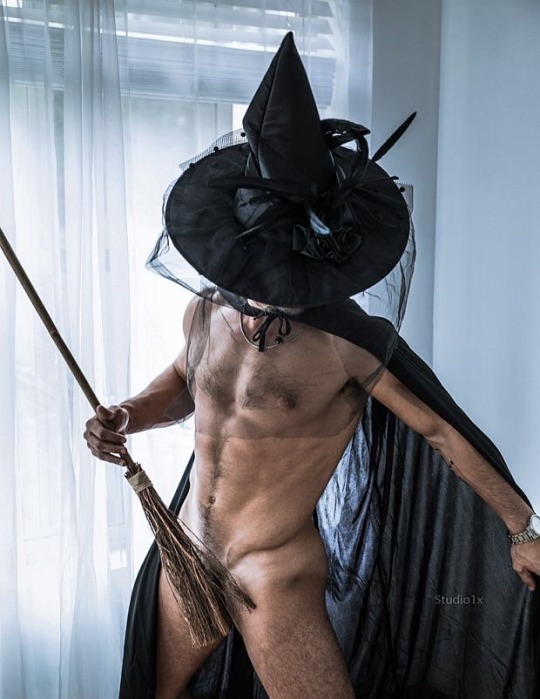
This is why I love the witches in Macbeth. There is so much history and intrigue in the play, though exaggerated and twisted to fit the purposes of Shakespeare. So remember, when your standing around your cauldron this Halloween:
Double, double toil and trouble; Fire burn and cauldron bubble.
Fall, leaves, fall; die, flowers, away; Lengthen night and shorten day; Every leaf speaks bliss to me, Fluttering from the autumn tree. – I shall smile when wreaths of snow Blossom where the rose should grow; I shall sing when night’s decay Ushers in a drearier day.
About the Poem
Here in Vermont, the height of fall foliage has passed and “stick season” is encroaching on us. I chose this poem today because most of the fall leaves have fallen here. The higher elevations of central Vermont have some trees hanging on to their foliage, contrasting with the dark green evergreens, and the soft gray hillsides where the leaves have fallen. The most foliage color right now is found in the rolling hills of the Champlain Valley, including the Lake Champlain Islands and the Burlington area, and in the valleys of southern Vermont.
Nature is surely the most noticeable themes in “Fall, Leaves, Fall.” For the narrator of the piece, presumably a voice for Brontë’s consciousness, the transition from the autumnal equinox to the winter solstice is one of the best times of the year, when the days grow increasingly shorter, and the nights grow longer. In each line of the two quatrains, Brontë’s word choice emphasizes her own emotional connection to the season, and its own unique beauty, even as she describes such occurrences as the death of leaves and other plants due to increasing cold.
It is likely that “Fall, Leaves, Fall” constitutes one of few existing commentaries on who Emily Brontë was as a person. In her life, friends and family described her as a shy individual, but most of what is known about her come from the posthumous commentaries of her older sister, Charlotte Brontë, whose neutrality cannot be assured. It is understandable to think that her elder sister would want to paint her in a positive light, especially as her novels and poems slowly cemented themselves within the history of English literature. In “Fall, Leaves, Fall,” Emily Brontë seems to be free to discuss herself, and depict herself as a quiet individual who sees life, beauty, and bliss in things that a great many people do not. Even if all she wishes to say is that she loves fall and winter more than summer and spring, it is something worth saying, especially for someone who can express it so well in such a short poem.
About the Poet
Emily Brontë was born in Thornton, England, on July 30, 1818. She and her five siblings grew up in Haworth, where their father, the Rev. Patrick Brontë, was the church curate. Their mother died in 1821, and in 1824, Emily and three of her sisters were sent to the Clergy Daughters’ School in Lancashire. When her two oldest sisters died of tuberculosis, Emily returned to Haworth with her sister Charlotte.
After leaving school, Emily continued her studies with her two surviving sisters, Charlotte and Anne, and their brother, Branwell. With access to their father’s library, the Brontë siblings read and wrote extensively, producing a family magazine that featured their stories and poems.
In 1837, Emily became a teacher at the Law Hill School, but she left the position after several months. After teaching for a brief period at the Pension Héger in Brussels, she returned permanently to Haworth in 1842.
In 1846, Emily, Charlotte, and Anne self-published a collection of poetry under the pseudonyms Currer, Ellis, and Acton Bell. While The Poems of Currer, Ellis, and Acton Bell (Aylott and Jones, 1846) reached a very limited audience, the three sisters each went on to publish novels soon after. In 1847, Emily published her sole work of fiction, Wuthering Heights (Thomas Cautley Newby), which is widely regarded as one of the great novels of the English language.
Emily Brontë died of tuberculosis on December 19, 1848. The Complete Poems of Emily Jane Brontë (Hodder and Stoughton), a posthumous collection of over 200 poems, was published in 1923.
I thought by now my reverence would have waned,
matured to the tempered silence of the bookish or revealed
how blasé I’ve grown with age, but the unrestrained
joy I feel when a black skein of geese voyages like a dropped
string from God, slowly shifting and soaring, when the decayed
apples of an orchard amass beneath its trees like Eve’s
first party, when driving and the road Vanna-Whites its crops
of corn whose stalks will soon give way to a harvester’s blade
and turn the land to a man’s unruly face, makes me believe
I will never soothe the pagan in me, nor exhibit the propriety
of the polite. After a few moons, I’m loud this time of year,
unseemly as a chevron of honking. I’m fire in the leaves,
obstreperous as a New England farmer. I see fear
in the eyes of his children. They walk home from school,
as evening falls like an advancing trickle of bats, the sky
pungent as bounty in chimney smoke. I read the scowl
below the smiles of parents at my son’s soccer game, their agitation,
the figure of wind yellow leaves make of quaking aspens.
About This Poem
“Of late, I’ve been actively recording my responses to the seasons. Fall is particularly spectacular in northern New England; the countryside of Vermont hits my bones like warm bands of neon; there’s that palpable change in the air, electric and mysterious. However, in late autumn, one senses the impending, long wintry gloom overtake all reason. At some point, I began to understand Robert Frost and what critics such as Lionel Trilling and Joseph Brodsky argued, which is the darkness that hits the spirit. I think the poem is also an attempt to get out from underneath the shadow of the poet who looms in New England and to trouble the iconicity of the ‘quaintness’ of Vermont.”—Major Jackson
About This Poet
Major Jackson is the author of five books of poetry, including The Absurd Man (2020), Roll Deep (2015), Holding Company (2010), Hoops (2006) and Leaving Saturn (2002), which won the Cave Canem Poetry Prize for a first book of poems. His edited volumes include: Best American Poetry 2019, Renga for Obama, and Library of America’s Countee Cullen: Collected Poems. A recipient of fellowships from the Fine Arts Work Center in Provincetown, Guggenheim Foundation, National Endowment for the Arts, and the Radcliffe Institute for Advanced Study at Harvard University, Major Jackson has been awarded a Pushcart Prize, a Whiting Writers’ Award, and has been honored by the Pew Fellowship in the Arts and the Witter Bynner Foundation in conjunction with the Library of Congress. He has published poems and essays in American Poetry Review, The New Yorker, Orion Magazine, Paris Review, Ploughshares, Poetry, Poetry London, and Zyzzva. Major Jackson lives in Nashville, Tennessee where he is the Gertrude Conaway Vanderbilt Chair in the Humanities at Vanderbilt University. He serves as the Poetry Editor of The Harvard Review.
This is the way that autumn came to the trees: it stripped them down to the skin, left their ebony bodies naked. It shook out their hearts, the yellow leaves, scattered them over the ground. Anyone could trample them out of shape undisturbed by a single moan of protest.
The birds that herald dreams were exiled from their song, each voice torn out of its throat. They dropped into the dust even before the hunter strung his bow.
Oh, God of May have mercy. Bless these withered bodies with the passion of your resurrection; make their dead veins flow with blood again.
Give some tree the gift of green again. Let one bird sing.
About the Poet
Faiz Ahmed Faiz was born on February 13, 1911, in Sialkot, India, which is now part of Pakistan. Faiz’s early poems had been conventional, light-hearted treatises on love and beauty, but later, he began to expand into politics, community, and the thematic interconnectedness he felt was fundamental in both life and poetry. He received a bachelor’s degree in Arabic, followed by a two master’s degree, one in English and the other in Arabic. After graduating in 1935, Faiz began a teaching career. During his years teaching, he married Alys George, a British expatriate and convert to Islam, with whom he had two daughters. In 1942, he left teaching to join the British Indian Army, for which he received a British Empire Medal for his service during World War II. After the partition of India in 1947, Faiz resigned from the army and became the editor of The Pakistan Times, a socialist English-language newspaper.
On March 9, 1951, Faiz was arrested with a group of army officers under the Safety Act and charged with the failed coup attempt that became known as the Rawalpindi Conspiracy Case. He was sentenced to death and spent four years in prison before being released. Two of his poetry collections, Dast-e Saba and Zindan Namah, focus on life in prison, which he considered an opportunity to see the world in a new way. While living in Pakistan after his release, Faiz was appointed to the National Council of the Arts by Zulfikar Ali Bhutto’s government, and his poems, which had previously been translated into Russian, earned him the Lenin Peace Prize in 1963.
In 1964, Faiz settled in Karachi and was appointed principal of Abdullah Haroon College, while also working as an editor and writer for several distinguished magazines and newspapers. He worked in an honorary capacity for the Department of Information during the 1965 war between India and Pakistan and wrote stark poems of outrage over the bloodshed between Pakistan, India, and what later became Bangladesh. However, when Bhutto was overthrown by Zia Ul-Haq, Faiz was forced into exile in Beirut, Lebanon. There he edited the magazine Lotus and continued to write poems in Urdu. He remained in exile until 1982. He died in Lahore, Pakistan in 1984, shortly after receiving a nomination for the Nobel Prize.
Throughout his tumultuous life, Faiz continually wrote and published, becoming the best-selling modern Urdu poet in both India and Pakistan. While his work is written in fairly strict diction, his poems maintain a casual, conversational tone, creating tension between the elite and the common, somewhat in the tradition of Ghalib, the renowned 19th century Urdu poet. Faiz is especially celebrated for his poems in traditional Urdu forms, such as the ghazal, and his remarkable ability to expand the conventional thematic expectations to include political and social issues.
The Teller of Tales By Gabriela Mistral – 1889-1957
translated by Ursula K. Le Guin
When I’m walking, everything on earth gets up and stops me and whispers to me, and what they tell me is their story.
And the people walking on the road leave me their stories, I pick them up where they fell in cocoons of silken thread.
Stories run through my body or sit purring in my lap. So many they take my breath away, buzzing, boiling, humming. Uncalled they come to me, and told, they still won’t leave me.
The ones that come down through the trees weave and unweave themselves, and knit me up and wind me round until the sea drives them away.
But the sea that’s always telling stories, the wearier I am the more it tells me…
The people who cut trees, the people who break stones, want stories before they go to sleep.
Women looking for children who got lost and don’t come home, women who think they’re alive and don’t know they’re dead, every night they ask for stories, and I return tale for tale.
In the middle of the road, I stand between rivers that won’t let me go, and the circle keeps closing and I’m caught in the wheel.
The riverside people tell me of the drowned woman sunk in grasses and her gaze tells her story, and I graft the tales into my open hands.
To the thumb come stories of animals, to the index fingers, stories of my dead. There are so many tales of children they swarm on my palms like ants.
When my arms held the one I had, the stories all ran as a blood-gift in my arms, all through the night. Now, turned to the East, I’m giving them away because I forget them.
Old folks want them to be lies. Children want them to be true. All of them want to hear my own story, which, on my living tongue, is dead.
I’m seeking someone who remembers it leaf by leaf, thread by thread. I lend her my breath, I give her my legs, so that hearing it may waken it for me.
La Contadora
Cuando camino se levantan todas las cosas de la tierra y me paran y cuchichean y es su historia lo que cuentan.
Y las gentes que caminan en la ruta me la dejan y la recojo caída en capullos que son de huella.
Historias corren mi cuerpo o en mi regazo ronronean. Tantas son que no dan respiro, zumban, hierven y abejean. Sin llamada se me vienen y contadas tampoco dejan…
Las que bajan por los árboles se trenzan y se destrenzan, y me tejen y me envuelvan hasta que el mar los ahuyenta.
Pero el mar que cuenta siempre más rendida, más me deja…
Los que están mascando bosque y los que rompen la piedra, al dormirse quieren historias.
Mujeres que buscan hijos perdidos que no regresan, y las que se creen vivas y no saben que están muertas, cada noche piden historias, y yo me rindo cuenta que cuenta.
A medio camino quedo entre ríos que no me sueltan, el corro se va cerrando y me atrapa en la rueda.
Los ribereños me cuentan la ahogada sumida en hierbas, y su mirada cuenta su historia, y yo las tronco en mis palmas abiertas.
Al pulgar llegan las de animales, al índice las de mis muertos. Las de niños, de ser tantas en las palmas me hormiguean.
Cuando tomaba así mis brazos el que yo tuve, todas ellas en regalo de sangre corrieron mis brazos una noche entera. Ahora yo, vuelta al Oriente, se las voy dando porque no recuerdo.
Los viejos las quieren mentidas, los niños las quieren ciertas. Todos quieren oír la historia mía que en mi lengua viva está muerta.
Busco alguna que la recuerde hoja por hoja, herbra por hebra. Le presto mi aliento, le doy mi marcha por si el oírla me la despierta.
This poem is much longer than poems I usually post, but I found it very interesting. I think we are all “Teller of Tales.” We all have a story to tell. Anyone who knows me in real life will tell you that I am a shy person until I get to know you, then I can be quite a talker. I have a story or an obscure fact for most anything. I may not be able to remember what I had for lunch yesterday, but I can remember that Vermont used to alternate governors according to what side of the Green Mountains they lived on. I can tell you that Alabama Governor Lurleen B. Wallace once was publicized for going turkey hunting and was called Governor Diana (the Roman goddess of the hunt) and that she weighed that turkey on the porch of my grandparents’ store. Telling that story will probably get you a whole dissertation on the governorship of Lurleen Wallace and how running for governor ultimately led to her death. It’s amazing the minutia in my head, yet when I play Trivial Pursuit, I often can’t recall those “trivial” details when I need to.
The point is, we all have stories to tell. One of the things I love about working in a museum is that every object has a story. Every person behind that object has a story. We may not know all the details, and some things may be impossible to know, but the stories existed at one time or another. Can you think of a story or piece of minutia that is in the back of your head that comes up at odd times? What is that story?
About the Author
Gabriela Mistral (1889-1957), pseudonym for Lucila Godoy y Alcayaga, was born in Vicuña, Chile. The daughter of a dilettante poet, she began to write poetry as a village schoolteacher after a passionate romance with a railway employee who committed suicide. She taught elementary and secondary school for many years until her poetry made her famous. She played an important role in the educational systems of Mexico and Chile, was active in cultural committees of the League of Nations, and was Chilean consul in Naples, Madrid, and Lisbon. She held honorary degrees from the Universities of Florence and Guatemala and was an honorary member of various cultural societies in Chile as well as in the United States, Spain, and Cuba. She taught Spanish literature in the United States at Columbia University, Middlebury College, Vassar College, and at the University of Puerto Rico.
The love poems in memory of the dead, Sonetos de la muerte (1914), made her known throughout Latin America, but her first great collection of poems, Desolación [Despair], was not published until 1922. In 1924 appeared Ternura [Tenderness], a volume of poetry dominated by the theme of childhood; the same theme, linked with that of maternity, plays a significant role in Tala, poems published in 1938. Her complete poetry was published in 1958.
Note: I found this poem as part of a celebration of Hispanic Heritage Month on Poets.org, the website of the Academy of American Poets. National Hispanic Heritage Month (Spanish: Mes Nacional de la Herencia Hispana) is a period from September 15 to October 15 in the United States for recognizing the contributions and influence of Hispanic Americans to the history, culture, and achievements of the United States.












 Joe
Joe





 The Closet Professor